Wednesday, December 24, 2025
Home Blog Page 3078

General Soleimani Reveals Untold Facts of 2006 Lebanon War

The interviewer: In the Name of Allah, the Most Beneficent, the Most Merciful; and we ask His assistance.

Greetings and condolences on the days of Muharram. We are grateful for the time you are devoting to us. We would like to open the discussion with you, and it might be a good idea at first to ask you about the situation in the region before the war. As the US entered the region in 2001, after the 9/11 event, and staged two wars, which were followed by the 33-day war, our first question for you is: which were the factors that led to the 33-day war [2006 Israel–Hezbollah War​]? 

Major-General Soleimani: In the Name of Allah, the Beneficent, the Merciful. All praise is due to Allah, the Lord of the Worlds; and peace and greetings be upon God’s messenger, and upon his immaculate household. All praise is due to Allah who guided us…

Peace be upon you, O Aba-Abdullah! and upon the souls that gathered in your courtyard. Peace of Allah be upon you from me forever, as long as I am existent and as long as there are days and nights.

I also express my condolences on the days of mourning over the martyrdom of the master of all martyrs, Hussain Ibn Ali (a.s.).

To answer your question, I should say that the 33-day war had some hidden causes which were the principle factors leading to the war. The war had some apparent and some hidden causes, the pretext of which were the hidden goals that the [Zionist] regime sought for a period of time.

When I say there were hidden causes, we had some information about the preparations of the Zionist regime, but we had no information on the fact that the enemy wanted to launch an attack in ambush. Later, based on two circumstances, we concluded that prior to this war, a swift ambush was supposed to be conducted to overturn Hezbollah. Well, this war happened when two important events, one concerning the entire region and another exclusively concerning the Zionist regime were taking place.

In the event concerning the region, following the 9/11 incidents, the US had extensively developed the presence of its armed forces in our region, as much as was the case during the World War II, albeit only in terms of quantity; for its quality was still far more than that of the World War II. In 1991, when the first US attack happened following Saddam’s military action against Kuwait, the US’s invasion and Saddam’s defeat left military remainders in our region, leading to the settlement of a US military base.

But after the 9/11, due to the two heavy military actions the US exercised, about forty percent of the armed forces in the disposition of the US entered our region; and later gradually as a result of the changes and exchanges done, even reserve and standby forces as well as the national guard got involved.

That is to say, approximately over sixty percent of the US Army, including internal and extraterritorial forces were deployed to our region. Therefore, there was a dense presence in a limited area: in Iraq alone, there were more than 150,000 troops, and over 30,000 US military were present in Afghanistan.

Yet, this excluded the coalition forces which were about 15,000 in Afghanistan. Thus, a 200,000-member, specialized and trained force was present in our region, next to Palestine. This presence naturally provided opportunities for the Zionist Regime. That is, the presence of the US in Iraq was an obstacle to the dynamism of the Syrians in Syria, as well as a threat to the Syrian government, and a threat to Iran.

So if you look at the geopolitical position of Iraq, you will see that during the war in 2006, the 33-day war, the US placed an obstacle in the country that linked the principle country of Resistance; an obstacle made up of an armed force of 200,000 troops, hundreds of planes and helicopters, as well as thousands of armoured vehicles.

This naturally provided the opportunity for the Zionist regime to take advantage of this situation and take a measure. The grandeur [of their facilities] supposedly frightened Iran, frightened and halted Syria, so these two governments wouldn’t take actions. Based on this assumption, the Zionist Regime found the situation suitable for taking such a measure, especially due to the approach of the Bush administration—a harsh and fast-deciding administration—with the leading team in the White House supporting the Zionist Regime. Thus they found the situation apt for taking such a measure.

The principle root therefore lied in the Zionist Regime’s seeking advantage from the military presence of the US in the region; from Saddam’s fall; from the initial victory of the US in Afghanistan; and the fear that the US had created in the region, by considering a huge range of political groups of the region and of the world, as terrorist groups if they were deemed as opposing the US policies.

The Zionist Regime wanted to take advantage of this, thinking it was the best opportunity for a war; because the Israeli regime had suffered a defeat in the year 2000, and had retreated—or actually escaped—from Lebanon. Hezbollah had defeated it. So, it wanted to go back, not to occupy, rather to demolish and alter the demography in southern Lebanon. This was revealed during the war—or almost with the commencement of the war.

The main goal was to completely change the demography so that the people living in southern Lebanon—who had some religious connections with Hezbollah—would be moved out of Lebanon. The Israeli regime sought to implement the same plan as what happened after 1967 to the Palestinians in southern Lebanon to force people to evacuate and settle in various refugee camps in Lebanon, Syria, and other Arab countries. The same plan that was previously implemented for the Palestinians, was now outlined for the Shias in southern Lebanon.

They made the Palestinians to leave southern Lebanon, and to be dispersed in different camps in Lebanon, Syria and other areas of the Arab world. Even Arafat was obliged to relocate his major place of activity from Lebanon to Tunisia, in Maghreb, actually creating a displaced organization. The same assumption existed about the Shia community of Lebanon. So now I will move from the background, prior to the war, to the period during the war, to complete the discussion.

On this matter, the US and the Israeli officials have two important statements. On the early days of the war, Bush used inappropriate words—his microphone was turned on—but the words he used are at his own level, I won’t repeat them. He said this in support the aftermath of the war, not the war itself. In affirming the outcome of the war and the matter, Rice used more polite and diplomatic words.

She said it when the massacre and howls culminated in the south of Lebanon. The bombings showed utmost intoxication by technology; by precision of technology, they bombarded and obliterated any area they wished to. Murders were committed that actually swallowed and obliterated Qana. She used the words; she used an analogy, describing the howls—with blatant words—as the pain of delivery for giving birth to a new Middle East. She drew an analogy between the cries of the children, women and innocent people from under the rubbles and the labor pain of delivering a major event.

Therefore, these remarks indicated that a big project was underway. But as for the Zionist regime, the regime had prepared a big camp and a number of ships. The camp was provided to initially transfer the people they captured—as many as they could—to a camp inside Palestine, which was estimated to house up to 30,000 people. Then, they planned to send those who were ordinary civilians to other places, and abduct those who were considered convicts—in their view— or had some organizational affiliations with Hezbollah. They had prepared ships for the migration of the people.

Therefore, unlike other wars that affect all similarly, this war at this stage was done precisely, using technology–That is, the war targeted one single community. At first, they tried to limit it to a party, namely Hezbollah. Later, it was expanded to include all the Shia community in southern Lebanon, to completely change the demography of the south.

Hence, the initial hidden intention—as they also confessed later, when Ehud Olmert and later the Minister of Defense and the head of the Army said that they intended to conduct a raid— was to launch an ambush. If the ambush had happened, the major part of Hezbollah’s cadre would have been destroyed by a massive airstrike.

In the first stage, Hezbollah would have suffered severe damage to at least 30 percentage of its main organization. Then in the next stages, they would have inflicted absolute destruction. But the basic factor was taking advantage from the powerful presence of the US in Iraq, in Afghanistan and in the region; as well as other Arab countries’ willingness to support Israel in such a war to uproot Hezbollah or the Shia community of southern Lebanon. This was mentioned by Ehud Olmert.

He said that for the first time all the Arab countries [had reached a consensus]. By all Arab states, he meant the majority of the Arab countries; namely, the Cooperation Council for the Arab States of the Persian Gulf was, in particular, considered. Egypt was also included, and other countries were generally not exceptions. Yet, we could find a few exceptions at that time. You know, Iraq had no governing body at that time; the ruler of Iraq at the time was Paul Bremer—the US military ruler—so Iraq was ruled by the US

The Syrian government was a young government, due to the passing away of Hafez Assad, and had just started working. So when he said all the countries, he meant that majority. So he made this remark that for the first time, all the Arab countries supported Israel in the war against an Arab organization.

The remarks he made reveal a fact, an important serious reality. Therefore, we should consider three hidden factors with respect to the war. First, the opportunity provided by the presence and reigning of the US in Iraq, and the fear the extensive presence of the US had caused in the region.

Second, the willingness of Arab countries and their discreet announcement of cooperation with the Zionist Regime for obliterating Hezbollah and changing the demography in southern Lebanon. Third, the goals the Zionist regime pursued by taking advantage of this opportunity in order to get rid of Hezbollah forever. These three factors represented the main hidden goals or intentions that played a crucial role in the roots of this war.

Interviewer: Could you please also elaborate on the apparent reasons that you categorized? Upon which pretexts was the war was staged?

Major-General Soleimani: The main reason was Hezbollah’s commitment to the Lebanese people. There was no other power, apart from Hezbollah, who could make the commitment to free the young Lebanese imprisoned and captured by the Zionist Regime. Sayyid [Hassan Nasrallah] promised this in one of his speeches, saying they [Hezbollah] will surely free the Lebanese prisoners from the Zionist prisons, as they had done so previously too.

The Lebanese people, including the Druze, Muslim and Christian prisoners, had no hope or haven apart from Hezbollah; so do they today. In any event, the main refuge of the Lebanese people in defence against the violent regime has been Hezbollah. So, Sayyid made these remarks. In the previous swaps, Israel refused to deliver the main prisoners, some of whom were teenagers; and these teenagers spent their life in prison and had grown into young and middle-aged adults.

Hezbollah promised to liberate them; but it was not realized at the first swap [of prisoners], as Israel refused to free them. Therefore, in order to realize the promise, Hezbollah engaged in an operation to achieve the desired swap—which was later on actually successful.

So a special operation was performed, and it was commanded by someone named martyr Imad Mughniyeh. I don’t know what title can describe him, I wonder if I can use the title General, which has become popular today. Now the titles ‘general’ and ‘brigadier general’ are often used in our country. But, he was beyond those titles; he was a general, in the true sense of the word. He was a general with the most similar features to Malik Ashtar on the battlefield.

On his martyrdom, I felt the same feeling that Imam Ali (a.s.) experienced on the martyrdom of Malik, was now felt by the Resistance. By martyrdom of Malik, Imam Ali was grieved and sorrowed; and he cried while giving a speech on the pulpit—as some ahadith narrate, where he said: ‘how [extraordinary] was Malik! If he was a mountain, he was a huge and strong mountain. If he was a stone, he was a hard stone. Be aware that the death of Malik made a world sad, and a world happy.’ The passing of a man like Malik should be mourned and wept by men. Is there a companion like Malik? Will women deliver children who will ever again grow into someone like Malik? This saying by Imam Ali (AS) was very important; he said, ‘Malik for me was like I was for the Messenger of Allah (PBUH)’.

So, the same was true in the case of Imad. That is, Imad could be described in the same manner for the Resistance, as I mentioned. If I want to surpass our conventional ways of describing, I’d use the same sentence Imam Ali (a.s.) used for Malik. He said, ‘women should give birth, so a person like Malik would be born again.’

Imad had such a personality. As he had managed many difficult battles, he managed this operation, supervising and leading closely. His operation was successful. He managed to attack a vehicle of the Zionist regime, inside the occupied lands and captured two wounded persons from inside the vehicle as hostages. I don’t care about the previous operations at this point; this operation was not a one-day operation; rather it was a few-month operation wherein the Israeli regime was monitored.

Based on a plan worked out by Sayyid Hassan Nasrallah as the Commander-in-Chief of the Resistance in Lebanon, and with Imad Mughniyeh as the head of Hezbollah’s jihad, measures had been taken before this operation for it was very important—and as it is not the topic of our discussion, there is no need to address it.

The operation represented a number of operations, not a single one; there were four separate special operations were included. First, it was about planning the operation. Second, it was the time and situation of the attack.

The third step was to surpass the vast, dense and tall barbed wires of the Zionist regime, and to reach there; because the operation didn’t only consist of striking a point. They had to surpass the border, reach the prison and take the prisoners. So every operation had to be done so carefully that the people inside the tanks wouldn’t get killed.

The fourth point was that the operation had to be conducted very swiftly: not within 15 or 30 minutes, but in a few minutes or seconds. They had to very speedily move the now liberated captives to a safe place before the enemy could get to them. Usually, the enemy is within a distance of a few minutes away from the operation place — for the ground force; since for the air force it could take much shorter, of course, and the enemy would reach very rapidly. So it had to be planned very precisely.

One of Imad Mughniyeh’s features was his meticulousness and his attention for details. Hence, since he usually devised the operations himself closely, the outlining of the plan was by him, so was the implementation of it. And Imad came out victorious.

We have mentioned and emphasized two points so far. One was the reasons why the Israeli regime wanted to stage an ambush to get the most out of it. The second point we discussed was that the war was designed in a manner different from all the other previous wars. The process it wanted to adopt was not the process of a war against an organization like Hezbollah. Rather, the goal and the process of the war was to uproot a community in Lebanon and to move this community to dispersed areas. The victory of the enemy was aimed at achieving this.

[The goal was to] get rid of Hezbollah forever, and the prerequisite was to get rid of a big part of the Lebanese people who lived in a significant part of the country—not only in the south but also in Beqaa Valley and the north of Lebanon. Indeed, the regime wanted to remove this community, which stemmed from the regime’s past experience in confronting and uprooting the Palestinians from southern Lebanon, forcing them to live in confined camps. So the regime displaced the commandment [headquarters] of the Palestinians from Lebanon. This was the second issue we raised.

The third point was the reasons for Hezbollah’s action. With this regard, we said that firstly for returning the Lebanese prisoners there was no other hope apart from Hezbollah. Secondly, Hezbollah had no other option but to realize this swap for a swap. Bearing in mind that the Israeli regime doesn’t understand the language of diplomacy at all. The language the regime uses in communication with all the neighbouring countries is the language of coercion. And except for the language of force, it doesn’t understand any other languages. Just as it has been the case of dealing with the Arabs.

Another matter in the first part of our debate that I don’t want to miss and which is very important is the Arab countries’ support of the Zionist Regime in this war. This was unprecedented in the history of the Arab world and the Zionist Regime to openly support the Zionist regime, as this was previously done discreetly.  The Zionist regime announced it at the highest level, Ehud Olmert, the head of the Zionist regime. He said that for the first time the Arab countries supported the Zionist Regime in a war against an Arab organization. By Arab countries, he didn’t mean all the Arab countries, but mainly the countries of the Persian Gulf, with Al Saud regime leading them.

So here we concluded that Hezbollah had no other way for realizing its promise and giving a positive response to the Lebanese people’s expectations, rather than engaging in an operation to make the regime do this prisoners swap. This was the only possible way, and there were no other alternatives.

Then comes the question that the operation was a big operation. It was more than one single operation. Even regardless of the prerequisites, it was not a one-day operation, but an operation that needed several months of hard work. The regime was monitored. Based on the decision made by Sayyid of the Resistance, Sayyid Hassan Nasrallah, as the chief-commander of the Resistance in Lebanon, the commandment of the operation was undertaken by the jihadi official of Hezbollah, Imad Mughniyeh (r.a.), who performed the background measures needed for the operation, and they were very important. Because it is not the topic of our discussion, we don’t need to focus on it.

Thus, the way the operation was performed is important because firstly, this was an operation consisting of 3 or 4 different steps or operations. One point I forgot to mention is the time designated for the operation. The operation needed to be carefully outlined as they needed to accelerate the pace of reaching the target area. Tactically, the chance of action should be slim for the enemy while there should be a bigger opportunity for Hezbollah to take action. Moreover, fast reversing should be possible.

Therefore, these nuances were carefully considered prior to the operation. One of the characteristics of Imad Mughniyeh was his careful attention to details. Because he usually managed everything himself, the designing and the executing were all done by himself. So he had done all the different steps consisting of entering the occupied lands, taking hostages, taking them out of the carrier, and transferring them rapidly to a safe place, out of reach of the enemy.

Here the first part of the talk ends. Now either you can ask questions, or I can continue my debate. But I think I am invited here so you can ask questions.

Interviewer: The war was launched on that pretext and an intense rage was conducted on Hezbollah’s bases. How did Lebanon’s Hezbollah react in the first hours and days of the war? Particularly given that Israel declared the reason for this barbaric attack as Hezbollah’s taking captives— and this had normally created a psychological pressure.

General Soleimani: Two points are important to note. Hezbollah was facing a constant animosity on the side of an enemy that is impossible to compromise with. That is, in Hezbollah’s view, from religious and political perspectives, the enemy was impossible to compromise with. For the enemy, too, it was unacceptable to acknowledge Hezbollah. Therefore, this hostility is a perpetual hostility. So Hezbollah was always ready to defend. This was for point one. Hezbollah wasn’t unprepared and caught surprised; Hezbollah was prepared.

Hezbollah’s readiness was not only because of this operation as it was always prepared, however, the operation increased the readiness and vigilance in other dimensions, but readiness in terms of the combatants, facilities and equipment was already there. Today it is the same; that is, Hezbollah is always a hundred percent ready.

Hezbollah’s readiness is not like that of others where there might be different levels of readiness, announced by yellow or red alert; or by 30 percent, then 70 percent, and finally 100 percent. No, Hezbollah was constantly prepared 100 percent. Hezbollah was a hundred percent ready on that day too, and so is it a hundred percent ready today. However, the quality of the readiness varies at different times due to their facilities.

The second point is that before taking any measures, Hezbollah adopts security stratagems. So when Hezbollah decided to perform the operation of capturing the two Zionist soldiers, to attain the determining and important prisoners swap, first it developed the necessary preparedness. The preparedness was in two levels: for confrontation, and for reducing damage.

All during the time when the Israeli regime took military actions during the 33-day war, especially during the first hours and days, it attacked all the targets it had designated on a data bank it had prepared in advance. So the Zionist regime provided its air force with the list of all targets prepared in advance and the air force took action based on the precise geographic coordinates of the designated Hezbollah bases listed on the data bank. But because of the stratagems devised by Hezbollah, it suffered the least damage in terms of human resources and also important facilities; we can even say it didn’t suffer any damage during the beginning hours.

Ten days after the war began, the enemy announced the data bank was over, that is, all the determined targets related to Hezbollah were hit. But it was later revealed that thanks to the measures and innovation taken by Hezbollah before commencing its operation, as well as regarding the prediction of the enemy’s response, whatever Israel had done contradicted their own assumptions.

This was the first point. The second point is that, regarding the prediction of the war and given the previous cases of reactions, usually, such events would never a lead to war. Normally there was a one-day reaction with some intensity, targeting a few points or areas of the Zionist regime and then stopping. But this time, from the very early minutes, all the operation that was designed in advance was put to action completely. That is, they started to perform the secret plan they wanted to execute all at once.

Of course, now, we say it was a secret plan. I will explain later, we concluded this about two weeks after the war began, guided by our faith rather than by information– I will explain how. It was almost the final days of the war that we knew by information that the enemy had a plan in advance and had wanted to catch us by absolute surprise, and we understood this mainly because the enemy itself announced it. So, very fast, the war became a complete war, like a huge warehouse of explosives and gunpowder that explodes all at once by one spark.    And this major explosion which was named the 33-day war unfolded.

Interviewer: What was the opinion inside Iran? For such an important event, it was expected that the Leader would hold a meeting, inviting senior officials, where discussions are raised and a decision is made.

Were there any opposing views among the officials? Or they all unanimously agreed that [Iran] should support Hezbollah at that time taking the same approach? 

[Where were you when the war unfolded?]

General Soleimani: Before answering this question, I should say that on the first day the event happened, I returned to Lebanon. I was in Syria, but all the roads were under attack, especially the only official road which was the Lebanon-Syria cross border road. It was constantly bombarded by planes and the jets wouldn’t leave it a second. So we contacted a friend through a safe line and Imad came to pick me up to move me Syria to Lebanon through a rad where we walked a part of it and drove through the rest.

At that time, the main spectrum of the war included a focus on the administrative buildings of Hezbollah, the majority of the areas in the south, and some points, in the north and center. Toward the end of the first week, I was asked to go to Tehran to report on the war. I returned via a secondary road. At that time the Supreme Leader was in Mashhad. I went there to meet him at a meeting held between the heads and the senior officials of the three branches of power which were also members of the National Security Council and worked mostly in security and intelligence sectors.

The Interviewer: in Mashhad?

General Soleimani: Yes, in Mashhad. I reported on the events. My report was a sad bitter one. That is, my observations didn’t reflect any hope for victory. The war was a different one; a technological and precise war. 12-storey buildings were knocked down by a bomb. The targets were chosen with precision.

In the meantime, when the war’s target had moved from Hezbollah to the Shia community, in general, the situation was totally different in Shia-populated village from a village where our Christians or Sunnis brothers were living. That is, in one place people were safe and had their normal lives, smoking their hookahs, whereas, in another place, thousands of bullets were fired. I reported these in that gathering.

Prayers time arrived, and everyone left to perform ablutions (wudu). So did I. The Leader performed wudu; his sleeves were rolled up; on the way back, he pointed to me, asking me to go closer, and I did. He said, ‘did you want to tell me something about your report?’ I said, ‘no, I just wanted to describe the facts.’ His Eminence held, ‘I know. But didn’t you want to add anything else?’ I said, ‘no.’

We performed prayers and returned to the meeting. My report was over. His Eminence started to speak. He mentioned several points. He said that, the facts I had reported regarding the war were true, and that the war was a difficult and very intensive war. He continued: ‘but I assume this war is like the Battle of the Trench.’

His Eminence recited the ayahs (Quranic verses) about the Battle of the Trench [khandaq] –also called the Battle of the Confederates [ahzab]. He described the status of the Muslims and the companions of the Prophet, as well as the spirit of combatants. He then stated, ‘I believe that the victory of this war will be like the victory of the Battle of the Trench.’

I was daunted; because I didn’t have such a perspective from the military point of view. I secretly wished the Leader hadn’t said that the war would end in a victory–the Battle of the Trench was the big victory of the prophet (p.b.u.h.). He then mentioned two points which were very important.

His Eminence stated, ‘it seems to me that Israel had prepared this project in advance, and wanted to conduct a raid to destroy Hezbollah by launching a surprise attack. The action of Hezbollah—capturing two Zionist soldiers—disturbed the surprise plan. I didn’t have this information; Sayyid didn’t have this information; Imad didn’t have this information. None of us had this information.

I always believe and say to the friends, based on the twenty-year experience of working with the Leader, I well saw in the Leader how piety (taqwa) can result in sagacity and deep insight in one’s words, heart and wisdom. Therefore, now whenever the Leader raises suspicion about something, I am sure that the matter will finally fail somehow; and whenever the Leader reassures us about something, I know that it will have good results.

This remark was very promising for me—as it helped Sayyid a lot, and relieved him. The beginning of the war wasn’t so distressing, but the end was appalling. The number of martyrs and ravages rocketed. Some of Sayyid’s remarks impressed me. I found this remark (the Leader’s) very good for him. Because some might mal-intend and say ‘Why did Hezbollah endanger the whole Shia community by capturing two Zionists?’ But this perspective was promising and important, because accordingly, by seizing two captives, Hezbollah had saved not only itself from complete destruction, but also the Lebanese nation.

He also mentioned a third point which had a spiritual aspect. He recommended the Hezbollah members to recite the supplication Jowshan Saqir. Among the Shias, Joshan Kabir is often recommended. Jowshan Saqir is not very popular, at least among the masses-the elites are different.

The Leader explained that we shouldn’t doubt the effectiveness of this supplication. It’s like when some say, by reciting four Towhid verses or the Fatihah verse, the problems will be solved. His Eminence said that Jowshan Saqir is for a person in a desperate situation who wants to speak with God. On the same day, I returned to Tehran and then to Syria.

Iranian, Russian Presidents Discuss JCPOA, Hormuz Peace Plan

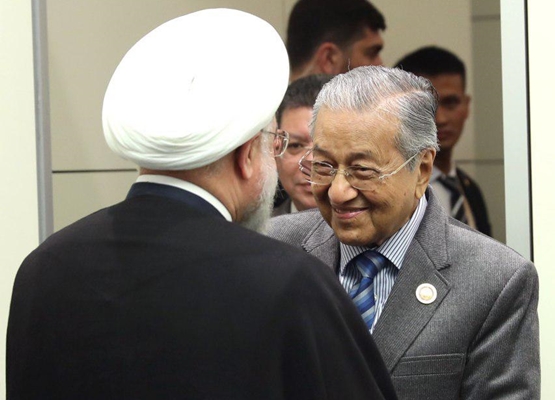
President Rouhani and Russian leader Vladimir Putin met on the sidelines of a summit of the Eurasian Economic Union (EAEU) in Armenia’s capital on Tuesday. 

In the meeting, the Iranian president hailed the Joint Comprehensive Plan of Action (JCPOA) as a good example of success of multilateral diplomacy in settling the international issues.

Rouhani emphasized that in order for the JCPOA to be successful, all parties to the agreement should honor their commitments and all other counties should support it as well. 

The Iranian president also highlighted Russia’s significant role in the implementation of the JCPOA.

He further pointed to Iran’s principled policy of protecting peace and stability in the region, as in the Persian Gulf, and ensuring the safety of navigation at the Strait of Hormuz, and noted, “Sustainable security and peace in the Persian Gulf, the Sea of Oman and the Strait of Hormuz would be ensured only with collaboration between this region’s countries.”

President Rouhani also underlined that Iran’s new initiative, known as the ‘Hormuz Peace Endeavor’, is aimed at promoting regional peace, stability and progress, as well as mutual understanding and peaceful relations.

He went on to say that the Iranian initiative is to include various types of cooperation, such as collective efforts for energy safety, freedom of navigation, and freedom of oil transportation for the Hormuz regional states and beyond.

For his part, Putin reaffirmed Russia’s support for the JCPOA, stressing that Moscow will do its utmost to push all signatories to the nuclear deal to honor it.

He also welcomed the beginning of official trade cooperation between Iran and the EAEU, saying it would contribute to closer regional convergence and development.

The two presidents also urged the need for the expansion of Tehran-Moscow ties in all fields of mutual interest, and discussed details of the Hormuz Peace Endeavor (HOPE) plan, which was put forward by President Rouhani in a recent meeting of the UN General Assembly in New York.

World Must Decisively Stand against US’ Unilateralism: Iran

Addressing the EAEU Summit on Tuesday in Yerevan, the capital of Armenia, Rouhani welcomed any cooperation with Eurasian states in financial and banking fields, as well as investment through new, effective mechanisms.

He also described the temporary signing of trade agreement between Iran and the Eurasian Economic Union as a sign of Tehran’s inclusive and constructive approach, and invited EAEU investors to take advantage of Iran’s ample potentials and infrastructures for deepening ties.

What follows is the full text of President Rouhani’s statement:

In the Name of Allah, the Most Beneficent, the Most Merciful

Your Excellency Mr Pashinyan, Honourable Prime Minister of the Republic of Armenia,

Honourable Presidents,

Honourable Prime Ministers,

Ladies, Gentlemen,

I am tremendously happy for the historic opportunity to be able to attend the great summit of Eurasian Economic Union in the beautiful, historical city of Yerevan, at the same time with the preparation of the preliminaries to the implementation of the temporary trade agreement between the Islamic Republic of Iran and the Union. I deem it necessary to thank Mr Pashinyan, the Honourable Prime Minister of Armenia, warmly for hosting this important summit and his warm hospitality.

Dear Participants,

The Summit Meeting of the Eurasian Economic Union is a unique opportunity for exchanging views and finding solutions for some of the most important regional and international issues and I hope our meeting today would produce fruitful and valuable outcome.

The global system has been founded on multilateralism and joint efforts of all the members of the International Community and therefore all the countries of the world are duty bound and responsible to combat with unilateralism in order to help safeguard international peace, security, stability and order.

The resistance of such countries as the Islamic Republic of Iran against the hostile and unilateral measures of the United States has resulted in inhuman and severe sanctions. The United States in recent years has employed and applied a unilateral approach and ignored its obligations and violated international agreements and bilateral treaties with many other countries such as China and Russia and has targeted even some of its allies. In our belief, the international community should stand against the US hostile and unilateral approach by taking serious decisions and effective measures. The US coercive measures and the use of dollar as weapon constitute an act of economic terrorism that target the life and living of ordinary people.

Distinguished Participants

The implementation of the nuclear deal or the JCPOA as an effective pattern of successful multilateral diplomacy for the settlement of international issues requires the full compliance of all the signatories to the deal and all the UN Member States have been obligated to comply with and support the implementation of its provisions.

The Islamic Republic of Iran expects the signatories to the JCPOA to act in compliance with the deal. Under the present sensitive circumstances, not only the JCPOA participants but all the other UN Member States should make all the necessary efforts to support and safeguard this multilateral achievement in order to strengthen regional and international cooperation, security and stability.

Unfortunately, as the result of the US destructive measures, today we are facing many problems at the world stage in the economic and commercial relations among countries as well as increasing poverty, insecurity, migration and reducing economic growth. And the continuation of such escalatory atmosphere will result in damages which cannot be compensated.   Under such conditions of fear and disappointment in international system, we require regional and multilateral cooperation parallel to multilateralism at the global level. Therefore, the Islamic Republic of Iran firmly supports any collective and regional cooperation within the framework of economic, commercial and political unions such as the Eurasian Economic Union, the Economic Cooperation Organization, the Shanghai Cooperation Organization and the Asian Cooperation Dialogue as the main important tools in regional economic and political integration.

Ladies and Gentlemen

The policy of the Islamic Republic of Iran is based on maintaining peace and stability in the region and the Persian Gulf as well as freedom and security of navigation and shipping in the Strait of Hormuz. Recent incidents have seriously jeopardized such security. Peace and security in the Persian Gulf, the Sea of Oman and the Strait of Hormuz shall be guaranteed with the participation of all the countries of this region. And as I reiterated in this year’s General Assembly of the United Nations, we invite all the countries affected by the developments in the Persian Gulf and the Strait of Hormuz to the Hormuz Peace Endeavour or the HOPE Coalition. This coalition aims to enhance peace, stability, progress and welfare for all the residents of the Strait of Hormuz. It will also lead to mutual understanding and peaceful and friendly relations among them. This initiative encompasses various avenues of cooperation such as the collective supply of energy, freedom of navigation and free movement of oil and other resources from and to the Strait of Hormuz and beyond.

Distinguished Participants

The Islamic Republic of Iran is determined to diversify its economic and trade relations and rely on economy of resilience and more active regional and international cooperation.

The trade agreement between the Islamic Republic of Iran and the Eurasian Economic Union signifies the comprehensive and constructive approach of Iran in harmony with a strong political determination to contribute to the development of multilateral and regional economic and commercial relations. The implementation of this trade agreement would constitute an important step towards strengthening multilateral trade structures.

Iran’s geographical position has provided the possibility of stronger connectivity between Europe and Asia and many countries in the west, east, north and south. We are interested in exploiting such God-given gift in order to contribute to the sustainable development and progress of our country as well as the economic integration of the countries of the region in the best possible manner. In this respect, various rail and road corridors have been designed and constructed with huge investments in order to facilitate transit and transport. Such corridors include the North-South corridor, the Persian Gulf-Black Sea corridor, the Ashgabat Agreement corridor, the ECO rail and road corridor and many airway and aviation corridors. The ports of the Islamic Republic of Iran in the Caspian Sea, the Persian Gulf and the Indian Ocean Rim especially Chabahar Port as well as Iran’s safe rail, road and air networks have created the possibility of stronger connectivity with the neighbouring countries and other continents.

The Eurasian Economic Union is able to realize all its capacity and move towards strategic transit and transport integration and convergence. Therefore, I would like to propose that the member countries of this union devise a strategy for the facilitation of transit in Eurasia in order to simplify and cut transit and transport procedures and regulations as well as to facilitate the traffic of transit and transport operators and passengers and trucks inside Eurasia through designing and developing smart solutions and minimizing obstacles on the way of more facilitated transactions.

The Islamic Republic of Iran has already set up extensive facilities and infrastructure in free trade, industrial and special economic zones particularly in the south and north of the country including the Chabahar Free Zone, Amirabad Free Zone in Mazandaran, Anzali Free Zone in Gilan and Aras Free Zone in East Azerbaijan. We stand ready to provide valuable facilities and more infrastructure for the expansion of our trade relations with the Eurasian Economic Union. Therefore, I would like to take this opportunity to invite the Eurasian Economic Union investors to enjoy and benefit from such facilities and capabilities to enhance mutual relations.

The Islamic Republic of Iran has adopted one of the most comprehensive laws to encourage and support foreign investment, and stands ready to warmly receive and host investors and entrepreneurs of the Eurasian Economic Union and hold investment opportunities forums in the near future. In this respect, we welcome any cooperation with the member states of the Eurasian Economic Forum in financial and banking sectors and investment especially through new and effective mechanisms. I would like to propose that a special ad hoc group is established comprising of the representatives of the Union members and the Islamic Republic of Iran in order to operationalize ideas and initiatives for joint venture and investment in Eurasia.

Distinguished Participants

I hope that the Islamic Republic of Iran would benefit from the contribution and cooperation of friend countries of the Russian Federation, Armenia, Kazakhstan, Kyrgyzstan and Belarus in overcoming the present obstacles and witness the further enhancement of economic and trade relations in addition to good political ties. Here, once again, I stretch the hand of assistance and cooperation to you and I believe that in cooperation with each other, we would be able to introduce to other parts of the world as an effective model the economic relations of our region within the framework of the Eurasian Economic Union.

In conclusion, once again I should like to thank all the high-ranking officials and organizers of this summit. I hope the presence of the heads of state and government in this meeting would pave the way for the Eurasian Economic Union to play a stronger role and enjoy a higher status in the region and the international system.

I thank you for your attention

A Look at Iranian Newspaper Front Pages on October 1

A Look at Iranian Newspaper Front Pages on November 19

Abrar:
1- Kremlin: Putin, Rouhani to Meet in Yerevan
2- Imran Khan Declares Jihad over Kashmir
3- Zarif: Europe Not Serious in Lifting Sanctions

A Look at Iranian Newspaper Front Pages on October 1


Aftab-e Yazd:
1- How Much Russia, China Contributed to Iran under Sanctions?
2- Military Attack against Iran, Red Line of Int’l Community
3- Trump: Civil War to Break Out If I’m Impeached

A Look at Iranian Newspaper Front Pages on October 1


Ebtekar:
1- Johnson’s Cabinet on Verge of Collapse
2- New Yorker: Rouhani Refused to Take Trump’s Phone Call

A Look at Iranian Newspaper Front Pages on October 1


Etemad:
1- Government Spokesman to Hardliners: Rouhani’s Laugh Not Sign of Submission
2- Bin Salman: I Prefer Diplomacy to War
3- Iran in Gathering of Eurasians

A Look at Iranian Newspaper Front Pages on October 1


Ettela’at:
1- Rouhani: Iran’s Development Hinges on Ties with World Economy
2- Two Afghan Presidential Candidates Claim Victory
3- Iraq: Israel behind Attacks on Hashd al-Shaabi
4- Judiciary Chief: People Should Feel Taste of Justice

A Look at Iranian Newspaper Front Pages on October 1


Iran:
1- Riyadh’s Message to Tehran
* Government Spokesman Confirms Riyadh Sent Messages to Tehran
* Iraq PM after Visiting Riyadh Says Iran, Saudi Ready for Talks

A Look at Iranian Newspaper Front Pages on October 1


Javan:
1- Washington’s 7,000-Kilometre Run from Iran Missiles
2- IRGC Chief: We Should Attack Enemies with Maximum Power, Precision
3- Rouhani Escapes Trump’s Trap of ‘Phone Diplomacy’
4- Top General: IRGC’s Achievements Make Enemies Frustrated

A Look at Iranian Newspaper Front Pages on October 1


Jomhouri Eslami:
1- Positive Perspective of Peace in Region
* Iraq PM: Iran, Saudi Ready for Talks
* Saudi Crown Prince: Ceasefire Declared by Yemenis Positive Initiative
2- Rouhani: Iran to Start Trade Ties with Eurasia as of October

A Look at Iranian Newspaper Front Pages on October 1


Kayhan:
1- Judiciary Chief: We’ll Cut Hands of Those Engaged in Economic Corruption
2- New York Times: Trump Desperate against Iran
3- Macron Mediates, Trump Makes Phone Call, Rouhani Refuses to Take Call

A Look at Iranian Newspaper Front Pages on October 1


Khorasan:
1- Riyadh Backs Off Verbally
2- Trump’s Phone Call with Rouhani at 9:30 pm

A Look at Iranian Newspaper Front Pages on October 1


Sazandegi:
1- New York Not End of the Way
* Why Was Rouhani Laughing?
* How Rouhani Refused to Sit for Talks at Last Seconds

A Look at Iranian Newspaper Front Pages on October 1


Setareh Sobh:
1- War between Iran, Saudi to Destroy World Economy
* A Review of Bin Salman’s Latest Remarks

A Look at Iranian Newspaper Front Pages on October 1


Shargh:
1- Trump Still Waiting for Rouhani
2- Saudi Arabia’s Message to Iran

A Look at Iranian Newspaper Front Pages on October 1


Tejarat:
1- Oil Minister: Iran to Develop Oil Industry Using Localized Equipment
2- Iran Warns against Consequences of Any Move against Iranian Trio Islands

A Look at Iranian Newspaper Front Pages on October 1

Repercussions of Riyadh’s Definite Defeat in Yemen Invasion

The Saudi-led attacks have left more than 10,000 people dead and hundreds of thousands homeless. Humanitarian organizations estimate that over 16 million Yemenis, which accounts for 61 percent of the country’s population, are in dire need of humanitarian aid.

Background of Saudi Aggression against Yemen

Yemen is home to a whole variety of ethnic and religious groups. It has a population of over 23 million people 87% of which is comprised of Arab tribes falling into two categories: Zaydi Shiites and Sunnis. Zaydi Shiites ruled Yemen for centuries and stayed in power until the 1960s. However, a coup was staged against their rule with the help of the Saudi government, resulting in the formation of a Republic government. Consequently, under the newly formed government, the Houthi movement was practically sidelined and lost its leverage.

The historical experience on the Saudi government’s political behaviour in the region is a testament to the fact that this hereditary government has always wanted nearby countries to be ruled by governments that lack a democratic nature and lean toward the Al Saud dynasty and are submissive to Riyadh. Hence, when Houthis also known as Ansarullah took power in Sana’a following the ouster of the Ali Abdullah Saleh’s regime in 2012, the Saudi government, which has always sought to steer clear of democratic rules, regarded the emergence of a democratic government as a major threat to the hereditary Al Saud monarchial rule.

Therefore, Riyadh mobilized its material and spiritual resources in an all-out attempt to topple the fledgling government in Yemen led by the powerful Ansarullah movement. Accordingly, Riyadh formed an Arab coalition in keeping with the West’s strategy in the region and engineered a military campaign against Yemen. Then, Saudi Arabia launched its all-out aggression on both hard and soft dimensions against Yemeni infrastructure and people. In order to justify its attacks, Saudi Arabia promoted the allegations that Ansarullah (Houthi) troops are backed by Iran and that the stabilization of their position means the spread of Iran’s influence and presence in the region and in an Arab country, which would serve as a major threat for the future of the region. So, as Saudi Arabia suggested, world powers, especially Arab states, have a duty to prevent the formation of the Shiite Crescent.

Nevertheless, four years on, all Saudi and Western potential and actual capacities have proven inefficient against the democratic government of Yemen and have lost their effect on the ground and the balance of power has fully changed in favour of the Yemeni government. Yemeni forces have made tremendous progress in the military, missile and air combat domains and have been able to strike targets deep within the Saudi territory.

The balance of power has been disrupted in the battlefield, so much so that the Saudis have no more justification, whatsoever, for playing a blame game and levelling accusations against Yemen’s allies in aerial and ground combat (especially after attacks by Yemeni drones against Saudi Aramco oil facilities and the heavy defeat inflicted on Saudi forces in a recent operation).

These wide-ranging failures against Yemeni troops has averted the possibility of playing a blame game, and Yemeni people will no longer buy into this ploy and the Saudi will have no choice but to accept their inefficiency in managing he war and tolerate its repercussions. This defeat has resulted in political and military consequences for the Saudis and their allies, which are briefly described below.

  1. the collapse of the Arab coalition comprising eight Arab countries led by Saudi Arabia
  2. The Iranian Leader’s historical prediction that this coalition will suffer defeat coming true
  3. Saudi Arabia’s failure to achieve its set goals (restoring ousted Yemeni President Abd Rabbu Mansur Hadi to power, breaking the Ansarullah movement apart and capturing Sana’a)
  4. Revolutionaries gaining power in Yemen (Given the historical background of the Saudi aggression against Yemen and
  5. A drop in Saudi Arabia’s political legitimacy and military credibility in the region and the undermining of the Saudi leader’s status in the Arab world and making Riyadh permanently unable to make a consensus in the region and creating a new trend in the region in the future.
  6. Influencing the equations of power in Saudi Arabia’s political system as well as political and security equations in the region in light of turning the resistance front into an efficient hub in the management of crises and its turning into reliable power in forming regional domestic equations with the cooperation of regional countries without the presence of foreign powers.
  7. Proving the inefficiency of US allies in implementing the United States’ schemes and scenarios in the region and trying to respectably withdraw from the US coalition against Yemen’s democratic government.

8.the defeat of the coalition in the clash of strategies in running the region. The US and its regional allies led by the Saudi government also suffered a historical defeat in the war of strategies and, in the war of wills, it was the willpower of Yemeni popular mobilization that won over the political and military mobilization of major Arab and Western powers.

  1. a decline in Saudi Arabia’s regional power and influence; this defeat showed that Riyadh is no longer able to maintain its strategic role in the region and to serve as a country capable of preserving the balance among regional powers because it is no capable of doing so.

The last point is that Yemen’s democratic government is edging closer to determining victory and has passed through the process of the political stability of its government after five years of defending the nation’s independence and democracy in its fight against regional and global hegemony led by the US and the monarchial and hereditary Saudi rule. On the other hand, masterminds behind the war on Yemen have conceded defeat, which means they have admitted to their strategic failure against Yemen’s fledgling and young government.

This means the start of a real step toward ending a five-year war against poor and defenseless, but strong people, who achieved their goal by relying on the resistance front’s model of dealing with aggressors. Before facing the new condition, which will destroy their remaining political and military credibility in the court of the public opinion, they should concede defeat and announce an end to their aggression against Yemen. This will be in their interest.

However, it does not mean they will not be accountable to the public opinion as well as international legal organizations and circles. They should be answerable for their aggression against the democratic government of Yemen and tens of thousands of women and children and civilians in Yemen.

The UN is also duty-bound to send envoys to Yemen to introduce the Saudi government as the one that initiated the Yemen conflict, like what the world body did with regards to the war imposed in the 1980s on Iran by an international coalition led by former Iraqi strongman Saddam Hussein and introduced Saddam Hussein as the initiator of the war. The UN should make Riyadh compensate for the damage it has inflicted on Yemen and for the blood of innocent Yemeni people.

Iran Unveils First Native Programming Language

“After identifying the various and dangerous consequences of using the unofficial version of web development languages, we decided to develop a native model,” said the CEO of a Web development company.

Due to the technical complexity and lack of expertise at this level, it took us about 5 years and fortunately we could develop the first Iranian programming language in the country, he added.

Currently American languages such as P.H.P and ASP.NET are taught almost at all higher education centres. Learning the Iranian programming language takes about one-tenth of the time required to learn foreign languages.

The program has been reviewed and debugged during the past five years and now a new version of it is available for more than 1,100 websites.

It can be used to design any software, web application or web portal. This product is by no means a reverse engineering production and its design is completely indigenous.

The success of websites designed with this program indicates the high quality of this product. Learning this software is completely free and basic education only needs a knowledge of HTML and CSS. The price of this product is the same as open source products.

Based on existing job statistics, such fields as hardware engineering, web security engineering, data processing and, of course, computer programming are among the most lucrative jobs in the world today, and this trend will continue in the coming decade.

All of these professions are at the service of information technology which clearly shows the future trend of technology in the world.

Iran President Declines to Take Trump’s Call Arranged by Macron

The New Yorker magazine reported on Monday that Macron had tried to engineer a three-way conversation by having technicians set up a secure line in a meeting room on Rouhani’s floor at the Millennium Hilton Hotel across the road from the UN General Assembly (UNGA), on September 24 evening.

The French leader, it added, hoped that the telephone conversation would lay the groundwork for the first meeting between an American president and an Iranian president since the 1979 Islamic Revolution.

Sources familiar with last Tuesday’s events said, “The call to Trump’s line came through at 9:30. Macron took the call. But Rouhani never emerged from his room.”

“As we have been doing for several months, we worked in New York to get Iran to make new commitments and for the US, in exchange, to ease sanctions,” a French diplomat told The New Yorker. “We made technical arrangements in the event that a telephone call could take place. That call did not take place.”

Later on Monday, The New York Times confirmed the report, saying that Rouhani had left Trump hanging and Macron waiting outside his hotel suite.

“The telephone line had been secretly set up. President Trump waited on the other end. All President Hassan Rouhani of Iran had to do was come out of his hotel suite and walk into a secure room where Mr. Trump’s voice would be piped in via speaker,” it said.

According to three people with knowledge of the developments, Macron, accompanied by a small team of advisers, “awaited an answer” outside Rouhani’s suite.

“Messages were passed between them via Mr. Rouhani’s aides,” they said. “In the end, Mr. Rouhani refused even to come out of his room. Mr. Macron left empty-handed and Mr. Trump was left hanging.”

Macron has been seeking to play a mediatory role aimed at easing Washington-Tehran tensions, which have been on the rise since the US withdrawal from a 2015 multilateral nuclear deal in May 2018.

The French leader has also been leading European efforts to save the accord, whose fate remains in doubt since Washington’s exit.

Iran has repeatedly rejected Trump’s offer of talks, saying it would not engage in such negotiations unless the US returns to the deal and lifts its unilateral sanctions.

Tehran says negotiations with Washington would be possible within the framework of the P5+1, comprising the US, France, Britain, Russia, China plus Germany, which successfully negotiated the deal with Iran, if Washington meets those conditions.

In a speech at the General Assembly on Wednesday, Rouhani reaffirmed Iran’s position and said he was not interested in a “memento photo” with Trump on the sidelines of the UN meetings, while the US was piling economic pressure on Iran.

“Memento photos are the final stage of negotiations, not the first one,” Rouhani told the world body.

In 2013, Rouhani and then US president Barack Obama held a telephone conversation as the Iranian president was wrapping up his visit to New York for the 68th annual session of the UNGA, as diplomatic efforts were underway between the two sides within the P5+1 format in the run-up to the nuclear deal.

The New York Times cited Cliff Kupchan, chairman of the Eurasia Group, a political-risk consulting firm in Washington, as saying that Trump’s desire for negotiations with Iran was meant to “flip the news cycle” from the Ukraine scandal.

“Trump really wants a foreign policy win and can’t find one,” he said. “He thinks talks with Iran now may be his best shot.”

Trump “was especially desperate at the UNGA — he wanted to flip the news cycle from Ukraine and Biden to a dramatic meeting with Rouhani,” he added.

The US president is facing an impeachment inquiry related to allegations that he pressured Ukraine to smear his top Democratic political rival Joe Biden.

Migraine Call Centre in Iran Monitoring Patients 24/7

Migraine Cut is a product of the knowledge-based company Mim Daroo, which was launched 13 years ago in Iran with the aim of treating migraines.

After 12 years of therapeutic experience in this field and use of aromatherapy method, they changed the treatment method by producing “Migraine Cut” sprays, which have so far treated many patients inside Iran.

Out of the 2,000 patients who took the drug, 79% reported that their pain has stopped.

The CEO of the company, who himself suffered from migraine for 28 years, has dedicated his life to treating patients from Iran and other countries by running this migraine treatment clinic.

The company has been producing and marketing these migraine sprays for a year, so that more people can get rid of migraine pain at a very low cost.

For a brief review of Iran’s achievements in various fields of science and technology, check the book “Science and Technology in Iran: A Brief Review – 2019

Prior to the production of this spray, patients had to be exposed to humidifiers for 20 sessions; each time for 30 to 40 minutes. They were treated in a period of about one year at a very high cost.

According to the Ministry of Health, 757 million drug units used to be sold in Iran during a single year to relieve headaches, as there are 9 million people suffering from migraine in the country. This led Iranian knowledge-based company Mim Daroo to think about mass production of migraine sprays.

“Before mass distribution of the spray, we distributed it among our clients in the clinic, and out of 300 patients, 81% stated that after 4 to 5 months the drug stopped their migraine headaches and turned them into ordinary headaches,” say the company officials.

IRGC Providing ‘Advisory’ Aid to Yemen, Not Missiles: Top General

“We are giving Yemen’s popular Army advisory and intellectual assistance and the Islamic Revolution Guards Corps (IRGC) is in charge of this,” General Baqeri told China’s Phoenix TV during a recent visit to Beijing.

He further stressed that the Islamic Republic will stand by the Yemeni people until the Saudi-led aggression comes to an end.

The top general also rejected claims that Iran has provided the Arab country with missiles, saying, “Today, Yemen is under a complete blockade (by Saudi Arabia), which has blocked all paths and prevented the delivery of food and even medicine”.

“How can one transfer several-meter-long missiles to Yemen when it is not possible to send medicine (to the Arab country)?” he asked.

In an interview with Tasnim in late August, Yemen’s Minister of Information Zaifullah al-Shami highlighted the Yemeni nation’s strong resistance to the acts of aggression by the Saudi-led military coalition.

“Yemen’s missile and military power is growing day by day,” the minister stressed, adding that his country is working on several new achievements which the aggressors could not tolerate.

Since March 2015, Saudi Arabia and some of its Arab allies have been carrying out deadly airstrikes against the Houthi Ansarullah movement in an attempt to restore power to fugitive former president Abd Rabbuh Mansour Hadi, a close ally of Riyadh.

Official UN figures say that more than 15,000 people have been killed in Yemen since the Saudi-led bombing campaign began.

The Saudi war has impacted over seven million children in Yemen who now face a serious threat of famine, according to UNICEF figures. Over 6,000 children have either been killed or sustained serious injuries since 2015, UN children’s agency said. The humanitarian situation in the country has also been exacerbated by outbreaks of cholera, polio, and measles.

Tahdig; A Dish All Your Dinner Guests Will Be Fighting Over

Saffron Tahdig / Photo by Kate Sears for The Wall Street Journal, Food Styling by Nora Singley, Prop Styling by Vanessa Vazquez

Growing up in Iran, Google chef Hoss Zaré so coveted tahdig, the crisped layer of rice from the bottom of the pot, that he would make a game of hiding it in the kitchen. “I’d say, ‘It’s burned, you can’t have it,’” he confessed. “I was just trying to keep it from my brothers so I could have more.”

With a flavour that is part popcorn, part fried chicken, and the crunch of a thick potato chip, tahdig has been stirring covetous feelings stateside, too. Last year, in the final episode of the Netflix series “Salt, Fat, Acid, Heat,” Iranian American cookbook author Samin Nosrat cooked a beautiful iteration with her mother that made a case for the pleasure and drama of preparing it. On Instagram, one can browse endless documentation of rice inverted from the pot to display a golden-toasted crown—the sort of achievement a cook wants to broadcast.

Iranians often embellish tahdig’s lacquered layer with potato slices, lettuce leaves, sliced eggplant or onion rounds; sometimes they’ll swap in spaghetti for the rice. Chef Zaré, who for years helmed Zaré at Fly Trap restaurant in San Francisco, posts some of Instagram’s most awe-inspiring tahdig shots. He has a version that incorporates whole fish, a culinary hat-trick that results in crisp-skinned fish, fluffy rice and that crunchy layer of tahdig in one dish.

At the live-fire restaurant Maydan in Washington, D.C., it’s been served with clotted cream and caviar; at the Israeli restaurant Zahav in Philadelphia, tahdig comes topped with dried fruit and nuts. At Kismet in Los Angeles, it’s the best-selling dish. “A lot of people come for dinner just to taste the tahdig,” said co-chef and co-owner Sara Kramer. “It’s so universally lovable.”

There’s a certain suspense built in: You never know whether you’ve successfully pulled off that prized layer of gold until you flip over the pot and release the rice. Mr. Zaré, who now cooks at Google, enjoys teaching the young chefs he oversees to master it. “There’s a wow factor that you can see in their eyes,” he said. “When I demo tahdig, everyone has questions about how you do it.”

Iranian cooks hone their tahdig skills over a lifetime. Everyone else can turn to a slew of books, blogs and videos wherein tahdig masters share hard-earned secrets and turn their misfires into your future success. (See “The Golden Rules of Tahdig,” at left, for a solid primer.)

Naz Deravian, author of the cookbook “Bottom of the Pot,” sees herself as a sort of tahdig doctor. “I can look at pictures that people send me and figure out what went wrong,” she said. Azita Mehran, whose “Turmeric and Saffron” blog features traditional Iranian dishes, has a key piece of advice: “For Iranian cooking you really need to be focused, in tune and present.”

For Ms. Mehran, the passion tahdig inspires goes beyond the effort and attention required to make it. “It brings all the good memories back,” she said—of home, of growing up, of a country that no longer exists as it once did.

While tahdig is easy to love and anyone can master its making, Firoozeh Dumas, author of “Funny in Farsi: A Memoir of Growing Up Iranian in America,” noted the particular ferocity her Iranian family brings to their pursuit of that crisped rice. At first, her French husband, François, hung back on occasions when her relatives gathered for a meal as everyone else battled for the tahdig. Then her mother took pity. “Before anyone had a chance to take food, François would be handed his plate, with a large portion of tahdig already on it,” she said. That’s how much she loved him.

Tahdig; A Dish All Your Dinner Guests Will Be Fighting Over
Tahdig: A Yummy, Globally Popular Part of Persian Cuisine

Saffron Rice Tahdig

Depending on the size of your skillet or pot, you may need more than 2 cups of rice to cover the bottom.

TOTAL TIME: 2½ hours SERVES: 4

2 cups basmati rice

Salt

1 teaspoon saffron threads

2 tablespoons warm water

3 tablespoons olive oil

1 tablespoon butter, broken in pieces, plus more to garnish

Dash of turmeric curcumin, optional

  1. Soak rice in salted cold water at least 1 hour or up to 24.
  2. Grind saffron, combine with warm water and let steep 15 minutes. Drain rice and rinse under cold water. In a stockpot, combine 8 cups water and 2 heaping tablespoons salt, and bring to a boil. Add rice and return to a boil, uncovered. After a few minutes, test a grain of rice by breaking it in half. The rice is ready when it’s still a little chewy and not fully cooked, like al dente pasta. Drain the rice and rinse under cold water to halt cooking. Set aside 2 cups parcooked rice.
  3. Heat a lidded deep 10” cast-iron skillet or Dutch oven over low heat 2 minutes, then add oil. Add two cups reserved rice, 1 teaspoon saffron water, turmeric if using, and ½ teaspoon salt. Stir to combine, then spread rice evenly over bottom of skillet, packing it down tightly with a spatula or wooden spoon.
  4. Heap remaining rice in center of skillet, coaxing it away from sides and shaping a dome. Poke holes in rice with the handle of a wooden spoon, avoiding packed layer on bottom. Drizzle remaining saffron water over rice. Scatter butter and ½ teaspoon salt on top. Cover tightly. Increase heat to medium and cook 7 minutes. Rice will sizzle and pop. Reduce heat to low and place a heat diffuser under skillet. Place a kitchen towel under lid and cover tightly. Cook 40 minutes.
  5. Fill sink with ice water 1 inch deep. Set skillet in ice water and let sit 2 minutes. Gently run a spatula under tahdig to loosen at edges. Place a kitchen towel on counter. Take a platter and place it on top of skillet. Wearing oven mitts, firmly hold skillet and platter together, and flip so platter is resting on dish towel. Carefully remove skillet.
  6. Show off the tahdig to your guests, then slide that layer onto a cutting board and gently slice it into pieces. Serve rice and tahdig on separate platters. Garnish rice with more butter.
Tahdig; A Dish All Your Dinner Guests Will Be Fighting Over
Spaghetti and Meatballs Tahdig / Photo by Kate Sears for The Wall Street Journal, Food Styling by Nora Singley, Prop Styling by Vanessa Vazquez

Spaghetti and Meatballs Tahdig

It’s important that the pasta for this dish be cooked only until al dente when it goes into the skillet, otherwise it will become mushy.

TOTAL TIME: 2½ hours SERVES: 4

For the meatballs:

¼ cup basmati rice, soaked in water 1 hour

3 cloves garlic, chopped

2 tablespoons dried mint

½ onion, chopped

½ pound ground lamb, beef or mix

1 egg, whisked

2 teaspoons salt

1 teaspoon black pepper

3 tablespoons olive oil

For the spaghetti:

Pinch of saffron

2 tablespoons warm water

½ pound spaghetti

3 tablespoons olive oil, plus extra

2½ cups tomato sauce

½ cup grated Parmesan cheese, plus extra

Salt and pepper

Handful of parsley leaves

Chile flakes (optional)

  1. Make the meatballs: Strain rice and shake off excess water. In a food processor, combine rice with garlic, mint and onion, and pulse until coarsely ground. Transfer to a large bowl and add meat, egg, salt and pepper. Mix well. Form meat into approximately 20 heaping-tablespoon-size balls. Heat a large skillet over medium heat and add oil. Working in batches, cook meatballs until they’re well browned all over, about 10 minutes. Set aside.
  2. Grind saffron, combine with warm water and let steep 15 minutes. Meanwhile, fill a large pot with water and add a generous amount of salt. Cook pasta according to package instructions, stopping when pasta is just al dente. Strain under cold water to halt cooking and toss with a little olive oil. Set aside 2 cups plain pasta. Transfer remaining pasta back to pot along with tomato sauce, and toss over medium heat until heated through. Gently fold in meatballs and season everything to taste with salt and pepper.
  3. Make the spaghetti:Heat a deep, 10-inch cast iron skillet over medium heat. Once skillet is hot, add olive oil, then scatter plain pasta evenly over bottom. Sprinkle with a dash of salt, and drizzle with 1 teaspoon saffron water. Pour pasta and meatballs into skillet, coaxing them into the middle and away from the sides. Pour remaining saffron water over pasta. With the handle of a wooden spoon, poke holes into pasta mound, stopping short of bottom layer. Put a tight fitting lid over skillet and cook on medium heat 8 minutes. Pasta will sizzle loudly and oil will bubble up around the sides.
  4. Reduce heat to low and place a heat diffuser under skillet. Place a towel or damkoni under lid and cover skillet. Cook 30 minutes.
  5. Fill sink with ice water 1 inch deep. Place bottom of skillet in water to loosen tahdig. Gently run a spatula under tahdig to loosen at edges. Place a kitchen towel on counter. Take a platter and place it on top of skillet. Wearing oven mitts, firmly hold skillet and platter together, and flip so platter is resting on dishtowel. Carefully remove skillet.
  6. Finish tahdig with parsley, shaved cheese, salt and pepper, a drizzle of olive oil, and chile flakes, if using. Slide onto a cutting board and slice into quarters with a serrated knife.
Tahdig; A Dish All Your Dinner Guests Will Be Fighting Over
Potato Tahdig with Herb Rice / Photo: Kate Sears for The Wall Street Journal, Food Styling by Nora Singley, Prop Styling by Vanessa Vazquez

Potato Tahdig with Herb Rice

TOTAL TIME: 2 hours SERVES: 4

2 cups white basmati rice, soaked in salted cold water for at least 1 hour

Large pinch of saffron

2 tablespoons warm water

1 scallion, sliced

2 cups fresh fava beans, shelled and peeled, or 2 cups frozen lima beans, thawed

1 cup grated multi-colored carrots

2 cups minced fresh herbs, any combination of dill, tarragon, parsley, cilantro, basil and mint

4 tablespoons olive oil

½ pound purple potatoes, peeled and sliced into rounds ¼-inch thick

Salt

1 tablespoon butter, broken in a few pieces, plus more to garnish

Edible flowers for garnish (optional)

  1. Drain rice and rinse under cold water. In a stockpot, combine 8 cups water and 2 heaping tablespoons salt, and bring to a boil. Add rice and return to a boil, uncovered. After a few minutes, test a grain of rice by breaking it in half. The rice is ready when it’s still a little chewy and not fully cooked, like al dente pasta. Drain rice and rinse under cold water to halt cooking. Set aside 1½ cups rice.
  2. Grind saffron, combine with warm water and let steep 15 minutes. In a large bowl, toss remaining rice with scallions, beans, carrots and herbs.
  3. Heat a deep 10” cast-iron skillet over low heat, then add oil. Cover bottom of skillet with a single layer of potato slices, leaving about ¼-inch of space between. Sprinkle with 1 teaspoon salt and drizzle with 1 teaspoon of saffron water. Scatter 1½ cups plain rice over top, pressing rice into crevices between potatoes with the back of a spoon.
  4. 4. Heap remaining rice in center of skillet, coaxing it away from sides and shaping a dome. Poke holes in rice with the handle of a wooden spoon, avoiding packed layer on bottom. Drizzle remaining saffron water over rice. Scatter butter and ½ teaspoon salt on top. Cover tightly. Increase heat to medium and cook 8 minutes. Potatoes and oil will sizzle loudly. Reduce heat to low and place a heat diffuser under skillet. Place a towel or damkoni under lid and cover tightly. Cook 40 minutes.
  5. Fill sink with ice water 1-inch deep. Set skillet in ice water and let sit 2 minutes. Gently run a spatula under tahdig to loosen at edges. Place a kitchen towel on counter. Take a platter and place it on top of skillet. Wearing oven mitts, firmly hold skillet and platter together, and flip so platter is resting on dishtowel. Carefully remove skillet.
  6. Show off the tahdig to your guests, then slide that layer onto a cutting board and gently slice it into pieces. Serve rice and tahdig on separate platters. Garnish rice with more butter and edible flowers, if using.


The Golden Rules of Tahdig

  1. Have everything at your fingertips. You will need to work fast.
  2. Stay within a moderate temperature range: medium/medium-low heat.
  3. Soak the rice in cold water for 1-24 hours before cooking to remove excess starch.
  4. Parcook the rice in salty water and finish by gently steaming.
  5. Put a towel under the pot lid to catch steam that rises as the rice cooks. Or use an Iranian damkoni, a fitted cloth.
  6. Use a heat diffuser, a metal disc that sits on the burner, to disperse heat.
  7. Dome the rice to give it room to expand and keep dried rice from sticking to the sides of the pot.
  8. Poke holes in the rice, without going as far down as the tahdig layer, to let steam escape.
  9. After cooking, loosen the tahdig by shocking the bottom of the pot in an inch of ice water for 2 minutes, or on a cool, damp towel for 5.Source: Wall Street Journal