Wednesday, January 14, 2026
Home Blog Page 3044

Iran to Open 4 New Innovation Factories

Iran to Open 4 New Innovation Factories

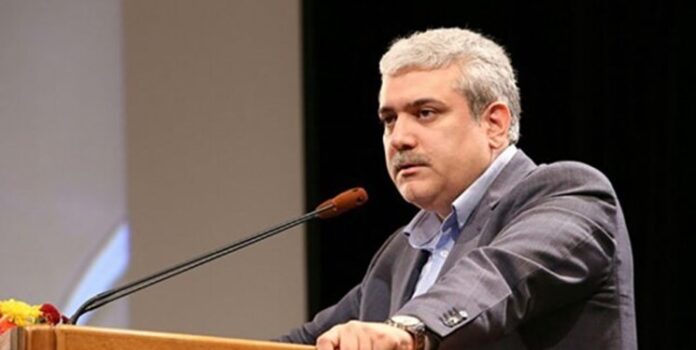
In an interview with Fars, Sattari said his office is pursuing programs to open and support more innovation factories and centers in various provinces.

The vice president said four innovation factories and complexes are going to open in the provinces of Kerman, Fars, Ardabil and Khorasan Razavi, noting that they would be built in the derelict sites and unused constructions.

The innovation factory of the Kerman Province covers an area of more than 30,000 square meters and will be inaugurated in the near future, he added.

The start-ups and knowledge-based companies will have the opportunity to set up new businesses in the factories and pave the way for a big rise in the development of technology in the country, Sattari said.

For a brief review of Iran’s achievements in various fields of science and technology, check the book “Science and Technology in Iran: A Brief Review – 2019

The vice president also pledged that the Iranian administration will support the private sector companies that make investment in the innovation centers, saying such help includes bank loans and plans to ease the process of granting the necessary licenses.

Under a long-term strategy, Iran will be opening 8 innovation factories.

In November, President Hassan Rouhani opened the Azadi Innovation Factory in western Tehran, saying it provides opportunities for the start-ups and young innovators to work together with the help of accelerators and get rid of bureaucracies.

Known as the first branch of the Pardis Technology Park, the innovation factory covers an area of 18,500 square meters and provides employment for 3,500 university graduates and young entrepreneurs.

The Azadi Innovation Factory includes 10 separate sections and a central building providing opportunities for Iranian start-ups in a broad range of fields, such as tourism, architecture and urban life, nanopharmaceuticals, artificial intelligence, biotechnology, insurance and financial innovations, content creation, and cyber security.

Iran, China Discuss JCPOA, Stress Closer Economic Ties

Iran, China Discuss JCPOA, Stress Closer Economic Ties

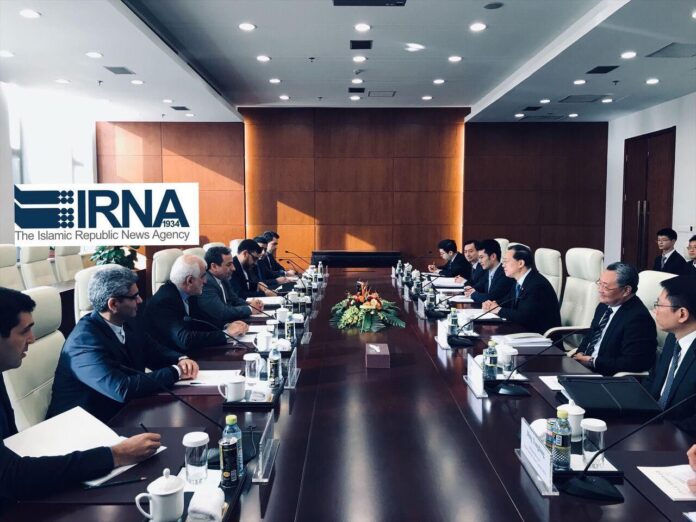
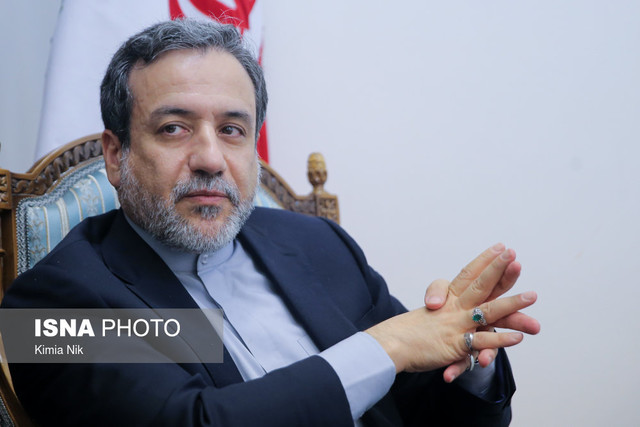
The meeting was attended by Iranian Deputy Foreign Minister for Political Affairs Abbas Araqchi and Chinese Vice Foreign Minister Ma Zhaoxu who discussed the latest developments regarding the JCPOA.

In the meeting, Zhaoxu welcomed the top Iranian diplomat, and expressed hope the two sides would have a good and constructive meeting.

He described Iran as a strategic partner and said China is interested in boosting cooperation with Iran on regional and international issues, including issues of mutual interest such as the JCPOA, in a bid to promote peace and security in the region and across the globe.

Araqchi, in turn, described Tehran and Beijing as two strategic partners. He expressed pleasure to have found the opportunity to sit down with Chinese officials to exchange views on key regional and international issues.

Among the topics discussed by both sides was a joint JCPOA commission slated to be held at the level of deputy ministers in Vienna next week. The latest developments pertaining to the JCPOA will be discussed by all sides at the commission.

Araqchi arrived in Beijing Saturday at the invitation of his Chinese counterpart in order to continue political consultations between the two countries.

He said the US illegal withdrawal from the JCPOA dealt a blow to Tehran’s economic relations with its partners. However, he said, things have settled down and Iran has devised new mechanisms concerning its relations with its economic partners.

“New methods have been found, and we are returning to a stable economic condition in our relations with China, but we need to remove obstacles and upgrade the level of mutual economic ties,” he said.

Iran Welcomes More EU States Joining INSTEX

Iran Welcomes More EU States Joining INSTEX

Araqchi said Saturday European countries are still serious about having INSTEX as a trade mechanism to maintain economic ties with Iran, and in fact claim that it is a way Tehran can do business with European countries despite US sanctions.

The Iranian diplomat, who has travelled to Beijing at the invitation of his Chinese counterpart to continue political consultations between the two countries on the 2015 nuclear deal, added although new European countries join the INSTEX mechanism as shareholders, it is worth discussing how effective this mechanism is.

“European countries will do nothing for the INSTEX without entering into a reasonable trade with Iran in various fields.”

Belgium, Denmark, Sweden, Finland, Norway and the Netherlands expressed their support for the nuclear deal Friday saying that they are in the process of joining INSTEX for trade with Iran. They also emphasised the importance of maintaining and fully implementing the Comprehensive Plan of Action (JCPOA) that was reached between Iran and the world powers.

The nuclear accord was unanimously approved by the UN Security Council and is an important element in the non-proliferation of nuclear weapons of the world and play a major role in regional stability, reads the statement.

“INSTEX is in the final stages of getting operational, and with the joining of new countries, the number of shareholders has increased to eight, and we hope that this mechanism will take a more serious operational form. I believe that even under sanctions, INSTEX can cover nearly 20 percent of Iran’s economic relations and get better in the next stage,” Araqchi said.

He said although European countries have announced they will open up the INSTEX for non-European countries after being operational, the economic ties between Iran and China do not need the European mechanism, as in fact, Tehran and Beijing have already designed goods and finance barter with China.

“INSTEX is a barter mechanism that can be formed between Iran and any other country including China and Russia,” he said.

US Economic Shocks Over

Araqchi added that it is very important that the countries are distancing from the US dollar in their trades and are using local currencies to start trading and economic cooperation with each other, especially Iran.

He stated that Iran’s economic and international trade ties are becoming more and more stable every day after the shocks that have taken place. “We planned to achieve a stable situation in the economy. Economic and trade partnerships with countries such as China have reached a stable level and are improving day by day,” he continued.

Concerning next week’s meeting of the JCPOA Commission in Vienna, the Iranian senior diplomat also said that the meeting is scheduled to be held next Friday, so it was necessary to review the agenda with the friends at the Chinese Foreign Ministry before the commission.

“The latest developments in the implementation of the nuclear deal, including Iran’s measures to balance its commitments, will be discussed at the Joint Commission meeting which will be held at the level of deputy foreign ministers,” underlined Araqchi.

INSTEX has been designed by the European Union to ease legitimate business with Tehran. It was introduced on January 31 by France, Germany and the UK.

It was introduced after Washington imposed sanctions on Iran and threatened to punish any country or that does business with Tehran.

INSTEX is supposed to be a financial mechanism for transferring money despite US sanctions on Iran. Its objective is to facilitate Iran’s transactions with European companies.

On March 20, Iran’s central bank governor Abdolnaser Hemmati announced that a mechanism similar to INSTEX has been registered in Iran, officially called the Special Trade and Finance Institute (STFI).

INSTEX has been slow to roll out and limited in scope as its creators navigate complex financial regulations and hurdles, and Iran has begun to reverse its JCPOA commitments as the other parties do not comply with their JCPOA commitments.

Rioters Linked to Hostile Broadcaster Arrested in Iran

In a statement on Saturday, the Intelligence Ministry said ‘Iran International’ satellite channel that has been established in the UK with a large budget provided by Saudi Arabia has been provoking riots and arson attacks in Iran since the early hours of the recent unrest, just like what the BBC Persian channel had been doing amid the 2009 sedition in the country.

Iran International had focused efforts on provoking the audience into riots and overplaying the crisis in different parts of Iran, the statement added.

It also noted that the Intelligence Ministry forces have been closely monitoring all activities of the UK-based broadcaster, its managers, anchors and analysts, as well as the channel’s contacts with its elements inside Iran.

The individuals who sent information to the channel have been identified, and those who carried out the broadcaster’s orders to torch the public and private properties in various provinces of Iran have been detected and arrested as they were following orders to escalate the riots and launch arson attacks, it added.

The statement also denounced the measures by the broadcaster and its staff as a blatant example of cooperation with the enemies of the Islamic Republic of Iran in the acts of terrorism.

The Iranian Judiciary has imposed a trade ban and slapped an asset freeze on all of the channel’s staff and its operatives in Iran, the statement noted, adding that those people also face international prosecution, so that it would teach a lesson to the individuals who betray their country by serving the outsiders and who take pride in torching the private properties.

The Intelligence Ministry finally underlined that the employees of the satellite channels who express remorse and stop working with those broadcasters will be granted clemency.

Economist Explains Reasons for Advocating Fuel Rationing in Iran

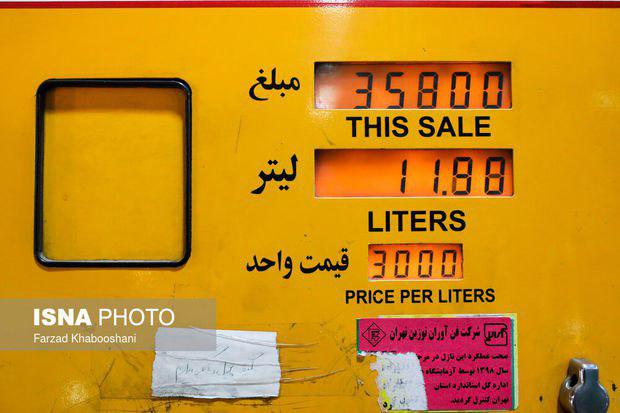
In an interview with Jamaran, Iranian economist Saeed Laylaz described the recent hike in the fuel price in Iran as a “pricing reform”, but also leveled heavy criticism at the management strategies of the government.

The following is the text of his interview:

Q: Mr. Laylaz, you had already announced that you were one of the architects of the fuel consumption management plan.

Laylaz: That’s right. I was a strong supporter of an increase in the price of energy carriers, not gasoline alone. But the plan that I had put forward in early 1397 (March 2018) at the outset of new sanctions had three parts.

The first part entailed reform policies, including a rise in the price of energy carriers. The second part involved policies to offer support and compensation in the face of such price reform: to double or triple the subsidies, and to guarantee a daily supply of 2,000 calories with the distribution of coupons among all 83 million people (in Iran); Thirdly, under no circumstance should a patient be deprived of medicine or treatment. We must also make the public transportation almost free, and guarantee free education up to the degree of diploma.

The principle of my theory, in theoretical or ideological terms, is that I believe that no revolution or unrest would take place without three or four deciles of a society. Those three deciles include the lowest income population. Also without the three or four middle deciles, there would be no stability. And without the one or two top deciles, no progress would be made.

After all, let’s see which issues in Iran do not have domestic roots. For instance, we face an environmental crisis. Do Iraq, Afghanistan, Pakistan, Saudi Arabia and Turkey not face it? We have a gap between the rich and the poor. Do not the other regional countries have it? All are the same.

If I’m not mistaken, the volume of liquidity in Iran stood at 200 billion tomans at the time of the (1979) Revolution. It now stands at above 2,200 trillion tomans. It’s incredible how high it is. It has risen by around 10,000 times within 40 years. This would create inflation. Inflation is the root cause of all problems.

On the other hand, we were plagued by organized corruption in Iran over the past 15 years. I believe that all of our problems have internal roots. Trump, or friendship with or hostility towards the United States would not determine Iran’s issues and problems.

Hard work in countries like Malaysia, South Korea, China and Japan has nothing to do with friendship with or hostility against the US. What does it have to do with the United States if the input of resources in Iran is 100 and the output is 40. We must combat domestic corruption, and the genuine combat is as follows:

  1. Tackling corruption should not be confined to a specific party.
  2. The advertisement should be proportional (to combatting corruption).
  3. You must eliminate the grounds for corruption, which means economic liberalization. Wherever there is economic rent and privilege, there would be embezzlement.
  4. The basic principle of combatting corruption is democracy. Why are the reformists generally healthier than non-reformists in financial issues? Why was Seyyed Mohammad Khatami’s administration the best, healthiest and the most well-functioning administration in the history of Iran after the Revolution? Because that administration was the target of the heaviest propaganda and political criticism, and the tiniest case of corruption in it was being exaggerated ten times stronger.

Do you believe that Mr. Trump has determined such four-dimension situation? Please specify the role of the United States in such state of corruption. You can mention a hundred other basic issues of Iran, and I’ll prove that the sanctions have had not the merest impact on those matters.

We have overcome and bypassed most of the harmful effects of the sanctions, and are doing our job. The issue of sanctions is not a long-term issue. The Supreme Leader himself has announced (that sanctions would last for) two or three years. I suppose that we may get somewhere within the next six or seven months, because Americans have also many restrictions in this approach.

However, we just wrangled with each other inside the country during the two or three years when we were not slapped with sanctions. Are sanctions to blame? Everybody could have been given the opportunity to work and have imported technologies. Iran will grow beyond the size of a regional power if it gets out of this crisis. Iran’s current problem is the crisis of incompetence. It will be fixed if someone makes that competent.

An era will come that Iran’s economic growth would become a two-digit number. This, however, would not happen overnight. A scientific process is underway.

In historical terms, a (Napoleon) Bonaparte will emerge in Iran and will carry out the process of transition to a pragmatic government whose pillars are based on Iranian nationalism, but would be Muslim. This would happen in the form of a transformation, not a revolution. I considered the very same developments in the past recent decade as a step in this path.

But what is the objective meaning of such deficient scheme passed by Mr. Rouhani? I invite my principlist friends to exercise such reasoning. We would get 30,000 billion tomans from the top social classes of Iran every year and inject it into the poorest classes of the society. This would increase the Gini Coefficient in Iran overnight. So why shouldn’t we do that?

Didn’t we experience a reform of fuel price during Mr. Khatami’s term? Didn’t we have fuel price reform at the beginning of Mr. Rouhani’s administration? Didn’t it take place to the highest degree during martyr Rajaee’s administration? From who or where did it meet opposition?

I do not see gasoline as the primary and final purpose behind the protests by any means. When the reforms that should have been implemented step by step are not carried out, they turn into a painful surgery. Every reform is painful. The more it is delayed, the worse it would become.

Everywhere in the world, either in the poor or rich countries, where there is no oil, the government revenues for running the society are based upon the taxation of alcoholic beverages, tobacco and fuel. All governments in the world levy very high taxes on these three items to generate revenue. We are not allowed to have alcoholic beverages for religious reasons.

Although it is said that alcohol consumption in our country is not lower than the other countries, the government in Iran has deprived itself of such taxation, and this has increased the per-capita consumption (of alcohol) in Iran. That’s because premium, pure and original alcohol reaches the consumers in Iran at a lower cost than Europe. Because they levy tax (on liquor) there (in Europe), but not in here.

Moreover, we are technically unable to levy a tax on tobacco. In addition, we cannot increase the fuel price for social reasons.

The price of gasoline in our country should not be lower than such a limit that smuggling gasoline out of the country would be economically feasible. In that case, those income resources must be spent on the people, which is exactly the example of social justice. I wonder why the opponents oppose this plan.

Q: Why doesn’t the income of people rise with a hike in the fuel prices? Because a series of charts have made a comparison between Iran and the other countries.

Laylaz: Such comparisons are so weird. According to the scheme introduced by Mr. Rouhani, a four-member family, for instance, would receive at least 200,000 tomans in cash handout. Well, such sum of money is equivalent to the difference in the cost of 100 liters of gasoline with new prices. Another 60 liters is also received under the rationing system, making a total of 160 liters per month. Accordingly, the families would by no means be affected by the rise in the gasoline price. The administration has given every family the freedom of choice with such scheme.

The true winners in this scheme would be the seven lowest deciles of the society. Because it is totally clear that we get 30,000 billion tomans from the main consumers of gasoline in the country and give it to the poorest social classes.

Q: Don’t you think that the administration would enlarge liquidity with this plan?

Laylaz: The rise of liquidity has nothing to do with this issue. Under such scheme, the administration gets money from one person and gives it to another individual. Since the scheme has not created any new liquidity in the society, it would not lead to inflation either.

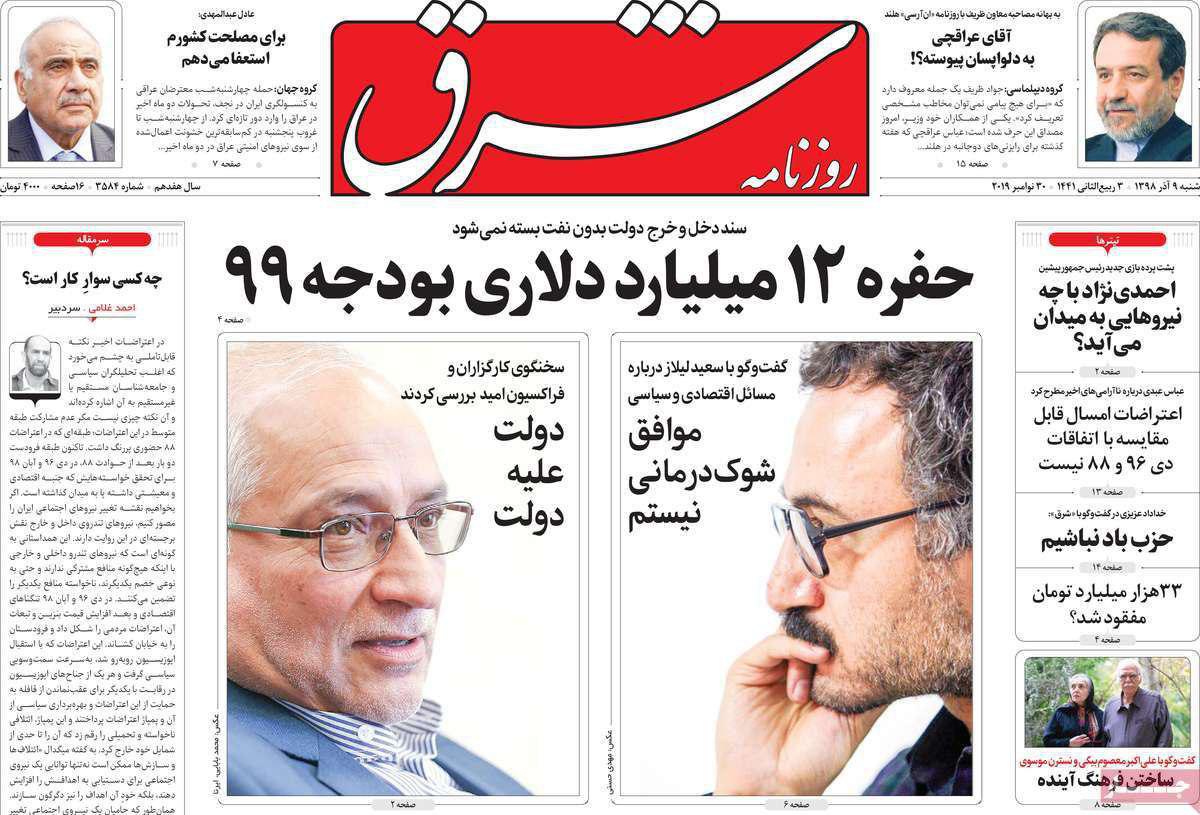
A Look at Iranian Newspaper Front Pages on November 30

A Look at Iranian Newspaper Front Pages on November 19

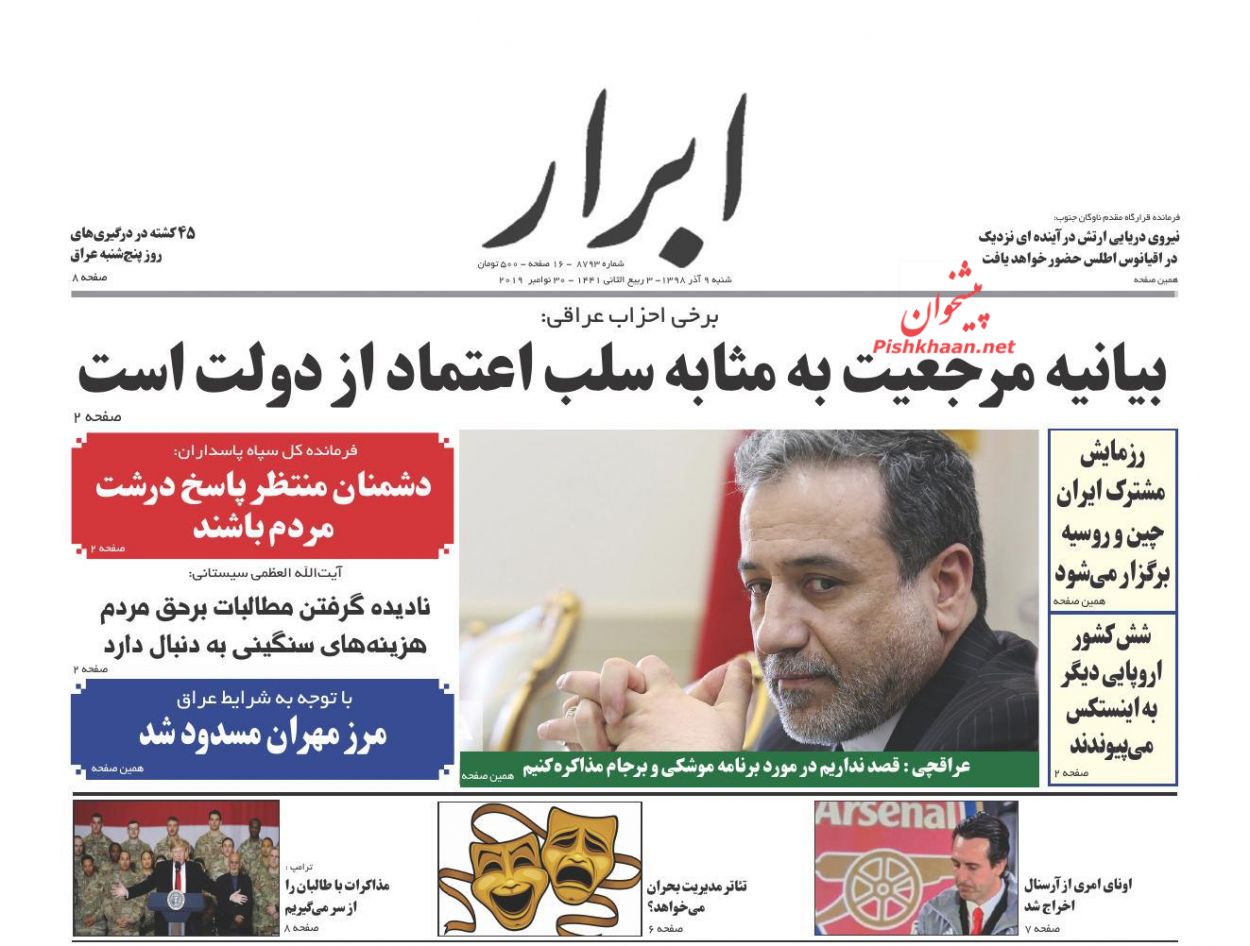
Abrar:
1- Some Iraqi Parties: Top Cleric’s Statement Shows Gov’t No Longer Trusted
2- Six More European States to Join INSTEX
3- Araqchi: We Don’t Intend to Hold Talks on Our Missile, JCPOA Program

A Look at Iranian Newspaper Front Pages on November 30


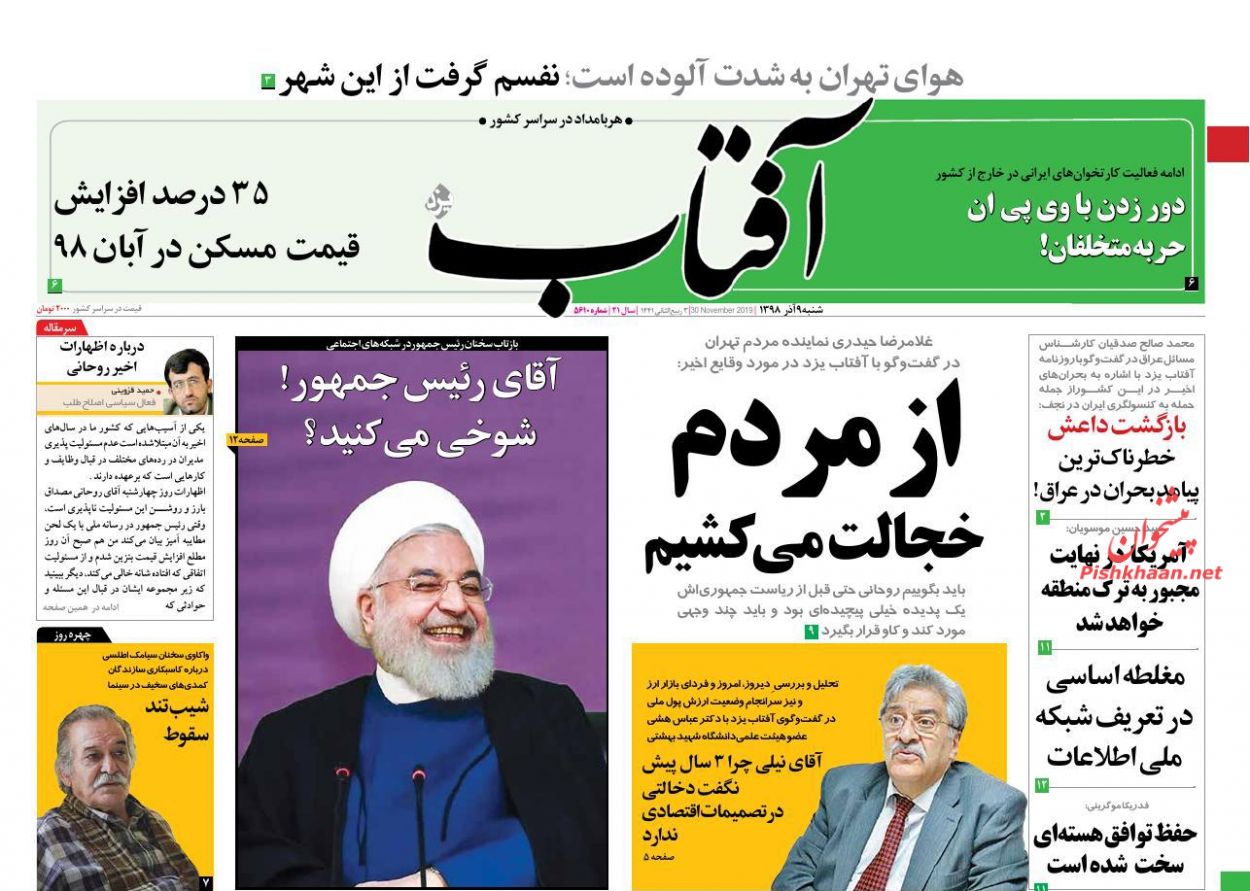
Aftab-e Yazd:
1- Tehran Air Heavily Polluted
2- Tehran Lawmaker: We Are Ashamed of People
3- Return of ISIS: Most Dangerous Consequence of Iraq Crisis
4- Mousavian: US Will Finally Have to Leave Region

A Look at Iranian Newspaper Front Pages on November 30


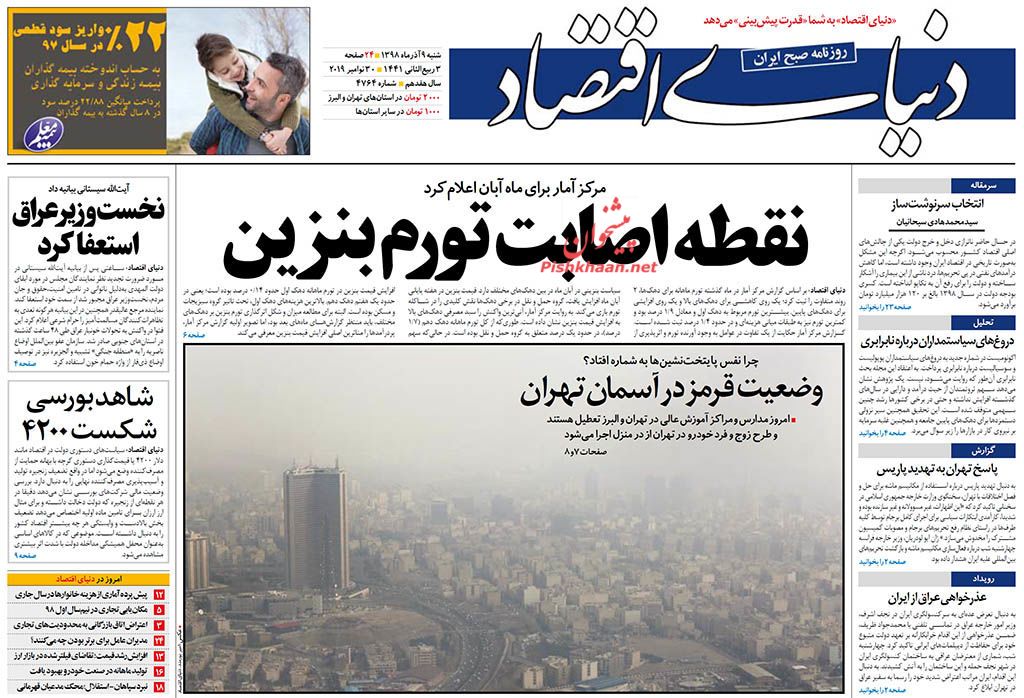
Donya-ye Eqtesad:
1- Red Condition in Tehran Sky

A Look at Iranian Newspaper Front Pages on November 30


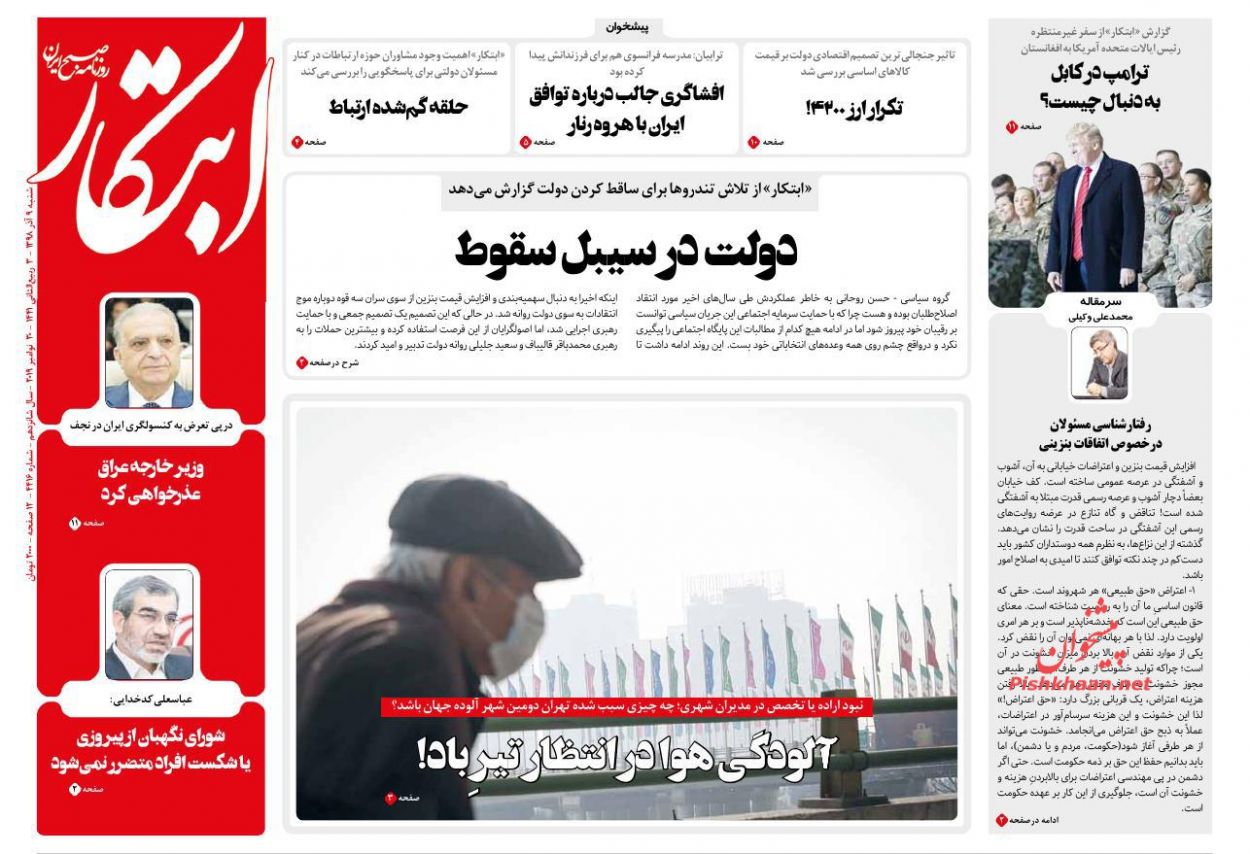
Ebtekar:
1- Hardliners Trying to Overthrow Rouhani Government
2- What Trump Looked for in Kabul
3- Iraq FM Apologizes to Iran after Attack on Iranian Consulate in Najaf

A Look at Iranian Newspaper Front Pages on November 30


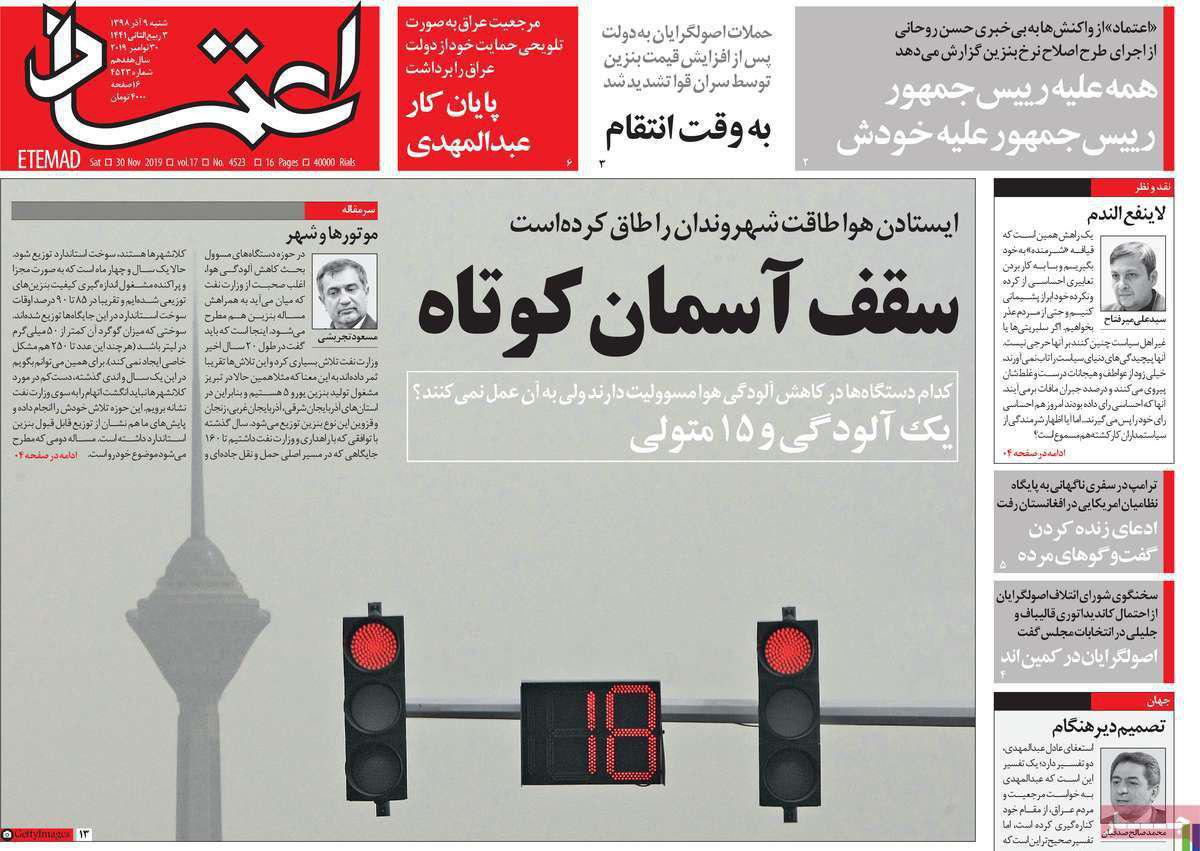
Etemad:
1- Tehran Citizens No Longer Stand Air Pollution
2- End of Abdul Mahdi
3- Everyone against President, President against Himself

A Look at Iranian Newspaper Front Pages on November 30


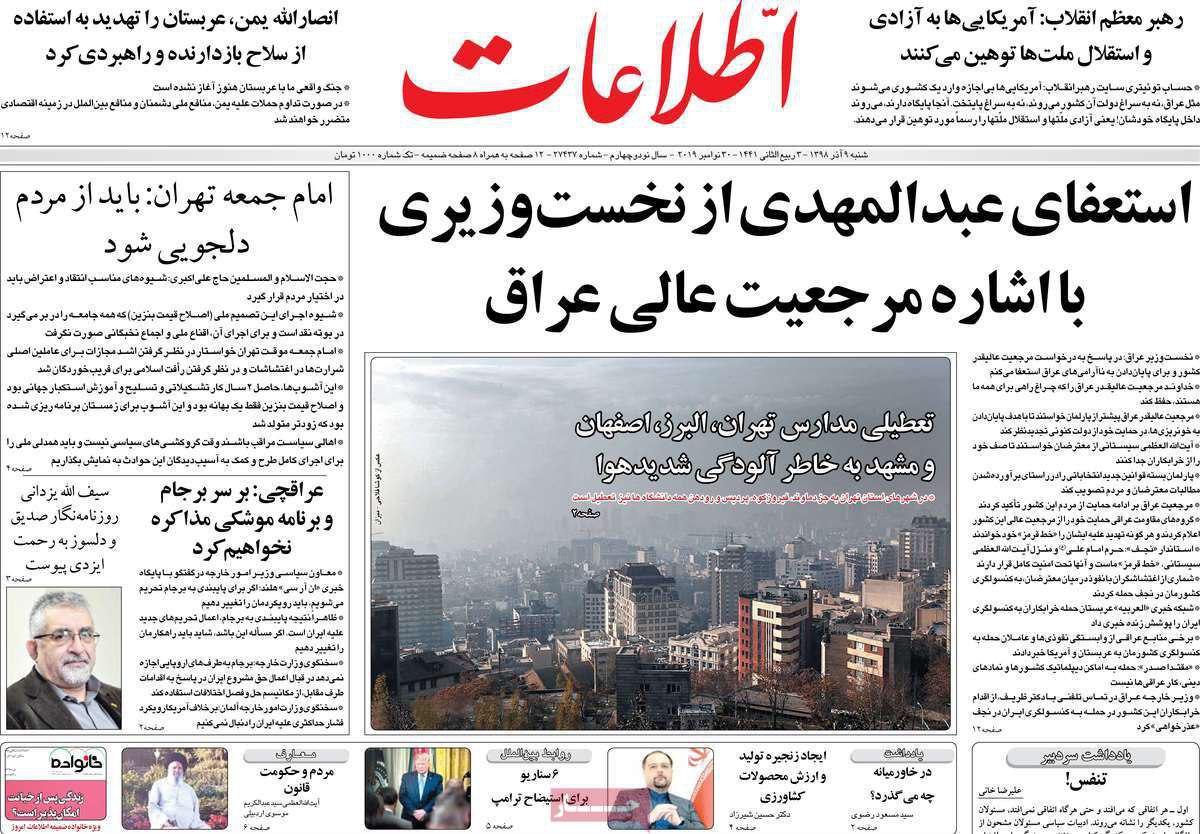
Ettela’at:
1- Iraq PM Resigns after Call by Top Cleric
2- Iran Leader: Americans Insulting Independence of Nations

A Look at Iranian Newspaper Front Pages on November 30


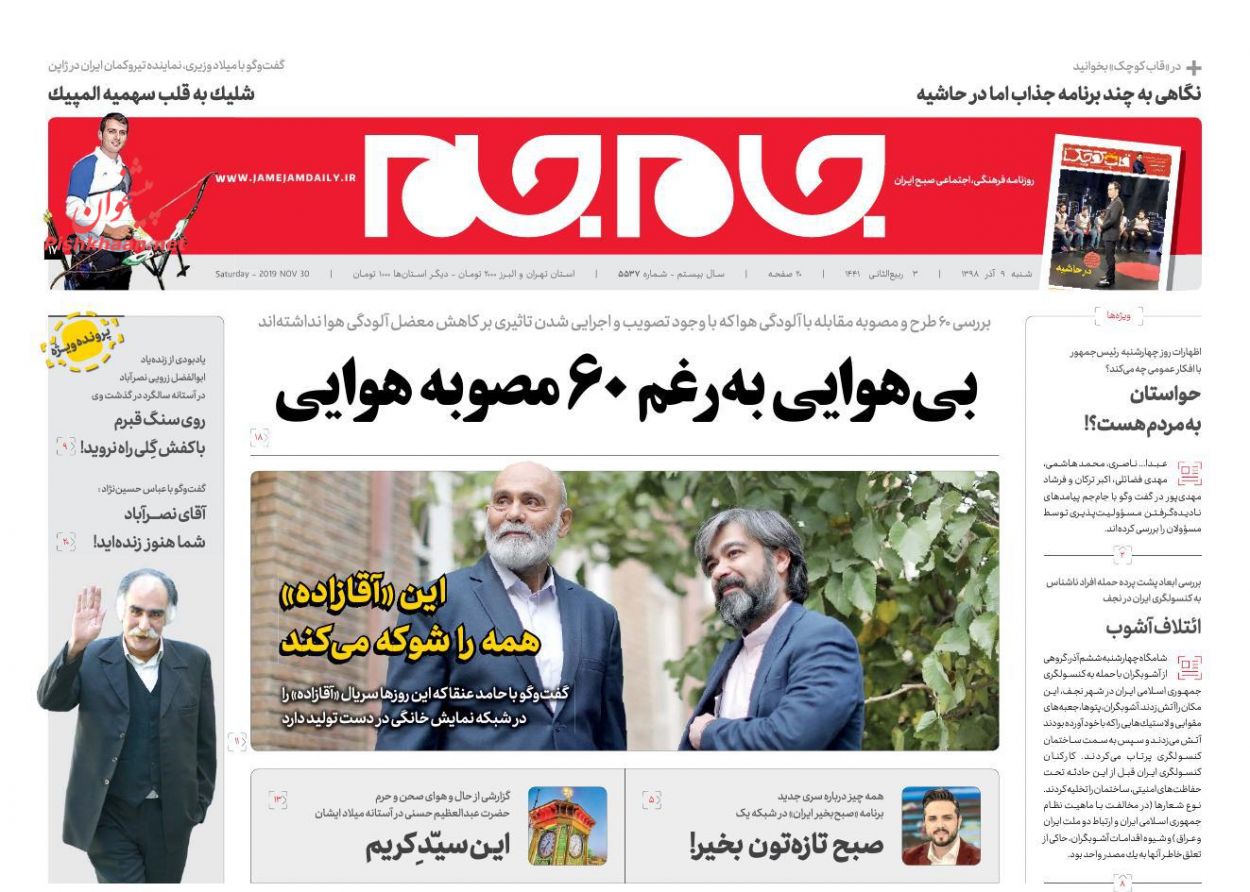
Jame Jam:
1- Severe Air Pollution Despite 60 Bills on Tackling It

A Look at Iranian Newspaper Front Pages on November 30


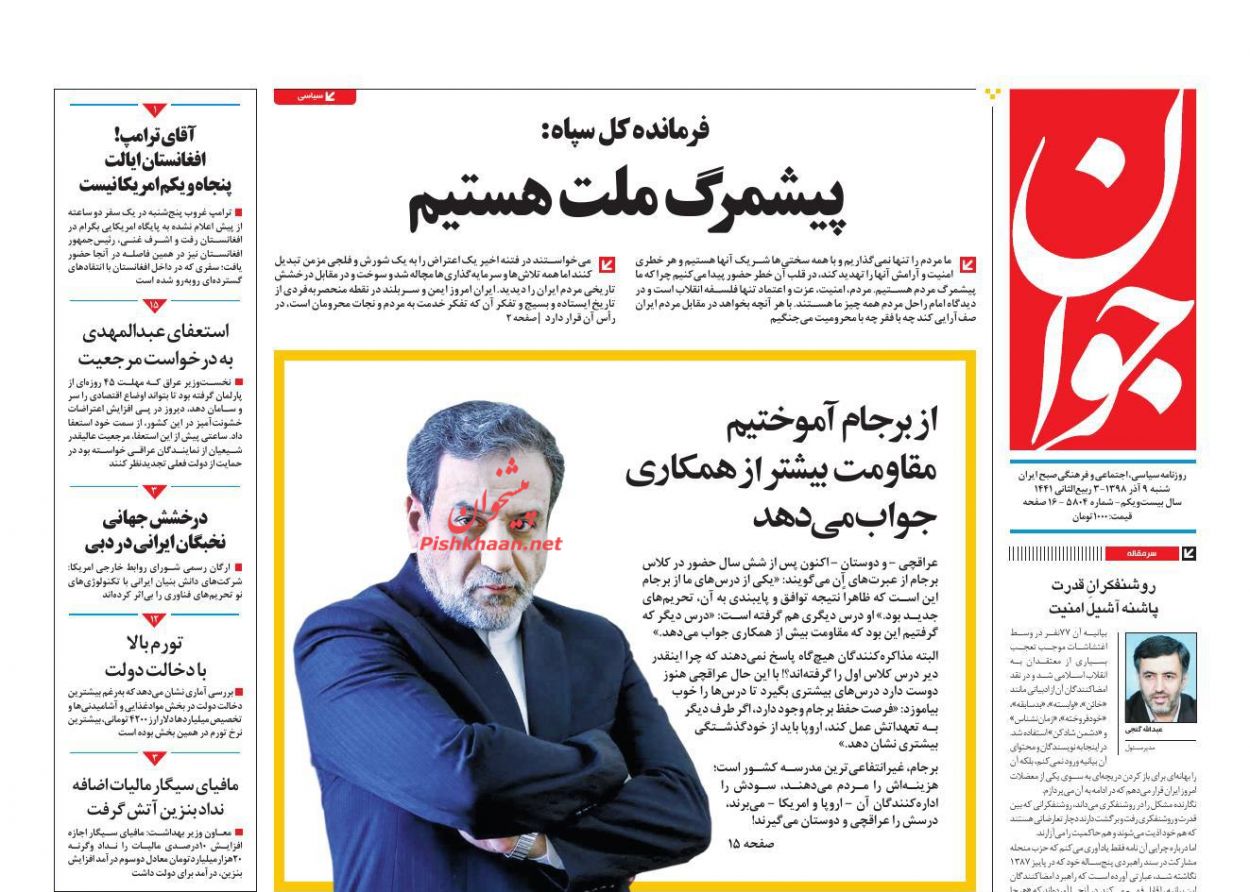
Javan:
1- IRGC Chief: We Sacrifice Our Lives for Nation
2- Araqchi: We Learned from JCPOA Resistance Works Better than Cooperation
3- Mr Trump! Afghanistan Not 51st State of US

A Look at Iranian Newspaper Front Pages on November 30


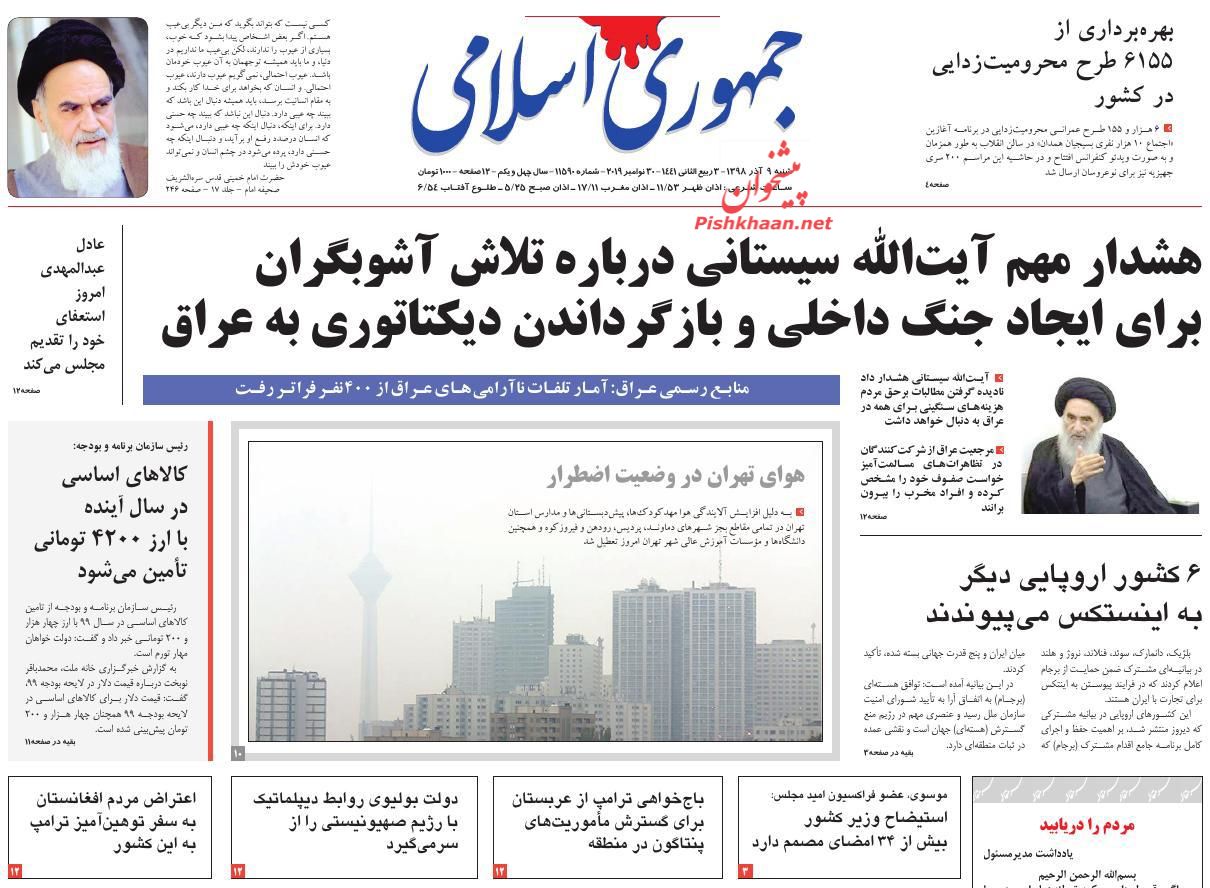
Jomhouri Eslami:
1- Ayatollah Sistani’s Important Warning on Rioters’ Efforts to Create Civil War
2- Tehran Air in Emergency Situation

A Look at Iranian Newspaper Front Pages on November 30


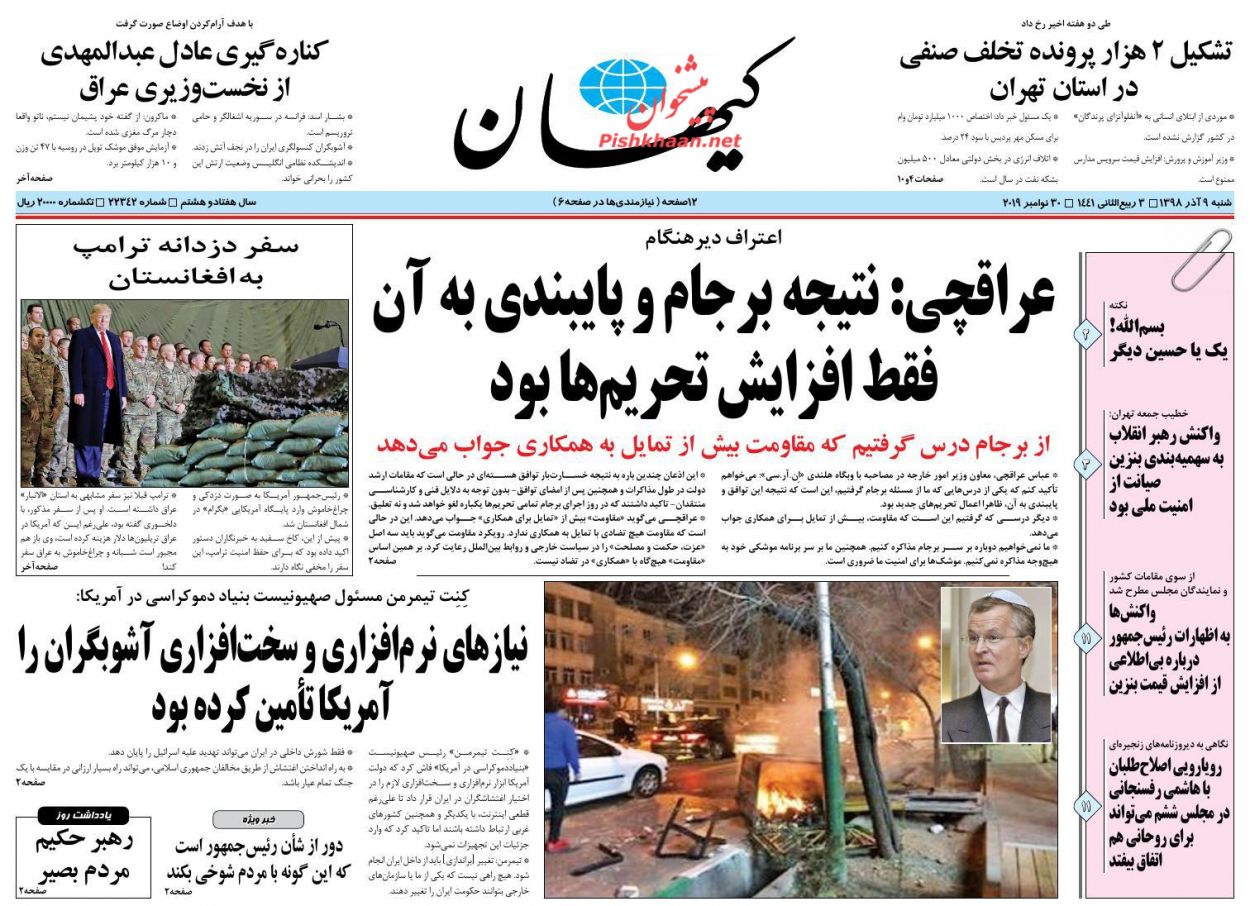
Kayhan:
1- Araqchi: Result of JCPOA Was Just More Sanctions
2- Trump Visits Afghanistan Like Thieves

A Look at Iranian Newspaper Front Pages on November 30


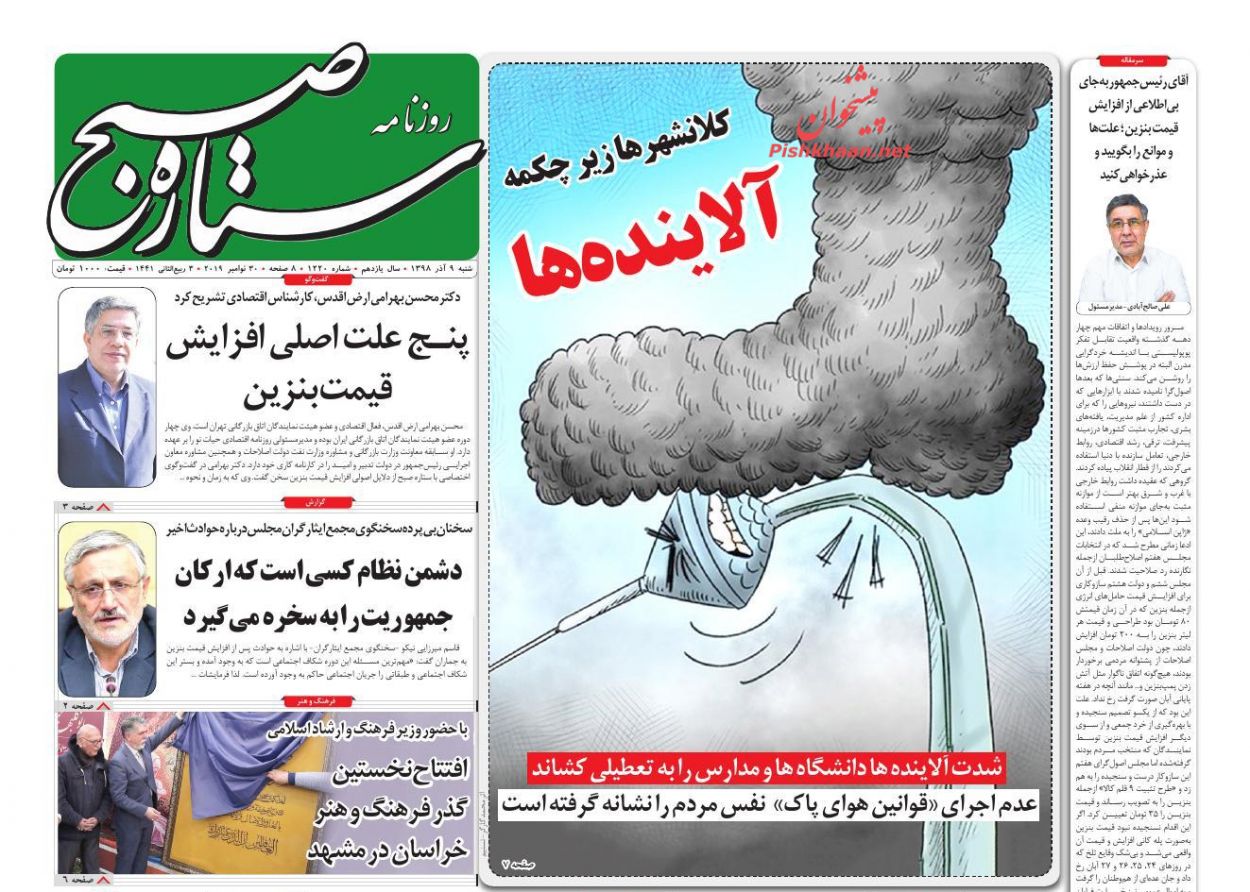
Setareh Sobh:
1- Tehran under Boots of Air Pollutants
* Universities, Schools Shut Down
* Clean Air Law Not Being Implemented; People’s Lives Targeted

A Look at Iranian Newspaper Front Pages on November 30


Shargh:

1- 2019 Protests Not Comparable to Those of 2017, 2009

2- Has Araqchi Joined Hardliners?

A Look at Iranian Newspaper Front Pages on November 30

Chinese Firms Invited to Invest in Iran’s Tourism Sector

Chinese Firms Invited to Invest in Iran’s Tourism Sector

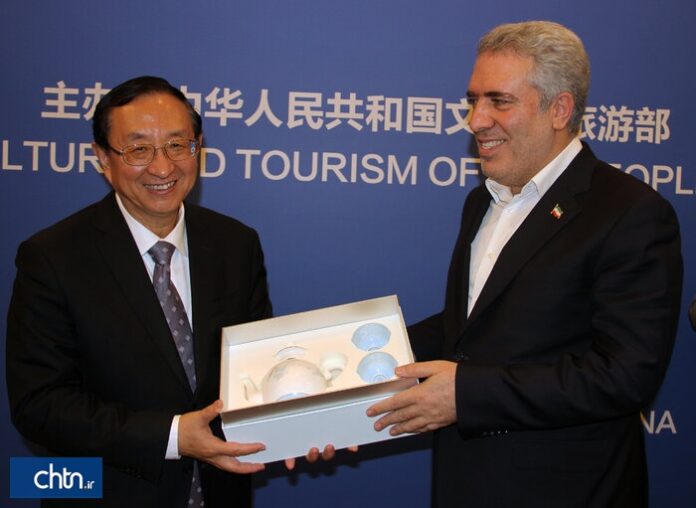
Ali-Asghar Mounesan says Tehran is ready to work closely with Beijing in tourism and cultural areas within the framework of the Chinese initiative “One Belt, One Road.”

“If Chinese investors are interested, we can offer them land in order to invest in the construction of tourism sites and facilities,” he said in a meeting with Chinese Minister of Culture and Tourism ‎Luo Shugang in Beijing.

The Iranian minister also expressed readiness boost cooperation with Beijing in the field of cultural activities, especially research and the restoration of ancient monuments.

“We have good cooperation with European countries such as Germany, France and Italy in this filed, and we can work with China, too, in this area, especially with regards to the exchange of researchers and experts,” Mounesan added.

He noted Iran and China enjoy very good political and economic ties, adding the two sides can forge closer cooperation on cultural and tourism fronts as well.

He said high on Iran’s agenda is to train Chinese-speaking tourists, calling on the Chinese Embassy to help in that regard.

The Chinese official, in turn, thanked Mounesan and said he would like to see a rise in the number of tourists of both countries. He expressed readiness to help train Chinese-speaking tour guides.

Iranian Diplomat in China for Key Talks on JCPOA

Iranian Diplomat in China for Key Talks on JCPOA

His trip comes at the invitation of his Chinese opposite number in order to continue political consultations between the two countries.

Upon arrival at the Beijing International Airport, Araqchi was welcomed by Chinese authorities as well as Iranian Ambassador to China Mohammad Keshavarz Zadeh.

Araqchi is to sit down with his Chinese Counterpart, too.

The two countries are to attend a bilateral consultative meeting on the Joint Comprehensive Plan of Action (JCPOA) in coming days.

During Araqchi’s trip, mutual issues will be discussed as well.

‘Iran Has Evidence IAEA Inspector Carried Suspicious Materials’

Salehi

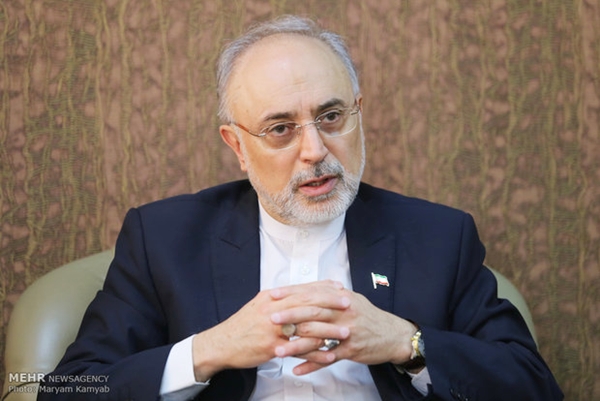
Head of the Atomic Energy Organization of Iran (AEOI) Ali-Akbar Salehi said on Saturday the inspector failed to give convincing explanation for carrying the substances.

“Generally, inspectors enjoy diplomatic immunity as ambassadors do while on a mission, and such issues have been stipulated in international laws and regulations,” he said.

“For example, if an Iranian AEOI inspector faces an issue in another country, he or she will enjoy diplomatic immunity,” Salehi added.

“Of course, IAEA inspectors must be checked when they enter Iranian sites. This is naturally done while inspecting nuclear facilities all around the world, and this law is not only related to Iran,” he said.

“During the check that was run by machines, one of the inspectors found the inspector to be carrying suspicious materials,” he added.

“When she was asked about it, she failed to give convincing and acceptable answers,” he said.

“At the end, all the events were documented and filmed, but we could not keep the inspector as she had diplomatic immunity,” Salehi added.

He said Iran sent a written objection to the IAEA in that regard and announced the country will follow up on the issue.

He said the inspectors carrying suspicious materials is seen by Iran as a move in connection with the malware Stuxnet.

“We have a site in Iran where we keep faulty machinery. And we buy many of the devices (spare parts) from abroad. But they sabotage these devices, so that we would face problems when operating our machinery,” he noted.

“They used the malware Stuxnet against us. They committed industrial sabotage against us and sold faulty equipment to us, but we were vigilant in that regard,” said Salehi.

Elsewhere in his remarks, he touched upon Iran’s enrichment activity.

He said enrichment work is underway at Fordo facility due to a breach of commitments by the European parties to the Iran nuclear deal known as the Joint Comprehensive Plan of Action (JCPOA).

“As long as they fail to live up to their obligations, we will continue enrichment at Fordo,” he said.

Salehi said Iran’s objective is to maintain the JCPOA.