Wednesday, January 14, 2026
Home Blog Page 3043

Iran Inaugurates Risky Investment Fund to Create Jobs for Youth

Iran Inaugurates Risky Investment Fund to Create Jobs for Youth

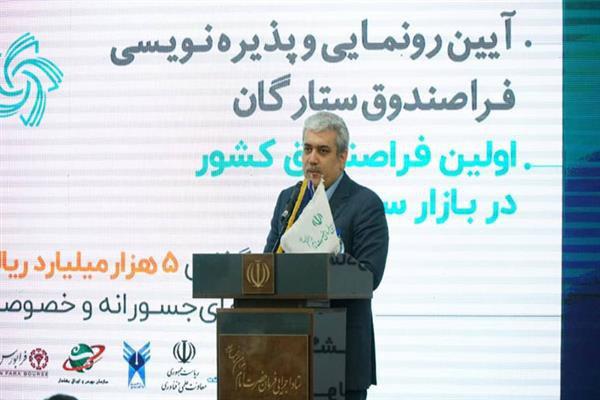
Addressing the ceremony to launch one of these funds, Iran’s Vice President of Science and Technology Sorena Sattari stressed that the ecosystem of risky investment had to be revived in previous years.

“It was the native ecosystem we destroyed with oil money and today we are working to restore it,” he said.

Sattari further noted that several risky investment funds have already been set up in the country, but the process is slow and needs to be boosted.

“A look at the lives of businessmen in Iran shows that we have had this culture in the country. They educated young people for entrepreneurship,” continued Sattari.

The Vice President for Science and Technology reiterated that in the past, a financial problem was considered an important issue in creating a business and it was thought that the problem can be resolved by allocating money, but this was a wrong culture.

“That included the Vice Presidency for Science and Technology as part of the government, but we have struggled with these over the years.”

Sattari, who is also the head of Iran’s National Elites Foundation, said in technological ecosystems the accelerators play the same role in increasing the pace of technology and innovation.

Risky investment is the investment in the thinking and creativity of young people.

Sattari said the first phase saw huge government investment in education, which has yet to yield results as other components of the innovation and technology ecosystem are not merged with that.

“Of course, these human resource centres do not provide this ecosystem for the country because oil money is involved. We need more startups to fix it. The creation of innovation zones in cities has already begun. In the next two years we will have more than one million square metres of innovation space around cities.”

These areas are also tasked with providing human resources to accelerate the conversion of ideas into business, he underlined.

Iran Ranks 15th in Global Web of Science Standing

Iran Ranks 15th in Global Web of Science Standing

Despite warnings about obsessive concern with the quantity of articles, the citable scientific articles published in reputable journals with a high impact factor (IF) are considered an index of scientific progress in various countries.

In 2018, Iran has been 15th in the ranking of countries with publications in the WOS database in terms of the number of articles and citations. Iranians published around 50,000 articles in that website in 2018.

More than 2,680,000 documents have been published in the Web of Science in 2018, including 2,435,053 (75% of the total) articles and reviews.

For a brief review of Iran’s achievements in various fields of science and technology, check the book “Science and Technology in Iran: A Brief Review – 2019

Another significant criterion for evaluating the scientific articles is the impact factor, a measure published annually by the Institute for Scientific Information (ISI).

While different indices and metrics have been developed to evaluate and rate a scientific journal –such as the Hirsch-index (h-index) and the Eigenfactor score—researchers still compete to have their best articles published in the journals with a higher impact factor.

A review of the articles available in the WOS database in 2018 indicates that Iran has published 6,912 (14% of the total) articles in the journals with an impact factor of above four.

The Islamic Republic of Iran has been ranked 21st in the world in terms of publishing articles in the journals with an impact factor of greater than four.

Moreover, the Iranian researchers have published 82 articles in the journals with an impact factor of greater than 15. Of those articles, 61 have appeared in the journals with an impact factor of above 20.

The Iranian Vice Presidency for Science and Technology has established the Federation of Scientific Elites to offer facilities to the scientific society, the faculty members and the top researchers for promoting science at the national and international level.

A Look at Iranian Newspaper Front Pages on December 1

A Look at Iranian Newspaper Front Pages on November 19

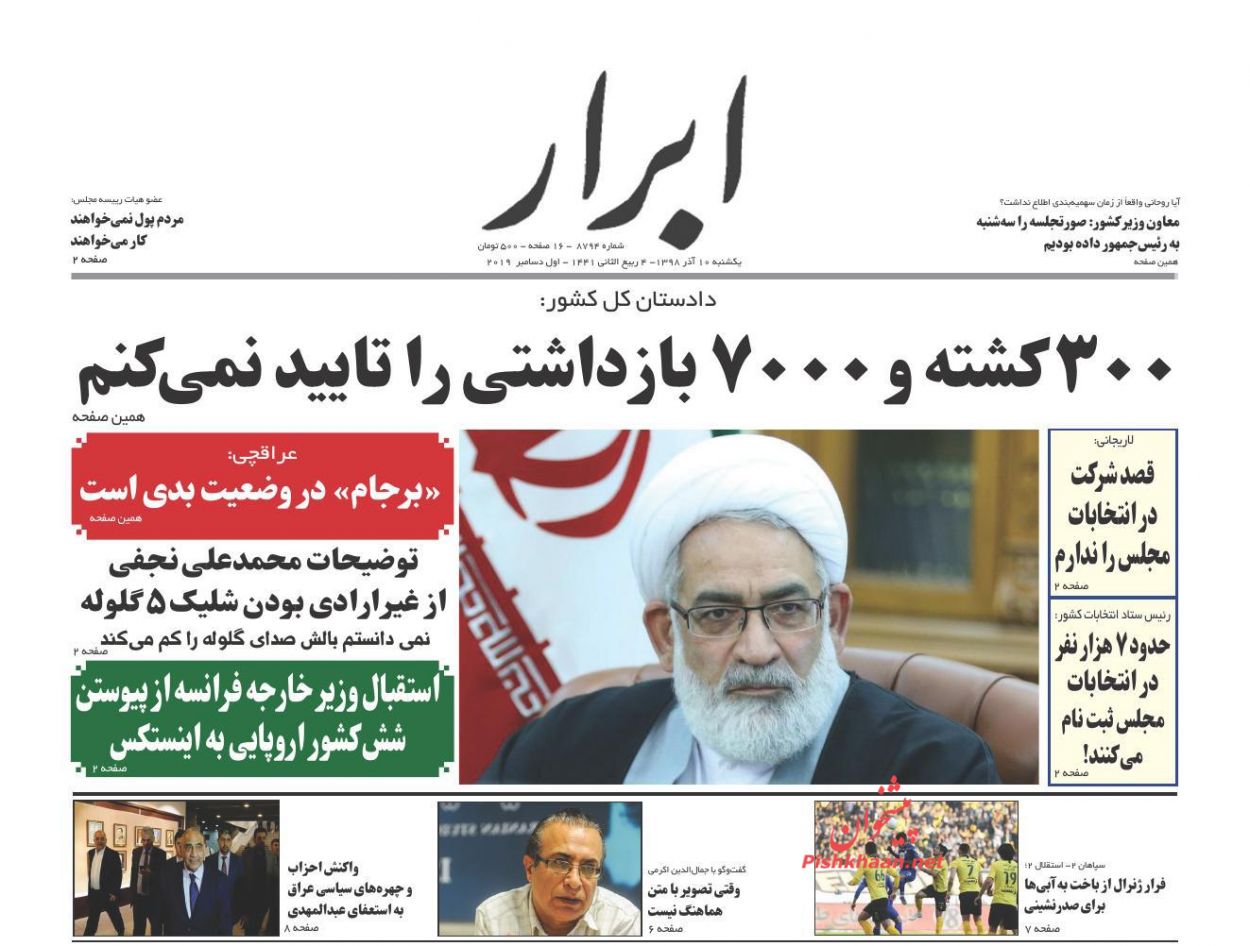
Abrar:
1- Prosecutor General: I Don’t Confirm Reports of 300 Killed, 7,000 Arrested
2- French FM Welcomes 6 Countries Joining INSTEX
3- Iraqi Parties, Political Groups of Iraq React to Abdul Mahdi’s Resignation

A Look at Iranian Newspaper Front Pages on December 1


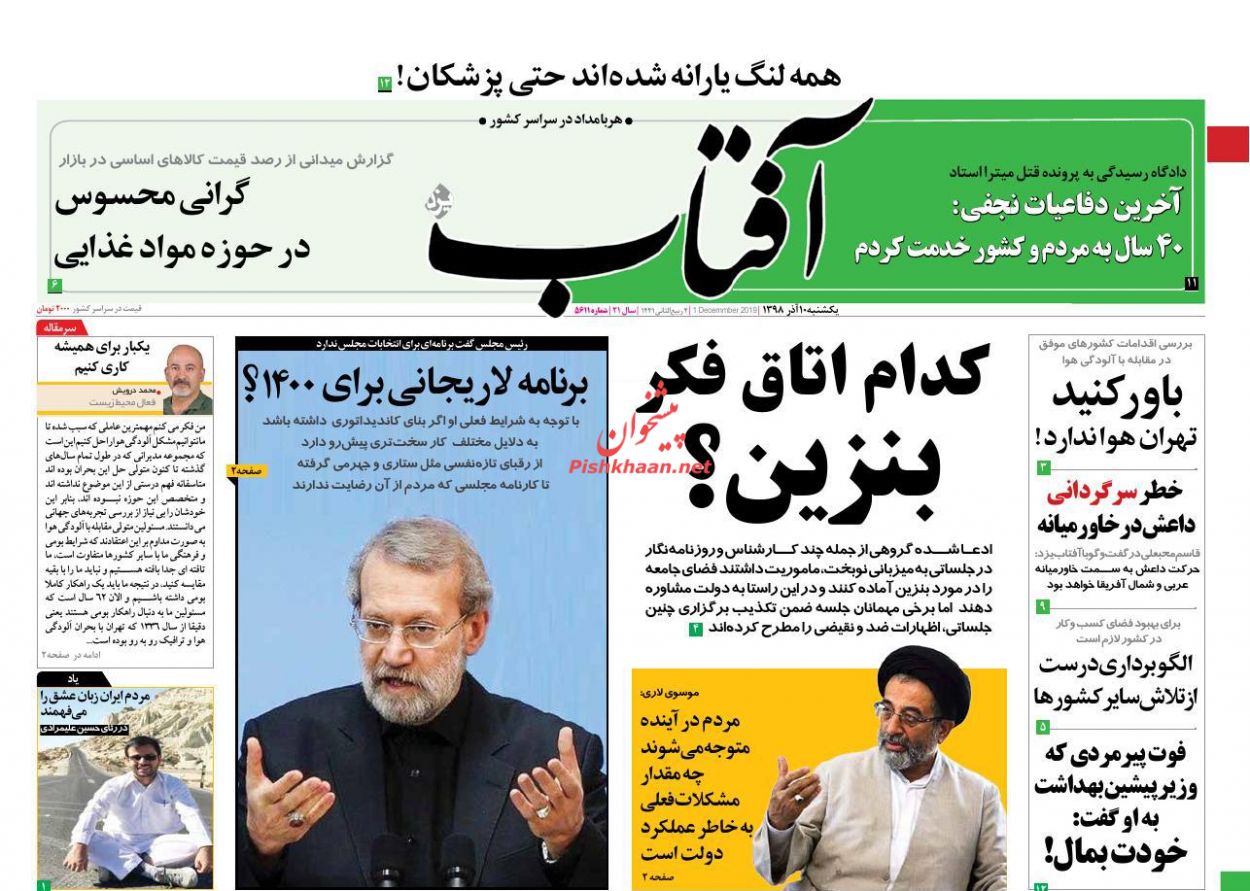
Aftab-e Yazd:
1- Danger of ISIS Displacement in Middle East: ISIS to Move towards Arab Mideast, North Africa

A Look at Iranian Newspaper Front Pages on December 1


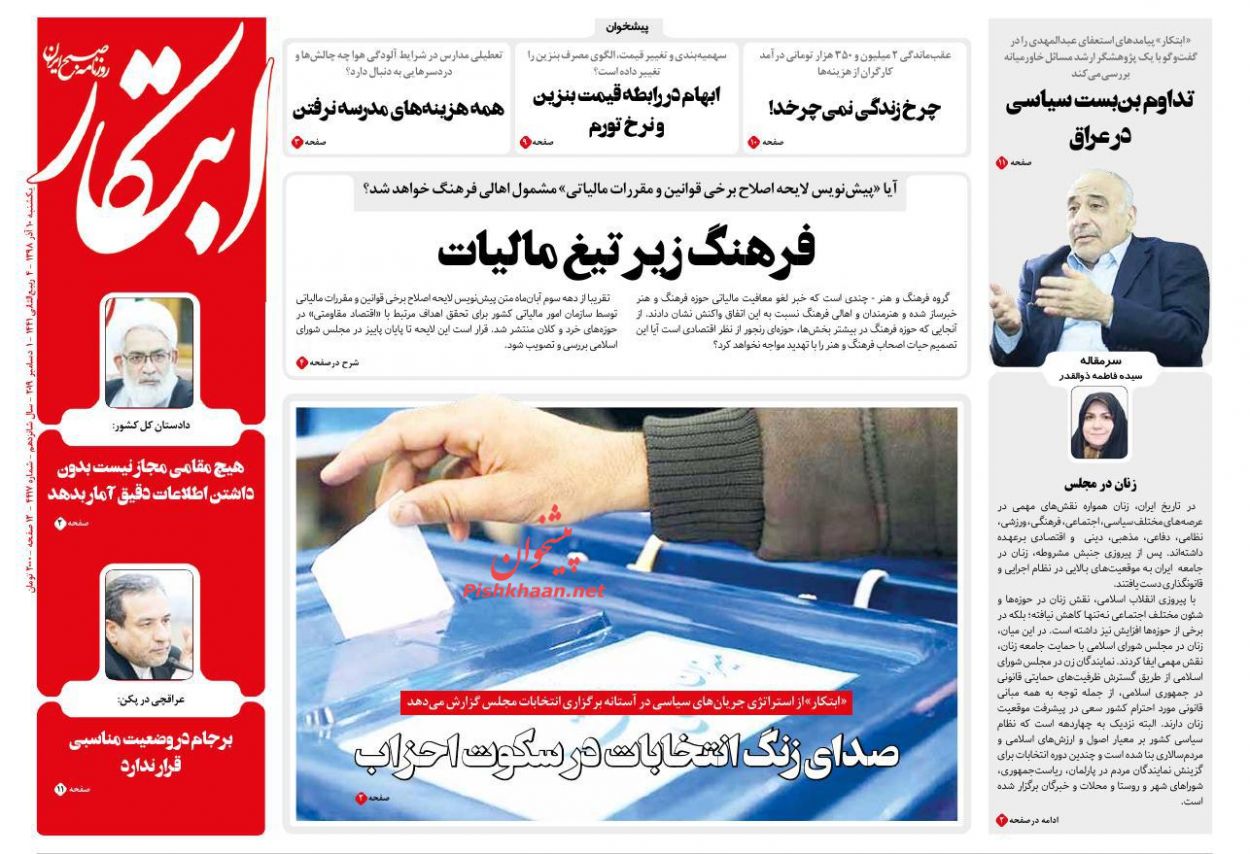
Ebtekar:
1- Continued Political Deadlock in Iraq
2- Araqchi in Beijing: JCPOA Not in Good Condition

A Look at Iranian Newspaper Front Pages on December 1


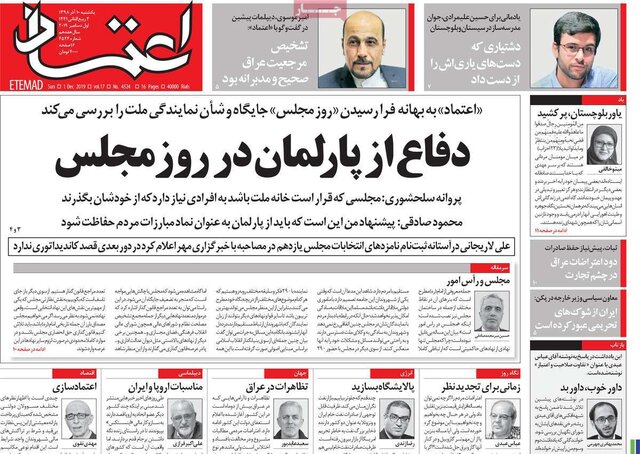
Etemad:
1- Iran Has Moved Past Shock of US Sanctions: Deputy FM
2- Trade Undermined by Iraq Protests: Stability Prerequisite for Maintaining Exports
3- Iraq’s Religious Authority Held Prudent, Correct Stance: Ex-Diplomat

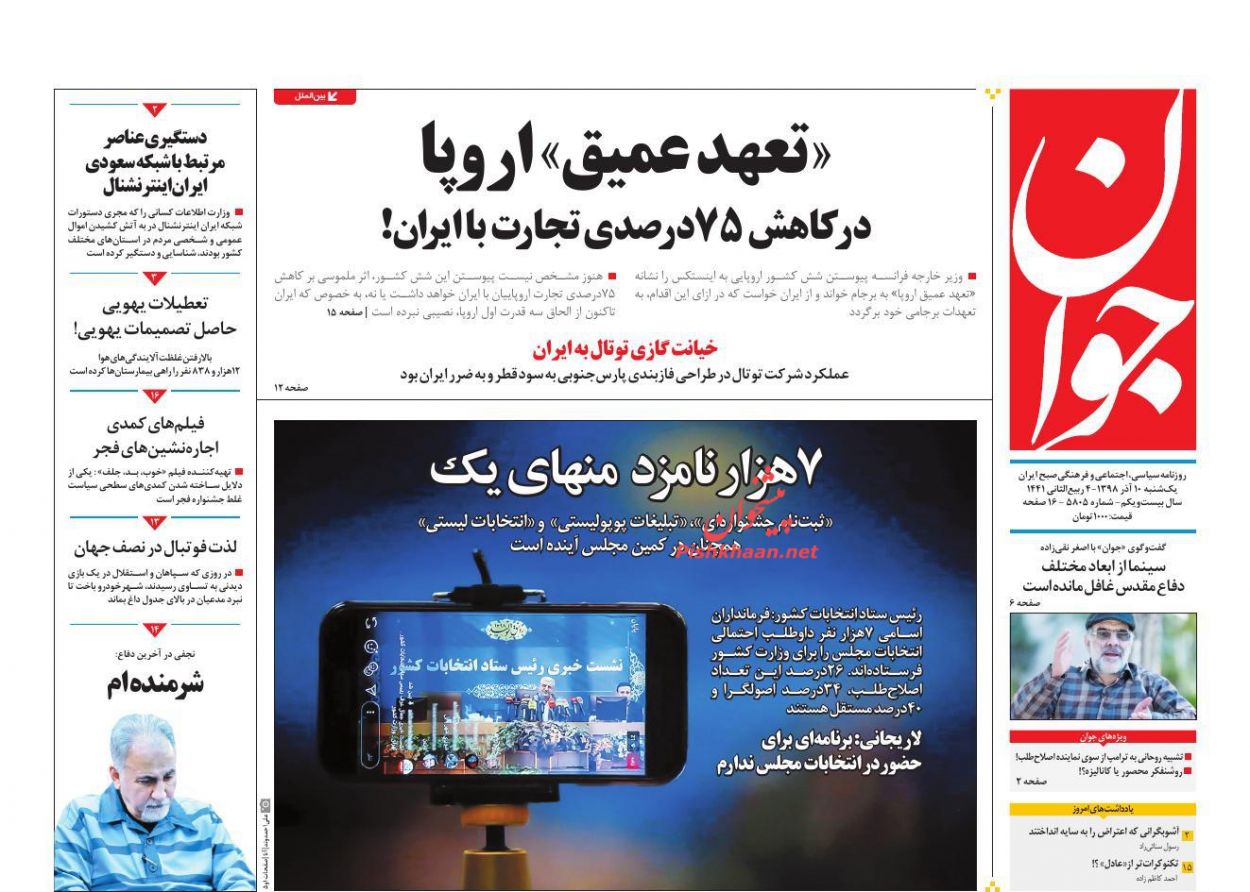
A Look at Iranian Newspaper Front Pages on December 1


Javan:
1- Europe Committed to Decrease Trade with Iran by 75 Percent
* Total’s Performance in South Pars in Favour of Qatar, to Iran’s Detriment

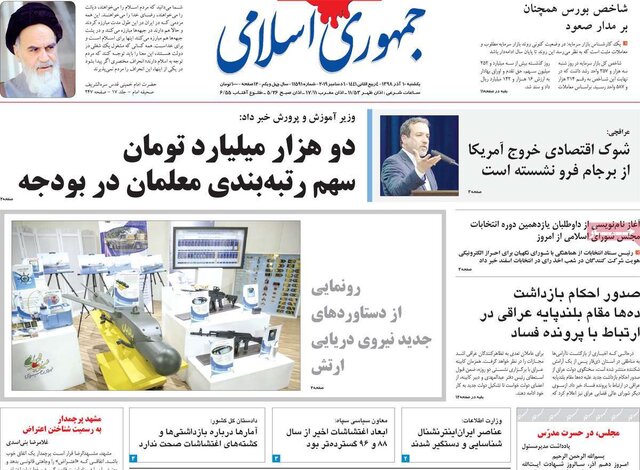
A Look at Iranian Newspaper Front Pages on December 1


Jomhouri Eslami:
1- Araqchi: Economic Shock of US JCPOA Withdrawal Over
2- Candidates Can Register for Parliamentary Elections as of Today
3- IRGC Political Deputy: November 2019 Riots More Widespread than 2017, 2009
4- Intelligence Ministry: Elements Linked to Iran Intl. TV Channel Arrested
5- Tens of High-Ranking Iraqi Officials Arrested over Corruption

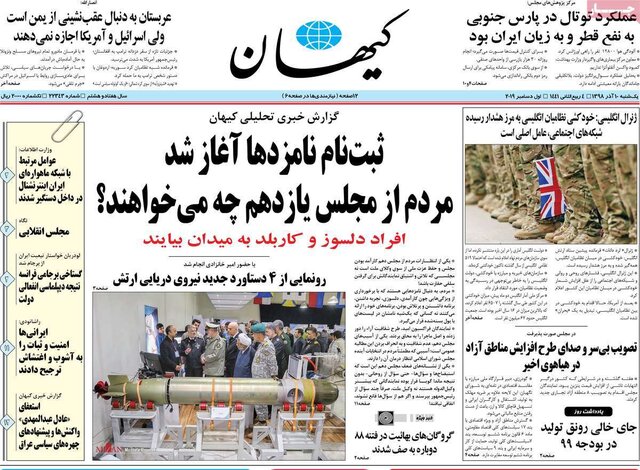
A Look at Iranian Newspaper Front Pages on December 1


Kayhan:
1- Ansarullah: Saudi Seeks Withdrawal from Yemen, but Israel, US Prevent It
2- France’s Impudence on JCPOA Result of Government’s Passive Stance
* Le Drian Urges Iran to Remain Faithful to JCPOA
3- Iranian Army’s Navy Unveils Four New Achievements

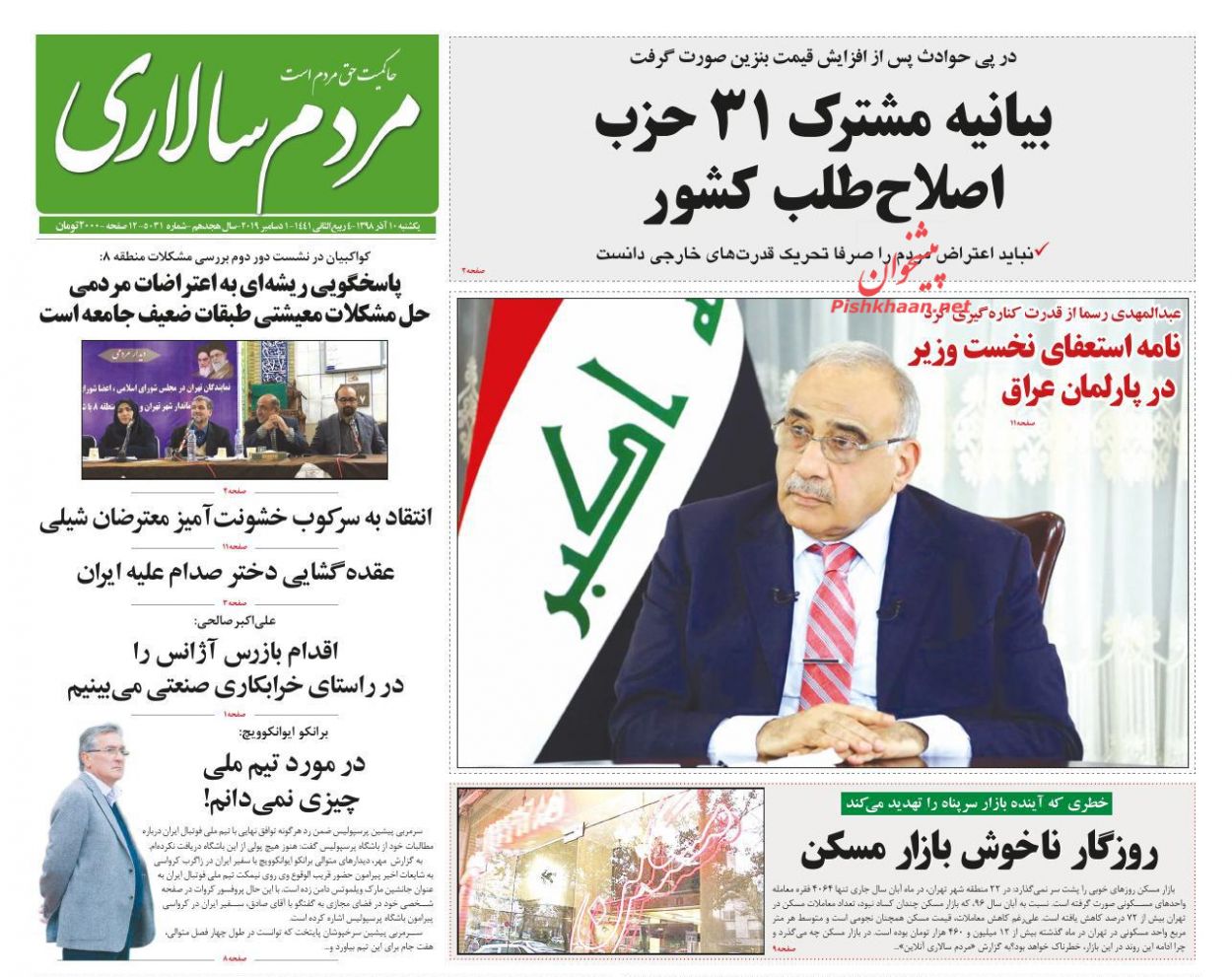
A Look at Iranian Newspaper Front Pages on December 1


Mardom Salari:
1- Iran Nuclear Chief: IAEA Inspector’s Move Was Industrial Sabotage
2- 31 Reformist Parties Issue Joint Statement over Recent Incidents
* People’s Protests Shouldn’t Be Only Linked to Foreign Provocation

A Look at Iranian Newspaper Front Pages on December 1


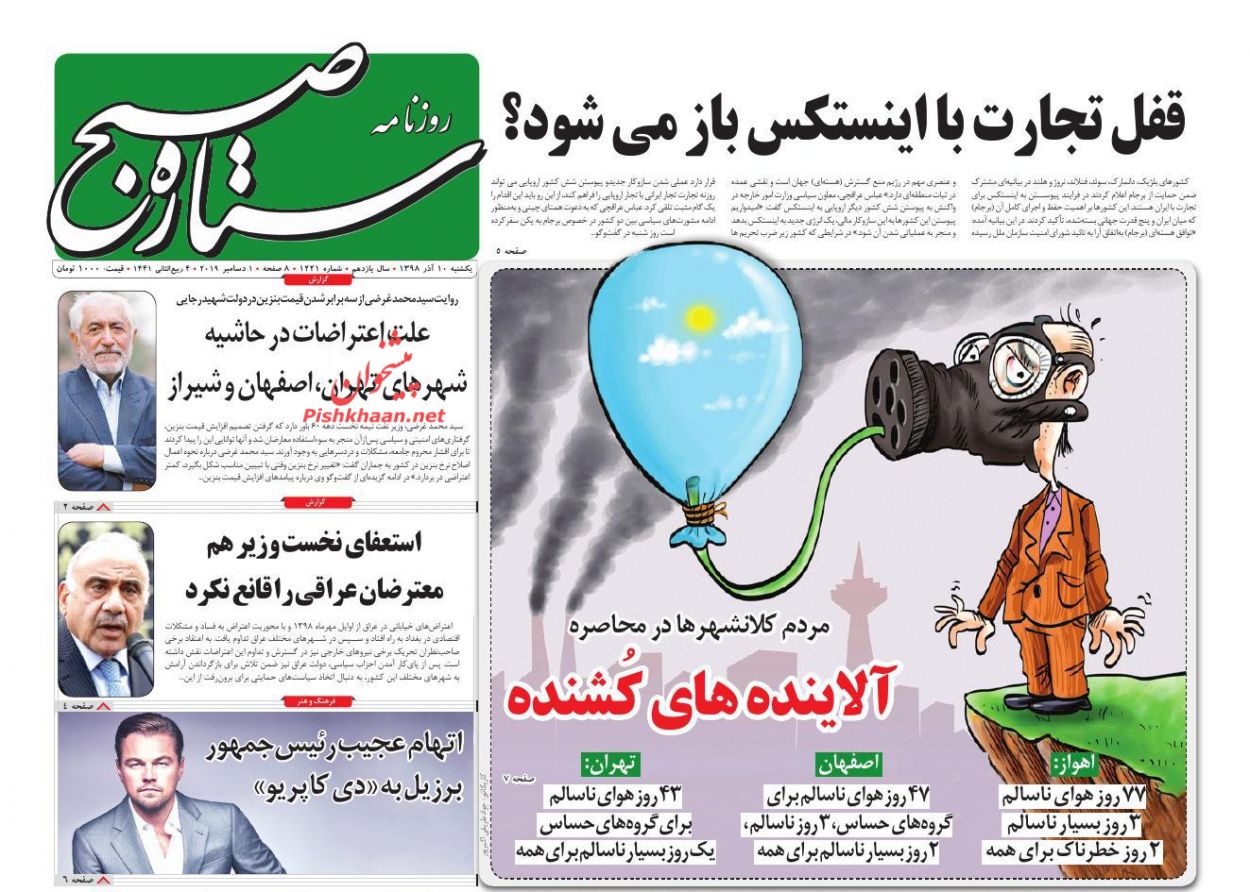
Setareh Sobh:
1- Even Prime Minister’s Resignation Did Not Convince Iraqi Protesters
2- Will INSTEX Finally Come into Operation?

A Look at Iranian Newspaper Front Pages on December 1

Iran’s Beauties in Photos: Stone Garden of Kerman

Iran’s Beauties in Photos Stone Garden of Kerman (2)

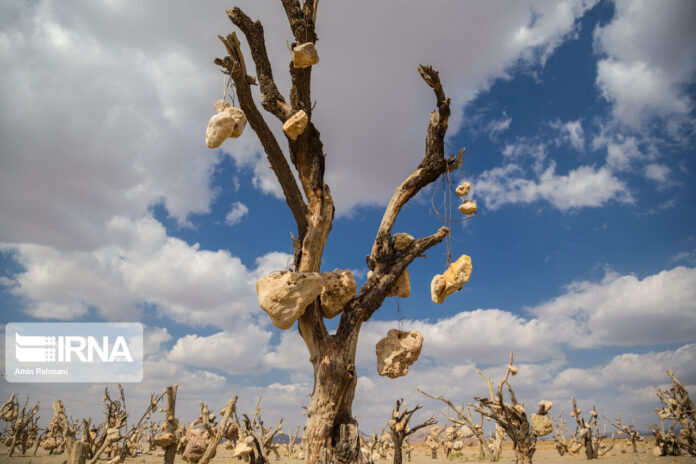
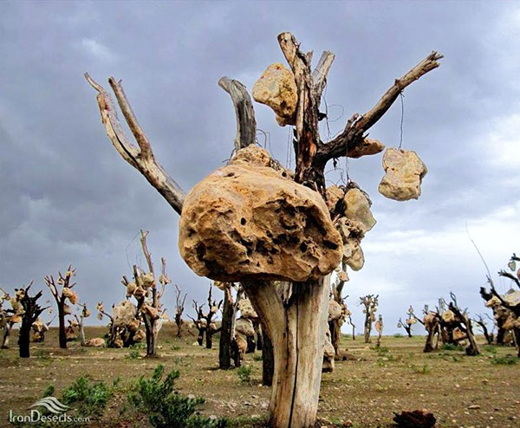
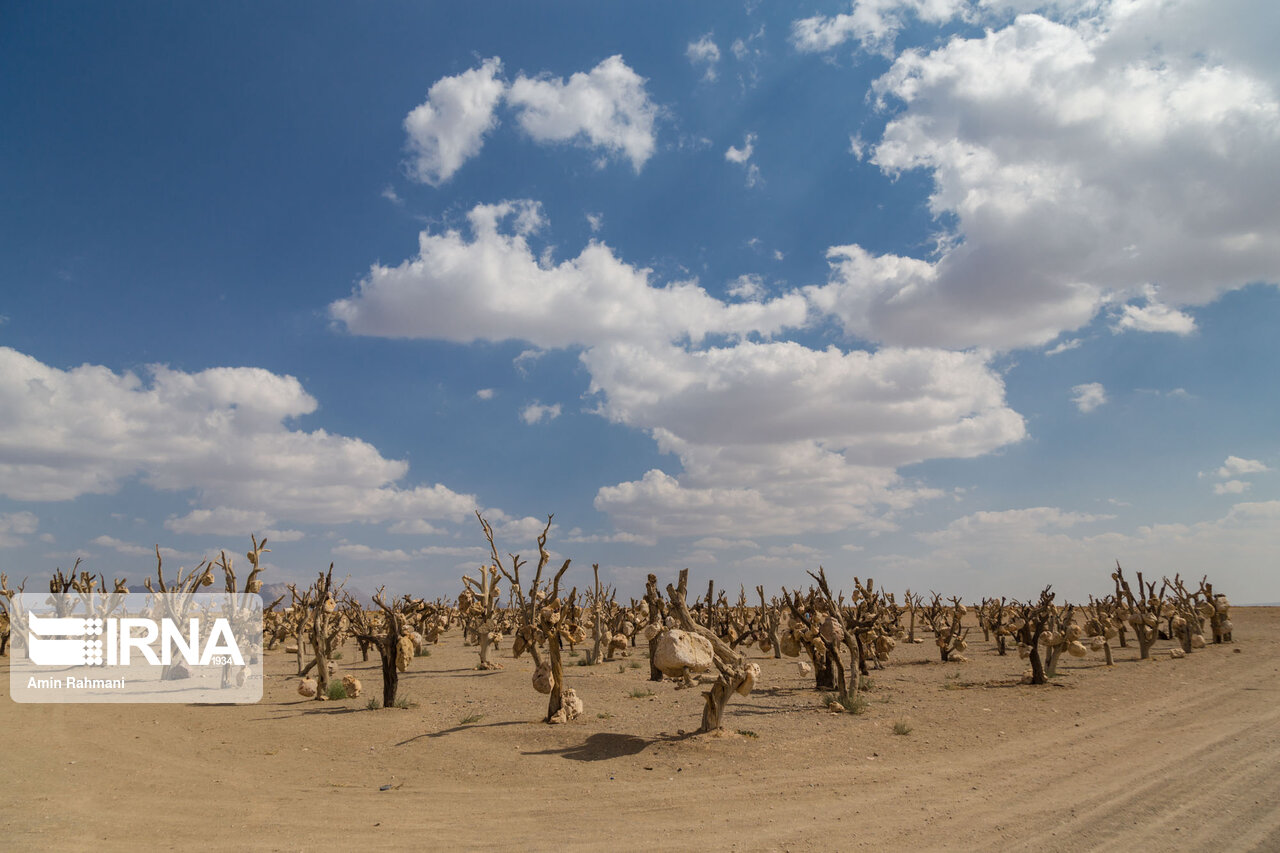
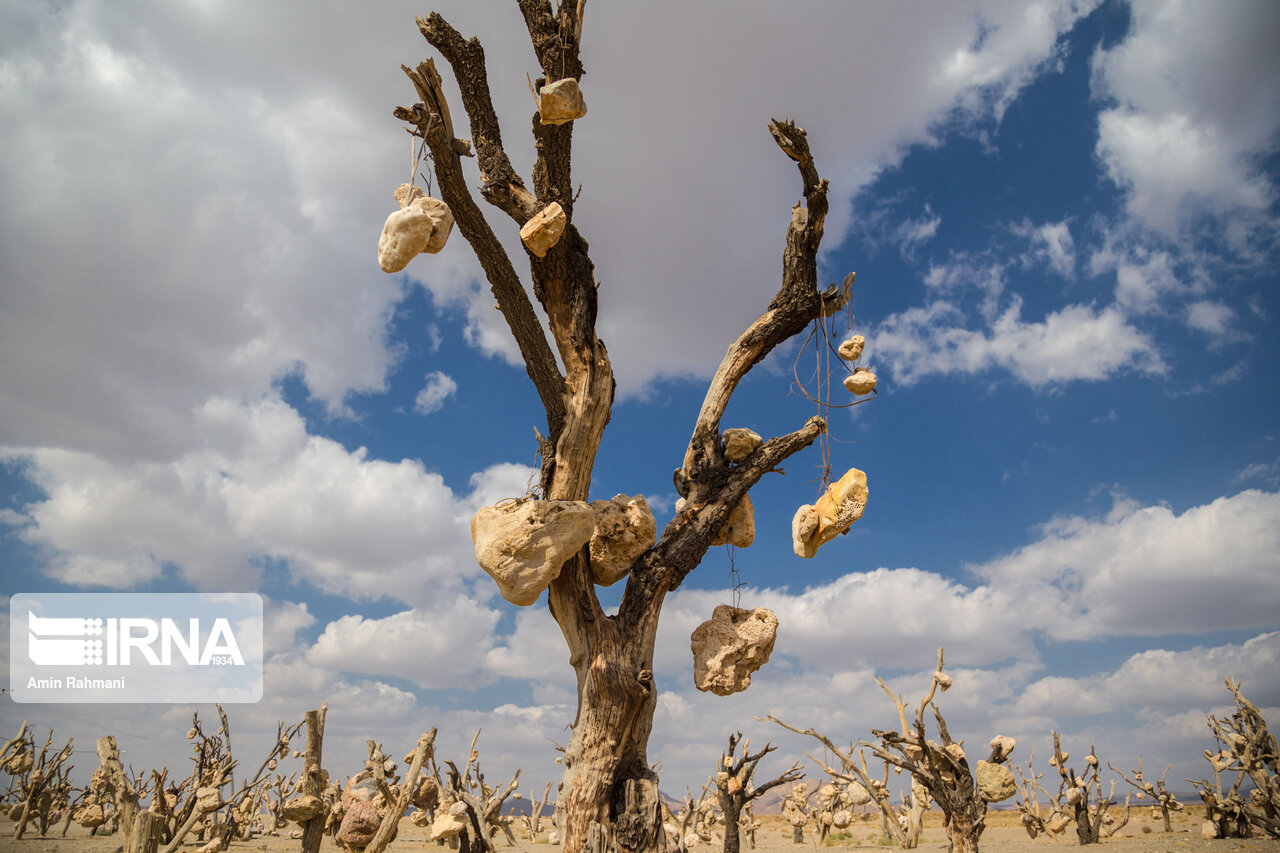
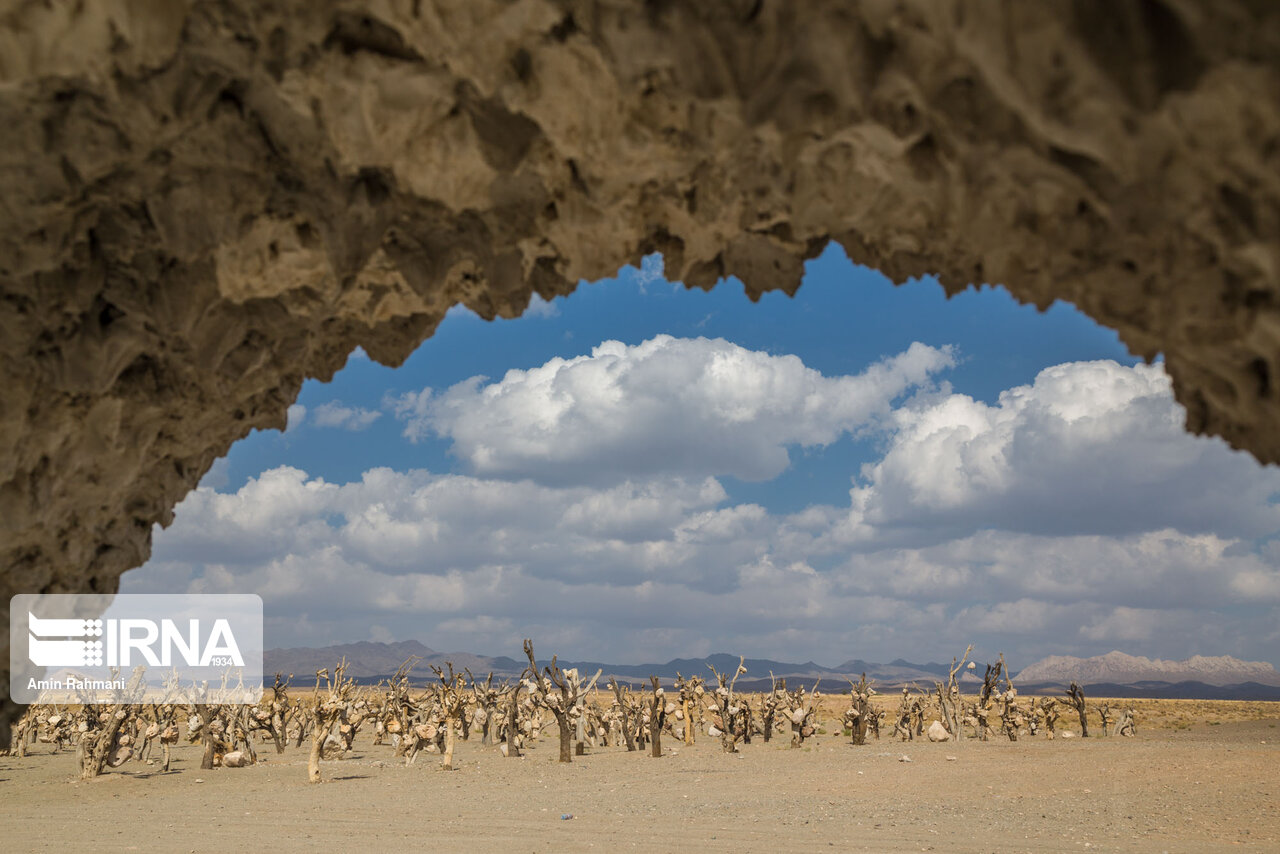
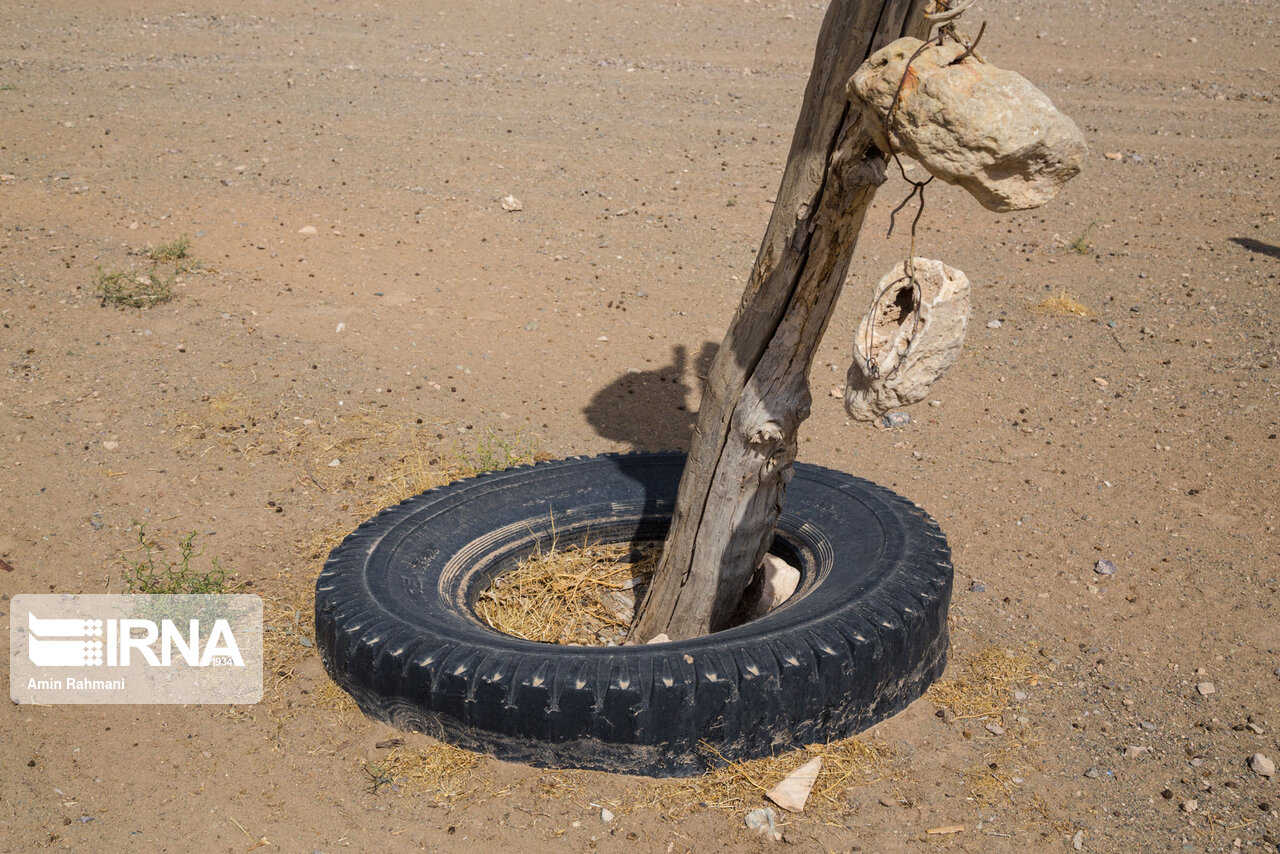
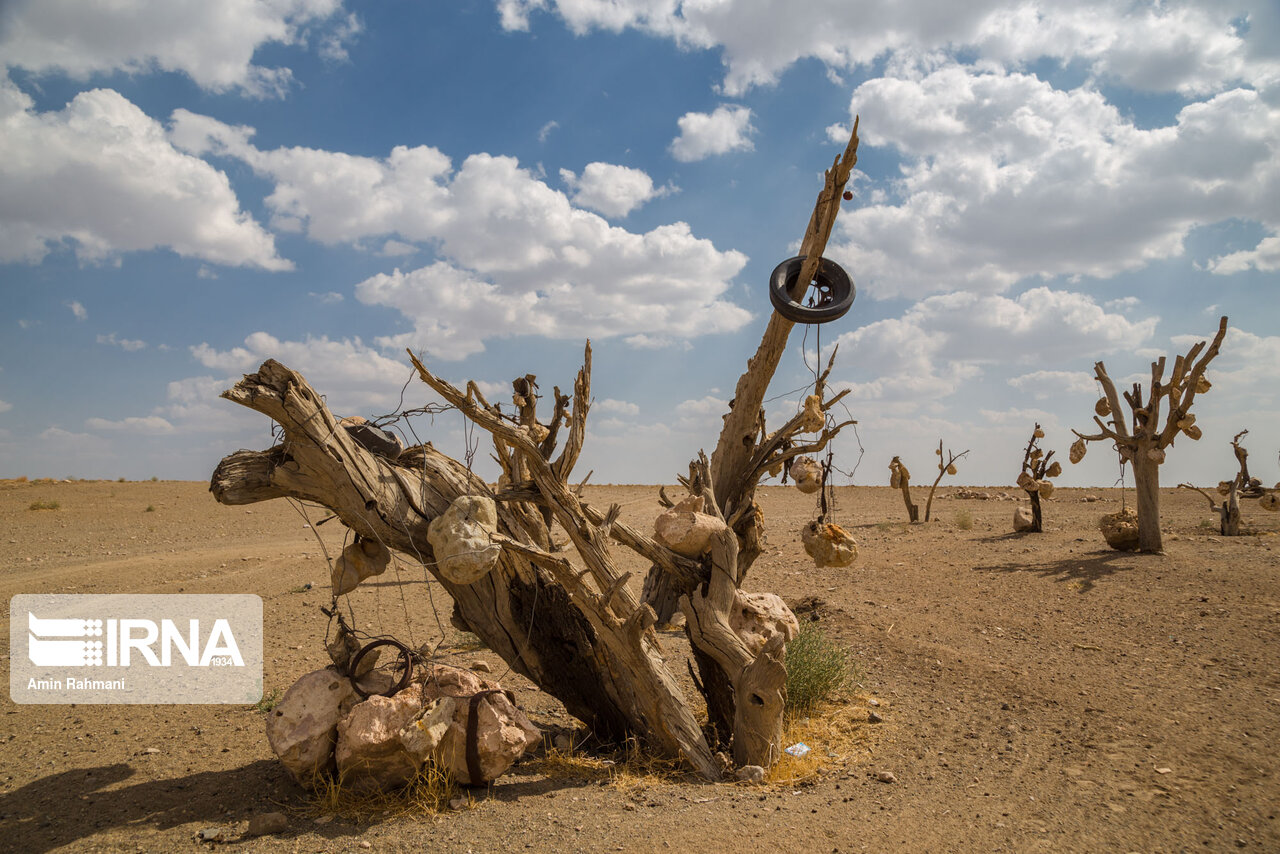
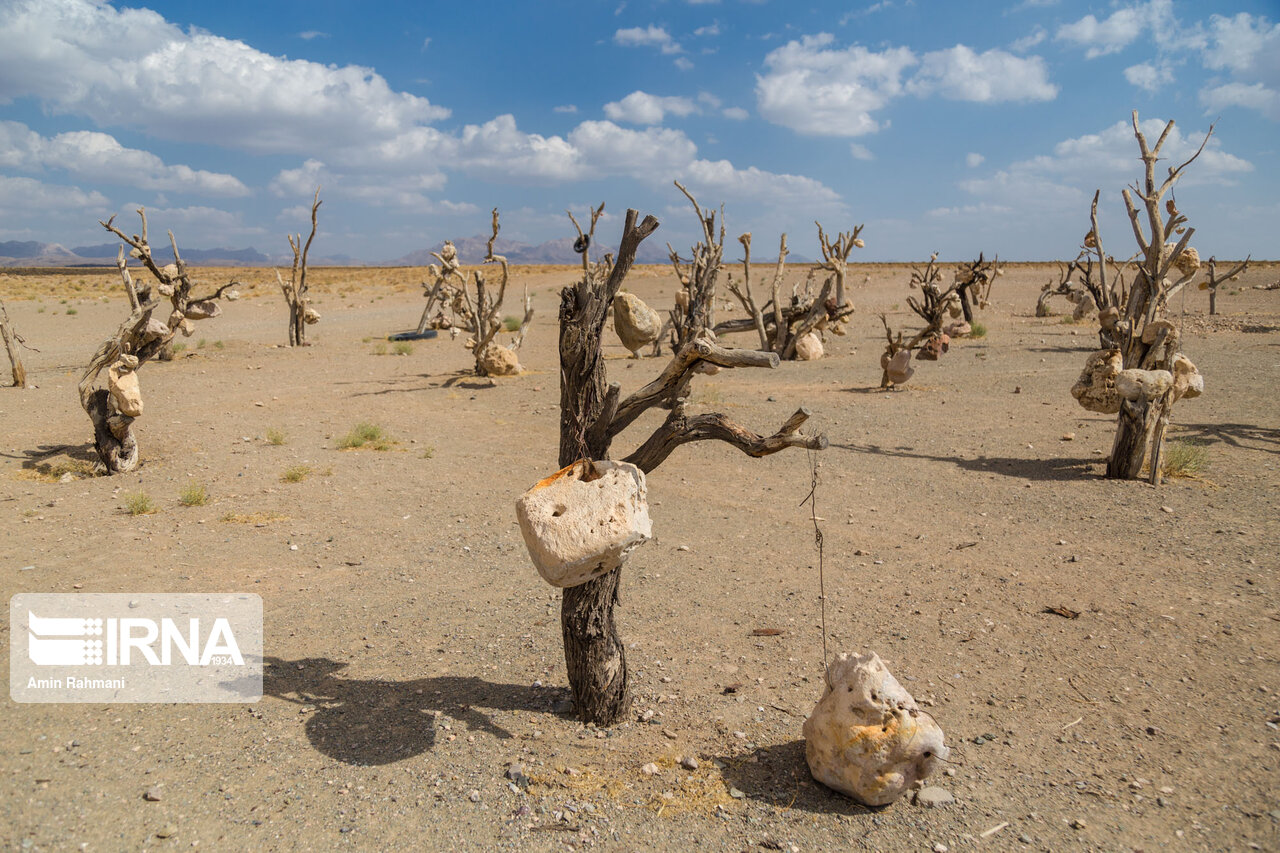
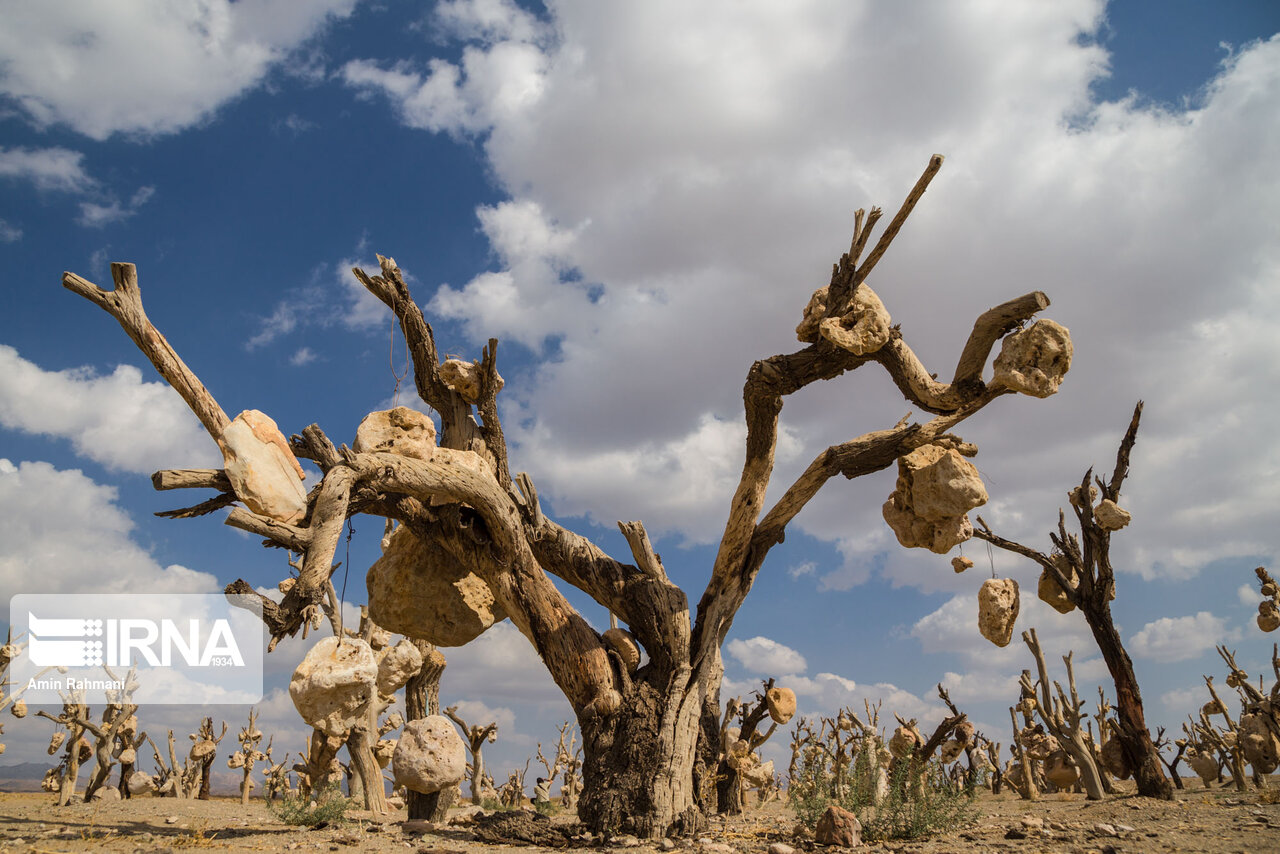
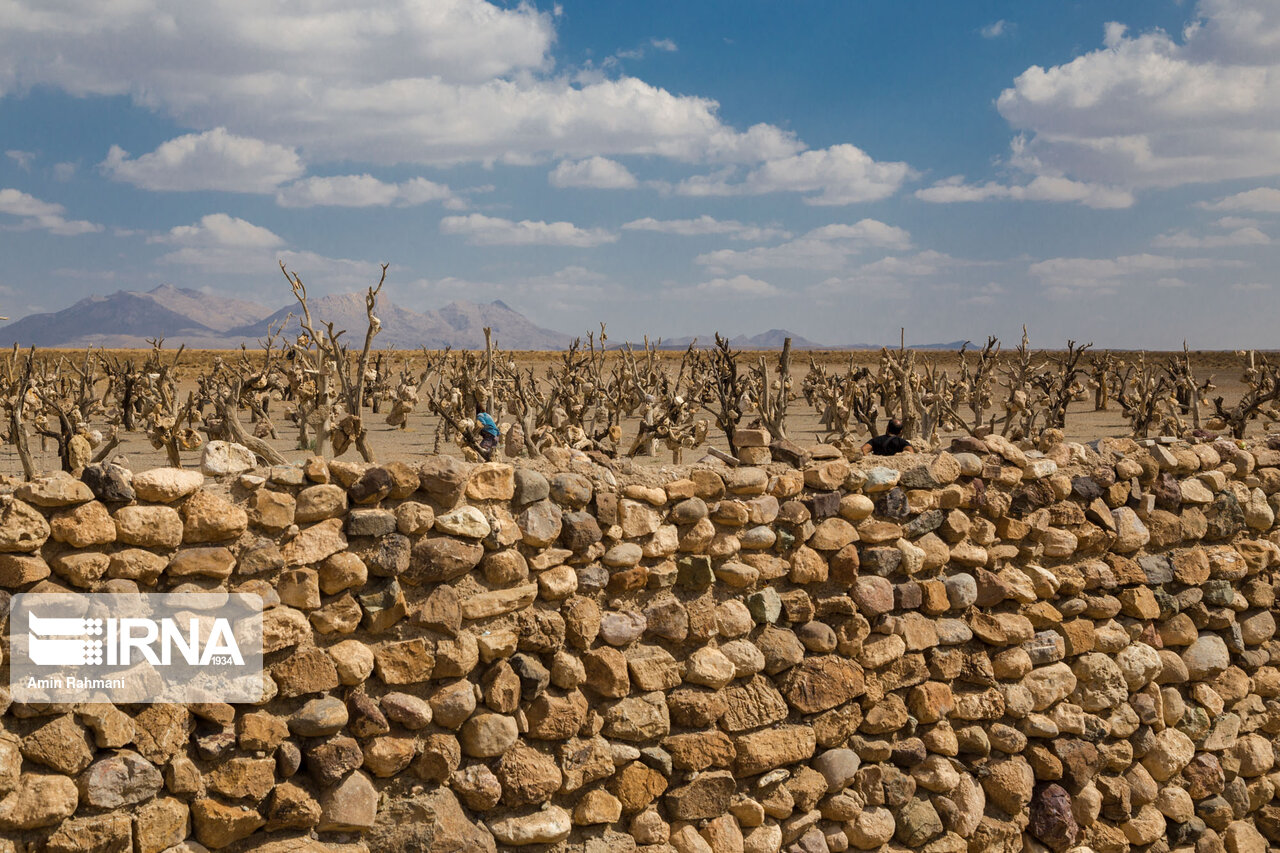
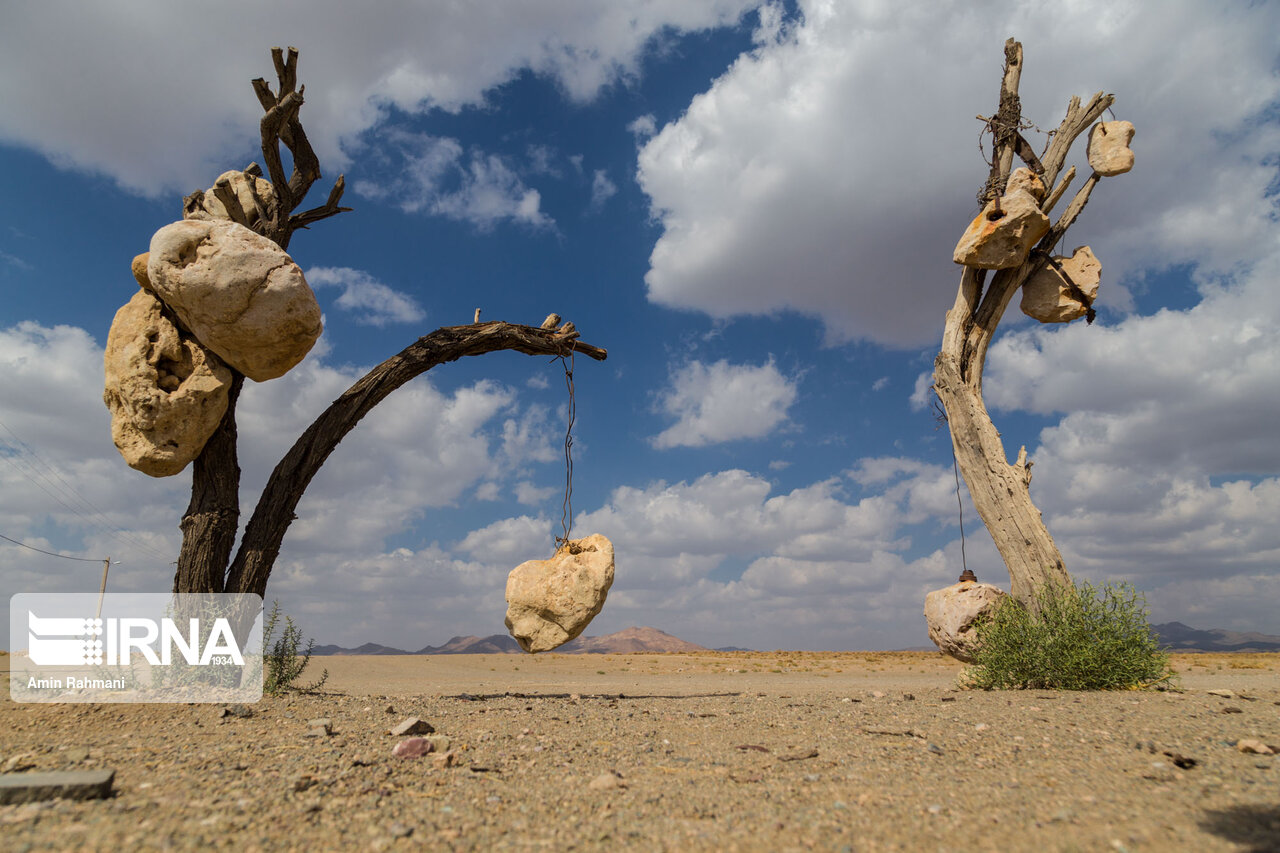
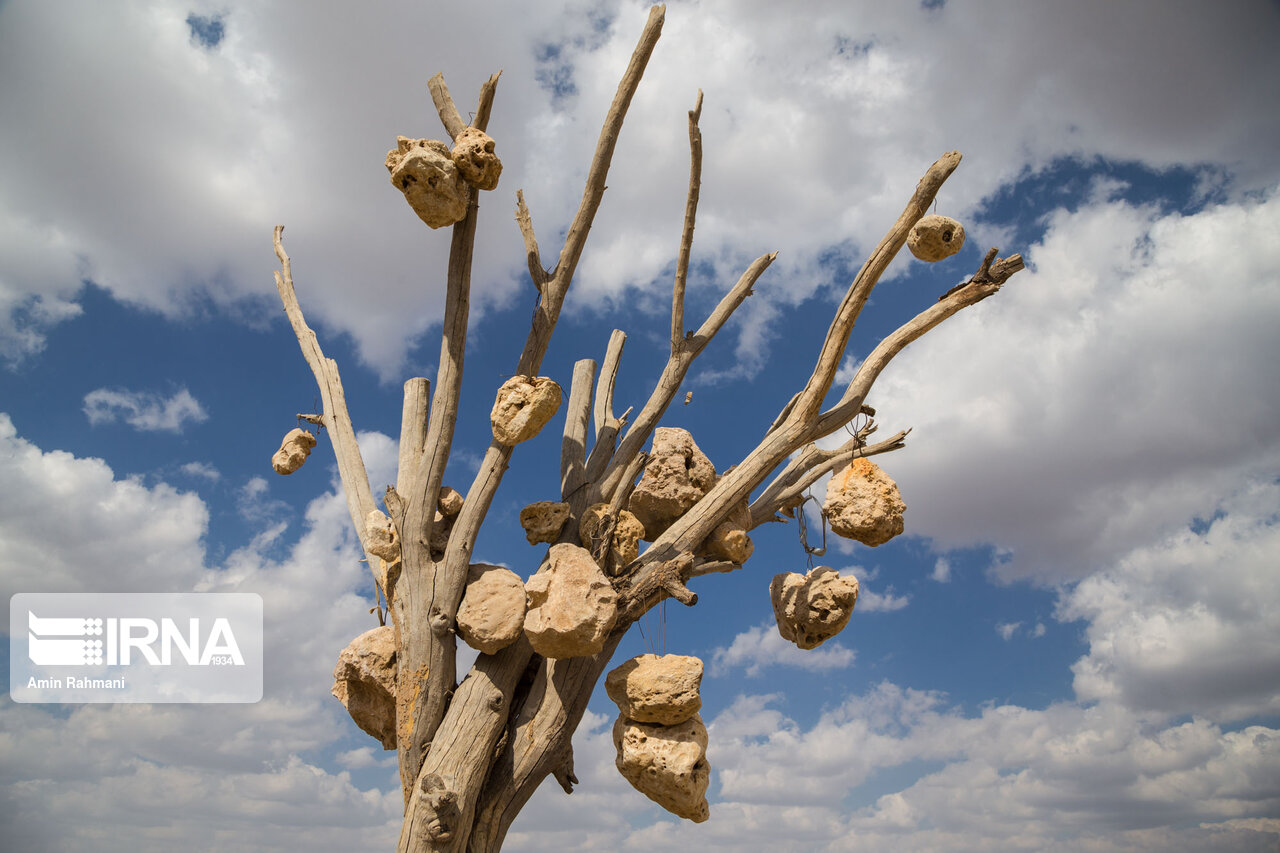
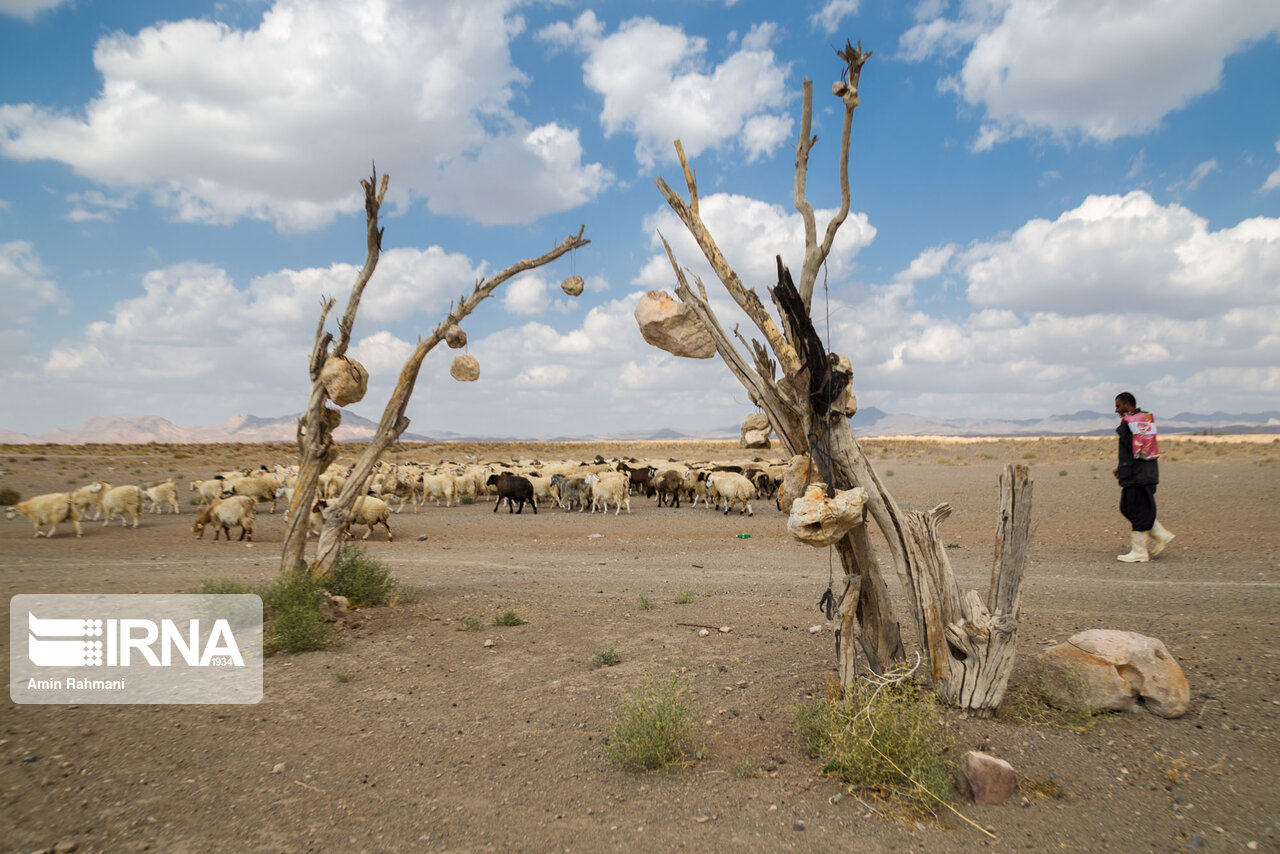
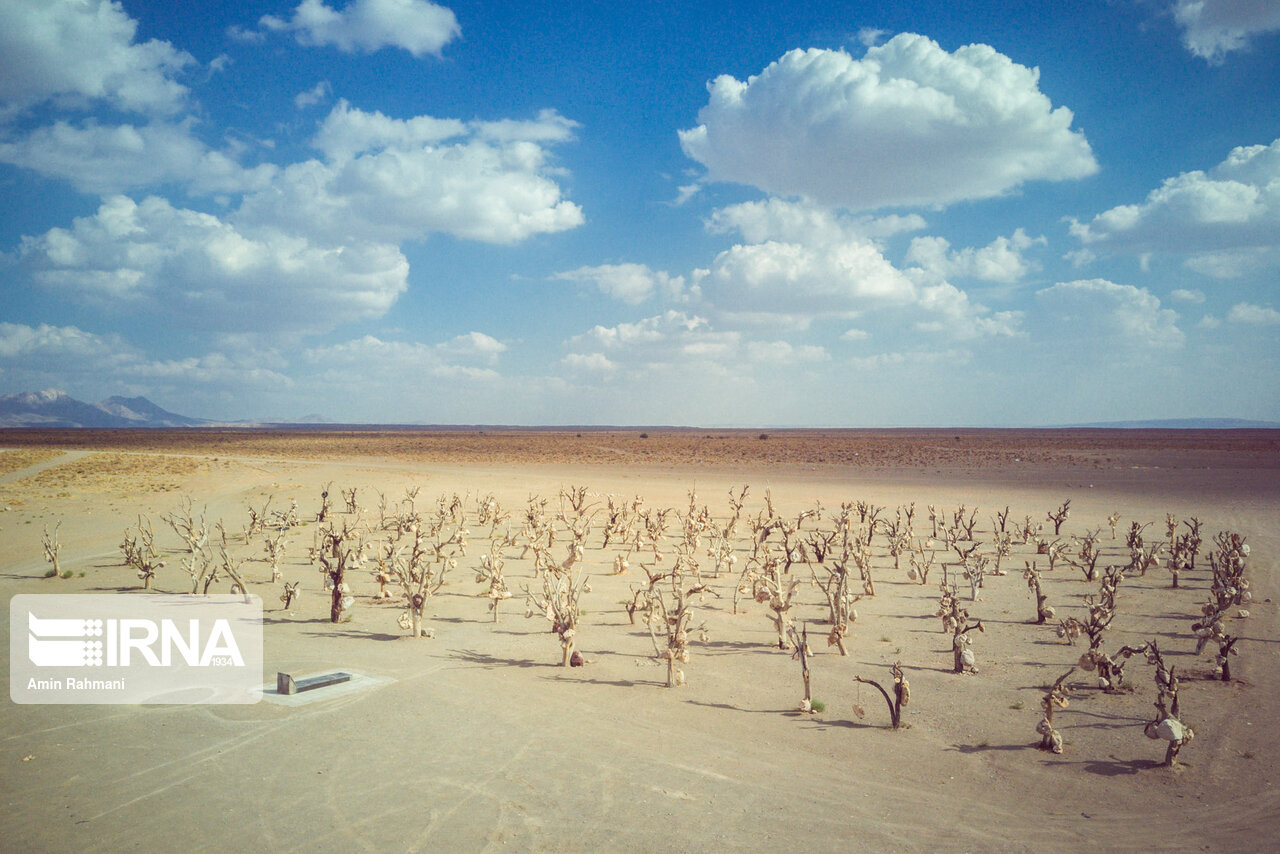
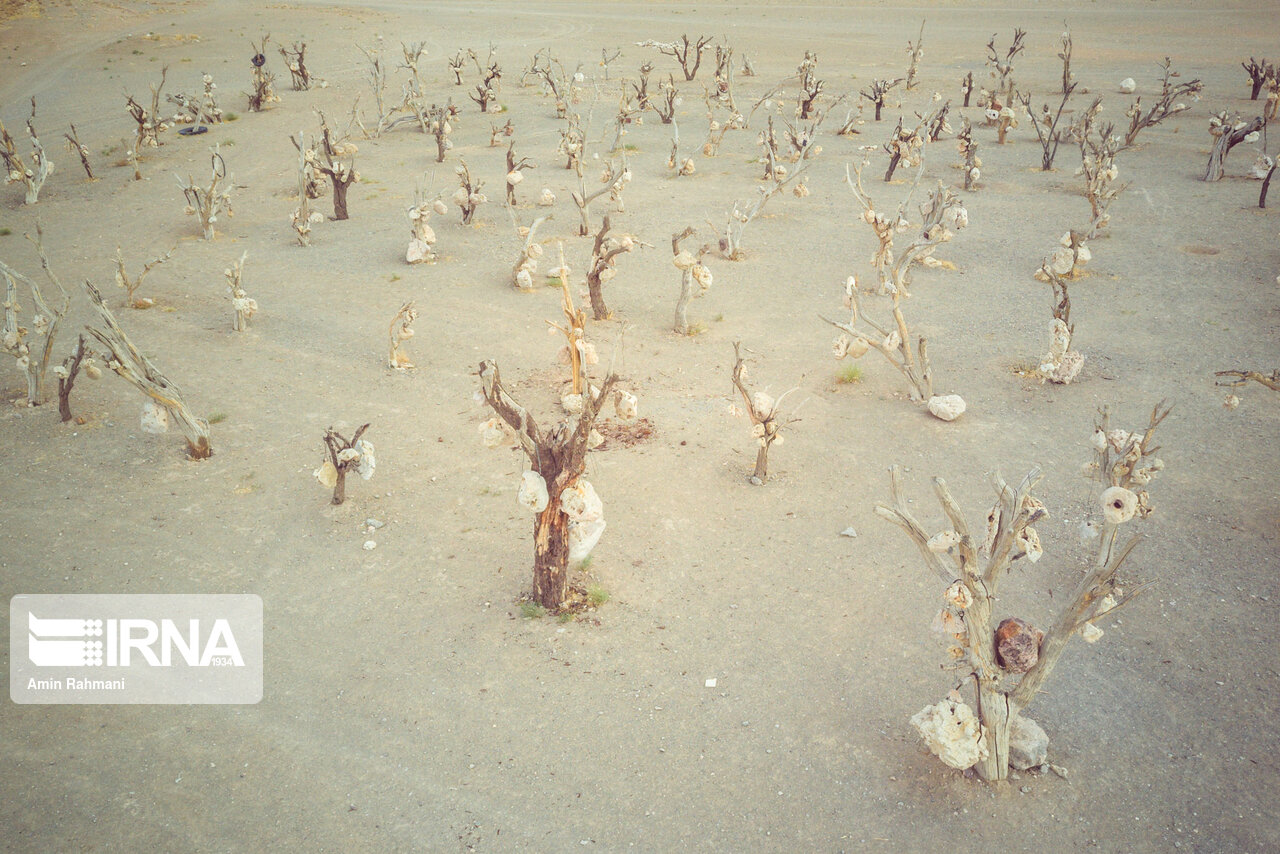
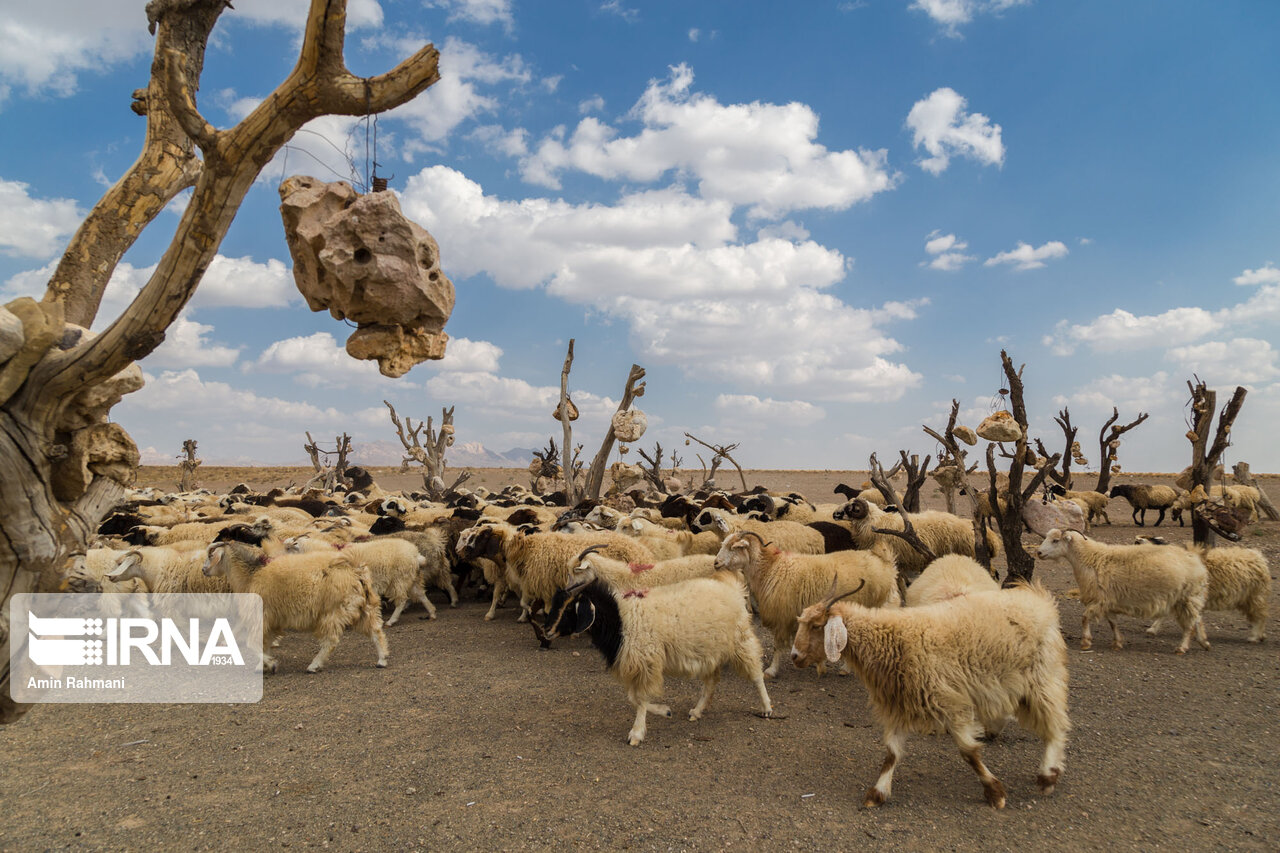
The stone garden is located in Miandoab village, Balvard district, 40 km to the southeast of Sirjan. Darvish Khan Esfandiarpoor, the owner of garden, was a deaf man who earned his family living through farming and animal husbandry.

Iran’s Beauties in Photos: Stone Garden of Kerman
Iran’s Beauties in Photos: Garden of Stones in Sirjan

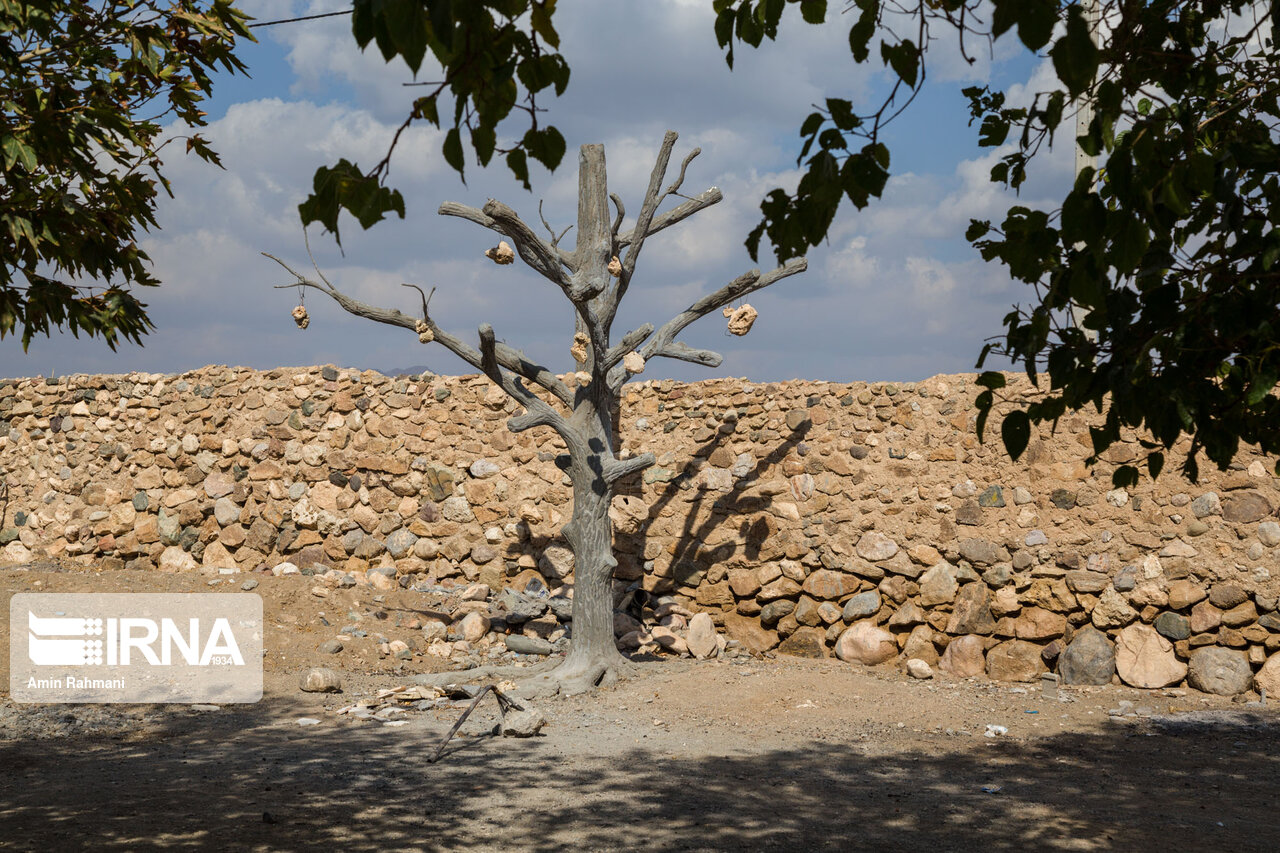
In protest at the loss of his properties due to the Iranian land reform in 1961, he stopped gardening. As a result, all the trees in his remaining land dried up.

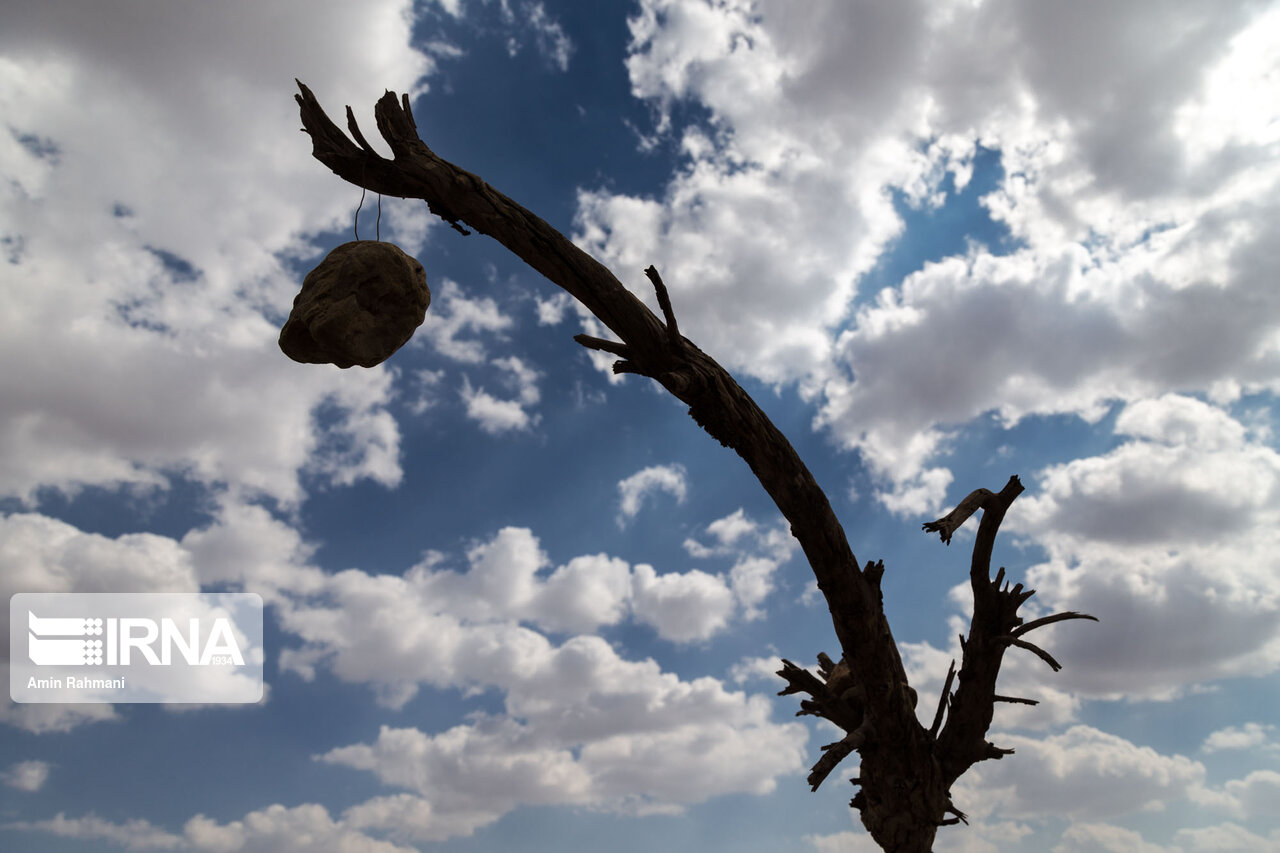
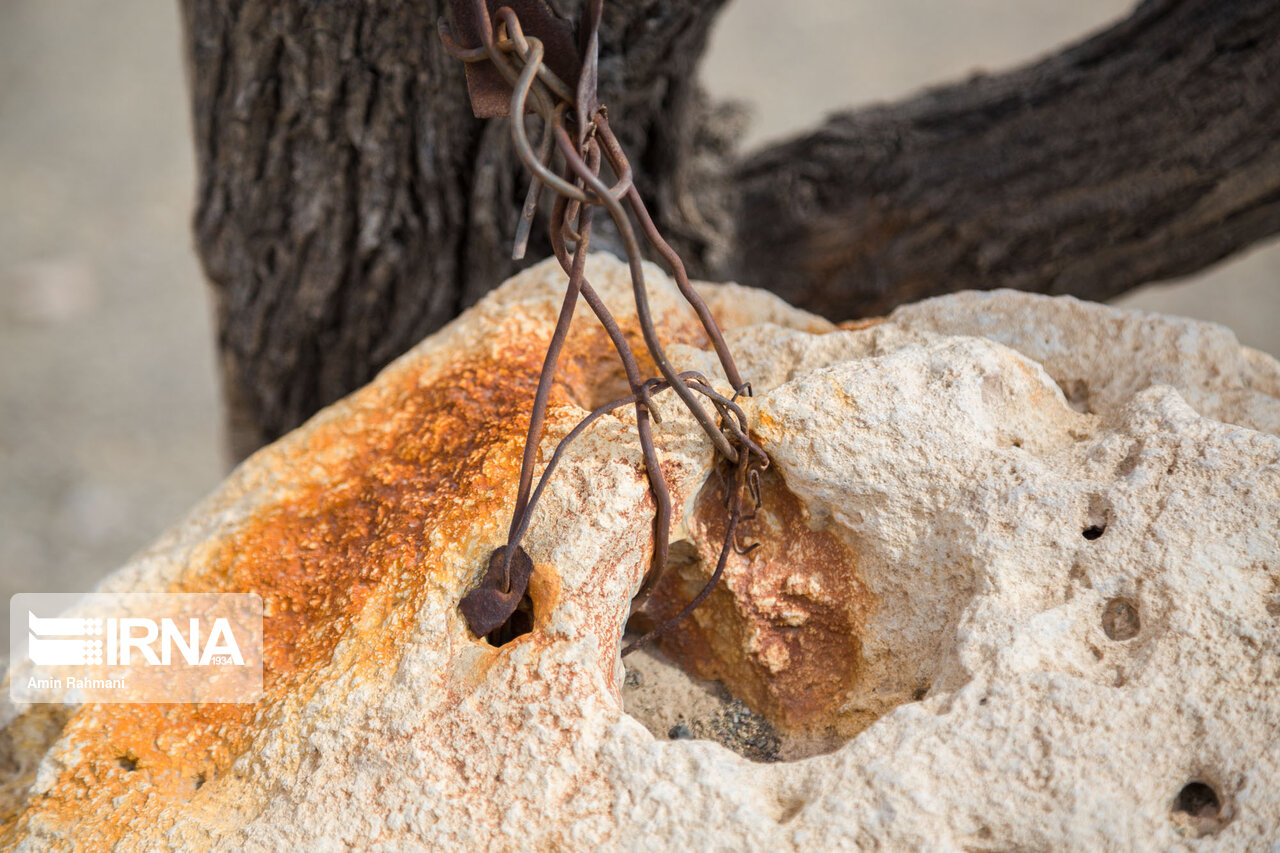
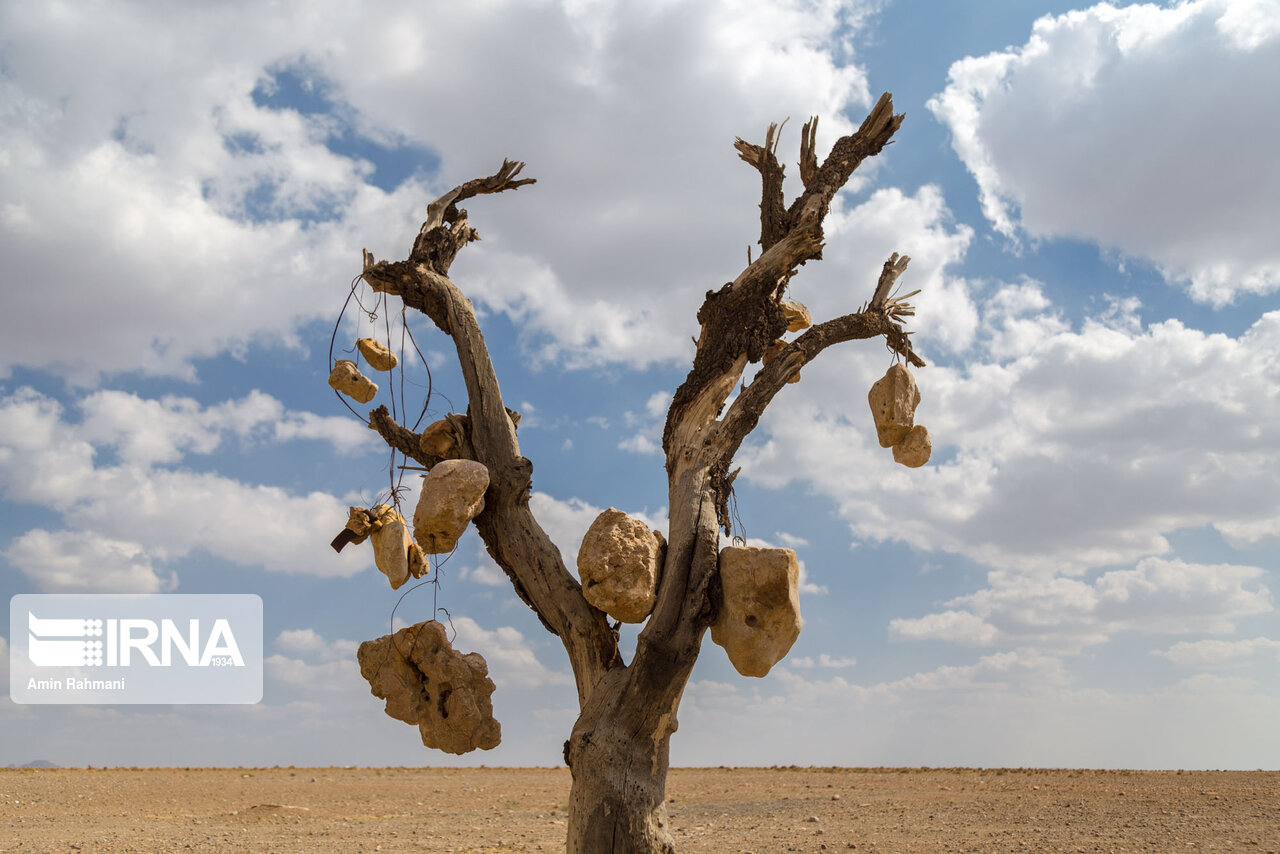
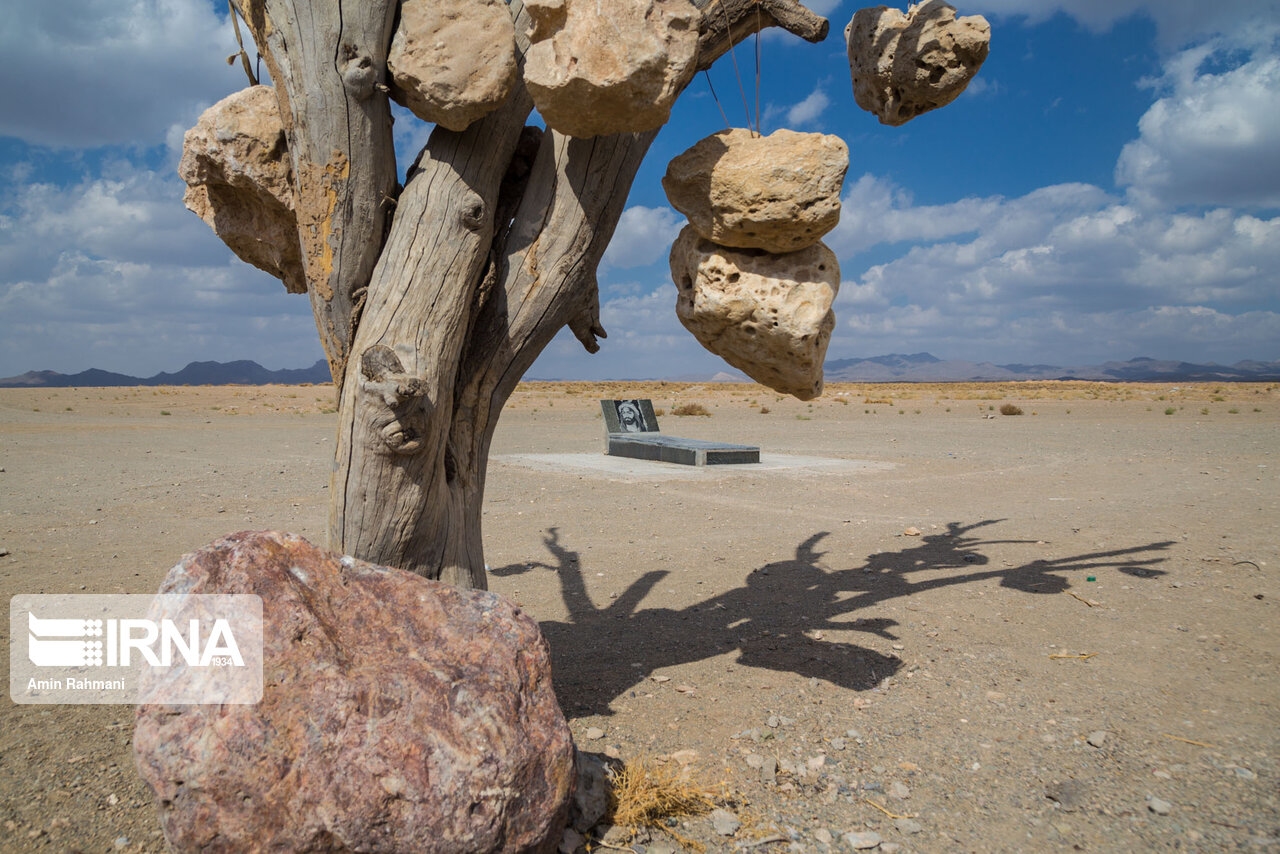
He then hung stones on all the branches of garden’s dried fruit trees, and started to take care of them like real fruits.

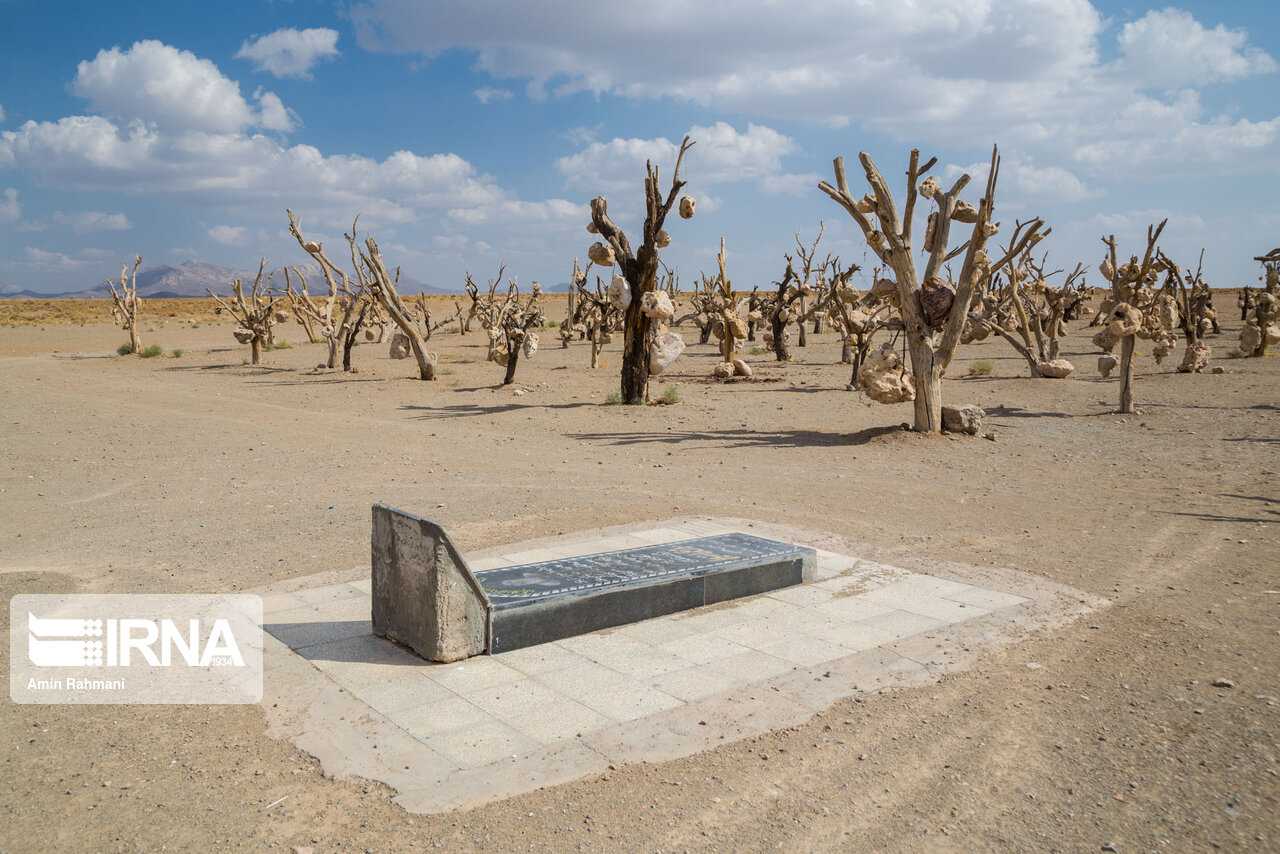
Darvish Khan died at the age of 83 in April 2007, and his body was buried in his garden.

What follows are IRNA’s photos of this tourist attraction of Kerman:

Iran Urges Closer Cooperation among Gas Producing Countries

Iran Urges Closer Cooperation among Gas Producing Countries

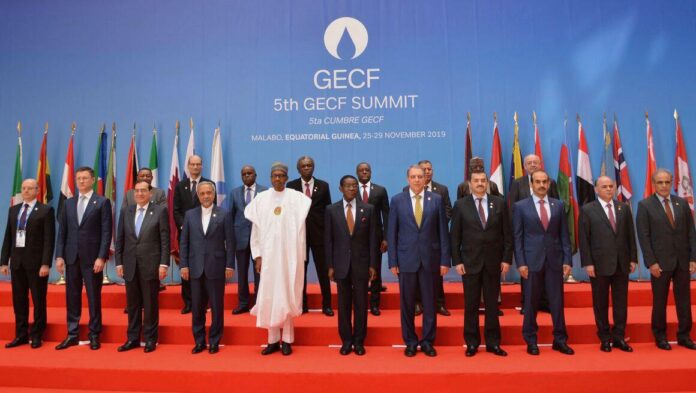
Iran was represented at the summit by Vice President for Economic Affairs Mohammad Nahavandian, who, in a speech, called for further cooperation and coordination among member states.

He said GECF members play a pivotal role in the development of a sustainable world.

“It is necessary that this potential be utilized through cooperation and partnership to further boost the growth, development and welfare of member states as well as other countries,” he said.

He noted that Iran has had a successful experience with regards to the utilization of natural gas as 95 percent of the country’s population now have access to this source of energy.

Nahavandian added Iran has also been successful in replacing air-polluting fuels with natural gas in the transportation and electricity generation sectors. The vice president noted that natural gas now accounts for 70% of the fuels used by Iranians.

“All this has been done on the back of domestic knowledge and potential at a time when Iran has been under pressure of the United States’ economic terrorism in the form of unilateral sanctions,” he noted.
He said some other GECF members are also under US sanctions, urging member states to use alternative currencies instead of the dollar in their transactions.

The Gas Exporting Countries Forum is an intergovernmental organization of 11 of the world’s leading natural gas producers made up of Algeria, Bolivia, Egypt, Equatorial Guinea, Iran, Libya, Nigeria, Qatar, Russia, Trinidad and Tobago and Venezuela.

US Sanctions Not to Stop Iranian Women’s Progress: VP

Speaking during a two-day visit to Thailand, the Iranian VP highlighted the progress of Iranian women in different fields saying that it was the result of the Islamic Revolution.

She further stated that with the plans of the government this process would continue and the will of the Iranian nation and women would definitely foil the US sanctions.

While in Thailand, Ebtekar met with Thai Foreign Minister, Don Pramudwinai, and touched upon the centuries-long relationship between the two countries. She also called for deepening ties in the economic field, including tourism.

She said the US unilateral and cruel sanctions is an economic war against the Iranian nation, and the unilateralism and imposition of personal will is a pest that could target any other country and cause insecurity in the international community.

US Sanctions Not to Stop Iranian Women’s Progress: VP
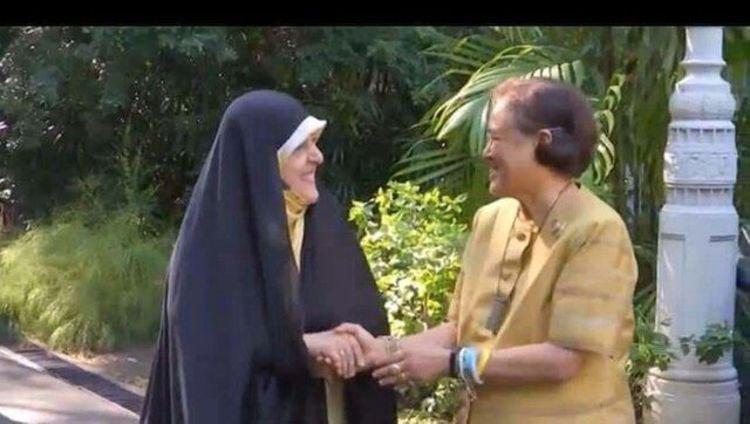
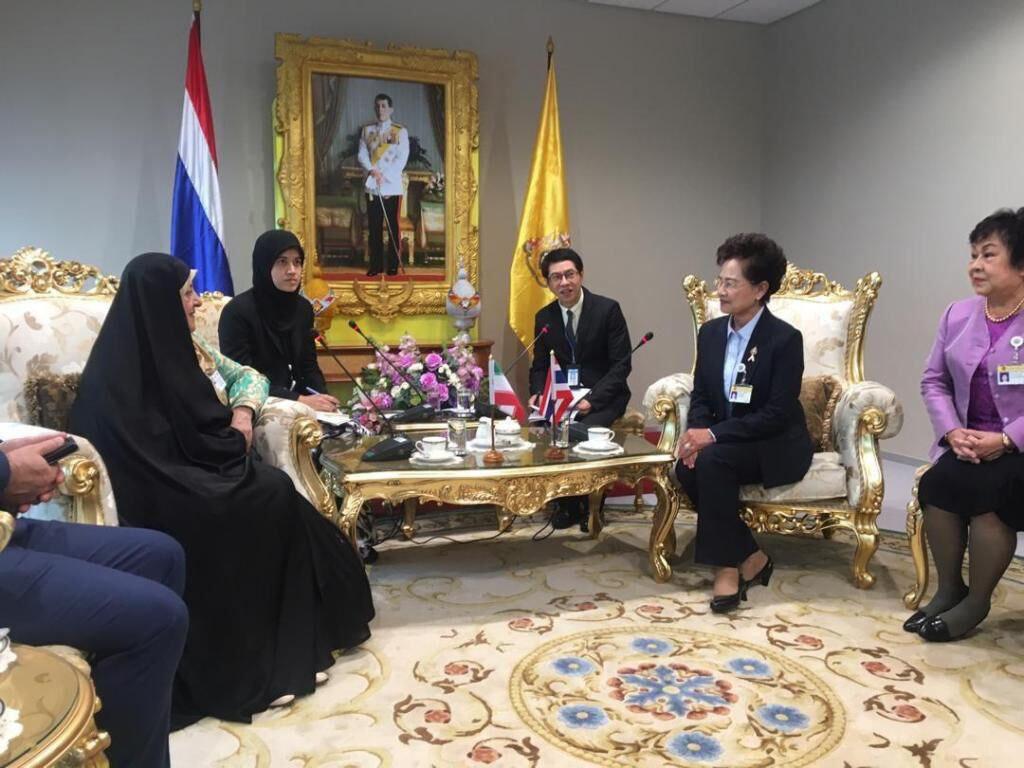
Masoumeh Ebtekar meets with Thai King’s sister

For his part, Don Pramudwinai blamed unilateralism as the root cause of many problems in the eastern regions, saying that it has caused damage for many countries.

Later on, Ebtekar met with Thai Minister of Social Development and Human Security Juti Krairiksh.

In this meeting, The Thai Minister of Social Development and Human Security called for using the Islamic Republic of Iran’s experiences regarding women and families and welcomed the holding of handicrafts exhibition by Iranian and Thai women.

The vice president also met with sister of Thailand’s King, and talked about the hostile US policies against Iran and the detrimental and inhumane effects of sanctions on Iranian society and family structure.

While expressing regret, the Thai official condemned the interventionist policies of any state against other countries and emphasised that such unilateral policies are ineffective on international relations and relations between countries.

Considering the extensive activities of the King’s sister in charity and philanthropy, the two sides exchanged views on the status of women in the two countries, family structure, education and employment of women, etc.

The Vice President for Women and Family Affairs had earlier met with the Chairman of the Committee on Women’s Affairs of the Thai Parliament and members of the Committee.

Ebtekar pointed to the Islamic Republic of Iran’s actions in the field of women, saying that the allocation of a 30% quota for the appointment of women managers and the participation of women in higher education in Iran were among the measures by the country.

The chairman of the Thai parliamentary committee also emphasised that there may be cultural differences between countries, but Thailand believes women’s issues are a global one and should be dealt by all countries beyond cultural differences.

At the end of the meeting, the two sides stressed the need to strengthen the role of women in peace and security, and the Iranian official called on the Thai Committee to travel to Iran as soon as possible to exchange issues of mutual interest.

US Sanctions Not to Stop Iranian Women’s Progress: VP
Masoumeh Ebtekar meets with chairwoman and members of the Thai Parliament’s Women Committee

Tehran’s Iconic Milad Tower Turns Red on World AIDS Day

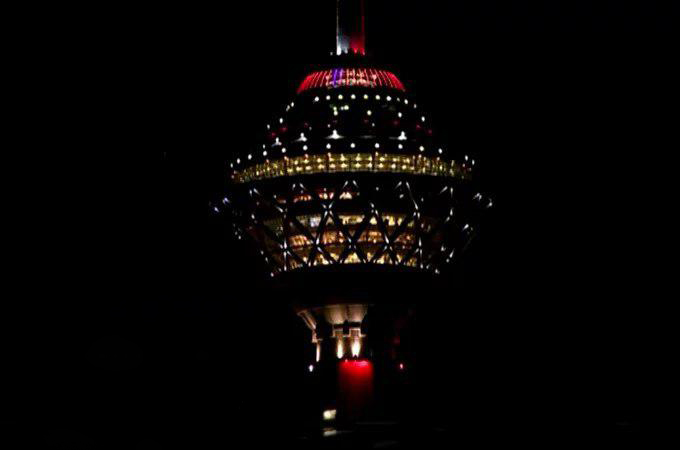
Tehran’s Iconic Milad Tower Turns Red on World AIDS Day

The tower turned red in a bid to support the HIV patients as well as raise awareness about this disease.

World AIDS Day offers an important platform to highlight the role of communities at a time when reduced funding and a shrinking space for civil society are putting the sustainability of services and advocacy efforts in jeopardy.

The theme of this year’s World AIDS Day is “Communities make the difference”. The red ribbon is the universal symbol of awareness and support for people living with HIV. Wearing a ribbon is a way to raise awareness on and during the run up to World AIDS Day.

Iran Ready for Active Participation in China’s ‘One Belt, One Road’

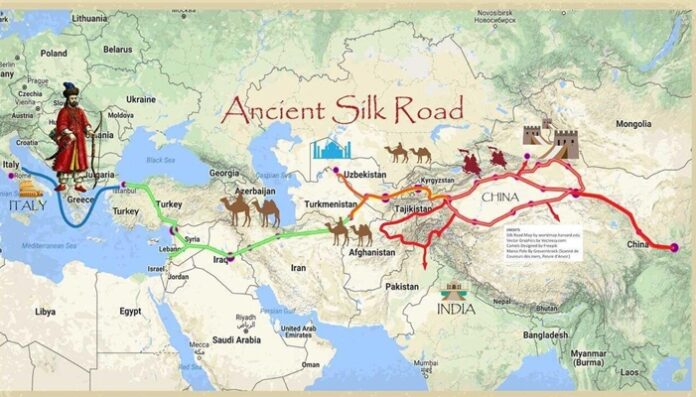
Silk Road

Ali-Asghar Mounesan, who was visiting China at the invitation of his Chinese counterpart to attend the Ancient Civilizations Forum, made the comments in an interview with China Radio International.

In the interview, the minister made it clear that Iran, as a major country in the ancient Silk Road, is ready for stronger participation in the One Belt, One Road project.

“Many countries participating in the Ancient Civilizations Forum have been part of the Silk Road in the past, and the route, which passed through Iran, was a very important path for trade in the Asian and European countries,” the Iranian minister added.
Highlighting the Silk Road’s role in connecting the nations, allowing people to know each other, and sharing the cultural elements, Mounesan hailed China’s president for his efforts to revive the Silk Road by proposing the One Belt, One Road initiative.

The minister also noted that he has visited China with a delegation of tourism industry activists at the invitation of China’s Minister of Culture and Tourism to take part in the Ancient Civilizations Forum.

Mounesan then pointed to the fruitful meetings between the Iranian and Chinese travel agencies, saying Iran could provide the Chinese people and travel agencies with information about its historic and natural attractions.

He went on to say that Iran has lifted visa requirement for the Chinese tourists since four months ago, citing the close and amicable ties between Tehran and Beijing, China’s large tourism market, and an extensive plan that Iran has devised to enhance tourism interaction with China.

According to the minister, statistics show an upward trend in the visits to Iran by the Chinese tourists over the past four months.

Mounesan then pointed to 24 Iranian sites inscribed on the UNESCO’s World Heritage List, saying they include 22 cultural sites and two natural sites, namely the Lut Desert and the Hyrcanian Forests.

Iran has up to 35,000 sites that have been registered nationally, many of which are waiting to be inscribed on the World Heritage List, the minister said, adding that there are around one million known historic sites and more than 600 museums in Iran.

He also noted that 13 Iranian cultural practices and expressions have been inscribed on the List of the Intangible Cultural Heritage of Humanity.

Highlighting the Iranian administration’s efforts to protect the cultural heritage, Mounesan said the Parliament has ratified a law that provides strong support for the cultural heritage in Iran, and has also upgraded the Cultural Heritage, Tourism and Handicrafts Organization to the status of a Ministry.

Lauding China’s rapid progress, the minister expressed hope for the expansion of relations between Iran and China and for sharing the experiences in order to build the two countries and provide a better life for the two nations.

“China and Iran are two countries with ancient civilizations, and have played a leading role in shaping the human civilization. We have great historical and cultural capacities and many things in common. The two countries are undoubtedly interested in getting to know each other’s civilizations,” Mounesan concluded.

Iran to Reconsider Commitments If Snapback Mechanism Triggered

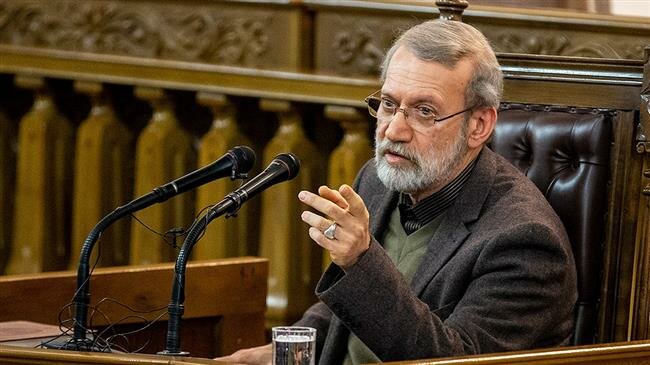
Larijani

Larijani issued the warning on Sunday after French Foreign Minister Jean-Yves Le Drian raised the possibility of triggering the dispute mechanism.

“If the European states use the mechanism, Iran will also revise some of its commitments to the International Atomic Energy Agency (IAEA),” he said.

Tehran is in the middle of a process to scale back its commitments under the Joint Comprehensive Plan of Action (JCPOA), the nuclear accord reached in 2015.

Iran is unhappy with the unilateral US withdrawal from the deal last year and its decision to reimpose sanctions on Tehran.

The Islamic Republic says its patience is also over with the Europeans because of their failure to protect Iran from the effects of the sanctions.

Germany, France and Britain are the three countries representing Europe as the signatory to the JCPOA, along with China and Russia.

For an entire year, Tehran remained fully committed to the JCPOA, waiting for the other sides to fulfill their end of the bargain.

As the Europeans failed to do so, Tehran moved in May to suspend some of its commitments as per Articles 26 and 36 of the nuclear deal.

So far, the Islamic Republic has gone through four stages of its plan to roll back the country’s obligations.

Larijani said Iran waited for more than a year after the US pullout, but the path to dialog and diplomacy still remains open.

He, however, warned the other parties should not make impudent remarks about Iran.