Sunday, December 21, 2025
Home Blog Page 3043

Iran Says Ready for Cooperation with Grossi as New IAEA Chief

Grossi IAEA Director General

In a statement on Thursday, Foreign Ministry Spokesman Seyyed Abbas Mousavi congratulated Grossi on being elected as the new IAEA Director General, and wished him luck in his serious post.

Pointing to the very sensitive and important responsibility that the IAEA member states have put on the International Atomic Energy Agency in the fields of nuclear disarmament and non-proliferation as well as the promotion of peaceful nuclear cooperation, Mousavi expressed hope that the IAEA would carry out its duties and delicate international missions impartially and professionally to the utmost.

The spokesman also highlighted the IAEA’s unique role in relation to the nuclear aspects of the JCPOA and the body’s significant role in Iran’s peaceful nuclear cooperation with the other member states.

“The Islamic Republic of Iran is ready to maintain and expand constructive interaction and cooperation with the Agency, coupled with goodwill and mutual respect and on the basis of the body’s (IAEA’s) professional accuracy and neutrality.”

On Tuesday, Grossi, 58, managed to secure the necessary two-thirds in a vote by the IAEA’s 35-nation Board of Governors to become the next chief of the nuclear watchdog, some three months after his predecessor, Yukiya Amano, died in office.

In a press conference following his victory, Grossi pledged to act independently and neutrally as the new chief of the IAEA.

“I will do my job and I think my job is to implement the mandate in a manner which is independent, which is fair, which is neutral,” Grossi told reporters when asked about Iran’s nuclear deal, which is arguably the most significant challenge he will have to tackle on his road ahead.

Malaysian Premier Says ‘Bullied’ to Close Iranians’ Bank Accounts

Mahathir Mohamad

Mahathir Mohamad said on Wednesday that the ties with Tehran are very good, but Malaysia faces strong pressures from certain quarters.

“We are forced to do this because if we don’t, they will close our banks abroad. It’s a kind of bullying by very powerful people,” he added.

Banks in Malaysia are closing the accounts of Iranian individuals and companies showing that the

US sanctions are having far-reaching effects on citizens of the Islamic Republic.

It is estimated that the accounts of some 10,000 Iranians living in Malaysia are closed.

Washington reinstated sanctions over Iran’s nuclear programme late last year, but Malaysia has maintained good diplomatic ties with Tehran.

Many Iranians said they know dozens of their fellow countrymen had received notices from CIMB and RHB Bank in the Southeast Asian country.

The banks did not state a reason, but some said bank officials attributed the move to tighter scrutiny after the sanctions.

Iran’s embassy in Kuala Lumpur says it is working to solve the problem. For the moment, Iranians in the Malaysian capital do not know how to pay school fees or hospital bills.

Iranian Official Raps US, Israel, Saudis for Plots against Lebanon, Iraq

Mahmood Vaezi Chief of staff of Iran President

Speaking to reporters on the sidelines of a weekly cabinet session in Tehran on Wednesday, Vaezi said, “The US, Saudi Arabia and the Zionist regime are controlling, directing and sponsoring the public demands and the virtual space (in Iraq and Lebanon), which is finally detrimental to people of both Lebanon and Iraq.”

He also reiterated Iran’s policy that the governments should respect the public demands and the demands should also be expressed in a way that would prevent chaos, unrest, damages or fatalities.

“The Islamic Republic of Iran’s permanent advice is calling for calm and not allowing the foreign forces to interfere in the affairs of countries,” the President’s Chief of Staff added.

Vaezi also took a swipe at the US, Saudi Arabia and the Israeli regime for their plots to weaken the incumbent governments of Lebanon and Iraq, to accuse Iraq’s religious authorities and official political parties of corruption, and to create a rift between Iraq and Iran.
“We and Iraq must be mindful to prevent the foreigners from achieving their objectives,” he added.

The presidential official further pointed to Iran’s next step in reducing commitments to the 2015 nuclear deal, saying a committee has been set up to weigh up plans for the fourth phase.

Vaezi warned that Iran will definitely take the fourth step in scaling back the JCPOA commitments in due time if the country’s demands are not met in the negotiations with the other JCPOA parties before the end of a two-month deadline.

Asked about the recent problems that a number of Iranians in Malaysia have encountered with their bank accounts, Vaezi said the problem is not confined to Malaysia, as Iranian students in the other countries have also faced such problems caused by the sanctions.

“Fortunately, the Foreign Ministry and our Embassy (in Malaysia) have held consultations, and many of those accounts have been unblocked,” he explained.

Vaezi then pointed to the domestic economy, saying the administration is gradually and carefully cutting the monthly cash subsidies for the affluent social groups, assuring people that their subsidy payment could be claimed back in case of a mistake.

He also noted that the US pressures have restricted the connections between the Iranian and foreign banks, stressing that the limitations are temporary.

The banking obstacles will be removed sooner or later, and the Iranian banks will be able to work with the world banks like before, he added.

Iran Joins Railroad Project Connecting China to Europe

Head of Iran Railways Saeed Rasouli

Iran, Kazakhstan, Uzbekistan, Turkmenistan and Turkey signed a cooperation document on a railroad corridor that would connect China to Turkey and Europe.

In an interview with IRIB, Head of the Islamic Republic of Iran Railways Saeed Rasouli said five countries, including Iran, have finalized plans and signed the document on a major railroad corridor that would link China to Turkey and extend farther west to Europe.

He said the transit of goods through the five participants in the project –Iran, Kazakhstan, Uzbekistan, Turkmenistan and Turkey- will be subject to the same and completely competitive tariff rates.

Expressing optimism about a boom in the transportation industry after coming into service of the railroad, Rasouli said the transit route from China to Europe has a very large capacity for the shipment of containers.

When the railroad corridor receives a share of the shipment of goods from China to Europe, it will definitely help the railroad networks thrive in Iran and the neighboring countries, the Iranian official concluded.

APA Concludes Meeting in Turkey

The 1st Executive Council meeting of the Asian Parliamentary Assembly - APA in Turkey

During the event, held on October 25-28, head of Iran’s parliamentary delegation held meetings with her counterparts from Russia’s State Duma and from Qatar, while the Iranian parliamentary delegation had a meeting with the delegation of Turkey.

The meeting of APA’s 1st Executive Council was attended by parliamentary delegations from Iraq, Russia, Iran, Turkey, Cambodia, Kuwait, Bahrain, Jordan, Bhutan, Palestine, Pakistan, Qatar, Timor-Leste, Kazakhstan, the Republic of Azerbaijan, and Afghanistan.

In an address to the closing ceremony of the meeting, head of the Iranian delegation Fateme Zolqadr said, “The Asian Parliamentary Assembly’s family has now become bigger and more diverse, because Qatar and Timor-Leste have fully joined the assembly.”

She also extended a warm welcome to the Consultative Assembly of Qatar and to East Timorese National Parliament, congratulated them on membership in the Asian Parliamentary Assembly, praised the APA members for active participation in the Executive Council discussions, and lauded the APA Secretariat for its professional approach and commitment to the assembly’s main goals.

The Iraqi Parliament was initially short-listed for the presidency of APA for 2020-2021, but after extensive talks about the Asian Parliamentary Assembly’s presidency, it was decided that Turkey would continue its presidency until December, so that Iraq could take over the presidency after the 12th APA Plenary and after restoration of stability in the Arab country.

Moreover, the Consultative Assembly of Qatar expressed readiness to host and chair the meeting of the Standing Committee on Economic and Sustainable Development.

Led by Fateme Zolqadr, the Iranian parliamentary delegation attended the meeting of APA’s 1st Executive Council, held in Turkey’s coastal city of Rize for the purpose of promoting cooperation and sharing experiences with Turkey.

Iran to Use Vegetation to Clean Oil-Contaminated Areas

The existence of various compounds of crude oil in water, soil and air has many adverse effects on all life forms and ecology next to its many adverse effects on humans, including the reduction of vegetation, soil microorganisms and aquatic populations. It also poses a serious threat to the environment directly or indirectly.

Physical, chemical and biological methods can be used to reduce these contaminants.

Physical and chemical methods are expensive and costly methods that are usually recommended for highly contaminated soils, while biological methods are convenient, inexpensive and low-cost methods to reduce soil contamination.

The use of phytoremediation to refine any infected system, in which the plants can grow, has recently received growing attention. Bioremediation is a method that utilises the ability of living organisms to increase the rate and speed of degradation of pollutants, and is an important tool to reduce environmental pollution. This process is particularly useful for treatment of contaminated systems with low concentrations of pollutants.

Phytoremediation is a technique of refining soil, water and contaminated sediments that is economical, environment-friendly and evolving.

Therefore, in order to analyse the amount of organic pollutants (TPH) and inorganic pollutants (lead, zinc, cadmium and nickel) in the soil of Pazanan oil field of Gachsaran, scientists are identifying and introducing native plants to refine the soils of the contaminated area.

“Feasibility of Using Rangeland Plants for Purification of Soil Pollutants in Oilfield Areas” is the title of the project, conducted by these researchers at the University of Tehran.
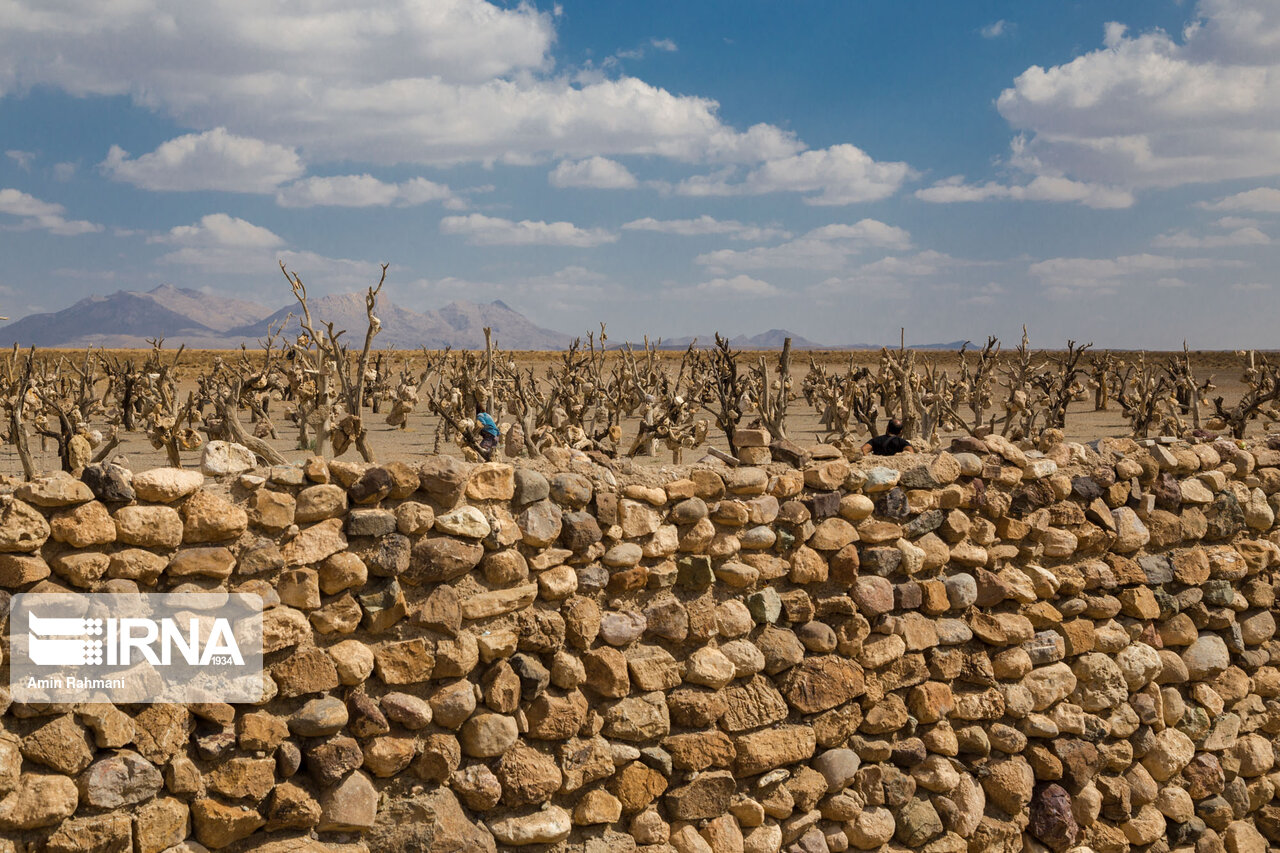
Since oil-contaminated areas in the world, especially in Iran, are very wide-ranging and have different climatic conditions, the use of indigenous plants in each region is essential for bio-filtration.

Scientists Devise New System to Monitor Brain Blood Flow

The brain is the most complex part of the body.

There are various ways to study the complexities of its operation. Functional near-infrared spectroscopy (fNIRS) is one of the new approaches in this field. This method works based on changes in blood flow within the brain.

When one part of the brain is involved in an activity, the activity of the nerves at that point is greater.

Therefore, as a result of high metabolism, the need for oxygen increases, so more blood is directed to that part. If these changes in blood flow are monitored and exposed to different parts of the brain, the active part can be identified.

Scientists at the University of Tehran have now designed and built an oxygen monitoring system in the brain tissue. With this device it is possible to study changes in blood flow in different areas of the brain.

“In this system by using probes placed on a person’s head the flow of blood is measured when the person is solving an issue,” the project manager said. “When one is engaged in a mental activity, use of oxygen is different in various parts of his brain. It also specifies which areas are simultaneously involved in resolving the problem.”

The pattern of oxygen use in a healthy person differs from that of a patient (for example, one suffering from Alzheimer’s disease). So one can diagnose various diseases like Alzheimer’s. It can also help people learn and focus on a specific matter.

1,200 Bone Marrow Transplants Carried Out in Iran Each Year

Amir Ali Hamidiyeh, the co-founder of the country’s first blood donor stem cell bank, says that expanding enrollment centres is one of the steps that can help.

Over the past two years, a lot has been done by the Health Ministry to promote the culture of donating hematopoietic stem cells.

1.3 million people around the world have undergone the surgery, of which 11,000 were Iranian. Currently, thousands of patients around the world are waiting for compatible stem cells donors. 40,000 people are diagnosed with leukemia each year, and one patient is diagnosed with leukemia every five minutes.
Once, leukemia was lethal, but nowadays it is treated with hematopoietic stem cell transplantation.
“Until 2009, there were no stem cell donor banks in the eastern Mediterranean region and North Africa, but in the same year Iran was listed as the 26th country to do hematopoietic stem cell exchanges.
Currently, more than 50 percent of all US, European and Japanese transplants are carried out with non-relative donors, but in our region, this number is below 1 percent,” said Hamidiyeh.

The cost of transplanting hematopoietic stem cells in Europe and the United States is $500,000 to $1 million, and the cost of transferring hematopoietic stem cells to other countries is 20,000 Euros. Thus, the outflow of capital can be prevented by increasing the number of donors and donor enrollment centres of hematopoietic stem cells.

At the same time, it should be noted that the patient does not require any medication six months after hematopoietic stem cell transplantation.

A Look at Iranian Newspaper Front Pages on October 30

A Look at Iranian Newspaper Front Pages on November 19

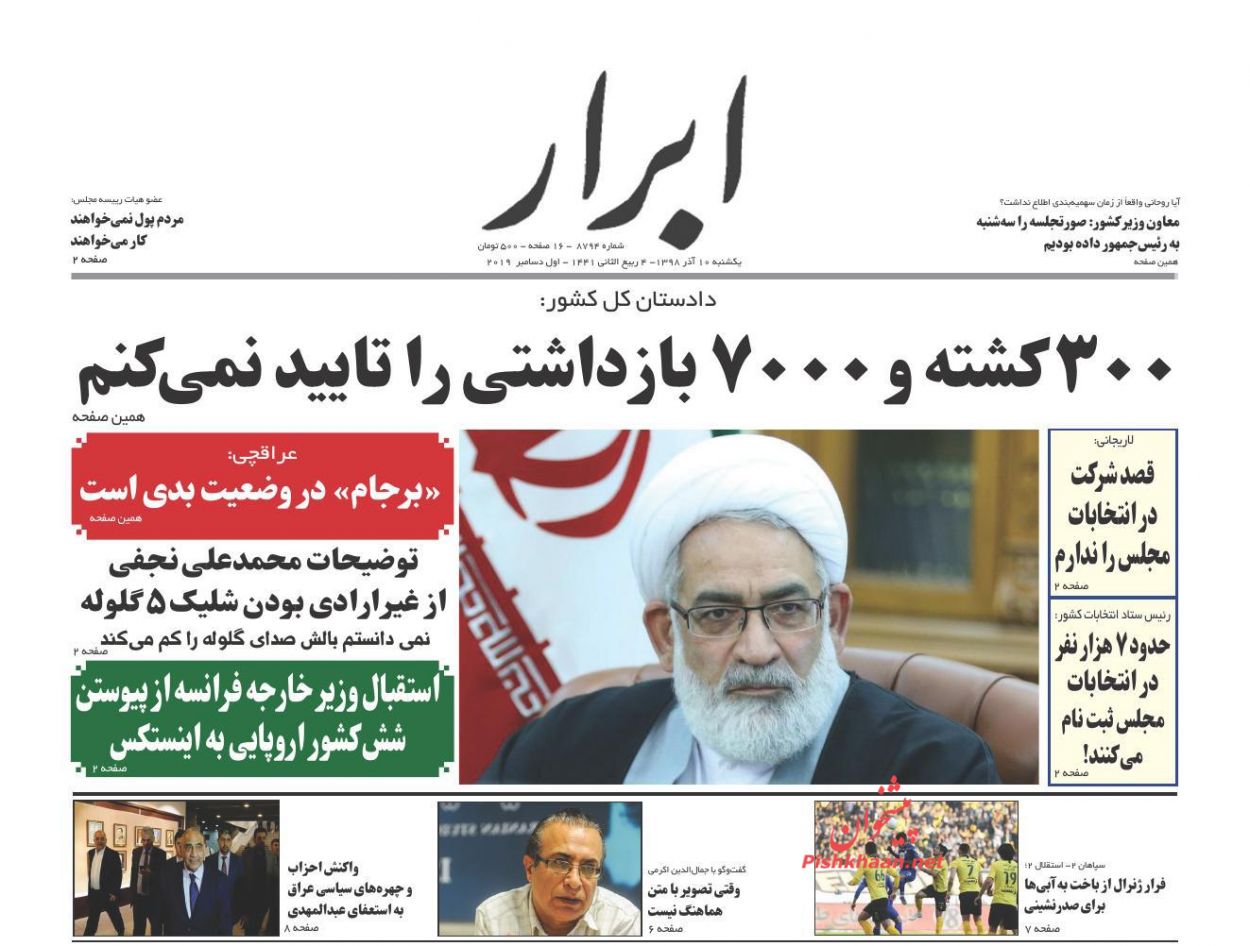
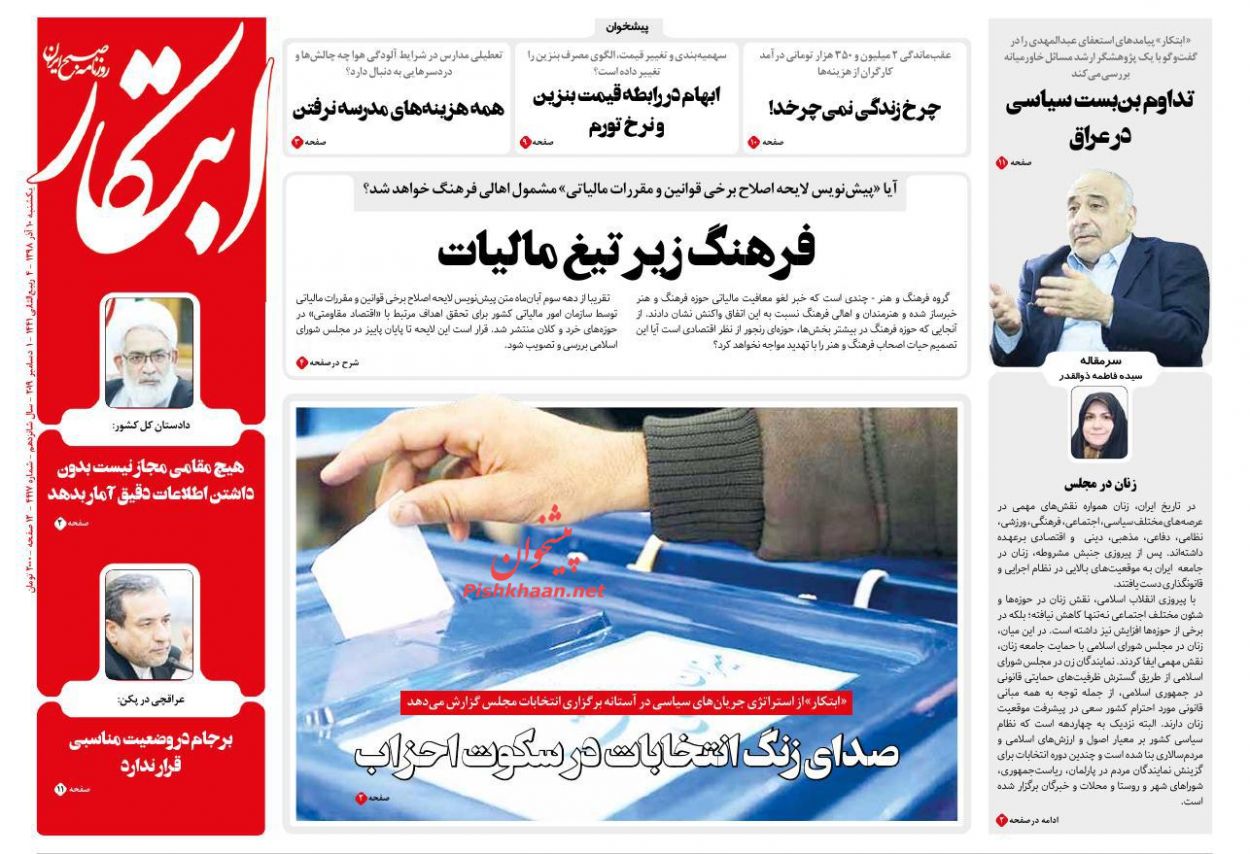
Abrar:
1- Kuwait: We’re Reviewing Iran’s Plan for Persian Gulf Security
2- Iranians Urged to Delay Trips to Iraq
3- UK Ambassador: We’ll Remain Loyal to JCPOA Despite Brexit
4- US Treasury: Economic Pressure to Be Increased against Iran
5- Salih: Iraq Cannot Choose between Iran, US

A Look at Iranian Newspaper Front Pages on October 30


Afkar:
1- Iran’s Possible Moves in Fourth Step of Reducing JCPOA Commitments

A Look at Iranian Newspaper Front Pages on October 30


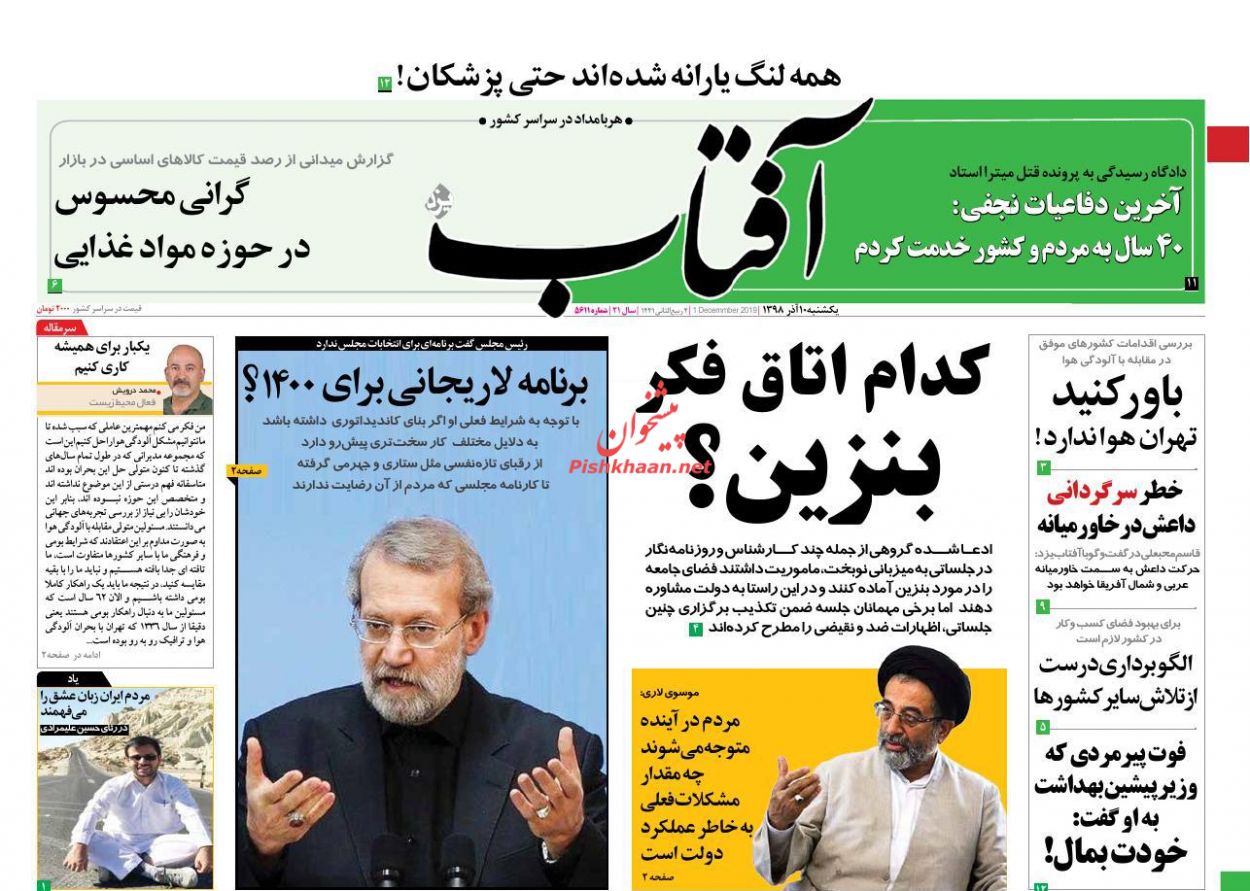
Aftab-e Yazd:
1- France One Step Closer to US on JCPOA
2- Americans Cut Tail of Dead Lion by Killing al-Baghdadi

A Look at Iranian Newspaper Front Pages on October 30


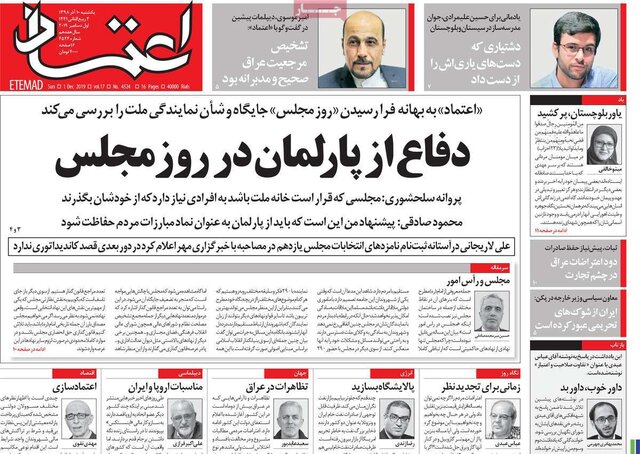
Etemad:
1- Death of al-Baghdadi Not End of ISIS: Analyst
2- Practicing Free Trade with Eurasian Union
* Iran Joins Treaty of Free Trade with Northern Neighbours
3- Hariri Deadlock: Lebanese Prime Minister Resigns in Reaction to 13-Day Protests

A Look at Iranian Newspaper Front Pages on October 30


Jame Jam:
1- Iran’s Ex-Envoy to Jordan Details Five Facts about Iraq These Days
2- Show of Caliph-Killing in White House
* Trump Copies Obama; Similar Fates of Baghdadi and Bin Laden
3- Iran Economy No Longer Dependent on Oil

A Look at Iranian Newspaper Front Pages on October 30


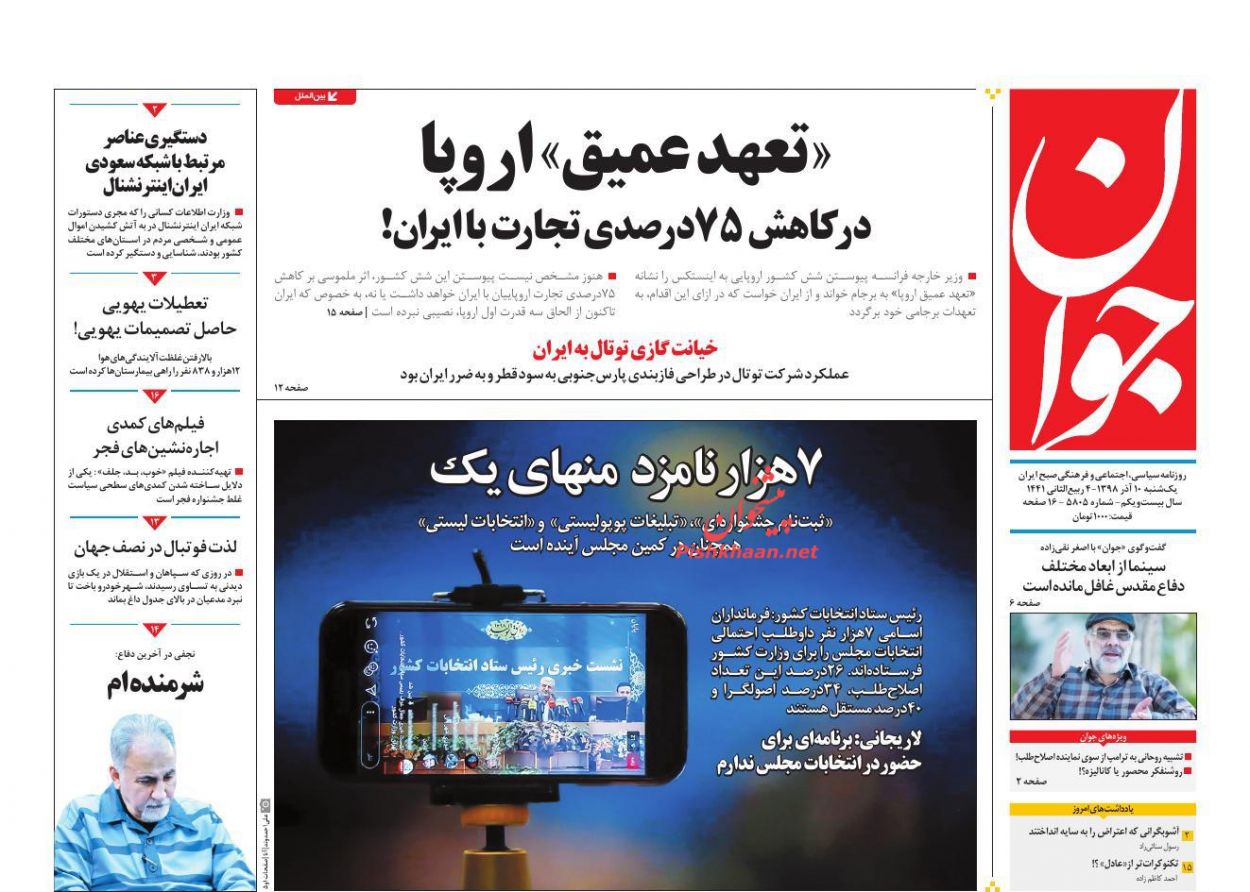
Javan:

1- Trump Gets Closer to Impeachment: US House to Vote Thursday

2- Lebanese PM Resigns for Second Time in Two Years

A Look at Iranian Newspaper Front Pages on October 30


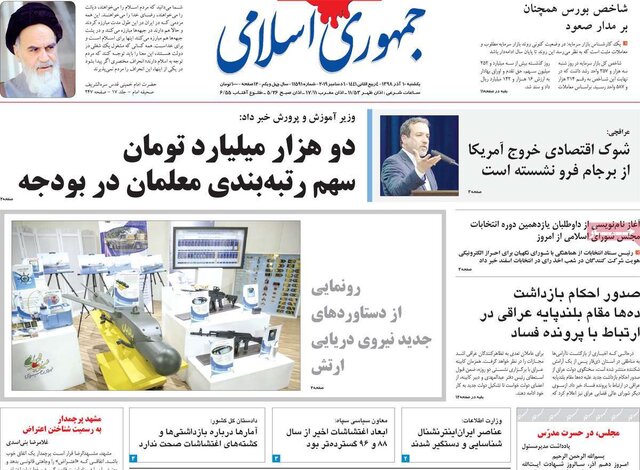
Jomhouri Eslami:

1- Economy Minister: Economic Indices Improve under Sanctions

2- UK Envoy: London Committed to JCPOA

3- French FM: UAE Seeks Easing Tension with Iran

4- Trump’s Electoral Fuss over Baghdadi

A Look at Iranian Newspaper Front Pages on October 30


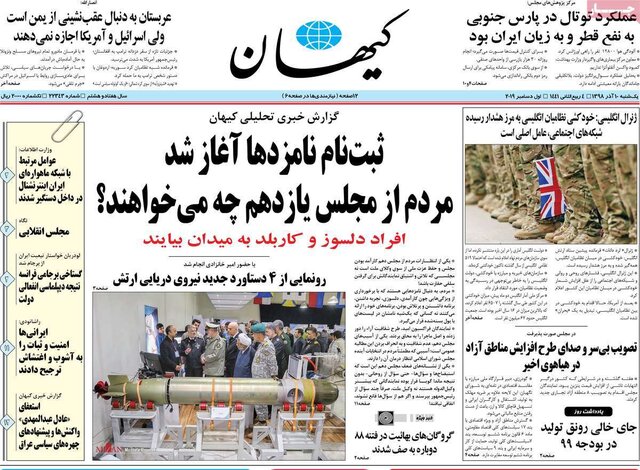
Kayhan:

1- Hariri Resigns after Saudi Pressures: Zionist Elements of Geagea Armed

2- Actors of Iraq Sedition from ISIS and Corrupt Officials to US and Saudi

3- US Removes al-Baghdadi after End of His Expiry Date

A Look at Iranian Newspaper Front Pages on October 30


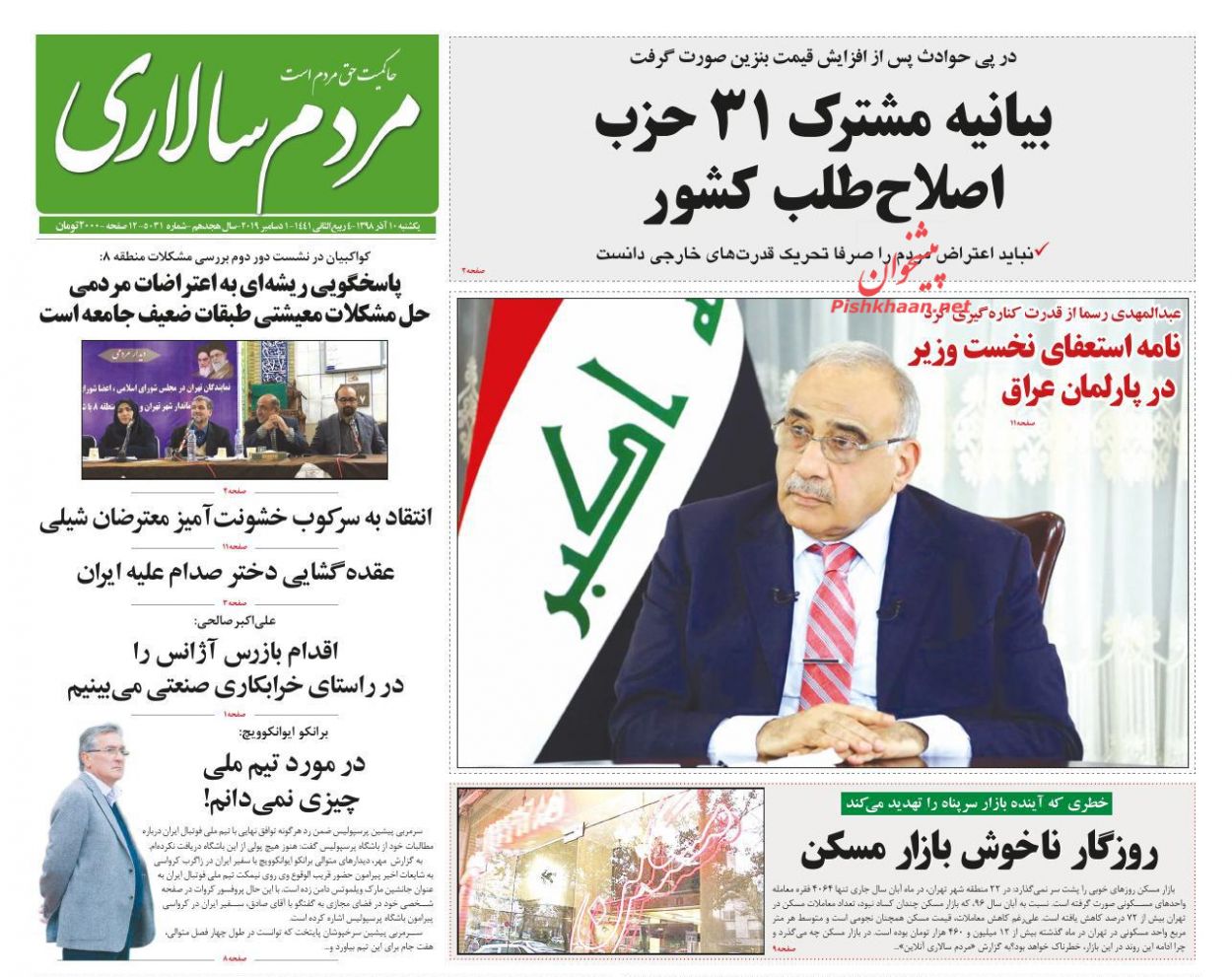
Mardom Salari:

1- Iran’s Economy Moving towards Prosperity: IMF

2- HRW: Trump Violates Iranians’ Right to Health

A Look at Iranian Newspaper Front Pages on October 30

Iran, Switzerland Discuss Latest Developments in Geneva

Iran, Switzerland Discuss Latest Developments in Geneva

In the Wednesday meeting, the two sides discussed the latest developments in bilateral ties, regional issues, and the JCPOA.

Foreign Minister Zarif arrived in the Swiss city of Geneva on Tuesday evening to take part in a meeting of foreign ministers of member states of the Astana Process.

The top Iranian diplomat attended a trilateral meeting with his Russian and Turkish counterparts and held a meeting with the United Nations Secretary-General’s Special Envoy for Syria Geir O. Pedersen on Tuesday night.

The meeting of foreign ministers of the three member states of the Astana Process coincided with the inaugural meeting of the Syrian Constitutional Committee.

The formation of the Syrian Constitutional Committee is the outcome of constant efforts by the Islamic Republic of Iran and the other partners within the framework of the Astana Process.