Wednesday, April 8, 2026
Home Blog Page 3042

Mideast Security Can Only Be Ensured by Regional Coalitions: Iran

Mideast Security Can Only Be Ensured by Regional Coalitions Iran

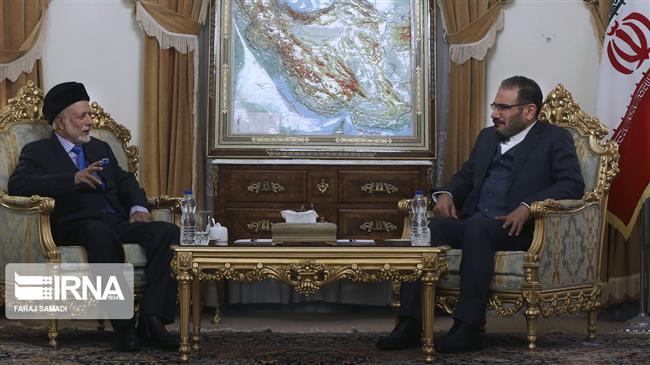
“Only those coalitions, which are free from influence and interference of foreigners, can solve problems, restore security [to the region] and last [for a long time],” Shamkhani said in a meeting with the visiting Omani Foreign Minister Yusuf bin Alawi in Tehran on Monday.

The Iranian official’s remarks were clear reference to the failure of the United States in forming a so-called coalition comprising regional and extra-regional states to allegedly protect security of shipping in the Persian Gulf.

On November 7, the International Maritime Security Construct (IMSC), a US-led military coalition in the Persian Gulf, officially launched its operations supposedly seeking to protect shipping lanes near Iranian territorial waters.

The US Fifth Fleet based in Bahrain announced that the IMSC, formerly known as Operational Sentinel, had opened its command center in the country.

Last month, Iran slammed the US move to create a coalition in the Persian Gulf, saying it will only exacerbate insecurity and instability across the world.

“History shows that American coalitions have always been nothing but misnomers, which have not only failed to create security but also caused more insecurity and instability in different parts of the world,” Iran’s Foreign Ministry Spokesman Abbas Mousavi said.

The IMSC launched its operation nearly five months after Washington announced that it was seeking to form a “multinational maritime effort” in response to a series of mysterious explosions targeting vessels in the Persian Gulf and the Sea of Oman earlier this year.

The US and Saudi Arabia were quick to blame Iran for the incidents without providing conclusive evidence.

Washington announced a deployment of 1,000 additional troops in the region following the attacks.

Iran has roundly rejected the accusations, emphasizing its commitment to regional maritime security and its importance in safeguarding international trade.

Elsewhere in his remarks, Shamkhani said, “A country that is not committed to any of its obligations, whether in connection with Iran or in exchanges with other countries, cannot be trusted.”

Those countries, which have played a leading role in creating tension and insecurity in the region and caused chaos by waging different wars and spreading terrorism, have never been after stability and security in the Persian Gulf and only seek to serve their own interests and plunder the region, the senior Iranian official warned.

Stressing that the persistence of the Saudi-led war in Yemen is indicative of the warmongering nature of arrogant powers and their stooges in the region, the official said, “The continuation of this genocide will only serve the interests of enemies of regional peace and security such as the US and Israel, and Saudi Arabia needs to yield to the demands of the resilient Yemeni people to stop posing further danger to regional stability and security.”

Saudi Arabia and a number of its regional allies launched a devastating campaign against Yemen in March 2015, with the goal of bringing the government of former president Abd Rabbuh Mansur Hadi back to power and crushing Ansarullah.

The US-based Armed Conflict Location and Event Data Project (ACLED), a nonprofit conflict-research organization, estimates that the war has so far claimed more than 100,000 lives.

Oman ready to help remove tension in region: Alawi

The Omani foreign minister, for his part, hailed regular consultations between Tehran and Muscat on regional and international issues and said any tension in the region would not be beneficial to any Persian Gulf littoral states.

Alawi added that the establishment of sustainable security in the region calls for consensus among all regional countries and settlement of misunderstandings.

He expressed his country’s readiness to make use of its potential to ease ongoing tensions and prepare the ground for constructive dialog among regional states.
Iran Rejects Arbitrary Preconditions for Peaceful Nuclear Activities

Iran-Nuclear

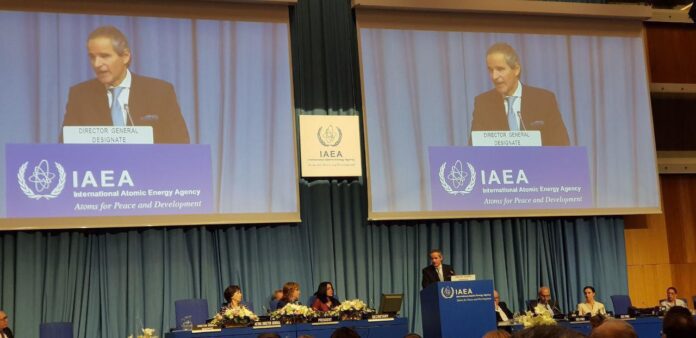
Iran’s permanent representative in the international organizations and the UN office in Vienna, Kazem Gharibabadi, delivered a speech in the Second Special Session of the IAEA General Conference, held in Vienna on Monday to approve the appointment of the IAEA’s new Secretary-General Rafael Grossi.

“Iran believes that peaceful employment of the nuclear energy must not be obstructed by the illegal and unilateral coercive measures, and must not be subject to any arbitrary and illegitimate preconditions from the other countries either,” the Iranian ambassador said.

Iran regards the IAEA as a very important organization, he added, adding, “As a developing country with considerable nuclear activities and programs, Iran has always respected the agency (IAEA) and its prominent role in creating capacities on the basis of its needs and priorities.”

He also noted that one of the major responsibilities of the IAEA is monitoring and verifying Iran’s nuclear activities under the UN Security Council Resolution 2231.

“Iran is a major partner of the IAEA,” Gharibabadi underscored, saying the UN nuclear agency has conducted 688 inspections in Iran in the current year alone, until November 2019, which amounts to 1,376 man-days of inspection.

It is necessary to maintain constructive working relations between Iran and the IAEA, the envoy noted, stressing that such interaction must take place in an independent, professional and impartial process.

The Iranian diplomat finally emphasized that commitment to those principles would guarantee the protection of the three pillars of the NPT and the IAEA’s credibility.

Iran Deplores French DM’s ‘Neocolonialist’ Ploy

Tehran Tells Warring Sides in Caucasus to Respect Iran’s Border Security

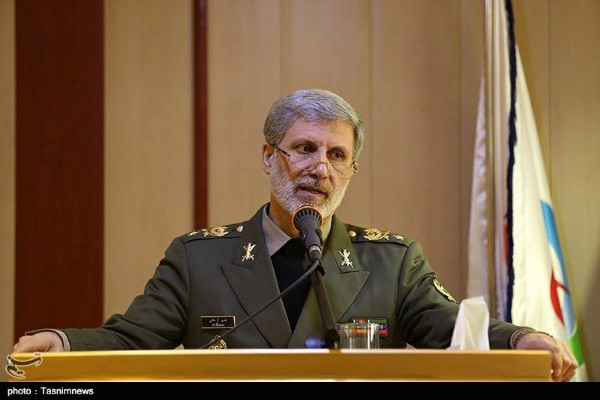
In remarks on Monday, General Hatami deplored the meddlesome comments from a European defence official made at a recent conference in Manama.

The Iranian Defence Minister said the Western colonialism that reigned over the region a century ago and was forced out of the region after confrontation with the popular resistance now fancies returning to the region and seeks to milk a cow that US President Donald Trump has mentioned.

“But they (Westerners) should know that people of the region are vigilant and have not forgotten their cruelty and plundering, and that they (Westerners) cannot provoke them (people of region) with rhetoric,” General Hatami added.

There is no doubt that the US government’s soft and hard power has declined across the world, the Iranian Defence Minister noted, and advised his French counterpart to notice the statistics for the number of French nationals who joined the ISIL terrorist group and committed crimes in Syria and Iraq instead of pinning the blame on the others and making provocative comments that are meant to fulfill France’s financial interests.

The French defence minister should explain what positive role her country has played in the fight against the Takfiri ISIL terrorists in Syria and Iraq, the Iranian general underlined.

“The Takfiri terrorists in the region were defeated at the hands of the armed forces and people of Iraq and Syria and with the help and assistance from Iran and Russia, while the Western powers, including the US and others, did nothing against them other than attempts to manage those groups in their own favor,” the Iranian general stated.

He further slammed as “neocolonialist and irresponsible methods” the plans that the Western officials, including the French defence minister, have proposed for security in the region, saying, “The Western presence and meddling would further complicate the security conditions in the region, which have been already upset by the excessive demands of the US and the Zionist regime.”

The Iranian minister also advised the Western officials to abandon their meddlesome and hegemonic ploys and find a remedy for “the brain death of their own security institutions.”

General Hatami further pointed to the downing of an intruding American drone in the Iranian airspace, saying the powerful Armed Forces of Iran are capable of protecting the country’s territories and airspace.

Iran has spared no effort in recent years to ensure regional stability and security, will continue to strengthen its defence capabilities, and will contribute to the establishment of security in the region according to the Islamic teachings and the Islamic Republic’s policies, he added.

“The extra-regional powers and their opportunistic interference is the main reason for instability and insecurity in the region, and the regional countries have the needed capacity to ensure regional security within a cooperative framework, without interference from the alien powers,” he concluded.

Iranian University Develops Auto Glass Adhesive

Auto Glass

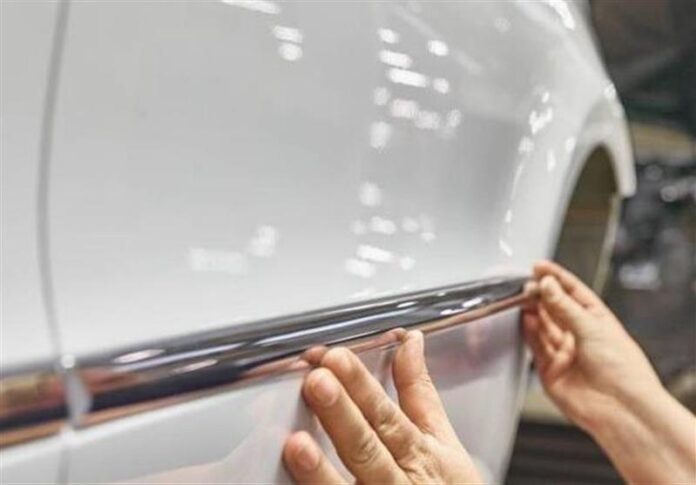
Director of the Sharif University of Technology’s office for interaction with the industries hailed the production of auto glass glue as one successful example of cooperation between the university and the industrial centers.

Researchers at the Sharif University have been working on the project to make the adhesive used in manufacturing auto glass, because the material has been always imported from abroad.

Manufacturing float glass for a single car requires approximately one kilogram of adhesive, whose export to Iran has become an arduous task in recent years due to the escalation of sanctions.

Although a series of efforts had been made to make the special auto glass glue in Iran, a product that would be suitable to use in the weather conditions of Iran and meet the automotive standards had not been developed until recently.

Now the Sharif University of Technology has gained the technical know-how to manufacture the adhesive, which is undergoing the final tests.

A Look at Iranian Newspaper Front Pages on December 2

A Look at Iranian Newspaper Front Pages on November 19

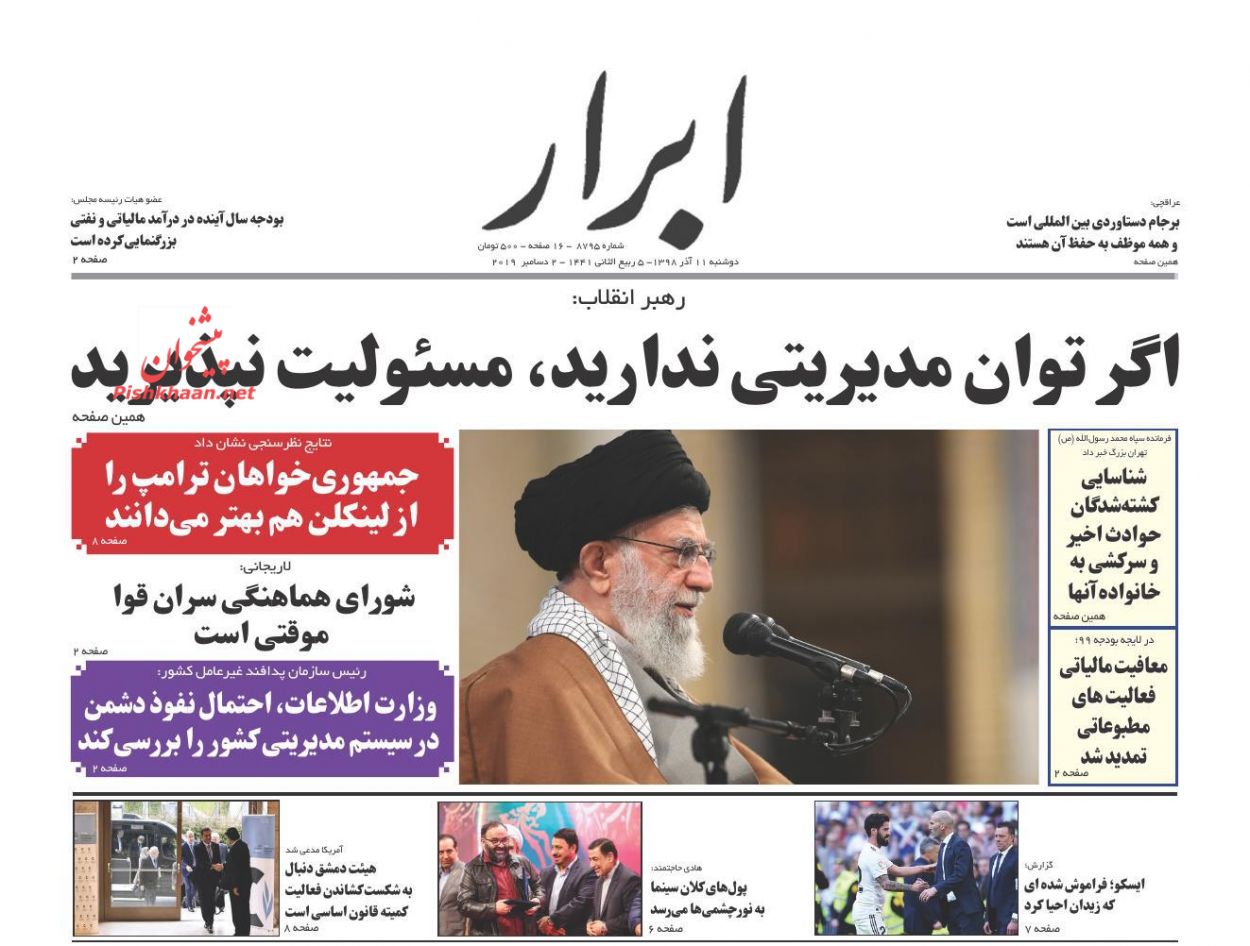
Abrar:
1- Araqchi: JCPOA International Achievement, Everyone Duty-Bound to Save It
2- US Claims Damascus Delegation Trying to Fail Constitutional Committee’s Mission
3- Republicans Believes Trump Even Better than Lincoln

A Look at Iranian Newspaper Front Pages on December 2


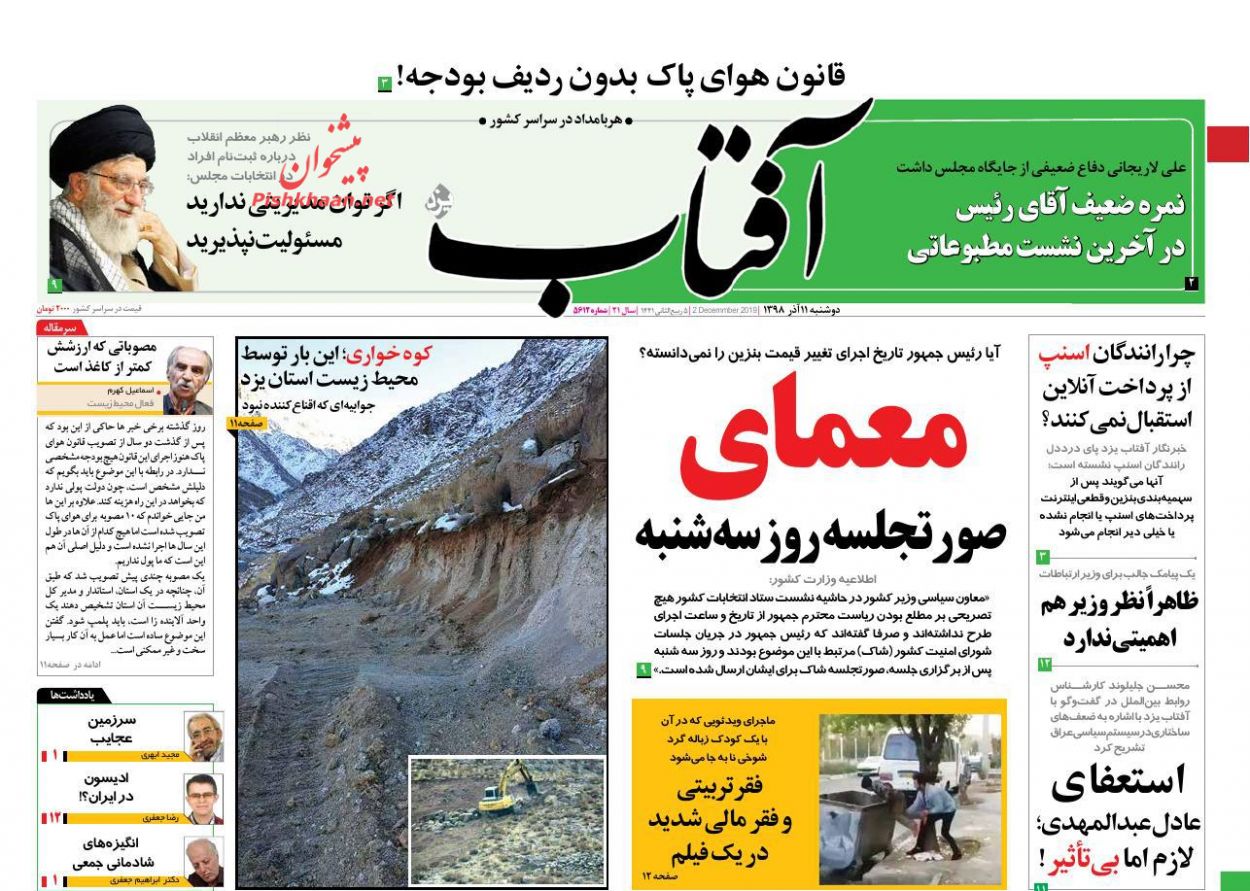
Aftab-e Yazd:
1- If You’re Not Competent Managers, Don’t Assume Responsibility: Leader
2- Abdul Mahdi’s Resignation Necessary but Futile: Analyst

A Look at Iranian Newspaper Front Pages on December 2


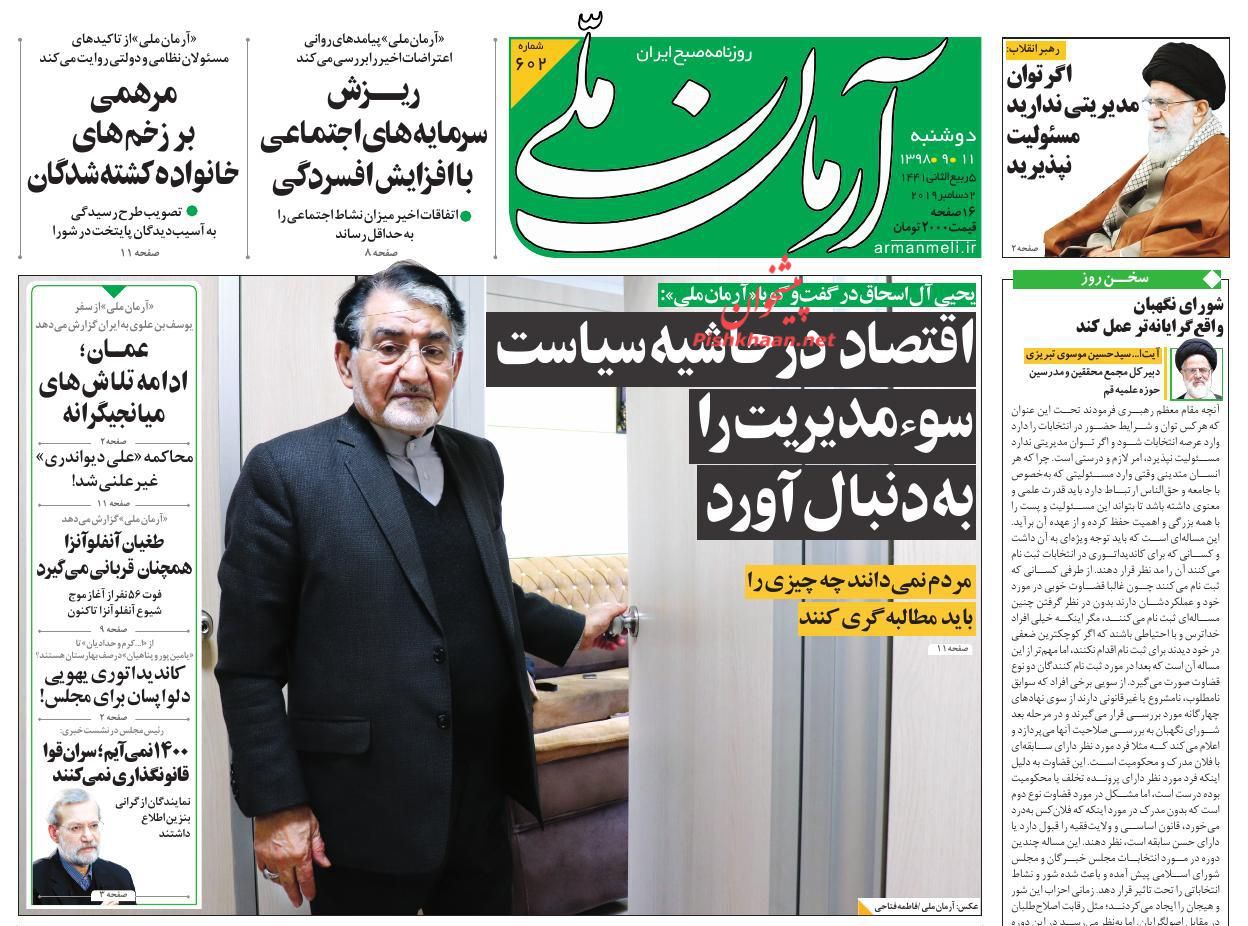
Arman-e Melli:
1- Iran Leader: Don’t Accept Responsibility If You’re Not Capable
2- Oman Continues Mediatory Efforts: A Report on Bin Alawi’s Tehran Trip
3- Flu Still Killing People in Iran: 56 Die of Influenza

A Look at Iranian Newspaper Front Pages on December 2


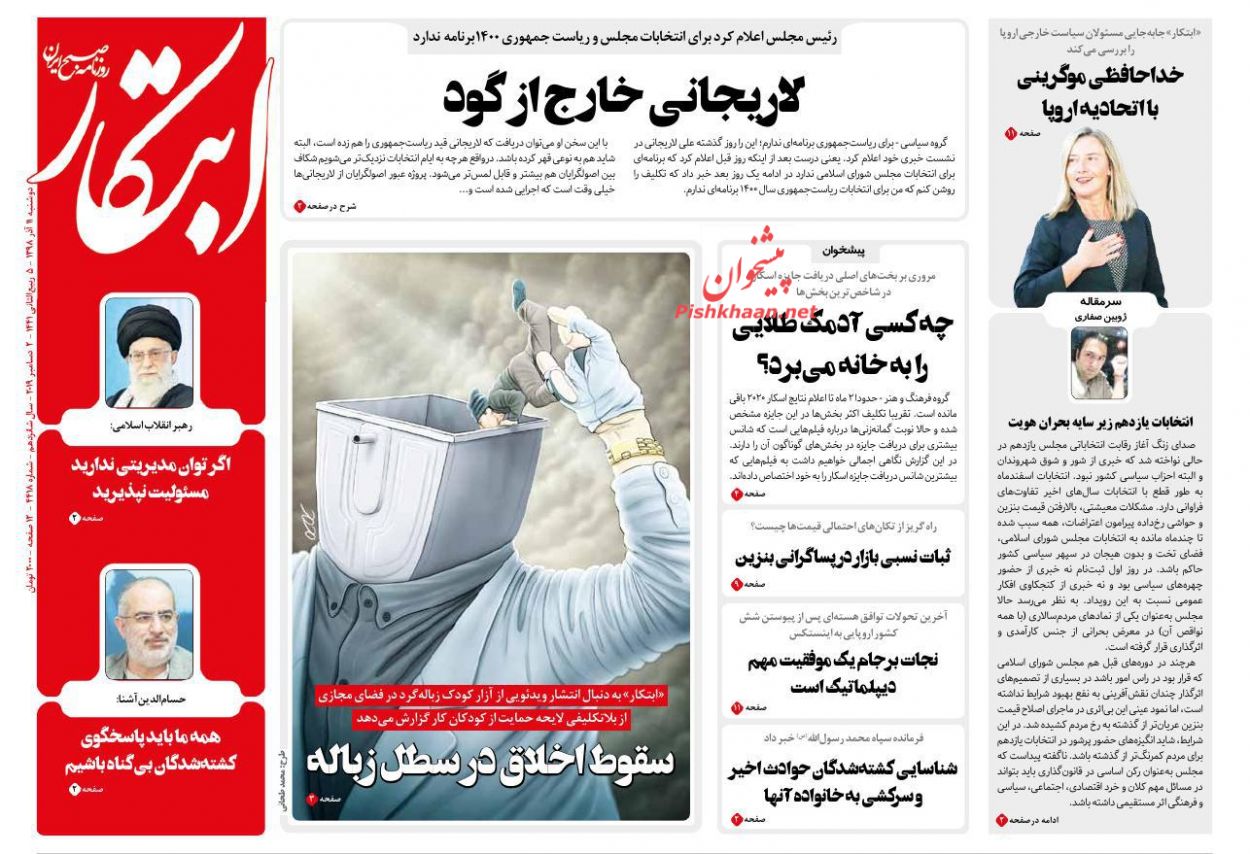
Ebtekar:
1- IRGC Says Visiting Families of Those Killed in Recent Riots
2- Saving JCPOA an Important Diplomatic Success: Six EU States Join INSTEX
3- Mogherini Bids Farewell to EU

A Look at Iranian Newspaper Front Pages on December 2


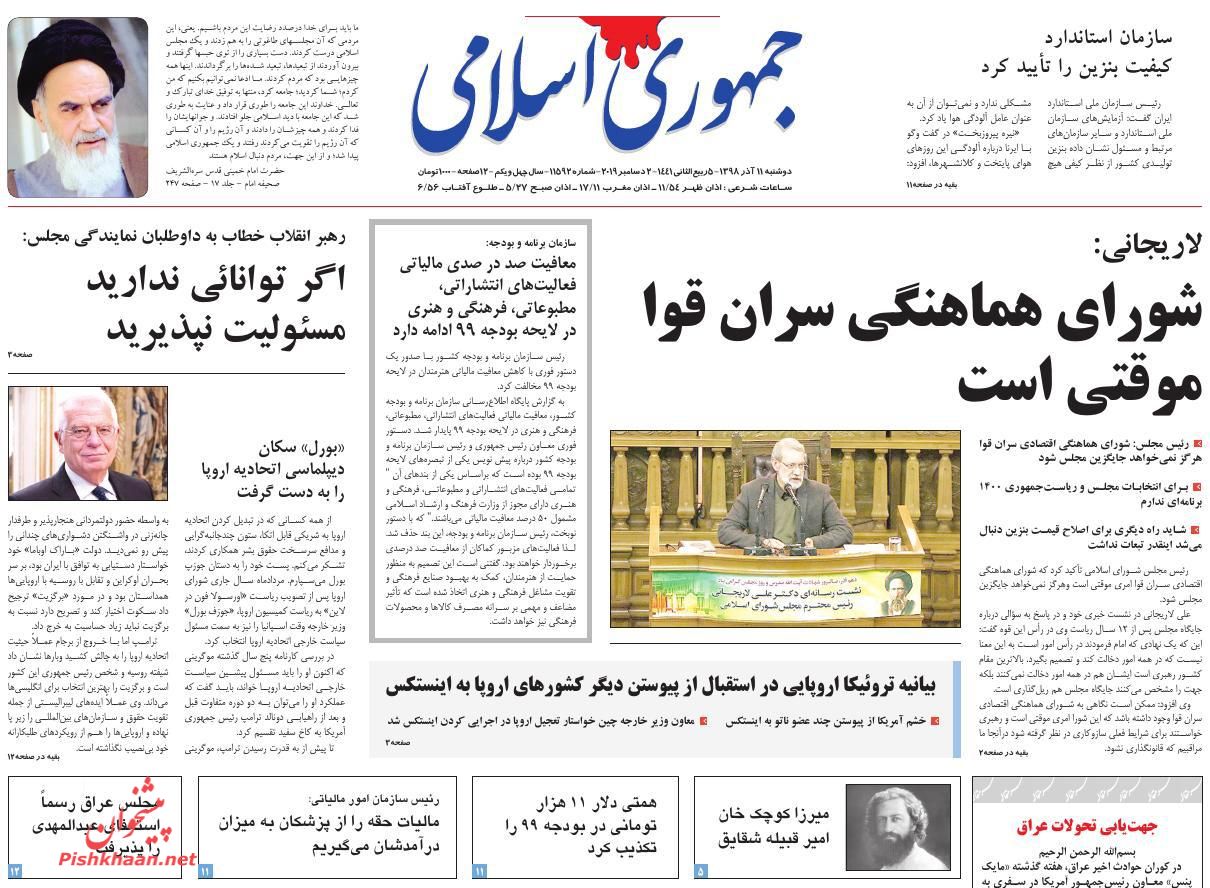
Jomhouri Eslami:
1- Borrell Takes Helm at EU External Action Service
2- E3 Welcomes Other States Joining INSTEX
* US Outraged by NATO Members’ Joining INSTEX

A Look at Iranian Newspaper Front Pages on December 2


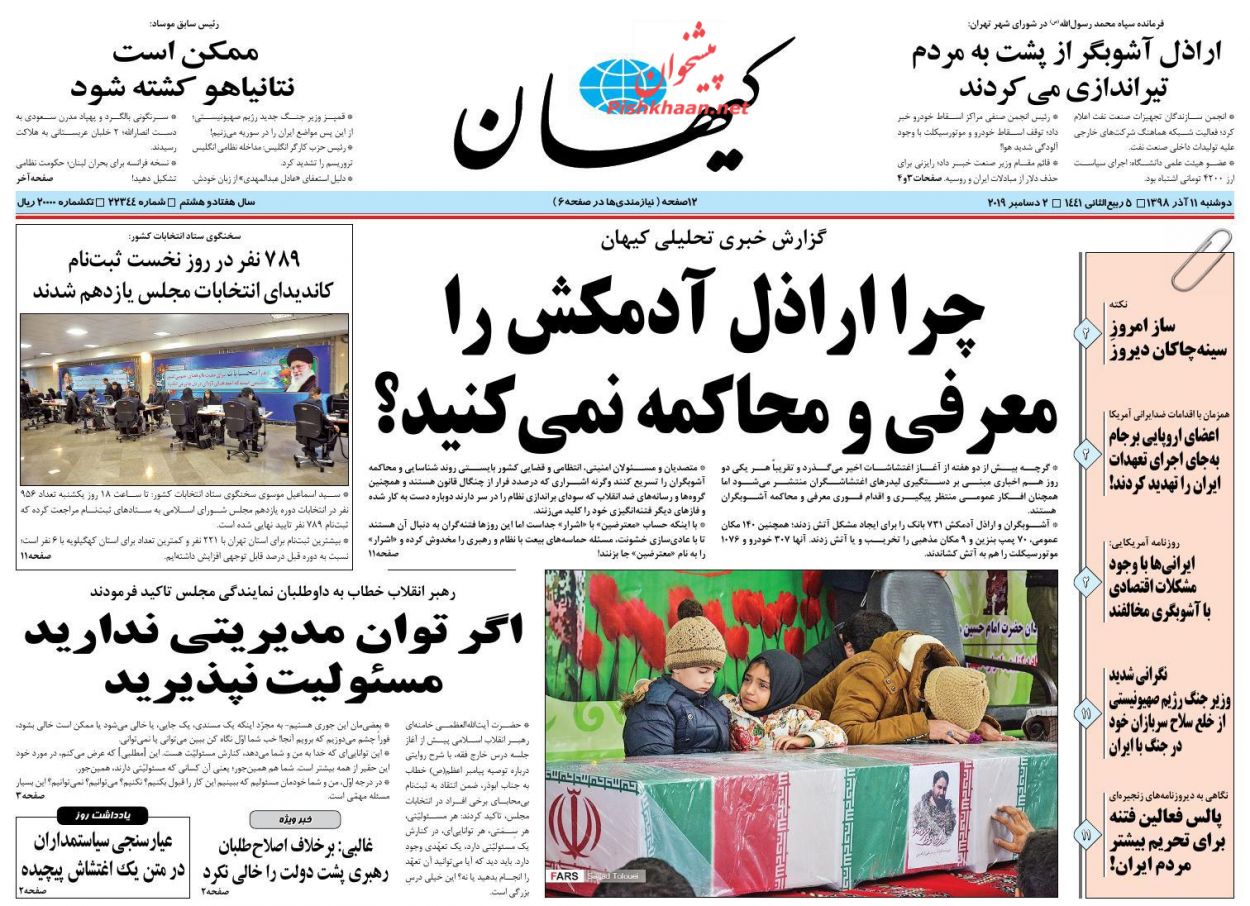
Kayhan:
1- Ex-Chief of Mossad: Netanyahu May Get Killed
2- E3 Parties to JCPOA Threaten Iran Instead of Implementing Commitments

A Look at Iranian Newspaper Front Pages on December 2


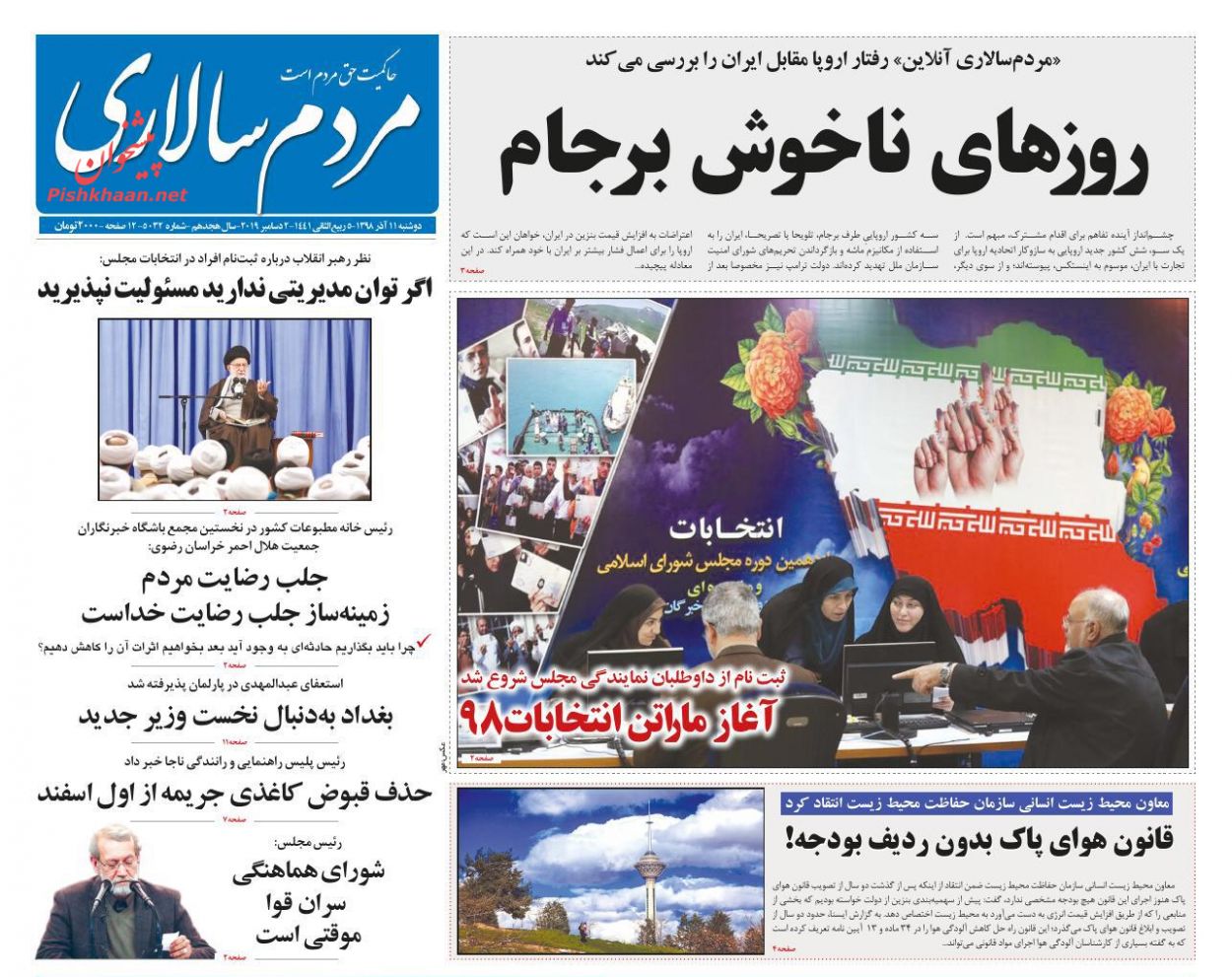
Mardom Salari:
1- Unhappy Days of JCPOA: A Report on Europe’s Behaviour towards Iran
2- Baghdad Looking for New Prime Minister: Abdul Mahdi’s Resignation Accepted in Parliament

A Look at Iranian Newspaper Front Pages on December 2


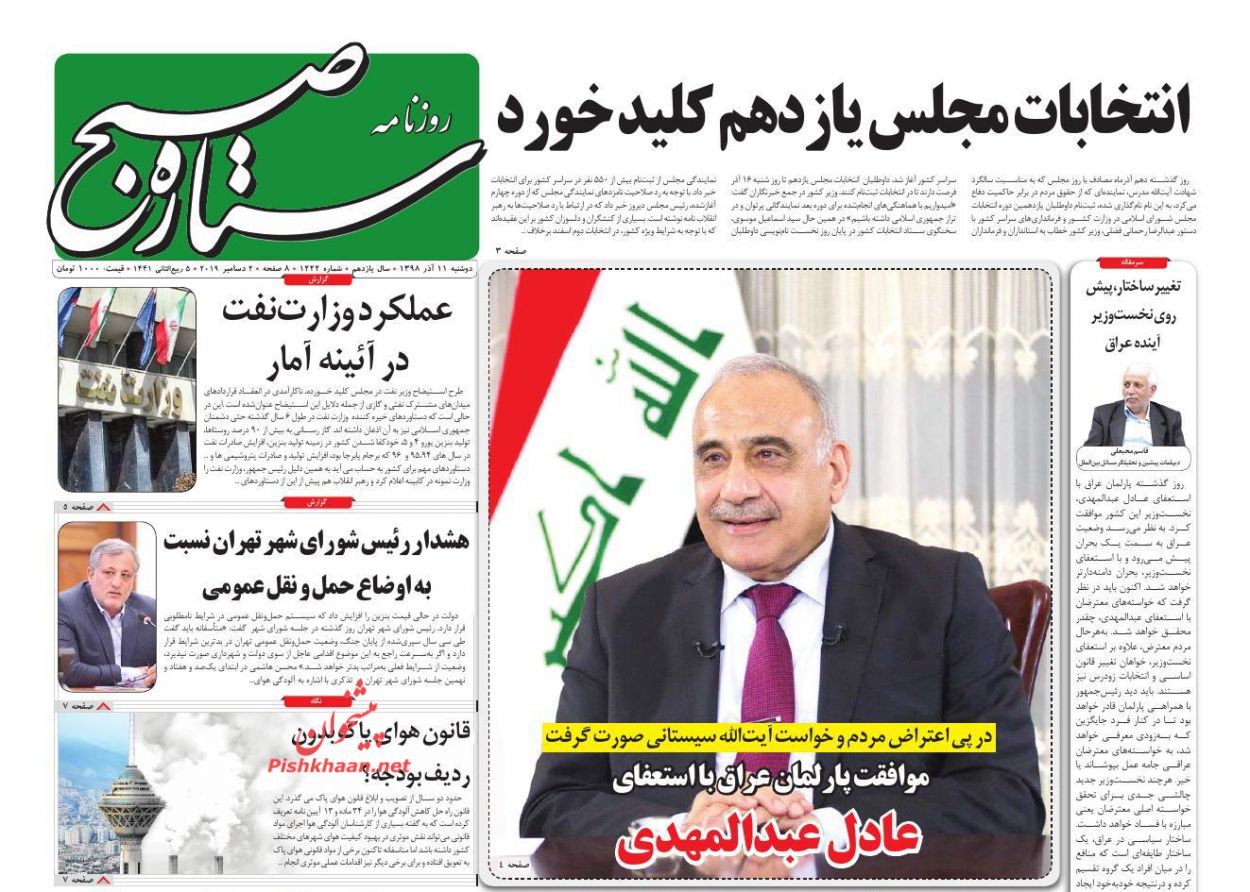
Setareh Sobh:
1- Registration for Iran’s Parliamentary Election Kicks Off
2- Iraq Parliament Accepts Abdul Mahdi’s Resignation after Ayatollah Sistani’s Call

A Look at Iranian Newspaper Front Pages on December 2

Zarif Urges EU to Save Iranian Kids with EB Instead of Threats

Zarif Urges EU to Save Iranian Kids with EB Instead of Threats

“Instead of arrogant threats or hollow paper promises, E3/EU—and future INSTEX shareholder Sweden—should start with something very simple; a minimal human duty: Ask Mölnlycke Health Care to SELL products enabling Iranian kids with EB to cover their wounds,” Zarif said Monday.

“Economic Terrorism kills,” Zarif added in his tweet, referring to the US economic sanctions on Iran, which have also kept European states from working with the country.

“Pompeo once again admits that US Economic Terrorism on Iran is designed to starve, and in the case of medical supplies, kill our innocent citizens,” he added.

Iranian children suffering from the rare skin condition known as EB are losing their lives as US economic sanctions hamper the flow of vital medical products, an NGO says.

Hamid Reza Hashemi-Golayegani, the head of the NGO that helps such patients, said last month that at least 15 Iranian children with epidermolysis bullosa (EB) have died since the US launched its new sanctions on Iran in August.

That is because Swedish medical companies which provided protective bandages for such patients have halted supplies due to the restrictions, he said.

Often known as butterfly children because their skin is as fragile as the wings of a butterfly, EB patients need special care. Even mild frictions or bumps cause severe blistering of the skin which is very painful.

They often have difficulty with their daily activities, such as walking, eating and even breathing, but without proper protective bandages, their agony would be heartbreaking.

Zarif’s Monday comments came shortly after six European countries announced they will join INSTEX, the bartering system created to enable Iran to side-step US sanctions, but they urged Tehran to stop what they called violating the landmark 2015 deal reached between Tehran and world powers.

Belgium, Denmark, Finland, the Netherlands, Norway and Sweden will join France, Germany and the UK as shareholders in INSTEX. No transaction has been conducted under the mechanism so far.

US President Donald Trump renewed sanctions on Iran last year as he pulled the US out of the 2015 deal, known as the Joint Comprehensive Plan of Action (JCPoA), and described it as too weak.

As a result, Iran has begun reducing its commitments under the treaty after Europe failed to live up to its obligations and compensate for the US withdrawal.

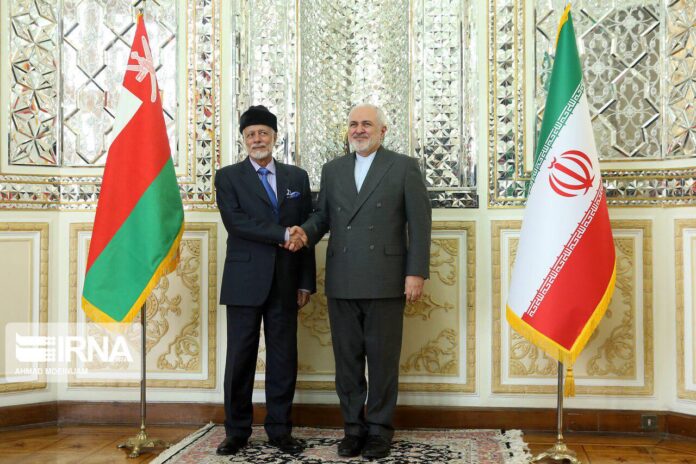
Iranian, Omani FMs Hold Key Talks in Tehran

Iranian, Omani FMs Hold Key Talks in Tehran

The meeting was held on Monday noon at the Iranian Foreign Ministry, and was focused on bilateral relations and regional developments.

In the meeting, the two sides discussed a broad range of bilateral subjects, as well as the regional and international issues. They also talked about the political, economic, scientific and technological cooperation between the two countries at the bilateral and multilateral levels.

Highlighting Oman’s positive and constructive role as a neighbouring state, Zarif hailed the extensive and very good relations between the two countries, and also welcomed the expansion of ties in all fields.

Emphasizing the necessity of reducing tensions in the region, particularly in Yemen, Zarif said, “The Islamic Republic of Iran would welcome and support any move and initiative that comes with goodwill for the reduction of tensions in the region.”

He also highlighted the Islamic Republic of Iran’s fierce determination to hold talks with all regional countries, adding, “The Hormuz Peace Endeavour has been put forward to that end.”

Omani Foreign Minister Yusuf bin Alawi, for his part, said the current regional situation requires further dialogue and understanding, saying, “In this regard, holding an inclusive and comprehensive conference with the presence of all countries with a stake (in the region) could be helpful.”

The two sides discussed the Hormuz Peace Endeavour (HOPE) initiative proposed by Iranian President Hassan Rouhani at the UN General Assembly this year.

Kuwait’s Al-Jaridah newspaper had earlier reported that Bin Alawi’s trip to Iran would be aimed at expressing Muscat’s agreement with the HOPE initiative proposed by Iran.

Last month, Iranian Foreign Ministry Spokesman Seyyed Abbas Mousavi announced that three countries have given positive written responses to President Rouhani’s letter, and others are reviewing the issue in group meetings.

IAEA Picks Iran Envoy as VP of Its Special Session

IAEA Picks Iran Envoy as VP of Its Special Session

The Second Special Session of the IAEA General Conference was held in Vienna on December 2 to approve the appointment of the IAEA’s new Secretary-General Rafael Grossi.

At the beginning of the session, Iran’s permanent representative in the international organizations in Vienna, Kazem Gharibabadi, was appointed by the IAEA’s Middle East and South Asia regional group as the vice president of the Special Session of the General Conference.

Back in October, the International Atomic Energy Agency picked Argentina’s Grossi as the UN nuclear watchdog’s next director general.

Grossi, 58, managed to secure the necessary two-thirds in a vote by the agency’s 35-nation Board of Governors to become the next chief of the nuclear watchdog, some three months after his predecessor, Yukiya Amano, died in office.

In a press conference following his victory, Grossi pledged to act independently and neutrally as the new chief of the IAEA.

“I will do my job and I think my job is to implement the mandate in a manner which is independent, which is fair, which is neutral,” Grossi told reporters when asked about Iran’s nuclear deal, which is arguably the most significant challenge he will have to tackle on his road ahead.

Iran, Tajikistan Discuss Economic Cooperation in Tehran

Iran, Tajikistan Discuss Economic Cooperation in Tehran

The meeting of Iran-Tajikistan joint commission of economic cooperation opened in Tehran on Monday morning with the presence of Iranian Energy Minister Reza Ardakanian and Tajikistan’s Minister of Energy and Water Resources, as well as a number of senior Tajik officials.

In comments at the opening of the meeting, Ardakanian highlighted the numerous cultural and historical commonalities between Iran and Tajikistan, adding, “These commonalities could give a special nature to the relations between the two countries in the region, and make the mutual cooperation outstanding and unique among the other countries.”

The minister also expressed confidence that determination of the two countries’ top officials and using the ample capacities available in the two countries would enhance the ties and elevate cooperation.

Calling for efforts to raise the volume of trade exchanges between Iran and Tajikistan, Ardakanian said there is a long way to achieve a target set by the administration, particularly after a constructive meeting between presidents of the two countries on the sidelines of the summit of the Conference on Interaction and Confidence Building Measures in Asia (CICA), held in Dushanbe back in June.

The Iranian Energy Minister also stressed the need for practical action on the financial statements of the Sangtuda-2 power plant project, the banking and educational cooperation, facilitation of Iranian investment and economic activities in Tajikistan, and completion of the Istiqlol tunnel in Tajikistan.

He also called on the Tajik administrative organizations to work in cooperation with Iran and show greater determination to carry out those projects.