Tuesday, January 13, 2026
Home Blog Page 301

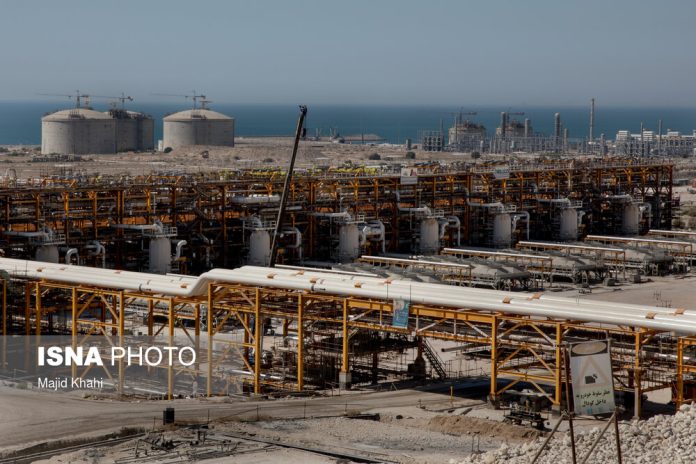
Iran begins gas exports from third train of South Pars Phase 14 refinery

South Pars

Hamidreza Saghafi, CEO of Petropars Group, announced the successful launch of the third processing unit, which follows the recent commissioning of the fourth train.

He described the achievement as a clear demonstration of Iranian engineering capability and a step forward in expanding the nation’s production and export capacity amid ongoing regional challenges.

“The commissioning of the third gas sweetening train enabled the start of exports from Phase 14. This accomplishment reflects not only technical expertise but also the strong organizational cooperation and national commitment of Petropars personnel,” Saghafi said.

He expressed gratitude for the efforts of project staff, including contractors, engineers, workers, and the Petropars Operation and Management Company (POMC), highlighting their dedication to securing the country’s energy future.

Saghafi emphasized the importance of human capital in advancing Iran’s energy sector, especially under current economic and geopolitical pressures.

The South Pars Gas Filed in the Persian Gulf contains the largest of gas reserves in the world, shared by Iran and Qatar.

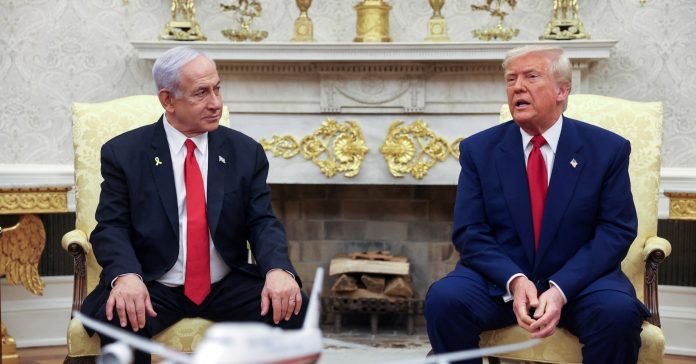
Trump slams Israel’s prosecutors over corruption trial for Netanyahu

Trump and Netanyahu

Netanyahu was indicted in 2019 in Israel on charges of bribery, fraud and breach of trust – all of which he denies. The trial began in 2020 and involves three criminal cases.

On Friday, the court rejected a request by Netanyahu’s lawyers to delay his testimony for the next two weeks because of diplomatic and security matters following the 12-day conflict between Israel and Iran this month.

He is due to take the stand on Monday for cross examination.

“It is INSANITY doing what the out-of-control prosecutors are doing to Bibi Netanyahu,” Trump said in a Truth Social post, adding that the judicial process was going to interfere with Netanyahu’s ability to conduct talks with Palestinian fighters Hamas, and Iran.

Trump’s second post over the course of a few days defending Netanyahu and calling for the cancellation of the trial went a step further to tie Israel’s legal action to U.S. aid.

“The United States of America spends Billions of Dollar [sic] a year, far more than on any other Nation, protecting and supporting Israel. We are not going to stand for this,” Trump noted.

Netanyahu “right now” was in the process of negotiating a deal with Hamas, Trump said, without giving further details. On Friday, the Republican president told reporters that he believes a ceasefire is close.

Hamas has announced it is willing to free remaining hostages in Gaza under any agreement to end the war, while Israel says it can only end it if Hamas is disarmed and dismantled. Hamas refuses to lay down its arms.

Interest in resolving the Gaza conflict has heightened in the wake of the U.S. and Israeli bombings of Iran’s nuclear facilities.

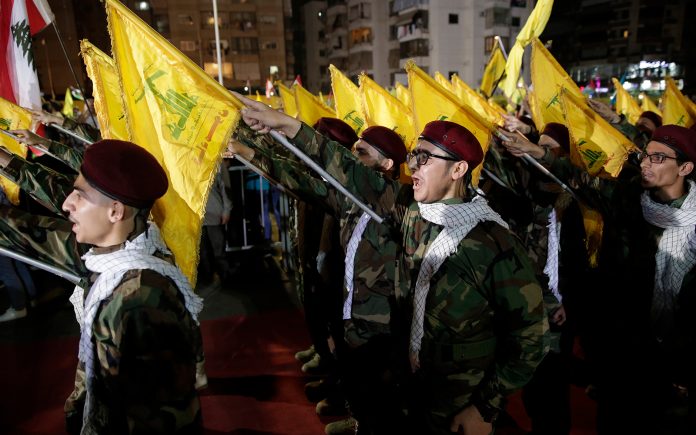
Hezbollah chief rules out laying down arms amid Israeli attacks

Hezbollah

According to a report by the Lebanese News Agency NNA, Qassem said a ceasefire with Israel would impose responsibilities on the state, but Hezbollah was prepared in the face of Israel’s continued attacks.

“Who in their right mind would give up their power? We will not give up our power while Israel continues its attacks,” he stated in Dahieh, south of Beirut.

Qassem added Israel’s attacks targeting civilians in Nabatieh are unacceptable and the state must do its part to deal with the situation.

He emphasized that the Lebanese resistance group would not remain silent in the face of the attacks.

“Do you think we will remain silent forever? That is not true. You have already tried us, and we have no choice but our honor.”

Hezbollah frequently states it will not surrender its weapons in the context of national sovereignty.

Lebanese Druze leader and former head of the Progressive Socialist Party, Walid Jumblatt, and leader of the Christian Lebanese Forces Party, Samir Geagea, have also said weapons should only be in the hands of the state.

Israeli forces have conducted near-daily attacks in southern Lebanon, claiming to target Hezbollah’s activities despite a ceasefire between Israel and Lebanon that was reached in November. The truce ended months of cross-border warfare between Israel and the Lebanese resistance group.

Lebanese authorities have reported nearly 3,000 Israeli violations of the truce, including the deaths of at least 224 people and injuries to more than 500, since the agreement was signed.​​​​​​​

Under the ceasefire deal, Israel was supposed to fully withdraw from southern Lebanon by Jan. 26, but the deadline was extended to Feb. 18 after Tel Aviv refused to comply. Israel still maintains a military presence at five border outposts.

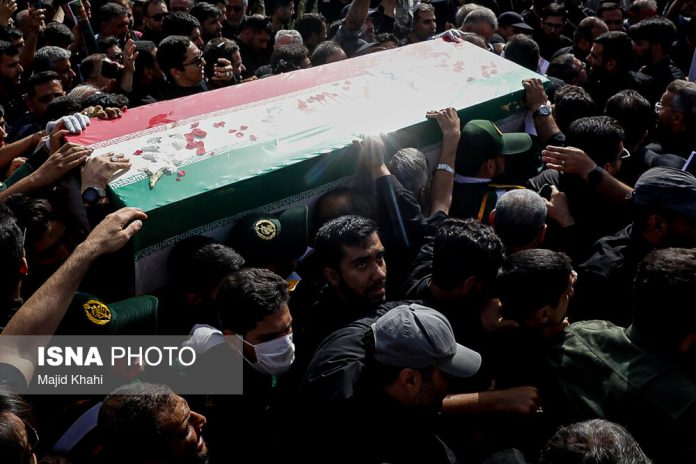
Funeral held for senior IRGC commanders

The senior commanders were laid to rest in Behesht-e Zahra Cemetery, in an area designated for Iran’s fallen military personnel, including the “Defenders of the Shrines” against militants in Iraq and Syria.

The ceremony began at 8:00 AM local time and was attended by a large crowd of mourners.

Mourners chanted religious slogans as the coffins were carried to their final resting place.

Senior Iranian officials, including General Esmail Qaani, the commander of the IRGC’s Quds Force, were present at the ceremony.

General Hajizadeh and General Bagheri were among several other top officials assassinated in Israeli strikes on June 13 in Tehran.

Separately, preparations were underway for the burial of General Hossein Salami, the commander in chief of the IRGC, at the Shrine of Abdul Azim in Shahr-e Rey, south of Tehran.

The body of General Ali Shademani, the commander of the Khatam al-Anbiya Central Headquarters, will also be laid to rest on Sunday in the western city of Hamedan beside the grave of the late General Hossein Hamedani, a prominent IRGC commander assassinated in Syria in 2015.

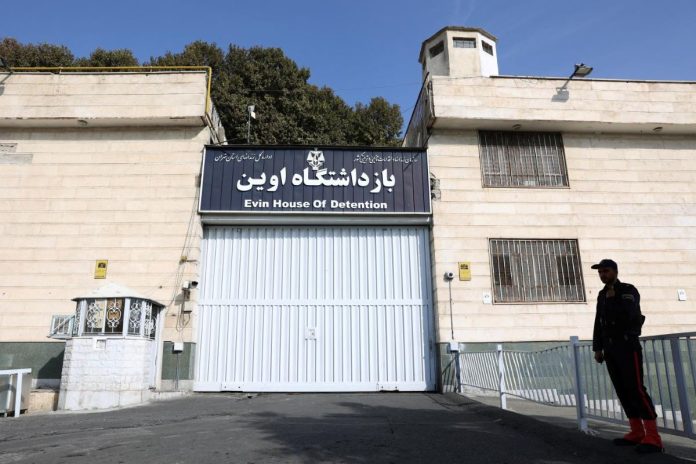
At least 71 killed in Israeli attack on Iran’s Evin prison, judiciary spokesman says

Evin Prison

Speaking on Sunday, Jahangir stated that the casualties include prison staff, conscripted soldiers, inmates, their visiting family members, and nearby residents.

He described the incident as a “full-scale crime” committed by a “Zionist terrorist gang.”

The attack targeted key facilities within the prison compound, including the medical ward, engineering offices, and visitation and judicial buildings.

Jahangir noted that several civilians living adjacent to the prison were also killed or injured, with many sustaining serious physical and material losses.

“Some of the victims were family members who had come for visits or to follow up on legal matters. The projectile struck the visitation area, causing fatalities and injuries among those present,” he said.

Jahangir added that several injured individuals were treated on-site, while others were hospitalized and later discharged after receiving medical care.

Iranian authorities have condemned the attack as a violation of international law and called on global institutions to hold Israel accountable for the 12-day unprovoked aggression.

Iran’s prosecutor general: Illegal migrants must all leave 

Afghan Refugee in Iran

He was speaking at a ceremony honoring the Iranian judiciary martyrs on Saturday.

He warned that if the illegals fail in leaving Iran, they will face legal action.

Addressing the judiciary, Movahedi Azad called on citizens to cooperate with security forces and reminded undocumented foreigners that Iran has shown hospitality, but security remains a red line.

He also said all those who have been deceived by Iran’s enemies into trying to undermine the country’s national security are obliged to surrender to authorities if they want to be shown leniency by the Islamic Republic of Iran.

Iranian security forces have arrested a number of illegal migrants over the past days for involvement in acts of sabotage during the Zionist regime’s aggression against Iran.

Iranian envoy: Possible launch of Israeli drones from Azerbaijan being investigated

Mehdi Sobhani stated that Tehran is conducting investigations to determine whether Israeli drones used Azerbaijani soil during the recent 12-day war to carry out attacks on Iran.

He added, “We do not confirm some of the information and reports published by certain sources in this regard… Once all aspects of the situation become clear, we will decide on our response.”

Sobhani further said, “We have not permitted Iranian territory to be used for such purposes. If Azerbaijan has granted such permission, it must provide an explanation in accordance with international law.”

He also noted that Tehran has requested Baku to conduct a thorough investigation into the matter.

In a recent phone call between the presidents of the two countries, Baku assured Tehran that Azerbaijani soil would not be allowed to be used against Iran.

However, the Iranian ambassador cautioned, “We all know that the Israeli regime does not abide by any laws or regulations. They may have taken advantage of the situation, but we need accurate information before making any judgment.”

Nearly half of Americans support sanctions on countries that buy Russian oil and gas: Survey

Russia Oil

A bipartisan sanctions bill in the U.S. Senate aims to slap 500% tariffs on imports from countries that continue to purchase Russian energy products. U.S. President Donald Trump has not backed the measure and a vote on the bill has reportedly been postponed.

In a YouGov survey of adult U.S. citizens conducted June 12-16, 24% said they “strongly support” sanctioning Russian energy buyers while 25% said they “somewhat support” secondary sanctions against these countries.

Like the Senate bill, support for secondary sanctions among respondents was bipartisan. Of “strong supporters,” 26% indentified as Democrats while 27% were Republicans.

More Republicans than Democrats said they favored the specific 500% tariff penalty proposed by legislators. While 29% of respondents who “strongly supported” the measure were Democrats, 41% were Republicans. Only 32% of survey respondents overall said they supported the 500% tariff.

The 500% tariff has been championed by Republican Senator Lindsey Graham, a Trump ally and co-author of the sanctions bill alongside Democrat Richard Blumenthal. Along with tariffs on countries purchasing Russian oil, the bill would also slap “bone-crushing” new sanctions against Russia, according to Graham.

A majority of Americans support increasing or maintaining U.S. sanctions against Russia, the survey found. Here the division along party lines is stark, with 59% of those in favor of increasing sanctions on Moscow identifying as Democrats and only 37% identifying as Republicans.

The poll also showed that about 50% of Americans oppose cutting military aid to Ukraine. According to YouGov, 26% of U.S. adults are in favor of increasing military aid while 23% believe Washington should maintain its current levels of support.

The results illustrate the contrast between the prevailing views of the American public and the policies of the Trump administration. Trump has repeatedly undercut the Senate sanctions bill, requesting delays to the vote and calling on lawmakers to weaken the proposed measures.

While Trump has at times threatened to impose new sanctions on Russia, he has never followed through on any of those threats and consistently shoots down domestic and international appeals to get tough on Moscow. At the recent G7 Summit in Canada, Trump reportedly insisted that sanctions would be at odds with U.S. business interests.

U.S. Defense Secretary Pete Hegseth also announced earlier this month that Washington will cut military aid to Ukraine in its upcoming defense budget.

66 children died from malnutrition in Gaza under Israeli blockade since start of war

Gaza War

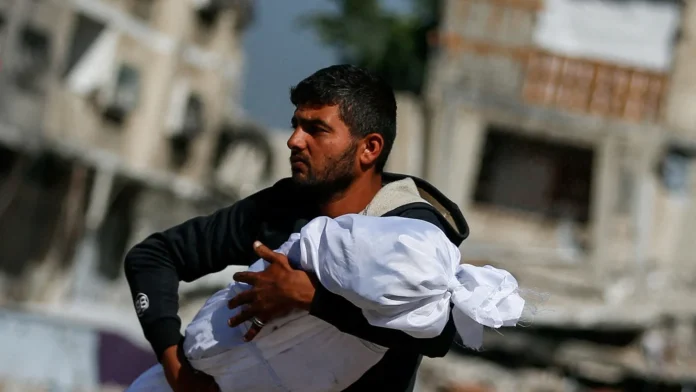
The infant deaths reflect the worsening humanitarian crisis in Gaza, where Israel has imposed a siege since Oct. 7, 2023, tightening restrictions on aid and fuel.

The latest fatalities include three infants who died from malnutrition and lack of medicine this week.

Jouri al-Masri, three months old, died Thursday in Deir al-Balah after her family was unable to obtain the specialized therapeutic milk she needed, according to Gaza’s Government Media Office.

On the same day, 5-month-old Nidal Sharab and 10-day-old Kinda al-Hams died at Nasser Hospital in Khan Younis, with their families blaming extreme malnutrition and critical shortages of medical supplies.

“These deaths reflect the ongoing war crime of denying access to life-saving essentials,” the media office announced, describing the blockade and border closure as a “crime against humanity and a blatant violation of international humanitarian law and the Geneva Conventions.”

The office also condemned what it called the international community’s “shameful silence” in the face of systematic starvation in Gaza.

On Friday, World Health Organization Director-General Tedros Adhanom Ghebreyesus stated an estimated 112 children are being admitted to Gaza hospitals each day for malnutrition treatment.

Israel has kept Gaza’s main crossings largely closed since March 2, blocking hundreds of aid and supply trucks. UN agencies say Gaza requires at least 500 trucks daily to meet basic needs, but often fewer than 50 are allowed to enter.

Rejecting international calls for a ceasefire, the Israeli military has carried out a deadly offensive on Gaza since October, killing more than 56,400 Palestinians, most of them women and children, according to Gaza health officials.

The International Criminal Court in November issued arrest warrants for Israeli Prime Minister Benjamin Netanyahu and former Defense Minister Yoav Gallant over war crimes and crimes against humanity in Gaza.

Israel also faces a genocide case at the International Court of Justice over its war on the enclave.

NATO state members wary of buying US weapons: Bloomberg

US Weapons

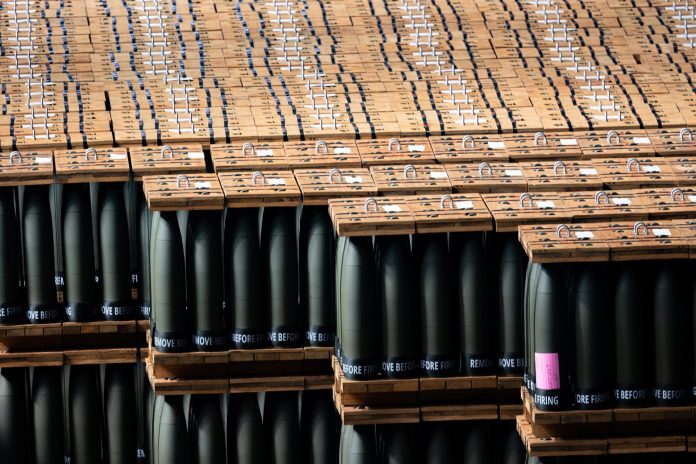
During a summit in The Hague this week, NATO states committed to raising military spending to 5% of GDP by 2035 to counter what they described as a “long-term threat posed by Russia to Euro-Atlantic security” – a claim that Moscow has repeatedly denied.

Concerns have reportedly emerged about deepening dependence on the American defense industry, particularly under the leadership of President Donald Trump.

According to Bloomberg, leaders fear they could be exposed to greater risks, especially in light of Trump’s efforts to improve ties with Russia and past threats to annex allied territory. Boosting reliance on US arms has become “an increasingly hard sell at home,” the outlet noted.

French President Emmanuel Macron has long championed the idea of securing greater defense autonomy for European NATO states, urging the development of a self-sufficient military industrial base.

Canada, a key NATO ally, is reportedly reconsidering its involvement in the US-led F-35 fighter jet program and may switch to Swedish alternatives.

“We should no longer send three-quarters of our defense capital spending to America,” Canadian Prime Minister Mark Carney stated earlier this month.

Copenhagen has also displayed some resistance, telling Washington that American arms deals have become “politically difficult” given Trump’s suggestion that the US annex Greenland, which is currently controlled by Denmark, Bloomberg reported.

Unease in the alliance has also been stoked by Trump’s move to cut intelligence sharing with Ukraine earlier this year. According to unnamed officials cited by Bloomberg, this decision “alarmed allies,” as it raised concerns over how much control the US might wield over weapons exports in the event of a crisis.

Nevertheless, a lack of viable domestic alternatives continues to bind European nations to US suppliers, according to the outlet. Decades of underinvestment have left Europe’s defense manufacturing capacity underdeveloped. As a result, countries will likely keep buying American equipment to meet rearmament targets, particularly as stockpiles have been depleted by shipments of military aid to Ukraine.

Moscow has condemned the EU’s militarization trend and arms transfers to Kiev, characterizing the conflict as a NATO proxy war. President Vladimir Putin has dismissed NATO’s concerns of Russian aggression as “nonsense,” instead blaming the alliance’s expansion and “aggressive behavior” for escalating tensions.