Wednesday, April 22, 2026
Home Blog Page 3000

The Assassination of Qassem Soleimani Institutionalizes Anti-American Sentiment in Iran

Donald Trump

Immediately after the assassination, President Donald Trump and Secretary of State Mike Pompeo, in series of tweets, announced that the U.S. reaction to any Iranian reprisal would be “fast” and “hard,” striving to justify their so-called preemptive action as the elimination of a so-called terrorist figure. They stressed that this operation was necessary for saving American lives and will help bring about peace and stability in the region.

However, what the Trump administration appears to be pursuing is an Israeli-style “campaign between the wars,” which keeps military pressure on an enemy even when no state of war officially exists. With this psychological measure, Trump is trying to create political divisions in Iran’s domestic politics with regard to the scope of Iran’s retaliatory response while decreasing the impacts of the global condemnation of Soleimani’s assassination.

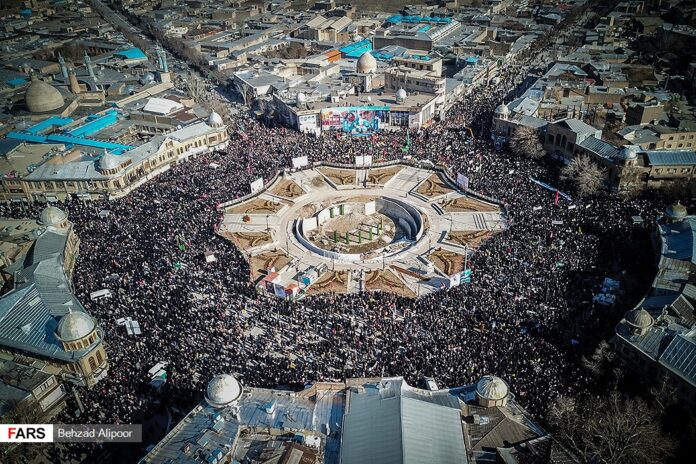
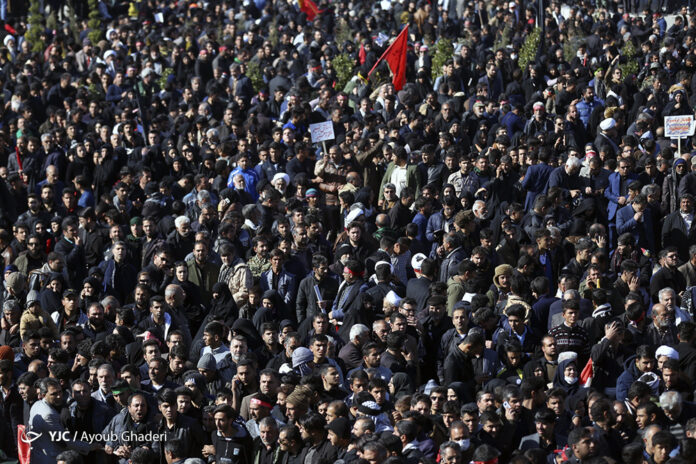
The attempt to create discord within Iran over the killing of Qassem Soleimani, who was widely respected by Iranians of many different walks of life as the protector of Iranian national security, is doomed to fail. The assassination will only generate more anxiety and anti-U.S. sentiment among the Iranian people. This has already been apparent in the attendance of millions of Iranians from virtually every social class at the funeral processions held in Soleimani’s honor.

In parallel to this public anxiety, Iranian officials are talking about taking “severe revenge” in both symmetric and asymmetric military dimensions — meaning the targeting of U.S. military bases and personnel in the region either directly or via local militia allies. Iran cannot afford not to respond to the Soleimani assassination in order to demonstrate and preserve its national strength and solidarity. Moreover, a retaliation for the assassination will fulfill the expectations of Iran’s regional allies, who consider Tehran the leader of “axis of resistance” and also want revenge.

Considering Iran’s extensive regional influence, the institutionalization of anti-U.S. sentiment among the Iranian people has grave strategic consequences for the U.S. and its regional and global status. Less than one century ago, Iranians regarded the U.S. as a positive “third party” that could help their country resist the political-economic demands of the colonial powers of the time, Russia (later the Soviets) and Britain. The CIA’s involvement in the coup that overthrew democratically elected Prime Minister Mohammad Mosaddegh in August 1953 was a turning point in terms of the rise of anti-U.S. enmity in Iran. By enhancing elite, political, and military relations with the U.S., the Shah’s regime tried to decrease this sense of enmity within the public. But bilateral relations further deteriorated after the 1979 Iranian Revolution. Later, the U.S. fully supported Iraqi leader Saddam Hussein’s war against Iran during the 1980s and the U.S. Navy shot down an Iranian commercial airliner over the Persian Gulf in July 1988, both of which have intensified Iranian feelings of hostility toward the U.S.

The deterioration in U.S.-Iranian relations became more severe following the U.S. invasion of Iraq in 2003 and still more severe following the Arab Spring in 2011 and the emergence of regional crises in Syria and Yemen. For the U.S., apparently, the goal continues to be bringing Iran back into its diplomatic fold. Washington has already tried all the means available, such as public diplomacy and direct contact with Iranians, direct negotiations, the pursuit of regime change in Tehran, and the imposition of coercive economic sanctions in order to collapse the Iranian state from inside.

In this respect, President Trump has continued his so-called “maximum pressure” policy to weaken the Iranian government. Yet he seems gradually to have realized that there is a slim chance to initiate direct talks with Iran on his terms. Even so, Iran’s increased regional power and influence threatens the cornerstones of U.S. regional policy: guaranteeing the security of Israel and protecting conservative Arab allies. Iran’s opposition is a key impediment for fulfilling U.S. strategic goals in these regards.

Trump’s decision to withdraw the U.S. from the 2015 Iran nuclear deal (Joint Comprehensive Plan of Action or JCPOA) ended any hope inside Iran that its prolonged strategic discrepancy with the U.S. and the West might be solved in the context of a win-win situation. Iranians expected the JCPOA to pave the way for further political interactions with world powers, resulting in a better life and increased economic growth and development. Increasingly the Iranian public has come to feel that Washington’s real problem with Iran is not its government’s behavior or its regional policy, but rather it is the state of Iran itself. The U.S. and its allies fear Iran’s emergence as a dominant Middle Eastern power and what that might mean for preserving the regional status quo, which the U.S. sees as the best policy to preserve its national interests. That concern has increased as Iran has developed more comprehensive economic and political-security cooperation with the two main global rivals of the U.S.—Russia and China.

From the U.S. perspective, Iran’s geopolitical strength, its vast economic potential, and its active role in battling terrorism will compel Russia and China to strengthen relations with Tehran under any circumstances. An alliance of these three states could imbalance current West-oriented regional political-security trends at the expense of the U.S. and its allies’ interests. The recent joint Chinese-Iranian-Russian naval exercise in the Gulf of Oman and the Indian Ocean caused concerns among the U.S. and its allies. Trump says that he withdrew from the JCPOA in order to contain Iran’s regional role and limit its missile activities. One may argue that he also sought to contain Iran’s growing ties with these two global rivals in the Middle East.

In such circumstances, perhaps the Trump administration and the U.S. intelligence community calculated that Soleimani was the main impediment to changing Iran’s regional policy, and decided to eliminate him in order to pave the way for direct talks with Iran. But this is surely a miscalculated perception of the strategic logic of Iran’s regional presence. Decisions on Iran’s regional policy are taken by Iran’s Supreme National Security Council and at the highest levels of the Iranian government. Soleimani was only a single high profile commander who was effective at operationalizing these policies. Killing him is unlikely to change Iran’s strategic direction.

Iran’s regional presence is based on a simple logic: preempting the penetration of symmetric and asymmetric threats inside Iran’s borders. Fulfilling this national security goal requires Iran to secure both its national borders and, in specific cases, areas beyond those borders. In the course of time, this logic has created the concept of a “wider security zone” in the strategic calculus employed by Iranian political-security elites. Soleimani was perceived by the Iranian public as the mastermind of this deterrence policy. Iran’s rule of regional engagement for several years has been that increased threats from the region require an increased and active Iranian response.

The basis of Iran’s decision to sign the JCPOA was the preservation of the country’s conventional deterrent strength. Trump’s miscalculation is based on achieving an impossibility — depriving Iran of defensive capabilities that are well-regarded by the Iranian people. In fact, it has been the U.S. and its regional allies, and the threat they pose to Tehran’s regional interests, that have pushed Iran toward strengthening its asymmetric power through forming and enhancing local networks of friendly forces. Trump’s insistence on threatening, sanctioning, and now targeted killing could lead Iran to seek other unconventional military means to protect itself. In this regard, Iran announced on Sunday that it was taking another step to reduce its nuclear commitments under the JCPOA, which effectively ends the nuclear deal at least in the near future.

Soleimani’s assassination is a turning point in institutionalizing the Iranian public’s sense of enmity toward the U.S., giving the government of Iran the domestic justification to endanger U.S. interests by all means at its disposal. It is evident now that President Trump cannot achieve his aims through threat of force. To avoid an all-out war that will harm both nations, the best policy for President Trump in the short-term is first to stop the threats, which only further raise the ire of the Iranian people. He should furthermore refrain from responding to Iran’s reprisal measure in the coming days. Moving forward, the U.S. president should end his “maximum pressure” policy (which in my view was foisted upon President Trump mainly by the Israelis and the Saudis, and some European countries), accept the totality of the JCPOA, and start to understand that Iran cannot afford to withdraw from the Middle East for national security reasons. These steps could pave the way for a meaningful diplomacy based on equal terms, to solve regional and bilateral problems.
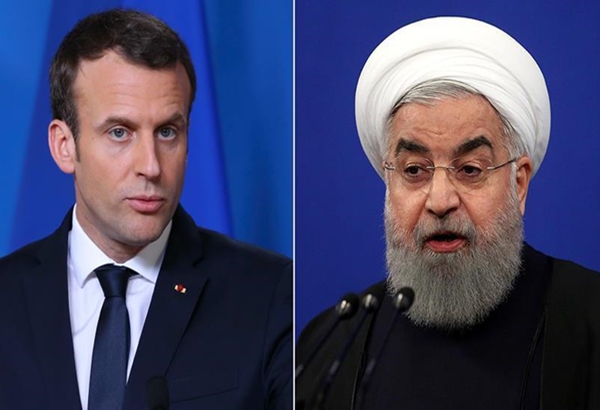
Iranian President Highlights Role of Gen. Soleimani in Europe’s Security

In a telephone conversation with his French counterpart Emmanuel Macron on Tuesday evening, President Rouhani said the Iranian nation is very grieved at the US crime and the loss of General Soleimani, noting that Americans made a “grave strategic mistake” by assassinating the Iranian commander.

He also expressed hope that all countries favoring peace and sustainable security in the world would adopt decisive stances against such criminal and terrorist action by the US.

The US will not achieve its objectives by taking this terrorist measure and its plot will backfire, President Rouhani added, noting that such American crime has strengthened unity and solidarity between the Iranian and Iraqi nations.

The late Iranian commander had traveled to Baghdad at the invitation of the Iraqi government for a meeting with the Arab country’s prime minister, President Rouhani added, stressing, “The US move was in violation of Iraq’s sovereignty, was an insult to that country’s government and nation, and was a serious and unforgivable crime against the Iranian nation.”

“The US government is held accountable for the consequences of such act of assassination,” the Iranian president told his French counterpart.

President Rouhani further pointed to the anger and sympathy that the US assassination of General Soleimani has prompted in the Muslim world and even in a number of the European cities, adding, “The Americans must know that their security and interests across the region are faced with dangerous conditions today, and they could not be immune from the consequences of this serious crime.”

Iran’s main strategy is to ensure security in the region, Rouhani underlined, adding, “General Soleimani’s goal was establishing sustainable security and stability in the region, and he is regarded as a hero of the fight against terrorism.”

Touching on the Iraqi parliament’s resolution on the expulsion of US forces from the Arab country following the assassination of General Soleimani, President Rouhani said, “We believe that regional security would be ensured by the regional countries alone. Nobody would benefit from tensions in the region, and instability in this region could be dangerous for the entire world.”

“The Islamic Republic of Iran never seeks war and insecurity in the region, but does not hesitate to defend its rights and sovereignty either,” the Iranian president underscored.

Highlighting the Iranian nation’s resistance to foreign pressures over the past 20 months, he added, “During this period, Iran has remained committed to its (JCPOA) undertakings, and what has been done in the recent five steps has been within the framework of the JCPOA. But the other side has not fulfilled its commitments which has created imbalance in the JCPOA.”

The president finally reiterated that Iran’s steps in reducing the JCPOA commitments could be reversed as soon as the other parties honor their commitments.

For his part, Macron said he understood the “bitter and saddening” conditions in which he was talking to the Iranian president, adding, “We are all very worried about peace and stability in the region, and the incidents that have taken place could cause increased tensions and irremediable convulsions.”

Reaffirming France’s permanent commitment to establishing peace and stability, Macron expressed regret at the recent incidents and voiced readiness to help relieve the tensions.

Highlighting the significance of the JCPOA, Macron said France will continue efforts to save such major international agreement and expects Iran to do so as well.

Erbil Owes Existence to Gen. Soleimani, KRG Ex-President Tells Why

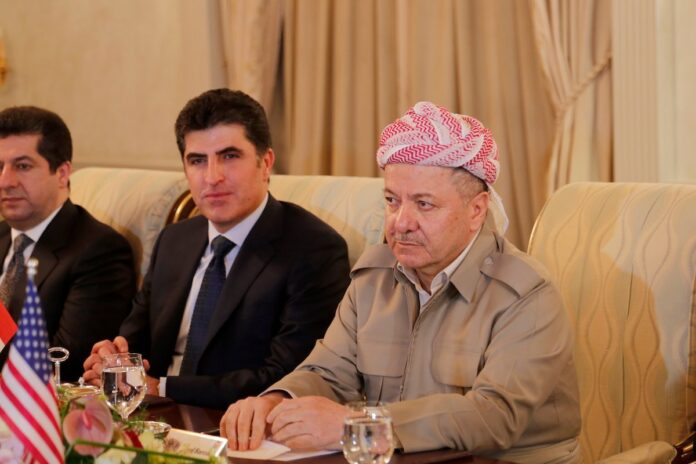
Masoud Barzani (right) and Nechirvan Barzani (centre)

“Kak Masoud! Guard the city just tonight.” This is what late Iranian commander General Soleimani had told former president of the Kurdistan Region Masoud Barzani when the ISIS fighters were closing in around the city of Erbil in 2014.

The above is part of an exclusive interview with Barzani, published in Turkish daily newspaper Zaman on January 8, 2015.

In the interview, entitled “How Did Erbil Survive?”, the then president of the KRG acknowledged the leading role that the popular Iranian commander had played in preventing the city from falling to the self-proclaimed caliphate of ISIS.

Following is an excerpt of Masoud Barzani’s 2015 interview with Zaman:

Zaman: We know that Erbil was about to fall to Daesh (ISIS). What happened that Daesh could not enter the city?

Barzani: That’s right. Everybody knows that Daesh had reached the doorstep of Erbil, and there were concerns about an immediate occupation of the city. After the Daesh assault, I called the Americans, the Turks, the UK, France and even Saudi Arabia, but all officials of those countries replied that they could not provide any help for now.

I immediately called up the Iranian authorities, and made it clear for them that the city was going to fall. I said ‘if you cannot help, we will evacuate the city’. Then the Iranian officials immediately gave me Qassem Soleimani’s contact number, saying ‘Haj Qassem is our plenipotentiary representative in the affairs of war on Daesh’.

So I phoned Haj Qassem right away and described the conditions exactly. Haj Qassem told me ‘I will be in Erbil tomorrow morning after the morning prayers’. I told him that ‘tomorrow would be late, come here right now’.

Haji (General Soleimani) said ‘Kak Masoud! Guard the city just tonight’.

Haj Qassem arrived in Erbil’s airport the next morning. I went there to receive him. Haji had come with 50 men from his special forces. They immediately departed for the clash zone and reorganized the Peshmerga forces. The battle turned in our favor within a couple of hours. Moreover, the Iranian arms supplies were delivered to us. Haj Qassem kept a number of his forces in Erbil for military advice, and returned to Karbala himself.

Later, we captured a commander of Daesh, and asked him how their forces retreated suddenly while they were about to conquer Erbil. The Daesh captive told us ‘our infiltrators in Erbil reported that Qassem Soleimani was in Erbil. So the morale of our men was destroyed and we retreated’.

Asked by Zaman about the war in Kobane, Masoud Barzani said, “Without the guidance of General Soleimani, Daesh would have created a big massacre in Kobane, and we owe our life to General Soleimani.”

Despite the open acknowledgement that the Iraqi Kurdistan Region and its capital city owe their security to the late Iranian commander, Masoud Barzani’s nephew and successor, Nechirvan, has not bothered to honor General Soleimani meritoriously.

Not only didn’t the incumbent KRG president attend the funeral of General Soleimani in Iran, he sent a short and formal letter of condolence to Leader of Iran’s Islamic Revolution Ayatollah Seyyed Ali Khamenei three days after the martyrdom of the popular commander in Iraq.

Nechirvan Barzani’s refusal to condemn the US for assassinating General Soleimani appears to be a sign he is still counting on Americans. However, a review of what happened to the Syrian Kurds could teach Nechirvan many lessons. A Persian proverb says that a wise man should keep the lantern for the time of darkness, something similar to the English expression “don’t bite the hand that feeds you”.

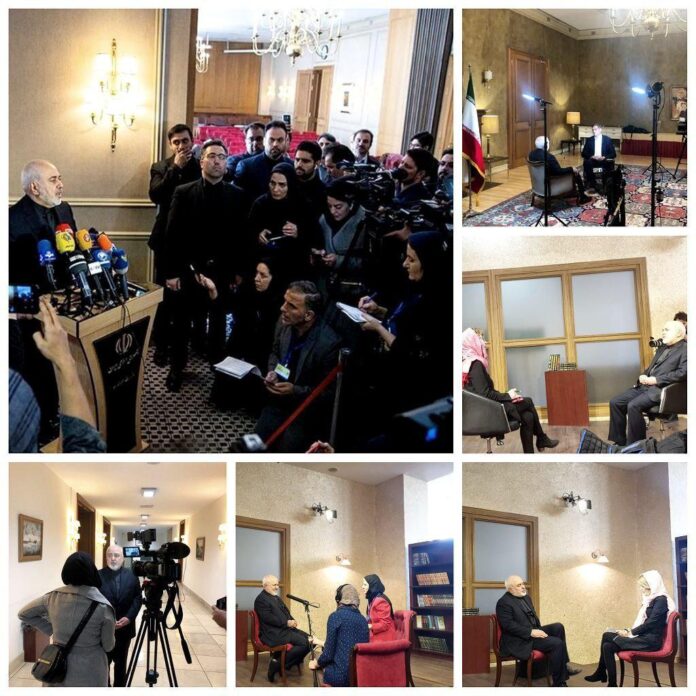
Gen. Soleimani’s Assassination to End US Presence in Region: Zarif

He made the remarks in separate interviews he gave to four American media outlets – CNN, ABC, CBS, and NPR – as well as Al Jazeera TV on the latest developments in the region and the JCPOA.

He gave the interviews on Tuesday on the sidelines of the Tehran Dialogue Forum held in the Iranian capital.

During the talks, he also vowed that Iran’s response to the recent malign move by the US will be given in an appropriate time and place.

Armed Forces Ready to Give Devastating Response: Iran

Iran Warns E3 Will Get Response for Triggering Dispute Mechanism

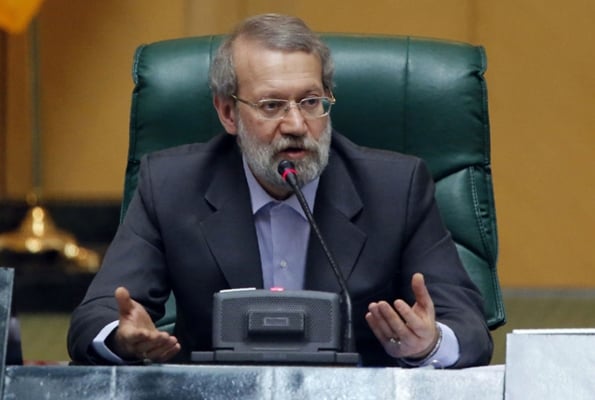
Larijani said on Tuesday an important responsibility is on the Iranian armed forces’ shoulders to meet the nation’s demand for punishment of the US criminals.

He pointed to people’s huge turnout in General Soleimani’s funeral ceremonies, and said, “The great Iranian nation gave a huge slap to the criminal US officials. Now a devastating response is in order.”

Hailing the huge presence of the Iranian people in the funeral procession for General Qassem Soleimani, Larijani said “the world witnessed a stunning and unique phenomenon. The funeral precessions for General Soleimani, whether in Baghdad, Kadhimiya, Karbala and Najaf, or in Ahvaz, Mashhad, Tehran, Qom and, today, in Kerman were but an infinite ocean of the presence of the Muslim people showing their anger with US crimes.”

Larijani further pointed to Trump’s claim that Iranian and Iraqi people celebrated the US action. “Do you now understand, Mr. Trump, how irrelevant your tweets are and how far is the distance between the realities and your analyses and illusions?”

Describing Trump as a president “who is interested in misunderstanding the realities, and jeopardizing his nation through his illusions,” Larijani said Trump’s claim that “General Qassem Soleimani should have been eliminated many years ago” means he is taking pride in doing and going on with a terrorist act.”

“Recently he has made another thoughtless remark that he will strike some of Iran’s cultural sites … and his unwise Secretary of State tried to whitewash his nonsense but in vain.”

“But even if you could have done this wrong, which you can’t, what would have been the consequences? Would Iranians be de-civilized? … Through hitting cultural symbols, the real essence of the Iranian assets will not be removed,” Larijani said.

Trump does not have the understanding that these symbols are the heritage of the whole mankind, he added.

Larijani noted that Trump’s decision to do ill-advised behaviours leaves but one pathway which is resistance. “The people’s stunning move was in fact a referendum for resistance.”

If Attacked Again, Iran Will Set Fire to Places Americans Love: IRGC

If Attacked Again, Iran Will Set Fire to Places Americans Love: IRGC

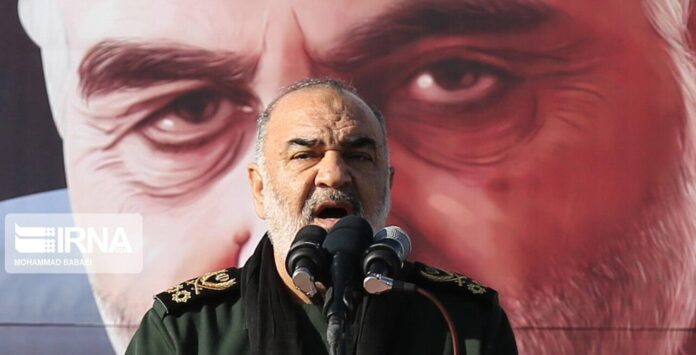
Speaking on the sidelines of a funeral ceremony for General Soleimani on Tuesday, General Salami said Americans well know where those places are.

“We will take revenge. We will set ablaze wherever they love,” General Salami said, drawing the cries of “Death to Israel!”

His comments came after US President Donald Trump’s threat to hit 52 Iranian sites, including those culturally important to the people of Iran, if the Islamic Republic decides to take revenge for the Friday assassination of its top commander.

Speaking in Kerman, General Salami praised General Soleimani’s achievements, describing him as essential to backing Palestinian groups, Yemen’s Houthi Ansarullah movement and the Resistance movement in Iraq and Syria.

As a martyr, General Soleimani represented an even greater threat to Iran’s enemies, General Salami said.

IRGC Missiles Hit US’ Ain Al-Assad Base in Iraq

‘US Says Didn’t Have Time to Issue Visa for Zarif’

‘US Says Didn’t Have Time to Issue Visa for Zarif’

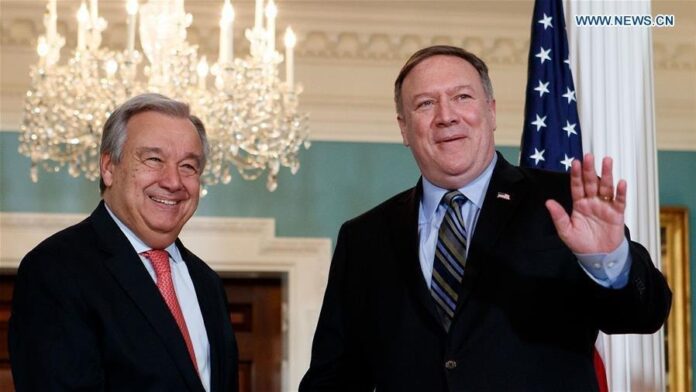
“What we know about the issue is that US Secretary of State Mike Pompeo said to the UN Secretary General Antonio Guterres that they had too little time to issue my visa and won’t do so, and the Secretary General said in response that it is Iran’s right to attend the meeting” slated for January 9, 2020, the Iranian foreign minister said on Tuesday.

“In the current situation I would not like very much to attend the meeting, but it was an opportunity for us to bring up the US crimes,” Zarif said.

He further noted that the US refusal to issue a visa for his presence at the UN Security Council’s special meeting shows the bankruptcy of the US government and Donald Trump’s regime.

The US refusal to issue visa for Zarif is in fact a continuation of its visa restrictions since 2017 when the Trump administration introduced a law that banned the citizens of six Muslim countries including Iran from entry into the US unless under specific circumstances.

The Trump administration has ratcheted up its visa restrictions on Iran ever since, as it has added several Iranian officials to the list of sanctioned people.

Although Zarif has been on the list since 1 August 2019, the US government gave him the permission to accompany President Rouhani in his visit to New York in September 2019. However, his movement was restricted in the city to the UN headquarters and the Iranian ambassador’s residence.

No officially confirmed explanation has been extended by the US government so far as to why this time Iran’s Foreign Minister was denied the visa.

Stampede in Gen. Soleimani’s Funeral Leaves Casualties

An emergency official said on Tuesday 40 have been killed and over 40 others wounded.

The tragic incident happened as millions of Iranian people from all walks of life had gathered for the last funeral ceremony of senior commander General Qassem Soleimani in his hometown Kerman, where he is being laid to rest.

The body of Lieutenant General Soleimani and one of his companions Major General Hossein Pourjafari, both assassinated in the same US drone attack early Friday, arrived at the Kerman airport following massive funeral processions in the Iraqi cities of Baghdad, Karbala and Najaf as well as the cities of Ahvaz, Mashhad, Tehran and Qom in Iran.

In Tehran, an estimated seven million mourners packed the 11-kilometre thoroughfare connecting the two iconic Enqelab (Revolution) and Azadi (Freedom) squares as well as the intersecting side streets in the capital Tehran during Monday’s funeral.

Following the Tehran processions, now millions of people are attending General Soleimani’s last funeral before the burial in Kerman.

Millions of Iranians Attend General Soleimani’s Funeral in Tehran

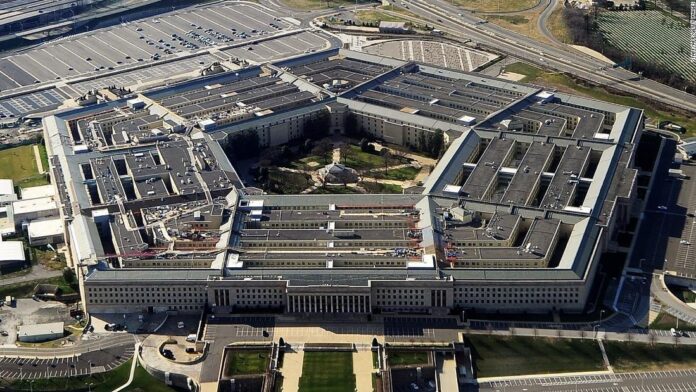
Iran Designates Pentagon as Terrorist Organization

Pentagon

During the parliamentary session, first the triple-urgency of the motion entitled “the Amendment to the Regulation of the Response to the Designation by the US of the Islamic Revolution Guards Corps as a Terrorist Organization” and then the motion was passed unanimously by the MPs with 233 members in attendance.

The full text of the motion is as follows.

Article one

The phrase “all the Pentagon members of staff and the affiliated companies and institutions, those who ordered the assassination of General Qassem Soleimani” is added to the previous phrase “the United States Central Command (US CENTCOM), and the workforce, organizations and institutions under its command.”

Article 2

The phrase “all the Pentagon members of staff and the affiliated companies, and institutions and those who ordered the assassination of General Qassem Soleimani” is added to the previous phrase “the commanders of the United States Central Command (US CENTCOM).”

Article 3

The government is obliged to allocate 200,000,000 Euros through the National Development Fund to the Islamic Revolution Guards Corps’ Quds Force within the next two months.