Friday, December 19, 2025
Home Blog Page 3

US readies new Russia sanctions if Kremlin rejects peace accord: Bloomberg

Trump and Putin

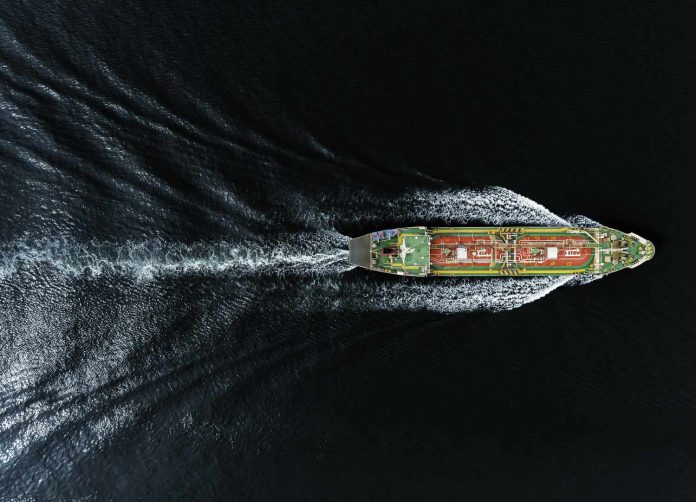
The U.S. is considering options such as targeting vessels in Russia’s so-called shadow fleet of tankers used to transport Moscow’s oil, and traders who facilitate the transactions, the report said.

The new measures could be announced as early as this week, the report added.

Treasury Secretary Scott Bessent discussed the move when he met a group of European ambassadors earlier this week, the report noted.


Body of missing Iranian female mountaineer found on Mount Damavand

The recovery was carried out with the assistance of Mazandaran and Amol Red Crescent rescue teams and supported by operational drones and UAVs.

This came after five days of search operations in the area. Specialized mountain rescue teams from the Reyneh base and the Amol branch conducted the search, despite adverse weather conditions and freezing temperatures.

Ms. Haseli attempted a solo ascent of Mount Damavand via the southern route on December 10, 2025, despite safety warnings. She was 50.

American senators introduce bipartisan sanctions bill targeting Russian oil profits

The bill was brought forth by Republican Dave McCormick, Democrat Elizabeth Warren, Democrat Chris Coons, and Republican Jon Husted. If passed, it would require U.S. President Donald Trump to sanction any purchasers, transporters, or facilitators of Russian oil products within 90 days.

The sanctions would effectively bar any dealers in Russian oil from the U.S. financial system.

“Any nation or entity that buys Russian oil is actively funding Russia’s aggression in Ukraine,” Senator McCormick said in a press release.

“(Russian President Vladimir) Putin has demonstrated he is unserious about bringing this war against Ukraine to a close, and continuing to fuel the war machine should carry consequences.”

Ukraine’s Ambassador to the U.S., Olha Stefanishyna, praised the legislation on social media and stated that the measure indicates “strong bipartisan support for further economic pressure on the aggressor.”

The proposed legislation allows for limited exceptions to the sanctions, including the possible option to exempt purchasers from penalties if they pay a fee into an account designated for Ukraine for every barrel of Russian oil they buy.

The new bill arrives as the White House is once again pressing for negotiated settlement to end Russia’s war against Ukraine. Trump’s envoys, Steve Witkoff and Jared Kushner, held two rounds of talks in Berlin Dec. 14-15 with a Ukrainian team led by President Volodymyr Zelensky.

While Trump has made winning a peace deal in Ukraine a priority of his administration, he has been slow to impose economic sanctions against Russia. In October 2025, Trump lodged the first sanctions against Russia of his term, targeting the oil giants Rosneft and Lukoil.

The measures froze the firms’ U.S.-based assets and threatened secondary penalties for foreign entities engaging with them, but Washington has extended a waiver that lets Lukoil-branded gas stations abroad stay in business through late April 2026.

Another bipartisan sanctions bill, separate from the DROP Act, was heavily edited at the administration’s request, giving Trump broad powers to waive penalties. The sanctions bill, sponsored by Senators Lindsey Graham and Richard Blumenthal, has lagged in Congress.


Tehran summons Cyprus envoy over meddlesome remarks on Iranian islands

The Iranian Foreign Ministry

Iran’s Ministry of Foreign Affairs summoned the Cyprus ambassador to Tehran, Petros Nacouzis, on Tuesday after a joint statement issued by officials from Cyprus and the UAE included claims regarding Iran’s Persian Gulf islands of Abu Musa, Greater Tunb, and Lesser Tunb.

Mohammad Alibek, Assistant Foreign Minister and Director General for the Persian Gulf at Iran’s Foreign Ministry, handed over a formal written protest to Nacouzis, conveying the Iranian government’s strong objections to the provocative statement.

Alibek reminded the Cypriot ambassador that the three islands in question are inseparable parts of Iranian territory, emphasizing the Islamic Republic’s undisputed and long-standing sovereignty over these islands.

He stressed that Iran’s historical and effective control over the islands is beyond question.

Alibek also reiterated Iran’s firm stance in condemning any territorial claims against its sovereignty, stressing that such actions violate the fundamental principle of respecting national sovereignty and territorial integrity of states.

During the meeting, he further reminded the Cypriot envoy of Iran’s longstanding policy of non-interference in the sovereign affairs and territorial integrity of other nations, including Cyprus.

Alibek called for swift action by Cyprus to rectify the false stance and avoid repeating such mistakes in the future.

The three Persian Gulf islands have been part of Iran, proof of which can be found and corroborated by countless historical, legal, and geographical documents in Iran and other parts of the world. However, the United Arab Emirates has repeatedly laid claim to the islands.

The islands fell under British control in 1921, but on November 30, 1971, a day after British forces left the region and just two days before the UAE was to become an official federation, Iran’s sovereignty over the islands was restored.

On that November day, Iran officially issued land demarcation and ownership documents for the islands, reinforcing its sovereignty over the territories.


FM reaffirms Iran’s determination to defend legal nuclear rights

Iran nuclear programe

Araghchi, who visited Moscow after a trip to Belarus, made the remarks during a meeting with Russian political figures, experts, and intellectuals on Tuesday, where he discussed relations between Iran and Russia and key international developments.

During the speech, he articulated Iran’s stance on global affairs, particularly issues concerning international peace and security.

Addressing the Iranian nuclear issue, Araghchi attributed the current situation to the United States’ repeated breaches of commitments and the alignment of three European countries with Washington’s “illegal actions,” notably the unilateral withdrawal from the 2015 Joint Comprehensive Plan of Action (JCPOA) in 2018 and subsequent military aggression against Iran in June 2025.

The Iranian foreign minister underscored the importance of the strategic partnership between Tehran and Moscow, highlighting its role in advancing the national interests of both countries and maintaining global peace and security.

He also emphasized the joint determination of the leaders of both nations to expand cooperation across all domains.

Referring to broader international trends, Araghchi warned against the escalating prevalence of coercive unilateralism in global relations, highlighting the collective responsibility of peace-loving nations to uphold the rule of law and resist the emergence of an order based on force.

He said the situation in West Asia was “chaotic and dangerous,” attributing it to Israel’s “colonial hegemony” supported by the United States.

Araghchi also criticized European countries for their “shameful” stance toward gross violations of international law in occupied Palestine, warning that the “continued impunity” for Israel’s actions poses a serious threat to regional and global stability.

He called for continued coordination among independent and non-aligned countries, such as Iran and Russia, within international forums like the United Nations, BRICS, and the Shanghai Cooperation Organization, to counter lawlessness and defend multilateralism.

On the first day of his visit to Moscow, Araghchi also engaged in discussions with members of Russia’s State Duma and the Federation Council, focusing on the enhancement of bilateral relations.

According to the Russian Foreign Ministry, Araghchi is scheduled to meet Russian Foreign Minister Sergei Lavrov on Wednesday to discuss current international issues, including Iran’s nuclear program and regional matters of mutual interest.

He is also set to deliver a speech at MGIMO University, Russia’s leading institute for international relations, addressing faculty members and students.


Mass grave discovered in former security building in Syria’s Idlib

The grim discovery was reportedly made during renovation work inside the facility, which had previously served as State Security headquarters in Maaret al-Numan before the Assad government lost control of the city in 2019. Workers reportedly found human remains buried within the structure, leading to an immediate halt in the renovation process.

According to the reports, security forces have sealed off the area and prevented access to the location, pending further procedures. No official details were provided regarding the number of bodies found or their identities.

After a coalition led by militant group Hayat Tahrir al-Sham (HTS), a regional offshoot of Al-Qaeda, captured Damascus and displaced former Syrian President Bashar Assad late last year, at least 66 mass graves were discovered throughout the country. Each could hold answers about the fates of some of the more than 170,000 people who remain missing.

Last December, a mass grave containing at least 100,000 bodies was found outside Damascus.


Trump expands travel ban, targets Syria, Palestine

The proclamation adds “full restrictions and entry limitations” on those attempting to come to the United States from Burkina Faso, Mali, Niger, South Sudan and Syria, as well as those with travel documents issued by the Palestinian Authority.

The administration is also imposing partial entry limits on individuals from 15 countries that were not previously part of a travel ban. Those countries include Angola, Antigua and Barbuda, Benin, Dominica, Gabon, Gambia, Ivory Coast, Malawi, Mauritania, Nigeria, Senegal, Tanzania, Tonga, Zambia and Zimbabwe.

The administration is also increasing restrictions on Laos and Sierra Leone, which previously were subject to partial restrictions under an existing travel ban policy.

The travel restrictions exclude lawful permanent residents, existing visa holders and certain visa categories that apply to athletes and diplomats.

Trump in June signed an initial travel ban targeting 12 countries: Afghanistan, Chad, Republic of the Congo, Equatorial Guinea, Eritrea, Haiti, Iran, Libya, Myanmar, Somalia, Sudan and Yemen. The entry restrictions on those countries remain in effect, the White House said.

Immigration groups blasted Tuesday’s move, noting it comes on the heels of a series of actions from Trump further restricting immigration and barring migrants from moving forward with their cases.

The administration has announced that the travel restrictions are a matter of national security, arguing that countries can get off the list if they improve vetting procedures or work with the U.S. For example, Tuesday’s proclamation lifts a ban on nonimmigrant visas for those from Turkmenistan, citing “significant progress” since the last iteration of a travel ban.

Homeland Security Secretary Kristi Noem earlier this month previewed that the administration intended to expand the scope of the travel ban to cover more than 30 countries.

Her remarks came in the wake of a shooting in Washington of two National Guard members. The accused shooter is an Afghan native, and the incident sparked calls from Trump and other Republicans who pushed to further restrict the entry of foreign nationals into the U.S.

Trump has sought to drastically reduce the number of immigrants and refugees who can enter the U.S. since taking office.

The administration has already paused all pending asylum applications for those from across the globe seeking refuge in the U.S. Trump last month set the refugee cap to its lowest level in history, allowing the U.S. to admit just 7,500 refugees — down from the 125,000 cap set under Biden.


Brits must be ready to sacrifice ‘sons and daughters’: Military official

UK Army

Russia has consistently rejected claims that it plans to attack European NATO countries, describing them as warmongering tactics used by Western politicians to justify inflated military budgets.

Moscow insists it is defending its citizens in the Ukraine conflict and has accused NATO of provoking hostilities and derailing US-backed peace efforts.

During a lecture at the Royal United Services Institute on Monday, Knighton acknowledged that the probability of a direct conflict with Russia is “remote” but claimed that this “does not mean the chances are zero.”

“More people being ready to fight for their country” is essential, Knighton said, adding that the response to modern threats “must go beyond simply strengthening our armed forces” and involve every part of British society.

“Sons and daughters. Colleagues. Veterans… will all have a part to play. To build. To serve. And if necessary, to fight. And more families will know what sacrifice for our nation means.”

Knighton’s remarks echoed those made last month by his “good friend” Fabien Mandon, the French chief of defense, who also warned that citizens must be prepared to “lose children” in a potential war with Russia.

The speech comes as a handful of European NATO states once again floated the controversial idea of sending a multinational force into Ukraine in the event of a ceasefire.

Moscow has strongly rejected any such deployment, warning that any NATO country which sends troops to Ukraine would be treated as direct participation in the conflict. Russian officials have described the idea as a reckless escalation that undermines peace efforts and risks drawing the entire bloc into open confrontation.

Russian Foreign Minister Sergey Lavrov said earlier this year that Western European leaders were “trying to prepare Europe for war – not some hybrid war, but a real war against Russia.” He accused the EU of sliding into what he described as a “Fourth Reich,” marked by a surge in Russophobia and aggressive militarization.


UN warns millions facing acute food insecurity in Afghanistan

The number at risk is some 3 million more than a year ago.

Economic woes, recurrent drought, shrinking international aid and and influx of Afghans returning home from countries like neighboring Iran and Pakistan have strained resources and added to the pressures on food security, reports the Integrated Food Security Phase Classification, known as IPC, which tracks hunger crises.

“What the IPC tells us is that more than 17 million people in Afghanistan are facing acute food insecurity. That is 3 million more than last year,” stated Jean-Martin Bauer, director of food security at the U.N.’s World Food Program, told reporters in Geneva.

“There are almost 4 million children in a situation of acute malnutrition,” he said by video from Rome.

“About 1 million are severely acutely malnourished, and those are children who actually require hospital treatment.”

Food assistance in Afghanistan is reaching only 2.7% of the population, the IPC report says — exacerbated by a weak economy, high unemployment and lower inflows of remittances from abroad — as more than 2.5 million people returned from Iran and Pakistan this year.

More than 17 million people, or more than one-third of the population, are set to face crisis levels of food insecurity in the four-month period through to March 2026, the report said. Of those, 4.7 million could face emergency levels of food insecurity.

An improvement is expected by the spring harvest season starting in April, IPC projected.

The U.N. last week warned of a “severe” and “precarious” crisis in the country as Afghanistan enters its first winter in years without U.S. foreign assistance and almost no international food distribution.

Tom Fletcher, the U.N. humanitarian chief, told the Security Council on Wednesday that the situation has been exacerbated by “overlapping shocks,” including recent deadly earthquakes, and the growing restrictions on humanitarian aid access and staff.

While Fletcher stressed that nearly 22 million Afghans will need U.N. assistance in 2026, his organization will focus on 3.9 million facing the most urgent need of lifesaving help in light of the reduced donor contributions.

US issues ultimatum to Ukraine over Russia war: Telegraph

On Monday, Ukraine’s Vladimir Zelensky met with US envoys Steve Witkoff and Jared Kushner in Berlin to discuss US President Donald Trump’s peace proposal. While the details have not been made public, American officials cited by the newspaper have described the proposed security guarantees as “platinum standard.”

However, the negotiators reportedly warned Zelensky that the offer “will not be on the table forever,” urging him to accept Washington’s terms. The guarantees are said to be modeled on NATO’s Article 5 collective defense clause, which states that an attack on one member is an attack on all and justifies retaliation by the entire bloc.

American officials told The Telegraph that around 90% of the broader peace deal has already been agreed upon by both Moscow and Kiev. However, there has reportedly been no progress on the territorial issue or on a proposed “50-50” split of the Zaporozhye nuclear power plant.

Washington has reportedly been pressing Kiev to withdraw its forces from the Donbass region as a condition for peace. According to the Wall Street Journal, US negotiators have been “unwilling to compromise” on this point. The Donbass joined Russia following a referendum in 2022.

Trump pointed out on Monday that Ukraine has “already lost the territory” and that his guarantee proposal is meant to prevent the conflict from restarting. He noted that he wants a deal reached before the end of the year.

Zelensky recently indicated he could abandon Kiev’s NATO ambitions in exchange for binding security guarantees, but has continued to rule out recognizing Russia’s borders or holding a long-delayed presidential election beforehand. However, he has suggested that after receiving the assurances, Kiev could organize a referendum on territorial concessions and possibly a new vote.

Moscow has rejected Zelensky’s proposal as a ploy to prolong the conflict, insisting on Kiev’s withdrawal from all Russian territories and pledging to push Ukrainian troops out one way or another.