Tuesday, January 13, 2026
Home Blog Page 298

Iranian Armed Forces spokesman: Ceasefire was never an option

Shekarchi was spekaing about the situation after the cessation of the Zionist regime’s aggression against Iran.

He noted that the Zionist regime is never trustworthy, neither for the world, nor for Iran.

Shekarchi also spoke about the high level of preparedness of Iran’s armed forces, saying, “Our military is more ready than ever before, and in the event of any renewed aggression by the Zionist regime, the act will be met with a crushing and decisive response”.

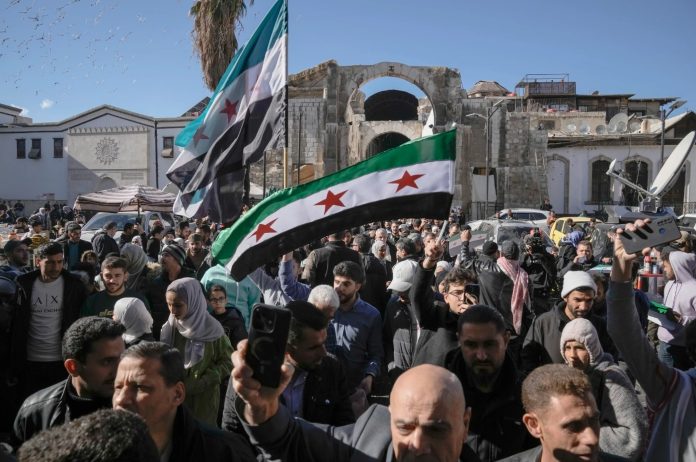
Israel says eying ties with Syria and Lebanon after Iran war

Syria War

Israeli leaders argue that after the 12-day war, other countries in the region have an opportunity to forge ties with Tel Aviv.

The Middle East has been upended by nearly two years of war in Gaza, during which Israel also carried out airstrikes and ground operations in Lebanon targeting Hezbollah, and by the overthrow of former Syrian leader Bashar al-Assad.

In 2020, the United Arab Emirates, Bahrain and Morocco became the first Arab states to establish ties with Israel since Jordan in 1994 and Egypt in 1979. The normalisation agreements with Israel were deeply unpopular in the Arab world.

“We have an interest in adding countries such as Syria and Lebanon, our neighbours, to the circle of peace and normalisation, while safeguarding Israel’s essential and security interests,” Saar said at a press conference in Jerusalem.

“The Golan will remain part of the State of Israel”, he added.

Israel annexed the Golan Heights in 1981 after capturing the territory from Syria during the 1967 Six-Day War. While most of the international community regards the Golan as occupied Syrian land, U.S. President Donald Trump recognised Israeli sovereignty over it during his first term in office.

Following Assad’s ousting, Israeli forces moved further into Syrian territory.

A senior Syrian official, speaking on condition of anonymity, stated that Syria would never give up the Golan Heights, describing it as an integral part of Syrian territory.

The official also added that normalisation efforts with Israel must be part of the 2002 Arab Peace Initiative, and not carried out through a separate track.

The 2002 initiative proposed Arab normalisation with Israel in exchange for its withdrawal from occupied territories including the Golan Heights, the West Bank, and Gaza. It also called for the establishment of an independent Palestinian state with East Jerusalem, which Israel also captured in 1967, as its capital.

Throughout the war in Gaza, regional power Saudi Arabia has repeatedly stressed that establishing ties with Israel was conditional on the creation of an independent Palestinian state.

Saar said it was “not constructive” for other states to condition normalisation on Palestinian statehood.

“Our view is that a Palestinian state will threaten the security of the State of Israel”, he added.

In May, Reuters reported that Israel and Syria’s new rulers had established direct contact and held face-to-face meetings aimed at de-escalating tensions and preventing renewed conflict along their shared border.

The same month, Trump announced the U.S. would lift sanctions on Syria and met Syria’s new president, urging him to normalize ties with Israel.

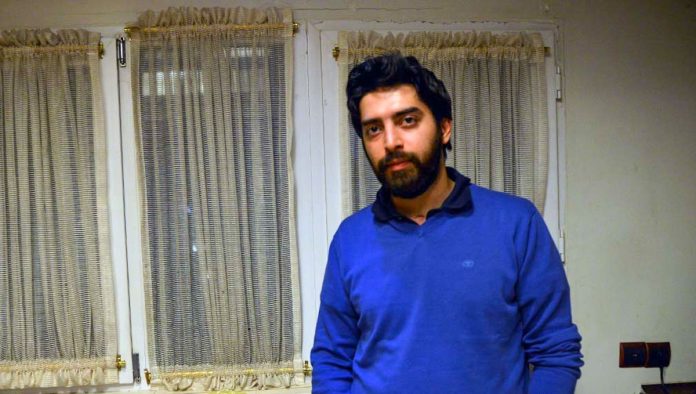
Iranian musician Bamdad Bayat dies at 40

The news was shared by lyricist and director Babak Sahraei on social media

He said, “Bamdad Bayat took flight. Where did you go, my dearest, my little brother? ” Born on August 4, 1985, in Tehran, Bamdad was the twin brother of Barbod Bayat and began learning music at an early age under the guidance of his father.

At 11, he entered Tehran’s Music Conservatory and later continued his studies in Canada, where he received a diploma in jazz music from the University of Toronto. Bamdad specialized in film music and composed scores for short films such as Where Is the House? (1997) and Rebellion (1999).

He also collaborated with his father on soundtracks for many feature films and TV series.

Bamdad Bayat’s untimely death marks a great loss for Iran’s music and cinema communities.

President Pezeshkian deplores IAEA’s double standards

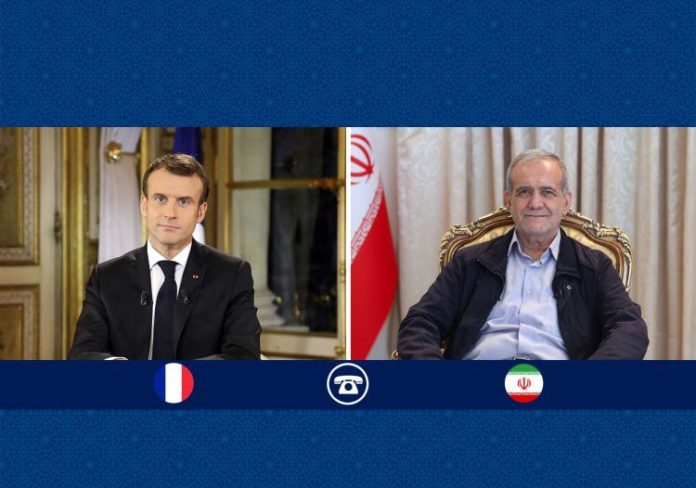
Pezeshkian and his French counterpart Emmanuel Macron held a telephone conversation on Sunday night.

Reacting to the concern expressed by the French president about the suspension of Iran’s cooperation with the International Atomic Energy Agency, Pezeshkian criticized the UN nuclear chief for making incorrect reports about Iran’s nuclear activities and refusing to condemn the American and Israeli military strikes on Iran’s nuclear facilities.

Despite Iran’s interaction with the IAEA, Grossi has not acted impartially, Pezeshkian said, describing Iran’s decision to suspend cooperation with the UN nuclear agency as a natural reaction to unjustifiable, unconstructive and destructive behaviors.

He also condemned the military aggression by the US and Israeli regime that resulted in the martyrdom of hundreds of Iranian people, including military commanders and nuclear scientists, saying the greater pity is that the self-proclaimed advocates of human rights and international law rushed to justify such inhumane and illegal attacks instead of deploring them.

Pezeshkian described Grossi’s conduct as a source of concern and formation of serious challenges eroding the Iranian nation’s trust.

The first step in rebuilding trust is the IAEA’s full commitment to the observance of its own rules and regulations, the president added.

The question is why the criminal Zionist regime, which is not a member of the NPT and has violated all international rules in the past years, should become a basis and reference for the IAEA’s reports, Pezeshkian told Macron.

“Such double standards have created numerous problems for the regional and world security. The IAEA is expected to uphold the rights of countries, avoid double standards, and defend the rights of all member states,” the Iranian president added.

Even if Iran resumes cooperation with the IAEA, there will be no guarantee that the country’s nuclear facilities won’t be struck again, he added.

Reiterating Iran’s policy of settlement of disputes through diplomacy and dialogue and avoidance of wars and insecurity, Pezeshkian expressed hope that the international organizations, including the IAEA, would honor their commitments and steer the world into the course of peace and security, not wars and conflicts.

While the Zionist regime waged a war of aggression against Iran on June 13 and struck Iran’s military, nuclear and residential areas for 12 days, the US stepped in and conducted military attacks on three nuclear sites in Iran’s Natanz, Fordow and Isfahan on June 22.

The Iranian military forces conducted powerful counterattacks immediately after the aggression. The Islamic Revolution Guards Corps Aerospace Force carried out 22 waves of retaliatory missile strikes against the Zionist regime as part of Operation True Promise III that inflicted heavy losses on cities across the occupied territories.

Also, in response to the US attacks, Iranian armed forces launched a wave of missiles at al-Udeid air base in Qatar, the largest American military base in West Asia.

A ceasefire that came into force on June 24 brought the fighting to a halt.

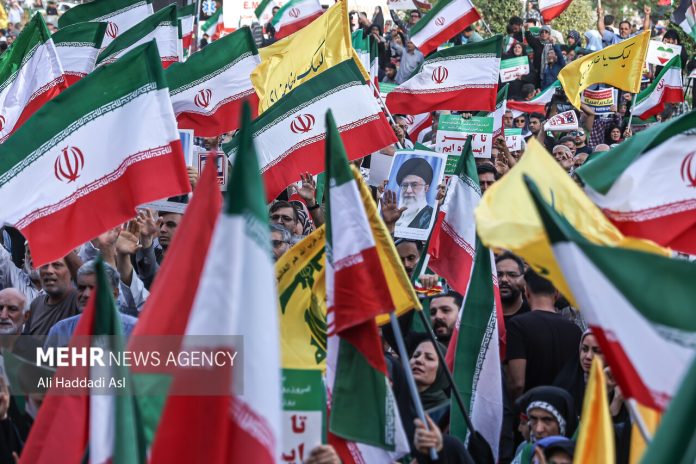
Poll: Iranians see ceasefire agreement with Israel as strategic victory

The national survey, conducted by the Research Institute of Studies and Investigations of the Islamic Revolution University, reveals that an overwhelming majority of Iranians consider the recent ceasefire in the war with the Zionist regime to be a strategic victory for the country.

The poll was conducted in recent days with the participation of 626 citizens over the age of 18 across provincial capitals in Iran.

The findings indicate that IRIB (state broadcaster) and domestic messaging platforms remain the main sources of news for citizens during crises.

61% of respondents believe Iran had the upper hand militarily prior to the ceasefire, while only 17.3% saw the Zionist regime and the US as superior. Additionally, 53.3% rated Iran’s diplomatic and foreign policy performance as “good” or “very good.”

51.3% of people considered the timing of the ceasefire decision appropriate, while 30.5% opposed it. 80% of respondents said they would support resuming the war if the Zionist regime violated the ceasefire.

54.5% reported feeling a strong or significant sense of victory after the ceasefire was announced. Furthermore, 62.9% believed that the Zionist regime failed to achieve its objectives.

68.4% of respondents said they do not trust the Zionist regime to honor the ceasefire at all.

Iran says IAEA should avoid political approaches

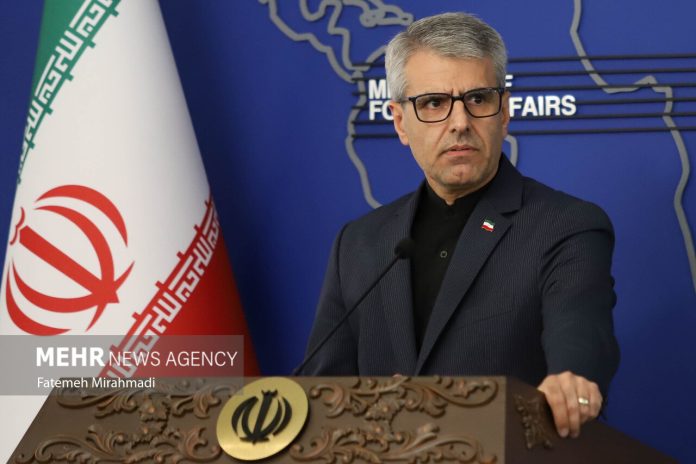
Speaking at a press conference on Monday, Baqaei commented on a recent bill passed by the Iranian Parliament on the suspension of Tehran’s cooperation with the UN nuclear agency.

He said the IAEA is an international organization with clearly-defined duties and its director general has specified duties as well.

“What we have demanded is that the (IAEA) director general act within the framework of his technical duties without being influenced by certain members of the agency,” Baqaei added.

Deploring the brazen policy of the European troika during the past two decades to exert pressure on Iran, the spokesman said Tehran has always called on the UN nuclear agency to avoid political attitudes.

He noted that the latest “inappropriate” report by the IAEA chief about Iran provided a basis for a politicized resolution against the Islamic Republic by the IAEA Board of Governors.

Baqaei also condemned the subsequent illegal military strikes by the US and the Zionist regime against Iran, stating, “What happened was an act of aggression. Our main request at present is the recognition of the aggressor. The aggressor is clearly known and the UN Security Council must admit it.”

His comments came after the Iranian Parliament passed a bill that obligates the administration to put its cooperation with the International Atomic Energy Agency on hold.

The decision to suspend cooperation with the UN nuclear agency came in response to IAEA Chief Rafael Grossi whose biased report against Iran paved the way for a resolution that subsequently encouraged the Israeli regime to launch a war of aggression on Iran and also prompted the US to bomb three main nuclear sites of Iran in Isfahan, Fordow and Natanz.

Israel planned but failed to assassinate Ayatollah Khamenei, government heads: Iranian official

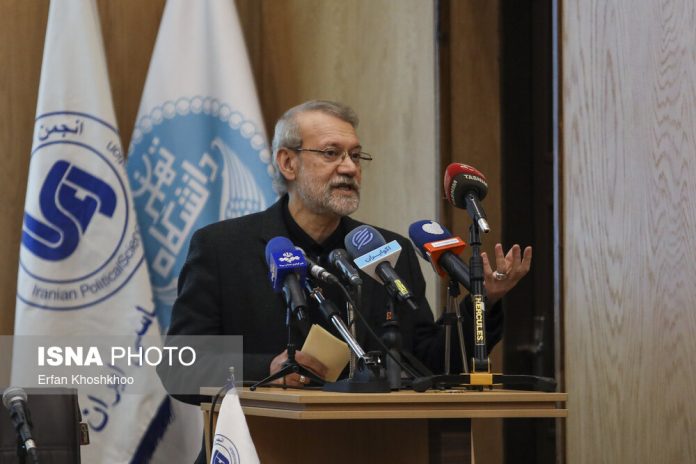
Ali Larijani

“The enemy’s plan in this war was to target IRGC commanders and key national centers simultaneously. They believed they could pressure certain officials into abandoning the establishment through threats,” Ali Larijani said in a televised interview on Sunday.

Larijani, who served as Parliament speaker between 2008 and 2020, further revealed that during the war, Israel had attempted to intimidate a range of Iranian officials, including politicians, military officers, and security personnel.

“On Friday, they contacted me and gave me 12 hours to leave Iran or get out of Tehran—or else, they said, I’d meet the same fate as martyrs like [Chief of Staff of Iran’s Armed Forces Major General Mohammad Hossein] Bagheri and [commander of Iran’s top military headquarters Major General Gholam-Ali] Rashid. But I gave them the answer they deserved,” he said.

Referring to the US aggression against Iran’s peaceful nuclear sites of Fordow, Natanz, and Isfahan, Larijani dismissed the move as a “face-saving” gesture, saying, “let them be happy about that.”

Pointing to Iran’s retaliation against the US aggression on Iranian soil, Larijani said, “out of 14 Iranian missiles, 6 struck the American base [in Qatar] – and they hit hard, each carrying a 400kg warhead.”

US President Donald Trump, trying to save face, claimed “only one missile hit,” he said, adding let him “enjoy his delusions.”

The Israeli regime launched its unprovoked aggression on the Islamic Republic on June 13, with American backing, assassinating several top-ranking military commanders, scientists, and many other ordinary civilians, including women and children.

On the same day, Iranian armed forces, spearheaded by the Islamic Revolution Guards Corps (IRGC), launched an unprecedented retaliatory campaign against the Israeli regime known as Operation True Promise III.

After more than a week into the war, the US decided to finally make its collaboration with the Israeli regime official, with direct intervention in the war that the Israeli regime has been losing.

On June 22, the United States joined the Israeli regime in the assault and bombed three Iranian nuclear sites in a grave violation of the United Nations Charter, international law, and the Nuclear Non-Proliferation Treaty (NPT).

A day later, Iran launched a wave of missiles at al-Udeid air base in Qatar—the largest American military base in West Asia—in retaliation for the US aggression.

As the Iranian armed forces pounded Israel and its military and industrial infrastructure, using many new-generation missiles that precisely hit the designated targets, the embattled regime was forced to unilaterally cease its aggression against Iran on June 24.

Following the unilateral move, Iran too, halted its retaliatory campaign after carrying out 22 waves of successful attacks against the Israeli-occupied territories.

Elsewhere in his remarks, the Iranian senior official said that the US engaged in five rounds of indirect talks with Iran prior to the aggression solely to mislead Iran, while Israel carried out the strikes in complete coordination with Washington.

“The US used [indirect] talks as a capacity for deception and military aggression,” he noted.

The Israeli regime launched its aggression on Iran just two days before the sixth round of indirect talks, which were scheduled to take place in Muscat.

Trump denies he is talking with Iran, slams Obama-era agreement

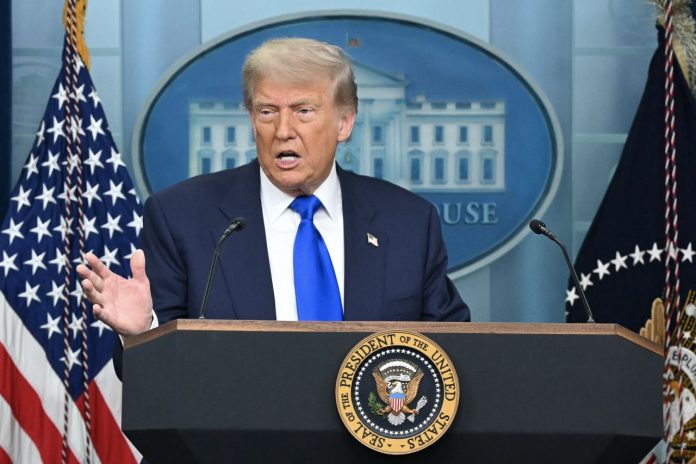
“Tell phony Democrat Senator Chris Coons that I am not offering Iran ANYTHING … nor am I even talking to them,” Trump said on social media, pushing back against any suggestions of his talking with Tehran.

He also criticized former President Barack Obama over the 2015 Iran nuclear deal, formally known as the Joint Comprehensive Plan of Action (JCPOA), which he called “the stupid ‘road to a Nuclear Weapon JCPOA (which would now be expired!)’”

Trump’s 2018 unilateral withdrawal from the accord paved the way to the current standoff with Iran over its nuclear enrichment.

The US president also reiterated his claim that recent US attacks had effectively destroyed Iran’s nuclear facilities, despite US intelligence reports suggesting the damage might actually have only set back the program a matter of months.

“I am not even talking to them since we totally OBLITERATED their Nuclear Facilities,” he stated, referring to US strikes earlier this month on sites in Fordo, Natanz and Isfahan.

Trump’s comments come amid ongoing international debate over the fate of Iran’s enriched uranium stockpile and questions regarding possible diplomatic re-engagement.

While some US officials have indicated openness to dialogue, the president’s remarks suggest a firm stance following the recent escalation between the two nations.

Iran demands end to aggression as precondition for nuclear talks with US

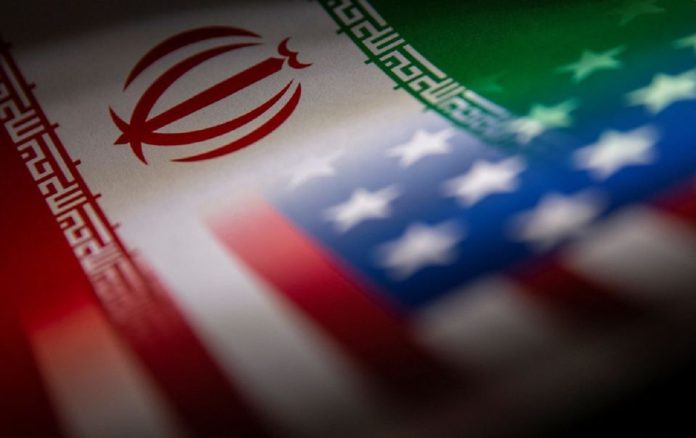
Iran US Flags

Deputy Foreign Minister Majid Takht-Ravanchi told the BBC that such a commitment is essential for rebuilding trust and continuing diplomacy.

On June 13, Israeli strikes targeted multiple Iranian sites, including nuclear facilities and civilian areas, killing senior military officials and civilians. Days later, the US directly attacked Iran’s Fordow, Isfahan, and Natanz nuclear sites using bunker-buster bombs, causing major damage but no radiation leaks.

A ceasefire halted hostilities on June 23, just as indirect talks between Tehran and Washington were to begin under Omani mediation.

Takht-Ravanchi stressed Iran’s right to enrich uranium for peaceful purposes and dismissed suggestions of weaponization.

He warned against pressure tactics, asserting, “Saying ‘zero enrichment or be bombed’ is the law of the jungle.”

While confirming messages from Washington disavowing regime change, he said no timeline has been agreed for talks.

“We seek dialogue, not war, but must remain vigilant,” he said.

Intercepted Iranian communications downplay damage from US attack on nuclear sites: Washington Post

US Attack Iran

A source, who declined to be named, confirmed that account to Reuters but said there were serious questions about whether the Iranian officials were being truthful, and described the intercepts as unreliable indicators.

The report by the Post is the latest, however, to raise questions about the extent of the damage to Iran’s nuclear program. A leaked preliminary assessment from the Defense Intelligence Agency cautioned the strikes may have only set back Iran by months.

President Donald Trump has stated the strikes “completely and totally obliterated” Iran’s nuclear program, but U.S. officials acknowledge it will take time to form a complete assessment of the damage caused by the U.S. military attacks last weekend.

The White House dismissed the report by the Post.

“The notion that unnamed Iranian officials know what happened under hundreds of feet of rubble is nonsense. Their nuclear weapons program is over,” White House press secretary Karoline Leavitt was quoted as saying by the Post.

In an interview broadcast on Sunday on Fox News, Trump reiterated his confidence that the strikes had destroyed Iran’s nuclear capabilities.

“It was obliterated like nobody’s ever seen before. And that meant the end to their nuclear ambitions, at least for a period of time,” he stated on the “Sunday Morning Futures with Maria Bartiromo” program.