Tuesday, January 13, 2026
Home Blog Page 299

Iran demands UN action over Israeli attack on Evin Prison

In a formal letter dated 28 June 2025, addressed to the UN Secretary-General and President of the Security Council, Iravani expressed Iran’s “grave concern and strongest condemnation” over the 23 June attack that killed and injured dozens of civilians, including prison staff, inmates, and visiting family members.

The letter describes the strike as a “blatant and egregious violation” of international humanitarian and human rights law, emphasizing that the facility — a clearly marked civilian prison — was deliberately targeted. Iran urged the Council to take immediate steps to prevent the recurrence of such attacks and safeguard the principles of international law.

Full text of the letter follows.

In the Name of God, the Most Compassionate, the Most Merciful

No. 2529802 28 June 2025

Excellency,Upon instructions from my Government and pursuant to our previous communications concerning the large-scale, unprovoked, and premeditated acts of military aggression by the Israeli regime against the sovereignty and territorial integrity of the Islamic Republic of Iran, I am writing to convey the Islamic Republic of Iran’s grave concern and strongest condemnation of the deliberate and unlawful attack launched by the Israeli regime against Evin Prison in Tehran on Monday, 23 June 2025, at 10:30 a.m. local time.

This attack, carried out targeted at a clearly identified civilian prison, constitutes a blatant and egregious violation of international humanitarian law, international human rights law, and the foundational principles of the Charter of the United Nations. As a direct result of this reckless aggression, numerous civilians—including correctional officers, prison staff, visiting family members, and inmates—were martyred, either due to the impact of the strike or the trauma it caused.

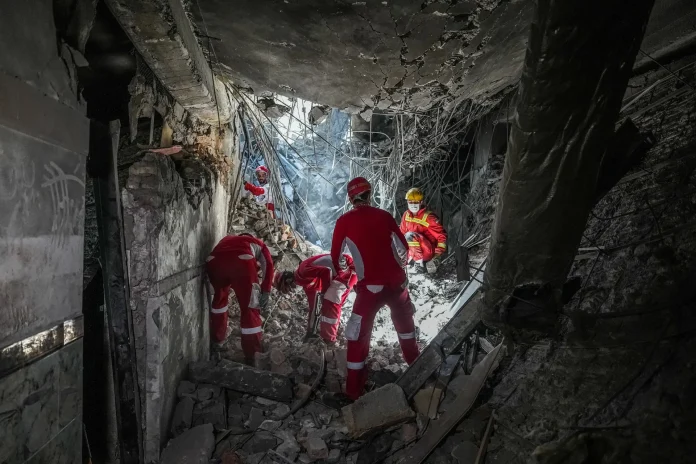
Key prison infrastructure, including the medical clinic, entry gate, kitchen, and visitation rooms, was destroyed. Many civilians were severely injured, among them women and children. Notably, Ms. Zahra Ebadi, a prison social worker, and her five-year-old son, Mehrad Kheiri, were found dead under the rubble three days after the attack.

The intentional targeting of a detention facility housing persons under state custody is a grave breach of international law, including but not limited to Article 33 of the Fourth Geneva Convention, which prohibits collective punishment, intimidation, and acts of terrorism against protected persons. It also contravenes the United Nations Standard Minimum Rules for the Treatment of Prisoners (Nelson Mandela Rules), which guarantee detainees’ access to health care without discrimination.

Furthermore, the attack violated the fundamental principle of distinction under international humanitarian law, which obliges all parties to distinguish at all times between civilian objects and military objectives.

The destruction of the prison’s medical facilities in particular rendered it impossible to provide urgent and life-saving care to critically ill detainees. The resulting humanitarian crisis and logistical challenges severely undermined the ability to uphold detainees’ rights and ensure their safety.

The chaos and terror induced by this barbaric assault placed all detainees, especially women and other vulnerable groups, at extreme risk.

The suddenness of the attack deprived the Iranian authorities of any opportunity to take protective measures in accordance with national and international obligations. Following the strike, the Government of the Islamic Republic of Iran was compelled to immediately relocate surviving inmates to other correctional facilities, resulting in severe overcrowding and further straining an already fragile system.

Given the gravity of this heinous and horrific crime, the Islamic Republic of Iran calls upon the United Nations Security Council and the Secretary-General to:

1. Unequivocally condemn the Israeli regime’s attack on Evin Prison as a serious breach of international humanitarian and human rights law;

2. Hold the perpetrators accountable for war crimes and crimes against humanity under international law; and

3. Take all necessary measures to prevent the recurrence of such heinous acts, which threaten not only the lives of civilians in custody but also the very foundations of the international legal order.

This attack constitutes a dangerous and unacceptable escalation. It strikes at the heart of the international community’s collective responsibility to uphold the rule of law and protect the rights and dignity of all persons, including those in detention. The Islamic Republic of Iran trusts that Your Excellency and your esteemed Office will treat this matter with the urgency and seriousness it demands.

I should be grateful if you would have the present letter and its attachment circulated as a document of the Security Council.Please accept,

Excellency, the assurances of our highest consideration.
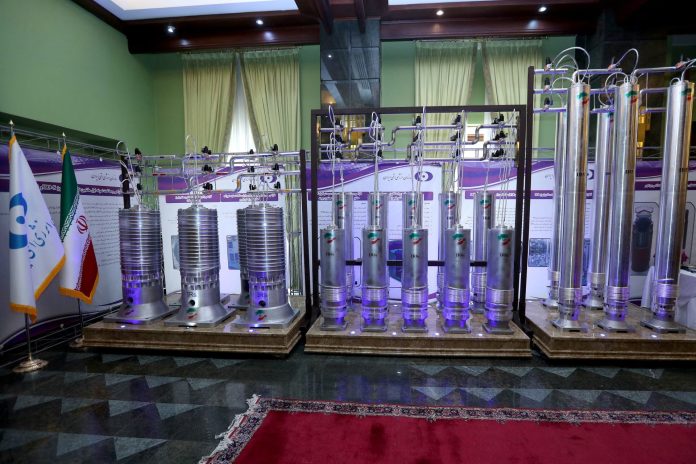
Tehran’s nuclear enrichment ‘will never stop’: Iran’s envoy

Iran Nuclear Program

“The enrichment is our right, an inalienable right, and we want to implement this right,” Iravani told CBS News, adding that Iran was ready for negotiations but “unconditional surrender is not negotiation. It is dictating the policy toward us.”

But Iravani stated Tehran is “ready for the negotiation, but after this aggression, it is not proper condition for a new round of the negotiation, and there is no request for negotiation and meeting with the president”.

The Iranian UN envoy also denied that there are any threats from his government to the safety of Rafael Grossi, the director general of the International Atomic Energy Agency, or against the agency’s inspectors, who are accused by some Iranian officials of helping Israel justify its attacks. IAEA inspectors are currently in Iran but do not have access to Iran’s nuclear facilities.

Pressed by the CBS News anchor Margaret Brennan on whether he would condemn calls for the arrest and execution of the IAEA head, which Marco Rubio, the US Secretary of State Marco Rubio said an Iranian daily newspaper had made, Iravani stressed that he would.

“There is no any threat,” Irvani said, but acknowledged that Iran’s parliament had suspended cooperation with IAEA. The inspectors, he added, “are in Iran, they are in safe conditions, but the activity has been suspended. They cannot have access to our site … our assessment is that they have not done their jobs.”

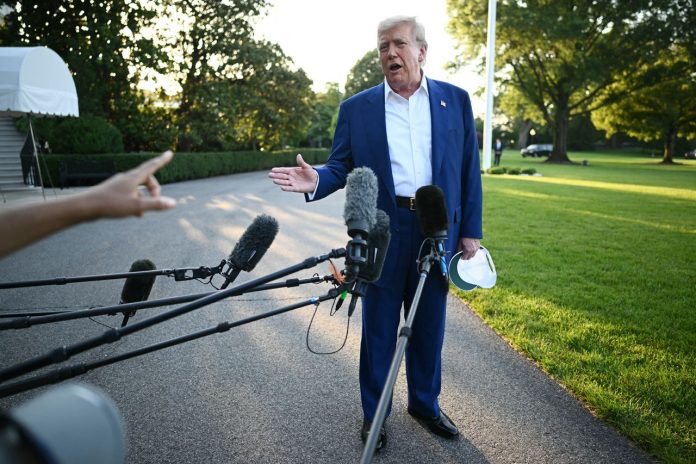
Iravani also responded to questions on why Tehran has not accepted proposals for a diplomatic solution. Referring to President Donald Trump’s “unconditional surrender” demand, Irvani stated that the US “is dictating the policy towards us. If they are ready for negotiation, they will find us ready for that. But if they want to dictate us, it is impossible for any negotiation with them.”

Irvani’s comments comes as western nations, including the US, are pushing for Iran to resume negotiations over its nuclear program a week after the US launched strikes on three facilities, setting off days of heated dispute over whether the facilities has been “totally obliterated”, as Trump initially claimed, or if they had delayed but not destroyed the program.

Grossi told CBS that there is “agreement in describing this as a very serious level of damage” but went on to say that Iran will likely will be able to begin to produce enriched uranium within months.

“The capacities they have are there,” he stated.

“They can have, you know, in a matter of months, I would say, a few cascades of centrifuges spinning and producing enriched uranium, or less than that. But as I said, frankly speaking, one cannot claim that everything has disappeared and there is nothing there.”

On Sunday, President Trump again dismissed reports that Iran had moved 400kg (880lb) on 60% enriched uranium ahead of the strikes on Fordow, regarded as the center of Iran’s enrichment program.

“It’s very hard to do, dangerous to do, it’s very heavy, plus we didn’t give them much notice because they didn’t know they we were coming,” Trump told the Fox News host Maria Bartiromo.

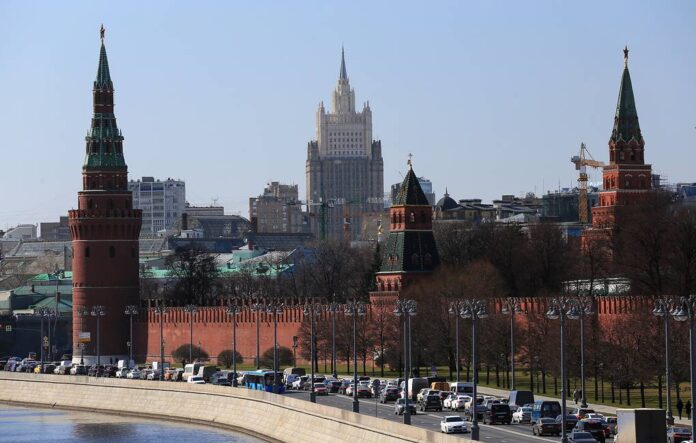
US Senator says Congress will soon vote on new Russian sanctions after talks with Trump

Kremlin

Voting on the bill is expected to begin following the end of the July congressional break, Graham said.

“For the first time yesterday the president told me… he says, ‘it’s time to move your bill’,” Graham said in an interview with ABC News, stressing that it would be Trump’s purview as to whether the bill would ultimately be signed into law.

When asked if Graham expected Trump to sign the bill, the senator responded: “Yes, I think we’re in good shape… But he has a waiver. It’s up to him how to impose it.”

Graham said he held the talk with Trump during a round of golf on June 28. No specific timeline was provided as to when the bill can be expected to be moved, although Congress is set to reconvene on July 9.

Signed by 84 co-sponsors, Senators Lindsey Graham (R-S.C.) and Richard Blumenthal (D-Conn.) have been working on a revised version of their bill that would impose secondary sanctions on Russian trading partners, while shielding Ukraine’s allies from penalties and making technical adjustments.

“So what does this bill do? If you’re buying products from Russia and you’re not helping Ukraine, then there’s a 500 percent tariff on your products coming into the United States. India and China buy 70 percent of Putin’s oil. They keep his war machine going,” Graham explained.

Despite pressure, Trump has thus far refused to impose additional sanction against on his own accord. Amid discussion around the Senate bill, Trump has reportedly asked Graham to to soften his proposed sanctions, having previously postponed a vote on the bipartisan measure.

Amid the slow process of moving the proposed bill, Graham described the move as a “big breakthrough.”

Ukraine has repeatedly urged the United States to impose additional sanctions on Russia as Moscow continues increase the frequency and magnitude of its attacks on Ukrainian cities.

Graham’s comments come just hours after Hungarian Foreign Minister Peter Szijjarto claimed that Washington lifted sanctions that hindered the expansion of the Paks Nuclear Power Plant, where Russia’s state-owned energy company Rosatom is to build two new reactors.

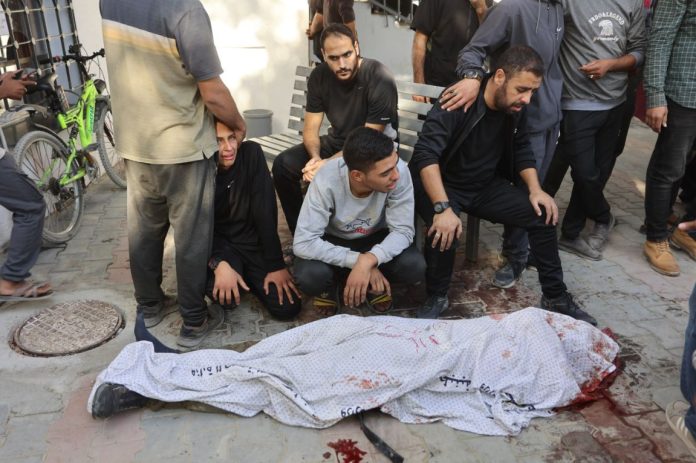
Nearly 800 Palestinian athletes, sports officials killed by Israel since start of Gaza war

Gaza War

The deaths include players and administrative staff from various sports, with the vast majority killed in Gaza and 23 in the occupied West Bank, Susan Shalabi, deputy head of the association, told Anadolu.

Shalabi said that 437 of those killed were football players, including 15 from the West Bank.

She explained that the association is compiling the figures using player registration records and data from its Gaza branch.

However, Shalabi noted that the toll is likely higher due to missing persons under rubble and restricted access to many affected areas as a result of Israeli airstrikes and the ongoing blockade.

Regarding sports infrastructure, Shalabi added Israeli attacks have completely or partially destroyed 288 sports facilities, including stadiums, gyms and club buildings. Of those, 21 were in the occupied West Bank.

She demanded an end to Israel’s deliberate targeting of Palestinian sports and called for protection for athletes and sports venues in both Gaza and the West Bank.

Despite international calls for a ceasefire, the Israeli army has killed at least 56,000 Palestinians in a deadly onslaught in the Gaza Strip since October 2023.

Attacks by the Israeli army and illegal settlers have also killed at least 986 Palestinians in the West Bank during the same period, according to the Palestinian Health Ministry.

Last November, the International Criminal Court issued arrest warrants for Israeli Prime Minister Benjamin Netanyahu and his former Defense Minister Yoav Gallant for war crimes and crimes against humanity in Gaza.

Israel also faces a genocide case at the International Court of Justice for its war on the enclave.

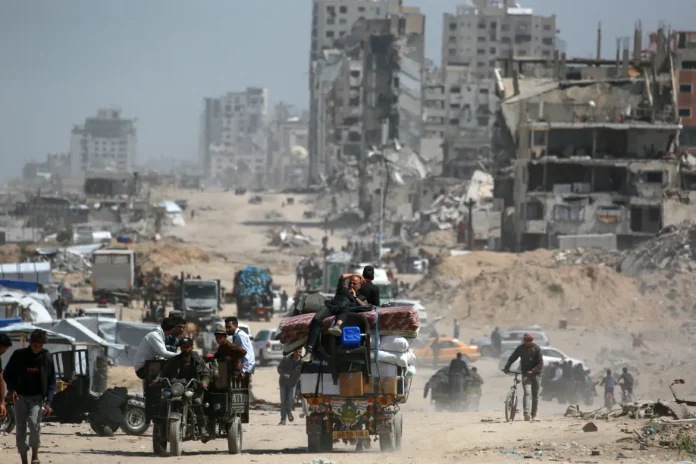
US planning to pressure Israeli Strategic Affairs chief to end Gaza war: Report

Gaza War

The Times of Israel cited sources as saying that the remaining sticking points in achieving a ceasefire include the Palestinian group Hamas’s demand for a permanent end to the war, as opposed to Israel’s efforts to secure a temporary ceasefire that leaves open the option for it to resume fighting.

They also added that Hamas is demanding a return to old mechanisms for distributing humanitarian aid or the establishment of a new system to replace the current one managed by the Gaza Humanitarian Foundation (GHF), a proposition backed by Arab mediators.

Israel announced GHF, an Israeli- and US-backed private mechanism, is essential in preventing the diversion of aid by Hamas, but it has forced Gazans to walk long distances in order to pick up food while also crossing Israeli army lines, coming under deadly fire on a near-daily basis, the Times of Israel reported.

Israel’s Haaretz newspaper, citing senior White House officials, reported that senior officials from US President Donald Trump’s team will pressure Dermer to reach an agreement on “ending the attacks on Gaza and returning the remaining prisoners.”

It was also reported that US officials would tell Dermer that Israel’s insistence on “eliminating Hamas” would be left for the future.

The Yedioth Ahronoth daily also reported that Israeli Prime Minister Benjamin Netanyahu’s recent statement that the rescue of Israeli hostages in Gaza had become a primary focus rather than repeating his goal of “eliminating Hamas” suggested a shift in his priorities.

Channel 12, citing Israeli sources, reported that the army has asked the government to determine the next step in the war.

The report added the next step could be either completing control over Gaza or reaching a prisoner exchange agreement and claimed that the army prefers the second option.

The report emphasized that Dermer’s trip was also planned in preparation for Netanyahu’s visit to Washington, expected to take place in the next two weeks, and said the US wanted an agreement to be reached before Netanyahu’s trip.

Channel 13 also reported that the army had informed the government that there were no significant targets left in Gaza that could be reached without endangering the lives of the remaining hostages after nearly 19 months of ground attacks.

Trump, who announced an end to the Israel-Iran conflict on June 23 with a ceasefire that began on June 24 after 12 days of fighting, shared a message saying: “Make a deal in Gaza, bring back the (Israeli) hostages,” which was interpreted as a message to Netanyahu.

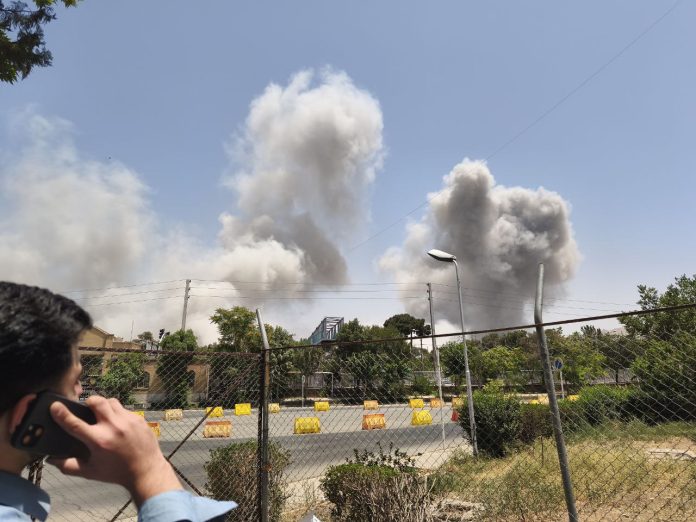
Over 1,500 explosion-induced earthquakes recorded amid 12-day US-Israeli strikes on Iran

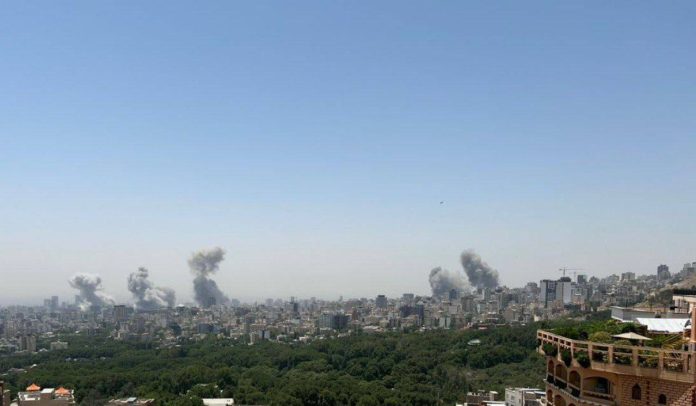
Zare confirmed that seismic monitoring stations across Iran and neighboring countries logged all ground tremors linked to missile and drone strikes, which reportedly involved over 3,400 projectiles targeting sites in 24 Iranian provinces.

These explosions, especially near nuclear facilities in Fordow, Natanz, and Isfahan, generated earthquakes of up to magnitude 2.

While such quakes are considered small, Zare warned that if explosions had occurred directly on active fault lines, the consequences could have been far more destructive.

He also raised concerns over secondary risks, especially in Tehran, where sinkhole-prone urban areas could collapse due to repeated underground shockwaves.

Artificial quakes from military or mining activity are distinguishable from natural ones, Zare said, citing global seismic data sharing.

He stressed that while Iran has seen no unconventional blasts in 30 years, standard military tests and mining explosions frequently cause minor quakes with magnitudes under 4.

Iran condemns Trump’s rhetoric, insulting remarks

In a statement the Iranian Foreign Ministry said such insolent remarks and undiplomatic behavior not only constitute a flagrant violation of universally shared moral principles and the provisions of the Charter of the United Nations, but also represent a blatant affront to a dignified nation with an ancient civilization, and deeply wound the sentiments of hundreds of millions of Muslims across the region and the world.

It added, undoubtedly, insulting and bullying rhetoric directed at Iran and at political and religious figures revered by the Iranian people and Muslims worldwide serves only to deepen the global revulsion and indignation toward the United States’ short-sighted policies, while further discrediting its purported desire for dialogue and engagement.

The Ministry of Foreign Affairs of the Islamic Republic of Iran advised American officials to refrain from resorting to insulting rhetoric and inconsistent posturing, and instead be held accountable for their government’s blatant violations of international law—particularly its unlawful attack on Iran’s peaceful nuclear facilities and its continued support for the Zionist regime’s atrocities against the Iranian people and the broader region.

Iran’s FM calls on UN to recognize Israeli, US aggression

Abbas Araghchi

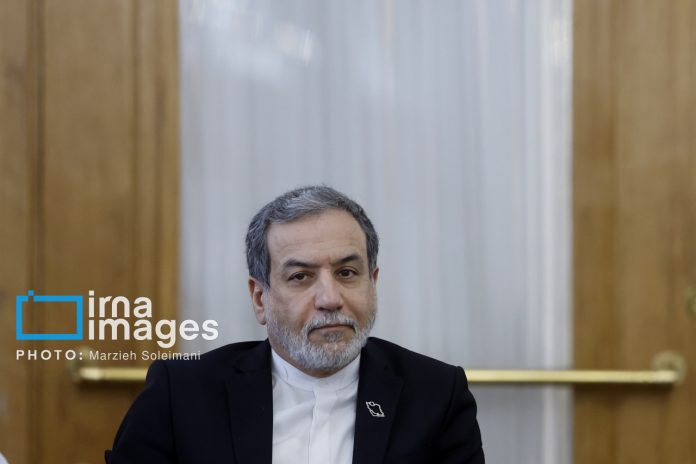
In a letter dated 28 June 2025, addressed to the UN Secretary-General and the President of the Security Council, Araqchi condemned the military assaults from 13 to 24 June as a “flagrant breach” of the UN Charter and international law.

Detailing the targeting of civilians, hospitals, infrastructure, and safeguarded nuclear sites, he warned that failure to act would undermine the UN’s credibility and embolden future violations.

Araqchi urged the Council to fulfill its responsibility under Articles 24 and 39 of the Charter and hold the political and military leaders of the aggressor states individually accountable.

Full text of the letter follows.

In the Name of God, the Most Compassionate, the Most Merciful
28 June 2025

Excellency,

Pursuant to the letter dated 13 June 2025 (S/2025/379) regarding the act of aggression committed by the Israeli regime against the Islamic Republic of Iran from 13 June 2025 until 24 June 2025, and other relevant communications, I am writing to recall the necessity of fulfilment, by the United Nations Security Council, of its primary responsibility in maintenance of international peace and security.

Since the beginning of aggression of the Israeli regime against the Islamic Republic of Iran on 13 June 2025 in flagrant breach of Article 2 (4) of the United Nations Charter, a number of residential buildings, civilians, and civilian infrastructure were deliberately targeted in blatant violation of international law.

While the full scale of the losses is under assessment, several hospitals and relief centers were targeted in grave breach of international humanitarian law, a few energy installations were targeted with the aim of disrupting daily lives of civilians, and IAEA-safeguarded nuclear facilities became the target of attacks of Israeli regime and the United States in Qom, Arak, Natanz and Isfahan in grave violation of the UN Charter, the NPT, IAEA instruments and its resolutions.

These unilateral attacks on Iran violate numerous fundamental rules of international law, including:

– the right to life under article 6 of the International Covenant on Civil and Political Rights;

– the international prohibition on the use of force under article 2(4) of the United Nations Charter and customary international law (General Assembly resolution 2625 (XXV) (1970): Declaration on Principles of International Law concerning Friendly Relations), which has the status of jus cogens;

– the prohibition on aggression (General Assembly resolution 3314 (XXIX) (1974): Definition of Aggression);

– the duty of non-intervention in the internal affairs of another State (General Assembly resolution 2625 (XXV) (1970): Declaration on Principles of International Law concerning Friendly Relations);

– the duty to respect the sovereignty of another State; and

– the right of the Iranian people to self-determination under Article 1(2) of the United Nations Charter and common article 1(1) of the International Covenant on Civil and Political Rights and the International Covenant on Economic, Social, and Cultural Rights.

Following the aggression, a considerable number of UN Member States and regional and international organizations condemned the aggression and attacks in strong terms, recognized them as a serious violation of the UN Charter, including the Non-Aligned Movement (NAM) through its Communiqué of 13 June 2025, the Shanghai Cooperation Organization (SCO) through its Statement of 17 June 2025, BRICS through its Statement of 25 June 2025, Group of the Friends in Defense of the Charter of the United Nations through its statements of 14 & 24 June 2025, the Arab Union through its statement of 21 June 2025 and the PGCC through its statement of 17 June 2025. Furthermore, the Organization of the Islamic Cooperation strongly condemned the aggressions through its resolution of 22 June 2025.

While this is a minimum requirement of the rule of law at the international level, in particular, considering the erga omnes obligation of non-recognition of breach of a peremptory norm of international law, it is incumbent upon the UN Security Council to fulfill its primary responsibility for the maintenance of international peace and security entrusted upon it under Article 24 (1) of the Charter.

Therefore, and in the present context, in order to give effect to the provisions of the Charter, and in view of the fact that the Security Council has the duty of determining, as per Article 39, the existence of an act of aggression by the Israeli regime against the sovereignty and territorial integrity of the Islamic Republic of Iran, we solemnly request that the Security Council recognize the Israeli regime and the United States as the initiators of the act of aggression and their subsequent responsibility therefor including compensation and reparation.

The Security Council should also hold the aggressors accountable and prevent the recurrence of such heinous and serious crimes to enable it to maintain international peace and security. It should be noted that political and military leaders who order an act of aggression, are also individually liable for the international crime of aggression under customary international law.

It is further emphasized that the said act of aggression is a brazen assault on the very foundations of international law, and that tolerating the same and the legal consequences thereof seriously undermines the credibility of the United Nations system, poses a real threat to rule of law at the international level and engenders lawlessness in the future of international relations in our region as well as the international community at large.

I should be grateful if you would have the present letter circulated as a document of the General Assembly and of the Security Council.

Please accept, Excellency, the assurances of my highest consideration.

Moscow says US, Russian spy chiefs agree to keep direct line open

“I had a phone call with my American counterpart, and we reserved for each other the possibility to call each other at any time and discuss issues of interest to us,” Naryshkin said.

He did not specify when the conversation took place, and Ratcliffe has not publicly confirmed the call.

Russian state media claimed the last known exchange between the two intelligence chiefs occurred in March.

The remarks come amid broader efforts by the administration of U.S. President Donald Trump to normalize relations between Washington and Moscow. During a phone call on Feb. 12, Presidents Trump and Vladimir Putin agreed to reset U.S.-Russia ties and revive dialogue on “topics of mutual interest,” including a potential resolution to the war in Ukraine.

That call was followed by the first round of bilateral talks, held on Feb. 18 in Saudi Arabia—the first official meeting between U.S. and Russian officials in over three years. Both sides pledged to begin restoring diplomatic relations and to appoint senior teams tasked with negotiating a Ukraine peace agreement.

Despite these efforts, progress on peace has been limited.

Two earlier rounds of talks between Moscow and Kyiv in Istanbul failed to produce a ceasefire. On June 5, Trump declined to say when or if further sanctions on Russia might be imposed, stating only that there is a deadline “in (his) brain.”

U.S. Secretary of State Marco Rubio later told Politico that Trump would resist European pressure to toughen sanctions, arguing that doing so could jeopardize the fragile window for negotiations with the Kremlin.

Iran writes to UN on Israeli attacks against medical sector

The letter includes the initial report from the Ministry of Health and Medical Education covering casualties and damages inflicted between 13 and 22 June 2025.

According to the report, the Israeli regime’s “large-scale, unprovoked, and premeditated” aggression resulted in the martyrdom and injury of a considerable number of civilians, including medical personnel, and caused widespread destruction to healthcare infrastructure.

Iravani condemned the attacks as “inhumane” and “in flagrant violation” of international humanitarian and human rights law, as well as conventions protecting medical workers and facilities during armed conflict.

The letter specifically highlights the deliberate targeting of hospitals and health workers, warning of the severe consequences for the civilian population.

Iran described the document as a preliminary submission, noting that a full report would be provided once further verified data becomes available.

Tehran called on the UN to take immediate action in response to the continued Israeli violations.