Health Ministry Spokesman Kianoush Jahanpour on Thursday said 117 people have died in the past 24 hours from the novel coronavirus, increasing the death toll to 4,110.
He also confirmed 1,634 new cases of infection in 24 hours, increasing the total number to 66,220. The number of new cases shows a decrease for the 11th consecutive day.
The spokesman said the recovery process has gained momentum in the past few days, and that 32,309 patients have so far recovered and been discharged from the hospital.
Jahanpour also noted that 3,918 patients are in severe conditions of the disease.
So far, 231,393 tests for the novel virus have been taken in the country.
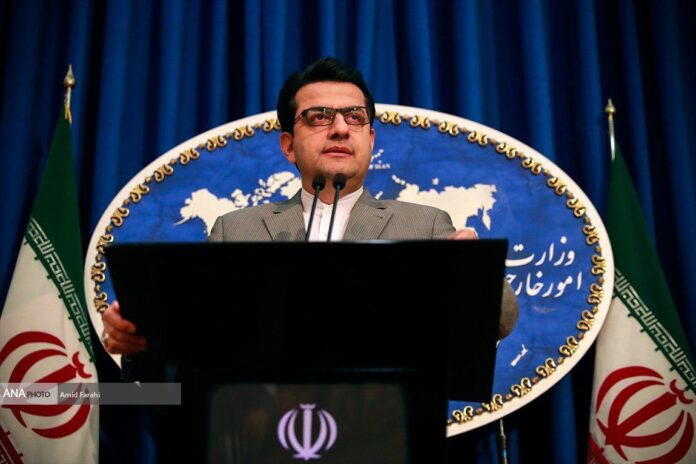
Iranian Foreign Ministry Spokesman Abbas Mousavi said the accusation is not true.
“What Hungarian officials call a violation of health protocols is, in fact, the students’ objection to the improper quarantine conditions at a Budapest hospital where infected and healthy individuals were kept in one place,” said Mousavi.
“But unfortunately, authorities, without realizing these conditions, pointed the finger at the university students and first issued a directive for the expulsion of three students and then 14 others without paying attention to the fact the health protocols had, in fact, been violated by the Budapest hospital,” the spokesman added.
“Unfortunately, the three students mentioned above were taken to a migrants’ camp in very appalling conditions before they returned their country for fear of the coronavirus at the request of their families and through the good offices of the Islamic Republic of Iran’s embassy,” he added.
Mousavi said the Iranian foreign ministry and the Iranian embassy in Hungary had made every effort to manage the situation and prevent the expulsion of the students.
“Receiving consultation from legal counsellors, the Iranian embassy helped employ lawyers and pursue the matter through legal channels with the cooperation of the students themselves and their families,” he noted.
Mousavi said a Hungarian court ruled that the 14 students had to be expelled, adding the students were not allowed to take their case to the court.
“There is important and admissible evidence that the Iranian students had the right to take their case to the court, but they were denied the chance,” he said.
“The Iranian foreign ministry firmly demands Hungarian officials to reconsider the verdict and prepare the conditions for the Iranian students to continue their studies,” he said.
Mousavi noted that the foreign ministry will keep pressing ahead with diplomatic efforts to restore the students’ right.
Sattari said the clinical trials have been conducted in the form of 76 projects to discover treatment protocols, effective drugs, cell therapy methods, the effects of improved blood plasma in patients, and herbal remedies that affect the disease.
“Many of these tests have yielded significant results, and hundreds of thousands of hours of research have led to the development of disease control knowledge. They have also led to the elimination of drugs that have no effect on disease, and the development of three effective treatment protocols that have significantly reduced mortality rate,” Sattari wrote in an Instagram post.
These studies have been conducted with the participation of many scientists, and researchers who work at institutes, universities and knowledge-based companies, he underlined.
Sattari further announced there are several projects underway with the participation of companies and research institutes to discover its vaccine and the genetic nature of the virus.
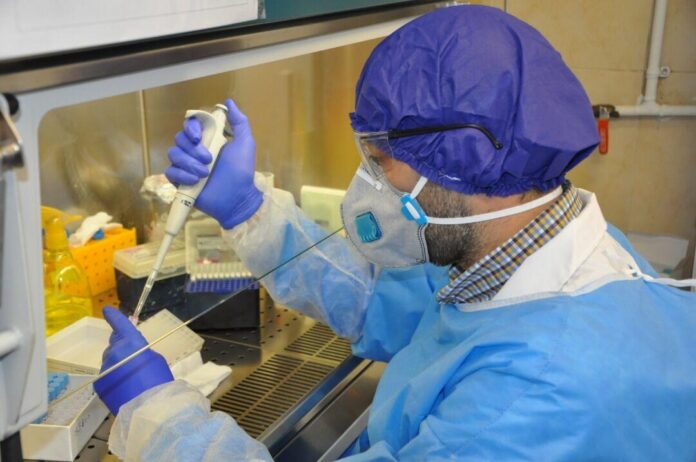
“Fortunately, two types of kits have been developed to diagnose the disease with two different methods, one based on saliva and the other based on blood tests. Both methods have their own advantages. Soon, good news will be released about the production of the rapid diagnosis kit, which can be used at a rate of several million per week.”
Artificial intelligence systems were widely marketed for the diagnosis of the disease, and several applications developed to predict and track the spread of the disease.
“While the developed countries are facing serious problems in providing medical equipment, knowledge-based companies in Iran have produced all of these products domestically. So far there has never been a shortage of such equipment, including ventilators, CT scans, surgery and ICU room equipment, oxygen generators,” reads Sattari’s post.
Iranian Vice President went on to say that so far, several mask production lines have been launched and about 40 new domestic production lines will be added in the next 15 days.
“All of the medicines are produced domestically. Even new items that were not on the drug list will be tested by companies in a few days and will soon be mass-produced.”
Unprecedented things have happened in the field of education and health, but there is still a long way to go for all of us. All these successes have been achieved with the help of the educated youth of this country, concluded Sattari.
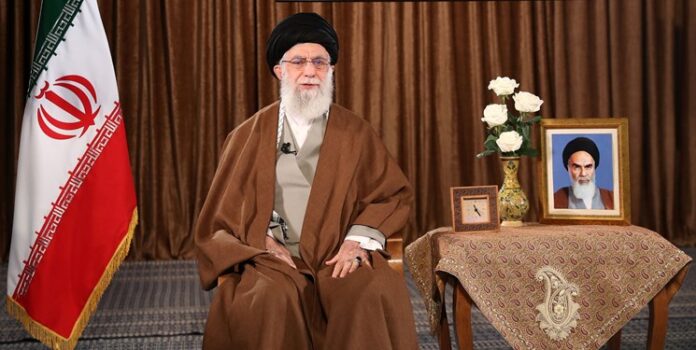
“The Iranian nation shone very well in this test,” Ayatollah Khamenei said in a televised address Thursday.
He specially thanked the medical personnel across the nation for their major contribution to the national campaign against the disease.
The Leader said the coronavirus outbreak is also “a test for the world, both for governments and for nations,” he noted.
He then praised local media and officials for giving the public good information about the pandemic.
“A lot has been said about the figures, the very good measures that have been adopted and the recommendations given by authorities, and enough information has been given in that regard,” said Ayatollah Khamenei.
Ayatollah Khamenei drew a comparison between Iran’s handling of the coronavirus outbreak and that of other countries. He dismissed the way certain other government’s dealing with the issue.
“[It is not acceptable to see] That a government seizes masks and gloves which belong to another government and redirects the shipment toward its own country, something which happened with regards to several governments in Europe and the United States,” the Leader noted.
He also reprehended what happened in countries where shopper rushed to supermarkets and shops to buy supplies more than they needed, resulting in empty shelves all over.
“Some people even began to fight over some rolls of toilet paper,” he said.
“And some individuals were queueing up to buy guns as they felt they were in danger,” Ayatollah Khamenei said.
He noted that older patients were discriminated against in some countries as their governments argued that treating the elderly is not a priority.
“Some people committed suicide fearing the coronavirus,” Ayatollah Khamenei underlined.
“This is the behaviour that some Western nations showed, which is the logical and natural outcome of the philosophy ruling the Western civilization,” he said.
He said philosophies in the West deal with such issues as “materialism, laicism,” etc.
The Leader underscored that the coronavirus is a major ordeal for humanity, but is dwarfed by many other problems.
“In the past, we had numerous problems both in the world and in our country, which were no less important than this incident (the coronavirus outbreak),” He said.
“For example, 32 years ago around this time, [former Iraqi ruler] Saddam [Hussein]’s warplanes waged gas attacks on some parts of our country and killed thousands of our and their own people, and, of course, all major powers supported Saddam” he said.
“Some of these very Western countries supplied Saddam with nuclear weapons, and until now, none of them has answered for that,” he noted.
“Millions of people were killed in major wars around the world like the two world wars. The same goes for the Vietnam war and other wars like the war on Iraq,” he noted.
Ayatollah Khamenei underlined that the COVID-19 pandemic should not deflect our attention from enemy plots.
Elsewhere in his remarks, the Leader praised efforts by Iranian authorities and ordinary people to help fight the coronavirus. He touched upon support plans drawn up to help the needy, and called for those programs to be enforced immediately.
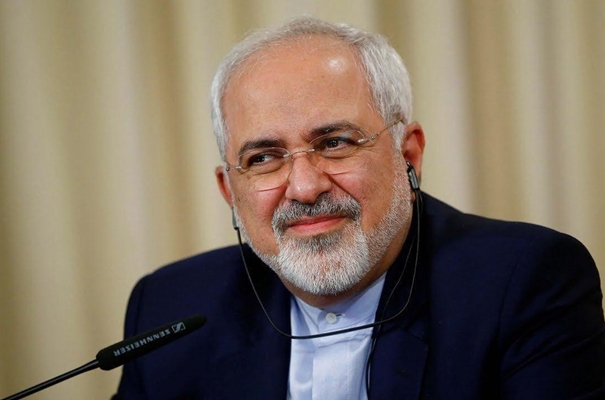
In separate phone conversations on Wednesday afternoon, Iranian Foreign Minister Mohammad Javad Zarif told his Armenian, Azerbaijani and Kazakh counterparts that Tehran is prepared to put its experiences in coping with COVID-19 at the disposal of these countries.
Zarif expressed solidarity with Armenia’s Zohrab Mnatsakanyan and Azerbaijan Republic’s Elmar Mammadyarov in fighting against the deadly epidemic.
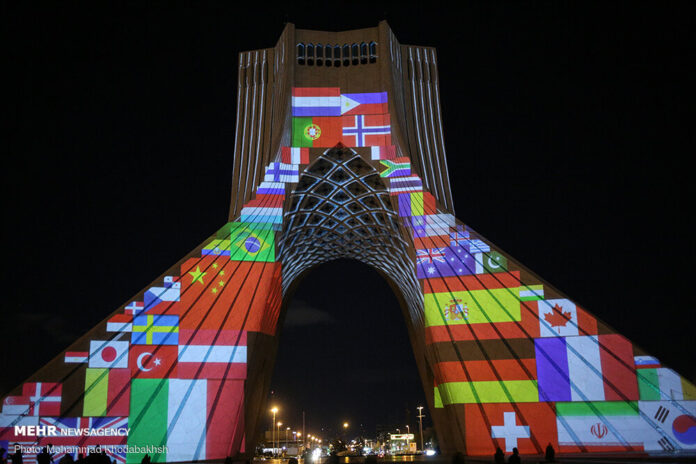
Heydar Aliyev Center in Baku illuminated with Iran’s flag in solidarity with the Islamic Republic’s fight against coronavirus
In his talks with Kazak FM Mukhtar Tileuberdi, FM Zarif stressed the expansion of mutual collaborations to deal with COVID-19.
The Coronavirus broke out in Iran late February, but the country has been able to confine it in a way that on Wednesday the infection rate showed a downward trend for the tenth consecutive day.
Iran is hopeful to completely eradicate the disease as soon as possible. In order to do so, the government has announced some tough restrictions for transportation, trade, and commuting.
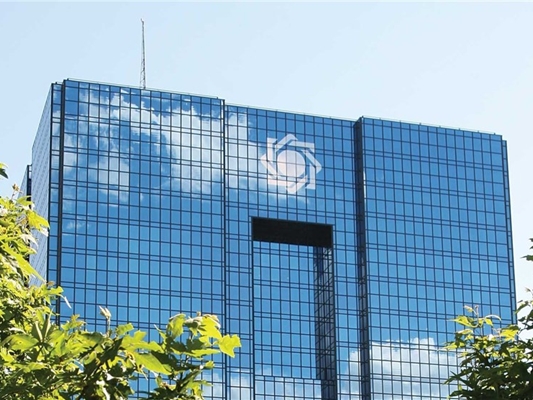
Hemmati said on Wednesday with the legal follow-ups of the Central Bank, the US effort to seize and transfer the CBI’s funds in Europe was thwarted.
Hemmati underlined that $1.6 billion worth of assets belonging to the central bank at Luxembourg’s Clear Stream, has now been released.
The money had been frozen since January 15, 2015 at the international central securities depository (ICSD).
“By intelligently monitoring the efforts of the United States and taking the lead in legal action, as well as following the judicial proceedings in Luxembourg, two victories were achieved by the Islamic Republic and the Central Bank of Iran at the beginning of the New Persian Year,” he noted.
First, $1.6 billion belonging to the Central Bank was released and then another branch of the Luxemburg’s court issued an interim order not to transfer the same funds to the United States to be distributed among the false claimants of the September 11 incident, underlined Hammati.
Under the US pressure, billions of dollars of Iran’s oil money and other funds are held up in several countries at a time when they are urgently needed to fight the deadly coronavirus.
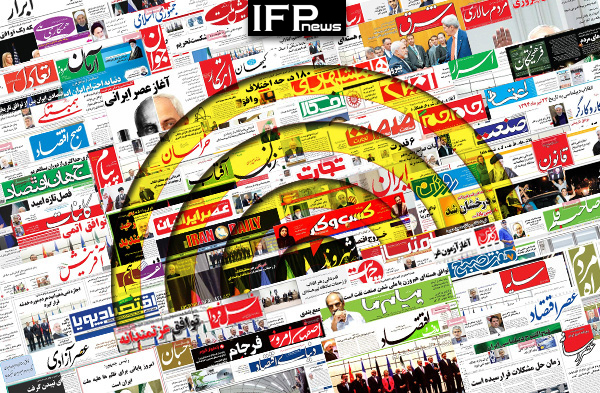
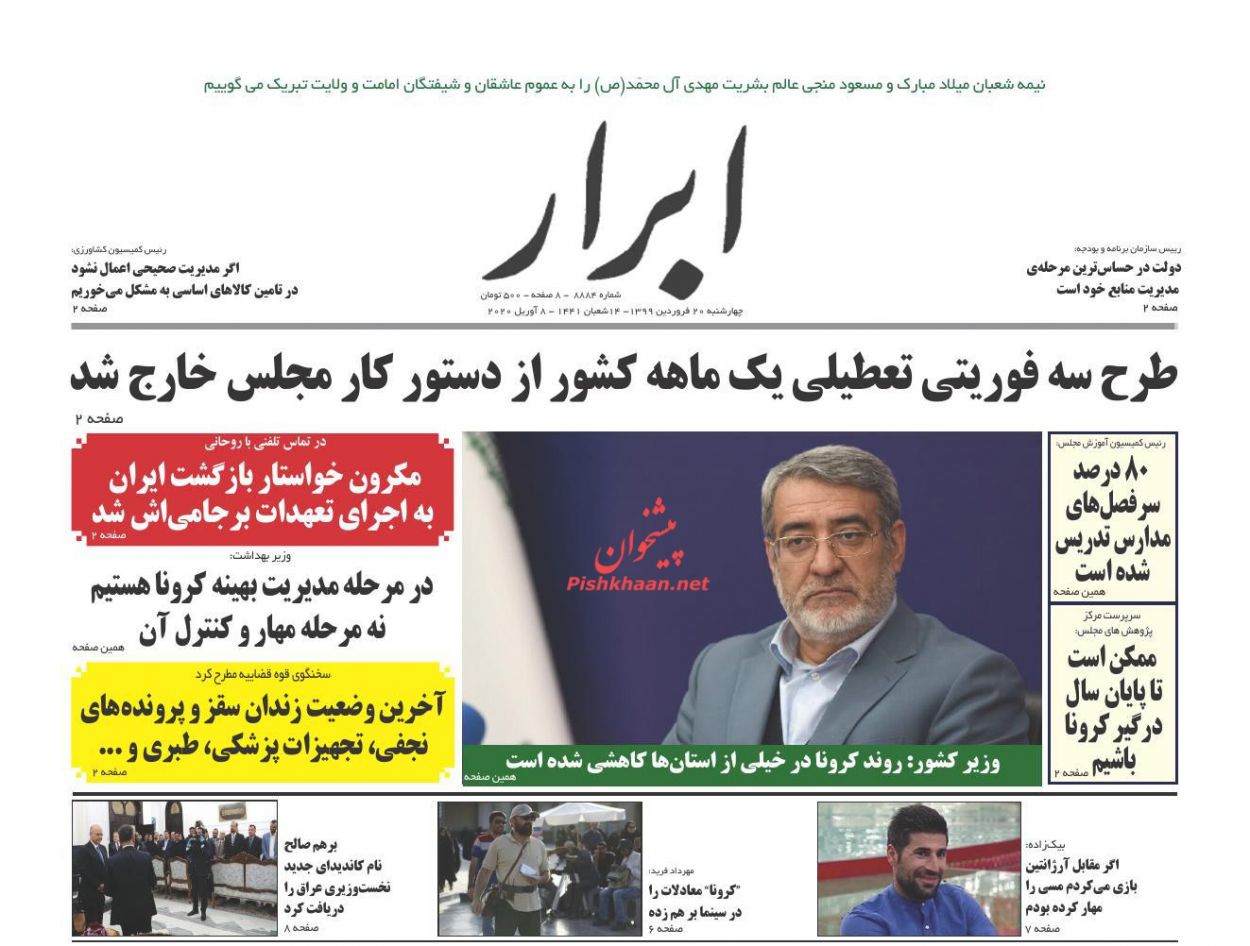
1- Parliament Removes from Its Agenda a Triple-Urgency Motion to Shut Down Country for One Month
2- Macron Urges Iran to Return to Its JCPOA Commitments
3- Interior Minister: Coronavirus Trend Slowing Down in Many Provinces
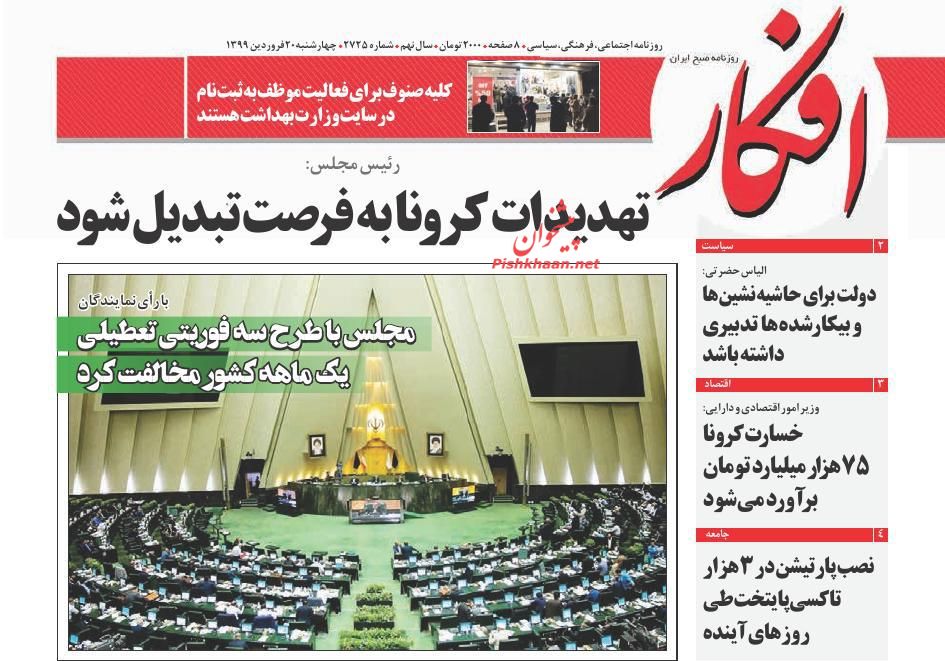
Afkar:
1- Parliament Speaker: Corona Threats Must Be Turned into Opportunity
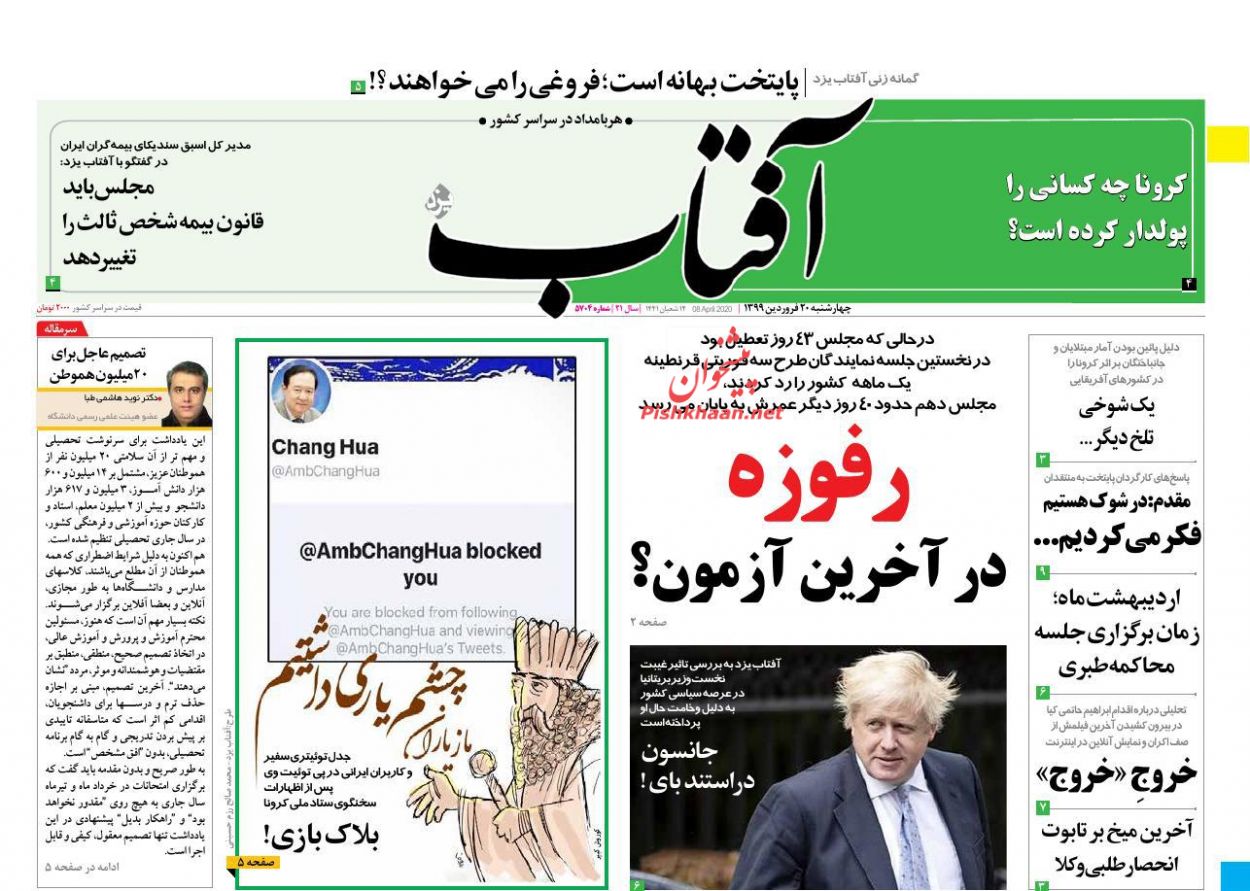
Aftab-e Yazd:
1- Johnson on Standby
2- Who Has Become Richer Thanks to Corona?
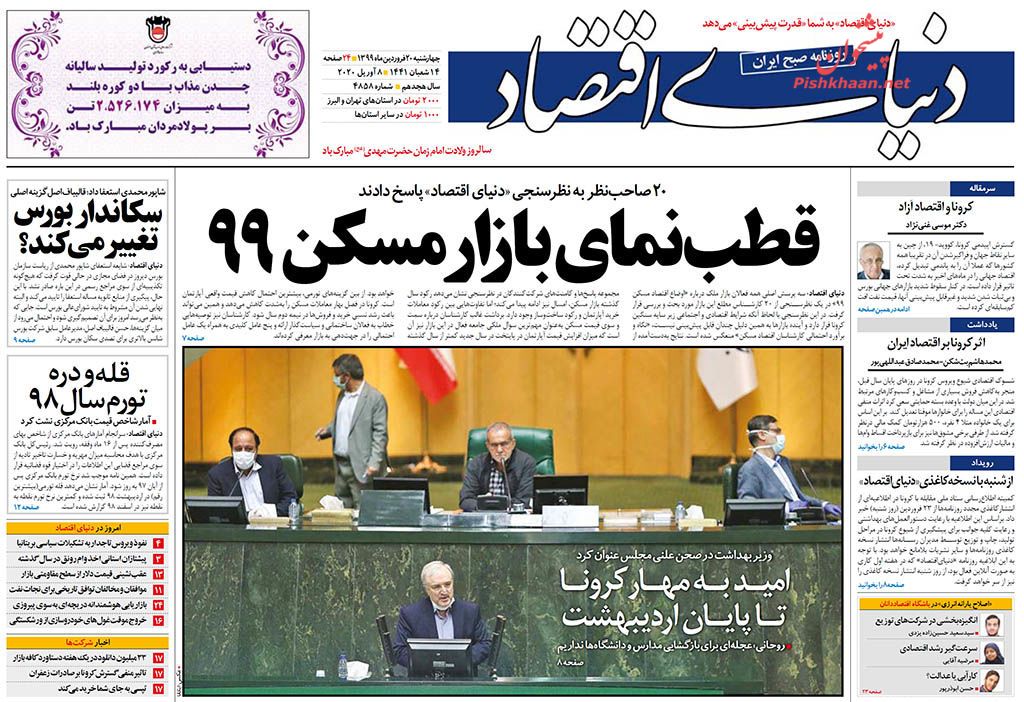
Donya-ye Eqtesad:
1- Health Minister: We Hope Corona Will Be Contained by Mid-May
Ebtekar:
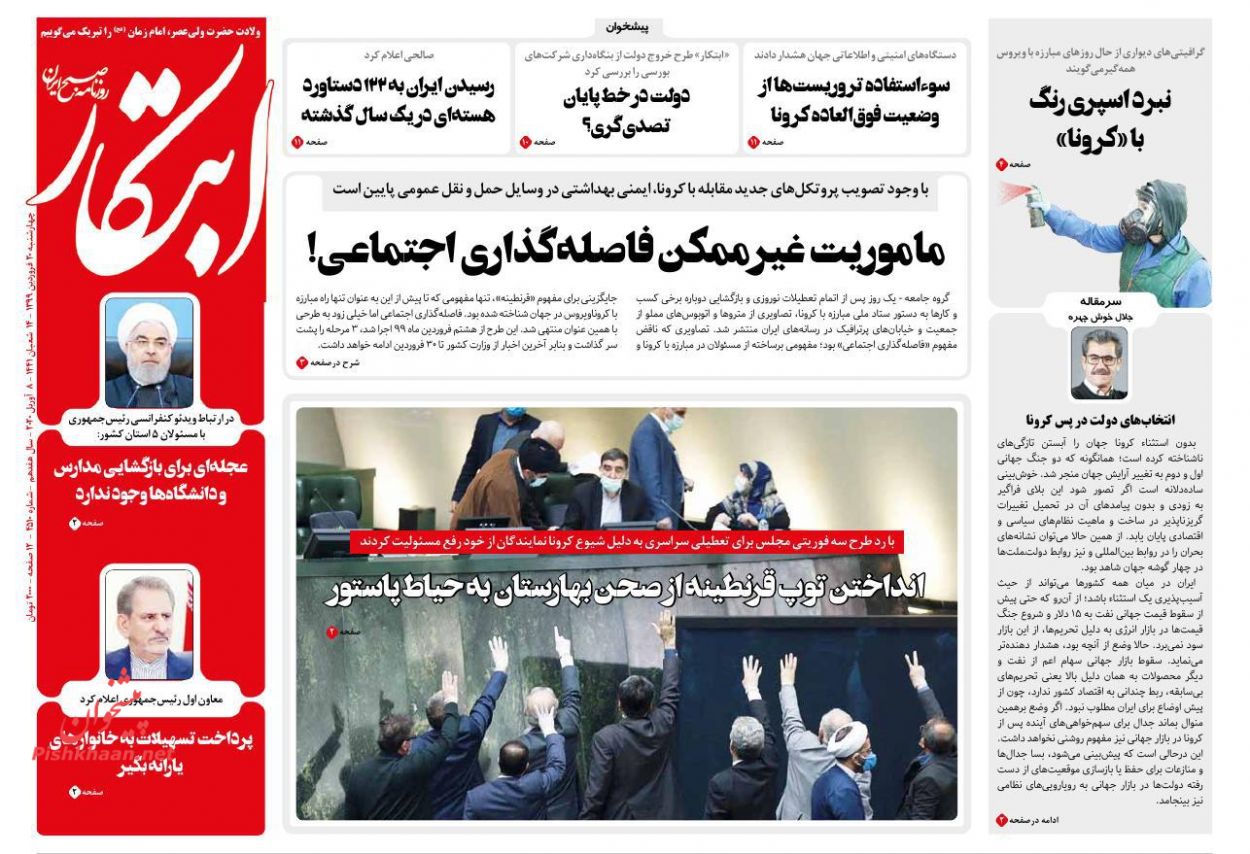
1- Impossible Mission of Social Distancing!
2- Rouhani: No Rush to Reopen Schools and Universities
Hamshahri:
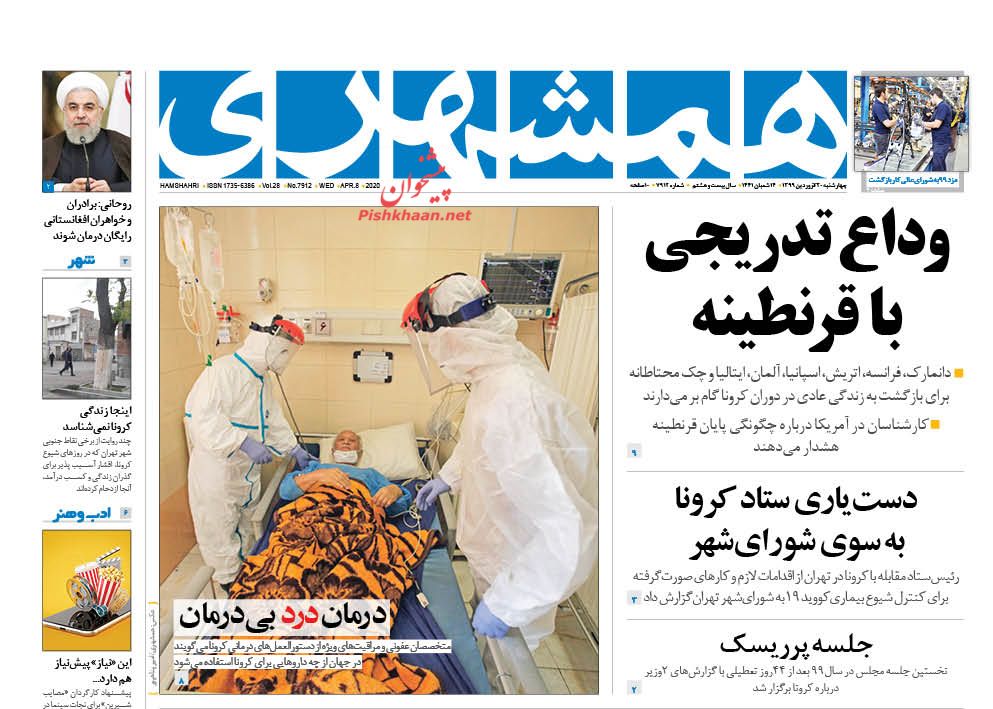
1- Gradual Farewell to Corona
* Denmark, France, Austria, Spain, Germany, Italy, Czech Cautiously Returning Life to Normal
Jame Jam:
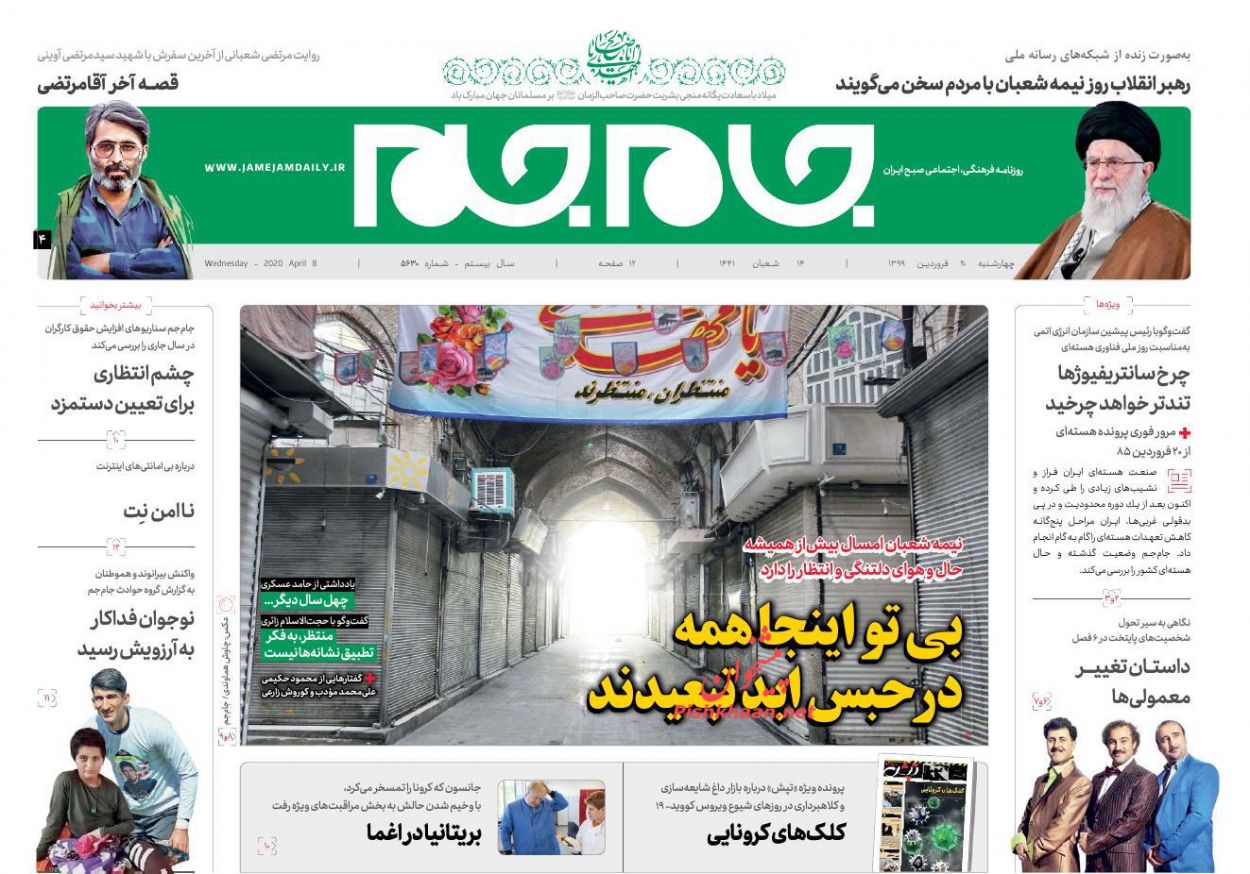
1- UK in Coma: Johnson Who Made Fun of Corona Transferred to ICU
Kayhan:
1- Health Minister Praises Leader’s Unmatched Support for National Corona Fight Headquarters
2- Corona Taking More Victims in US: New York Parks Turned into Mass Graves!
3- Iran Leader’s Speech to Be Televised Live on Thursday
Rooyesh-e Mellat:
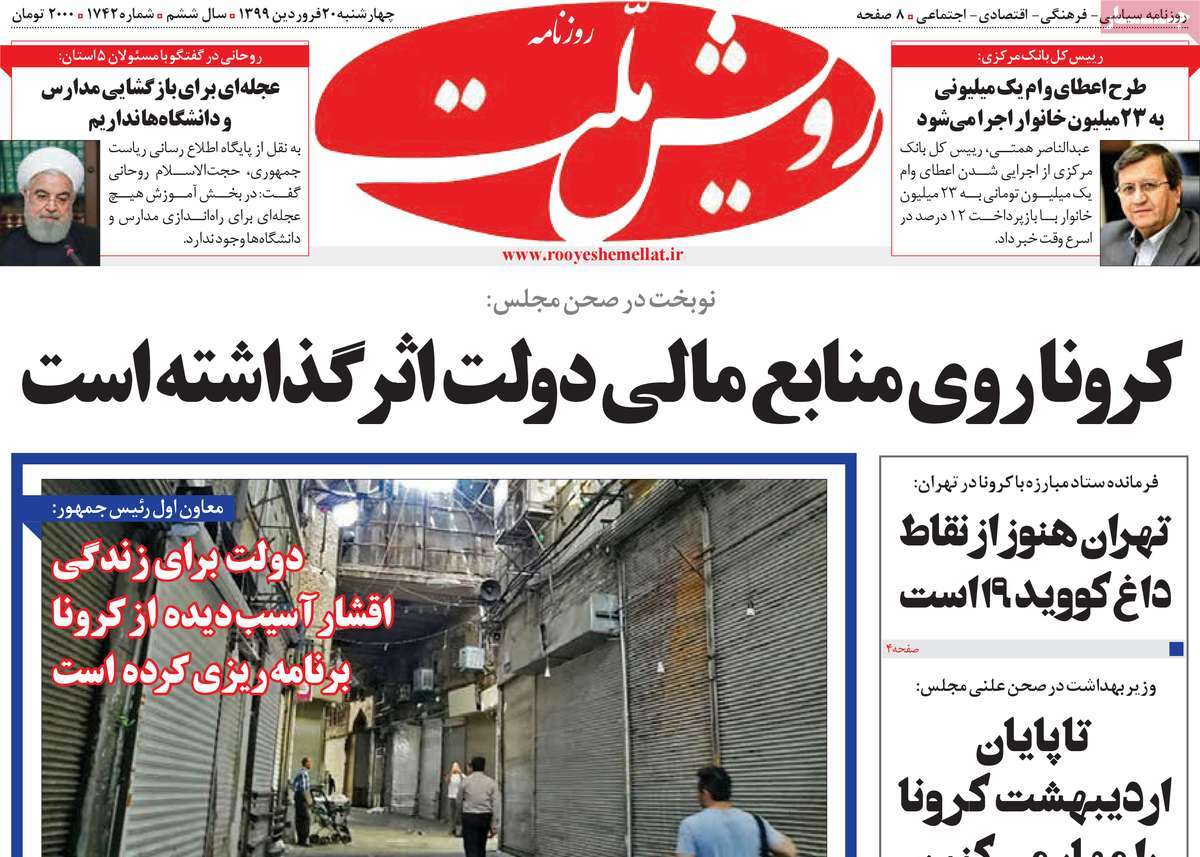
1- Corona Has Impact Government’s Financial Resources: VP
2- Tehran Still a Hotspot of COVID-19: Official
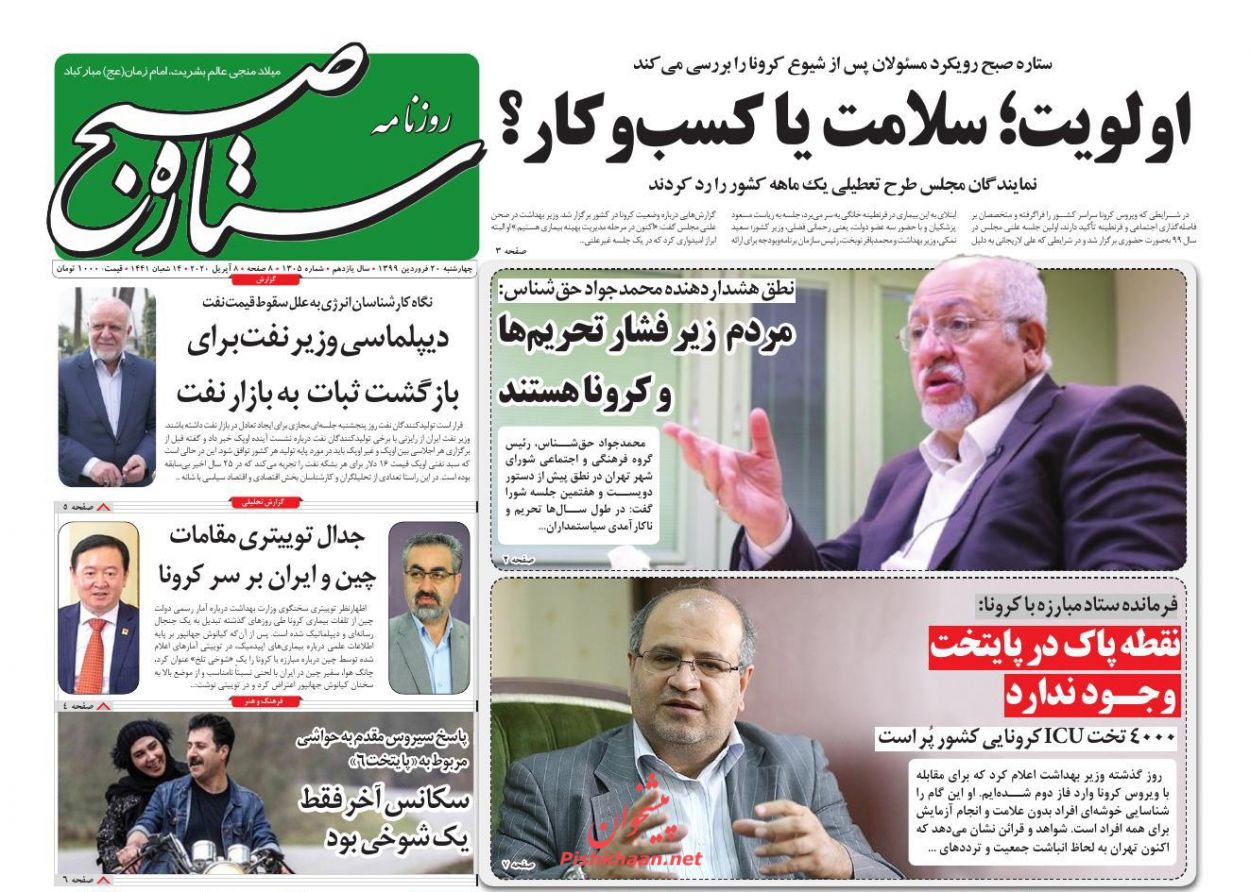
Setareh Sobh:
1- People Under Pressure of Sanctions, Corona: MP Warns
2- There’s No Clean Spot in Tehran: Official
* 4,000 ICU Beds Allocated to Corona Patients All Full
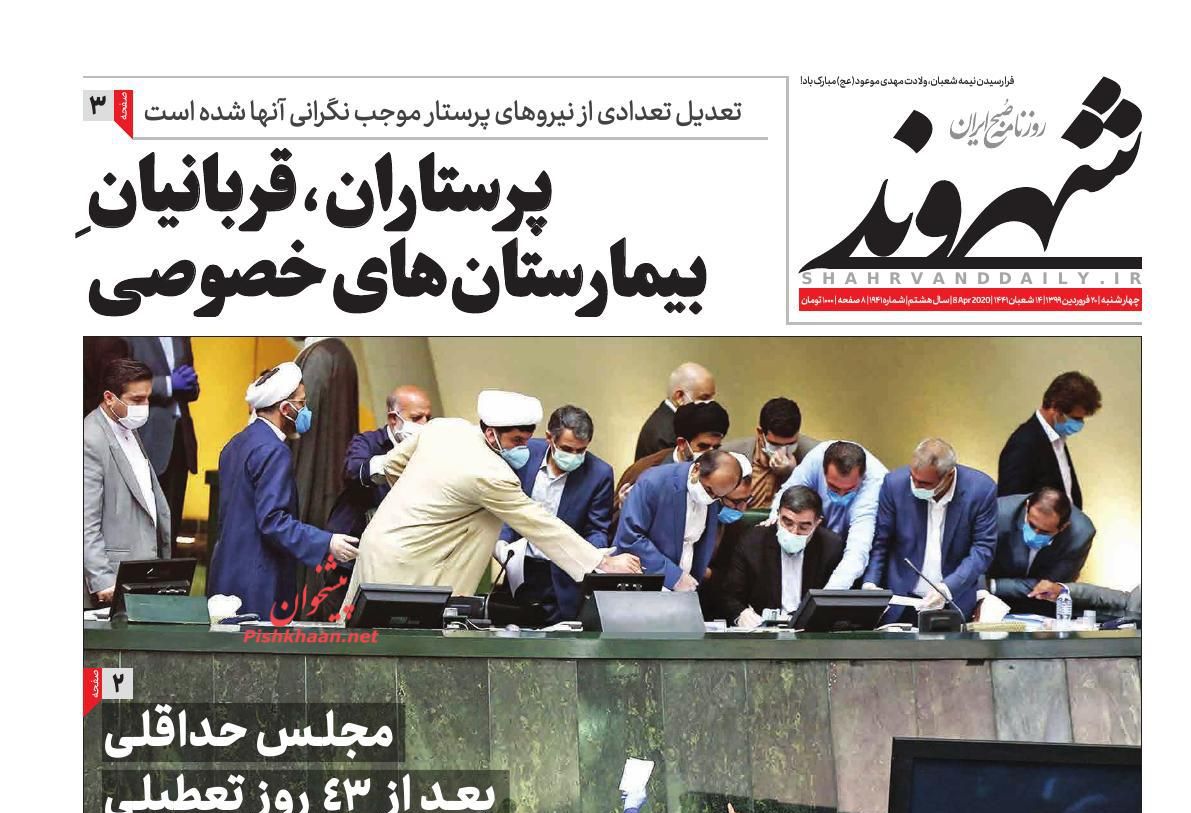
Shahrvand:
1- Nurses Victims of Private Hospitals
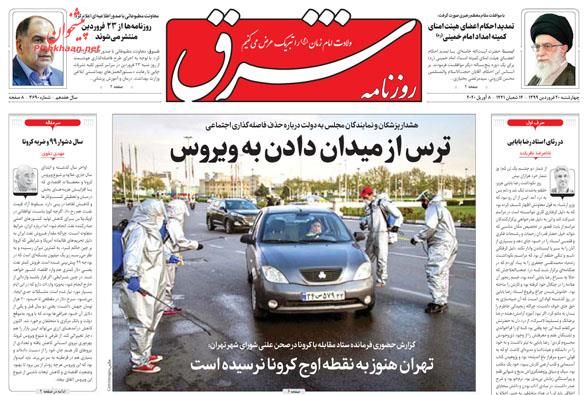
Shargh:
1- Newspapers Can Publish Print Version as of Saturday: Official
2- Tehran Has Yet to Reach Peak of Corona: Official
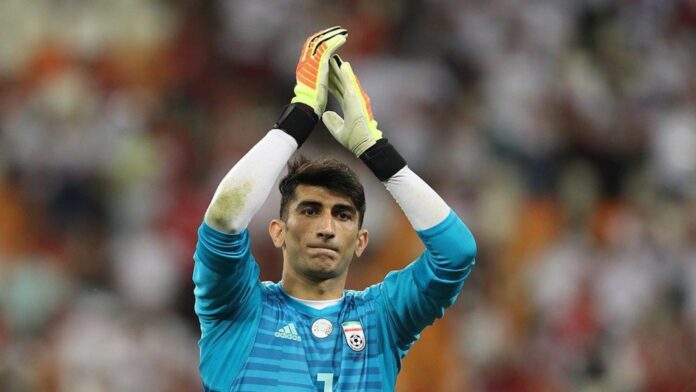
The Asian Football Confederation posted an opinion poll on its website on April 01, 2020 to introduce Asia’s best footballer of all World Cup competitions.
Finally, Beiranvand secured 66 percent of the vote and was named Asia’s best football player in the World Cup history.
Beiranvand represented the Iran national team at the 2015 and 2019 AFC Asian Cups and the 2018 FIFA World Cup.
At the World Cup, he made the headlines by saving a penalty from Cristiano Ronaldo, as Iran drew 1–1 with Portugal.
In 2017, Beiranvand became the first Iranian ever to be nominated for an individual award at The Best FIFA Football Awards. He has been the best goalkeeper in the Persian Gulf Pro League for four consecutive seasons from 2014 to 2019 and has also been the Iranian footballer of the year in 2019. With 23 clean sheets in 37 matches in 2017–18 season, he ranked as the second goalkeeper in the world for the most clean sheets.
In a thread on his Twitter account, posted in Russian language, Foreign Minister Zarif welcomed Russia’s idea of creating a green zone amid the outbreak of COVID-19.
“In order to contain the situation of coronavirus, different countries have closed their geographical borders, but opened them to provide assistance,” Zarif said on Wednesday.
“(US President) Donald Trump continues to resist the international demand for lifting the sanctions on Iran in order to counter the coronavirus infection. Coronavirus may spread to the neighbouring countries,” the top Iranian diplomat warned.
Speaking via teleconference to the leaders of the G-20 group of nations last week, Putin urged the creation of ‘green corridors’ to transport essential goods and technologies without sanctions as the world continues to battle the coronavirus pandemic.