Wednesday, January 14, 2026
Home Blog Page 288

BRICS summit condemns U.S.-Israeli regime military attacks against Iran

According to Paragraph 21 of the BRICS Leaders’ Declaration, released on Sunday afternoon local time in Brazil, the military assaults on the Islamic Republic of Iran since June 13 have been denounced as violations of international law and the UN Charter.

The statement also describes the deliberate attacks on Iran’s peaceful nuclear facilities as breaches of international law and the resolutions of the International Atomic Energy Agency, IAEA.

The BRICS communiqué further addresses a broad range of issues related to international peace and security, development, economic inequality, the environment, unilateralism, economic sanctions, and the genocide and crimes perpetrated by the Zionist regime in the occupied Palestinian Territories.

BRICS is an intergovernmental organization comprising ten countries – Brazil, Russia, India, China,
South Africa, Egypt, Ethiopia, Indonesia, Iran and the United Arab Emirates.

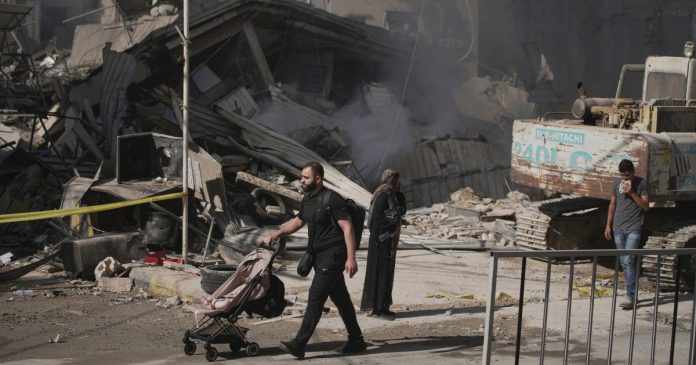
Israel strikes several targets across Lebanon despite ceasefire

Lebanon war

The strikes targeted the town of Kfar Melki in Akkar district in Northern Lebanon and the town of Flawiye, West of Baalbek, Lebanon’s state-run National News Agency (NNA) reported.

Israeli warplanes also carried out three airstrikes targeting the outskirts of the town of Bodai, West of Baalbek.

In Southern Lebanon, Israeli aircraft launched an airstrike on the area between the towns of Ain Qana, Sarba and Houmine Al Faouqa in the Iqlim Al-Tuffah region.

Israeli fighter jets also carried out a heavy airstrike on Wadi Al-Zararia–Razai in Sidon district in the country’s South, in addition to another airstrike targeting the outskirts of the towns of Arzi and Burj Rahal in Tyre district.

NNA reported that Israeli warplanes also bombed the area between the town of Al-Matariyyah on the banks of the Litani River in the Qasmiyeh area of Tyre district in Southern Lebanon.No casualties were reported due to the attack.

Lebanese Prime Minister Nawaf Salam earlier Monday made a visit to the Eastern region of Bekaa, which was bombed by the Israeli military tonight.

“I have repeatedly stated that there is no stability in the country without Israel’s complete withdrawal from Lebanon and the cessation of its aggressive actions,” he wrote in a post on X, adding that weapons must be confined to the state alone for Lebanese people to feel safe.

Salam stated that the country also needs safety nets to protect its citizens and “balanced development across the homeland”.

This comes as the prime minister, along with President Joseph Aoun and parliament Speaker Nabih Berri, are expected to meet with US envoy Tom Barrack in Beirut to discuss the future of Lebanon.

Israel launched an assault on Lebanon on October 8, 2023 that escalated into a full-scale war by September 23, 2024. The conflict has killed more than 4,000 people, wounded over 17,000 and displaced nearly 1.4 million, according to official data.

Israeli forces have conducted near-daily attacks in Southern Lebanon, claiming to target Hezbollah’s activities despite a November ceasefire between Israel and Lebanon.

The truce ended months of cross-border warfare between Israel and the Lebanese resistance group.

Lebanese authorities have reported nearly 3,000 Israeli violations of the truce including the deaths of at least 231 people and injuries to more than 500 since the agreement was signed.

Under the ceasefire deal, Israel was supposed to fully withdraw from Southern Lebanon by January 26, but the deadline was extended to February 18 after Tel Aviv refused to comply.

Israel still maintains a military presence at five border outposts.

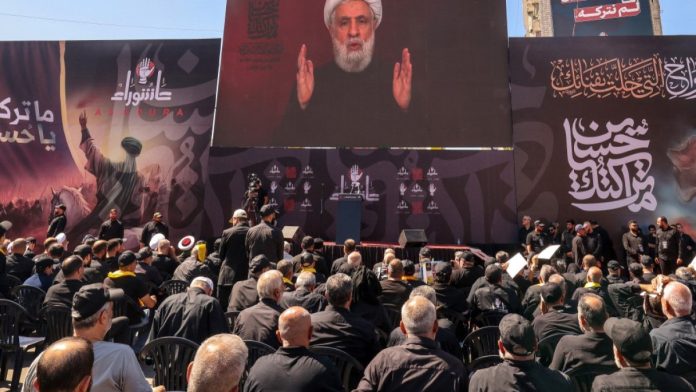
Hezbollah secretary-general says won’t disarm until Israel leaves southern Lebanon

“We cannot be asked to soften our stance or lay down arms while [Israeli] aggression continues,” Naim Qassem told thousands of supporters gathered in Beirut’s southern suburbs on Sunday for Ashura.

The Beirut area, a Hezbollah stronghold, was draped in yellow banners and echoed with chants of resistance as Qassem delivered his speech, flanked by portraits of his predecessor, Seyyed Hassan Nasrallah, who was killed by Israel in September last year.

Israel launched a wide-scale assault on Lebanon on October 8, 2023 – a day after Palestinian group Hamas, which counts Hezbollah as an ally, stormed the occupied territories, killing some 1,200 people and taking about 250 others captive.

The Hamas attack was immediately followed by Israel’s bombing of the Gaza Strip, which has killed more than 57,000 Palestinians, most of them women and children. The Israeli genocidal campaign was accompanied by a brutal blockade on entry of food and medical aid, bringing the enclave’s 2.3 million residents to the brink of starvation.

Israel’s simultaneous attack on Lebanon escalated into a full-scale war by September 2024, killing more than 4,000 people, including much of Hezbollah’s top leadership, and displacing nearly 1.4 million, according to official data. A United States-brokered ceasefire nominally ended the war in November.

However, since the ceasefire, Israel has continued to occupy five strategic border points in southern Lebanon and has carried out near-daily air strikes that it says aim to prevent Hezbollah from rebuilding its capabilities. Those strikes have killed some 250 people and wounded 600 others since November, according to Lebanon’s Ministry of Health.

“How can you expect us not to stand firm while the Israeli enemy continues its aggression, continues to occupy the five points, and continues to enter our territories and kill?” Qassem said in his video address.

“We will not be a part of legitimising the occupation in Lebanon and the region. We will not accept normalisation,” he added, in an apparent response to Israeli Foreign Minister Gideon Saar saying his government was “interested” in such a move.

Qassem stated Hezbollah’s weapons would not be on the negotiating table unless Israel “withdraws from the occupied territories, stops its aggression, releases the prisoners, and reconstruction begins”.

“Only then,” he noted, “will we be ready for the second stage, which is to discuss national security and defence strategy”.

On Saturday, Israeli drones carried out four strikes on southern Lebanese towns, killing one person and wounding several others. Most of the Israeli attacks have targeted areas near the border, but Israeli warplanes have also hit residential neighbourhoods in Beirut’s southern districts, causing panic and mass evacuations.

Qassem’s speech came as the US envoy to Turkiye and Syria, Tom Barrack, was expected in Beirut on Monday. Lebanese officials say the US has demanded that Hezbollah disarm by the end of the year. Israel has warned it will continue striking Lebanon until the group is disarmed.

But Lebanon’s President Joseph Aoun has repeatedly called on the US and its allies to rein in Israel’s attacks, noting that disarming Hezbollah is a “sensitive, delicate issue”.

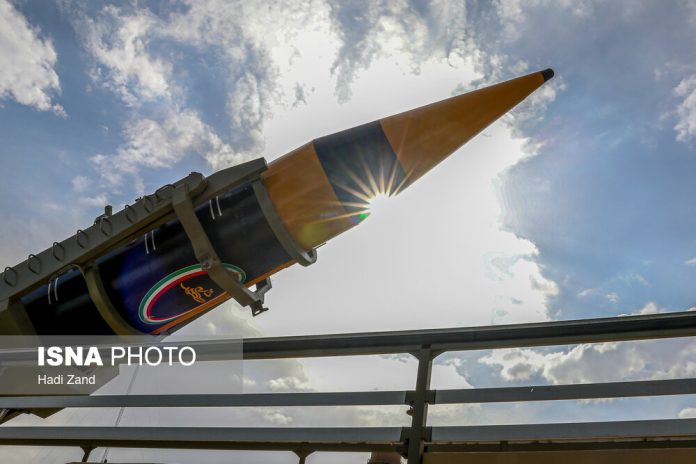
IRGC cmdr.: Iran’s precision missiles neutralize threats at their roots

Khaibar Missile

Speaking amid ongoing regional tensions, the IRGC commander emphasized that Iran had recently faced an unprecedented multi-pronged assault.

“The latest scenario saw hundreds of enemy drones and missiles launched simultaneously, while foreign-backed saboteurs and infiltrators attempted to breach Iran’s borders,” he said.

He added that the assault was designed not only to destroy Iranian infrastructure, but to divide the nation and impose foreign will on the Iranian people.

Underscoring Iran’s readiness, General Khadem Seyed al-Shohada declared, “Today, we are engaged in a direct confrontation with enemies such as the Zionist regime and the United States. Iran is prepared for battle and poised to secure historic victories.”

He concluded by pointing to global solidarity with the Iranian people: “From London to Khuzestan, the voice of resistance echoes. Iran’s flag is raised high, and the world is hearing the call of a resilient nation.”

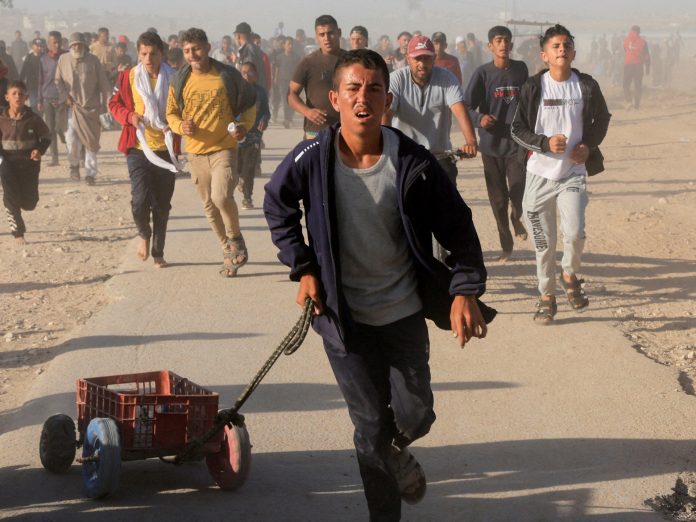
Over 700 Palestinians killed seeking aid in Gaza: Health Ministry

The Health Ministry announcedd on Saturday that at least 743 Palestinians were killed and more than 4,891 others were injured while seeking assistance at Gaza Humanitarian Foundation (GHF) distribution sites.

The GHF, which began operating in the bombarded Palestinian enclave in late May, has drawn widespread criticism amid multiple reports that its contractors as well as Israeli forces have opened fire on aid seekers.

Earlier this week, a report by The Associated Press news agency quoted American contractors who said live ammunition and stun grenades have been fired at Palestinian civilians seeking aid at GHF distribution points.

Two unnamed US contractors told AP that heavily armed staff members appeared to be doing whatever they wanted.

The administration of US President Donald Trump also has stood by the GHF, with a State Department spokesperson telling reporters on Wednesday that the group is the “one entity that has gotten food and aid into the Gaza Strip”.

In late June, the Trump administration pledged $30m in direct funding for the organisation.

Leading humanitarian and human rights groups have demanded the immediate closure of the GHF, which they accused of “forcing two million people into overcrowded, militarized zones where they face daily gunfire and mass casualties”.

Amnesty International has described the group’s operations as an “inhumane and deadly militarized scheme”.

“All the evidence gathered, including testimonies which Amnesty International is receiving from victims and witnesses, suggest that the GHF was designed so as to placate international concerns while constituting another tool of Israel’s genocide,” Amnesty announced.

Still, faced with dire shortages of food, water and other humanitarian supplies under Israel’s blockade, many Palestinians in Gaza say they have no choice but to seek assistance from the group, despite the risks.

A recent report from Israeli outlet Haaretz also detailed Israeli forces, in their words, confirming that Israeli troops have deliberately shot at unarmed Palestinians seeking aid in Gaza after being “ordered” to do so by their commanders.

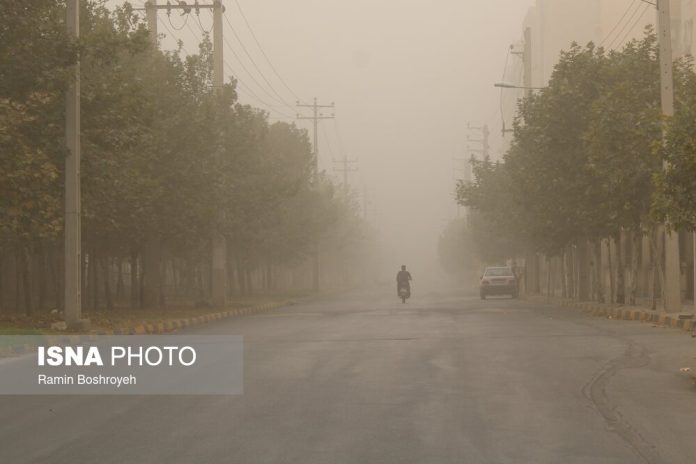
Severe sandstorm hits Iran’s southeast, wind speed exceeds 100 km/h

Dust Storm

According to Mohsen Heidari, Director General of the provincial Meteorological Organization, winds peaked at 101 km/h in Zabol, reducing horizontal visibility at the city’s airport to just 1,200 meters.

Heidari noted that the seasonal “120-day winds” have intensified across the northern areas of the province. In nearby Zahak, wind speeds reached 75 km/h, and visibility dropped to 1,500 meters.

The advancing dust front also impacted Zahedan, the provincial capital, where visibility at the airport was reduced to 2,000 meters.

Heidari warned that strong winds and dust storms are expected to persist in northern parts of the province through midweek. In some areas, the conditions may escalate into full dust storms.

Authorities advised vulnerable groups, including respiratory patients, the elderly, and children, to avoid unnecessary outdoor activity. Caution was also urged for drivers, farmers, and construction workers, particularly in high-risk areas and during periods of reduced visibility.

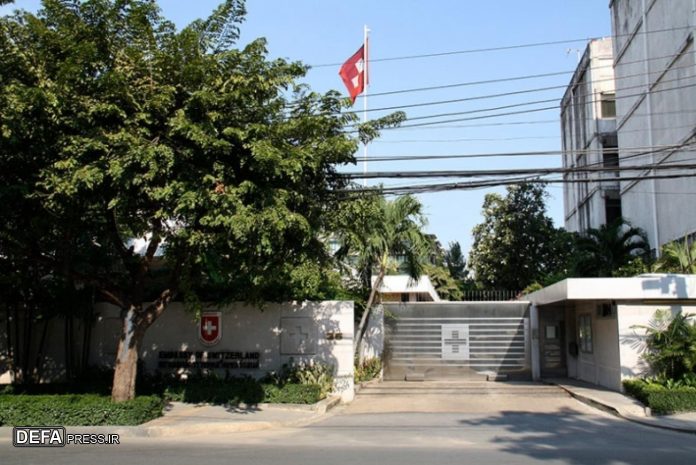
Swiss Embassy reopens in Tehran after temporary closure

The reopening was marked by the arrival of Swiss Ambassador Nadine Olivieri Lozano and a small team who entered Iran via the Republic of Azerbaijan.

According to a statement by the Swiss Federal Department of Foreign Affairs (FDFA), the decision to reopen came after a comprehensive risk assessment and consultations with both Iranian and US authorities. Switzerland continues to represent US interests in Iran as a protecting power.

While the embassy will gradually resume its functions, consular services such as visa issuance remain suspended for the time being. The FDFA emphasized that all Swiss missions abroad maintain emergency protocols that are regularly updated.

Switzerland expressed concern over regional tensions and reiterated its commitment to diplomacy. The reopening enables Switzerland to fully restore its intermediary role, including offering Geneva as a venue for dialogue.

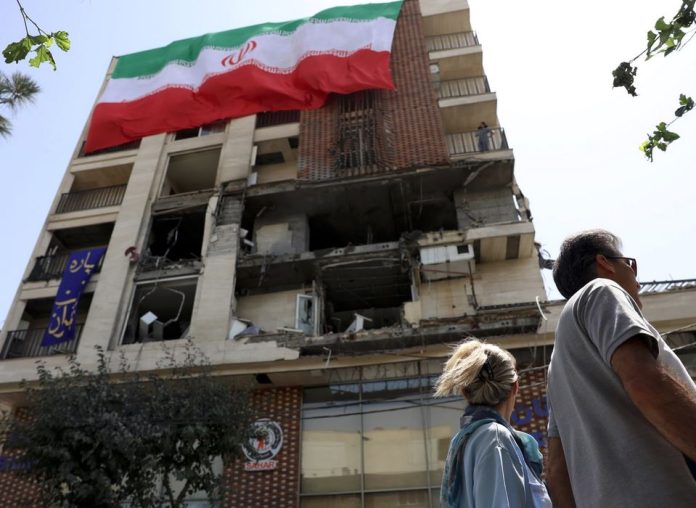
The embassy had suspended operations following Israeli strikes on Tehran and other cities, including those with nuclear facilities.
Iran condemned the attacks as violations of international law and vowed to defend its sovereignty and people under Article 51 of the UN Charter.

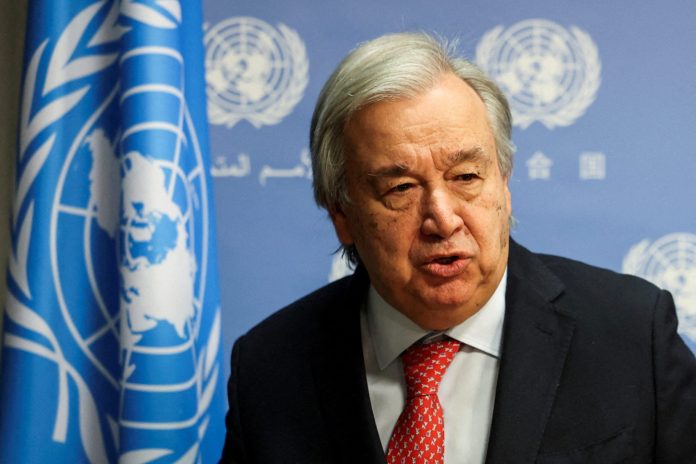
UN chief ‘strongly condemns’ Russian drone attack on Ukraine

António Guterres

In a statement on Saturday, Guterres’s spokesperson said the Russian strikes “disrupted the power supply to the Zaporizhzhia Nuclear Power Plant, once again underlining the ongoing risks to nuclear safety”.

“The secretary-general is alarmed by this dangerous escalation and the growing number of civilian casualties,” the statement read.

Ukrainian officials said Moscow fired more than 500 drones and 11 missiles at the capital Kyiv overnight into Friday in an attack that killed one person, injured at least 23 others and damaged buildings across the city.

The sounds of air raid sirens, kamikaze drones and booming detonations reverberated until dawn.

Ukraine’s President Volodymyr Zelensky called the attack “deliberately massive and cynical”.

Russia has been stepping up its long-range attacks on Ukrainian cities as United States-led efforts to reach a ceasefire to end the war have stalled.

The attacks come as Ukraine’s Zelensky stated on Friday that he had a “very important and fruitful” phone conversation with US President Donald Trump in his efforts to strengthen Ukraine’s air defences.

The US president also spoke to his Russian counterpart, Vladimir Putin, a day earlier in a conversation that he said was disappointing.

“I’m very disappointed with the conversation I had today with President Putin, because I don’t think he’s there, and I’m very disappointed,” Trump said after the call on Thursday.

“I’m just saying I don’t think he’s looking to stop, and that’s too bad,” he added.

Kremlin spokesperson Dmitry Peskov stated on Friday that it was “preferable” to achieve the goals of Russia’s invasion through political and diplomatic means.

“But as long as that is not possible, we are continuing the special operation,” he added.

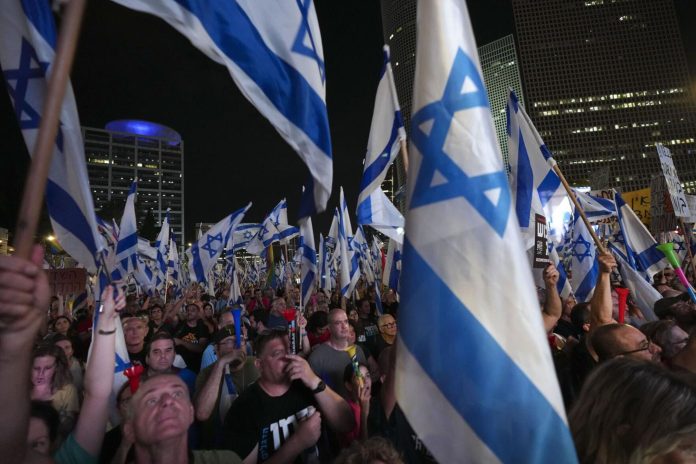
Thousands of Israelis demand release of hostages in Gaza

Israel Protest

The Yedioth Ahronoth daily reported that protesters called for a “comprehensive and not selective deal” that would lead to the release of all detainees in Gaza, alive or deceased.

Several family members of the hostages participated in the protest, chanting slogans that rejected any partial deal that might limit the release to a small number, according to the newspaper.

A number of relatives also gave speeches, urging pressure on Benjamin Netanyahu’s government to expedite the conclusion of a comprehensive deal without delay.

The demonstration coincided with the Israeli government’s announcement of its approval to send a delegation to the Qatari capital of Doha to negotiate an exchange deal proposal with Palestinian factions following a “positive” response from Hamas.

The official broadcasting authority stated that mediators are optimistic about bridging the gaps between the two sides, paving the way for an agreement.

Netanyahu is scheduled to leave for Washington early Sunday to meet US President Donald Trump, according to Haaretz.

Tel Aviv estimates that there are 50 hostages, 20 of whom are held captive in Gaza. More than 10,400 Palestinians are held in Israeli prisons, subjected to torture, starvation and medical neglect, which has resulted in many deaths, according to Palestinian and Israeli human rights and media reports.

Despite international calls for a ceasefire, Israel has pursued a genocidal war against Gaza, killing more than 57,300 Palestinians, most of them women and children, since October 2023.

The International Criminal Court issued arrest warrants last November for Netanyahu and his former Defense Minister Yoav Gallant for war crimes and crimes against humanity in Gaza.

Israel also faces a genocide case at the International Court of Justice for its war on the enclave.

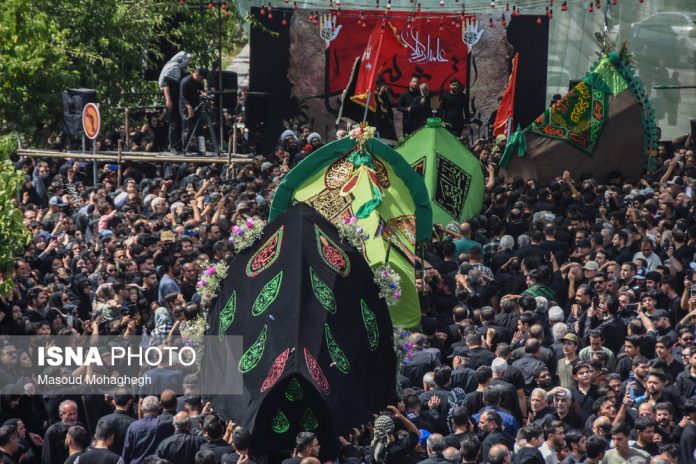
400-year-old Nakhl-Gardani ritual held in Iran’s North Khorasan to mark Ashura

With a history spanning over 400 years, the ceremony is considered one of the region’s most significant and symbolic forms of Shia mourning.

Every year on the 10th day of the Islamic month of Muharram, large crowds from nearby cities and villages gather to participate in and witness the emotionally charged event.

The central feature of Nakhl-Gardani is the carrying of a large wooden structure, called the “Nakhl,” which symbolizes the coffin of Imam Hussein, the Prophet Muhammad’s grandson who was martyred in the Battle of Karbala in 680 AD.

The Nakhl is elaborately decorated with black cloth, mirrors, and religious symbols, and is lifted and carried by groups of mourners through the streets as a sign of reverence and collective mourning.

The ceremony is accompanied by recitations of elegies, chest-beating, and prayers, highlighting themes of sacrifice, resistance against oppression, and spiritual solidarity in memory of Ashura.