Thursday, April 30, 2026
Home Blog Page 283

Oil minister: Russian companies collaborate on oil field development in Iran

Iran Oil Gas

Emphasizing the significance of international presence, Paknejad stated, “We seize every opportunity for international engagement to realize our interests through energy diplomacy.”

Paknejad mentioned that the Secretary-General of OPEC recently visited Iran for an extensive meeting to discuss mutual assistance. He highlighted Iran’s reciprocal support within OPEC, encouraging other member states to aid Iran.

Discussing the Iran-Russia cooperation in shared oil markets, Paknejad revealed ongoing projects in oil field development and trade with Russian companies, without delving into specifics.

When asked if similar collaborations exist with other countries, Paknejad confirmed, “Certainly, yes,” but refrained from naming them, citing confidentiality.

Addressing the benefits of increased tariffs on Canadian imports, Paknejad noted that Iran is keen to leverage emerging opportunities, particularly in the oil sector.

Paknejad concluded by affirming Iran’s dedication to utilizing every chance to advance its interests through energy diplomacy, solidifying its presence in the international arena.

Iranian officials investigate murder of Tehran University student amid public outcry

Khaleghi was fatally stabbed by motorcycle-riding thieves while returning to his dormitory on Wednesday night.

Despite being critically injured, he chased the assailants before collapsing and succumbing to his wounds the following morning.

First Vice President Mohammad Reza Aref issued a special directive to the interior minister, demanding a thorough and urgent investigation into the incident.

Meanwhile, Minister of Science, Research, and Technology, Hossein Simaei Saraf, publicly apologized for the security lapse, acknowledging the failure to address long-standing safety concerns around the university dormitories.

Simaei Saraf announced the resignation of the director of Tehran University’s dormitories and revealed that two police kiosks have been installed near the campus, with additional lighting and security cameras to be operational within days.

He also emphasized that no students were detained during a recent protest at the dormitory, urging against actions that could escalate tensions.

Students have long complained about the lack of security in the area. They say, despite repeated appeals to university officials, no significant measures have been taken to address the issue.

Russia, Iran expand aviation cooperation through new agreements

Russia Airport

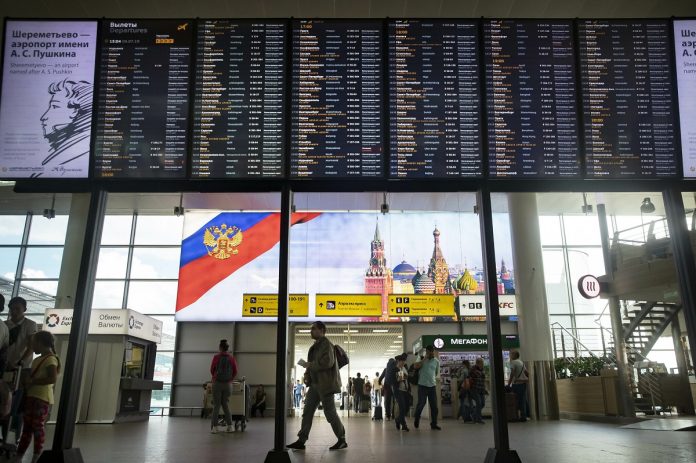
In an interview with IRNA news agency, Dmitry Yadrov, Head of the Federal Air Transport Agency of Russia, highlighted the signing of a new cooperation document with Iran’s Civil Aviation Organization, which will facilitate the approval process for Iranian maintenance and design companies seeking to operate in Russia.

Yadrov stated, “We are awaiting requests from Iranian companies through Iran’s Civil Aviation Organization to begin the review and licensing process for their activities in Russia.”

He also noted that since 2021, three Iranian aviation companies have obtained the necessary certifications to provide services for maintaining the airworthiness of Russian aircraft.

Praising Iran’s capabilities in the aviation industry, Yadrov expressed admiration for the products displayed at Iran’s national exhibition in Moscow.

He expressed confidence that Iranian companies, leveraging their expertise and innovative products, could undertake significant projects in Russia’s aviation and airport sectors. “I foresee a bright future for this cooperation,” he added.

Yadrov also emphasized the impact of the Comprehensive Strategic Partnership Treaty signed between Iranian President Massoud Pezeshkian and Russian President Vladimir Putin on January 17, 2024.

He affirmed that the treaty would undoubtedly strengthen collaboration in the aviation industry, among other sectors, marking a new chapter in bilateral relations.

American soldiers in Europe won’t stay ‘forever’: US defense chief

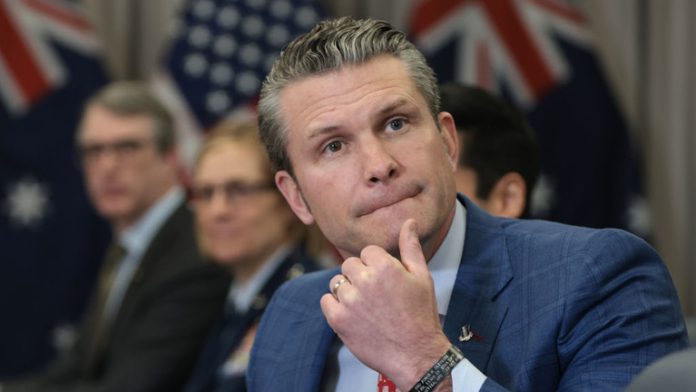
“The American troop levels on the continent are important,” he said, alongside his Polish counterpart, Władysław Kosiniak-Kamysz.

“What happens five, 10, 15 years from now is part of a larger discussion that reflects the threat level, America’s posture, our needs around the globe, but most importantly the capability of European countries to step up,” he added.

“That’s why our message is so stark to our European allies — now is the time to invest because you can’t make an assumption that America’s presence will last forever,” he continued.

Hegseth’s comments come on the heels of a two-day meeting at NATO’s Brussels headquarters that marked his debut on the European stage. He had already hinted then that Europeans would eventually have to provide most of the conventional deterrence against Russia.

The US is currently reviewing its global military presence, but no decision has been made yet on changing force deployments.

Hegseth’s visit to Poland was his first bilateral meeting since he was confirmed by the US Senate. There was a lot of love in the air between him and Kosiniak-Kamysz.

Poland is historically one of America’s closest European allies, seeing the US as a bulwark protecting it against Russia. Poland, which spent centuries under Russian domination, is the top spender in NATO as a percentage of economic output; this year’s defense budget will be 4.7 percent of GDP. That makes it the closest ally to reaching US President Donald Trump’s call for military spending to hit 5 percent of GDP.

“Poland is a country that understands threats. It sees, it feels, because it has its own history, where these threats often resulted in war in our territory, in our beloved homeland,” Kosiniak-Kamysz said, adding, “Freedom needs strength; peace needs strength. There is no such strength without spending.”

Warsaw has also been a big buyer of US weapons, from M1 Abrams tanks to General Dynamics F-16 Fighting Falcon and Lockheed Martin F-35 Lightning II jet fighters.

After years of pressure, Poland has succeeded in getting 8,000 US troops permanently stationed in the country.

That got Hegseth to again call Poland a “model ally.”

He said the “level of partnership is unmatched in Europe, the common bond is unlike others in Europe.” He also praised Poland for investing in local infrastructure for US troops.

“The invitation we receive here, if anything, would make me want to have more troops to Poland — that’s not a policy statement, that’s just how I feel,” Hegseth told reporters.

The two defense chiefs pledged to enhance cooperation.

Poland and the US will set up joint ventures to boost “capacity to produce ammunition, armament,” stated Kosiniak-Kamysz. Poland “wants to be a service hub for the American equipment used on NATO’s eastern border,” he added.

In a testament to the special bond between Warsaw and Washington, Kosiniak-Kamysz announced that the Polish armed forces would be exempt from Trump’s recent freeze of the US State Department’s Foreign Military Financing program, which enables eligible partner nations to purchase American gear.

Iraqi Kurdistan president: We will not allow Iran’s security to be threatened

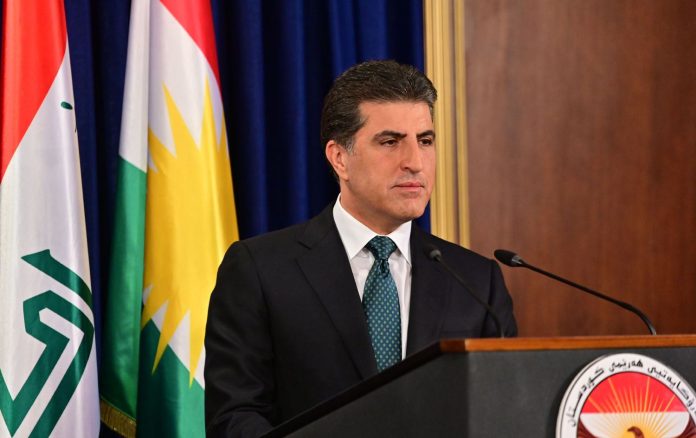
Nechirvan Barzani made the remarks about Tehran-Erbil relations and the follow-up on agreements made during reciprocal visits, noting that a significant and new chapter has been opened in enhancing relations between Iran and the Kurdistan Region.

Barzani noted that the recent visit of Iranian President Massoud Pezeshkian to the Kurdistan Region, as well as his own visit to Tehran, marked a crucial phase in strengthening bilateral ties.

He stated that relevant Iraqi and Iranian entities are monitoring the implementation of agreements in various sectors, including economic, security, and cultural cooperation.

He stressed the importance of facilitating cross-border trade and addressing logistical challenges at border crossings to boost economic exchanges, which currently exceed $10 billion annually, with 60% passing through the Kurdistan Region.

Barzani underlined the good progress observed in the implementation of the Iran-Iraq security agreement, affirming that no threats to Iran’s peace and security would be allowed from the territory of the Kurdistan Region.

US VP: European politicians censoring free speech

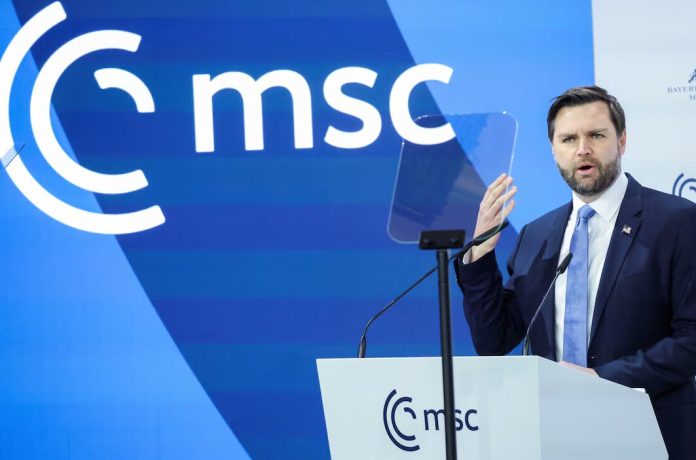
Speaking to European political leaders, military officers and diplomats at the Munich Security Conference, Vance surprised the audience by dismissing the risk of Russian political interference in Europe, taking a similar stance to US President Donald Trump, who has railed against claims by US intelligence agencies that Russia had interfered on his behalf in the 2016 election.

Vance adopted a confrontational tone, accusing European politicians of what he said was a fear of their own people and warned them that the real threat against their democracy was not from Russia or China.

“The threat I worry the most about vis-à-vis Europe is not Russia, it’s not China, it’s not any other external actor. What I worry about is the threat from within, the retreat of Europe from some its most fundamental values, values shared with the United States of America,” Vance added.

The future of Ukraine was at the top of the agenda in Munich after a phone call between Trump and Russian leader Vladimir Putin this week where they pledged to work together to end the conflict, but Vance did not bring it up.

Instead, he stated Brussels had shut down social media over hateful content, and criticized Germany for what he described as raids against its own citizens for posting anti-feminist comments, Sweden for convicting a Christian activist, and United Kingdom for backsliding on religious rights.

A Reuters reporter in one of the side rooms where more delegates could listen to Vance said people appeared stunned and did not applaud.

Vance specifically targeted the December cancellation of Romania’s elections, which were annulled by the country’s top court after accusations of Russian meddling, dismissing worries of disinformation as “ugly Soviet-era words”.

“If you’re running in fear of your own voters, there is nothing America can do for you,” Vance said.

Romania’s Nov. 24 vote was annulled after declassified security documents said Romania had been a target of “aggressive hybrid Russian attacks” during the election period.

Russian Foreign Ministry spokeswoman Maria Zakharova has dismissed allegations of Moscow’s involvement in the Romanian presidential election as “absolutely groundless.”

Vance questioned Washington’s support and funding of what was billed as a defense of democracy and support of Ukraine in the name of shared values.

“But when we see European courts canceling elections and senior officials threatening to cancel others, we ought to ask whether we’re holding ourselves to an appropriately high standard,” he added.

The European Union’s foreign policy chief Kaja Kallas stressed on Friday that a speech by Vance at the Munich Security conference felt as if the United States was ‘trying to pick a fight’ with Europe.

“Listening to that speech, they try to pick a fight with us and we don’t want to a pick a fight with our friends,” Kallas said at the Munich event.

Kallas added that allies should be focusing on bigger threats like Russia’s war on Ukraine.

Iran condemns Israeli threat against passenger plane, calls on Lebanon to remove restrictions

Esmail Baghaei

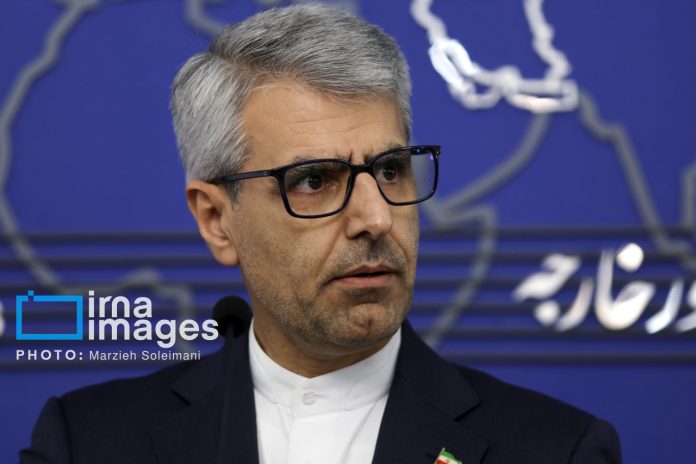
In a statement on Friday, Baqaei urged international organizations, particularly the International Civil Aviation Organization (ICAO), to take firm action against Israeli regime’s threats to aviation safety.

He added that Israel’s actions had disrupted normal flight operations at Beirut Airport.

His remarks followed the cancellation of two Iranian civilian flights to Lebanon, a decision made by Lebanon’s Roads Minister under the Israeli regime’s pressure. Israel alleged that the aircraft was transporting funds to Hezbollah.

The flight cancellations triggered protests near Beirut International Airport, where demonstrators blocked access roads, set tires on fire, and chanted slogans against the US and Israel.

Meanwhile, Iran’s Ambassador to Beirut, Mojtaba Amani, announced on Friday that Tehran does not accept Lebanon’s proposal to replace Iranian flights with Lebanese airline services.

He acknowledged Lebanon’s interest in operating flights to Iran but stressed that this should not come at the expense of Iranian air traffic.

Amani emphasized that Iran would only agree to an arrangement that does not impose restrictions on its airlines.

He noted that the flight cancellations left many Lebanese passengers, including pilgrims, stranded in Tehran, while others planning to travel to Iran were unable to do so.

He expressed hope that the issue would be resolved swiftly and urged the Lebanese government to act wisely in addressing the matter.

Iran says received messages from Damascus amid Moscow talks

Syria War

Mohammad Reza Raouf Sheibani, who traveled to Moscow for talks, emphasized Iran’s “forward-looking” approach to Syria’s developments and the restoration of ties with Damascus following the fall of former government of Bashar al-Assad.

Sheibani stated, “We are closely monitoring the developments in Syria with caution and will make our decisions at the appropriate time.”

He reiterated Iran’s clear stance on Syria, stressing that the future of the country must be determined by its people, with the participation of all political factions.

He also emphasized Iran’s opposition to foreign interference in Syrian affairs, underscoring the importance of stability and peace in the region.

During his visit, Sheibani held discussions with the Russian president’s Special Envoy for the Middle East and Africa, Alexander Lavrentiev, and Deputy Foreign Minister, Mikhail Bogdanov, on the latest developments in Syria and the broader West Asia region.

Both sides reaffirmed their commitment to Syria’s unity, sovereignty, and territorial integrity, while highlighting the need for inclusive national dialogue.

Sheibani noted that Iran and Russia emphasized the importance of implementing UN Resolution 2254, which calls for a political settlement and inclusive participation in shaping Syria’s future.

University of Tehran students rally over stabbing to death of fellow student by muggers

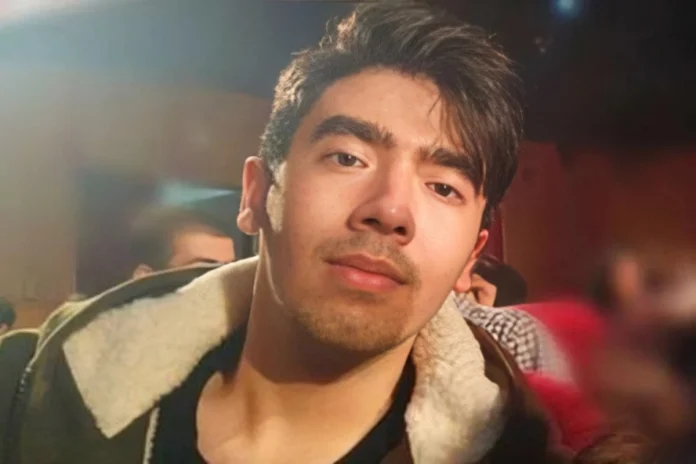
The victim has been identified as Amir Mohammad Khaleghi.

The protesters shouted chants, calling for the resignation of relevant university’s officials whom they described as “incompetent “.

They accused the officials of failing to provide security for students.

The rally over the death of Khaleghi happened outside the university’s dormitory.

The Business Administration student was stabbed to death by two men riding a motorbike.

The attackers are said to have tried to snatch Khaleghi’s cellphone and laptop. Accordingly, they stabbed and injured him when he resisted.

The 19-year-old was rushed to a hospital but succumbed to his wounds there.

Iranian ambassador urges Lebanon to resolve issue of flight restrictions wisely

Mojtaba Amani was speaking after the Lebanese government revoked the permits for two airlines that regularly operate weekly flights from Iran to Lebanon on Thursday and Friday.

Amani said following efforts by Iranian officials to resolve the issue, the Lebanese side promised that these flights would go ahead as scheduled, but ultimately, this did not happen.

According to Amani, the cancellation of these flights has left the Lebanese passengers, mostly visiting Iran on pilgrimage, stranded at Tehran’s airport.

He added that the Lebanese government has requested a replacement flight for the Iranian one but Tehran would grant the request only if Beirut did not impose restrictions on Iranian flights.

The Iranian ambassador to Beirut added that the issue has angered the Lebanese citizens who wish to attend the funeral of the late leader of Hezbollah resistance movement Sayyed Hassan Nasrallah from various parts of the world, including Iran. Amani also said these people construe the move by Lebanon’s government as an attempt to obstruct participation in the ceremony.