Monday, December 29, 2025
Home Blog Page 2825

Evangelicalism and US Politics: Trump Using Religion to Prop Up Israel

Evangelicalism and US Politics: Trump Using Religion to Prop Up Israel
US President Donald Trump prepares to leave a note at the Western Wall in Jerusalem al-Quds on May 22, 2017. /Photo by Reuters

Born in 1953, Masjed-Jamei is a religion scholar and researcher, with a special focus on Christianity. A former ambassador of the Islamic Republic of Iran to Vatican and Morocco, Masjed-Jamei has authored several books including “Christians and the New Era”, which deals with the geopolitics of modern Christianity in the contemporary era. 

Mohammad Masjed-Jamei
Iranian scholar Mohammad Masjed-Jamei

A PhD graduate in geopolitics from the University of Pisa in Italy, Masjed-Jamei has taught at the University of Religions and Denominations of Qom as well as the Iranian Foreign Ministry’s School of International Relations.

In a detailed interview with Iranian news website Khabar Online, Masjed-Jamei has weighed on the impact of evangelical Christianity on the US politics and the country’s foreign policy, especially since President Donald Trump assumed office.

An English version of the interview, originally conducted in Persian, is published by IFP News in several parts.

The first part mainly focused on the impact of evangelical Christianity on Trump’s relations with Iran.

What follows is the second part of the interview, which mainly concerns the US government’s use of religion to prop up its regional ally Israel:


Trump himself is not that evangelical, i.e., his religious beliefs are not much deep-rooted compared to those of Mike Pompeo, Mike Pence and the like. However, his associates are deeply evangelical; most importantly, Trump has pinned his hopes on these evangelicals in order to boost his popularity among Americans, especially for the upcoming elections. So, the issue of evangelicals is very important and even vital to him. The key reason why he picked Pence as Vice President was to attract evangelicals.

I should also add that the United States’ current policy, regardless of us and our region, especially toward Latin America, has a religious side to it. That means – as was the case at the time of Reagan – they are trying hard to turn Latin America into their own favourite churches, i.e., evangelical churches. Of course, that does not mean that they only promote evangelicalism there; rather, they try to elevate evangelical groups to better political, social and economic positions. An example of that is Brazil whose presidents usually had socialist-democratic tendencies following the rule of juntas. This is the first time that a right-leaning person like Jair Bolsonaro comes to power. He is a devout evangelical, too and he emerged victorious with the help of the US while his rival, Haddad, was in a better position. You see the same trend in Guatemala whose president Jimmy Morales came to power with Washington’s help as well.

But Bolsonaro is a Catholic!

I know, but he is a “born-again” Catholic and an “evangelicalized” one. His supporters are evangelical, too. Even Trump’s Secretary of State Mike Pompeo is a Catholic, but one who is aligned with evangelicals, not with the Catholic Church in Rome. Their Catholicism is a strange combination. US Vice President Mike Pence is like that, too.

Anyway, irrespective of our region and Iran, the United States’ foreign policy vis-à-vis the whole world is an amalgamation of nationalism and US-style rightist extremism. And when it comes to Latin America, the element of religion is somehow added to it. However, the issue of religion is not that determining with regard to a country like China which, the US feels, is a tough rival and is becoming all the more powerful; rather, the nationalistic and rightist dimensions of the policy have the most influence.

And as for our region, especially the occupied territories, i.e., Israel, this policy is a completely religion-driven one. That means the Americans want to use religious motives to serve the interests of Israel and not only strengthen the Tel Aviv regime, but also meet its various needs. This tendency has two reasons: first, based on the religious book, they believe they will be successful and have welfare and be masters only if they serve Israel. In their viewpoint, the United States’ prosperity and grandeur and dignity is subject to honestly serving Israel. They really have such a picture in mind.

Recently, I watched a video where an American shepherd, while blindfolded and standing in front of the crowd at the church apparently worshipping the Lord, was asking God to protect the United States against the coronavirus because the US had treated Israel well.

Yes, that’s the case. On the other hand, they believe world Jews having assembled at the so-called “Israeli land” and the construction of the Jewish “Third Temple” are preludes to the reappearance of Jesus Christ. At the moment, a key feature of the evangelical ideology is the issue of the apocalypse and the re-emergence of Jesus Christ. To them, this is not a simple belief, but a fundamental one which is very provocative and promising.

US Ambassador to Israel David Friedman, who happens to be a Jew, is such an ardent supporter of Israel that one cannot tell whether he is really the “US ambassador” to Israel or the “Israeli ambassador” to the United States. A few days after the opening of the US Embassy in Beit-ul-Muqaddas in 2018, he was seen in a picture which showed him standing in one of occupied Palestinian cities. That picture had been photoshopped to replace Temple Mount with the “Third Temple.” As you know, he is not an ordinary person to be authorized to do such things; he is a political authority.

Religion-wise, they are generally very sensitive about that land and Jews, and that’s why the religious dimension of their foreign policy plays the main role when dealing with Iran. Their policy toward Israel, and toward the entire Middle East for that matter, is that Israel should be prominent in the region, and that relations within the region should take shape in such a way that Israel’s interests are served. They are seriously pursuing these objectives and try to manage the Middle East as well as political and economic relations and energy routes within the region in such a way that Israel will benefit most from it. Even their policy vis-à-vis North Africa is such that it would serve Israel’s interests as much as possible. Well, I’m not going to give examples here.

The third part of the interview will be released in coming days.

Trump’s Gov’t Worst, Most Ruthless Ever in US History: Iran

Iran's Gov't Committed to Combatting Absolute Poverty

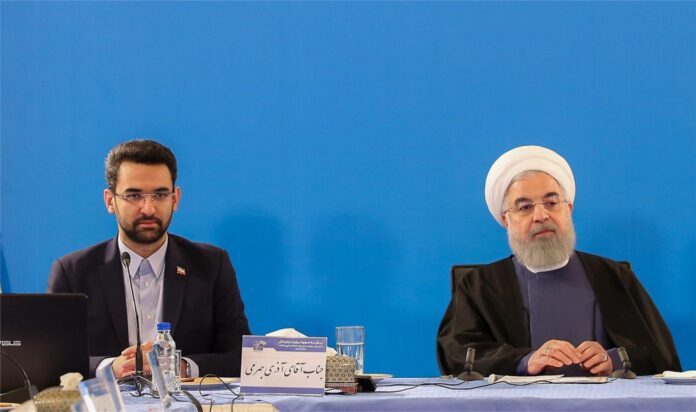
In comments on Wednesday, President Rouhani said the ruling elite in the White House are the evilest ever.

“The worst ever US government is now in power; the most wicked US government ever is in power now,” said the president.

“I can’t remember White House authorities have ever, in the US history, been as anti-human, ruthless, merciless and weak as they are now,” he said.

“There is a group of people who don’t know much. You see, it looks like the US regime’s secretary of state is unfamiliar with the ABC’s of politics. I can’t remember any US government ever like this,” he noted.

He once again lashed out at the Trump administration for refusing to lift sanctions on sales of medicines and medical equipment to Iran.

“The Iranian nation and government are facing a unique tough test. It is right that this virus outbreak has gripped other nations as well, but no nation [except Iran] has been gripped by coronavirus while being lashed by the harsh blows of sanctions and blockades for two years. If you know of a single case, please let us know,” said the president.

He then expressed gratitude to all Iranians for contributing heavily to the campaign against coronavirus since three months ago when the virus began to spread.

The president said the COVID-19 pandemic was a major test for Iranians.

“Here, I’m going to tell our dear people, God Almighty has decided that we deserve such a tough and difficult test; not everybody and every government and every nation and every group is subjected to hard and tough tests,” he said.

Clay Bowl with Hadith from Prophet Muhammad Unearthed in Iran

Clay Bowl with Hadith from Prophet Muhammad Unearthed in Iran

The historic work has been built in the third and fourth centuries AH at the time of the Samanid dynasty in one of the historical sites of Nishapur in Khorasan Razavi province, northeastern Iran.

According to ISNA, the dark brown clay bowl is now kept in the Islamic Era section of the National Museum of Iran.

The clay bowl is made of red mud. Its base is like a concave ring, and the body is stretched while the edge is smooth. The decoration inside and outside the bowl has a white floral cover. Its diameter is 34 cm and the height is 11.5 cm.

The interior decoration of this bowl includes five Kufic words with the theme of a hadith by the Holy Prophet (PBUH). Its translation is as follows:

The person who eats and thanks is like a tolerant fasting person.

Pottery with dark brown inscriptions on white or milky background with glazed floral coverings and decorative Kufic script was one of the most famous types of pottery in the third and fourth centuries AH, especially in Greater Khorasan and Nishapur.

Such works can be considered as works of Iranian pottery during the golden era of Islamic art and civilisation. They were decorated with Kufic script and patterns such as flowers, leaves, and birds.

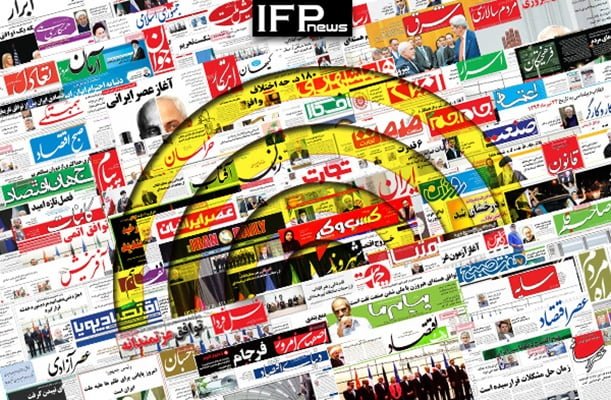
A Look at Iranian Newspaper Front Pages on May 13

A Look at Iranian Newspaper Front Pages on November 18

Iranian Newspapers

Aftab-e Yazd Newspaper:

1- People Won’t Afford Buying New Cars Even If Prices Return to Previous Level
2- Paying Compensation to UK over Embassy Damages Not Negotiable: Analyst

A Look at Iranian Newspaper Front Pages on May 13


Arman-e Melli Newspaper:

1- Iran Leader: It’s a Heavy Sorrow to Lose Hard-Working Young Men
2- Transmitters of Death Wandering in Cities: Concerns about COVID-19 Outbreak

A Look at Iranian Newspaper Front Pages on May 13


Donya-ye Eqtesad:

1- Gov’t to Sell Bonds in Order to Provide Its Budget

A Look at Iranian Newspaper Front Pages on May 13


Ebtekar Newspaper:

1- Living with Mask: From Dust Pollution to Corona; New Wave of Disease in Khuzestan
2- Glorious Funeral Held for Martyrs of Konarak Vessel Incident

A Look at Iranian Newspaper Front Pages on May 13


Ettela’at Newspaper:

1- Iran Leader Offers Condolences on Martyrdom of Navy Officers
2- Rouhani: Iran’s Fight against COVID-19 Neutralized Many Anti-Iran Judgements

A Look at Iranian Newspaper Front Pages on May 13


Iran Newspaper:

1- Farewell to Children of Sea
2- Iran Ready for Exchange of Prisoners, but Not for Negotiation
* Zarif Holds Talks with Swiss Counterpart on Prisoner Swap with US

A Look at Iranian Newspaper Front Pages on May 13


Javan Newspaper:

1- Parliament’s Double-Urgency Motion to Counter Israel’s Measures
2- Iran Now at Control, Containment Phase of Fight against Corona

A Look at Iranian Newspaper Front Pages on May 13


Kayhan Newspaper:

1- Incumbent Parliament Good Lesson for Incoming Lawmakers
2- US, UK Giving Economic Promises to Al-Kadhimi to Increase Their Influence
3- Industry Minister Sacked Not Because of Car Price Hikes

A Look at Iranian Newspaper Front Pages on May 13


Khorasan Newspaper:

1- Shocking Account of Smuggling Commodities into Iran
2- Coronavirus Spreading in Banks

A Look at Iranian Newspaper Front Pages on May 13


Mardom Salari Newspaper:

1- Call for Accurate Information on Konarak Tragedy
2- Corona’s Deadly Trouble for Putin
3- Corona, Heat Going Together Well: COVID-19 Spreading in Hot Days of Khuzestan

A Look at Iranian Newspaper Front Pages on May 13


Shargh Newspaper:

1- Another Minister Sacked from Rouhani’s Cabinet
2- Iran Denies Role in Afghan Border Incident, Respectfully Raises Complaints
3- Nine Cities of Khuzestan in Red Condition

A Look at Iranian Newspaper Front Pages on May 13

Iran’s Coronavirus Infections Surge Again

Over 22,000 Iranians Die of COVID-19: Health Ministry

The Ministry’s spokesman Kianoush Jahanpour said on Wednesday that the new cases increase the total number of infections to 112,725.

Jahanpour noted that one-fourth of the new infections are from the south-western province Khuzestan.

He said 50 patients have also died of the virus in the past 24 hours, raising the death toll to 6,783.

According to the spokesman, 89,428 patients have so far recovered from COVID-19, but 2,735 are in severe conditions of the disease.

He said so far 629,534 COVID-19 tests have been taken across the country.

Coronavirus online test
If you are worried that you may have contracted the Coronavirus, take this test right now.

Iran Bans Import of Medical Items Obtainable at Home

Iran Bans Import of Medical Items Obtainable at Home

In remarks on Wednesday, Hossein Modarres Khiabani unveiled new initiatives for supporting domestic production and encouraging local industries.

In order to support the domestic producers, the Ministry of Industry, Mine and Trade is refusing permission for the import of the medical items and supplies which are available inside the country, he added.

The caretaker minister also noted that another permission has been given for the unlimited export of homegrown N95 masks, hospital gowns and serology coronavirus test kits in an effort to support the domestic producers and meet the demands of the foreign countries struggling with COVID-19 epidemic.

Modarres Khiabani said the supply of those three items in Iran is outstripping domestic demand, adding, “The situation of production of health items and coronavirus-related medical equipment in the country is such that Iran has become a hub of export of coronavirus-related medical and health products.”

The Ministry of Industry, Mine and Trade, the Ministry of Health and Medical Education, and the Food and Drug Administration of Iran have coordinated a plan that gives approval to the export of 50 percent of the medical ventilators, electronic vital signs monitors, and home oxygen concentrators manufactured inside the country, he added.

The caretaker minister finally expressed hope that the unrestricted export of homegrown medical supplies and emergence of new markets for the Iranian products would pave the way for a surge in domestic production.

In April, President Hassan Rouhani said Iran has begun to export the health supplies necessary for the fight against COVID-19 after meeting the domestic demand.

Last week, a consignment of 40,000 coronavirus diagnostic test kits manufactured by an Iranian knowledge-based company was shipped to Germany.

Iran, Malaysia Discuss Collaboration in Coronavirus Fight

Iran, Malaysia Discuss Collaboration in Coronavirus Fight

In a telephone conversation on Wednesday, Iranian President Hassan Rouhani and Malaysia’s Prime Minister Muhyiddin Yassin expressed readiness to share the experiences of Tehran and Kuala Lumpur in tackling COVID-19 and to cooperate in supplying the medical and health products.

They also described the coronavirus outbreak as a global challenge and agreed on the need for collective action by the Islamic countries in the battle with the disease.

The Iranian president and the Malaysia prime minister also highlighted the significance of the Joint Comprehensive Plan of Action (JCPOA), stressed the need to save the nuclear deal, denounced the US’ illegal sanctions against Iran -particularly in the current conditions- as a violation of human rights, and pledged that Iran and Malaysia will continue to support each other in the international organizations and in defiance of the sanctions.

President Rouhani and Prime Minister Yassin further stressed the need to expedite the implementation of the financial and trade agreements signed between Tehran and Kuala Lumpur in the past, specifically the deals inked during the previous Malaysian premier’s tenure.

They also promised to spare no effort to strengthen mutual cooperation between the two Muslim nations, which has been in progress and has grown over years.

The Iranian president finally invited the Malaysian leader to pay a visit to Iran at an appropriate time.

In December 2019, President Rouhani visited Kuala Lumpur to take part in the KL Summit 2019. He also held a meeting with former prime minister of Malaysia Mahathir Bin Mohamad, who had expressed the Southeast Asian country’s determination to continue economic and trade relations with Iran in defiance of the “illegal” sanctions against Tehran.

Iranians Attend ‘Qadr Night’ Rituals While Observing Health Protocols

Iranians Attend 'Qadr Night' Rituals While Observing Health Protocols 4

“The decision to reopen mosques and allow the faithful to attend Qadr night rituals was a very tough and high-risk one, and last night was the first night when we experienced it,” Health Minister Saeid Namaki said Wednesday.

He thanked people for complying with health protocols while holding the religious ceremonies.

He said there were few reports of violations.

His comments came after the Health Ministry allowed religious sites to reopen while taking the necessary precautions amid the coronavirus pandemic.

What follows are IRNA’s photos of people attending the Laylat al-Qadr ceremonies across the country on Tuesday night:

Iran to Resume Trade Ties with Turkmenistan, Uzbekistan

Iran to Resume Trade Ties with Turkmenistan, Uzbekistan

Mohammad Eslami said Wednesday heath protocols will be observed, in the meantime.

“We are trying to resume trade transactions. In this regard, the health ministry has adopted measures and protocols all of which we have fully complied with,” said the minister after a trilateral meeting of Iran, Uzbekistan and Turkmenistan.

“Turkmenistan’s health minister has a different idea. He said the disinfectant tunnels they had dug could be extended by up to 20 metres,” he said.

“It was also decided that train drivers and crew be tested for coronavirus and carry with them a clean bill of health. These things are being done, and I hope we, as agreed, will see good developments in the next 15 days with regards to the issue of transit in the country,” said the minister.

He said it has been two months that exports of commercial goods to Turkmenistan and Central Asia have been halted, which seriously harms businessmen as well as transport companies.

“Road and rail transport with Turkmenistan will be resumed in 15 days,” he added.
He also expressed hope trade will be resumed as well.

Devoted Teachers Making Sacrifices amid COVID-19 Outbreak in Iran

Devoted Teachers Making Sacrifices amid COVID-19 Outbreak in Iran 1

With the onset of the coronavirus the Iranian government announced the schools must be shut down until further notice. Therefore, teachers started to educate their students via television, mobile phone applications and the internet.

However, there are some students in remote areas who do not have access to these facilities, and the teachers are instructing them in person. Even though they do not get high salaries, they pay the fare themselves to commute to the place where their students live.

One of these teachers is Moharram Navazesh who travels a long distance every day to instruct his students. He travels 110 kilometres every day to reach his students, and of course his students come from the villages in groups of two or three. They observe the principles of health and social distancing in the classes that are held in Ardabil province.

“Due to the social distancing and in order for the students to be separated from each other, I teach each grade separately,” he says.

All the teachers of the villages of Jafarabad in Moghan region are present at schools these days, taking care of the educational and even cultural issues of their students.

Devoted Teachers Making Sacrifices amid COVID-19 Outbreak in Iran 2Students with Special Needs

Amid the corona outbreak, students with special needs must not lag behind. The situation of these students is a little different from that of ordinary students, and this multiplies their teachers’ efforts.

The education ministry has provided facilities for students with special needs to be able to benefit from virtual teaching, but this method is not like face-to-face training and real classroom atmosphere. Atefeh Rajabi is a teacher at Payam School in Gotvand, Khuzestan Province.

When she saw that Fatemeh, one of her students, could not use mobile phone and tablet because of her physical and mobility problems and weakness in her hand muscles, she decided to go to Fatemeh’s house and sometimes Fatemeh would come to her to practice lessons.

 Students with Special NeedsTeaching Afghan Students

At present, with the cooperation of IRIB, televised trainings are aired on channels 4 and 7. Meanwhile teachers are also educating their students in the cyberspace. However, there are some students who may not have access to none of these methods of training, or may not be able to use them for a variety of reasons.

Tahereh Nekouian is a first grade elementary school teacher who teaches Afghan students in the city of Noorabad Mamasani in person.

“14 out of 30 students do not have access to television, the Internet and smartphones, so I decided to teach these students in person while observing hygienic principles and social distancing,” she said.

Devoted Teachers Making Sacrifices amid COVID-19 Outbreak in Iran 3Teaching Nomadic Students

Some teachers, despite being sick or injured, continued educating their students. One of them is Sajjad Ahmadi, the teacher of nomadic students in Harsin city of Kermanshah province, western Iran. Although he has injuries, he goes door to door to teach his nomadic students.

Another teacher who was suffering from kidney and heart disease teaches his nomadic students in meadows.

The other one in the city of Saveh spent one month of his salary to buy Internet service for her poor students.

Another example is a devoted teacher in the city of Ahar in East Azarbaijan province, who bought a TV set for her student when she found out they did not have a TV at home.

These are some instances of the devotion of Iranian teachers who never forget their students despite their own lives being at risk.

Devoted Teachers Making Sacrifices amid COVID-19 Outbreak in Iran 4