Friday, December 26, 2025
Home Blog Page 280

Kim pays rare public tribute to North Korean soldiers killed in Russia-Ukraine war

Photographs of the North Korean leader pausing in front of a line of half a dozen coffins draped in the country’s flag were displayed on a screen at a gala performance held to mark the first anniversary of a military treaty between the North and Russia.

The event at East Pyongyang Grand Theatre combined performances by North Korean and visiting Russian artists with images celebrating a mutual defence pact agreed by Kim and the Russian president, Vladimir Putin, in Pyongyang in June last year.

The scenes showing Kim and the remains of fallen soldiers followed those of troops from both countries waving their national flags. One image purportedly showed pages from a blood-stained notebook, believed to have belonged to a North Korean soldier, that had been retrieved from a battlefield in Russia’s Kursk region.

According to South Korea’s Yonhap news agency, the messages in the notebook read: “The decisive moment has finally come,” and “Let us bravely fight this sacred battle with the boundless love and trust bestowed upon us by our beloved Supreme Commander” – a reference to Kim.

It was not immediately clear when the repatriation ceremony took place. Kim and other officials, including his influential sister, Kim Yo-jong, and the foreign minister, Choe Son-hui, are wearing winter clothing, suggesting that the soldiers’ remains may have been returned to the North several months ago.

Having denied for months that North Korean soldiers had been sent to fight alongside Russian forces, the regime is now attempting to put a positive spin on its involvement in the Ukraine conflict.

“North Korea probably wanted to frame the fallen soldiers not just as sacrifices but as part of a victory narrative,” Hong Min, a senior researcher at the Korea Institute for National Unification, told Yonhap.

“The footage appears to have been released after the two countries acknowledged the troop deployment” and declared their joint operation to reclaim the Kursk region in western Russia a success, Hong added.

Footage of the gala broadcast by North Korea’s state KRT television showed Kim, who appeared emotional at times, sitting alongside his guest, the Russian culture minister, Olga Lyubimova, and his daughter, Kim Ju-ae. People in the audience were shown wiping away tears.

The Korea Herald said the event was the first time state media had shown footage and photos of soldiers sent to Russia that can be seen by North Korean citizens.

The state-run KCNA news agency reported the event had inspired confidence in the “ties of friendship and the genuine internationalist obligation between the peoples and armies of the two countries that were forged at the cost of blood”.

In April, Putin and Kim confirmed for the first time that North Korean troops had been deployed, with both leaders describing them as “heroes”.

Kim stated at the time that a monument would be built in Pyongyang to honour his soldiers, and that flowers would be laid before the tombstones of those who had died – seen as the first public confirmation by North Korea that its troops had been killed in combat.

The North has sent an estimated 15,000 troops to fight in the war since last autumn. It has suffered about 4,700 casualties, including 600 deaths, South Korean lawmakers said in April, while Seoul’s intelligence agency recently claimed that additional deployments could come in July or August.

North Korea has also provided Russia with large quantities of ammunition, artillery shells, ballistic missiles and other weapons, reportedly in return for weapons and satellite technology, and economic and other assistance from the Kremlin.

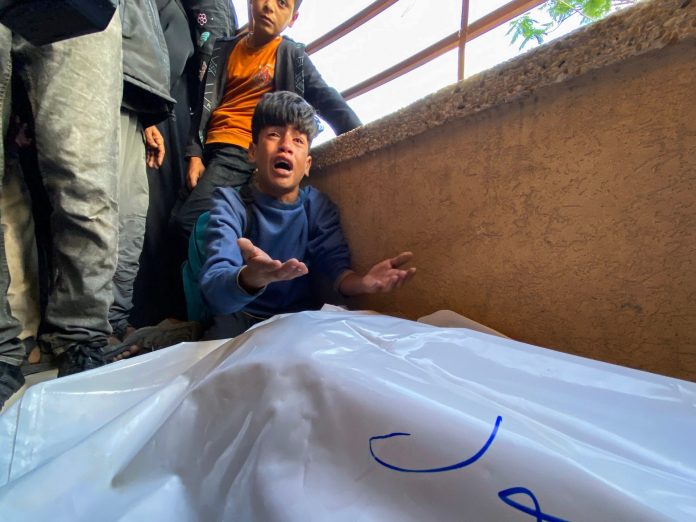
935 killed, over 5,600 injured in 12-day US-Israeli conflict, Iranian gov’t says

Speaking at a press conference on Tuesday morning, Mohajerani condemned attacks on civilian infrastructure, stating, “We witnessed assaults on national television headquarters, university housing, Evin prison, hospitals, and aid units. Who could carry out such acts? Those were dark days, but our nation remains resilient.”

Mohajerani highlighted that the government responded immediately after the attacks began on June 13. “The Minister of Health was among the first to act, coordinating emergency operations with medical universities across the country,” she said.

She explained an emergency cabinet session was held early Friday, June 13, chaired by Vice President Mohammad Reza Aref. Four specialized task forces were formed to address key issues including public security, medical treatment, distribution of essential goods, the repatriation of pilgrims, and economic stability.

“The health system managed an overwhelming number of casualties, even as hospitals faced capacity challenges,” Mohajerani added.

She expressed condolences to the families of the victims.

Saudi Public Investment Fund’s profits plunge 60 percent in 2024

Saudi Arabia’s Public Investment Fund (PIF) has more than $1 trillion dollars in assets and generated just $6.9bn in net profits in 2024, according to results it released on Monday.

PIF’s gross revenue rose 25 percent compared to last year. The jump was added by investments in local Saudi firms maturing, like the Saudi National Bank. But the rise was not enough to offset higher interest rates and what PIF called “impairments” on select projects.

PIF is the main vehicle for Crown Prince Mohammed bin Salman’s bid to diversify his country’s economy away from a reliance on energy. PIF has invested in local tech startups, sports, and luxury developments on the Red Sea.

But for now, oil still accounts for roughly 61 percent of Saudi Arabia’s revenue, according to its 2025 budget. PIF also generates money from owning shares in Aramco, the Saudi state oil company.

Saudi Arabia’s spending benefited from higher energy prices after Russia’s 2022 invasion of Ukraine. But crude has since plunged to around $65 per barrel, despite the war between Israel and Iran.

Saudi Arabia has had to scale back some of its more ambitious mega-projects like Neom. The futuristic development was originally billed as a $1.5 trillion project that would be 33 times the size of New York City and include a 170km straight-line city known as “The Line”.

Instead of 1.5 million people living in the city by 2030, Saudi officials anticipate fewer than 300,000 residents. Meanwhile, only 2.4km of the city will be completed by 2030.

In April, the Financial Times reported that the CEO of the futuristic city had launched a “comprehensive review” of the kingdom’s mega-project, signifying more belt-tightening to come with falling energy prices.

Saudi Arabia has had trouble luring foreign investors to its programme, and PIF has had to carry the weight.

The fund owns US stocks like Uber and Meta and has invested in overseas infrastructure projects with Blackstone.

However, PIF governor Yasir al-Rumayyan said in October that the fund would focus more on the domestic Saudi market as it looks to advance the crown prince’s Vision 2030 programme.

Saudi Arabia has also turned to debt to finance its projects, which makes the kingdom’s goals susceptible to rising interest rates. In January, the fund raised $4bn in an international bond sale, and in June rolled out a new special purpose vehicle to issue short-term debt.

Saudi Arabia has seen solid demand for its debt among investors and has shown a willingness to run budget deficits. The kingdom’s 2025 budget expects a fiscal deficit of $27bn or 2.3 percent of GDP.

However, that number could rise.

According to a report published in April by the Arab Gulf States Institute, if oil prices were to average $65 per barrel in 2025, the deficit would likely be around $56bn or 5.2 percent of GDP.

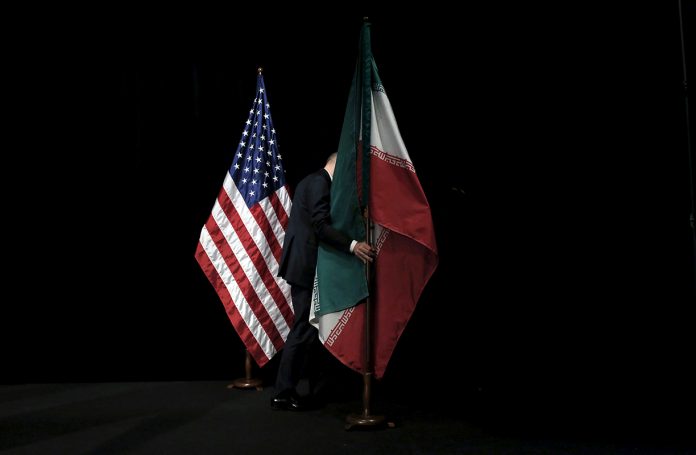
Iranian FM: US must assure no military action before new nuclear talks resume

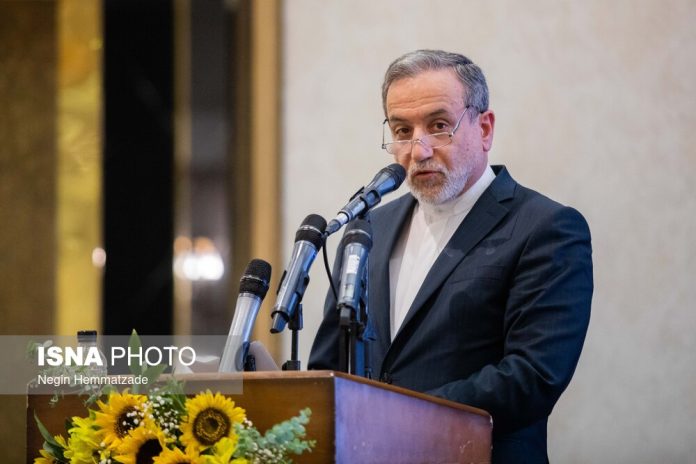
Abbas Araghchi

In an interview with CBS News aired early Tuesday, Araghchi stressed Iran’s right to enrich uranium and underscored the resilience of its nuclear program.

“Before we decide to return to the negotiating table, we must be sure that Washington will not resume military strikes during the negotiations,” he said.

He noted that talks would not restart quickly, citing the need for more time and assurance. “Despite all concerns, diplomacy is not off the table. The doors to dialogue remain open,” he added.

Araghchi emphasized that while nuclear facilities can be targeted, the knowledge and technology behind uranium enrichment cannot be eliminated by bombing. He described Iran’s peaceful nuclear program as a source of national pride.

Recalling Iran’s endurance during the eight-year Iran-Iraq war in the ‘80s, Araghchi said, “Our people will not easily give up enrichment. We have demonstrated our ability to defend ourselves, and if attacked, we will continue to do so.”

US formally orders lifting of Syria sanctions

Trump’s decree on Monday offers sanction relief to “entities critical to Syria’s development, the operation of its government, and the rebuilding of the country’s social fabric”, the US Treasury announced in a statement.

The Syrian government has been under heavy US financial penalties that predate the outbreak of the civil war in the country in 2011.

In a statement posted on X, Syrian Foreign Minister Asaad Al Shaibani welcomed the decision of Trump, saying it “will open the door of long-awaited reconstruction and development.”

“It will lift the obstacle against economic recovery and open the country to the international community,” he added.

The sprawling sanction programme, which included provisions related to the former government’s human rights abuses, has derailed reconstruction efforts in the country. It has also contributed to driving the Syrian economy under Bashar al-Assad to the verge of collapse.

Trump promised sanctions relief for Syria during his visit to the Middle East in May.

“The United States is committed to supporting a Syria that is stable, unified, and at peace with itself and its neighbours,” the US president said in a statement on Monday.

“A united Syria that does not offer a safe haven for terrorist organisations and ensures the security of its religious and ethnic minorities will support regional security and prosperity.”

The US administration announced that Syria-related sanctions against al-Assad and his associates, ISIL (ISIS) and Iran and its allies will remain in place.

While the US Treasury noted it already removed 518 Syrian individuals and entities from its list of sanctions, some Syria penalties may not be revoked immediately.

For example, Trump directs US agencies to determine whether the conditions are met to remove sanctions imposed under the Caesar Act, which enabled heavy penalties against the Syrian economy for alleged war crimes against civilians.

As part of Trump’s order, the US president ordered Secretary of State Marco Rubio to review the designation of interim Syrian President Ahmed al-Sharaa as a “Specially Designated Global Terrorist”.

Moreover, the US president ordered a review of the status of al-Sharaa’s group, al-Nusra Front – now Hayat Tahrir al-Sham (HTS) – as a designated “foreign terrorist” organisation. Al-Nusra was al-Qaeda’s branch in Syria, but al-Sharaa severed ties with the group in 2016.

Al-Nusra later became known as Jabhat Fath al-Sham before merging with other rebel groups as HTS.

Al-Sharaa was the de facto leader of a rebel enclave in Idlib in northwest Syria for years before leading the offensive that overthrew al-Assad in December 2024.

Trump met with al-Sharaa in Saudi Arabia in May and praised the Syrian president as “attractive” and “tough”.

The interim Syrian president – who was previously known by his nom de guerre Abu Mohammed al-Julani – has promised inclusive governance to allay concerns about his past ties to al-Qaeda.

But violence and kidnappings against members of al-Assad’s Alawite sect by former rebel fighters over the past months have raised concerns among some rights advocates.

Al-Sharaa has also pledged that Syria would not pose a threat to its neighbours, including Israel, which has been advancing in Syrian territory beyond the occupied Golan Heights and regularly bombing the country.

Iranian Armed Forces spokesman: Ceasefire was never an option

Shekarchi was spekaing about the situation after the cessation of the Zionist regime’s aggression against Iran.

He noted that the Zionist regime is never trustworthy, neither for the world, nor for Iran.

Shekarchi also spoke about the high level of preparedness of Iran’s armed forces, saying, “Our military is more ready than ever before, and in the event of any renewed aggression by the Zionist regime, the act will be met with a crushing and decisive response”.

Israel says eying ties with Syria and Lebanon after Iran war

Syria War

Israeli leaders argue that after the 12-day war, other countries in the region have an opportunity to forge ties with Tel Aviv.

The Middle East has been upended by nearly two years of war in Gaza, during which Israel also carried out airstrikes and ground operations in Lebanon targeting Hezbollah, and by the overthrow of former Syrian leader Bashar al-Assad.

In 2020, the United Arab Emirates, Bahrain and Morocco became the first Arab states to establish ties with Israel since Jordan in 1994 and Egypt in 1979. The normalisation agreements with Israel were deeply unpopular in the Arab world.

“We have an interest in adding countries such as Syria and Lebanon, our neighbours, to the circle of peace and normalisation, while safeguarding Israel’s essential and security interests,” Saar said at a press conference in Jerusalem.

“The Golan will remain part of the State of Israel”, he added.

Israel annexed the Golan Heights in 1981 after capturing the territory from Syria during the 1967 Six-Day War. While most of the international community regards the Golan as occupied Syrian land, U.S. President Donald Trump recognised Israeli sovereignty over it during his first term in office.

Following Assad’s ousting, Israeli forces moved further into Syrian territory.

A senior Syrian official, speaking on condition of anonymity, stated that Syria would never give up the Golan Heights, describing it as an integral part of Syrian territory.

The official also added that normalisation efforts with Israel must be part of the 2002 Arab Peace Initiative, and not carried out through a separate track.

The 2002 initiative proposed Arab normalisation with Israel in exchange for its withdrawal from occupied territories including the Golan Heights, the West Bank, and Gaza. It also called for the establishment of an independent Palestinian state with East Jerusalem, which Israel also captured in 1967, as its capital.

Throughout the war in Gaza, regional power Saudi Arabia has repeatedly stressed that establishing ties with Israel was conditional on the creation of an independent Palestinian state.

Saar said it was “not constructive” for other states to condition normalisation on Palestinian statehood.

“Our view is that a Palestinian state will threaten the security of the State of Israel”, he added.

In May, Reuters reported that Israel and Syria’s new rulers had established direct contact and held face-to-face meetings aimed at de-escalating tensions and preventing renewed conflict along their shared border.

The same month, Trump announced the U.S. would lift sanctions on Syria and met Syria’s new president, urging him to normalize ties with Israel.

Iranian musician Bamdad Bayat dies at 40

The news was shared by lyricist and director Babak Sahraei on social media

He said, “Bamdad Bayat took flight. Where did you go, my dearest, my little brother? ” Born on August 4, 1985, in Tehran, Bamdad was the twin brother of Barbod Bayat and began learning music at an early age under the guidance of his father.

At 11, he entered Tehran’s Music Conservatory and later continued his studies in Canada, where he received a diploma in jazz music from the University of Toronto. Bamdad specialized in film music and composed scores for short films such as Where Is the House? (1997) and Rebellion (1999).

He also collaborated with his father on soundtracks for many feature films and TV series.

Bamdad Bayat’s untimely death marks a great loss for Iran’s music and cinema communities.

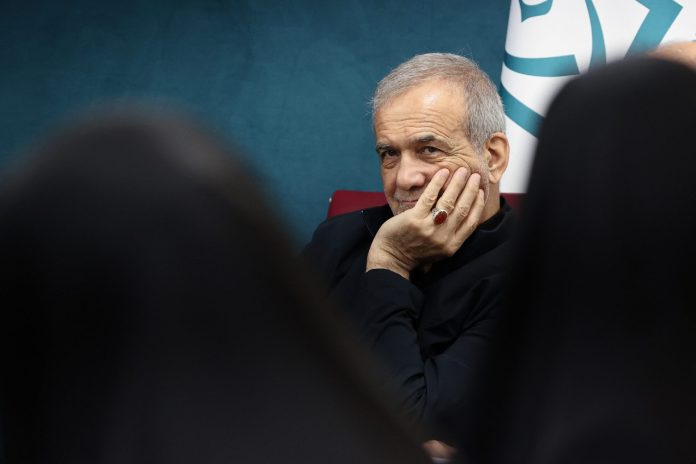
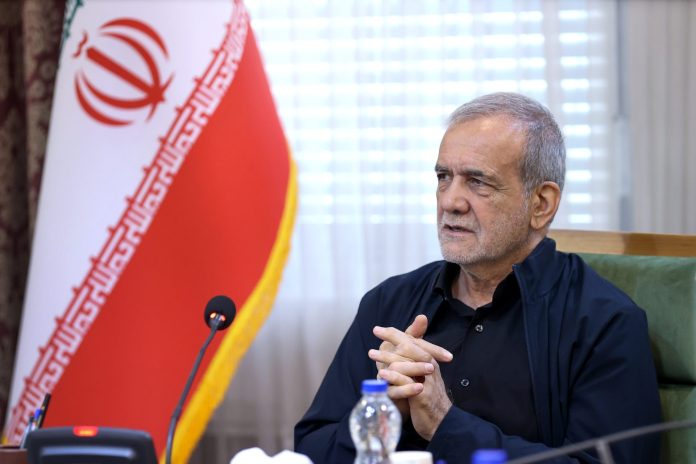
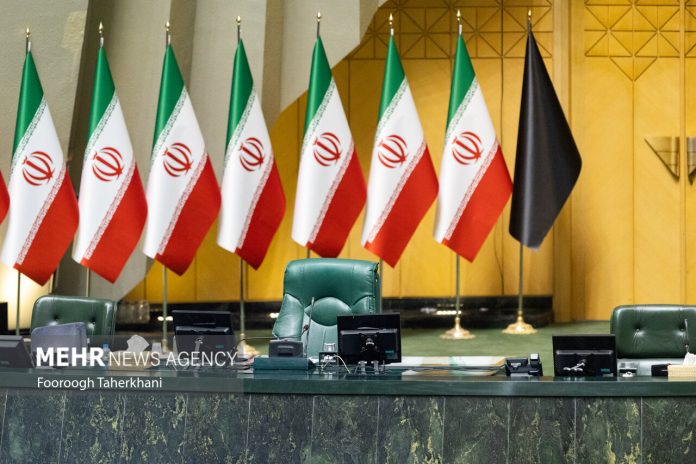
President Pezeshkian deplores IAEA’s double standards

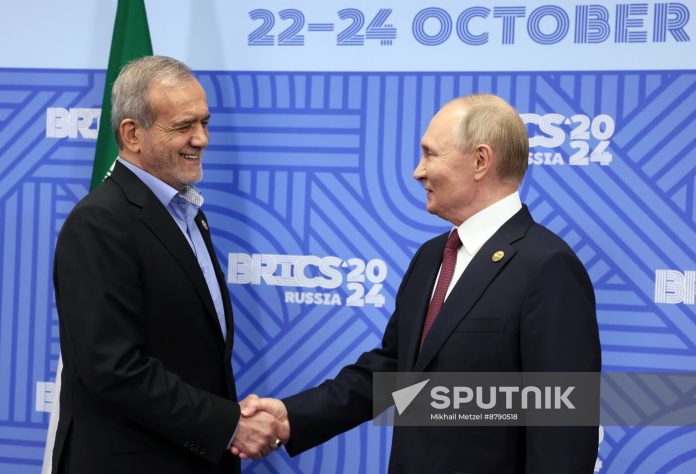
Pezeshkian and his French counterpart Emmanuel Macron held a telephone conversation on Sunday night.

Reacting to the concern expressed by the French president about the suspension of Iran’s cooperation with the International Atomic Energy Agency, Pezeshkian criticized the UN nuclear chief for making incorrect reports about Iran’s nuclear activities and refusing to condemn the American and Israeli military strikes on Iran’s nuclear facilities.

Despite Iran’s interaction with the IAEA, Grossi has not acted impartially, Pezeshkian said, describing Iran’s decision to suspend cooperation with the UN nuclear agency as a natural reaction to unjustifiable, unconstructive and destructive behaviors.

He also condemned the military aggression by the US and Israeli regime that resulted in the martyrdom of hundreds of Iranian people, including military commanders and nuclear scientists, saying the greater pity is that the self-proclaimed advocates of human rights and international law rushed to justify such inhumane and illegal attacks instead of deploring them.

Pezeshkian described Grossi’s conduct as a source of concern and formation of serious challenges eroding the Iranian nation’s trust.

The first step in rebuilding trust is the IAEA’s full commitment to the observance of its own rules and regulations, the president added.

The question is why the criminal Zionist regime, which is not a member of the NPT and has violated all international rules in the past years, should become a basis and reference for the IAEA’s reports, Pezeshkian told Macron.

“Such double standards have created numerous problems for the regional and world security. The IAEA is expected to uphold the rights of countries, avoid double standards, and defend the rights of all member states,” the Iranian president added.

Even if Iran resumes cooperation with the IAEA, there will be no guarantee that the country’s nuclear facilities won’t be struck again, he added.

Reiterating Iran’s policy of settlement of disputes through diplomacy and dialogue and avoidance of wars and insecurity, Pezeshkian expressed hope that the international organizations, including the IAEA, would honor their commitments and steer the world into the course of peace and security, not wars and conflicts.

While the Zionist regime waged a war of aggression against Iran on June 13 and struck Iran’s military, nuclear and residential areas for 12 days, the US stepped in and conducted military attacks on three nuclear sites in Iran’s Natanz, Fordow and Isfahan on June 22.

The Iranian military forces conducted powerful counterattacks immediately after the aggression. The Islamic Revolution Guards Corps Aerospace Force carried out 22 waves of retaliatory missile strikes against the Zionist regime as part of Operation True Promise III that inflicted heavy losses on cities across the occupied territories.

Also, in response to the US attacks, Iranian armed forces launched a wave of missiles at al-Udeid air base in Qatar, the largest American military base in West Asia.

A ceasefire that came into force on June 24 brought the fighting to a halt.

Poll: Iranians see ceasefire agreement with Israel as strategic victory

The national survey, conducted by the Research Institute of Studies and Investigations of the Islamic Revolution University, reveals that an overwhelming majority of Iranians consider the recent ceasefire in the war with the Zionist regime to be a strategic victory for the country.

The poll was conducted in recent days with the participation of 626 citizens over the age of 18 across provincial capitals in Iran.

The findings indicate that IRIB (state broadcaster) and domestic messaging platforms remain the main sources of news for citizens during crises.

61% of respondents believe Iran had the upper hand militarily prior to the ceasefire, while only 17.3% saw the Zionist regime and the US as superior. Additionally, 53.3% rated Iran’s diplomatic and foreign policy performance as “good” or “very good.”

51.3% of people considered the timing of the ceasefire decision appropriate, while 30.5% opposed it. 80% of respondents said they would support resuming the war if the Zionist regime violated the ceasefire.

54.5% reported feeling a strong or significant sense of victory after the ceasefire was announced. Furthermore, 62.9% believed that the Zionist regime failed to achieve its objectives.

68.4% of respondents said they do not trust the Zionist regime to honor the ceasefire at all.