Friday, December 26, 2025
Home Blog Page 281

Iran says IAEA should avoid political approaches

Speaking at a press conference on Monday, Baqaei commented on a recent bill passed by the Iranian Parliament on the suspension of Tehran’s cooperation with the UN nuclear agency.

He said the IAEA is an international organization with clearly-defined duties and its director general has specified duties as well.

“What we have demanded is that the (IAEA) director general act within the framework of his technical duties without being influenced by certain members of the agency,” Baqaei added.

Deploring the brazen policy of the European troika during the past two decades to exert pressure on Iran, the spokesman said Tehran has always called on the UN nuclear agency to avoid political attitudes.

He noted that the latest “inappropriate” report by the IAEA chief about Iran provided a basis for a politicized resolution against the Islamic Republic by the IAEA Board of Governors.

Baqaei also condemned the subsequent illegal military strikes by the US and the Zionist regime against Iran, stating, “What happened was an act of aggression. Our main request at present is the recognition of the aggressor. The aggressor is clearly known and the UN Security Council must admit it.”

His comments came after the Iranian Parliament passed a bill that obligates the administration to put its cooperation with the International Atomic Energy Agency on hold.

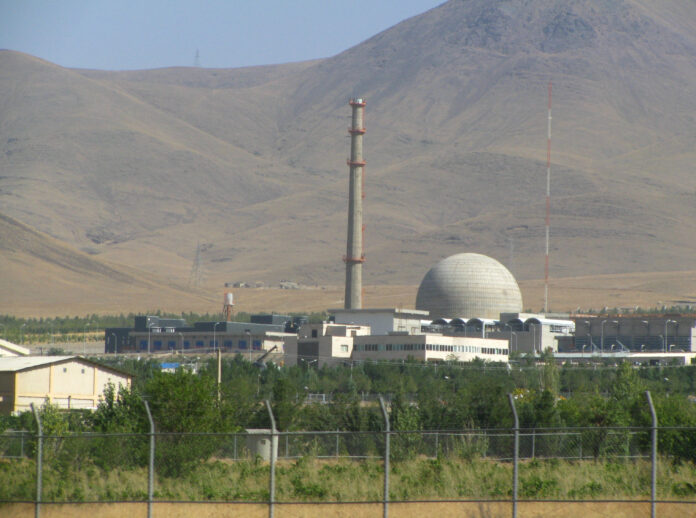
The decision to suspend cooperation with the UN nuclear agency came in response to IAEA Chief Rafael Grossi whose biased report against Iran paved the way for a resolution that subsequently encouraged the Israeli regime to launch a war of aggression on Iran and also prompted the US to bomb three main nuclear sites of Iran in Isfahan, Fordow and Natanz.

Israel planned but failed to assassinate Ayatollah Khamenei, government heads: Iranian official

Ali Larijani

“The enemy’s plan in this war was to target IRGC commanders and key national centers simultaneously. They believed they could pressure certain officials into abandoning the establishment through threats,” Ali Larijani said in a televised interview on Sunday.

Larijani, who served as Parliament speaker between 2008 and 2020, further revealed that during the war, Israel had attempted to intimidate a range of Iranian officials, including politicians, military officers, and security personnel.

“On Friday, they contacted me and gave me 12 hours to leave Iran or get out of Tehran—or else, they said, I’d meet the same fate as martyrs like [Chief of Staff of Iran’s Armed Forces Major General Mohammad Hossein] Bagheri and [commander of Iran’s top military headquarters Major General Gholam-Ali] Rashid. But I gave them the answer they deserved,” he said.

Referring to the US aggression against Iran’s peaceful nuclear sites of Fordow, Natanz, and Isfahan, Larijani dismissed the move as a “face-saving” gesture, saying, “let them be happy about that.”

Pointing to Iran’s retaliation against the US aggression on Iranian soil, Larijani said, “out of 14 Iranian missiles, 6 struck the American base [in Qatar] – and they hit hard, each carrying a 400kg warhead.”

US President Donald Trump, trying to save face, claimed “only one missile hit,” he said, adding let him “enjoy his delusions.”

The Israeli regime launched its unprovoked aggression on the Islamic Republic on June 13, with American backing, assassinating several top-ranking military commanders, scientists, and many other ordinary civilians, including women and children.

On the same day, Iranian armed forces, spearheaded by the Islamic Revolution Guards Corps (IRGC), launched an unprecedented retaliatory campaign against the Israeli regime known as Operation True Promise III.

After more than a week into the war, the US decided to finally make its collaboration with the Israeli regime official, with direct intervention in the war that the Israeli regime has been losing.

On June 22, the United States joined the Israeli regime in the assault and bombed three Iranian nuclear sites in a grave violation of the United Nations Charter, international law, and the Nuclear Non-Proliferation Treaty (NPT).

A day later, Iran launched a wave of missiles at al-Udeid air base in Qatar—the largest American military base in West Asia—in retaliation for the US aggression.

As the Iranian armed forces pounded Israel and its military and industrial infrastructure, using many new-generation missiles that precisely hit the designated targets, the embattled regime was forced to unilaterally cease its aggression against Iran on June 24.

Following the unilateral move, Iran too, halted its retaliatory campaign after carrying out 22 waves of successful attacks against the Israeli-occupied territories.

Elsewhere in his remarks, the Iranian senior official said that the US engaged in five rounds of indirect talks with Iran prior to the aggression solely to mislead Iran, while Israel carried out the strikes in complete coordination with Washington.

“The US used [indirect] talks as a capacity for deception and military aggression,” he noted.

The Israeli regime launched its aggression on Iran just two days before the sixth round of indirect talks, which were scheduled to take place in Muscat.

Trump denies he is talking with Iran, slams Obama-era agreement

“Tell phony Democrat Senator Chris Coons that I am not offering Iran ANYTHING … nor am I even talking to them,” Trump said on social media, pushing back against any suggestions of his talking with Tehran.

He also criticized former President Barack Obama over the 2015 Iran nuclear deal, formally known as the Joint Comprehensive Plan of Action (JCPOA), which he called “the stupid ‘road to a Nuclear Weapon JCPOA (which would now be expired!)’”

Trump’s 2018 unilateral withdrawal from the accord paved the way to the current standoff with Iran over its nuclear enrichment.

The US president also reiterated his claim that recent US attacks had effectively destroyed Iran’s nuclear facilities, despite US intelligence reports suggesting the damage might actually have only set back the program a matter of months.

“I am not even talking to them since we totally OBLITERATED their Nuclear Facilities,” he stated, referring to US strikes earlier this month on sites in Fordo, Natanz and Isfahan.

Trump’s comments come amid ongoing international debate over the fate of Iran’s enriched uranium stockpile and questions regarding possible diplomatic re-engagement.

While some US officials have indicated openness to dialogue, the president’s remarks suggest a firm stance following the recent escalation between the two nations.

Iran demands end to aggression as precondition for nuclear talks with US

Iran US Flags

Deputy Foreign Minister Majid Takht-Ravanchi told the BBC that such a commitment is essential for rebuilding trust and continuing diplomacy.

On June 13, Israeli strikes targeted multiple Iranian sites, including nuclear facilities and civilian areas, killing senior military officials and civilians. Days later, the US directly attacked Iran’s Fordow, Isfahan, and Natanz nuclear sites using bunker-buster bombs, causing major damage but no radiation leaks.

A ceasefire halted hostilities on June 23, just as indirect talks between Tehran and Washington were to begin under Omani mediation.

Takht-Ravanchi stressed Iran’s right to enrich uranium for peaceful purposes and dismissed suggestions of weaponization.

He warned against pressure tactics, asserting, “Saying ‘zero enrichment or be bombed’ is the law of the jungle.”

While confirming messages from Washington disavowing regime change, he said no timeline has been agreed for talks.

“We seek dialogue, not war, but must remain vigilant,” he said.

Intercepted Iranian communications downplay damage from US attack on nuclear sites: Washington Post

US Attack Iran

A source, who declined to be named, confirmed that account to Reuters but said there were serious questions about whether the Iranian officials were being truthful, and described the intercepts as unreliable indicators.

The report by the Post is the latest, however, to raise questions about the extent of the damage to Iran’s nuclear program. A leaked preliminary assessment from the Defense Intelligence Agency cautioned the strikes may have only set back Iran by months.

President Donald Trump has stated the strikes “completely and totally obliterated” Iran’s nuclear program, but U.S. officials acknowledge it will take time to form a complete assessment of the damage caused by the U.S. military attacks last weekend.

The White House dismissed the report by the Post.

“The notion that unnamed Iranian officials know what happened under hundreds of feet of rubble is nonsense. Their nuclear weapons program is over,” White House press secretary Karoline Leavitt was quoted as saying by the Post.

In an interview broadcast on Sunday on Fox News, Trump reiterated his confidence that the strikes had destroyed Iran’s nuclear capabilities.

“It was obliterated like nobody’s ever seen before. And that meant the end to their nuclear ambitions, at least for a period of time,” he stated on the “Sunday Morning Futures with Maria Bartiromo” program.

Iran demands UN action over Israeli attack on Evin Prison

In a formal letter dated 28 June 2025, addressed to the UN Secretary-General and President of the Security Council, Iravani expressed Iran’s “grave concern and strongest condemnation” over the 23 June attack that killed and injured dozens of civilians, including prison staff, inmates, and visiting family members.

The letter describes the strike as a “blatant and egregious violation” of international humanitarian and human rights law, emphasizing that the facility — a clearly marked civilian prison — was deliberately targeted. Iran urged the Council to take immediate steps to prevent the recurrence of such attacks and safeguard the principles of international law.

Full text of the letter follows.

In the Name of God, the Most Compassionate, the Most Merciful

No. 2529802 28 June 2025

Excellency,Upon instructions from my Government and pursuant to our previous communications concerning the large-scale, unprovoked, and premeditated acts of military aggression by the Israeli regime against the sovereignty and territorial integrity of the Islamic Republic of Iran, I am writing to convey the Islamic Republic of Iran’s grave concern and strongest condemnation of the deliberate and unlawful attack launched by the Israeli regime against Evin Prison in Tehran on Monday, 23 June 2025, at 10:30 a.m. local time.

This attack, carried out targeted at a clearly identified civilian prison, constitutes a blatant and egregious violation of international humanitarian law, international human rights law, and the foundational principles of the Charter of the United Nations. As a direct result of this reckless aggression, numerous civilians—including correctional officers, prison staff, visiting family members, and inmates—were martyred, either due to the impact of the strike or the trauma it caused.

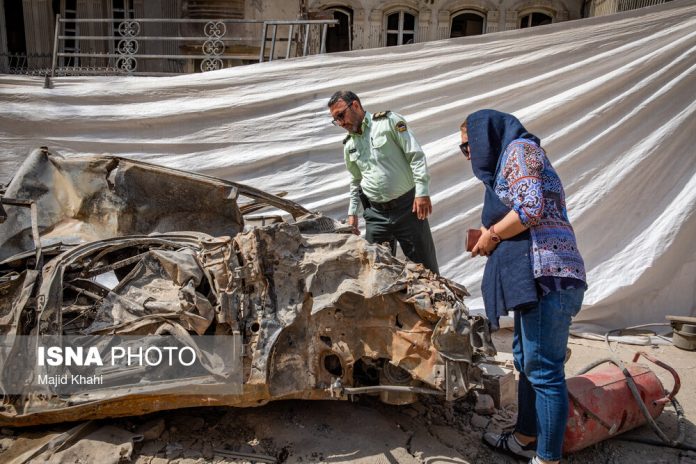
Key prison infrastructure, including the medical clinic, entry gate, kitchen, and visitation rooms, was destroyed. Many civilians were severely injured, among them women and children. Notably, Ms. Zahra Ebadi, a prison social worker, and her five-year-old son, Mehrad Kheiri, were found dead under the rubble three days after the attack.

The intentional targeting of a detention facility housing persons under state custody is a grave breach of international law, including but not limited to Article 33 of the Fourth Geneva Convention, which prohibits collective punishment, intimidation, and acts of terrorism against protected persons. It also contravenes the United Nations Standard Minimum Rules for the Treatment of Prisoners (Nelson Mandela Rules), which guarantee detainees’ access to health care without discrimination.

Furthermore, the attack violated the fundamental principle of distinction under international humanitarian law, which obliges all parties to distinguish at all times between civilian objects and military objectives.

The destruction of the prison’s medical facilities in particular rendered it impossible to provide urgent and life-saving care to critically ill detainees. The resulting humanitarian crisis and logistical challenges severely undermined the ability to uphold detainees’ rights and ensure their safety.

The chaos and terror induced by this barbaric assault placed all detainees, especially women and other vulnerable groups, at extreme risk.

The suddenness of the attack deprived the Iranian authorities of any opportunity to take protective measures in accordance with national and international obligations. Following the strike, the Government of the Islamic Republic of Iran was compelled to immediately relocate surviving inmates to other correctional facilities, resulting in severe overcrowding and further straining an already fragile system.

Given the gravity of this heinous and horrific crime, the Islamic Republic of Iran calls upon the United Nations Security Council and the Secretary-General to:

1. Unequivocally condemn the Israeli regime’s attack on Evin Prison as a serious breach of international humanitarian and human rights law;

2. Hold the perpetrators accountable for war crimes and crimes against humanity under international law; and

3. Take all necessary measures to prevent the recurrence of such heinous acts, which threaten not only the lives of civilians in custody but also the very foundations of the international legal order.

This attack constitutes a dangerous and unacceptable escalation. It strikes at the heart of the international community’s collective responsibility to uphold the rule of law and protect the rights and dignity of all persons, including those in detention. The Islamic Republic of Iran trusts that Your Excellency and your esteemed Office will treat this matter with the urgency and seriousness it demands.

I should be grateful if you would have the present letter and its attachment circulated as a document of the Security Council.Please accept,

Excellency, the assurances of our highest consideration.

Tehran’s nuclear enrichment ‘will never stop’: Iran’s envoy

Iran Nuclear Program

“The enrichment is our right, an inalienable right, and we want to implement this right,” Iravani told CBS News, adding that Iran was ready for negotiations but “unconditional surrender is not negotiation. It is dictating the policy toward us.”

But Iravani stated Tehran is “ready for the negotiation, but after this aggression, it is not proper condition for a new round of the negotiation, and there is no request for negotiation and meeting with the president”.

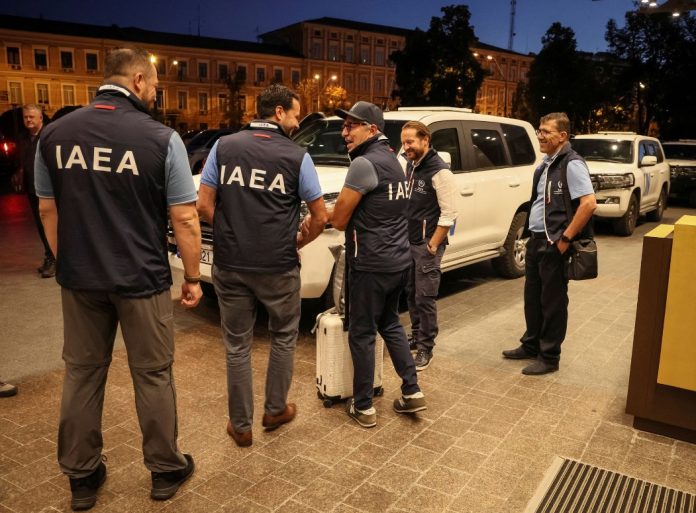
The Iranian UN envoy also denied that there are any threats from his government to the safety of Rafael Grossi, the director general of the International Atomic Energy Agency, or against the agency’s inspectors, who are accused by some Iranian officials of helping Israel justify its attacks. IAEA inspectors are currently in Iran but do not have access to Iran’s nuclear facilities.

Pressed by the CBS News anchor Margaret Brennan on whether he would condemn calls for the arrest and execution of the IAEA head, which Marco Rubio, the US Secretary of State Marco Rubio said an Iranian daily newspaper had made, Iravani stressed that he would.

“There is no any threat,” Irvani said, but acknowledged that Iran’s parliament had suspended cooperation with IAEA. The inspectors, he added, “are in Iran, they are in safe conditions, but the activity has been suspended. They cannot have access to our site … our assessment is that they have not done their jobs.”

Iravani also responded to questions on why Tehran has not accepted proposals for a diplomatic solution. Referring to President Donald Trump’s “unconditional surrender” demand, Irvani stated that the US “is dictating the policy towards us. If they are ready for negotiation, they will find us ready for that. But if they want to dictate us, it is impossible for any negotiation with them.”

Irvani’s comments comes as western nations, including the US, are pushing for Iran to resume negotiations over its nuclear program a week after the US launched strikes on three facilities, setting off days of heated dispute over whether the facilities has been “totally obliterated”, as Trump initially claimed, or if they had delayed but not destroyed the program.

Grossi told CBS that there is “agreement in describing this as a very serious level of damage” but went on to say that Iran will likely will be able to begin to produce enriched uranium within months.

“The capacities they have are there,” he stated.

“They can have, you know, in a matter of months, I would say, a few cascades of centrifuges spinning and producing enriched uranium, or less than that. But as I said, frankly speaking, one cannot claim that everything has disappeared and there is nothing there.”

On Sunday, President Trump again dismissed reports that Iran had moved 400kg (880lb) on 60% enriched uranium ahead of the strikes on Fordow, regarded as the center of Iran’s enrichment program.

“It’s very hard to do, dangerous to do, it’s very heavy, plus we didn’t give them much notice because they didn’t know they we were coming,” Trump told the Fox News host Maria Bartiromo.

US Senator says Congress will soon vote on new Russian sanctions after talks with Trump

Kremlin

Voting on the bill is expected to begin following the end of the July congressional break, Graham said.

“For the first time yesterday the president told me… he says, ‘it’s time to move your bill’,” Graham said in an interview with ABC News, stressing that it would be Trump’s purview as to whether the bill would ultimately be signed into law.

When asked if Graham expected Trump to sign the bill, the senator responded: “Yes, I think we’re in good shape… But he has a waiver. It’s up to him how to impose it.”

Graham said he held the talk with Trump during a round of golf on June 28. No specific timeline was provided as to when the bill can be expected to be moved, although Congress is set to reconvene on July 9.

Signed by 84 co-sponsors, Senators Lindsey Graham (R-S.C.) and Richard Blumenthal (D-Conn.) have been working on a revised version of their bill that would impose secondary sanctions on Russian trading partners, while shielding Ukraine’s allies from penalties and making technical adjustments.

“So what does this bill do? If you’re buying products from Russia and you’re not helping Ukraine, then there’s a 500 percent tariff on your products coming into the United States. India and China buy 70 percent of Putin’s oil. They keep his war machine going,” Graham explained.

Despite pressure, Trump has thus far refused to impose additional sanction against on his own accord. Amid discussion around the Senate bill, Trump has reportedly asked Graham to to soften his proposed sanctions, having previously postponed a vote on the bipartisan measure.

Amid the slow process of moving the proposed bill, Graham described the move as a “big breakthrough.”

Ukraine has repeatedly urged the United States to impose additional sanctions on Russia as Moscow continues increase the frequency and magnitude of its attacks on Ukrainian cities.

Graham’s comments come just hours after Hungarian Foreign Minister Peter Szijjarto claimed that Washington lifted sanctions that hindered the expansion of the Paks Nuclear Power Plant, where Russia’s state-owned energy company Rosatom is to build two new reactors.

Nearly 800 Palestinian athletes, sports officials killed by Israel since start of Gaza war

Gaza War

The deaths include players and administrative staff from various sports, with the vast majority killed in Gaza and 23 in the occupied West Bank, Susan Shalabi, deputy head of the association, told Anadolu.

Shalabi said that 437 of those killed were football players, including 15 from the West Bank.

She explained that the association is compiling the figures using player registration records and data from its Gaza branch.

However, Shalabi noted that the toll is likely higher due to missing persons under rubble and restricted access to many affected areas as a result of Israeli airstrikes and the ongoing blockade.

Regarding sports infrastructure, Shalabi added Israeli attacks have completely or partially destroyed 288 sports facilities, including stadiums, gyms and club buildings. Of those, 21 were in the occupied West Bank.

She demanded an end to Israel’s deliberate targeting of Palestinian sports and called for protection for athletes and sports venues in both Gaza and the West Bank.

Despite international calls for a ceasefire, the Israeli army has killed at least 56,000 Palestinians in a deadly onslaught in the Gaza Strip since October 2023.

Attacks by the Israeli army and illegal settlers have also killed at least 986 Palestinians in the West Bank during the same period, according to the Palestinian Health Ministry.

Last November, the International Criminal Court issued arrest warrants for Israeli Prime Minister Benjamin Netanyahu and his former Defense Minister Yoav Gallant for war crimes and crimes against humanity in Gaza.

Israel also faces a genocide case at the International Court of Justice for its war on the enclave.

US planning to pressure Israeli Strategic Affairs chief to end Gaza war: Report

Gaza War

The Times of Israel cited sources as saying that the remaining sticking points in achieving a ceasefire include the Palestinian group Hamas’s demand for a permanent end to the war, as opposed to Israel’s efforts to secure a temporary ceasefire that leaves open the option for it to resume fighting.

They also added that Hamas is demanding a return to old mechanisms for distributing humanitarian aid or the establishment of a new system to replace the current one managed by the Gaza Humanitarian Foundation (GHF), a proposition backed by Arab mediators.

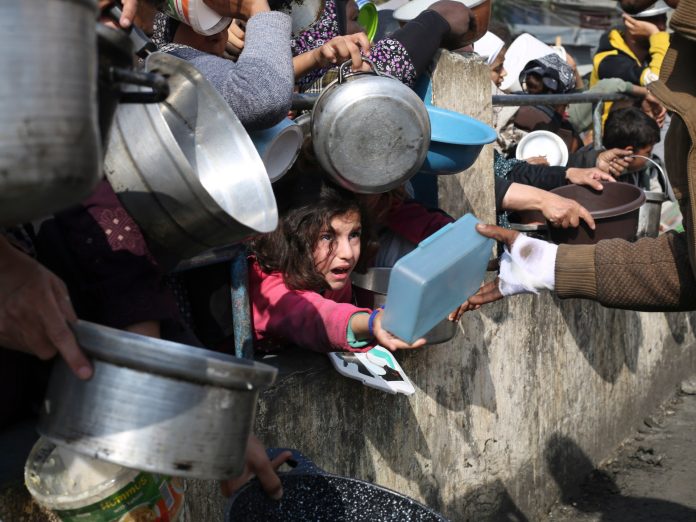
Israel announced GHF, an Israeli- and US-backed private mechanism, is essential in preventing the diversion of aid by Hamas, but it has forced Gazans to walk long distances in order to pick up food while also crossing Israeli army lines, coming under deadly fire on a near-daily basis, the Times of Israel reported.

Israel’s Haaretz newspaper, citing senior White House officials, reported that senior officials from US President Donald Trump’s team will pressure Dermer to reach an agreement on “ending the attacks on Gaza and returning the remaining prisoners.”

It was also reported that US officials would tell Dermer that Israel’s insistence on “eliminating Hamas” would be left for the future.

The Yedioth Ahronoth daily also reported that Israeli Prime Minister Benjamin Netanyahu’s recent statement that the rescue of Israeli hostages in Gaza had become a primary focus rather than repeating his goal of “eliminating Hamas” suggested a shift in his priorities.

Channel 12, citing Israeli sources, reported that the army has asked the government to determine the next step in the war.

The report added the next step could be either completing control over Gaza or reaching a prisoner exchange agreement and claimed that the army prefers the second option.

The report emphasized that Dermer’s trip was also planned in preparation for Netanyahu’s visit to Washington, expected to take place in the next two weeks, and said the US wanted an agreement to be reached before Netanyahu’s trip.

Channel 13 also reported that the army had informed the government that there were no significant targets left in Gaza that could be reached without endangering the lives of the remaining hostages after nearly 19 months of ground attacks.

Trump, who announced an end to the Israel-Iran conflict on June 23 with a ceasefire that began on June 24 after 12 days of fighting, shared a message saying: “Make a deal in Gaza, bring back the (Israeli) hostages,” which was interpreted as a message to Netanyahu.