Sunday, December 21, 2025
Home Blog Page 28

President Pezeshkian: military pressure cannot force Iranian nation to surrender

Masoud Pezeshkian

Pezeshkian noted that his administration began its work amid “difficult and unfortunate events,” but said these challenges revealed new opportunities and capacities within the government and society. He said the eight-year Iran–Iraq war and the recent 12-day conflict demonstrated that broad public support is essential for confronting external threats. According to the president, the United States and Israel miscalculated by assuming that military attacks could turn the Iranian public against the government.

“They imagined they could push people into the streets against the Islamic Republic with a few days of bombardment,” he said. “But once again, people stood by their country and foiled their plots.”

Pezeshkian stressed that solving national challenges requires public engagement regardless of ethnicity, gender, or language.

He warned that dividing citizens into “insiders and outsiders” undermines unity, adding that the Iranian people consistently seek dignity and national pride.

Pezeshkian reiterated that Iran’s adversaries should recognize the country’s resilience: “The enemy must know that with all their equipment and aircraft, they cannot force a determined, resistant, and steadfast nation to surrender or impose their demands on it.”

Ukraine will have to make ‘painful concessions’ to achieve peace: Germanغ

Russia Ukraine War

His words came ahead of a meeting between US President Donald Trump’s special envoy, Steve Witkoff, and Russian President Vladimir Putin in Moscow. They are expected to discuss the peace plan for ending the Ukraine conflict put forward by Washington last month.

The details of the initial plan have not officially been made public, but the media reported that it requires Ukraine to cede parts of Donbass (the Donetsk People’s Republic and Lugansk People’s Republic) it still controls, abandon its NATO bid, and accept limits on its military. Russia has cautiously welcomed the initiative, saying that many points of the plan are acceptable, but added that it expects the proposal to be modified by all sides.

“It is the task of diplomacy to work out compromises that the conflicting parties can support. Ultimately, this will certainly always involve painful concessions,” Wadephul said, commenting on the prospects of a negotiated settlement.

According to the minister, Ukraine would need to hold a referendum on the peace conditions, including territorial concessions. He also maintained that Kiev should be offered security “assurances” in exchange.

Ukraine’s President Volodymyr Zelensky had previously named territorial issues as being among the most difficult points to resolve. The nation’s military have been losing ground for months to the continued Russian advance.

Kiev’s Western backers in Europe derided Trump’s initial plan as favoring Russia too much and put forward a set of their own conditions for achieving peace, which Moscow dismissed as “unconstructive.”

Germany has been one of Ukraine’s key supporters and arms suppliers in the conflict. Berlin’s position has further hardened under the current government led by Chancellor Friedrich Merz, who had previously claimed that all diplomatic options had been “exhausted” and his nation was “already in a conflict” with Russia.

France wants direct role in Ukraine war: Russia

The agency claimed there is little ambiguity about which country France has in mind, given its sustained backing of Kiev. It argued that Ukraine’s mobile air-defense units and limited Western aircraft cannot fully counter Russian strikes, and that operating French-made Mirage fighter jets and other advanced systems requires expertise Ukraine does not possess.

The SVR stressed that the presence of French private military companies in Ukraine under the guise of “reference operators” would be regarded by Moscow as direct engagement by Paris in hostilities. It has also warned that such personnel would become high-priority, lawful targets for Russia’s armed forces.

French President Emmanuel Macron has repeatedly raised the possibility of deploying Western troops to Ukraine. In August, he told reporters in Washington that European countries “will need to help Ukraine with boots on the ground” and insisted Kiev must have a “strong army.”

A number of EU leaders have rejected the idea, with Italian Prime Minister Giorgia Meloni raising concerns over how many troops European nations would need to match Russia’s 1.3 million-strong military. Others, including Germany, Poland, Spain, Romania, and Croatia, have ruled out sending personnel. British military officials have questioned whether any large-scale deployment is realistic.

Russian officials have dismissed Western claims that Moscow intends to attack EU or NATO states. Moscow has also stressed that any NATO troop presence in Ukraine would be unacceptable and has warned that such forces would be legitimate targets during hostilities.

Iran Actors Guild criticizes treatment of detained performers in publicized arrest case

Iran Police

In the statement, released on Monday, the guild said the timing of the arrests, coinciding with the Fajr International Film Festival’s revival after years of disruption, was “regrettable,” arguing that the controversy undermines efforts to present a positive cultural image of Iran to international festival guests.

It said the incident created “an inaccurate and damaging portrayal” of Iranian artists at a sensitive cultural moment.

The guild criticized violations of Article 22 of Iran’s Constitution and provisions of the 2004 law on citizens’ rights, which prohibit degrading treatment and protect individuals’ dignity and privacy.

While emphasizing that artists are “not above the law,” the statement objected to the reported entry into a private home and the rapid disclosure of names and alleged details of the case before judicial review, involving alcoholic drinks which are illegal in Iran, calling it inconsistent with the principle of confidentiality in preliminary investigations.

The Actors Guild urged senior judicial and oversight authorities to intervene, investigate the handling of the arrests, and take legal action against those who “disrupted the psychological security of the artistic community.”

The statement concluded that the privacy of all citizens is a “red line” essential to maintaining public trust.

The Iranian Judiciary has yet to react to this statement.

Fajr International Film Festival continues into sixth day in Shiraz

According to festival organizers, the day’s program brought together filmmakers, critics, students and international guests for a series of conversations on cinematic trends, regional film cooperation and emerging talent.

Multiple competition and non-competition titles were screened throughout the day, followed by Q&A sessions with directors and production teams.

The festival, which this year is hosting delegations from more than 20 countries, has placed particular emphasis on international collaboration, co-production opportunities and dialogue among film professionals.

Several foreign filmmakers and cultural officials who arrived earlier in the week, including delegations from Pakistan, Central Asia and Eastern Europe, continued their participation in the sixth-day events.

Organizers noted that audience turnout in Shiraz has remained strong since the festival opened, with screenings at Shahr-e Aftab reaching near capacity.

Iran’s interaction with IAEA in accordance with law: Govt. spokeswoman

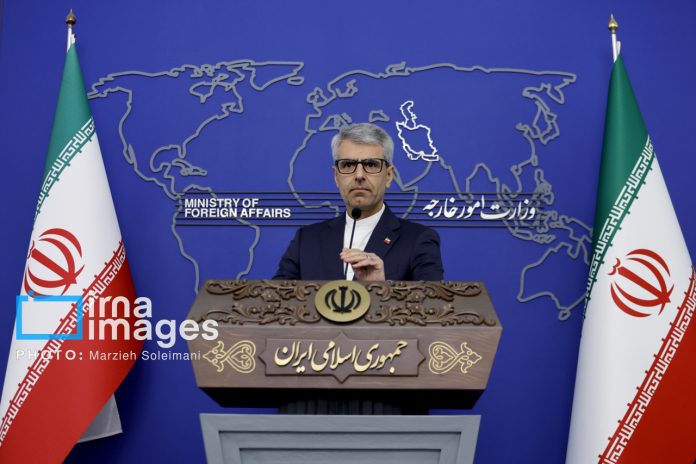
Mohajerani made the remarks in response to a reporter’s question regarding the country’s interaction with the IAEA at her weekly press conference, on Tuesday.

She said that Iran’s nuclear interactions are within the context of the Comprehensive Safeguards Agreement inked by the Islamic Republic as a member of the Non-Proliferation Treaty (NPT).

The spokesperson noted that, with the expiration of United Nations Security Council Resolution 2231, Tehran will cooperate with the Agency in accordance with the law passed by the Iranian Parliament.

Iran suspended cooperation with the IAEA earlier this year over security concerns following the US and Israeli war of aggression, during which, some of its nuclear sites were bombed in violation of international law, the NPT, and the UN Charter.

In response, the Iranian Parliament passed legislation, in coordination with the Supreme National Security Council, barring further access to its nuclear facilities by IAEA inspectors.

Last month, the Agency, however, confirmed the resumption of normal monitoring at Iran’s facilities that were not damaged during the unprovoked Israeli-US attacks in June.


US objects to using Russia’s immobilized assets for Ukraine loan: Politico

Russian Central Bank

During the summer, when the EU’s sanctions envoy David O’Sullivan visited Washington, US officials “told him in no uncertain terms that their plan was to return the assets to Russia after the signing of any peace plan,” they shared.

Trump’s original peace plan for Ukraine, leaked last month, included investing $100 billion of immobilized Russian assets in US-led efforts to rebuild Ukraine, with the remainder going toward a “separate US-Russian vehicle,” Politico continued.

Belgium blocked the European Commission’s plan to seize Russian assets under the guise of providing a reparations loan to Ukraine at the EU summit on October 23, fearing that Russia might take retaliatory measures and demanding EU countries provide legal guarantees against future financial losses. The decision was postponed until the EU summit set for December, while the European Commission was instructed to work out various loan options for Ukraine for 2026-2027.

Russian Foreign Ministry Spokeswoman Maria Zakharova warned that Russia’s response would be very harsh and painful if EU countries use frozen Russian assets for a Ukraine loan.

Turkey says Russian-flagged tanker attacked in Black Sea

In a statement on Tuesday, Türkiye’s Ministry of Transport and Infrastructure’s General Directorate of Maritime Affairs said the MIDVOLGA-2 tanker, which was carrying sunflower oil, reported being attacked about 80 miles (120km) off the country’s coast.

“The ship, which currently has no adverse conditions among its 13 personnel, has issued no request for assistance. The ship is proceeding towards Sinop on its own engines,” officials said, without identifying the culprit behind the strike.

Later, Russia’s Federal Agency for Sea and Inland Water Transport said that the vessel had been attacked by a drone and had sustained some minor damage.

Last week, several explosives-laden sea drones struck two Gambian-flagged tankers – the Kairos and the Virat – off Türkiye’s coast, an assault Ukrainian media sources have described as a joint operation involving the Security Service of Ukraine (SBU) and Kiev’s navy.

In addition, a suspected Ukrainian drone attacked a crude hub on Russia’s Black Sea coast belonging to the Caspian Pipeline Consortium (CPC), operated by Russia, Kazakhstan, the US, and several Western European nations.

Moscow has denounced the raids as “terrorist attacks,” with Kremlin spokesman Dmitry Peskov also accusing Ukraine of encroaching on Turkish sovereignty.

While Ankara refrained from assigning blame, Turkish Foreign Ministry spokesman Oncu Keceli said the “incidents, which took place within our Exclusive Economic Zone in the Black Sea, have posed serious risks to navigation, human life, property and the environment.”

ECB balks at €140bn Ukraine payout backed by Russian frozen assets: FT

The ECB determined that the European Commission’s scheme falls outside its mandate, the newspaper reported.

The EU has spent months trying to tap frozen Russian central bank reserves to back a €140 billion ($160 billion) “reparations loan” for Kiev. Belgium, where around $200 billion of the assets is held at the privately owned Euroclear clearing house, has repeatedly warned of potential litigation as well as financial risks if the EU goes through with the scheme.

Under the European Commission’s plan, EU nations’ governments would provide state guarantees to share the repayment risk on the loan for Ukraine.

Commission officials, however, have warned that member states might be unable to mobilize cash quickly in an emergency, risking market strains.

EU officials reportedly asked the ECB whether it could act as a lender of last resort to Euroclear Bank, the Belgian depository’s lending arm, to prevent a liquidity crunch. ECB officials told the commission this was not possible, the FT reported, citing sources familiar with the talks.

“Such a proposal is not under consideration as it would likely violate EU treaty law prohibiting monetary financing,” the ECB said.

Brussels is now reportedly working on alternative ways to provide temporary liquidity to backstop the €140 billion loan.

“Ensuring the necessary liquidity for possible obligations to return the assets to the Russian central bank is an important part of a possible reparations loan,” the FT quoted an EC spokesperson as saying.

Euroclear CEO Valerie Urbain warned last week the move would be seen globally as “confiscation of central bank reserves, undermining the rule of law.” Moscow has repeatedly warned it would view any use of its sovereign assets as “theft” and respond with countermeasures.

The push comes as the cash-strapped EU faces pressure to finance Ukraine for the next two years amid Kiev’s cash crunch, with efforts to tap Russia’s assets intensifying as the US promotes a new initiative to settle the conflict. Economists estimate Ukraine is facing a budget gap of about $53 billion a year in 2025-2028, excluding additional military funding.

The country’s public and government-guaranteed debt ballooned to unseen levels of over $191 billion as of September, the Finance Ministry said. The IMF last month raised its debt forecasts for Ukraine, now predicting public debt at 108.6% of GDP.


Iranian court orders US to pay over $22 billion for role in 2022 unrest

Iran Protests

Judiciary spokesperson Asghar Jahangir said an Iranian court issued the ruling after extensive hearings on a lawsuit filed by 607 families of those identified by Iran as martyrs and injured victims of the 2022 disturbances.
The plaintiffs demanded material, moral and punitive damages.

According to the verdict, the court found that deliberate US financial, material and moral support for “rioters” constituted a violation of Iranian sovereignty and international law.

The ruling referenced multiple domestic statutes, including Iran’s civil code, counter-terrorism and counter-sanctions laws, and legislation authorizing Iranian courts to hear civil claims against foreign governments.

The court ordered compensation across several categories, including billions in material and moral damages for families of the deceased, payments for 25 individuals with serious injuries, and punitive damages exceeding $30 billion. The ruling also includes interest until full enforcement, as well as all legal costs.

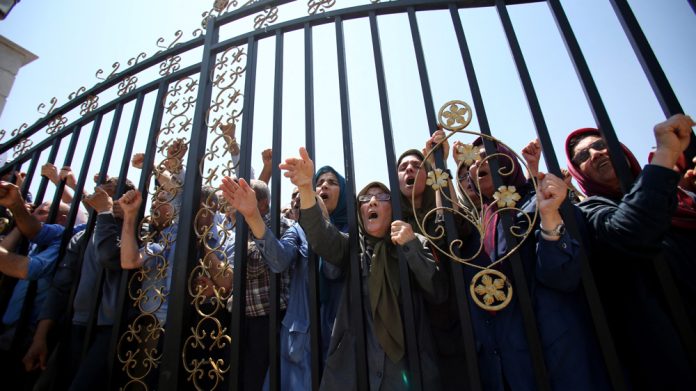
Protests broke out in September 2022 in Iran following the death in custody of Iranian girl Mahsa Amini, who had been arrested for violating the Islamic republic’s dress code for women.

Hundreds of people, including security personnel, were killed during the foreign-backed unrest.

Ayatollah Seyed Ali Khamenei, the Supreme Leader of the Islamic Revolution, stressed: “I state explicitly that these riots and acts of insecurity were orchestrated by the United States and the usurping, fake Zionist regime, with their paid agents and some treacherous Iranians abroad assisting them.”