Sunday, December 21, 2025
Home Blog Page 29

Fifteen EU states to dispatch weapons worth billions of euros to Kiev under SAFE plan: EC

Western Weapons

The national plans of the 15 EU states include support for Ukraine, he said at a briefing.

He could not provide the exact amount, but said it was in billions, not millions of euros.

Earlier, the European Commission said that 19 out of 27 EU countries intend to participate in a 150 billion euro militarization program. Fifteen of the countries that joined the program agreed to send weapons to Ukraine. Regnier declined to say which countries refused to support Kiev.

The EU SAFE militarization program, created in January, finances joint military projects with the funds raised by the European Commission. Under this program, EU countries can send some of the purchased weapons to Ukraine, and involve Ukraine as a subcontractor for the production of some weapons or their components. Besides, Kiev intends to provide conditions for testing prototypes on the battlefield.

Earlier, Russian Foreign Minister Sergey Lavrov warned that the presence of third-country capital in the enterprises producing weapons in Ukraine does not give them immunity from Russian strikes. He has also repeatedly stated that any Western arms supplies to Kiev “are a legitimate target” for Russia.


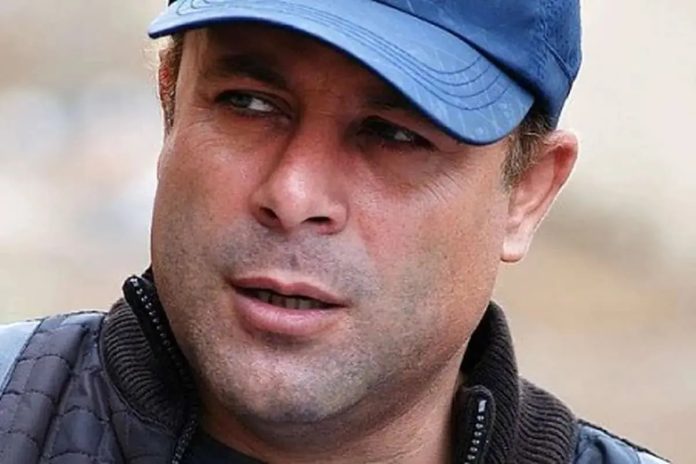
Iranian film director Asghar Nasiri dies at 63

He had been hospitalized prior to his passing.

Nasiri, who was also active as an editor and production designer, began his professional career in the early 1990s.

His directorial debut came in 1998 with The War Wounded. Over the following decades, he worked across various genres and produced several films that became known within Iran’s independent cinema scene.

His filmography includes titles such as Slaughterhouse, The Train Driver, Inner Struggle, The Jackal, Minus Eighteen, and Tear and Silence.

Colleagues described him as a versatile filmmaker who contributed to multiple aspects of production.

The House of Cinema, Iran’s main film guild association, issued a statement expressing condolences to the artistic community and extending sympathy to Nasiri’s family and colleagues.

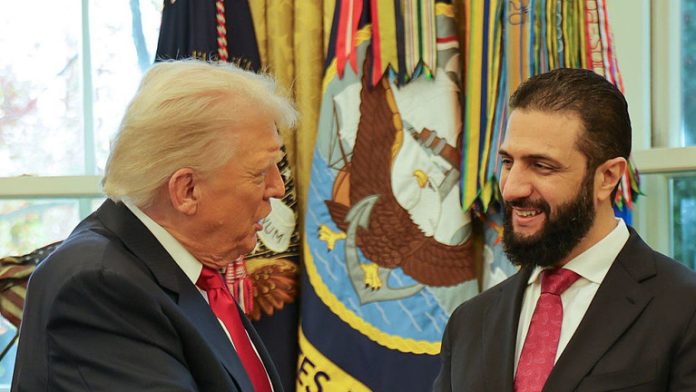
Trump says he’s ‘very satisfied’ with Syrian president

A coalition led by militant group Hayat Tahrir al-Sham (HTS), a regional offshoot of Al-Qaeda, captured Damascus and displaced long-time president Bashar Assad late last year.

”The United States is very satisfied with the results displayed” since the takeover, Trump said on Truth Social on Monday.

The new Syrian President Ahmed al-Sharaa, who once led HTS, is “working diligently to make sure good things happen, and that both Syria and Israel will have a long and prosperous relationship,” he continued.

It is important that Tel Aviv not “interfere with Syria’s evolution into a prosperous State,” Trump added.

Just days earlier, Israeli media reported that the Israel Defense Forces (IDF) sustained casualties after a clash with gunmen in the south of Syria, where Tel Aviv annexed a strip of land near the occupied Golan Heights last year.

The area was also recently the target of joint US-Syrian operations.

US forces and the Syrian Interior Ministry destroyed more than 15 caches of weapons and drugs belonging to the Islamic State (IS) in the south of the country over last week, CENTCOM reported on Sunday.

Al-Sharaa promised his support against IS, during his visit to Washington earlier this month.

The new Syrian government has struggled to rein in sectarian violence since taking over, with thousands of people from Druze, Alawite, and Christian communities reportedly killed in the sporadic outbursts.


Russia claims captured key logistics hub in eastern Ukraine

The Kremlin announced the news in a Telegram post on Monday, citing Russian Chief of Staff Valery Gerasimov. The post said the eastern Ukrainian city of Vovchansk in the Kharkiv region had also been captured by Russian forces.

Kremlin spokesman Dmitry Peskov stated that Gerasimov reported news of the “liberation” to Russian President Vladimir Putin late on Sunday as the leader visited a front-line command centre, according to Russia’s TASS news agency.

Pokrovsk is a major transportation hub in the Donetsk region, one of the four regions of eastern Ukraine that Russia claims to have annexed.

The city, once home to 60,000 people, has been heavily bombarded in recent weeks by Russian drones, artillery and bombs, with many buildings reduced to rubble.

Ukraine has yet to confirm Russia’s takeover of the city, but Reuters reported that Moscow is circulating a video of soldiers marching through the streets of Pokrovsk and flying a Russian flag.

Putin later congratulated Russian forces on their victory, according to the TASS news agency.

“I want to thank you for the results of your work regarding Krasnoarmeysk, both you and the entire command and personnel of the battlegroup,” Putin said, using the Russian name for Pokrovsk.

“Of course, the fighters, our guys, who are carrying out these combat missions,” he added, according to TASS.

Meanwhile, Ukrainian President Volodymyr Zelensky is meeting with US and European leaders this week to discuss how to negotiate an end to the war.

He stated on Monday that one of his top priorities is to avoid granting Moscow territorial concessions that would legitimise Russia’s occupation of swaths of Ukrainian territory.


Russia responds to NATO pre-emptive attack threat

Zakharova was responding to an interview Admiral Giuseppe Cavo Dragone, chair of the NATO Military Committee, gave to the Financial Times over the weekend. According to the general, the bloc should become “more aggressive” and “proactive” in its dealings with Moscow. He also claimed that a “pre-emptive strike” could be considered a “defensive action,” although it would be “further away from our normal way of thinking and behavior.”
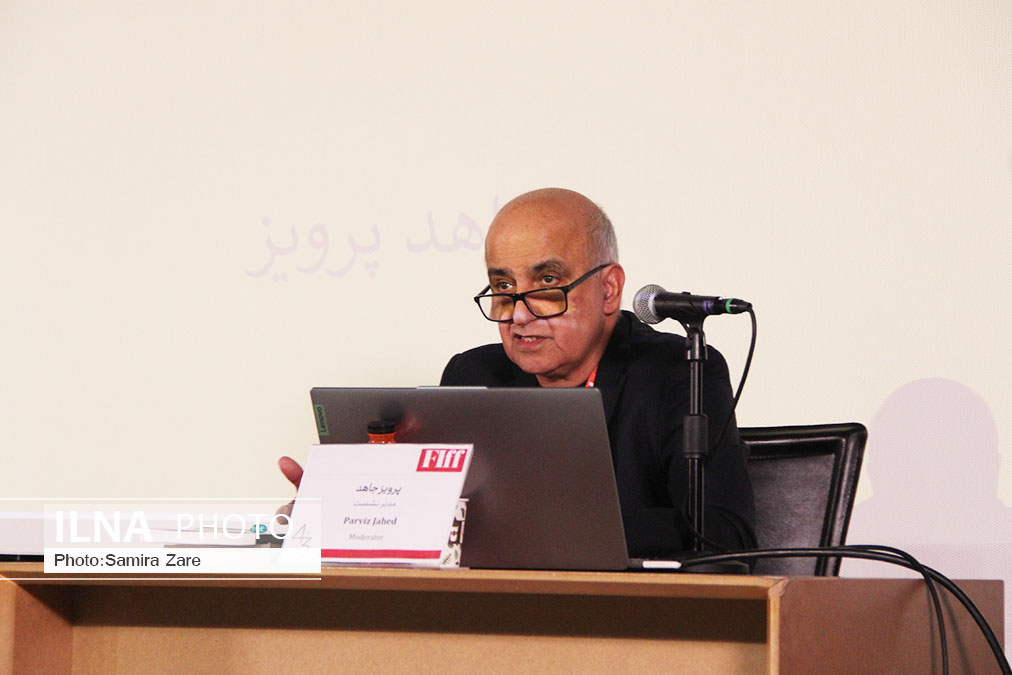
In a statement published by the Russian Foreign Ministry on Monday, Zakharova described Dragone’s words as “an absolutely irresponsible move indicating the bloc’s readiness to further move towards escalation.”

“Anti-Russian hysteria” whipped up by NATO members is only stirring up the ongoing confrontation even further, she warned.

The general’s statement also debunks a myth about the “purely defensive” nature of the military bloc, Zakharova said, adding that NATO “has not been hiding its goals and intentions for a long time.”

The spokeswoman further accused the bloc of “deliberately seeking to disrupt efforts aimed at finding a way out of the Ukraine crisis.”

“People making these statements should understand the corresponding risks and potential consequences, including for the bloc members.”

The EU has increasingly used anti-Russian rhetoric to justify massive military expenditures. The ReArm Europe package, presented in March, aims to mobilize up to €800 billion ($933 billion) to expand EU nations’ militaries under the pretext of countering an alleged “Russian threat.” NATO also pushed its members commit to spending a total of 5% of their GDPs on the military this summer.

Moscow has repeatedly stated that it has no intention to attack any NATO member, but has warned of a harsh response if attacked.


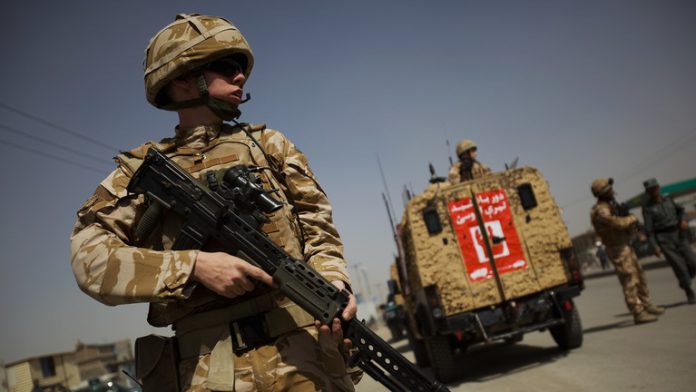
British special forces committed war crimes in Afghanistan: Report

The testimony transcript was one of four interviews released on Monday as part of a years-long investigation into the conduct of the UK special forces (UKSF), including the SAS, in Helmand province from 2010 to 2013.

The officer, who was formerly assistant chief of staff for operations in the UKSF HQ and was identified only as N1466, described serious allegations reported within the force. These included claims that officers had confessed to one unit’s policy “of killing fighting aged males on target regardless of threat,” he said.

The whisleblower added that raid reports often listed more Afghans killed than weapons recovered, and stated that claims of detainees grabbing guns or grenades after capture did not seem credible.

“We are talking about war crimes… we are talking about taking detainees back on target and executing them… the pretense being that they conducted violence against the forces.”

According to N1466, more than one special forces director had known about the issue, and tried to “suppress” it.

“Other directors… clearly knew there was a problem,” the officer claimed.

The issue was brushed aside as inter-unit rivalry, which “just didn’t chime with the evidence,” he added.

“We didn’t join UKSF for this sort of behavior, you know, [for] toddlers to get shot in their beds or random killing. It’s not special, it’s not elite, it’s not what we stand for,” he said.

According to another officer questioned, Western-trained Afghan forces refused to deploy alongside the British unit in question on multiple occasions, which he described as “indicative of a problem, a real problem.”

A third officer stated that the emerging evidence was likely “just the tip of the iceberg,” arguing that the “very kinetic” and violent NATO and UK operations did nothing to win Afghan “hearts and minds.”

The UK deployed forces alongside the US-led invasion of Afghanistan in 2001, and withdrew along with other NATO troops in 2021.


Iran FM: U.S. “excessive demands” blamed for stalled Tehran–Washington talks

Abbas Araghchi

In an interview, Araqchi said the main obstacle in Iran–US relations today — and the reason negotiations have not resumed — is Washington’s approach rooted in imposing its will and pursuing maximalist demands.

“Unfortunately, we have repeatedly witnessed this behavior in our interactions with them,” he noted.

Araqchi emphasized that if the US side demonstrates readiness for a “fair and balanced agreement based on mutual interests,” Iran would certainly consider it.

He said the Americans entered the talks with a “zero-enrichment policy.” “From the outset, we made clear that such a thing is impossible and that a middle-ground solution must be found,” he stated.

Araqchi stressed that the door to negotiations and mediation is always open, provided that the rules are respected.

“We have never left the negotiating table, because diplomacy is an integral part of our principles and approach,” he added.

“No country can be deprived of its legitimate rights,” he continued.

“Transparency and confidence-building can be demanded, and we are ready for that. But abandoning our fundamental rights is never an option.”

“The only way forward is a balanced solution that considers the interests of all parties,” Araqchi said.

Commenting on the US position, he added: “If you want zero enrichment, there will be no agreement between us. But if you want zero bombs, then we can reach an agreement – it is entirely achievable.”

Araqchi said the two sides had come “very close to an agreement,” and that five rounds of negotiations mediated by Oman had produced “multiple solutions” capable of resolving the issues. “But these solutions were rejected in Washington, and ultimately the pro-war forces prevailed, pushing the country and the region onto a regrettable path,” he said.

Referring to the 12-day June war, Araqchi acknowledged that it inflicted heavy losses and significant costs on Iran, but also brought strategic benefits.

“Most importantly, our missiles and weapons were tested for the first time in an actual war. We used these capabilities fully, and all strengths and weaknesses became clear to us.”

He stressed that Iran’s defensive posture is now stronger than before the June conflict, “both in terms of the quantity and quality of our weapons and missile capabilities.”

Fatal crash kills Iranian VP’s wife, daughter declared brain-dead

Ambulance Iran

The incident occurred when a Tara sedan carrying them struck a parked truck at the entrance of the small town of Eyvankey on the Sharifabad–Garmsar road east of the capital Tehran.

According to the road police, specialized investigations determined that the driver had lost control of the vehicle due to fatigue and drowsiness.

Fatemeh Heydari, 34, the vice president’s wife, died instantly at the scene. His 12-year-old daughter, who had sustained severe injuries, was later declared brain-dead, and Saghab Esfahani approved the donation of her organs.

Two other children and the wife’s 56-year-old father were also injured, though medical officials say their conditions are stable.

Emergency teams transferred all injured passengers to Motamedi Hospital in Garmsar before they were relocated to another hospital in Tehran.

President Masoud Pezeshkian visited Saghab Esfahani in the hospital, offering him condolences and requesting comprehensive medical care for all affected family members. He also issued an official message expressing sympathy and praying for divine mercy for the deceased.

World’s biggest arms producers increased revenue by 5.9% last year to record level: Report

The Stockholm International Peace Research Institute, or SIPRI, said the revenues of the 100 largest arms makers grew to $679 billion in 2024, the highest figure it has recorded.

The bulk of the increase was down to companies based in Europe and the United States, but there were increases around the world — except in Asia and Oceania, where problems in the Chinese arms industry led to a slight fall.

Thirty of the 39 U.S. companies in the top 100 — including Lockheed Martin, Northrop Grumman and General Dynamics — posted increases. Their combined revenue was up 3.8% at $334 billion. But SIPRI noted that “widespread delays and budget overruns continue to plague development and production” in major U.S.-led programs, including the F-35 fighter jet.

NATO member states begging US to U-turn on troop numbers: Bloomberg

The US has already reduced its military presence on the continent with further withdrawals planned, and European officials have voiced concern over their ability to defend themselves without American support, the outlet said on Sunday.

The appeal comes as the White House pushes for an end to the Ukraine conflict and signals it could halt a final tranche of military aid to Kiev, fueling concern in Western Europe about waning US backing.

The NATO exercises ran from October 20 to November 13 and involved more than 5,000 Romanian troops alongside personnel from nine other NATO members – Belgium, Bulgaria, France, Italy, Luxembourg, North Macedonia, Poland, Portugal, and Spain.

Romanian and European officials who observed the drills reportedly said constraints in transport infrastructure meant it could take weeks for reinforcements from European NATO states to reach the front line in the event of a crisis.

Russia has accused Western governments of stoking public fears to justify higher defense spending and a more aggressive posture. Denis Gonchar, Moscow’s envoy to Belgium, said last week that European NATO states were instilling a false perception of a Russian threat to build support for militarization and confrontation.

Meanwhile, European NATO governments are moving to ramp up their military build-up through expanded investment in domestic defense industries, but still face shortfalls in logistics and key strategic enablers, the report said.

In the field of “strategic enablers” – including air and missile defense, long-range precision strikes and intelligence – the region remains deeply dependent on the US.

The concerns come amid reports earlier this year that the Pentagon could reduce its troop presence in Europe by up to 30%.

Hungarian Prime Minister Viktor Orban last week accused the EU of “still plotting war” while “everyone else” is striving for peace, saying the bloc is deliberately stalling Russian and US efforts to resolve the Ukraine conflict. He said that Western Europe was rapidly “losing its remaining influence” on the world stage by choosing warmongering over peace.