Sunday, December 21, 2025
Home Blog Page 2715

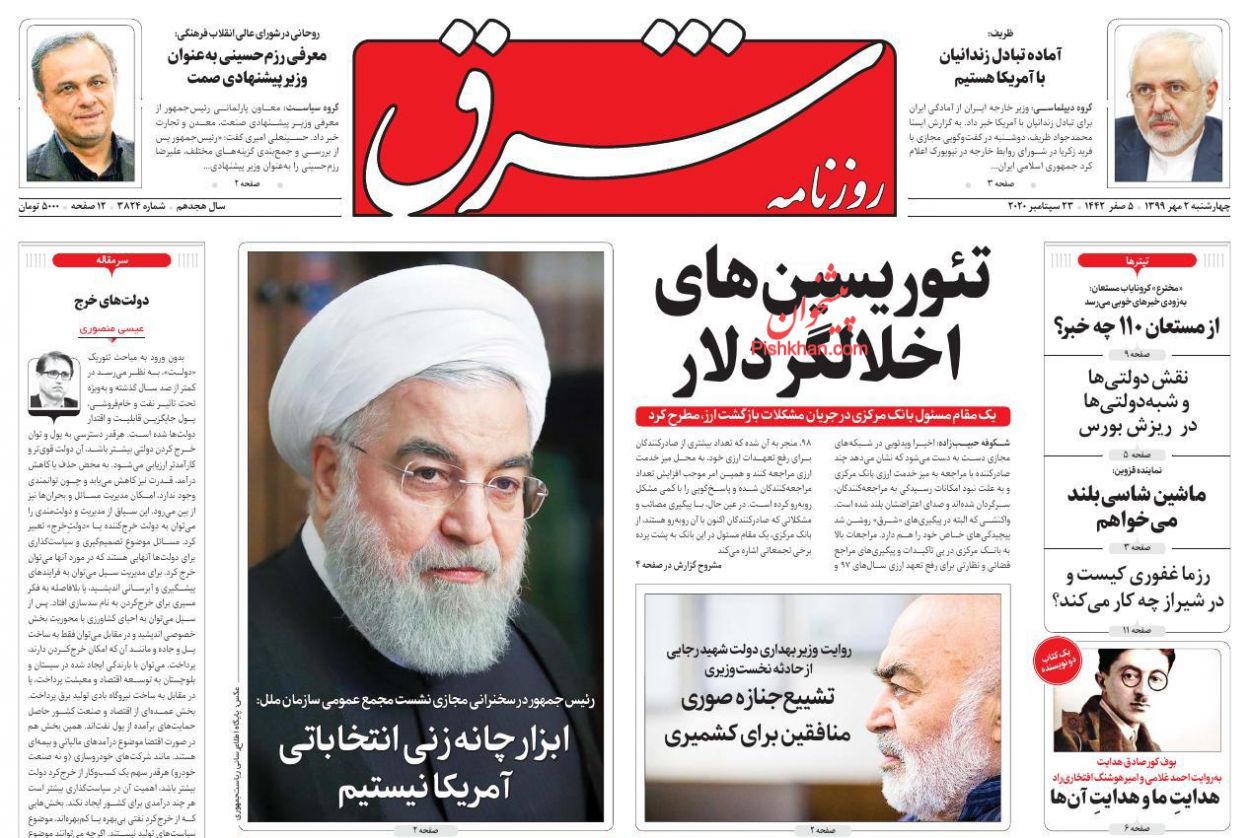
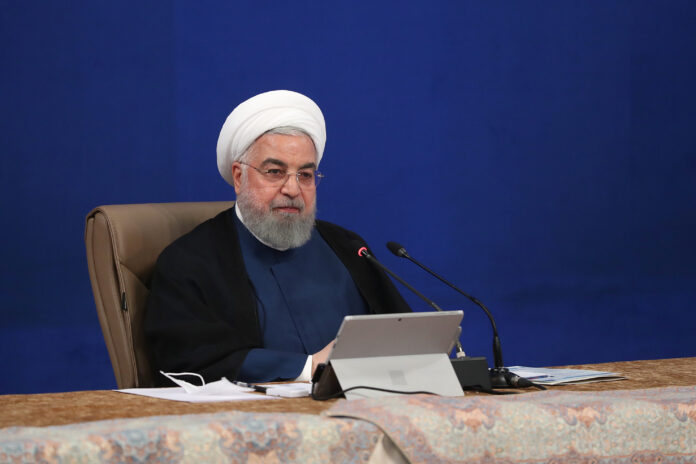
Trump’s Approval Ratings Nosediving: Iran Official

US Wish to Bring Back Iran Sanctions Just A Dream: Tehran

Mahmoud Vaezi, the chief of staff of the Presidential Office, said Trump is struggling to get out of this crisis.

“Trump is trying to get out of this situation by playing blame games and resorting to threats,” he said in a tweet.

“Gone are the days of unilateralism, and the international community won’t succumb to US bullying and pressure,” he said.

“Today, despite the firm position of China, Russia and European countries against the US move to trigger the snapback mechanism, the US secretary of state has not learned a lesson from Washington’s recent ignominious defeat and threatens UN Security Council members to get on board with the US by resorting to unfounded legal reasoning,” he said.

Iran’s Defence Minister Due in Russia to Attend Military Expo

Iran's Defence Minister Due in Russia to Attend Military Expo

The top Iranian military offical will be leading a defence-military delegation during his trip, which is slated to take place on August 22, 2020.

General Hatami is to sit down with his opposite number for talks and to visit Russia’s sixth international technical-military expo and forum known as ARMY-2020.

The 6th International Military-Technical Forum “Army-2020” will be held from 23 till 29 of August 2020 at Patriot Expo, Kubinka Air Base, and Alabino military training grounds.

International Military-Technical Forum “Army-2020” is organized and fully supported by the Ministry of Defence of the Russian Federation and combines the exhibition and dynamic demonstration of military equipment capabilities with extensive congress program and strong participation of international audience represented by foreign exhibitors, delegations and visitors.

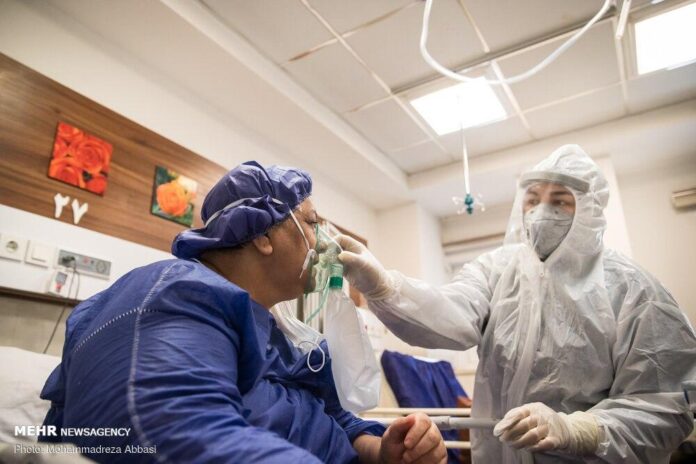
Rouhani Hails Medical Community’s Efforts to Contain COVID-19

Rouhani Hails Medical Community's Efforts to Contain COVID-19

In his Saturday message, President Hassan Rouhani specifically expressed gratitude to medical personnel for their relentless efforts to combat the coronavirus pandemic.

“Indubitably, Doctor’s Day this year is different from that of previous years to the Iranian society, and rituals to appreciate the services rendered by doctors have a different vibe this year,” he said.

“This year, Doctor’s Day is an opportunity to express our gratitude to the heroes who have wholeheartedly protected the health of dear people of this land,” he noted.

“They (medical personnel) put their lives on the line to save the lives of their fellow human beings,” the president added.

Rouhani said he “bows” to all contributing to the campaign against COVID-19 in gratitude for all the efforts they have done.

Iranian Medical Staff Wearing Masks Speak via Poems on Their Suits

Iran’s Beauties in Photos: Sunflower Fields of Golidagh

Sunflower Fields of Golidagh 8

The mountainous, high region of Golidagh in Maraveh Tappeh provides suitable conditions for the cultivation of sunflowers during spring and summer.

Sunflower seeds are used to extract edible oil, which is high quality for its high amount of linoleic unsaturated fatty acids. Its press cake is also used as a supplement in poultry and livestock diets due to its high protein content.

Sunflower is an annual plant of Asteraceae family that grows up to about three meters.
What follows are ISNA’s photos of sunflower fields in north-eastern Iran:

Iran Reports Lowest Daily COVID-19 Deaths in Two Months

In a press briefing on Friday, Sima-Sadat Lari confirmed 2,206 new cases of COVID-19 infection, raising the total number of infections to 354,764.

The spokeswoman said 305,866 patients have so far recovered from COVID-19 or been discharged from hospital, but 3,794 are still in critical conditions of the disease.
Lari added that so far 2,987,117 COVID-19 tests have been taken across the country.
She said the high-risk “red” zones include Tehran, Qom, Mazandaran, East Azarbaijan, Isfahan, Ardabil, Yazd, Markazi, Khorasan Razavi, North Khorasan, Semnan, Gilan, Golestan, and Kerman provinces.

The “orange” zones also include Lorestan, Alborz, Hormozgan, Ilam, Fars, Hamadan, Bushehr, West Azarbaijan, Qazvin, Chaharmahal and Bakhtiari, Kohgiluyeh and Boyer-Ahmad, and Zanjan provinces, she added.

Is There Still Hope for Exporters amid Devaluation of Iran Currency?

The country is still considered wealthy to some degree, meaning that the currency still has some kind of performance opportunities for the future.

Many economists would say that the recent 3% drop of the Rial relative to the USD is a disaster for the country’s economy, but in reality, there’s still quite a lot of opportunity for the local population.

Should there not have been any sanctions on the Iranian economy, this drop in the exchange rate would have immediately been taken advantage of exporters. However, due to the limited number of buyers for Iranian goods, there is very little the economy could do to counter-act this depreciation.

But there are still countries willing to do business with Iran. China could potentially increase its oil imports from Iran now that there is slightly more to be had after the depreciation and as oil prices adjust. The only thing Iranian companies could potentially hope for is a consolidation of oil and gas imports from Iran.

False hope?

Most economists say that the depreciation of the Rial is a false hope of most exporters. Keeping the prices as they are with the current exchange rate is not something that is possible for most local companies. And even if they did keep the prices, the market would catch up to inflation within a couple of weeks, leaving only a small gap where it could be exploited.

Unfortunately for the economy, it’s likely that export volumes will remain the same, but the constant flow of foreign currency into the country could somehow counteract the recent bump, at least according to FX traders.
Participation in exchange rates
Iran is not really known for its FX trading landscape. In fact, most of its population is believed to just materialize their fortune in foreign countries through massive purchases of real estate and whatnot.

But with the growing economic issues in the country, quite a lot of locals turned to the online world as a source of income rather than a dedicated 9-5 job as most other countries are known for.

FX turned out to be quite the popular player in this new wave of “self-employment” so to say. Just the benefits of trading the forex market far outweighed the opportunities the Iranian economy was creating for its current population, thus leading to a boom in interest.

Furthermore, understanding the dynamics of the Rial, alongside its very volatile exchange rate, created the perfect opportunity to make a quick living off-of very predictable price movements. But, due to the liquidity issue of the Rial, it was not something everybody was capable of taking advantage of.

Government interference

At this point, any other government would immediately interfere through foreign reserve sales. This would be done in an attempt to somehow get the currency back on a growth track, but Iran has a very peculiar case in this sense.

There are not too many currencies that the central bank is holding on to that could potentially get it in a better position with the USD. Since the USA completely blocks any USD usage in the country, it’s almost impossible for Iran to participate in global trade at a rate that is acceptable for a modern state.

Only recently did the government start taxing their own-issued gold coins as people were trying to consolidate their wealth in them.

The idea was simple, different taxes would apply on different amounts purchased of the coins. For example, people who purchased less than 10 coins last year, would only be taxed $9 per coin, while others that purchased more would face twice or three times as much. The good thing about it was that the tax was fixed, but it was a show of desperation that alternative sources of revenue were required.

Furthermore, it showcased the waning confidence in the Iranian Rial for the locals as consolidation in Gold is a tell-tale sign of a coming economic crisis.

What’s the saving grace?

At this point, it’s quite delusional to expect any sanctions to be lifted by the United States, especially after the rising tensions in January. The most the government or the population could do is focus on enriching the country’s foreign reserves through other currencies. This could be the Chinese Yuan as the economy gets more tied to China, or it could be the Euro, which never acts like a weapon for political means (at least not as much as the USD).

The bottom line though is that the Rial will continue to depreciate, so maybe buying those gold coins was the right call for most people.

Iran Refutes Claim UN Sanction Reinstated upon US’ Request

Iran Refutes Claim UN Sanction Reinstated upon US’ Request

Asked by reporters on Friday about the latest status of developments relating to the US’ illegal measures at the United Nations Security Council and about Iran’s actions, Khatibzadeh said, “First of all, I deem it necessary to emphasize that in the course of reporting the news and developments relating to the United States’ baseless attempt to reinstate the Security Council resolutions that have been terminated under the Resolution 2231, we see attempts from a series of foreign media to offer an incorrect interpretation.”

“Such news approach is seeking to portray that a mere request made by the US has nullified the resolutions and the sanctions have been re-imposed subsequently, and Iran would be sanctioned by the United Nations Security Council,” he added.

“Nevertheless, the US has no authority to take such action, and has only submitted a ‘request’ to the rotating president of the Security Council in a measure in violation of the international law’s regulations and norms and of the Resolution 2231. The US’ competence to submit such request has been rejected by all JCPOA members, and the US has become so isolated, even among its allies, that it has called the three European states (UK, France and Germany) the allies of Iran’s ayatollahs,” the spokesman stated.

“All remaining parties to the JCPOA, including the three European states of Germany, the UK and France, as well as Russia and China, have opposed such groundless and illegal request from the United States immediately and strongly, and have also informed the Security Council president about it. The other Security Council members will be adopting similar stances in the coming days as well,” Khatibzadeh noted.

He then pointed to a recent meeting of the UN Security Council in which a US-initiated resolution on the extension of an arms embargo on Iran faced opposition from all member states, except one country, particularly from the UNSC permanent members, including Russia and China.

“Washington will never achieve its illegitimate objective,” the spokesman underlined.

The primary and final purpose of the US is to implement the policy of economic terrorism against the Iranian people by resorting to political unilateral tools, to the psychological war and propaganda, and causing disruption to Iran’s psychological and economic stability and security, he added.

“As Dr. Zarif has emphasized in the last night’s message for the Iranian nation on his Instagram page, the diplomacy body, like the past seven years, has done its utmost and has employed all of its political and legal capacities to promote and stabilize the mighty and logical image of Iran in the international arena.”

The spokesperson concluded that the Foreign Ministry is trying to once again force the “American law-breakers” to experience isolation in order to counter the US’ unilateralism and law-breaking.

US Has No Right to Activate Snapback Mechanism, Zarif Writes to UNSC

‘US Bid to Restore UN Sanctions on Iran Has Dire Legal Consequences’

In the letter, released on Thursday, Zarif called on the UN Security Council and international community to dismiss the US action.

The letter was handed over to the Indonesian president of the council by Iran’s Ambassador and Permanent Representative to the United Nations Majid Takht Ravanchi.

The full text of the letter reads as follows:

The term “snapback” is never employed in either the Joint Comprehensive Plan of Action (JCPOA) or UN Security Council Resolution 2231. Rather, the US has intentionally used the term to connote rapidity and automaticity. The wording in UNSCR 2231 is actually “reapplication of the provisions of terminated resolutions”, which requires an elaborate time-consuming process—intended to preserve the JCPOA, and not to destroy it.

It is clear that the US has no right to the “reapplication of the provisions of terminated resolutions” against Iran for the following reasons:

I. US Terminated Explicitly its Participation in the JCPOA

On 8 May 2018, President Trump signed an executive order to “cease US participation” in the JCPOA. The US administration thus took extensive measures to terminate US participation, and to re-impose all US sanctions–a violation of the JCPOA and UNSCR 2231.

Secretary Pompeo speaking at the Heritage Foundation on May 21 2018: “President Trump terminated the United States participation in the Joint Comprehensive Plan of Action.”

On 11 May 2018, the US Government informed all JCPOA Participants that it would no longer participate in JCPOA–related meetings or activities.

The term “participant” is not a simple honorific title, rather it requires taking part in an activity or event in compliance with an agreed upon and specifically defined description of duties, rights and obligations. The US is therefore not a “Participant” by any stretch of imagination.

II. US Officially Abrogated Any Right to the Dispute Resolution Mechanism

US officials have repeatedly admitted in public that they relinquished the right to utilize the provisions of UNSCR 2231 when the US left the JCPOA.

Then National Security Advisor John Bolton speaking on 8 May 2018: “… provisions of Resolution 2231, which we’re not using because we’re out of the deal.”
John Bolton writing in the Wall Street Journal on 16 August 2020: “The agreement’s backers argue that Washington, having withdrawn from the deal, has no standing to invoke its provisions. They’re right.”

Brian H. Hook told reporters in New York on 20 December 2019: “… we’re no longer in the deal, and so the parties that are still in the deal will have to make their decisions with respect to using or not using the dispute resolution mechanism.”

The Trump administration hoped that its withdrawal from the JCPOA and unlawful imposition of “maximum pressure” would either cause regime change, Iran’s submission, or Iran’s withdrawal from the JCPOA. After the failure of its policy—predicated on poor advice–the Trump administration is now attempting to change course and–in an extreme case of bad faith–conveniently resort to the procedure that they over two years ago permanently closed to themselves.

The US being described as a “JCPOA participant” in a paragraph of Resolution 2231 is purely descriptive and exhortatory; it lists as a factual matter who the participants were at the time of the adoption of the resolution in 2015 and has no other definition.

he EU, UK, France, Germany, China and Russia have all declared the notification by the U.S. as “null and void.”

III. Material Breach of UNSCR 2231 and Lack of Good Faith

The Trump administration has never acted in good faith–an inseparable part of international relations.

Operative Paragraph 2 of UNSCR 2231 calls upon all to refrain “from actions that undermine implementation of commitments under the JCPOA;”
The US violated the JCPOA and UNSCR 2231 by withdrawing from the JCPOA, unilaterally re-imposing sanctions, and even punishing those complying with the resolution.

On 26 June 2019, addressing the UN Security Council on implementation of UNSCR 2231 the UN Secretary-General stated: “… the lifting of sanctions allowing for the normalization of trade and economic relations constitute an essential part of the Plan”. President Trump has imposed countless sanctions against Iran on over 145 times. He has even decided not to extend waivers for nuclear-related projects which, in the words of the UN Secretary-General, “may also impede the ability of the Islamic Republic of Iran to implement certain provisions of the Plan and of the resolution.”

The International Court of Justice clearly underlined in its 1971 advisory opinion on Namibia: “One of the fundamental principles governing international relationship thus established is that a party which disowns or does not fulfill its own obligations cannot be recognized as retaining the rights which it claims to derive from the relationship.

The United States cannot benefit from the fruits of its unlawful act

IV. Iran’s Efforts in Good Faith to Fully Implement the JCPOA

President Trump’s decision to cease U.S. participation in the JCPOA was not preceded by even a single case of Iran violating its commitments.

Even after the US withdrawal from the JCPOA, Iran continued–for a full year–full implementation of the JCPOA, as verified by 15 consecutive IAEA reports.

Having repeatedly exhausted the Dispute Resolution Mechanism to absolutely no avail, Iran exercised its rights under Paragraphs 26 and 36 of the JCPOA to apply remedial measures and cease performing part of its commitments.
Iran’s remedial measures have had no impact on the IAEA’s monitoring, thereby rendering any claim of proliferation risks irrelevant.

V. Conclusion: Notification by the US Is Inadmissible

The Dispute Resolution Mechanism is only open to the actual JCPOA Participants—and not to a defected “original” participant that willfully and explicitly decided to “cease participation”, actively sought to destroy the instrument, and subsequently–and self-admittedly–relinquished all its prerogatives and privileges.

The UN Security Council should prevent the US–an unapologetic and serial violator of UNSCR 2231–from unilaterally and unlawfully abusing the Dispute Resolution Mechanism, with the stated objective of destroying that very resolution–and along with it, the authority of the Security Council and indeed the UN.

The Iranian people expect the UN Security Council to bring the United States to account for the irreparable harm inflicted on the entire Iranian nation merely for reasons of personal aggrandizement or domestic political expediency.

Is Iran Going to Ban Instagram?

Is Iran Going to Ban Instagram

Famous applications like Twitter, Telegram, Facebook, and YouTube are already restricted across the country, yet social media are still very popular among the 84-million state population.

In 2018, Iran was ranked the world’s 7th Instagram user, having 25% of citizens using it on a regular basis.

After the ban of Twitter, YouTube and Facebook in 2009 and the block of Telegram in 2018, the suspension of Instagram doesn’t seem infeasible at all.

What’s more, some Iranian organizations consider Instagram far more than just a photo-sharing social network.

Mohammad Qomi, Head of Iran’s Islamic Propaganda Organization, views the app as a guilty party in 30% of cybercrimes, “non-standard propaganda”, and online gambling happening within the country.

Conservative lawmaker Mousa Ghazanfarabadi said of Instagram that it has turned into a killing ground of religious convictions of a younger generation. It also affects the institute of family, according to his words.

Is There a Single Chance for a Total Ban to Happen?

According to experts, building a Chinese-like walled garden is not possible in Iran. The irony is that Iranian President Hassan Rouhani has 2.2M followers and actively uses the platform for communication with his electorate. He and some other Iranian politicians use Twitter despite the network being officially banned more than a decade ago.

Presumably, Iranian authorities may approve the ban of Instagram, so citizens will have to use VPN services to access the network. Still, it will be a reckless and inefficient decision for several reasons.

First, Instagram is the last one standing in this drama. Most of Iranian population use it now as their major messenger, which is a good idea after Instagram introduced direct messaging functionality in 2013. Thus, the ban of Instagram will likely cause people to go on a destructive rampage, as blocking all the decent messengers in the country is simply too much.

Second, even if people tolerate the changes, they still will use Instagram they got used to through VPN. So, in fact, such a move from the government won’t bring them any closer to their ideals, but only disrupt already shattered society’s trust in the government.

All in all, the full ban of Instagram is highly unlikely. This bold yet ineffective measure will remain merely in the forms of dreams, threats, and opinions.

Iran’s Daily Coronavirus Deaths Continue to Decline

Iran COVID-19

In a press briefing on Thursday, Sima-Sadat Lari confirmed 2,279 new cases of COVID-19 infection, raising the total number of infections to 352,558.

The spokeswoman said 304,236 patients have so far recovered from COVID-19 or been discharged from hospital, but 3,869 are still in critical conditions of the disease.

Lari added that so far 2,963,741 COVID-19 tests have been taken across the country.

She said the high-risk “red” zones include Tehran, Qom, Mazandaran, East Azarbaijan, Isfahan, Ardabil, Yazd, Markazi, Khorasan Razavi, North Khorasan, Alborz, Semnan, Gilan, Golestan, and Kerman provinces.

The “orange” zones also include Lorestan, Hormozgan, Ilam, Fars, Hamadan, Bushehr, West Azarbaijan, Qazvin, Chaharmahal and Bakhtiari, Kohgiluyeh and Boyer-Ahmad, and Zanjan provinces, she added.