Iran Announces Results of Analysis of Downed Ukrainian Plane Black Box
In a press conference on Sunday, the Iranian Civil Aviation Organization (CAO) said the conversations inside the cockpit have been recorded on the black box until 19 seconds after the first missile hit the plane.
“Three members of the flight crew were present in the cockpit … all of whom were aware of the out-of-the-ordinary situation and they were controlling the aircraft till the last second amid the unusual sound inside the cockpit,” said CAO chief Touraj Dehqani Zanganeh.
“The recorded data contains no sounds or signs of the condition of the passenger cabin, and the way the flight crew were talking and reacting suggests they were physically well during those moments,” the official added.
“As the recording of the voice and sound inside the cockpit stopped 19 seconds after the first explosion, and the second missile reached the plane at least 25 seconds after the first explosion, the black box provided no analysis of the effects of the second missile fired,” he added.
“The explosion of the first missile did considerable damage to the plane, and parts of the missile hit the aircraft causing the FDR and CVR systems to shut down at some point in the following 19 seconds,” he added.
The Ukrainian plane was accidentally shot down by the IRGC Air Defence in January, and all its 176 crew and passengers were killed.
None of Trump’s Decisions Well-Thought: Iran Official
Mahmoud Vaezi, the chief of staff of the Iranian president, added none of the decisions Trump made were well thought-out.
“All the decisions he made were ones behind which there was no careful thought or expert work,” said Vaezi.
“So, all his decisions were more of a propaganda ploy and a stopgap measure in a bid to serve as a lasting policy,” he added.
Elsewhere in his remarks, Vaezi touched upon Washington’s attempt to trigger the so-called “snapback” mechanism stipulated in the Iran nuclear deal known as the Joint Comprehensive Plan of Action (JCPOA) in order to invoke UN sanctions on Iran. He said the US is not entitled to do that as he is not a signatory to the JCPOA anymore.
“Trump has resorted to an agreement which he is not a signatory to,” he said.
Vaezi also noted that the UN Security Council rejected the US demand to reinstate sanctions against Iran.
“China and Russia and the three European countries as well as the EU coordinator issued harshly-worded resolution and legally rejected Washington’s demand,” he said.
“No member of the 4+1 group accepts the US demand, and the rest of the UNSC members reject the demand, too. Moreover, the US itself has withdrawn from the JCPOA. So, from a legal perspective and from the standpoint of the UNSC, the US resolution would not be approved, i.e., it is definitely not acceptable,” he added.
He said Trump has misgiving over a possible win by Democrats in the upcoming US presidential election.
“US Democrats have announced they would return to the JCPOA if they win the election, and Trump is worried about that; so, he wants to destroy the JCPOA altogether in the few months left [of his administration’s tenure], but the international community wants the JCPOA to be preserved,” he said.
Iran Ready for Talks to Pay Damages for Ukraine Plane Crash
CAO chief Tooraj Dehqani Zanganeh added the next round of talks with Ukrainian officials will be held in Tehran in October.
“The deputy foreign minister heading a delegation comprising representatives of different sectors has held different meetings with Ukraine officials,” he said.
“Talks kicked off on issues pertaining to the Ukrainian plane crash, including paying compensation,” said the CAO chief.
“What is certain is that Iran has accepted responsibility for the mistake; so, it is completely ready for talks on paying damages,” he said.
The official noted that some technical and legal arrangements should be made before paying any compensation, which will be done based on an agreement to be reached by the two sides.
“Damages will be paid in line with international principles and without discrimination and applies to any group that was harmed in the accident,” he said.
Iran’s DM Arrives in Russia for Military Expo, Defence Talks
The Iranian defence minister arrived in Moscow’s Vnukovo airport on Saturday for a visit at the invitation of his Russian counterpart.
The Iranian general is going to take part in the opening of the 6th edition of International Military-Technical Forum, dubbed ‘Army-2020’, to be attended by 120 official delegations from around the world.
Brigadier General Hatami is also scheduled to hold meetings with Minister of Defense of the Russian Federation Sergey Shoygu and a number of other top authorities.
Speaking to reporters upon his arrival in Moscow, the Iranian minister highlighted the close defense and security cooperation between Iran and Russia, saying he will be holding talks on a broad range of issues such as regional security and the exchange of defence technologies and military experiences.
Iran regards Russia as a friend and ally in the regional and international arenas, he noted, saying the two countries have always held close defense cooperation.
The Iranian defense minister finally noted that his visit would include plans to promote security in West Asia, handle the possible crises, and enhance Iran’s military and defense power in cooperation with the Russian Federation.
Iran Expresses Concern over Kabul Attacks
In remarks on Saturday, Taherian voiced concern about the escalation of insecurity in Afghanistan, particularly over the bomb explosions in Kabul.
“Establishment of peace and stability is not only a public demand from people, the government, and various currents of Afghanistan, but a necessity in the course of promotion of regional cooperation and achievement of collective security,” he added.
The Iranian diplomat also pointed to the recent measures approved by the consultative Loya Jirga for peace in Afghanistan, stressed the need to prepare the ground for holding the intra-Afghan negotiations with the purpose of achieving an agreement, and expressed the Islamic Republic of Iran’s readiness for cooperation in launching the negotiations.
At least 14 security forces have been killed in three attacks across Afghanistan on Saturday.
Nine security forces were killed and one wounded in an attack on a checkpoint in the northern Takhar province, while another attack in the northeastern province of Badakhshan left four security forces dead.
Meanwhile, three magnetic bomb explosions in capital Kabul killed one and wounded at least four people, including a civilian.
There was no claim of responsibility for the attack in Kabul which has recently seen a surge in sticky bomb explosions.
Iran Says Its AI Solutions Competing with Foreigners
In a ceremony held in Tehran on Saturday, Sattari unveiled two homegrown AI systems and an artificial intelligence product developed by the local experts and commercialized under the patronage of the Vice Presidency for Science and Technology.
In remarks at the event, Sattari highlighted the administration’s support for the AI companies and the targeted projects set up for development of artificial intelligence in the country, hoping that Iran would soon enter a competition with the world’s top-notch countries in the AI field.
“However, it must be mentioned that even at present, a series of products and services provided by the Iranian technological companies active in the artificial intelligence fields can compete with the similar foreign products,” the vice president added.
A comparison with the advanced countries in the AI arena, such as China, shows that the Iranian-made products developed by the local knowledge-based companies are comparable with the foreign ones, he noted.
The vice president then highlighted the great contribution that the AI solutions make to a broad range of domestic businesses, saying they can be utilized for text-to-speech programs, face detection technology, analysis of emotions, detection of risk at the heavy industry factories, and tens of others sectors.
The Iranian enterprises can employ the online AI software to optimize their products and offer higher-quality services with the analysis of customers’ feedback, Sattari explained.
He finally pointed to the Vice Presidency for Science and Technology’s serious support for the homegrown technologies, saying hundreds of AI companies and start-ups have come into existence in recent years, some of which have improved so dramatically that they have employed hundreds of programmers and staffers.
The vice president also unveiled the National Document on Artificial Intelligence, drawn up for submission to the Supreme Council of Cultural Revolution.
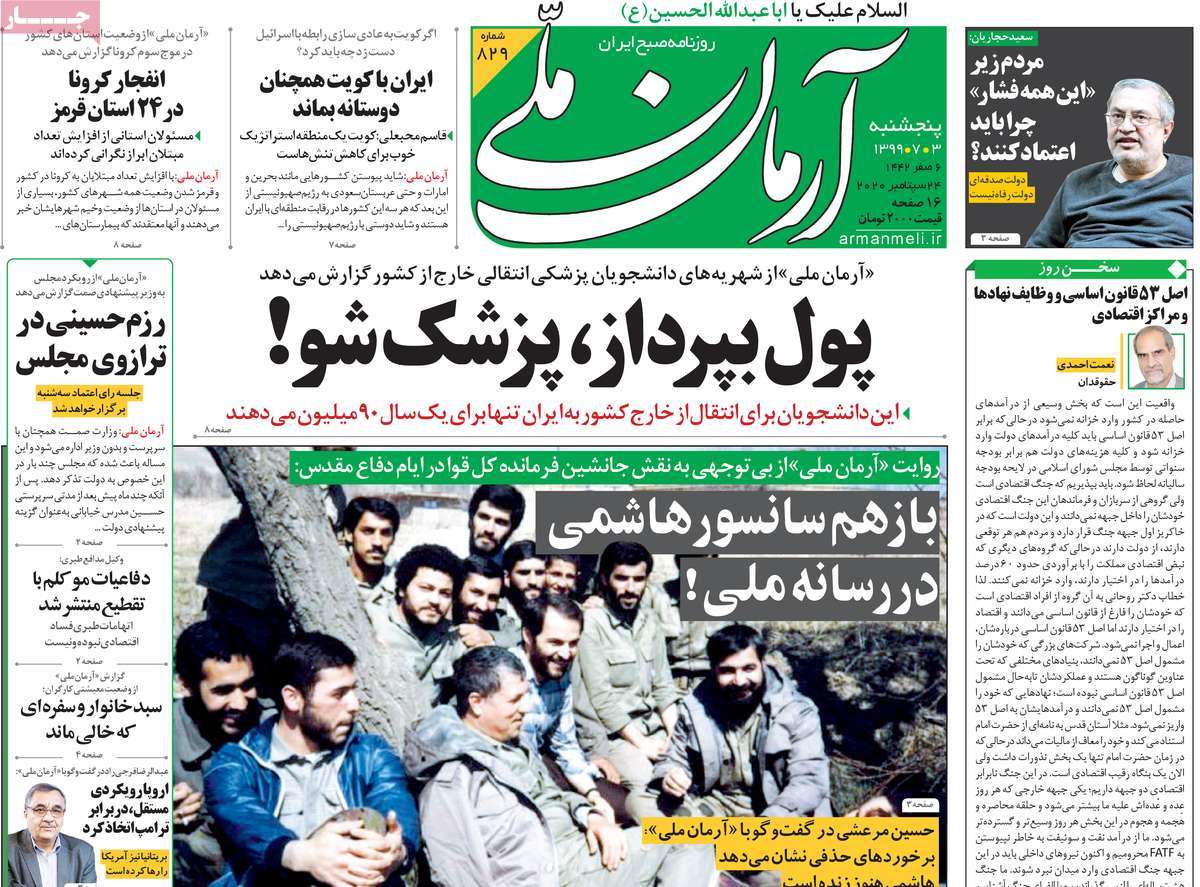
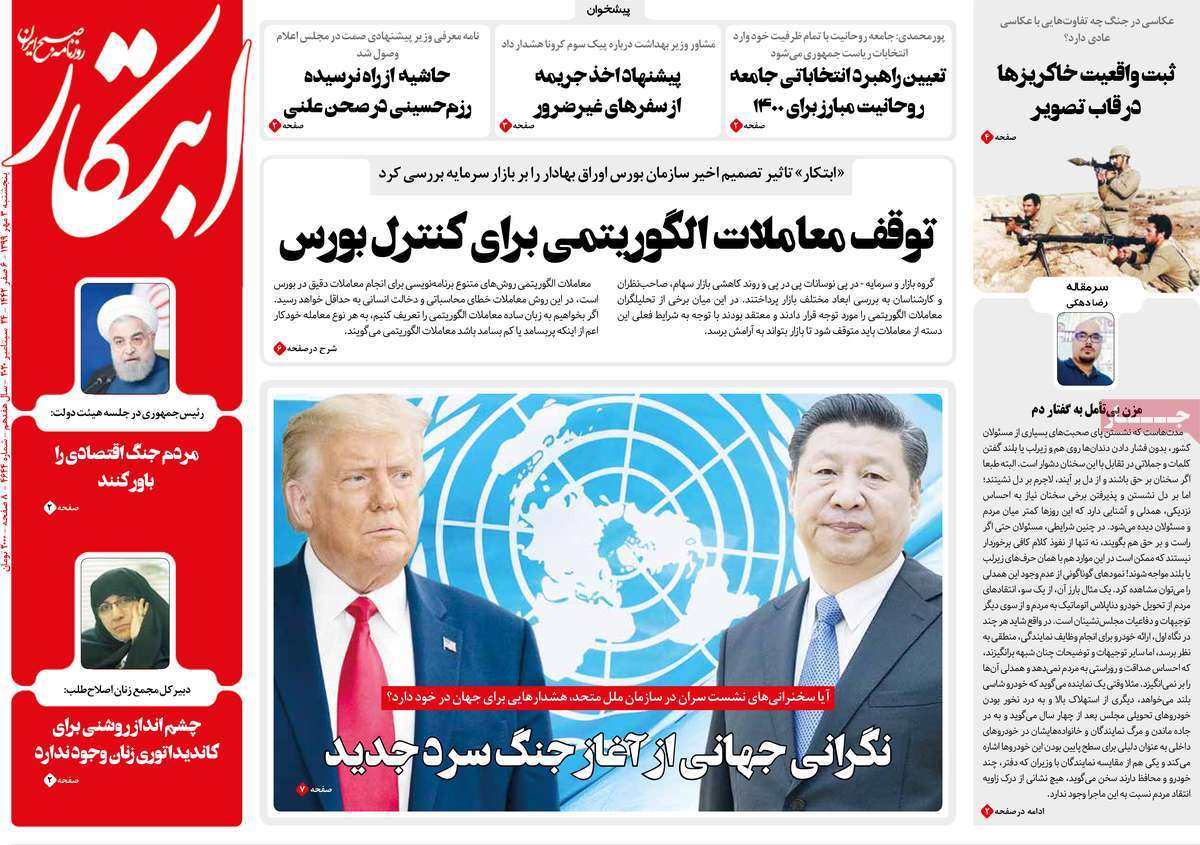
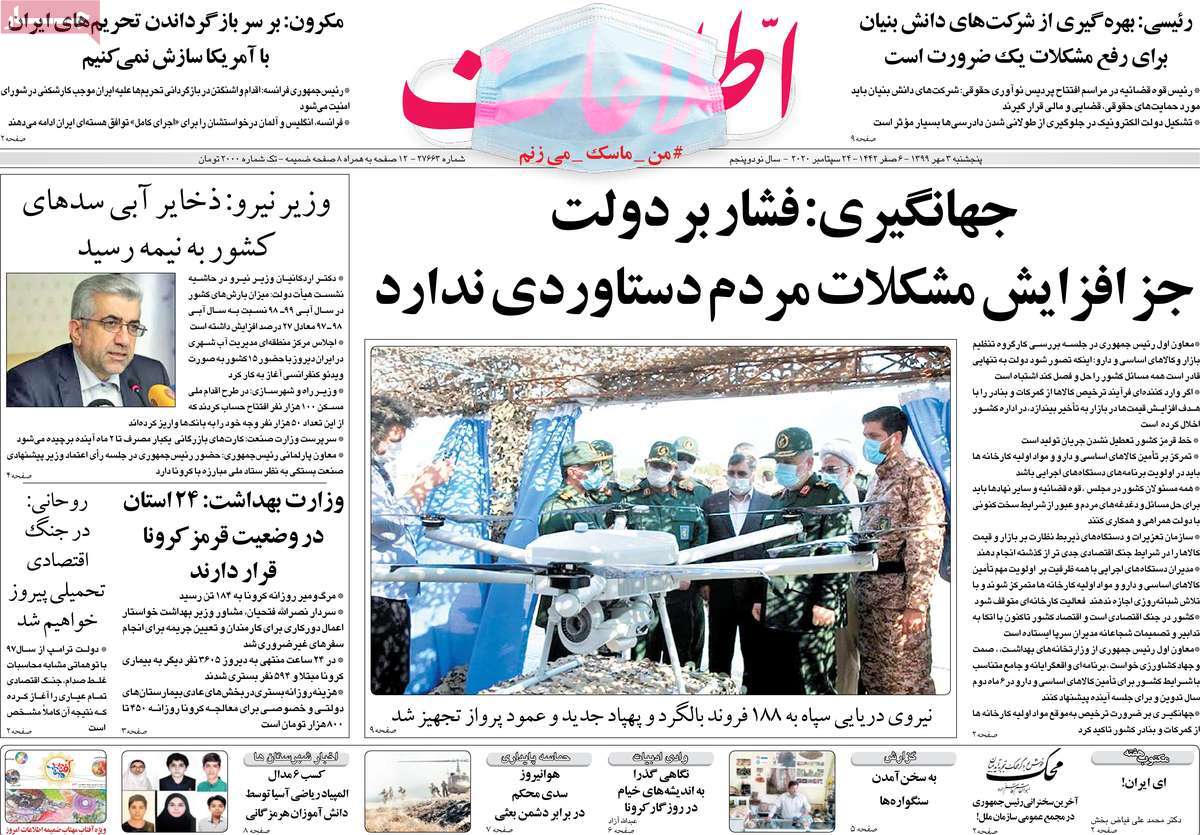
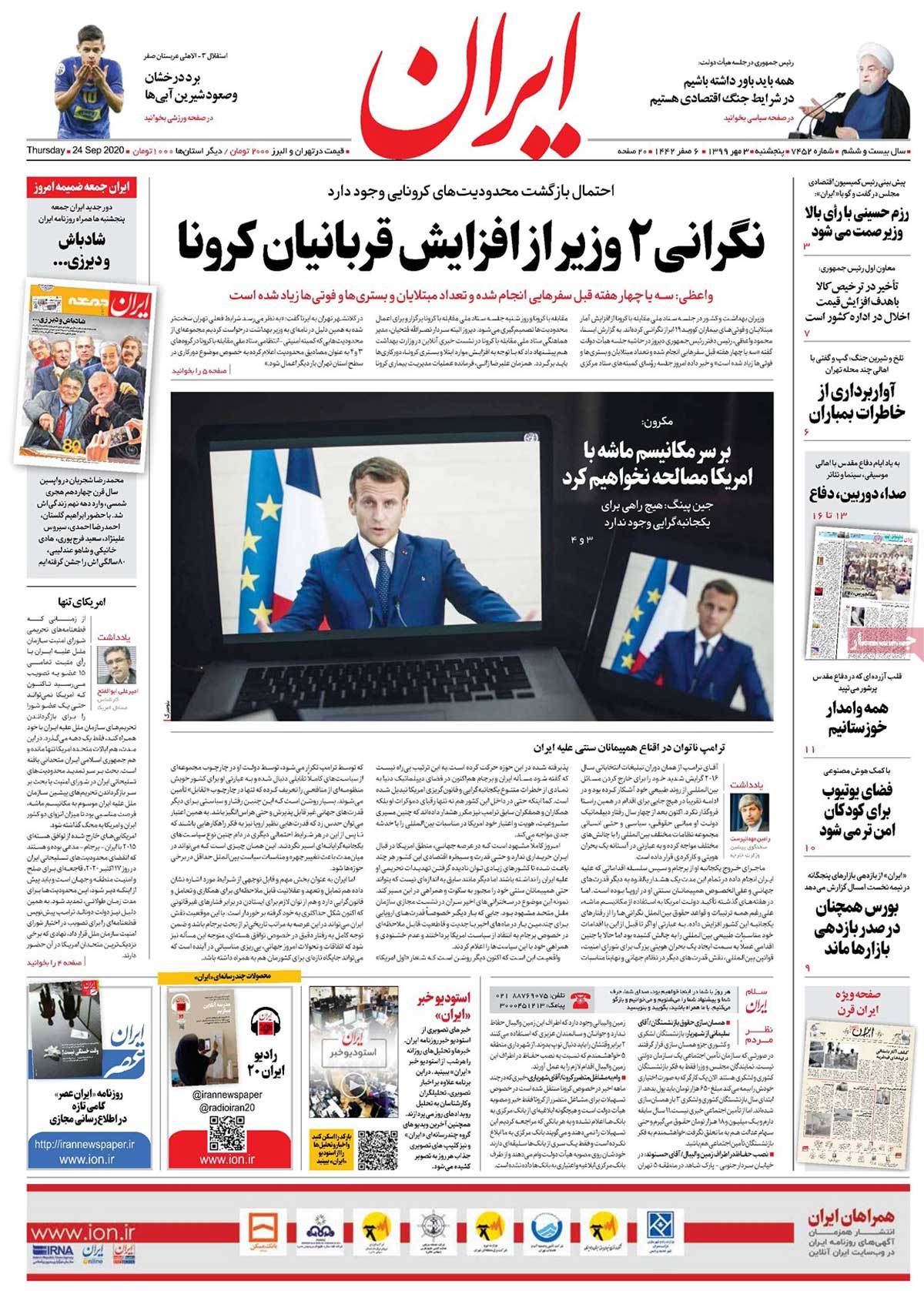
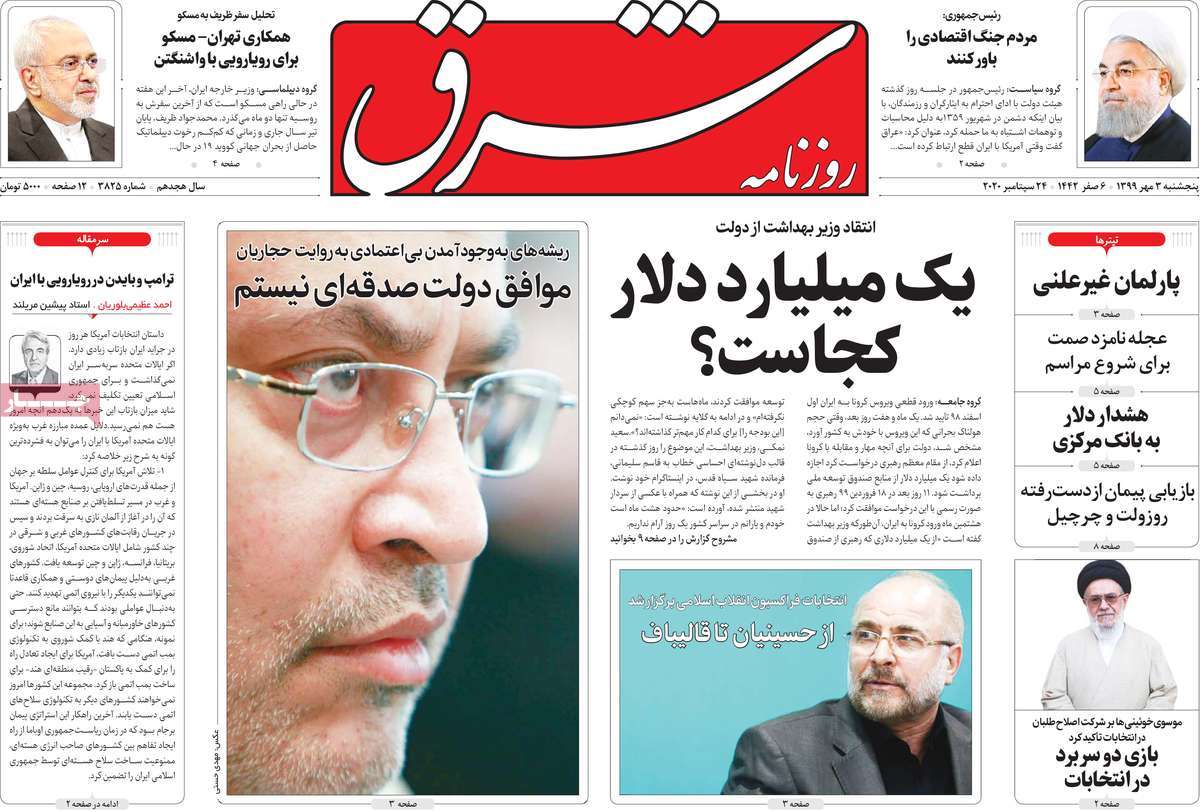
A Look at Iranian Newspaper Front Pages on August 22
Iranian Newspapers
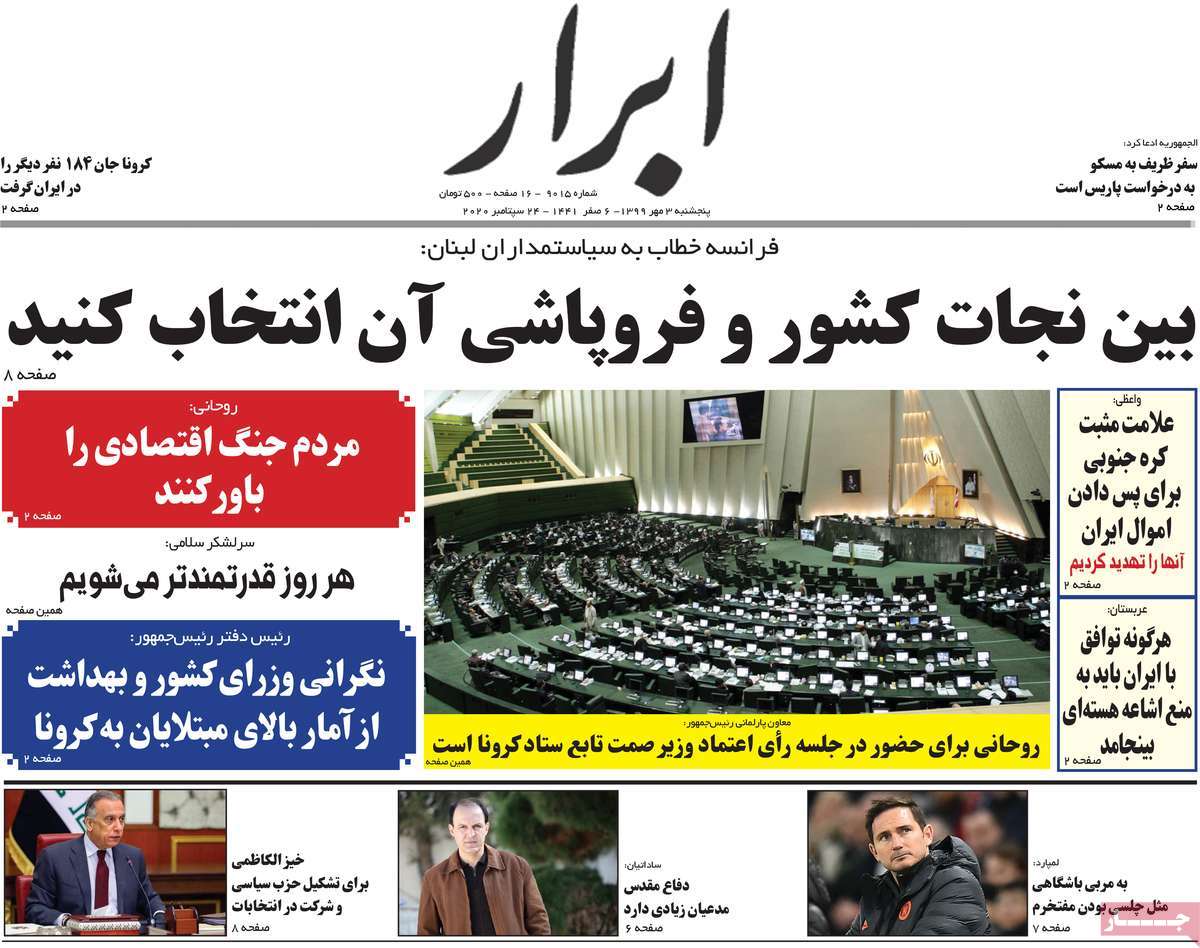
Abrar Newspaper:
1- AEOI: Iran Has Taken Long Strides to Achieve 190,000 SWU
2- Rouhani: Iran’s Defence Power No Threat to Neighbours
3- IAEA Chief to Visit Tehran Monday
4- Guterres, Zarif Discuss Resolution 2231, JCPOA, Yemen
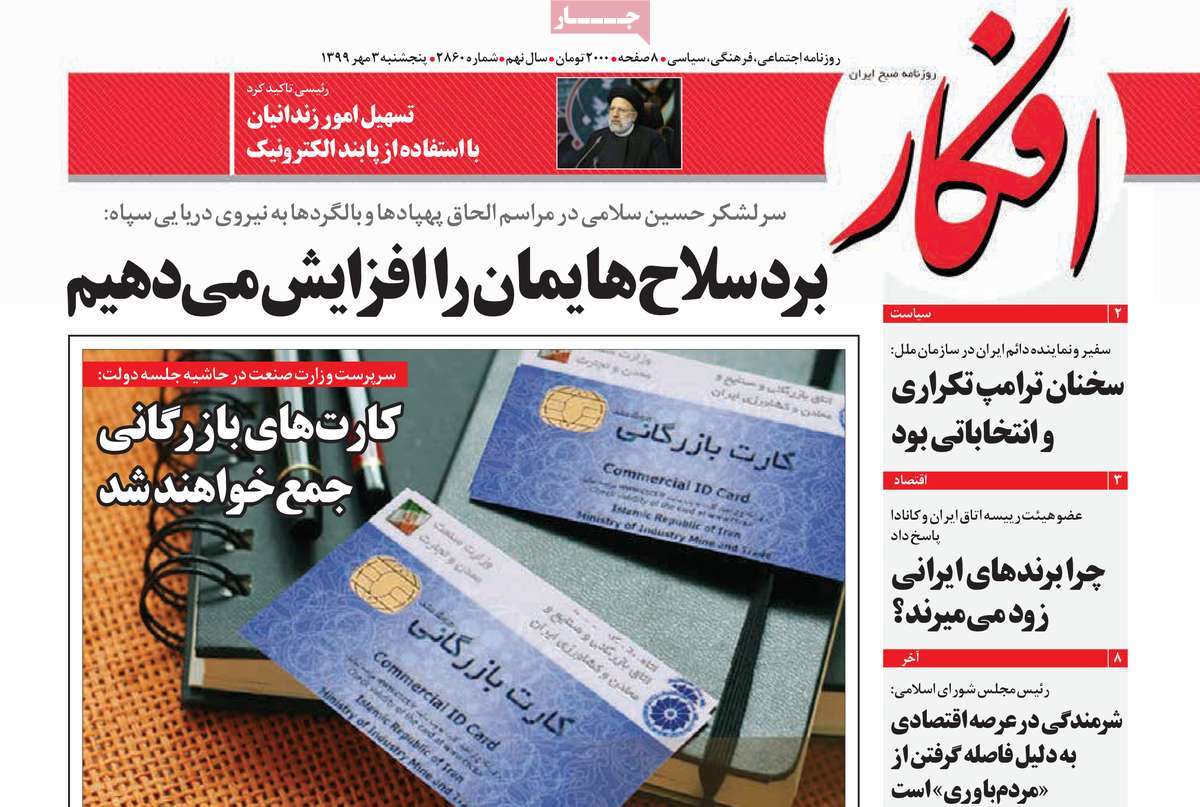
Afkar Newspaper:
1- DM: Iran Testing Its Air-Launched Cruise Missiles
2- Iran’s Fingers on Trigger: Official
3- Iran, Russia Stress Expansion of Cooperation Despite US Destructive Measures
Aftab-e Yazd Newspaper:
1- Pulling Trigger of Unloaded Weapon: Pompeo Activates Snapback Mechanism, but All UNSC Members Reject US Bid
2- Turkish Lira Recovers Its Value after Central Bank Backs Off from Increasing Interest Rate
Arman-e Melli Newspaper:
1- JCPOA Member States Strongly Oppose Activation of Snapback Mechanism: Zarif
2- Qassem Soleimani, Abu Mahdi Missiles Join Iran’s Defence Systems
3- What Does Removal of Yusuf bin Alawi Mean?
* World Surprised by Dismissal of Veteran Omani Foreign Minister
Etemad Newspaper:
1- Destroying UN Security Council: Pompeo Calls for Return of Iran Sanctions
2- US Gambling with Afghanistan’s Opium
* Ashraf Ghani Issues Warning after US Deal for Release of 400 Dangerous Taliban Criminals
Ettela’at Newspaper:
1- Hezbollah Chief: Zionist Regime Most Important Regional Threat
2- Iran Unveils Long-Range Cruise and Ballistic Missiles
3- P4+1: US Has No Right to Activate Snapback Mechanism against Iran
Iran Newspaper:
1- Trigger Now Pointed at US; Borrell Says Will Do Anything to Keep JCPOA
2- Iran Unveils Soleimani, Abu Mahdi Missiles
3- Rouhani: Iran’s Defence Efforts Based on Non-Aggression Strategy
Javan Newspaper:
1- US Pulls Trigger for Withdrawal of Iran from JCPOA
2- Zarif: US Has No Right to Return Provisions of Annulled Resolutions
3- Iran Joins Global Club of Turbojets
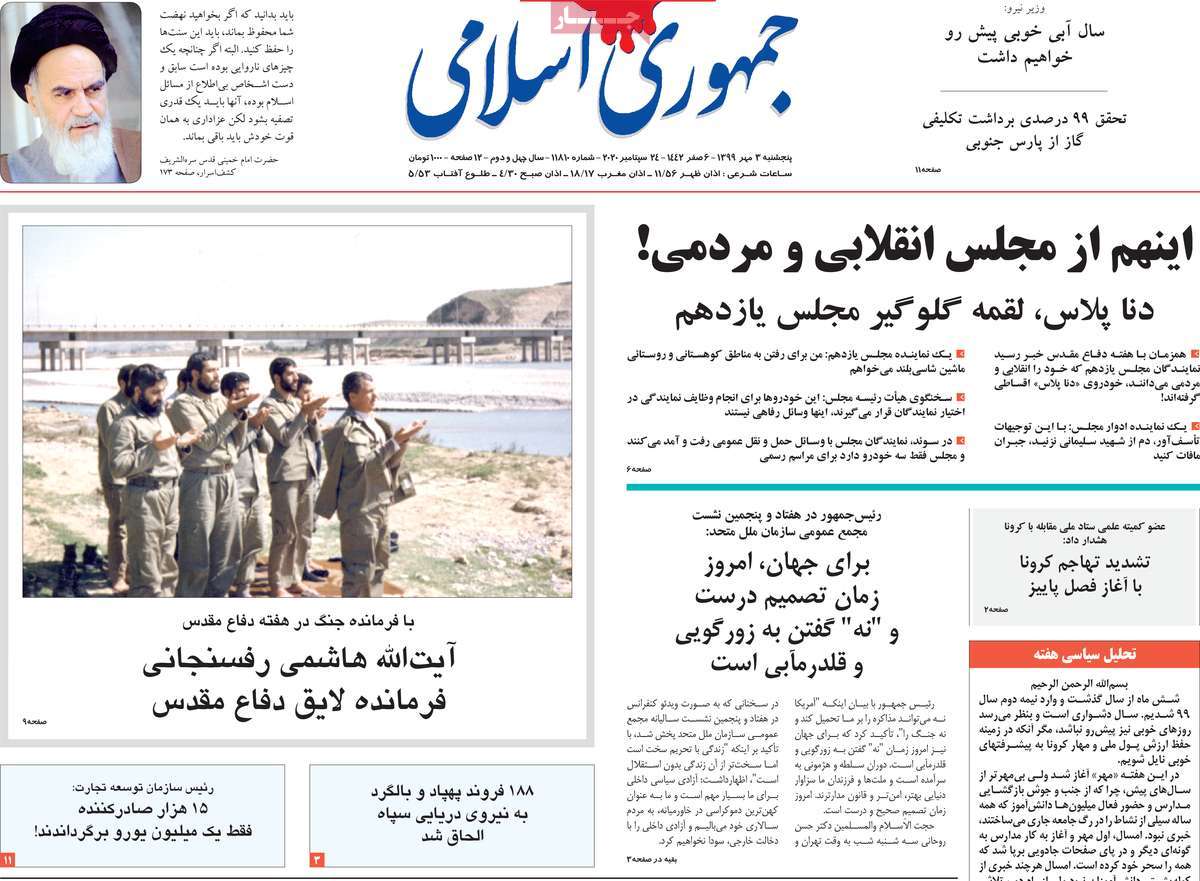
Jomhouri Eslami Newspaper:
1- Iran’s Defence Ministry Unveils Latest Achievements
2- Global Opposition to US’ Moves against JCPOA
* Pompeo Outraged by European Allies’ Refusal to Support US
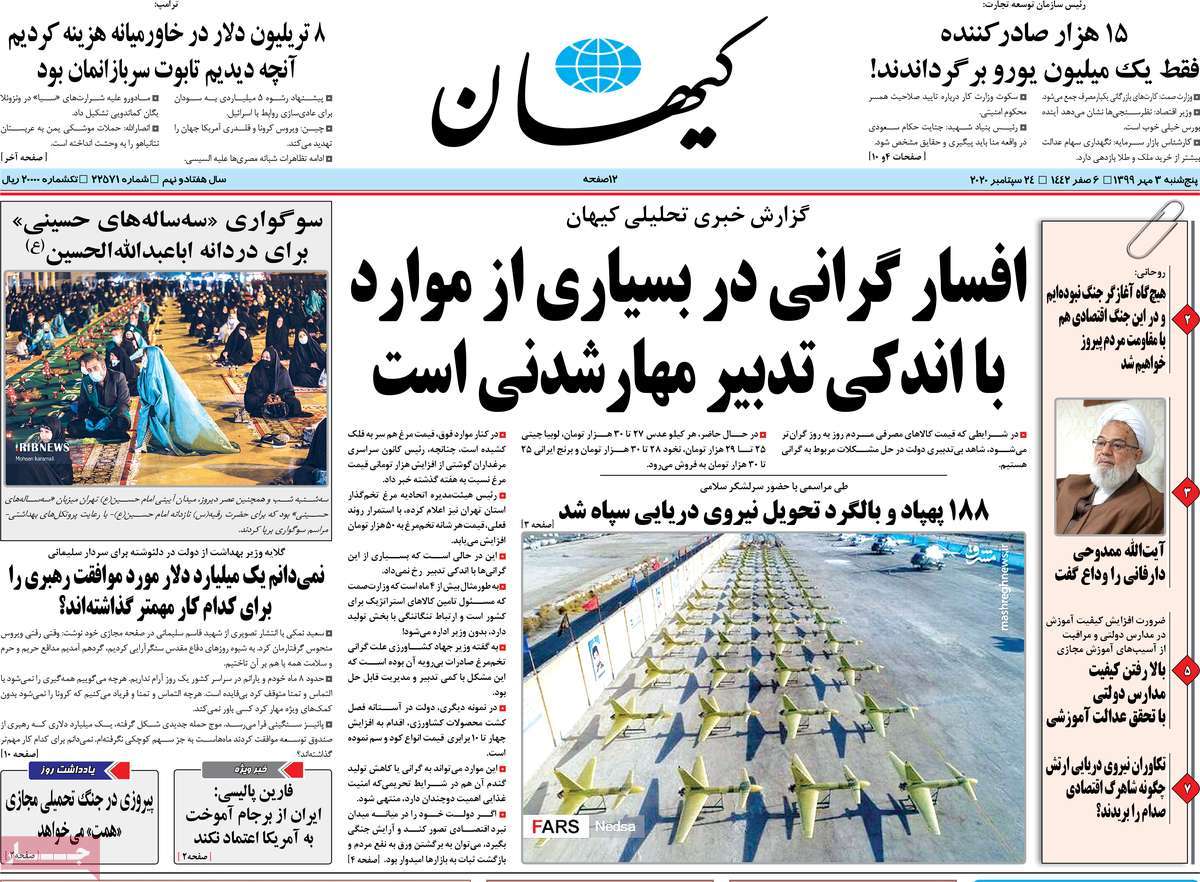
Kayhan Newspaper:
1- Hashd al-Sha’abi’s Reaction to Iraqi PM’s Inaction: We’ll Target US with All Our Power
2- Iran Pulls Trigger Before US by Unveiling Soleimani, Abu Mahdi Missiles
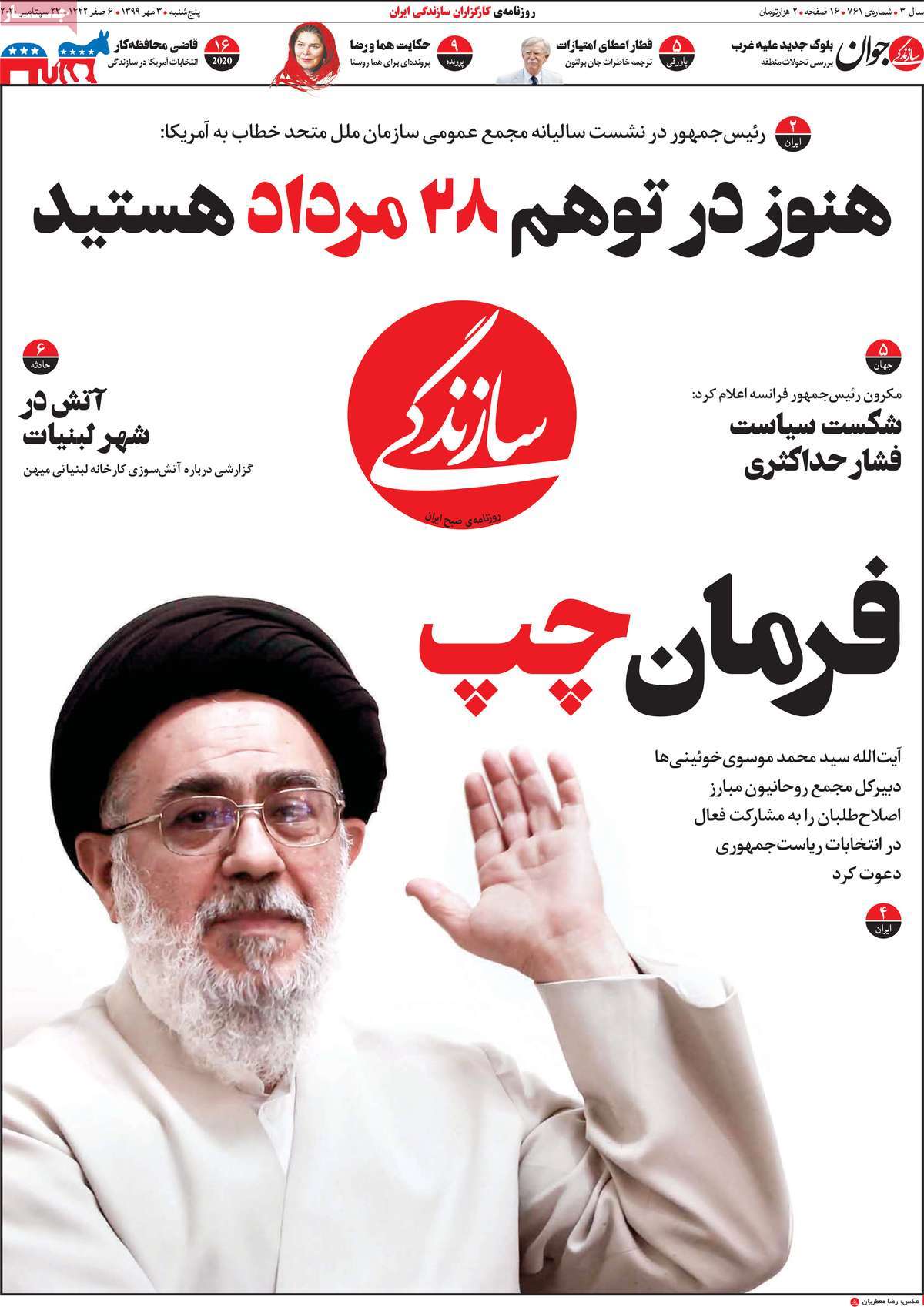
Sazandegi Newspaper:
1- Europe against America: E3 Express Opposition to US in Official Letter to UN
Shargh Newspaper:
1- September Clash over Snapback Mechanism: Zarif Writes to UN Security Council
Iran Reports over 2,000 New Cases of COVID-19 Infection
In a press briefing on Saturday, Sima-Sadat Lari said the virus has killed 126 patients since Friday noon, increasing the overall death toll to 20,502.
So far, she added, 307,702 patients have recovered from the disease or been discharged from the hospital.
Lari said 3,850 patients are also in critical conditions caused by more severe infection.
The spokeswoman noted that 3,011,310 COVID-19 tests have been taken across the country so far.
She said the high-risk “red” zones include Tehran, Qom, Mazandaran, East Azarbaijan, Isfahan, Ardabil, Yazd, Markazi, Khorasan Razavi, North Khorasan, Semnan, Gilan, Golestan, and Kerman provinces.
The “orange” zones also include Lorestan, Alborz, Hormozgan, Ilam, Fars, Hamadan, Bushehr, West Azarbaijan, Qazvin, Chaharmahal and Bakhtiari, Kohgiluyeh and Boyer-Ahmad, and Zanjan provinces, she added.
Muharram Mourning Rituals Start in Iran amid Strict COVID-19 Measures
The lunar month coincides with the martyrdom anniversary of the third Shia Imam, Hussein, and his companions, some 14 centuries ago, who were killed in modern day Iraqi city of Karbala by the forces of the 2nd Umayyid caliph, Yazid.
Every year, during the first ten days of Muharram, Muslims get dressed in black, erect mourning tents and participate in mass processions to commemorate the martyrdom of Imam Hussein.
Still after 14 centuries, Imam Hussein‘s memory is alive in the hearts and minds of Muslims.
But this year, perhaps, Muslims are marking the most different Muharram, amid a pandemic that has cancelled every mass gathering.
The atmosphere of Muharram is still there. The majority of people are seen in black clad, and mourning tents are erected ahead of time as of every year.
The government said it would not prevent Muharram ceremonies, but advised people to observe health protocols.
This year, mourners can listen to online eulogies or watch the ceremonies on TV.
Any physical mourning ceremony needs to be held in open air environments, as instructed by the health ministry.
Mourners must have their masks on, and organizers are obliged to hand out masks to mourners upon entry to the ceremonies; PS; the safety distance must be observed.
To the fervent lovers of Imam Hussein, it’s really hard to miss the annual mourning rituals.
At the same time, they find the spiritual occasion a chance to pray for the elimination of the virus.
Mourners say they miss what they call the mass carnival of love for Imam Hussein.
But they say with or without ceremonies, they will not forget their third Imam, since they say, they owe the existence of Islam to the sacrifices he made 14 centuries ago.