Monday, April 20, 2026
Home Blog Page 2700

“Iran’s Tabriz, Nakhchivan Must Boost Ties as Tourism, Cultural Capitals of Muslim World”

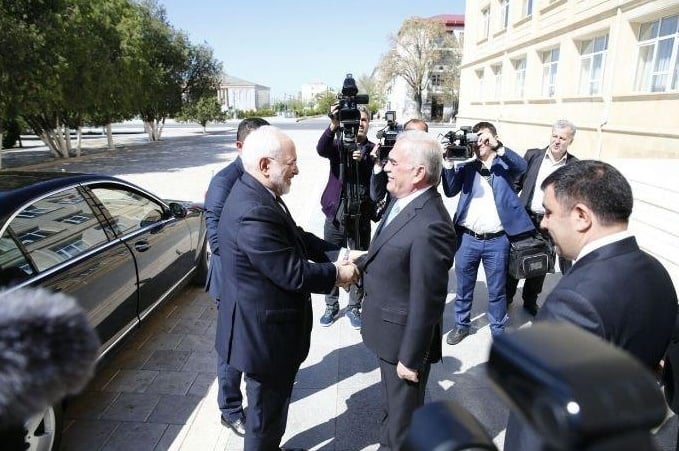
In a Friday meeting with Vasif Talibov, the Chairman of the Supreme Assembly of the Nakhchivan Autonomous Republic, Zarif pointed to the selection of Iran’s Tabriz as the tourism capital and Nakhchivan as the cultural capital of Muslim world in 2018, and said the two cities can have further cooperation in this regard.

The Iranian top diplomat also underlined the reinforcement of banking ties, academic relations and exchange of students, facilitation of travel, and expansion of provincial ties between Nakhchivan and cities of Iran’s East and West Azarbaijan provinces.

Zarif, who was on an official visit to Nakhchivan, said the reciprocal ties of Iran and Azerbaijan Republic and the Nakhchivan Autonomous Republic are developing.

“Power plant and dam construction projects have been operationalised, and there are good grounds for expansion of mutual cooperation in the fields of intensive animal farming, health, supply of pharmaceuticals and construction of drug production facilities, dispatch of doctors and export of medical equipment, tourism, facilitation of transport, food industries, and joint production,” he added.

Talibov, for his part, expressed his pleasure with the visit of Zarif and his entourage to Nakhchivan, and said relations between the two sides are on the right track in various areas.

“People of Iran and Nakhchivan are easily travelling [to the two Republics], the number of tourists has increased, and Iranian university students are pursuing their education without any problem,” he noted.

Talibov also highlighted the significance of customs [regulations] in the development of bilateral relations between the two sides, and called for further expansion of cooperation in this field.
“Iran’s Tabriz, Nakhchivan Must Boost Ties as Tourism, Cultural Capitals of Muslim World”Zarif and Talibov had earlier in December held talks in Tehran. In that meeting, Talibov said Nakhchivan is ready to increase its cooperation with Iran in the fields of energy, tourism and transportation.

In late December 2016, Iran launched a direct passenger train service between its northeastern city of Mashhad and Azerbaijan’s Nakhchivan.

The train from Nakhchivan travels to Iran’s northwestern city of Tabriz through Jolfa and thereon to Tehran and finally Mashhad.
 

Iran Promises “Special Surprise” for Enemies in Case JCPOA Violated

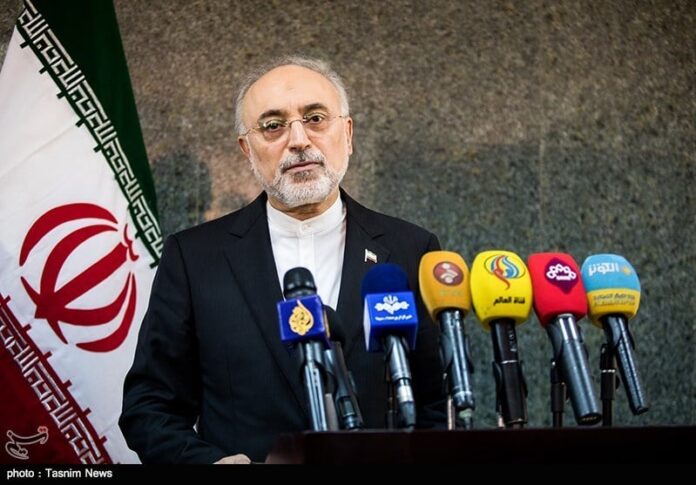
“The enemies should know that in case the JCPOA is reversed – even though we are never looking for such a situation – special conditions will arise, and when the high-ranking (Iranian) officials decide, we would have a special surprise for those who scrap the deal,” Salehi said in a speech on Thursday.

“We are seriously seeking to preserve our national interests and sovereignty, but if the US withdraws (from the JCPOA) and Europe and other major powers retreat from this agreement, we would definitely act differently,” he added.

The Iranian nuclear chief further denounced US President Donald Trump as a businessman, who has mixed trade with politics, trying to advance his agendas in the international arena with “his unpredictable decisions”.

The nuclear agreement between Iran and the Group 5+1 (Russia, China, the US, Britain, France and Germany) was reached in July 2015 and came into force in January 2016.

Ever since the deal took effect, the International Atomic Energy Agency (IAEA) has confirmed Iran’s compliance with the JCPOA in all quarterly reports, but some other parties, especially the US, have failed to live up to their undertakings.

Trump has on various occasions called for renegotiating the JCPOA or terminating it but Iran and most other parties to the deal say the nuclear agreement is a valid multilateral international document that would not be renegotiated.

Policies of US, Mideast Allies Embolden Israel: Zarif

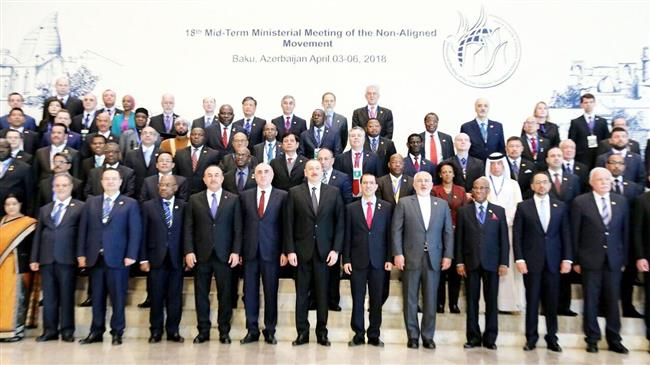
“Regrettably, short-sighted policies of some regional governments in befriending the Zionists and sidelining our Palestinian cause have made the apartheid Zionist regime and its supporters more brazen in their ongoing criminal acts,” Zarif told a meeting of the Non-Aligned Movement (NAM) Ministerial Committee on Palestine in the Azerbaijani capital Baku on Thursday.

The remarks came days after a controversial interview by Saudi Crown Prince Mohammed bin Salman, where he appeared to publicly recognize the Israeli regime’s existence.

While both Riyadh and Tel Aviv had admitted to having established secret ties over the past years, the young prince’s announcement was a slap in the face for Palestinians in the wake of a brutal Israeli crackdown on peaceful anti-occupation protests in the Gaza Strip.

‘Premeditated’ violence

Israeli military forces have killed 20 protesters while injuring dozens more since March 30, when thousands of Gazans marched to the fence separating Israelis and Palestinians to mark the start of a six-week protest dubbed, “The Great March of Return.”

Undeterred by international condemnation, Israeli officials have pledged “a reaction of the harshest kind” if the protests continue.

Calling the Israeli violence “premeditated and deliberate,” Zarif said “those who support and enable the Israeli regime to commit these types of crimes have also the Palestinians’ blood on their hands.”

Trump’s embassy move

According to Zarif, the decision in December by US President Donald Trump to recognize Jerusalem al-Quds as Israel’s new capital was another reason that exacerbated the problem.

“These measures, which contravene international law and relevant UN General Assembly and Security Council resolutions, have demonstrated that the United States could have never been an impartial broker in dealing with the issue,” he added.

Israel lays claim to the entirety of Jerusalem al-Quds as its “capital” while Palestinians want its eastern part as the capital of a future state for themselves.

Palestinian leaders have warned that the planned relocation would fuel strong reaction in the region and deliver a death blow to any prospect of resolving the Israeli-Palestinian conflict.

NAM’s responsibility

Commending NAM’s longtime support for Palestine, Zarif said the movement still had a lot to do to help end the violence through “collective action” in the United Nations General Assembly while ensuring that the UN Security Council would take the necessary steps to punish the perpetrators.

“Our movement has been right in placing emphasis on Palestine since its inception,” he stated, adding that this attention should lead to an organized effort towards “the realization of the basic rights of the Palestinian people.”

The Iranian FM said in conclusion that the movement needs to “call for full restoration of the rights of Palestinians, in particular the establishment of an independent Palestinian state with al-Quds al-Sharif as its capital, and to demand an immediate end to the siege on the Gaza Strip.”

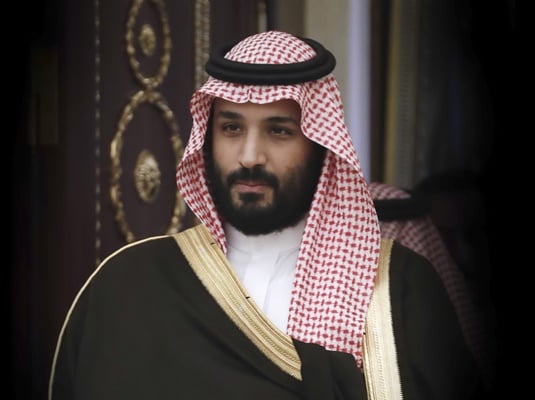
Saudi Crown Prince Contradicts Himself on Wahhabism

This week, Saudi Crown Prince Mohammad bin Salman pretended he knows nothing about Wahhabism.

Please define it for us. We’re not familiar with it. We don’t know about it,” bin Salman said in an interview with the US-based The Atlantic magazine published on April 2.

“No one can define Wahhabism. There is no Wahhabism. We don’t believe we have Wahhabism. We believe we have, in Saudi Arabia, Sunni and Shia,” the Saudi prince claimed.

However, bin Salman himself had acknowledged the role of Saudi government in spreading Wahhabism across the globe since 1980s.

In a talk with the Washington Post daily published on March 22, the Saudi prince said Saudi Arabia funded Wahhabism across the world as a result of Western countries asking Riyadh to help counter the Soviet Union during the Cold War.

Bin Salman said Saudi Arabia’s Western allies urged the country to invest in the construction and operation of (Wahhabi) mosques and madrassas overseas, in an effort to prevent encroachment in Muslim countries by the Soviet Union.

The crown prince went on to claim that successive Saudi governments had lost track of that effort and his government has toget it all back”.

Wahhabism, founded in 18th-century by Muhammad ibn Abd al-Wahhab, is the version of Islam preached in and by Saudi Arabia.

It was originally the cornerstone of Saudi statehood, as the House of Saud could form its government early 20th century thanks to its alliance with Abd al-Wahhab descendants, the al-Sheikh family.

The sect has been described as an extreme interpretation of Islam, which sees followers of some Islamic sects including Shiites as apostates punishable by death.

Wahhabism is the trademark of many terror groups wreaking havoc in the Middle East and other regions, including the ISIS and Al-Qaeda.

The explosive growth of Wahhabism is blamed for the spread of global terrorism in the next decades.

The US State Department has estimated that over the past four decades Riyadh has invested more than $10bn into charitable foundations in an attempt to replace mainstream Sunni Islam with Wahhabism.

However, other estimates run as high as hundreds of billions of dollars.

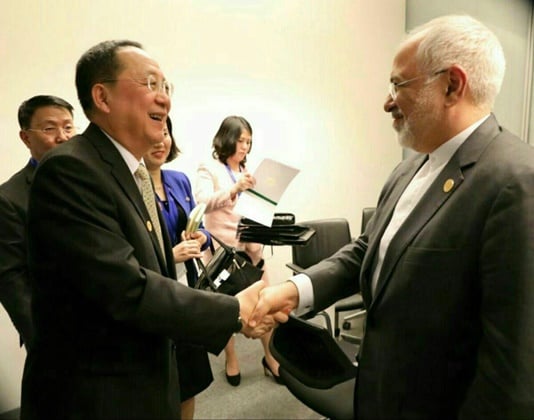
Iran FM Holds Talks with Counterparts in Baku

Zarif on Thursday held separate meetings with foreign ministers of North Korea, Libya, Afghanistan, Palestine, India, Serbia, Venezuela.

The top Iranian diplomat also met the heads of Syrian and Cuban delegations and the head of United Nations General Assembly.

Zarif and the officials discussed bilateral relations, international issues and those related to the Non-Aligned Movement.

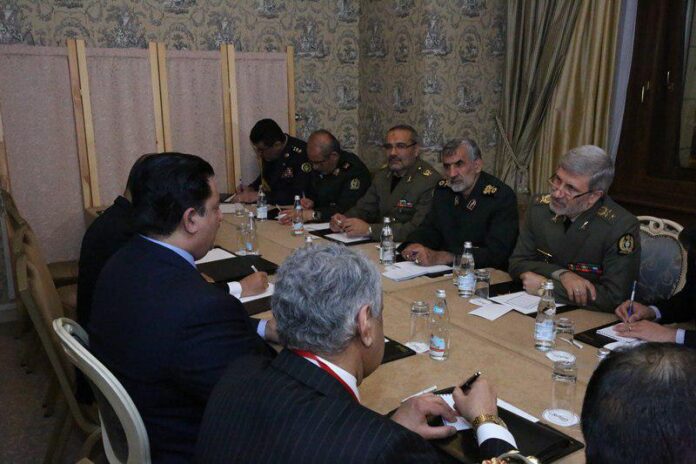
Iran Calls for Enhanced Military Ties with Pakistan

Speaking in a Thursday meeting with his Pakistani opposite number Khurram Dastgir in Moscow, Brigadier General Amir Hatami said Pakistan is a friendly country and a neighbor of Iran and has a special status in Tehran’s foreign policy.

He also stressed the need for further expansion of mutual military and defense cooperation.

“The key potentialities of Iran and Pakistan have a determining role and help boost reciprocal ties,” he added, a Farsi report by Fars News said.

The Iranian defence chief further lashed out at the US interventionist policies in the region.

“We believe that regional countries should not allow the Americans to execute their wicked schemes, which are against the interests of the countries in the region, in order to trigger insecurity, instability and chaos,” said the top Iranian military commander.

The senior Pakistani military official, for his part, said he was pleased to be meeting with his Iranian counterpart.

He said Islamabad and Tehran have had good border and territorial cooperation over the recent years, expressing hope the partnership will further ensure stability and security along the borders of the two countries.

Given the insecurity in West Asia, said Dastgir, the two countries need to have more meetings and talks in order to move toward solving regional problems.

The Pakistani defence chief noted that it would be impossible to achieve progress and tranquility in the region without the establishment of peace and security.

A Look at Iranian Newspaper Front Pages on April 5

A Look at Iranian Newspaper Front Pages on November 18

All newspapers today covered the remarks made by the Leader of Iran’s Islamic Revolution Ayatollah Seyyed Ali Khamenei in a letter to Hamas chief Ismail Haniyeh, in which the former reiterated Tehran’s strong support for the Palestinian nation’s resistance against the Israeli regime.

Also a top story in most papers today was the trilateral talks between Iranian President Hassan Rouhani, Russian President Vladimir Putin, and Turkish President Recept Tayyip Erdogan in Ankara. The three sides discussed the political resolution of the ongoing conflict in Syria.

The issue of Telegram messaging app’s “security threats” and the controversy over the possible blocking of people’s access to the messenger also remained a top story today.

The above issues, as well as many more, are highlighted in the following headlines and top stories:


Aftab-e Yazd:

  • Iran’s Economy Still on Nowruz Vacations!
  • Most Production Units, Gov’t Offices Still Closed Even after Nowruz Holidays!
  • Rouhani Opposed to Filtering

A Look at Iranian Newspaper Front Pages on April 5


Arman-e Emrooz:

  • Iran Leader to Hamas Chief: We Feel Duty-Bound to Support You
  • Peace in Tehran’s Time: Next Trilateral Summit on Syria to Be Held in Tehran

A Look at Iranian Newspaper Front Pages on April 5


Ebtekar

  • Tehran, Moscow, Ankara against Changes in Regional Borders
  • Iran, Russia, Turkey Stress Political Solution to Syria Crisis
  • Bin Salman Manoeuvring on Red Line: Reasons for Riyadh’s Close Ties with Tel Aviv

A Look at Iranian Newspaper Front Pages on April 5


Etemad:

  • Architects of Ceasefire: Rouhani, Putin, Erdogan against Syria Disintegration
  • Two MPs Argue over a National Crisis
  • Issue of Financial Institutions Getting More Politicized Everyday

A Look at Iranian Newspaper Front Pages on April 5


Ettela’at:

  • Iran’s Non-Oil Exports Increase to $47 Billion
  • Times: Bin Salman Has Allied Itself with Israel against Iran
  • Stronger Fight against Israel Solution to Palestine Issue
  • Trump: Saudi Arabia Must Pay for US Presence in Syria
  • Zarif Underlines Iran’s Support for Palestinian People’s Resistance
  • Parliament Speaker: All Bodies Must Back Investors

A Look at Iranian Newspaper Front Pages on April 5


Hamshahri:

  • Unprecedented Decrease in Price of Mortgage
  • Rouhani: Mideast’s Geography Should Not Change

A Look at Iranian Newspaper Front Pages on April 5


Iran:

  • Iran Leader to Hamas: Moving towards Talks with Israeli Usurpers Unforgivable Mistake
  • Source: Rumours that Rouhani Has Order Filtering of Telegram False, Sheer Lie
  • Iran Proposes Four-Point Plan to Resolve Syria Crisis in Ankara Summit

A Look at Iranian Newspaper Front Pages on April 5


Jahan-e San’at:

  • Aftershocks of US-China Trade War: Trump to Sacrifice Wall Street
  • Iranian-American Lawyer Appointed as New US Assistant Secretary of Commerce
  • Iran, Russia, Turkey Back Syrian-Syrian Talks
  • Constitution Committee Must Be Formed

A Look at Iranian Newspaper Front Pages on April 5


Javan:

  • Iran Leader: Zionist Regime Must Be Forced to Withdraw to Point of Decline
  • IRGC Chief-Commander: All Stances Held by Officials Must Reinforce Spirit of Hope

A Look at Iranian Newspaper Front Pages on April 5


Jomhouri Eslami:

  • Latest IMF Analysis Shows Iran to Have Almost 4% Economic Growth
  • Iran, Russia, Turkey Resolved to Restore Peace, Stability to Syria
  • Iran DM: Those Violating JCPOA Responsible for Its Consequences
  • Palestinian Groups Outraged by Bin Salman’s Humiliating Remarks on Israel Recognition

A Look at Iranian Newspaper Front Pages on April 5


Kayhan:

  • New Nail in Coffin of Production: Banks Once Again Paying 21% Interest Rate to Depositors
  • Saudi Prince: Recognizing Israel among Trump’s Conditions to Accept Bin Salman as King
  • Bloomberg: JCPOA Is against Iran, Why Should Trump Terminate It?
  • Trump: Saudi Arabia Must Pay for Our Presence in Syria!
  • US Thinking of Milking Saudi Arabia’s Cow Once Again

A Look at Iranian Newspaper Front Pages on April 5


Khorasan:

  • Why and How to Support Iranian Products
  • Capacities of Apparel, Challenges of Car Industry
  • Shocking Tweet of Bill Gates’ Wife on Population Decrease in Iran

A Look at Iranian Newspaper Front Pages on April 5


Shahrvand:

  • Iran, Turkey, Russia Call for Increased Humanitarian Aid to Syria

A Look at Iranian Newspaper Front Pages on April 5


Shargh:

  • MP Says National Security Commission to Hold Special Meeting on Telegram

A Look at Iranian Newspaper Front Pages on April 5


Vatan-e Emrooz:

  • 12 Meetings in Less than 5 Years
  • A Report on Rouhani-Putin Unprecedented Interactions
  • Iran Leader: Increased Fight to Resolve Palestine Issue

A Look at Iranian Newspaper Front Pages on April 5

Tehran Calls for Dialogue-Based Solution to Skripal Case

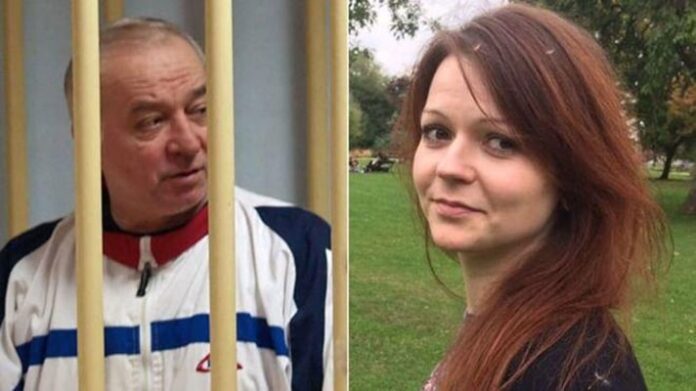
Sergei Skripal and his daughter Yulia

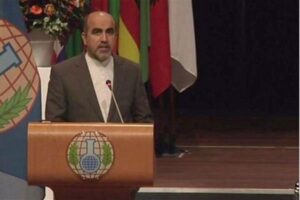
“Politicizing any issue within the framework of OPCW is not to the benefit of members and puts in risk the credibility of the organization,” said Iran’s permanent representative to OPCW Alireza Jahangiri.

Jahangiri was speaking in an emergency meeting of the OPCW executive council on Wednesday over the incident, held at the request of Russia to counter accusations by Britain that it was behind the March 4 nerve agent poisoning of the Russian ex-spy Sergei Skripal and his daughter Yulia in Salisbury, England.

Skripal and his daughter were hospitalized following what is thought to be a chemical attack involving the A-234 nerve agent and are now in a critical but stable condition.

London blamed Moscow for the attack, which triggered mass expulsions of diplomats by Britain and its western allies, including the United States, and similar retaliatory action by Russia.

Russia has denied the British government’s allegations.


Avoid Prejudice

Tehran Calls for Dialogue-Based Solution to Skripal CaseJahangiri said members should avoid airing prejudice and making baseless allegations, and seek using mechanisms of the global chemical weapons watchdog to reveal truth.

The envoy said Iran, the biggest victim of chemical weapons in contemporary history, is always against any use of chemical weapons, a Farsi report by IRNA said.

Jahngiri was referencing to the use of the weapons by former Iraqi dictator Saddam Hussein during the 1980s Iran-Iraq war, which Iran believes were provided to the Iraqi regime by Germany and other western countries.

The Russian representative to OPCW Alexander Shulgin said after the meeting Russia, Iran and China had presented a proposal to the OPCW for a joint investigation into the Skripal case by Russia and the UK.

The proposal failed to get the necessary two-thirds support for the draft proposal to pass.

The proposal was outvoted 15-6, with 17 abstentions among members of the organization’s 41-member council.

Russia says it has been pushed aside from a probe being carried out by the OPCW at Britain’s request, results of which are due next week.

Britain called the Russian proposal for a joint investigation a “perverse” attempt to escape blame for the poisoning of the Skripals, Reuters reported.

Shulgin responded that London has attempted to use the international body to support the results of its own investigation.

Speaking at a press conference in The Hague following the OPCW meeting, Shulgin emphasized that Russia would accept the results of any investigation into the Skripal case so long as it includes Russian experts, is transparent, and based on provable facts.

Iran Playing Effective Role in Regional Development: IRGC Chief

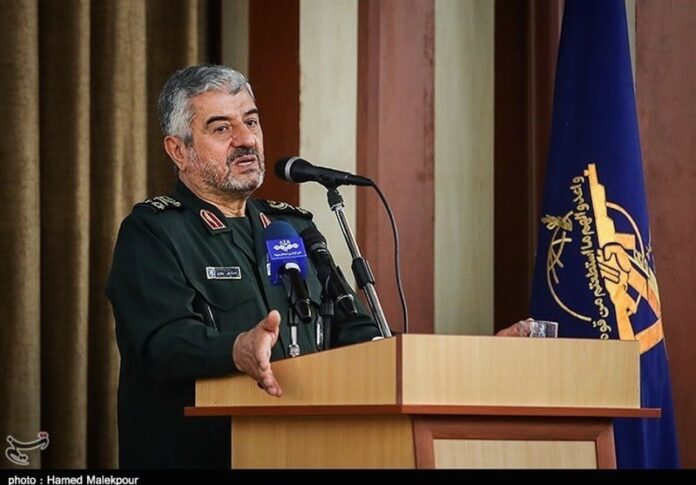
“The decisive defeat of Daesh (ISIL or ISIS) and collapse of their self-proclaimed caliphate in Syria and Iraq and the following gradual clearing of cities from terrorists and also the foiling of the plot of an independence referendum in Iraqi Kurdistan, thanks to the right and timely support and role of the Islamic Republic of Iran and astuteness of the governments and nations of the two (Arab) countries, put before the eyes of everyone the continuation of the victories of the Islamic Revolution and the Islamic Ummah (community) in today’s very sensitive and critical conditions,” Major General Jafari said Wednesday in a meeting with IRGC commanders and staff on the occasion of the new Iranian calendar year (started on march 21).

He added that the previous Iranian year of 1396 (March 2017-March 2018) was a year of triumph for the Islamic Revolution and the demonstration of the Iranian people’s insightfulness and the Islamic Republic’s power.

Daesh militants made swift advances in northern and western Iraq over the summer of 2014, after capturing large areas of Syria.

But the timely support by Iran helped the two Arab countries fight off Daesh.

In November 2017, Daesh terrorists were flushed out of their last stronghold in Syria’s Al-Bukamal. The city’s liberation marked an end to the group’s self-proclaimed caliphate it had declared three years earlier.

Iran also played a major role in persuading the Iraqi Kurdistan Region (KRG) to cancel the result of the independence referendum held in the region in September and remain committed to the unity and territorial integrity of Iraq.

Extremism in Mideast Legacy of US, Israel: Iran DM

Speaking in a Thursday meeting with his Kazakh counterpart Saken Zhasuzakov in Moscow, Brigadier General Amir Hatami said extremism is a legacy of the US and the Israeli regime in order to secure their interests in the region.

“Cashing in [on the situation] and taking advantage of terrorist groups to loot the riches of the regional countries have always been among the objectives of hegemonic powers,” said Iran’s defence chief.

He highlighted the danger posed by extremism and terrorism in the region, saying, “As we have a precise understanding of the root causes of terrorism and its different dimensions, we helped Syria and Iraq, with all our power, in the fight against terrorism, so that they would be able to eradicate terrorism in their countries,” Hatami added, according to a Farsi report by Tasnim.

During the meeting which was held on the sidelines of the Moscow Security Conference, the senior Iranian official also touched upon the religious, cultural and historical commonalities between the two countries and described the enhancement of bilateral ties as important.

“Kazakhstan plays a key role in establishing stability and security in the region, contributed to the nuclear talks [between Iran and six world powers] and the Astana negotiations [on Syria] and managed to discharge its responsibility,” said he top general.

He said Tehran-Astana cooperation in international circles could set a good example of bilateral ties in the region, and stressed the need for such cooperation to continue.

The Kazakh defence minister, in turn, described as “significant” cooperation among regional countries, especially Russia, Iran and Turkey, to fight terror and prevent a flare-up of the crisis in Syria.

Zhasuzakov said insecurity in the region is a scourge for all countries, expressing hope that the countries in the Middle East will be able to take greater steps toward promoting mutual cooperation in political, military, economic and other areas.

In the meeting, the two sides reached agreements on the enhancement of relations in the defence-security domain.