Monday, December 29, 2025
Home Blog Page 269

Saudi Arabia executed more than 100 foreigners in 2025 so far: AFP

Saudi Execution

“Khalil Qasim Muhammad Omar and Murad Yaqub Adam Siyo -– both of Ethiopian nationality -– were found guilty of smuggling hashish,” read the statement published by the Saudi Press Agency.

“Upon referral to the competent court, a verdict was issued confirming the charges against them and sentencing them to death.”

In total, 189 people have been executed in 2025, according to AFP’s count, including 88 Saudis.

In 2024, the 100-foreigners execution mark was only surpassed in November in the Gulf kingdom, one of the world’s leading users of the death penalty.

According to a previous AFP tally, at least 338 people were executed last year, compared with 170 in 2023 — far surpassing the previously known record of 196 in 2022.

British parliamentary committee seeks answers over US firm BCG’s role in Gaza

Gaza

Labour Party MP Liam Byrne, who chairs the House of Commons Business and Trade Select Committee, asked Boston Consulting Group (BCG) in a letter on Wednesday for “clarification and information” about its work in the besieged enclave, adding that the query was part of the committee’s “scrutiny of the UK’s commercial, political and humanitarian links to the conflict”.

Byrne’s letter to BCG CEO Christoph Schweizer comes after The Financial Times daily reported on Friday that the firm had drawn up an estimate of the costs of relocating Palestinians from Gaza and signed a multimillion-dollar contract to help create the Israel- and US-backed GHF.

Gaza health authorities say that more than 700 Palestinians have been killed trying to access aid at distribution centres run by the GHF, which has been disavowed by the United Nations and numerous aid organisations.

The UK newspaper also reported on Monday that the Tony Blair Institute (TBI), run by the former British prime minister, participated in message groups and calls for a post-war development plan for Gaza that relied on BCG modelling.

In his letter, Byrne asked for a “clear and comprehensive response” to a list of questions, including a “detailed timeline” of when BCG began work on establishing the GHF.

Byrne also demanded information from BCG about other companies and institutions, as well as funding sources, linked to the creation of the group.

The GHF, which began operating in the bombarded Palestinian enclave in late May, has drawn widespread criticism amid numerous reports that its US security contractors and Israeli forces have opened fire on aid seekers.

While noting that BCG had ended its involvement with the GHF, and that some of the associated work had been “unauthorised”, Byrne said the firm should provide specific details on what activities were not authorised, “when and how” the work was undertaken, and what actions were made to correct those activities.

Byrne also called for more information about BCG’s work on proposals to relocate the population of Gaza, which have been condemned by Palestinians in the enclave, rights groups and the UN.

“Who commissioned or requested this work? Which individuals or entities . . . did BCG engage with in this context? Is any such work ongoing or active in any form? Were any UK-based organisations – including companies, NGOs, academics or think-tanks – involved?” Byrne said in the letter.

Byrne directed BCG to respond by July 22, “given the seriousness of these issues and the high level of public interest”.

Israeli Prime Minister Benjamin Netanyahu has also floated the idea of relocating Palestinians during his meetings this week with US President Donald Trump at the White House.

In a statement issued earlier this week, BCG said that “recent media reporting has misrepresented” the firm’s potential role in the post-war reconstruction of Gaza.

The firm said that two of its partners “failed to disclose the full nature of the work” they carried out without payment in helping to establish the GHF.

“These individuals then carried out subsequent unauthorised work. Their actions reflected a serious failure of judgment and adherence to our standards,” the company said, adding that the two partners had been fired.

Armenia, Azerbaijan leaders meet for peace negotiations in UAE

Pashinyan Aliyev

The meeting in Abu Dhabi on Thursday between Armenian Prime Minister Nikol Pashinyan and Azerbaijani President Ilham Aliyev, confirmed by both their governments, comes after the two countries finalised a draft peace deal in March.

The South Caucasus countries have fought a series of wars since the late 1980s when Nagorno-Karabakh, a region in Azerbaijan that had a mostly ethnic-Armenian population at the time, broke away from Azerbaijan with support from Armenia.

Peace talks began after Azerbaijan recaptured Karabakh in a lightning offensive in September 2023, prompting a huge exodus of almost all of the territory’s 100,000 Armenians, who fled to Armenia.

But the timeline for sealing a deal remains uncertain.

Ceasefire violations along the heavily militarised 1,000km (620-mile) shared border surged soon after the draft deal was announced, though there have been no reported violations recently.

In a potential stumbling block to a deal, Azerbaijan has said it wants Armenia to change its constitution, which it says makes implicit claims to Azerbaijani territory.

Yerevan denies this, but Pashinyan has repeatedly stressed in recent months – most recently this week – that the South Caucasus country’s founding charter needs to be updated.

Azerbaijan also asked for a transport corridor through Armenia, linking the bulk of its territory to Nakhchivan, an Azerbaijani enclave that borders Baku’s ally, Turkiye.

Pashinyan and Aliyev’s last encounter was in May, on the sidelines of the European Political Community summit in Tirana, Albania.

In June, Pashinyan made a rare visit to Istanbul to hold talks with Turkish President Recep Tayyip Erdogan, a meeting Armenia described as a “historic” step towards regional peace.

This week, United States Secretary of State Marco Rubio expressed hope for a swift peace deal between the Caucasus neighbours.

The outbreak of hostilities between the two countries in the late 1980s prompted mass expulsions of hundreds of thousands of mostly Muslim Azeris from Armenia, and Armenians, who are majority Christian, from Azerbaijan.

President Pezeshkian says Iran’s cooperation with IAEA depends on end to double standards

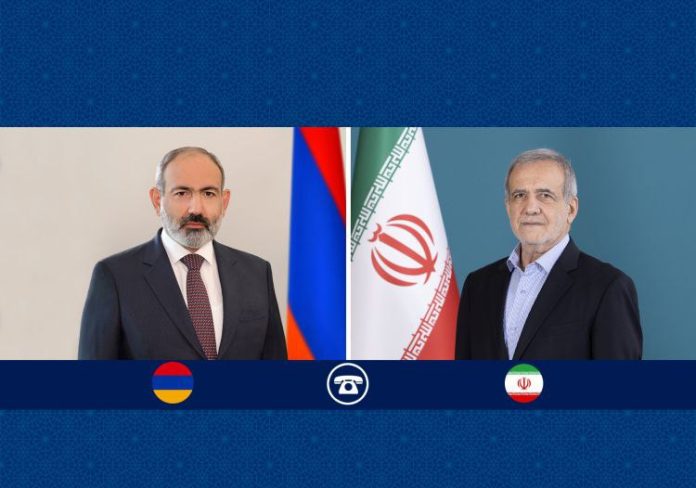
In a phone conversation with European Council President Antonio Costa on Wednesday evening, Pezeshkian said Iran has a long record of principled cooperation with the IAEA, but continuation of this engagement requires an end to double standards regarding the country’s nuclear dossier.

He stressed that any repetition of hostile acts would be met with an even more decisive response.

Pezeshkian and Costa discussed international developments, including the 12-day aggression against Iran and prospects for relations between Tehran and the European Union.

The Iranian president underlined the country’s commitment to peace, regional stability, and constructive global dialogue, especially in the new political period.

Pezeshkian condemned the criminal actions of the Zionist regime and its destructive role in undermining global security, stating that Iran was targeted by Israel and the United States while it pursued dialogue.

He added that when faced with Iran’s firm response, they were compelled to request a ceasefire, and made clear that Israel could not have acted without US support.

Responding to Costa’s concerns over Iran’s suspension of cooperation with the IAEA, Pezeshkian reaffirmed Iran’s adherence to dialogue, diplomacy, and respect for international law, describing recent parliamentary legislation as a reaction to the agency’s biased and unprofessional conduct.

He said the IAEA’s failure to remain impartial, its silence over attacks on Iranian nuclear facilities, and its disregard for international law have undermined its credibility and forced the adoption of new measures by Iran’s parliament.

He noted that membership in international bodies like the IAEA must deliver balanced benefits; otherwise, such memberships lose their value.

Pezeshkian reiterated that cooperation will depend on correcting discriminatory behavior.

He thanked Costa for efforts to promote diplomacy and expressed Iran’s willingness to expand relations with the EU through respectful dialogue.

Costa, for his part, emphasized the European Union’s willingness to pursue diplomatic solutions to existing issues and expand cooperation with the Islamic Republic of Iran.

“I fully agree with you that international organizations must avoid any form of double standards,” he stated.

He added that the European Union holds deep respect for the history, civilization, and culture of the Iranian people and is fully prepared for dialogue and collaboration.

The European Council President also extended his sincere condolences over the martyrdom of Iranian citizens in the recent attacks by the Israeli regime.

He said the European Union condemns Israel’s human rights violations in Gaza and stresses the need to end the war, deliver humanitarian assistance, and provide effective support for the Palestinian people.

Intl. Red Cross says socked by extent of Israeli strike on Evin prison

Vincent Cassard made the remarks on Wednesday as he visited the facility. He was accompanied by Pir Hossein Kolivand, head of the Iranian Red Crescent Society (IRCS), and Heshmatollah Hayat al-Ghaib, director general of Tehran Province Prisons Organization.

Cassard thanked Kolivand for allowing him to see firsthand the destruction caused by the Israeli attack on the Evin prison’s visitation hall, kitchen, infirmary, administrative building, and other sections.

He also noted that he was shocked that civilians, families of prisoners, and ordinary people were targeted and affected by the Israeli strike.

He further said the ICRC monitors the implementation of international humanitarian law, which strictly prohibits any attack on civilians and civilian infrastructure, including prisons.

Hospitals and medical centers are also protected under international humanitarian law, and they should never be a target for attacks.

The Israeli airstrike on the Evin prison took place on June 23 during the inmates’ visitation hours with their families and social workers.

It killed 80 people, including prison administrative staff, soldiers, inmates, families of the prisoners who had come for visitation or legal follow-ups, humanitarian workers, and people living nearby.

Kolivand said that Iran has sent reports to the ICRC and the prosecutor of The Hague-based International Criminal Court (ICC) regarding the Israeli atrocity.

The Geneva Conventions prohibit the bombardment of civilian targets, including prisons, and consider them to be a crime, he added.

On June 13, Israel launched a blatant and unprovoked aggression against Iran, assassinating many high-ranking military commanders, nuclear scientists, and ordinary civilians.

More than a week later, the United States also jumped on the bandwagon and bombed three Iranian nuclear sites in a grave violation of international law.

In response, Iranian armed forces targeted strategic sites across the occupied territories as well as the al-Udeid air base in Qatar, the largest American military base in West Asia.

On June 24, Iran, through its successful retaliatory operations against both the Israeli regime and the US, managed to impose a halt to the illegal assault.

Over 100 premature babies in Gaza at risk as hospitals run out of fuel

The warnings from al-Shifa Hospital in northern Gaza City and Nasser Hospital in southern Khan Younis came on Wednesday, as Israeli forces continued to bombard the Palestinian enclave.

Muhammad Abu Salmiyah, the director of al-Shifa Hospital, Gaza’s largest facility, told reporters that the lives of more than 100 premature babies and some 350 dialysis patients were at risk.

“Oxygen stations will stop working. A hospital without oxygen is no longer a hospital. The lab and blood banks will shut down, and the blood units in the refrigerators will spoil,” Salmiyah said.

“The hospital will cease to be a place of healing and will become a graveyard for those inside,” he added.

Abu Salmiyah went on to accuse Israel of “trickle-feeding” fuel to Gaza’s hospitals, and said that al-Shifa’s dialysis department had already been shut down to conserve power for the intensive care unit and operating rooms, which cannot be without electricity for even a few minutes.

In Khan Younis, the Nasser Medical Complex said it, too, has entered “the crucial and final hours” due to the fuel shortages.

“With the fuel counter nearing zero, doctors have entered the battle to save lives in a race against time, death, and darkness,” the hospital announced in a statement.

“Medical teams fight to the last breath. They have only their conscience and hope in those who hear the call – save Nasser Medical Complex before it turns into a silent graveyard for patients who could have been saved.”

Mohammed Sakr, a spokesman for the hospital, told the Reuters news agency that the facility needs 4,500 litres (1,189 gallons) of fuel per day to function, but it now has only 3,000 litres (790 gallons) – enough to last 24 hours.

Sakr added doctors are performing surgeries without electricity or air conditioning, and the sweat from staff is dripping into patients’ wounds, risking infection.

A video from Nasser Hospital, posted on social media, shows doctors sweating profusely as they perform a surgery.

“Everything is turned off here. The air conditioning is turned off. No fans,” a doctor says in the video as he demonstrates conditions in the ward.

“All the staff are exhausted, they are complaining [about the] high temperature.”

Israel’s relentless bombardment has decimated Gaza’s healthcare system in the 21 months since it launched its assault on the Palestinian enclave in the wake of the Hamas-led attacks of October 7, 2023.

Since then, there have been more than 600 recorded attacks on health facilities in Gaza, according to the World Health Organization (WHO). As of May this year, only 19 of Gaza’s 36 hospitals remain partially operational, with 94 percent of all hospitals damaged or destroyed.

Israeli forces have also killed more than 1,500 health workers in Gaza, and detained 185, according to official figures.

The WHO, meanwhile, has described Gaza’s health sector as being “on its knees”, with shortages of fuel, medical supplies and frequent arrivals of mass casualties from Israeli attacks.

Marwan al-Hams, the director of field hospitals in Gaza, told Al Jazeera that “hundreds” of people could die in the territory if fuel supplies are not brought in urgently.

This includes “dozens” of premature babies who could die within the next two days, he stated. Dialysis and intensive care patients would also lose their lives, he added, adding that the injuries of the wounded were worsening amid deteriorating conditions, while diseases like meningitis were spreading.

UNICEF spokesperson James Elder, who recently returned from Gaza, said, “You can have the best hospital staff on the planet”, but if they are denied medicine and fuel, operating a health facility “becomes an impossibility”.

Israel has imposed a suffocating siege on Gaza since early March.

Over the past weeks, it has allowed some food into Gaza to be distributed through a United States-backed group at sites where hundreds of aid seekers have been shot dead by Israeli soldiers.

But fuel has not entered the territory in more than four months.

“What little fuel remains is already being used to power the most essential operations – such as intensive care units and water desalination – but those supplies are running out fast, and there are virtually no additional accessible stocks left,” the UN’s humanitarian agency (OCHA) announced on Tuesday.

“Hospitals are rationing. Ambulances are stalling. Water systems are on the brink. The deaths this is likely causing could soon increase sharply unless the Israeli authorities allow new fuel in – urgently, regularly and in sufficient quantities.”

Israel’s war on Gaza has killed at least 57,575 people and wounded 136,879, according to Gaza’s Health Ministry. An estimated 1,139 people were killed in Israel during the October 7, 2023 attacks, and more than 200 were taken captive.

Trump ready to support new Russia sanctions bill: Politico

Putin Trump

If adopted, the “bone-crushing” legislation spearheaded by hawkish Senator Lindsey Graham would impose a 500% tariff on countries buying oil, gas, uranium, and other goods from Russia. Although the bill grants the president the power to exempt nations from the tariff for up to 180 days, Trump reportedly wants Congress to give him sole authority to decide on the sanctions.

“The administration is not going to be micromanaged by the Congress on the president’s foreign policy. The bill needs a waiver authority that is complete,” an official told Politico. The source added that otherwise, “conceptually there’s an openness” to signing the legislation.

Graham said on Tuesday that the Senate would soon vote on the draft. “The Senate bill has a presidential waiver to give President Trump maximum leverage,” he wrote on X. According to The New York Times, the vote could take place as soon as this month.

The push for tougher sanctions has gained momentum since Trump stepped up criticism of Russian President Vladimir Putin, as restarted negotiations between Moscow and Kiev have so far failed to produce a ceasefire.

Moscow has insisted that any lasting settlement must address the “root causes” of the conflict, including NATO’s eastward expansion and Ukraine’s aspirations to join the US-led alliance, which Russia views as a threat to its national security.

“We don’t need a pause, which the regime in Kiev and its foreign handlers would like to use to regroup their forces, continue mobilization, and strengthen their military potential,” Russian Foreign Minister Sergey Lavrov told Hungarian newspaper Magyar Nemzet on Monday.

Putin has demanded that Ukraine recognize Russia’s new borders and adopt permanent neutrality with a legally limited army.

Lavrov said this week that Moscow is working to arrange a third round of direct talks with Ukraine in Türkiye.

Tehran environmental authority denies presence of arsenic, cyanide in dust

According to Hassan Abbasnejad, Director General of Tehran’s Environment Department, thorough scientific assessments have found no credible evidence of these toxic substances in the region’s dust, soil, or water samples.
The allegations surfaced following a media report on Wednesday suggesting severe contamination in the area.

“Industrial activities in the Charmshahr Industrial Zone, including leather tanning, do not involve the use of high-risk materials such as arsenic or cyanide,” Abbasnejad clarified.

He noted that these chemicals are primarily used in specific mining or chemical industries, which are not present in the area.

While acknowledging the presence of hexavalent chromium in some industrial wastewater, Abbasnejad emphasized that its concentration and impact are not comparable to the alleged levels of arsenic or cyanide.

He also announced ongoing oversight programs, legal actions against polluters, and plans to upgrade wastewater treatment facilities. Additionally, a committee has been formed to restore the Band-e Ali Khan wetland, including efforts to secure environmental water rights.

Hamas agrees to release 10 Israeli hostages

The comments on Wednesday came as Israeli forces killed dozens in Gaza, and United States President Donald Trump again expressed hope that a truce could be reached soon.

Hamas said the talks, spearheaded by key mediators Qatar and the US, have several sticking points, including the flow of desperately needed aid, withdrawal of Israeli forces from Gaza, and “genuine guarantees for a permanent ceasefire”.

Hamas official Taher al-Nunu stated that the group agreed to the latest truce proposal and “offered the necessary flexibility to protect our people, stop the crime of genocide, and allow the free and dignified entry and flow of aid to our people until we reach a complete end to the war”.

He added that the areas Israeli troops should withdraw to as part of the first phase of a ceasefire had to be drawn up in a way that does not affect Palestinian lives and “paves the way for the second phase of negotiations”.

In Washington, DC, Trump, who has met Israeli Prime Minister Benjamin Netanyahu at the White House twice this week, said there is a “very good chance” of a ceasefire in Gaza, although his latest comments appear to reduce his expectations.

“I think we have a chance this week or next week. Not definitely. There’s nothing definite about war and Gaza and all the other places that we deal with so much,” he told reporters.

“But there’s a very good chance that we will have settlement, an agreement of some kind, this week and maybe next week if not,” he added.

Israel’s war in Gaza has killed over 57,000 Palestinians, according to the enclave’s health ministry. Most of Gaza’s population has been displaced by the war and nearly half a million people are facing famine within months, according to United Nations estimates.

Tehran lawmakers criticize President Pezeshkian over remarks in US interview

The lawmakers accused the president of “undermining national unity” in the face of US hostility, stating that his comments on possible renewed negotiations with Washington and cooperation with the International Atomic Energy Agency (IAEA) “sent a message of weakness” following recent military strikes against Iran.

Referring to the 12-day conflict involving the US and Israel, the MPs argued that the Iranian public had achieved rare unity in opposing Western aggression, and the president’s statements risked undermining that consensus.

They also condemned President Pezeshkian’s attempt to distinguish between the US government and Israel, asserting that the two are inseparable in their actions against Iran.

The letter called on the president to adopt a firmer tone aligned with the leadership’s stance and to reject “poor advice” from close aides.

It criticized President Pezeshkian for not strongly supporting the religious decrees of senior clerics, particularly those defending sacred figures and the Leader Ayatollah Seyed Ali Khamenei.

The MPs said a firm stance would have conveyed a clear warning to Western audiences that any threat against the Iranian leadership would carry serious consequences.