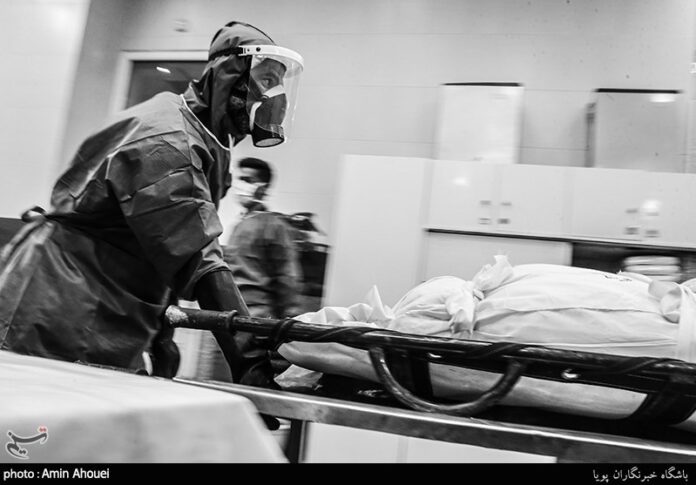
In a press briefing on Monday, Sima-Sadat Lari said the virus has killed 190 patients since Sunday noon, increasing the overall death toll to 25,779.
So far, she added, 376,531 patients have recovered from the disease or been discharged from the hospital.
Lari said 4,068 patients are also in critical conditions caused by more severe infection.
The spokeswoman noted that 3,959,783 COVID-19 tests have been taken across the country so far.
She said the high-risk “red” zones include Tehran, Qom, Mazandaran, East Azarbaijan, Isfahan, Yazd, Ardabil, Khorasan Razavi, Khuzestan, Hamadan, West Azarbaijan, Bushehr, Chaharmahal and Bakhtiari, Kohgiluyeh and Boyer-Ahmad, Alborz, Lorestan, Markazi, Ilam, South Khorasan, Kermanshah, North Khorasan, Semnan, Gilan, Zanjan, Qazvin, and Kerman provinces.
The “orange” zones also include Golestan, Hormozgan, Kurdistan, and Fars provinces, she added.
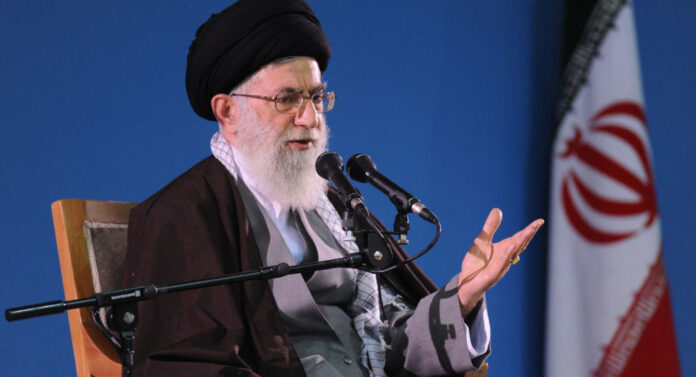
“There hasn’t been, there isn’t, and there won’t be any negotiations [between Iran and the US]. These [reports] are only for domestic use,” Khatibzadeh said in a weekly press conference, in reaction to a report by Kuwaiti paper Al-Jaridah.
“They may be useful for Mr [President Donald] Trump, but they don’t serve Iran-US relations,” he added.
Khatibzadeh said “Trump has no proper understanding of the nature of international relations and that of Iran-US ties. It seems that his advisors are not supposed to understand what has happened, either.”
According to the spokesman, “the path is clear.”
“The US needs to first admit its big mistake; second, respect the international rules and regulations and its commitments; third, stop this inhumane and all-out war and these cruel sanctions against the Iranian nation; and finally make up for all the damages it caused on the Iranian nation through this war and its violations of the Iranian people’s rights.”
“After going through all these stages, it may find a place for itself in a corner of the JCPOA room. For now, we don’t have anything else to say, and let them say whatever they think may help them in their elections,” he added.
“The Islamic Republic of Iran’s stance is firm, decisive, and clear, and we have repeatedly and clearly expressed it. If the question is asked a thousand of times more, our answer will be the same,” Khatibzadeh noted.
Bandar Torkaman is adjacent to the Caspian Sea and Ashooradeh Island on its west and leads to the city of Gorgan on its east.
The port city was established in the first Pahlavi era, when Reza Shah Pahlavi decided to construct Iran’s national rail network. It was around 1927 when ground was broken to establish the city of Bandar Torkaman whose municipality was established three years later in 1930.
It is the first Iranian city to have been fully designed by European architects and whose network of streets and residential areas follow a chess-like pattern.
Bandar Torkaman is home to Ashooradeh Island, one of Iran’s most important and most famous islands. The island is an ideal place for bird-watching and seeing different species endemic to Iran as well as Turkoman horses.
The best caviar in Iran and in the world is produced in this region. You can experience riding on Turkoman horses in Bandar Torkaman.
1 of 10
Residents of Bandar Torkaman
Around 80% of people in this city are Sunni Muslims (Hanafis). The most important festivals that locals celebrate are Eid al-Fitr and Eid al-Adha, two Muslim feasts which are always celebrated in the best manner possible in this city.
Turkmens make up the majority of the city’s population, though a small number of Tabaris, Kazakhs, Turks, Azeris and Sistanis also live in the area.
Iranian Turkmens speak Turkmen, which is a Ural-Altaic language. In addition to Turkmen, other languages such as Mazani, Sistani and Gorgani Persian are also spoken in this region.
It is interesting to know that the urban construction system for Bandar Torkaman was, in the past, developed in such a way that locals’ businesses were based on rail and port activities. Through the passage of time and due to climatic changes such as the sea level rising, the port lost its business dimension, and its people today earn a living by producing and selling rugs, quality caviar and agricultural produce as well as selling goods at border markets.
Tourism in Bandar Torkaman
The souvenirs and handicrafts of this city include quality caviar, local halva (a type of Iranian sweet), Turkmen scarves, silk products, special jewelry and Turkmen rugs.
Ashooradeh Island, Gomishan lagoon, the pier in Turkmen with a lot of entertainment activities, and horse racing tracks make up the most important visitor attractions in Bandar Torkaman.
1 of 4
Traditional Foods in Banar Torkaman
Chekdermeh: This food is very similar to Estamboli (a type of food cooked with rice) and is specifically cooked in Bandar Torkaman and Aq-Qala city in Golestan province.
Rice with peas and sultanas: This food contains rice, peas, sultanas, sour pomegranate paste, chicken or beef, onions, salt, pepper and other spices.
Tahchin (Rice Cake): Different types of rice cake with various ingredients, including beef, aubergines, beans, etc., are cooked here each of which has a unique aroma and taste.
Boorak: This food is very similar to doughnuts and is filled with different types of meat, aubergines, vegetables, etc., and is usually cooked during the Muslim holy month of Ramadan.
Culture and Art in Land of Turkmens
One of the most beautiful local costumes in Iran belongs to Turkmens and spans a large cultural domain including countries such as Turkmenistan and even Afghan Turkmens. Men and women’s outfits each have something different to say. Men’s clothing includes a whole variety of items, namely various types of hats. And the striking feature of Turkmen women’s clothes is beautiful Turkmen scarves which come in different colours and designs and are an integral part of Turkmen garments. In addition to scarves, different other types of local outfits and decorative items are also used by Turkmen women.
1 of 3
Turkmen Music
The Turkmen music is an intangible culture shared across the geographical region of Turkmen Sahra. This rich music can be heard in Iran and neighbouring Turkmenistan and Afghanistan.
Overall, the Turkmen music is inspired by nature and culture, and when played, it contains sounds of tribes migrating, water running, wind blowing, rugs being woven, spinning wheels turning, etc.
Turkmen Rugs
The Turkmen rug has important features such as being plain and simple as it is woven in accordance with people’s needs. Nevertheless, some Turkmen rugs are more elaborate and have more designs and can be termed “luxury” rugs. Unlike other Iranian rugs such as those woven in Tabriz, Kerman, Kashan or Qom, the Turkmen rug is limited in colour and mostly contains dark colours such as black, dark red, grey, navy blue, etc. Turkmen rugs usually measure between 1 to 12 metres in length.
Online services save time and money, and people generally feel convenient sitting at home and buying different products. In terms of the banking sector, online services have escalated the financial industry’s revenue and sales by giving online transaction services.
What is meant by E-banking?
The term e-banking depicts the electronic banking that uses the electronic medium for the transaction and money withdrawal purposes. The electronic banking facilitates the bank account holders to use this service on your laptop or mobile for payment transaction and money sending purposes. It is referred to as online banking that makes different tasks easier for clients or customers.
The majority of people use the internet nowadays, and that’s why Online or e-banking has importance in the financial sector. With the evolution of technology, the financial industry utilizes the technology to provide ease and comfort to the customers in money transactions and other related issues.
E-banking Facilities
E-banking provides many facilities to the customers by delivering a different electronic medium according to the clients’ requirements. The e-banking software development offers the well-designed, developed, and customized software for providing various facilities to the customers by the banking sector. Software development is necessary to provide online banking software for various transactions or money withdrawal purposes. Some facilities are given below:
Internet Banking Facility
Mobile Banking
ATM card Facility
Debit Card Access
These are some electronic facilities provided by the banking sectors to their customers. The customers get advantages of these facilities, and without visiting the bank branch, they can send, withdraw money, make online transactions or pay their utility bills.
What are the services offered by the Software Development Company?
Different services are offered by the software development company’s financial sector to ensure the best online baking software for the customers without any difficulty in banking services. The software development provides data migration, audit transfer, designing the interface, different tools, features, and data optimization services.
Attractive Interface
The main target of software development is to develop a simple and attractive interface of online banking software to provide readability and understandability. UI design assists in making the interface more engaging and creative.
System Optimization
The software development provides system optimization services to the clients. They can easily update, upgrade, and optimize the system according to the banking sector’s customers’ requirements and policies. In this way, changes in the software can be made from time to time to provide the best services to the customers.
User-Friendly Software
Interaction of the customers with the online banking service is the most important factor to count on. UX design assists in making the software user-friendly and smooth.
Anti-Fraud Management
Electronic or online services are always at risk of the bogus activity. The e-banking software is developed by ensuring all the security parameters in it. The service provides full protection and guaranteed safety to the customers by managing, controlling, and monitoring the account’s fraudulent and bogus activity.
Salient Features in E-Banking Software
There are different features in banking software that make the online service more reliable and accessible:
Money Withdrawal Service
Payment Method verification
Transaction Process
Utility Bill Paying Services
Debit Card service
Deposit withdraw service
Customer Identification
Customer Registration Setup
Baking servicing Details
Bank’s Representatives Service
ATM and Branch location Providing Service
Loan Instructions
Currency Exchange Service
Advantages of E-Banking Software
E-banking services have made life easy and convenient nowadays. It’s easy to interact with the bank account details by checking them online by using your smartphone. You don’t need to visit the bank branch to check balance, withdrawal money, and pay your utility bills. You can now pay all your utility bills online with your bank account without going physically to the bank. You can send or receive money across the globe. The money exchange online facility also provides convenience to foreign people. The 24/7 customer support center assists you in resolving the issue of banking services.
E-Banking and Ecommerce
Ecommerce business is overwhelming the digital market with online selling services. People are using ecommerce websites for online shopping and buying different products, resulting in boosting online businesses’ sales and revenue. E-banking plays an essential role in providing online transaction services to customers.
The people benefit from online banking and with the bank account, and by using the debit card, they can easily buy anything from the market.
Online services are imperative to compete with competitors in the market and meet the world’s technology challenges. Technology has forced every sector of life to modify its approach and provide reliable services to the customers by using the latest technology. It definitely will boost the status and revenue of the business sector.
Nearly 280 gold relics dating back to the Achaemenid era (550-330 BCE) were seized in the city Kermanshah, said General Amir Rahmatollahi, the commander of the local security unit of the Ministry of Cultural Heritage, Handicrafts and Tourism.
He said security personnel under his command acted on a tip-off suggesting certain individuals were trading in antiquities in Kermanshah.
“After the security unit established the authenticity of the report, a team of security troops were dispatched to the location in question in coordination with judicial officials and accompanied by police forces,” he added.
“While searching the home of one of the smugglers, the team found 278 historical items,” the top commander said.
Seven people were arrested in that connection, he said.
He added the discovered items included earrings, medallions, rings and plaques, among other things.
“The accused along with the cases filed against them were introduced to the province’s judicial officials to go through the legal proceedings,” Rahmatollahi said.
In 2007, Galimzhan Yessenov married Aizhan Akhmetzhankyzy Yesim. The wedding ceremony took place in one of the business centers in the UAE’s capital, Dubai. Yessenov’s father-in-law is Akhmetzhan Smagulovich Yesimov, a former Deputy Prime Minister of Kazakhstan and a close associate of ex-President Nursultan Nazarbayev.
Yesimov was the Minister of Agriculture at the time of the wedding. After that, he became chairman of Samruk-Kazyna, Kazakhstan’s sovereign wealth fund, with $60 billion capital.
Galimzhan Yessenov acquired ATF Bank in 2013 for $500 million from Unicredit through his company KNG Finance. Unicredit originally acquired ATF for $2.4 billion from another Kazakh oligarch, Bulat Utemuratov, but the Italian bank was forced to write off the purchase due to the financial crisis.
Since Yessenov acquired ATF, the bank has continued to struggle with problem loans and received 100 billion tenges ($260 million) in financial assistance from the National Bank of Kazakhstan in 2017. ATF received additional grant in 2020, raising questions about Yessenov’s political connections to receive funds from the state budget. ATF has also benefited from large monetary contributions made by Samruk-Kaznya.
Personal capital: $500,000,000
Source of wealth: political connections
Citizenship: Kazakhstan
Companies: ATF Bank, Kazphosphate LLP, Lyrtaka SA Limited
Date of birth: March 10, 1982
Galimzhan Yessenov was born in Almaty in an incomplete family. His grandfather was Shakhmardan Yessenov, a well-known scientist in the Soviet Union, who became the geology minister. Yessenov established a foundation named after his grandfather – the Foundation for Science and Education of Shakhmardan Yessenov. The Foundation aims to develop higher education, science, and innovation in Kazakhstan. It offers fellowships, research internships, and organizes lectures in areas of research interest.
Yessenov began his business career in the Seimar investment group, headed by Margulan Seisembayev. Seisembayev also owned Alliance Bank, but it collapsed during the financial crisis and was given a two-year suspended sentence for stealing $1.2 billion from the bank.
Yessenov and Seisembayev are partners of the private investment company Asadel Partners, located in Singapore. When Seisembayev fled Kazakhstan after the collapse of Alliance Bank, his former protégé Yessenov negotiated his return.
Shortly after getting married in 2007, Yessenov acquired Kazakhstan’s British company Kazphosphate with fertilizer production assets. The $120 million purchase was funded with unsecured loans from two offshore companies described as partner companies in corporate reports. According to media reports, the acquisition of Kazphosphate was financed by Yessenov’s father-in-law on behalf of the Kazakh regime’s political figures.
Yessenov is the President of the Kazakhstan Chess Federation, the Vice-President of the Kazakhstan Triathlon Federation, and the President of the MMA Federation of Kazakhstan.
According to the Worldcheck database, Yessenov is a politically exposed person.
“With the cities of Tehran, Isfahan and Khamir port joining UNESCO’s global network of learning cities, more than 10 Iranian cities now enjoy a global status,” said Hojjatollah Ayoubi, the secretary general of UNESCO’s National Iran Commission.
The UNESCO Global Network of Learning Cities is an international policy-oriented network providing inspiration, know-how and best practice. Learning cities at all stages of development can benefit greatly from sharing ideas with other cities, as solutions for issues that arise as one learning city develops may already exist in other cities.
The Network supports the achievement of all seventeen Sustainable Development Goals (SDGs), in particular SDG 4 (‘Ensure inclusive and equitable quality education and promote lifelong learning opportunities for all’) and SDG 11 (‘Make cities and human settlements inclusive, safe, resilient and sustainable’).
The UNESCO GNLC supports and improves the practice of lifelong learning in the world’s cities by promoting policy dialogue and peer learning among member cities; forging links; fostering partnerships; providing capacity development; and developing instruments to encourage and recognize progress made in building learning cities.
He said Iran, with a civilization going back thousands of years, is one of the founding fathers of the concept of “city” and “city-dwelling.”
“We are pleased to see that efforts by UNESCO’s National Iran Commission bore fruit, and the Iranian-Islamic experience of a city lifestyle turned into an opportunity to exchange thoughts and cultures and ideas with the world,” he noted.
Earlier, the Iranian cities of Shiraz, Isfahan, Kashan, Yazd, and the new town of Hashtgerd had been registered on the UNESCO’s global network of learning cities.
Several Iranian cities and villages have also been named as World Craft Cities. Those include Isfahan for its creative handicrafts, Mashhad for gemstones, Lalejin of Hamadan province for pottery, Mariwan of Kurdistan province for Giveh (a type of traditional Iranian footwear) weaving, Abadeh in Fars province for wood carving, Meibod of Yazd for Zilou (a type of traditional Iranian rug) weaving, the Kalpourgan village in Sistan and Baluchestan province for its pottery art which dates back 7,000 years, and the village of Khorashad in South Khorasan province for towel weaving.
Army of the Nagorno Karabakh Republic enters in Talish village, very close of the frontline with Azerbaijan on 2 June, 2017 / Photo by Getty
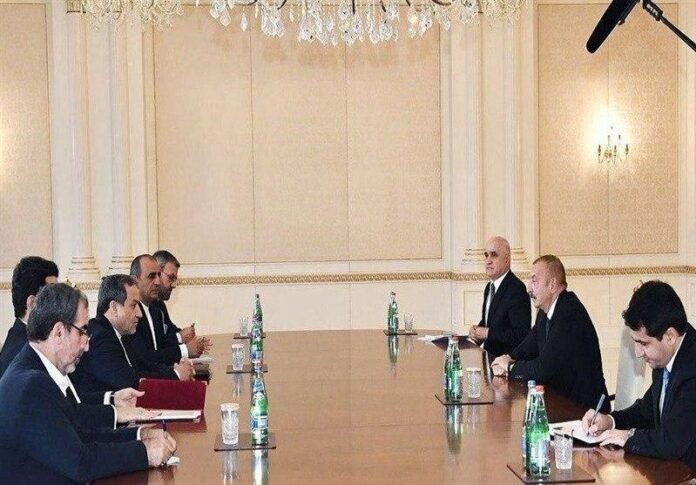
Foreign Minister Zarif held separate telephone conversations with his Azeri and Armenian counterparts on Sunday night following the outbreak of military clashes between the two countries.
In the talks with Minister of Foreign Affairs of the Republic of Azerbaijan Jeyhun Bayramov and with Armenian Foreign Minister Zohrab Mnatsakanyan, the top Iranian diplomat was informed about the latest conditions and on-the-field situation in the disputed region.
Foreign Minister Zarif also expressed concern about a flare-up of tensions, and called on the warring sides to show self-restraint, agree on ceasefire and immediate cessation of hostilities, and begin negotiations within the framework of the international law and regulations.
He also notified the two neighboring states that the Islamic Republic of Iran is ready to employ all of its capacities for the establishment of ceasefire, the start of dialogue, and restoration of peace and calm.
Heavy fighting has erupted between Armenia and the Republic of Azerbaijan over the disputed Nagorno-Karabakh region, with both civilians and troops killed.
Accusing the Republic of Azerbaijan of air and artillery attacks, Armenia reported downing helicopters and destroying tanks, and declared martial law.
The Republic of Azerbaijan said it had begun a counter-offensive in response to shelling.