Monday, April 20, 2026
Home Blog Page 2624

Iran, Russia Agree on Technical Cooperation in Oil Sector: Minister

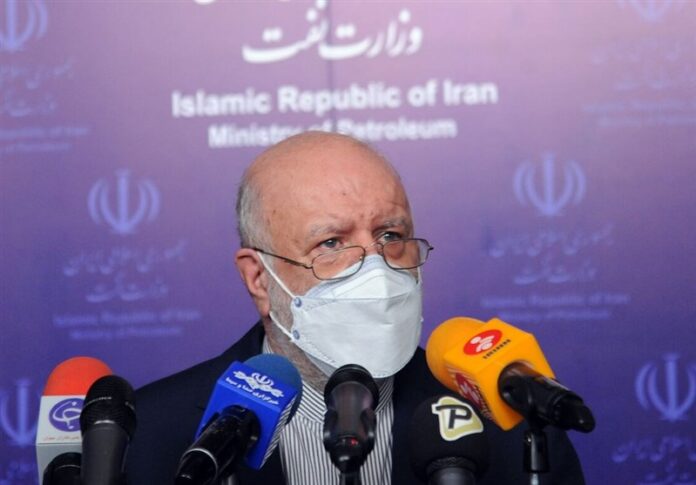
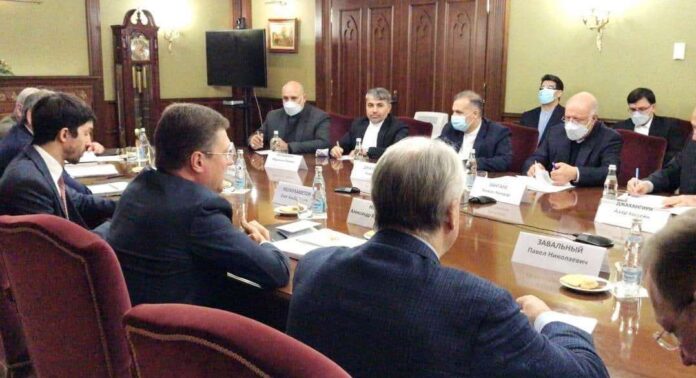
Bijan Namdar Zangeneh, who is on an official trip to Moscow, said the agreement was reached in meetings with Russian officials.

“During discussions in Moscow, we exchanged views on how to stabilize the global oil market,” he said.

“During these years, Russia has played a determining role in stabilizing the global oil market, and we held talks within the OPEC Plus framework given serious cooperation within OPEC. We shared similar ideas in that regard,” said the minister.

“The OPEC Plus meeting will be held on January 4. A meeting will also be held in February in this regard,” he explained.

“Both countries underlined that this (these meetings) is important for the maintenance of stability on the global oil market and the future possibilities in this arena,” he noted.

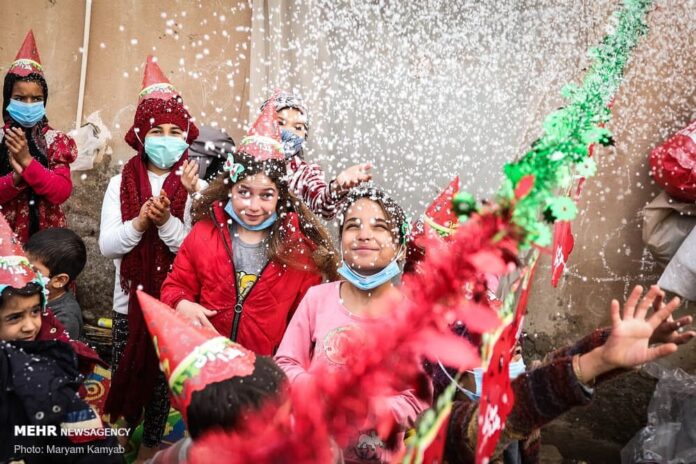
Celebrating Yalda Night with Poor Children of Qassem Abad

Photo by Maryam Kamyab, Mehr News Agency

A Look at Iranian Newspaper Front Pages on December 21

Iranian Newspapers

Aftab-e Yazd Newspaper:

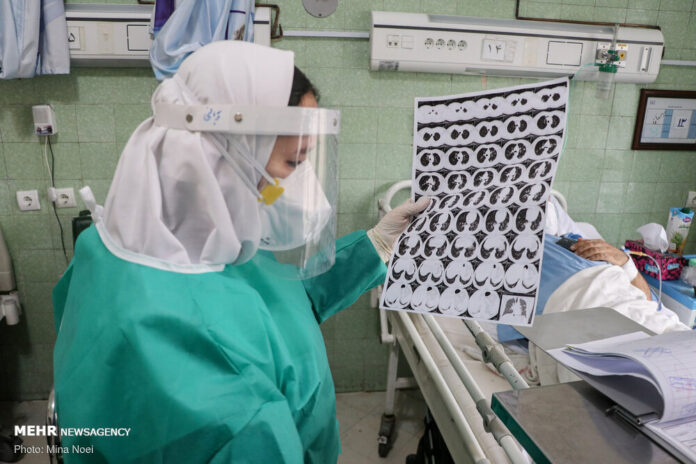
1- Leader: Hard Efforts of Nurses during Pandemic Made Them Even Dearer to Iranians

2- What’s Iran’s Petroleum Minister Looking for in Moscow?

A Look at Iranian Newspaper Front Pages on December 21


Arman-e Melli Newspaper:

1- Military Parliament of Iran Says Hello to Generals

* Military Men’s Presence in 2021 Presidential Votes

A Look at Iranian Newspaper Front Pages on December 21


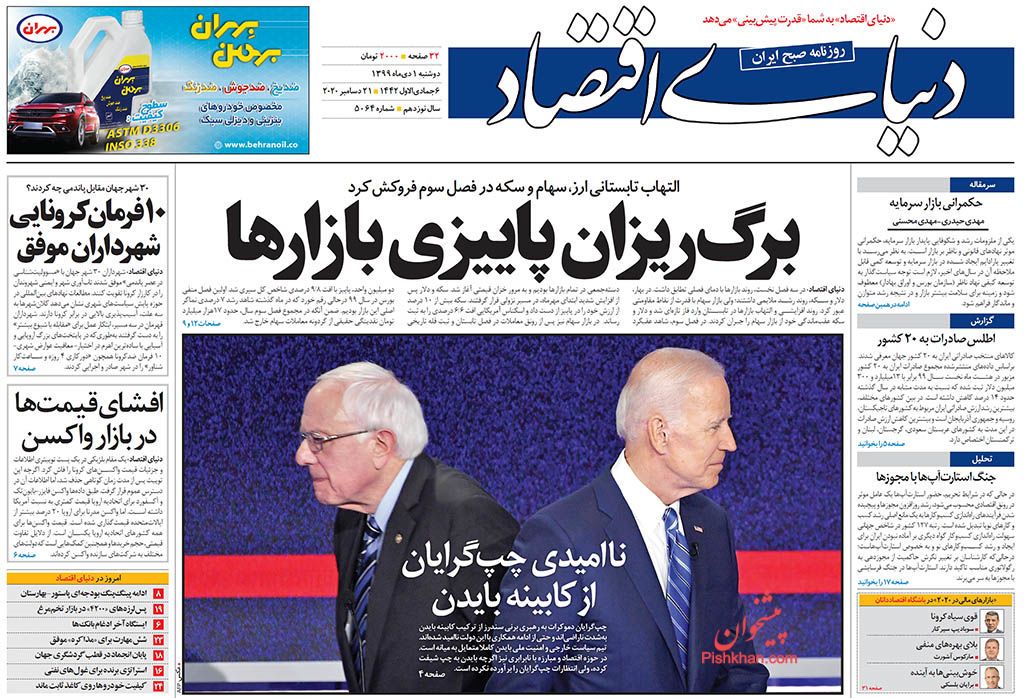
Donya-ye Eqtesad Newspaper:

1- Leftists Disappointed with Biden Cabinet

A Look at Iranian Newspaper Front Pages on December 21


Ebtekar Newspaper:

1- Positive Signals to US Dollar Market

2- Ifs and Buts of Biden and Europe for Return to JCPOA

3- Parliament Rejects Motion to Bar Military Men from Running for President

A Look at Iranian Newspaper Front Pages on December 21


Ettela’at Newspaper:

1- Iran’s Medical Council Calls for Immediate Purchase of COVID-19 Vaccine

A Look at Iranian Newspaper Front Pages on December 21


Iran Newspaper:

1- Rouhani: Health Workers Always on the Front Lines

A Look at Iranian Newspaper Front Pages on December 21


Javan Newspaper:

1- Here Comes the British Coronavirus

2- Iran Leader: Nurses Were Truly Amazing during Pandemic

2- Talk of ‘Martial Law‘ in US

A Look at Iranian Newspaper Front Pages on December 21


Kayhan Newspaper:

1- Zionist Newspaper: Biden Coordinates Policies with Israel on JCPOA

A Look at Iranian Newspaper Front Pages on December 21


Mardom Salari Newspaper:

1- West’s Double Standards on JCPOA Revival

2- Washington on Verge of Coup Orchestrated by Trump

3- Turkey’s Benefit from Azerbaijani Victory over Armenia

A Look at Iranian Newspaper Front Pages on December 21


Shahrvand Newspaper:

1- Nurses Are Like Angels to Patients

2- Even US Doesn’t Have Missiles Fired at Ain al-Assad: Former IRGC Chief

A Look at Iranian Newspaper Front Pages on December 21


Shargh Newspaper:

1- Lawmakers Embrace Military President

2- Iran Leader: Our Dear Nurses Did Great Job During Pandemic

3- Analyst: Zarif Can Definitely Be One of Presidential Candidates

A Look at Iranian Newspaper Front Pages on December 21

Iran’s Official COVID-19 Figures on December 21

Health Ministry spokeswoman Sima-Sadat Lari said in a press briefing on Monday that the new fatalities increase Iran’s overall death toll to 53,816, and the new cases raise the total number of infections to 1,164,535.

Lari went on to say that 5,519 patients are also in critical conditions caused by more severe infection.

The spokeswoman noted that 7,097,556 COVID-19 tests have been taken across the country so far.

She said currently 205 cities are in the “orange zone” and 243 are in the “yellow zone” in terms of coronavirus outbreak.

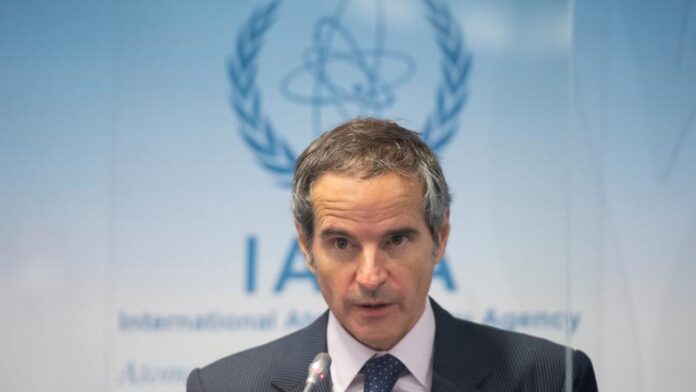
IAEA Chief’s Remarks about New Deal with Iran ‘Misinterpreted’: Spokesman

“Certain comments were made [by the IAEA director-general], but when asked about it, Mr Grossi said his remarks had been misinterpreted,” Iranian Foreign Ministry spokesman Saeed Khatibzadeh said on Monday.

“We have maintained that the JCPOA is not open to negotiation and no document can be added to the deal. He added a new interpretation to his earlier remarks and said what he meant was related to technical issues between Iran and the IAEA. We accept his interpretation of his own remarks and state that we will listen [to his views] within this framework,” Khatibzadeh noted.

The spokesman said Iran’s ties with the IAEA are totally technical, and we have always recommended that the ties must be maintained within the same technical framework.
“Indeed, the ties have always been clear, transparent and pragmatic whenever the IAEA had a totally technical view of issues,” he added.

“We have always advised the IAEA to stay away from political issues, political pressures and certain moves by third parties in order to maintain the weight, credibility and dignity of the IAEA and to keep its ties with Iran in the path of technical cooperation,” Khatibzadeh said.

His comments came after Grossi argued the upcoming US administration needs to strike a new deal with Iran due to the occurrence of what he claimed “too many breaches.”

Iran’s permanent representative to Vienna-based international organizations had earlier rejected Grossi’s remarks, saying there was no necessity for a separate document to revive the 2015 nuclear deal.

In a series of tweets on Friday, Kazem Gharibabadi reiterated Iran’s position on the 2015 landmark accord, officially known as the Joint Comprehensive Plan of Action (JCPOA), that the agreement was not subject to renegotiation even as a new administration came to power in Washington.

“There would be no renegotiation on the deal and in case of its revival, there is no necessity for a new document on the Agency’s role. It’s not needed to complicate the situation,” Gharibabadi wrote in one of his tweets.

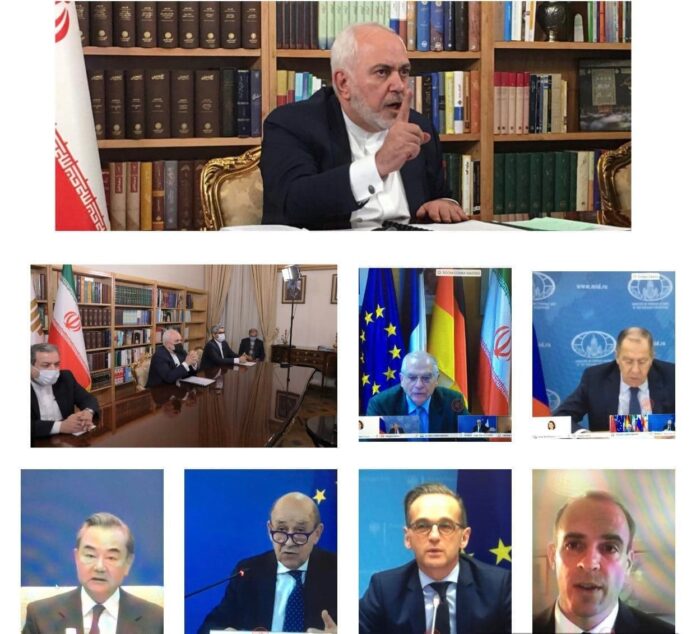
JCPOA Parties Hold Online Meeting at Ministerial Level

JCPOA Parties Hold Online Meeting at Ministerial Level

At the conclusion of the talks, the top diplomats released a joint statement, the full text of which follows:

1. A Ministerial Meeting of the E3/EU+2 (China, France, Germany, the Russian Federation, the United Kingdom, and the High Representative of the European Union for Foreign Affairs and Security Policy) and the Islamic Republic of Iran, the participants of the Joint Comprehensive Plan of Action (JCPOA), was held virtually on 21 December 2020. The meeting was chaired by the EU High Representative Josep Borrell.

2. JCPOA participants re-emphasised their commitment to preserve the agreement and stressed their respective efforts in this regard. They discussed that full and effective implementation of the JCPOA by all remains crucial and discussed the need to address ongoing implementation challenges, including on nuclear non-proliferation and sanctions lifting commitments.

3. Ministers underscored the important role of the IAEA (International Atomic Energy Agency) as the sole impartial and independent international organisation mandated by the UN Security Council to monitor and verify the implementation of the nuclear non-proliferation commitments under the JCPOA. They stressed the importance of continued good faith cooperation with the IAEA.

4. Ministers recalled that the JCPOA, as endorsed by UN Security Council resolution 2231 (2015), remains a key element of the global nuclear non-proliferation architecture and a significant achievement of multilateral diplomacy that contributes to regional and international security. Ministers reiterated their deep regret towards the US withdrawal from the agreement. They stressed that resolution 2231 remains fully in force.

5. Ministers agreed to continue dialogue to ensure full JCPOA implementation by all sides. Ministers acknowledged the prospect of a return of the US to the JCPOA and underlined their readiness to positively address this in a joint effort.

Too Soon to Talk about Iran’s Return to Oil Market: Minister

Speaking to reporters upon arrival in the Russian capital, Zangeneh said he will hold meetings with Russian officials and oil companies during the trip.

“However, our most important discussion is on the latest developments in the global oil market, which is in a sensitive situation,” he added.

Zangeneh pointed to the key role of Russia in OPEC+ and added, “For several years, Russia has been playing a very constructive and effective role in OPEC+, along with members of the Organization of Petroleum Exporting Countries (OPEC) and other allies.”

Pointing to the recent meeting between Russian Deputy Prime Minister Alexander Novak and Saudi Energy Minister Abdulaziz bin Salman, he said that consultations between OPEC members and their allies have always been effective.

During his stay in the Russian capital, the Iranian petroleum minister is to hold separate talks with Deputy Prime Minister Novak and Energy Minister Nikolai Shulginov.

The Ministers of Petroleum and Energy, members and non-members of the Organization of Petroleum Exporting Countries (OPEC), the OPEC Plus Coalition, recently decided to facilitate an agreement to reduce their oil production to 500,000 barrels per day in January 2021 and have monthly meetings to review further adjustments in the coming months.

Knowledge-Based Firms ‘Invaluable’ Assets in Fight against COVID-19: Rouhani

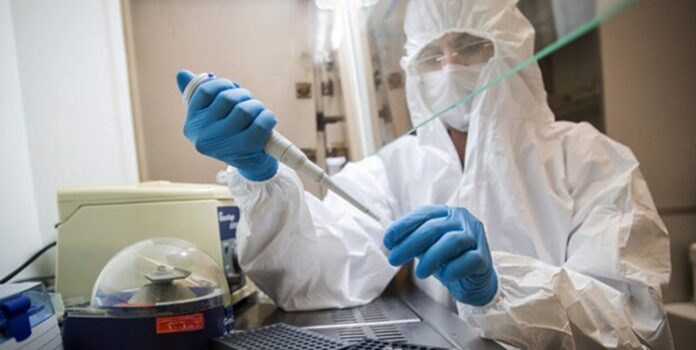
Iranian Researchers Detect 23 Types of Mutations in COVID-19 Virus

President Hassan Rouhani said they are also working to produce medicines, which will contribute heavily to the health sector.

“I’d like to thank knowledge-based companies. Knowledge-based firms help us a lot during this period. Knowledge-based companies produced a lot of equipment, including hospital equipment,” he said.

“Knowledge-based companies are also working to develop a vaccine for COVID-19, and will hopefully work to produce medicines in the future,” he said.

“These companies are invaluable,” the president noted.

President Rouhani then underlined that the number of knowledge-based firms has multiplied in the country over the past few years.

“There were only around 50 knowledge-based firms, but now their number has risen to around 5,200,” said the president.

He further underscored the importance of innovative factories to be established across the nation.

“Innovative factories have been inaugurated in some provinces. Recently, I ordered provincial governors to have an innovative factory established there and pave the wat for start-ups to begin work,” the president explained.

“There are some provinces where two innovative factories are up and running. We should become active in these areas as well,” he said.

“The electronic-government service, health sector, knowledge-based companies can work together to facilitate conditions for the health and treatment sector,” he noted.

Iran Suspends Flights to UK for 2 Weeks after Emergence of New Strain of Coronavirus

Authorities say the decision has been adopted to protect citizens’ health.

“As deemed necessary by the Iranian health ministry, flights to Britain will be suspended for two weeks,” said Shahram Adamnejad, the deputy minister of roads and urban development.

“Given the new conditions which have emerged in the UK with regards to COVID-19 infections, and at the discretion of the Iranian health ministry, flights between Tehran and destination in Britain will be suspended for two weeks in order to stop the spread of the disease and protect the health of people,” he noted.

England’s top medical officer announced on Saturday (December 19, 2020) that the UK has identified a new variant of the coronavirus that “can spread more quickly” than prior strains of the virus, leading Prime Minister Boris Johnson to impose fresh restrictions on parts of Britain to control its spread.

“We’re learning about it as we go, but we already know enough, more than enough, to be sure that we must act now,” Johnson said during a press briefing on Saturday where he laid out fresh restrictions on London and other parts of England ahead of the Christmas holiday.

“When the virus changes its method of attack, we must change our method of defense,” Johnson said.

The UK government announced the new coronavirus strain following an increase in cases in the southern and eastern parts of England.

Just over 1,100 Covid-19 cases with the new variant had been identified as of Sunday, according to a statement from Public Health England.

Now, it’s thought that the new strain could be up to 70% more transmissible than the original strain of the disease, Johnson said on Saturday, adding that it appears to be driving the rapid spread of infections.

Johnson called on residents to refrain from traveling and “stay local” to prevent the new strain from moving around the country and abroad.

 

Millions of Iranians Celebrate Yalda Night in Shadow of Coronavirus

For almost a year now, the COVID-19 pandemic has been the uninvited guest of the people across the world, forcing everyone to change their lifestyle.

This year, Iranian people are also forced to abandon their thousand-year-old tradition of family gatherings on Yalda Night.

Yalda Night (Shab-e Chelleh) is a Persian winter event which is commemorated on or around December 20 or 21 each year.

Yalda celebrations used to be a social occasion when friends and family gather to eat, drink and read poetry (especially Hafez) until after midnight.

Millions of Iranians Celebrate Yalda Night in Shadow of Coronavirus
Popular, Iconic Dishes of Yalda Night in Iran

Each member of the family makes a wish and randomly opens Hafez’s book of poems and recites the poem, which is believed to be an interpretation to the wish.

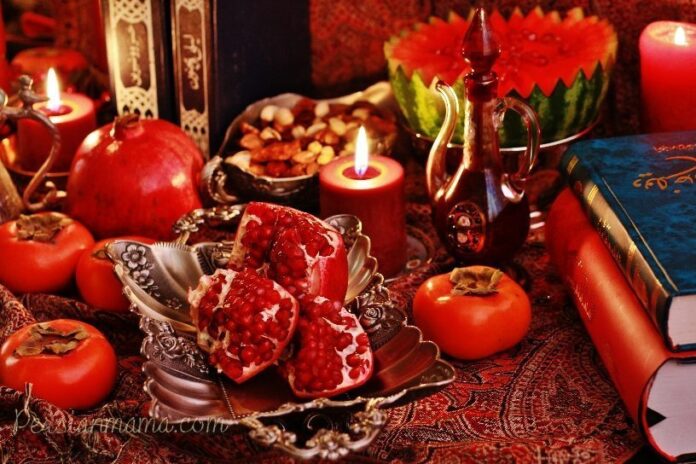
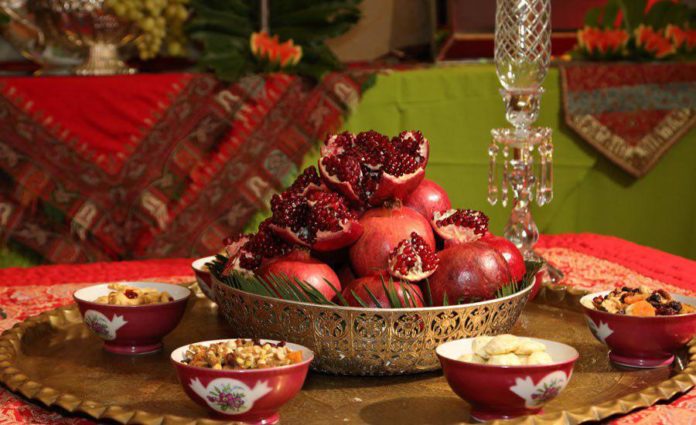
Fruits, particularly pomegranates and watermelons, and nuts are served in this night. The fruits signify the hope for having a fruitful spring and summer.

The red-coloured fruits are believed to symbolize the crimson hues of dawn and glow of life, invoking the glory of Mithra. Pomegranates with angelica powder are also believed to protect individuals against the Devil.

Central Asian countries such as Afghanistan, Tajikistan, Uzbekistan, Turkmenistan and some Caucasian states like Azerbaijan and Armenia share the same tradition as well and celebrate Yalda Night annually at this time of the year.

Yalda Night was officially added to Iran’s List of National Treasures during a special ceremony in 2008.

The annual winter ceremony manifests the traditional concept of light and good prevailing over darkness and evil in the ancient Iranian religion.

Despite all the economic hardships, many Iranians today were seen making their purchases of fruits such as pomegranates, watermelons and various dried nuts for the night’s celebration.