Wednesday, April 8, 2026
Home Blog Page 2572

Free Concert for Iranians to Feel Better amid Economic Woes

Amid an economic crisis and an historic devaluation of Iran’s national currency, Shajarian wrote on his Instagram page that he may perform a free street concert if he is given the required permissions.

“Dear people, in these days when Siavash is through the blaze [referring to a story in Ferdowsi’s Shahnameh], I do not know what to do to make people feel better. If there would not be a licence problem, I’ll be at your service to perform a broad street concert for you [for free],” he said.

“Hope we’d feel better next to each other,” he wrote on his page.

Shajarian’s post was immediately welcomed by Iranian officials. Hojjat Nazari, a member of Tehran City Council, hailed the decision and expressed his preparedness to cooperate with the renowned singer. He also recommended that Shajarian holds the concert in a relatively poorer neighbourhood in southern Tehran.

The Culture Ministry’s Music Office also said it is ready to issue the required permissions for Shajarian to hold the outdoor performance.

According to IRNA, several Iranian singers had earlier cancelled their concerts to sympathise with the people who are spending hard days.

However, they were criticized by some who believe instead of cancelling the concerts singers can lower the price of the tickets or hold free programs to create joyful moments for the people.

“Keeping Strait of Hormuz Open Hinges on Iran’s Interests”

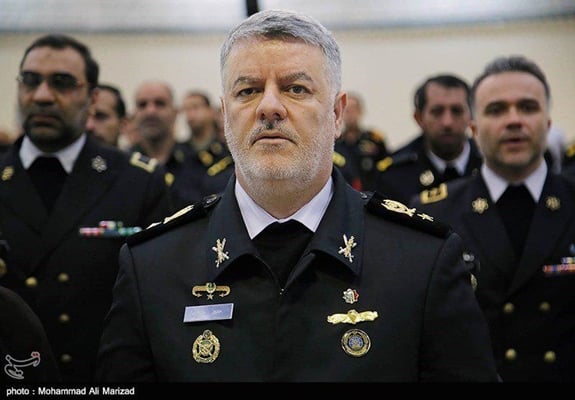
The closure of the Strait of Hormuz needs some preliminaries, Khanzadi said on Tuesday.

“The effectiveness of a Strait heavily depends on its openness. Sanctions are highly influential on the functions and sanctions against Iran will affect the functions of the Strait of Hormuz,” he added.

“The international community must show its commitment towards the Islamic Republic. We do not consider the US as an effective player in the decision-making process in the Strait of Hormuz, and our actions are dependent on the opinion of the Leader of Iran’s Islamic Revolution,” noted Rear Admiral Khanzadi.

The US has threatened to cut down to zero Iran’s oil exports as part of its efforts to step up pressure on the Islamic Republic.

Iranian President Hassan Rouhani suggested earlier this month that Iran would try to stop oil trade in the region, if the US halts Iran’s oil export.

Speaking in a Tuesday meeting with UK’s new ambassador to Tehran, Rouhani stressed that the Islamic Republic of Iran has never been seeking tension in the region and does not want to create a problem in the world’s waterways, but it will never give up its right to export oil.

Iran Keen to Boost Ties with S. Korea, Vietnam: Rouhani

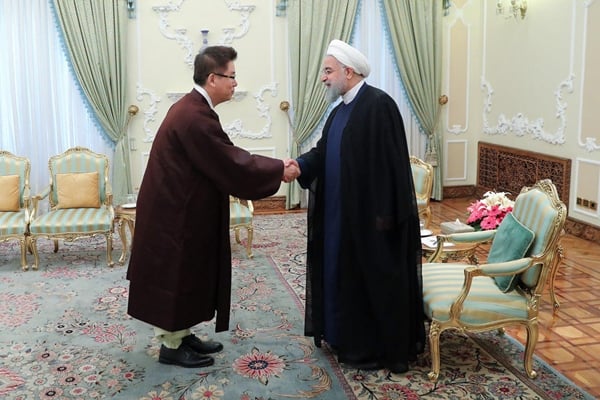
In a Tuesday meeting with the new ambassador of South Korea to Tehran, President Rouhani stressed that relations between Tehran and Seoul have always been friendly, and in recent years the ties have expanded and had positive results.

“Today, companies and private sectors of the two countries have good cooperation in different fields, especially energy, and they trust each other.”

“Iran can always be a reliable source of energy for South Korea,” said Rouhani, adding that certainly, the decisions of the new US administration are temporary, while the relations between Iran and South Korea are historical and deep-rooted.

“We should not let political issues and illegal sanctions hurt the historical relations between the two countries,” stated Rouhani, highlighting that efforts to further develop interaction between Tehran and Seoul and accelerate the implementation of the joint agreements.

In turn, the new South Korean Ambassador to Tehran underlined that Iran and South Korea have always had good relations.

He added that the ties between Tehran and Seoul have become much stronger in the past five years, saying, “I will not hesitate to try to expand the cooperation between the two countries in different sectors.”

Iran Keen to Boost Ties with S. Korea, Vietnam: Rouhani

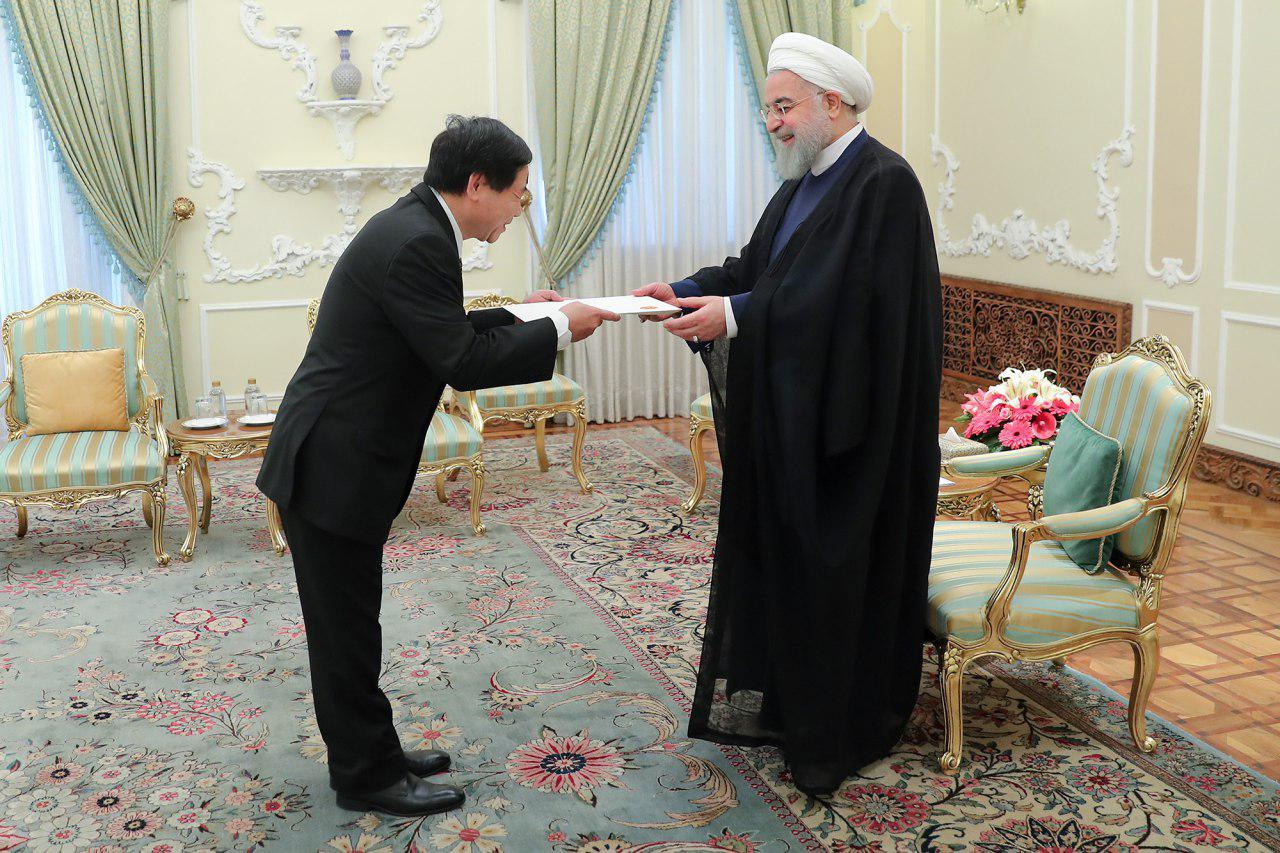
Meanwhile, Vietnam’s new ambassador to Tehran also held a meeting with the Iranian president and submitted his credentials.

In this meeting, President Rouhani said the relations between the two countries have been very well developed in recent years, and in the light of their capabilities, it is a must to further strengthen Tehran-Hanoi ties.

Referring to good agreements reached between the two countries during his visit to Vietnam, Rouhani noted that the two countries have plenty of capacities to meet each other’s needs. “By accelerating the implementation of the agreements, significant steps can be taken in line with the interests of the two nations,” he underscored.

“We hope that there will be good developments in the banking ties and deepening of Tehran-Hanoi economic cooperation. The Islamic Republic of Iran is fully prepared to boost the economic-political and cultural relations with Vietnam.”

The new Vietnamese envoy to Tehran, for his part, said he will do his utmost to expand the cooperation between the two countries in different sectors. He said in this regard, the Vietnamese prime minister has called on companies active in the economic sphere to develop relations with their Iranian counterparts.

Ball in Europe’s Court after US’ Withdrawal from JCPOA: Iran

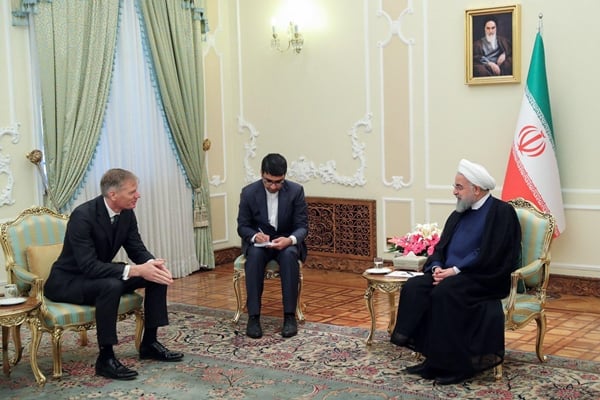
In a Tuesday meeting with UK’s new ambassador to Tehran Robert Macaire, President Rouhani said today is a significant period in history, and it is very important for the Iranian people to see that Europe clearly expresses its position on the actions that must be taken to compensate for the illegal withdrawal of the United States from the nuclear deal.

Rouhani also criticised the failure of some parties in the full implementation of the JCPOA in the commercial and economic sectors and banking relationships.

“The Islamic Republic of Iran is always ready to develop relations with European countries, and now, after the illegal withdrawal of the US, in the short time available, the ball is on the European states’ court.”

Rouhani also described as constructive the meetings and talks of the officials of the two countries regarding bilateral and international issues.

The president stressed that the Islamic Republic of Iran has never been seeking tension in the region and does not want to create a problem in the world’s waterways, but it will never give up its right to export oil.

For his part, Macaire said today, European countries are making unprecedented and great efforts to maintain the nuclear deal, especially in the economic field.

“We are looking for the further development of relations with Iran, and we believe that solving the problems and crises is possible only through dialogue and diplomacy,” he noted, stressing the importance of Iran’s de-escalation policy in the region.

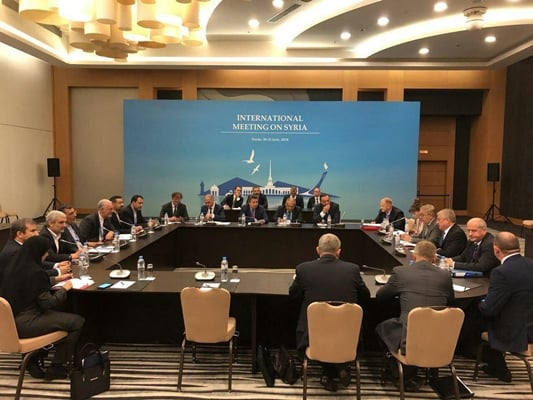
Iran, Turkey, Russia Discuss Syria Peace in Sochi

The Monday talks were attended by Senior Assistant to Iranian Foreign Minister Hossein Jaberi Ansari, Russian President’s Special Envoy for Syria Alexander Lavrentiev and Deputy Turkish Foreign Minister Sedat Onal.

The top negotiators of the three countries also discussed a draft final statement of the 10th international conference on Syria peace, which is underway in Sochi.

Jaberi Ansari also met with the Syrian delegation to Sochi talks headed by Syria’s UN envoy Bashar al-Jafari. During the talks, the two sides discussed the Constitutional Committee and the exchange of detainees. They also conferred on the final statement of the 10th Astana conference.

He also held separate talks with UN’s Special Envoy for Syria Staffan de Mistura and Turkey’s Onal.

In the meeting with de Mistura, the two diplomats exchanged view on the political settlement of the conflict, the committee tasked with drafting Syria’s Constitution, and humanitarian dimensions of the Syria crisis, particularly the return of refugees.

Jaberi Ansari and Onal also discussed the latest developments in the Syria crisis, the committee on Syrian Constitution, the return of refugees, the exchange of detainees and abductees, and the final statement the 10th round of Syria talks.

Seven Ways to Combat Poverty

Poverty

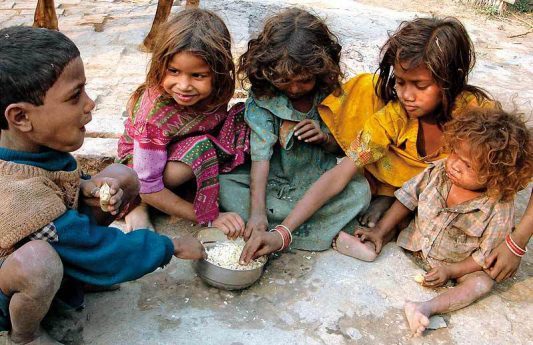
A look at this disparity of living may tempt you to believe the gap in lifestyles is too large to bridge, but there are many things that a single person can do to improve the well-being of those who live in poverty.


1. Understand the Obstacles of Poverty

Without an understanding of the challenges of poverty, it is difficult to help appropriately. For example, it often isn’t enough to provide a little bit of clothing or a meal here and there. Families and individuals stuck in a cycle of poverty are often deprived of the education that might lift them from their circumstances or adequate healthcare to ensure they are physically able to improve their situations.

People in poor communities may not have the same opportunities for employment as those in more comfortable conditions. Facing disadvantages economically, socially, and politically, entire segments of the population may be trapped in a cycle without the means to break free.


2. Recognize Talents and Value

Too often, people assume that gifts of money and goods are enough to make lasting changes in poor communities. While these donations are necessary, they don’t really address the underlying problem. One of the first things you can do as an individual is to change your perspective.

Rather than viewing these people as projects, take time to get to know individuals. As you come to know them, you’ll recognize the potential for success, while coming to love and respect individuals and groups of people. As part of these interactions, you may provide access to new job opportunities or give aid in overcoming everyday barriers.


3. Recognize Outside Influences

It is a somewhat prevalent attitude that the poor are poor because they haven’t done enough to change their situation. However, as you gain information about the issues facing impoverished communities, you’ll begin to recognize links between reproductive rights, workers’ rights, and the criminal justice system. Even in wealthy countries, there are struggles to implement government policies and programs that might alleviate poverty, lack of education, lack of healthcare, and income inequality. If you’re able to stop blaming the poor for their circumstances, you’ll be able to start affecting positive change.


4. Raise Awareness

In neighborhoods where clean water is taken for granted, it can be hard to imagine the struggle for water facing the poor in rural areas. When public education is more or less free, it is hard to believe that some children cannot afford to attend their local schools. According to the World Bank, 1 in 10 people survive on less than US$1.90 per day. That’s an issue that is easy to overlook when you’re surrounded by other affluent households.


5. Donate Money and Goods Wisely

Thoughtful financial assistance can be a boon to those in need. In the short term, those donations may provide a meal for a family or ensure another month of shelter. If you’re hoping to make a long-term difference, however, you may want to combine your efforts with others, such as charitable organizations.

Lola Karimova-Tillyaeva is one example of this type of work. She combined her efforts with UNESCO, the UN Education, Scientific, and Cultural Organization, which seeks to bring education to impoverished communities, foster unity between and appreciation for cultures, and advocates the importance of freedom of expression. Identify organizations with goals that align with yours and combine your resources with theirs to achieve lasting benefits.


6. Sponsor Fundraisers and Drives

Social media and electronic global communications have made it easier than ever to pull people together in a single effort. Communities around the world have been hit with hurricanes, earthquakes, and other natural disasters. News of those disasters traveled quickly, inspiring disaster relief donations; emergency supplies, food, money, and volunteer services arrived from all over the world. When you see a need, you could sponsor a fundraising effort online, organize a collection drive, or gather volunteers to complete needed projects, such as building a well.

Social media is a powerful tool which can be leveraged by charitable organisations and NGOs in many ways to start a fundraiser and drive attendance at charity events. For those yet to get their act together, here are three important tips to help you get started;

• Maintain your organisation’s profile clarity & consistency across platforms.
• Encourage all the members of your organization to follow and share your posts.
• Choose the right SM platforms to promote your organization and its upcoming charity events, depending on who your target audience is.


7. Get Involved in Public Policies

Pay attention to existing laws and bills and take steps to recognize their effect on society, especially on those populations living in poverty. Sponsor and support policies and laws that are aimed at reducing poverty and improving the circumstances of those who don’t have the same advantages you enjoy.

As just one person, you may not feel that you can do much to alleviate the suffering of those living in poverty. However, there are steps you can take to increase awareness, change minds, and improve the circumstances of families or individuals in your community. Whether you choose to make donations or influence public policy, your efforts are sure to serve as an example for others.


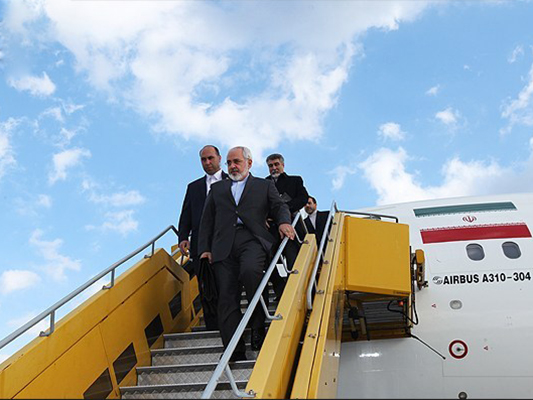
Iran’s Top Diplomat Departs for Sri Lanka

During the visit, the Iranian top diplomat is to discuss bilateral relations with senior Sri Lankan officials.

After Sri Lanka, Zarif will visit Singapore to sign documents on Iran’s accession to the Treaty of Amity and Cooperation of the Association of Southeast Asian Nations.

While in Singapore, he will also attend a ministerial meeting of the ASEAN.

“Consensus among South-east Asian countries on accepting Iran as a member of the ASEAN’s Treaty of Amity and Cooperation (TAC) indicates the importance of relations and interaction with Iran as an important and influential power in regional and international equations by all members of this Association,” said Iranian Foreign Ministry Spokesman Bahram Qassemi a few days ago.

The ministerial summit of the ASEAN member states and its partners was kicked off on Monday and will last until August 4 in Singapore.

US Secretary of State Mike Pompeo is also expected to attend the summit on August 3, fuelling speculations that there might be a bilateral meeting between top diplomats of Iran and the US after the recent escalation of war of words between Tehran and Washington.

Iran Slams Final Statement of US’ Religious Freedom Summit

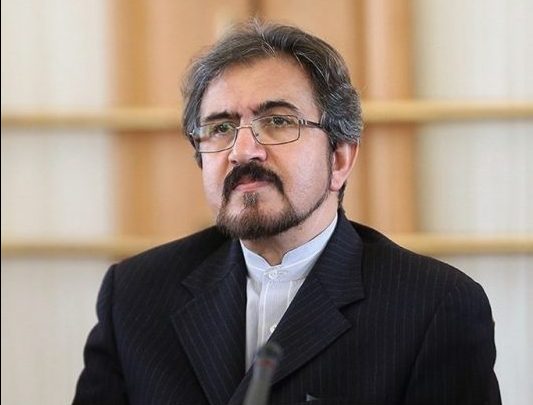
In a Monday statement, Qassemi slammed the statement as an example of interference in the internal affairs of Iran, saying that it is based on inaccurate, biased, and unrealistic information.

He pointed out that these few countries have falsely called themselves representatives of the international community.

“The US and other violators of the most natural and obvious human rights are not in a position to make biased judgments about other countries with different cultures and diversities.”

Qassemi highlighted the principles of the Islamic Republic of Iran’s developed constitution and the recent resolution of the Expediency Council on the rights of religious minorities, saying that throughout the history Iran has witnessed the peaceful presence and coexistence of various religious factions.

“At the moment, all divine religions in Iran are represented in the Iranian parliament and other bodies while enjoying all citizenship rights,” underscored the Iranian spokesperson.

He also scorned the baseless remarks of US Vice President Mike Pence about religions and religious ideas at this conference, noting that throughout the history, the Iranian people lived in a peaceful atmosphere with other minorities and believers of other religions.

He further highlighted that followers of all divine religions have practised their religious rituals throughout Iran and the country’s law protects these freedoms.

“Unfortunately, fighting against other religions and ethnic groups has spread to this region from the Western side of the world leading to catastrophes at times,” stated the Iranian official.

The US State Department concluded its first-ever Ministerial Meeting to Advance Religious Freedom Thursday (July 26), with declarations claiming further efforts to reduce religious persecution.

Secretary of State Mike Pompeo pointed to an action plan, dubbed the Potomac Declaration, that lays out “concrete ways” to protect religious groups around the world.

25 countries co-signed a statement condemning abuses of religious freedom by terrorist groups, while fewer than a dozen added their names to statements condemning religious restrictions in China, Iran and Myanmar.

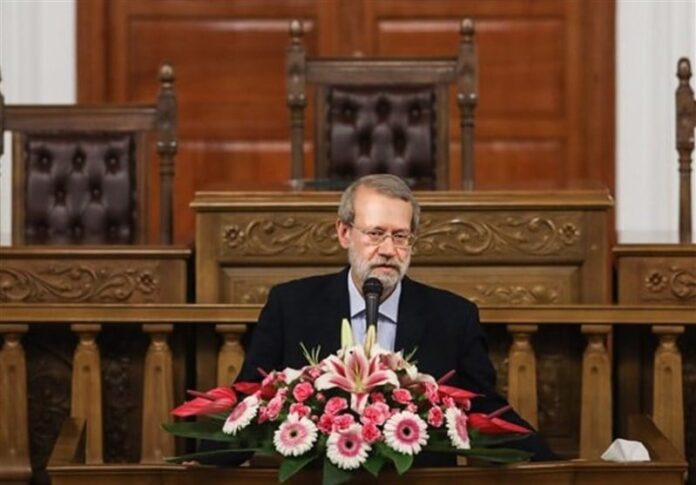
“Enemy Has Created Army of Guerillas in Suits against Tehran”

“According to the information we have received, the enemies’ intelligence services are seeking to harm (Iran’s) economy under the disguise of (other activities),” he said.

Larijani further emphasized that at any rate, it is very important to control the foreign exchange market’s situation.

“Enemies are seeking to prevent oil sales and banking transactions and, accordingly, they launched an army of guerrillas in suits to put pressure on Iran,” the parliament speaker went on to say.

The remarks came as the Iranian money, once again, plunged to a record low against the US dollar in the unofficial market, which is being offered for as much as 110,000 rials Monday.

On May 8, the US president pulled his country out of the Joint Comprehensive Plan of Action (JCPOA), a nuclear agreement achieved in Vienna in 2015 after years of negotiations among Iran and the Group 5+1 (Russia, China, the US, Britain, France and Germany).

After US President Donald Trump withdrew his country from the deal, his administration moved to re-implement the previous sanctions against Iran.

American authorities say the new sanctions would place “unprecedented economic pressure” on Iran and are seeking to impose sanctions against the countries that do not cut imports of Iranian oil to “zero” by November 4.

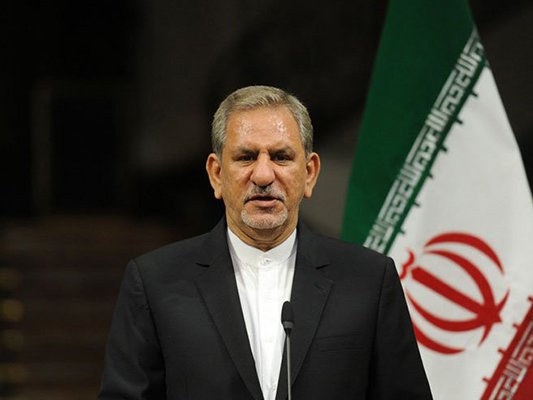
“Iranian Government to Resolve Economic Crisis Soon”

New Economic Plans Needed to Counter Fallout from COVID-19 Outbreak: Iran VP

“We must take care of the lives of the people in the new circumstances facing the country and not let them, especially the poor ones, be affected,” Jahangiri said on Monday in reaction to the historic plunge in the value of Iran’s national currency.

The government’s priority is to protect the lives of people, especially the poor, against sanctions, he said, addressing a meeting of Resistance Economy Committee.

“The basic commodities, pharmaceuticals and essential needs of the people should be provided with official-rate currency and be made available to the society in abundance,” stressed Jahangiri.

He also underlined that the United States wants to impact public opinion before it imposes the sanctions and, in their own words, they want to launch an economic war against the Iranian nation.

“If we can handle this situation well and pass the country through this stage, the Iranian economy will become stable and economic indices become positive again.”

He went on to say that sanctions create problems but also provide opportunities for the country, one of which is in the industry sector.

“The central bank is seriously looking to review foreign exchange policies and present a new package for managing the foreign exchange market. Once the central bank’s package is finalised, all related organisations will be required to accompany the central bank in implementation of the proposed package,” he noted, adding that the package is expected to stop fluctuations in the foreign exchange market, and return stability to the country’s economy.

A dramatic decline in the value of the Iranian rial has increased the prices of imported consumer goods and depressed some markets in the past few months.

On Monday, one US dollar was traded for IRR 120,000 in the free market, leading the government to face a strong backlash from political and social circles for its handling of the economy.