Monday, December 29, 2025
Home Blog Page 2569

Iran Says Trying to Get Its Stranded National Out of Myanmar

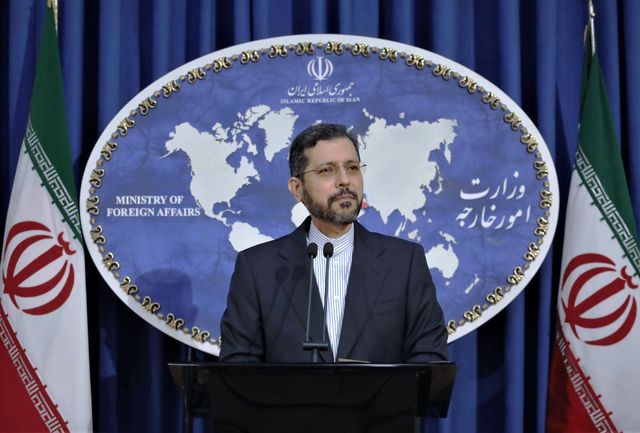
In a statement on Monday, Khatibzadeh said the embassy of the Islamic Republic of Iran in Thailand, which is also accredited to Myanmar, has been in touch with the small number of Iranian nationals in this country during the coronavirus pandemic, and helped them get out of Myanmar.
“The last remaining national is an Iranian woman, and the embassy is trying to make sure of her health and safety and to provide the assistance needed for her departure from Myanmar,” the spokesman said.

Khatibzadeh advised Iranian nationals to avoid travelling to the country until proper health and security conditions are restored, and strongly advised other Iranian nationals who might be still in Myanmar to inform the Iranian embassy in Thailand of their situation and possible requests as soon as possible, so that the embassy would provide the assistance needed.

His comments came after Iranian traveller Soudeh Sadraei said in a post in her Instagram account that she’s stranded in Myanmar and needs immediate help to get of the country.

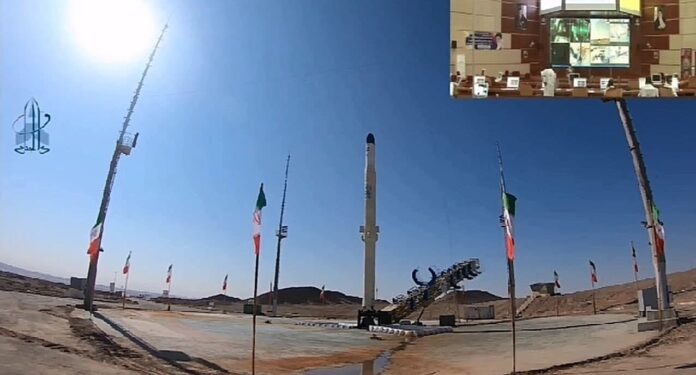
Iran Launches Zoljanah Satellite Launch Vehicle

The satellite launch vehicle has been developed by domestic experts.

“For the first time in the nation’s space sector, Iran carried out the research launch of the combined satellite carrier Zoljanah using the technology of the country’s most powerful solid-fuel engine,” said the defence ministry official.

The official noted that the three-phased satellite launch vehicle can compete with modern SLVs in the world in terms of technical specifications.

In addition to the solid-fuel engine, he said, several other cutting-edge technologies have been incorporated into the vehicle.


‘Talks with Taliban Don’t Mean Iran Has Forgotten Killing of Its Diplomats’

“The government of Iran not only has very close relations with the incumbent administration of the Islamic Republic of Afghanistan, but perhaps we are one of the two countries that, unlike many others, have always supported the achievements of the Afghan nation and its incumbent administration,” Khatibzadeh said on Monday.

“All the talks being held [between Tehran and the Taliban] are either upon the request of or with the knowledge of the Afghan government,” he added, speaking to reporters in a weekly press conference.

“What needs to be said is that the Taliban are part of the reality of Afghanistan’s today and future, but not all of it. The Taliban office is officially operating in Doha and in Pakistan as well as other places.

They are holding direct negotiations with the Afghan government and ruling system, and the Kabul government has been informed about this visit [of Taliban to Tehran].”

“On many issues, the two sides have already exchanged views. Of course, there are many things to say about the nature and activities of this group. We haven’t forgotten the issue of our martyrs [killed by Taliban] in Mazar-i-Sharif, and definitely one of the issues is that we have always held talks to find the perpetrators,” Khatibzadeh noted.

Taliban militants killed Mahmoud Saremi, the correspondent of the Islamic Republic News Agency (IRNA), along with eight Iranian diplomats, in the northern Afghan city of Mazar-i-Sharif in 1998.

The recent visit of a Taliban delegation to Tehran and their meetings with top Iranian officials have drawn widespread criticism, but Tehran says these talks are necessary for restoring peace and stability to Afghanistan, and are thus vital for Iran’s security.

“This visit has been made in line with and within the framework of negotiations between the Afghan government and this group. We have always, not just in this case, announced that we support intra-Afghan dialogue and all-inclusive talks among Afghan groups. The Taliban are definitely part of these groups,” Khatibzadeh said Monday.

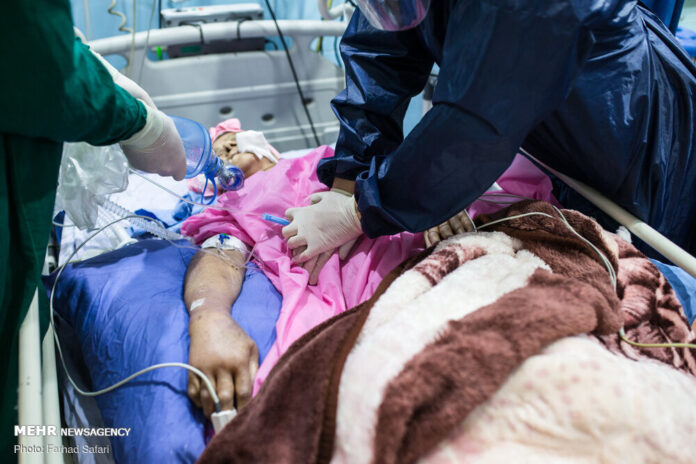
Iran’s Coronavirus Fatalities Rise to 58,000: Ministry

In a press briefing on Monday, the Ministry’s spokeswoman Sima-Sadat Lari reported 6,597 new cases of COVID-19 infection, raising the total number of cases to 1,424,596.

So far, Lari added, 1,216,305 patients have recovered from the disease or been discharged from the hospital.

Lari said 3,896 patients are also in critical conditions caused by more severe infection.

The spokeswoman noted that 9,340,259 COVID-19 tests have been taken across the country so far.

She said currently 18 cities are in the “orange” zone, 124 are in the “yellow” zone, and 306 are in the “blue” zone in terms of coronavirus outbreak.
The “orange” cities are all in northern provinces, and include Amol, Babol, Babolsar, Behshahr, Tonekabon, Juybar, Chalus, Ramsar, Sari, Fereydunkenar, Qaemshahr, Mahmoud Abad, Neka and Nowshahr in Mazandaran province and Some’eh Sara, Rudsar, and Lahijan in Gilan province.

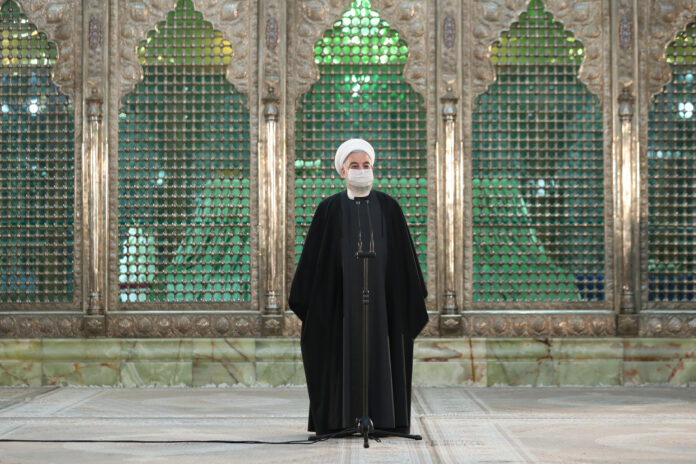
President Rouhani Renews Allegiance to Imam Khomeini

Speaking on Monday after renewing allegiance with the ideals of the late Imam on the forty-second anniversary of the Islamic Revolution, President Rouhani said Imam Khomeini, the great architect of the Islamic Revolution, did not choose to rely on outsiders and foreign powers for success because he considered the main power to be the power of the people and chose the way in which the people were the central point. 

“Imam Khomeini knew for many years that soft power would prevail over hard power, so he chose soft power, and February 1, 1979 showed well how the Imam was victorious in this way,” he said.

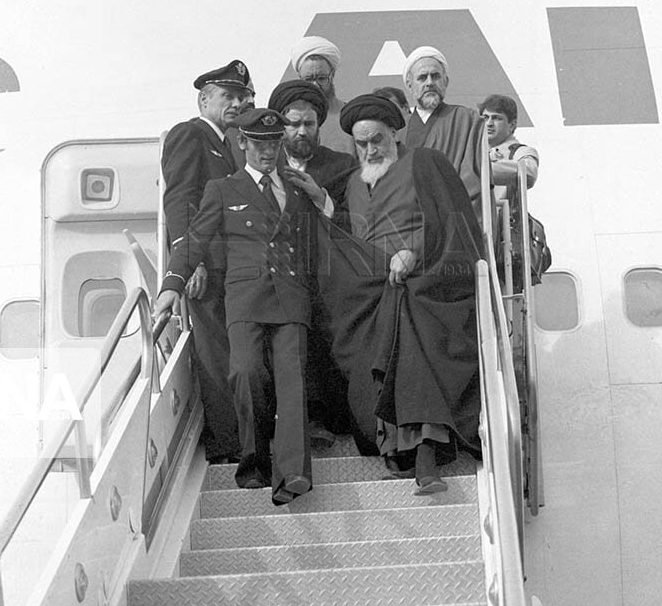
Rouhani said the people’s huge turnout on February 1 in welcoming the Imam back from exile was for the Imam himself.

“The Imam did not allow the tyrannical power that had exiled him to return him back. He first expelled them all from the country and then prepared the ground for his victorious return,” he said.

The people’s great reception, from Mehrabad Airport to Behesht Zahra, showed how influential and popular Imam was among the people, he added.

“Imam’s speech on February 1, 1979 in Tehran, which was his first speech after 14 years away from home, is the charter of our republic and Islamic system and the foundation of our system.”

Rouhani said as long as we are in touch with the words and logic of Imam in that speech and implement it, we will remain victorious.

President Rouhani went on to say, “In the historical speech Imam delivered next to the shrine of the martyrs of this land, he did not speak only about religious legitimacy, but about the acceptance and vote of the people and even about rationality.”

The president added, “Our fathers are not our guardians and we must vote and decide on our system. Imam spoke of rationality, legitimacy and Islam, and with strong reasons, determined the path and future path of the revolution for us.”

President Rouhani added, “The Imam told us in February 1979 that a system is legitimate that is based on the opinion and vote of the people within the framework and principles of Islam, and our path is the one he chose for us.”

Referring to Imam Khomeini’s words about the approval of the government, the president said, “Even when the Imam said, ‘I appoint the government based on the trust of the people,’ this was an important statement in Shiite ijtihad and the political jurisprudence of Islam and Shiism.”

The path of the Imam can lead to the survival of the system that he founded, the President said, adding, “Following the path of Imam is not just to read and repeat his words.”

The President went on to say that the values ​​of the revolution, such as Islam, republic, justice, independence and freedom, are fixed for us, but the methods are not fixed, adding, “In any condition, we have to choose a method in accordance with the time.”

Referring to the numerous elections held in the country over the past 42 years, the President said, “In most of these elections, sometimes more than two thirds of the people, that means 70%, went to the polls and when two thirds of the people vote, it shows that this vote is not only for the outcome of elections but it is the vote for the system.”

Referring to the importance of elections, President  Rouhani said, “Maximum turnout in elections is both a vote for the individual and a vote for the principle of the system.”

In another part of his speech, the President said that this year we celebrate the dawn of the Islamic Revolution in a situation where we have gone through a very difficult year since February last year as the imposed economic war and the spread of coronavirus have created many problems for the country and people.

Rouhani also stated that fortunately today, despite all the problems and economic pressures of the enemies, our efforts and the resistance of the people have resulted in both the prosperity of the economy and the health of the society, saying, “Wherever people participated, we could win in every problem.”

“Today, I believe that people are on the side of the system and have accepted that we are the servants of the people and we can continue the path of the Imam for years and even centuries.”

At the end of his speech, President Rouhani congratulated the people of Iran and the family of the late Imam on the dawn of the Islamic Revolution and added, “I hope the soul of the late Imam is satisfied with us and we can continue the path of Imam Khomeini and continue our allegiance with the great architect of the revolution until the end.”

Iran to Expand Export Markets for Its Knowledge-Based Products: VP

Knowledge-Based Companies

Vice President for Science and Technology Sorena Sattari stressed the importance of innovation centres of universities.

“Innovation centres are the birthplace of knowledge-based firms, in how fast they develop depends on their own efforts,” said Sattari while visiting the innovations centres of a prestigious university in the capital, Tehran.

“Any time I visit these centres, I see new systems, companies and products,” he added.

He praised universities’ initiative to establish innovation centres and knowledge-based companies which have considerable sales, and said the move can be a source of income for universities.

Sattari said such initiatives will build the culture of domestic production and bring universities and society closer together.

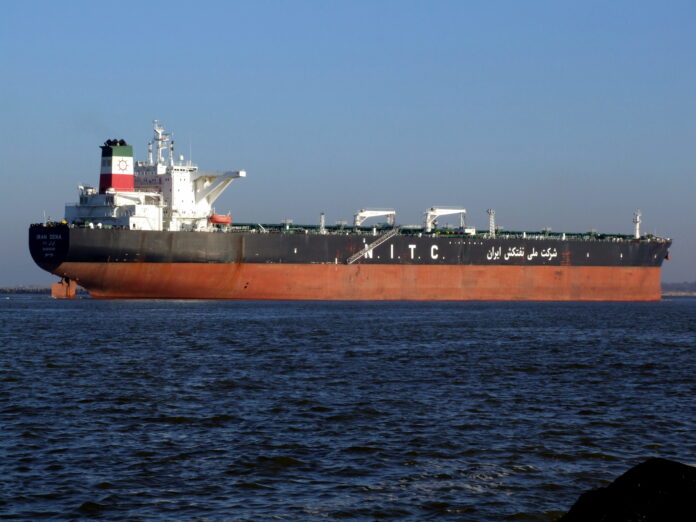
Iran’s Oil Exports Rising Despite Sanctions: Top Banker

Abdolnasser Hemmati said Iran’s measures to neutralize sanctions imposed on the country are working well.

“We will also try to make other countries prepare the ground for us to have access to our [financial] resources as soon as possible,” he said.

The official further noted that some $9 billion calculated based on an exchange rate of Rls. 42,000 for the US dollar has been set aside to provide basic goods for people in the year to March 2021.

The CBI chief then indicated that a “single exchange rate” should be defined for the greenback against the Iranian rial.

“However, different dimensions of such a move should be reviewed, so that people’s day-to-day lives won’t be affected,” he underscored.

He also said forex revenues from Iran’s exports are “good.”

‘Iran Secured Major Achievements after 1979 Islamic Revolution’

Ali Rabiei underlined one of the accomplishments was to eliminate the system ruling the country which was based on succession.

“The first achievement of the Islamic Revolution was to remove the hereditary system [of ruling the country] and build a nation,” he said.

“Through the Revolution, we built the nation and government and replaced a hereditary system,” the spokesman explained.

He then noted that a lack of experience in the early years following the Revolution, the eight-year Iraqi-imposed war in the 1980s and sanctions imposed on Iran kept the country from making progress at the beginning.

Rabiei further said stability and security are among other accomplishments of the Islamic Revolution.
“We should counter anything that would harm the Revolution and be sensitive about republicanism,” he said.

Elsewhere in his remarks, the government spokesman said Iran now ranks among the top 15 countries in the world when it comes to the production of science.

“We still maintain the first rank in nanotechnology, which is another accomplishment of the Islamic Revolution in the domain of science production,” he explained.

He added effective measures have also been adopted in terms of building sci-tech parks.
“At the moment, we have 50 major sci-tech parks,” he said.

Rabiei also said Iran should keep producing knowledge and presenting theories in order to further cement its achievements.

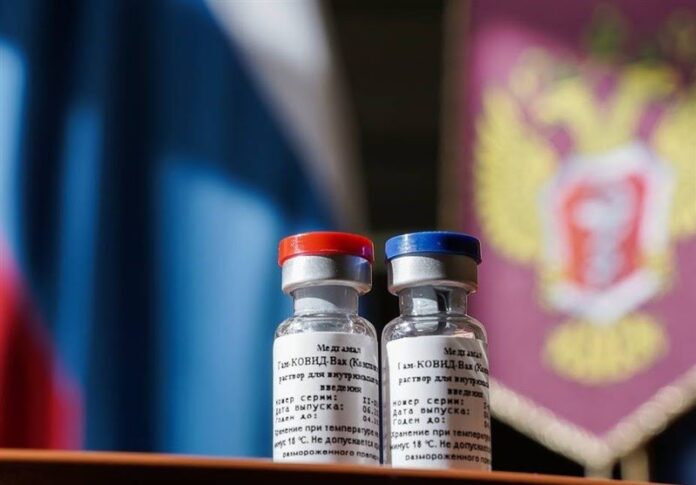
Iran Dispels Concerns over Import of Russian Coronavirus Vaccine

Saeed Namaki made the comment in response to speculations that the Russian vaccines due to be imported by the government might not be safe.

“Our own families will be the first to be inoculated with approved imported vaccines,” said the minister.

He said it is necessary to procure foreign vaccines for vulnerable groups “as long as domestically developed vaccines cannot meet our needs.”

However, he said only approved vaccines will be imported.

“We did not allow the clinical tests of vaccines produced by other countries to be conducted on our people,” he explained.

“No vaccine should be imported into the country before undergoing phase three of clinical tests and being [publicly] used in the country of origin,” the health minister stressed.

“We will only import vaccines which have been purchased and registered by at least five or six countries in the world and have begun to be used,” he said.

His comments came after Minoo Mohraz, a member of the scientific committee of the National Coronavirus Headquarters, said she would never accept to be vaccinated with the Russian SputnukV vaccine, as the World Health Organisation has yet to approve it, and it has only been approved by Iran’s Food and Drug Administration, which she said is not in a position to do so.

The concerns were echoed by the Medical Council of Iran, which questioned the effectiveness of the Russian vaccine.

Iran Rejects ‘Distorted, Misleading’ Report on Zarif’s Meeting with Taliban

In a statement on Sunday, Saeed Khatibzadeh said the expression “all-inclusive Islamic government” was never used by the Iranian foreign minister.

“In this regard, the story published by this media outlet is unfortunately not documented,” he said.

“Proper news related to the Ministry of Foreign Affairs is published merely by media approved by this ministry, and the publication of any story by media outlets other than what was just said are not valid,” Khatibzadeh emphasized.

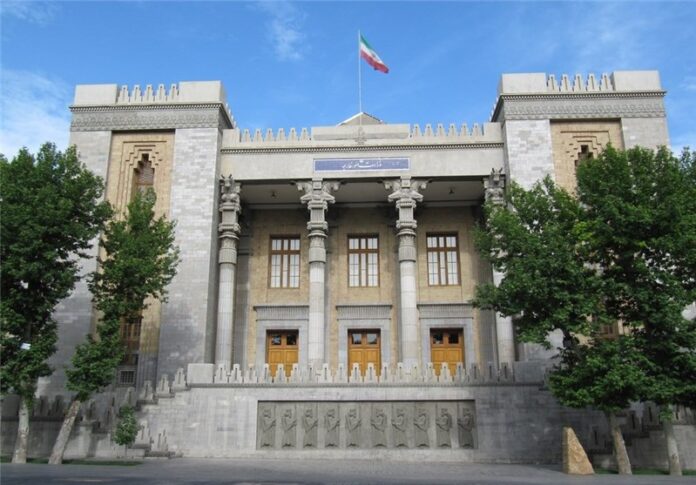
It is noteworthy that the Ministry of  Foreign Affairs has already covered the news about this meeting.