Monday, December 29, 2025
Home Blog Page 2568

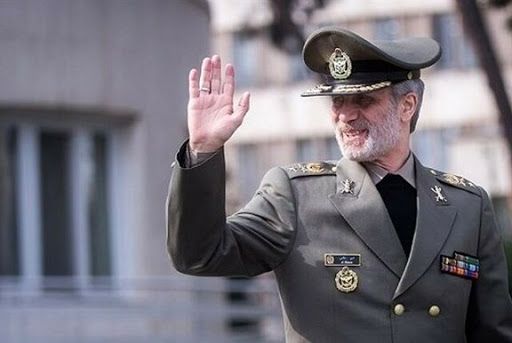
Iran’s Defence Minister in India for High-Level Talks

The top Iranian general, who arrived in New Delhi on Tuesday afternoon, is to sit down with his opposite number as well as military top brass and senior political officials.

General Hatami will also deliver a speech at a conference of defence ministers of the Indian Ocean Rim countries.

Iran’s defence chief will also take part in the opening ceremony of an air equipment exhibition in the city of Bengalur.

The trip is aimed at boosting political, security and defence ties between Iran and India.

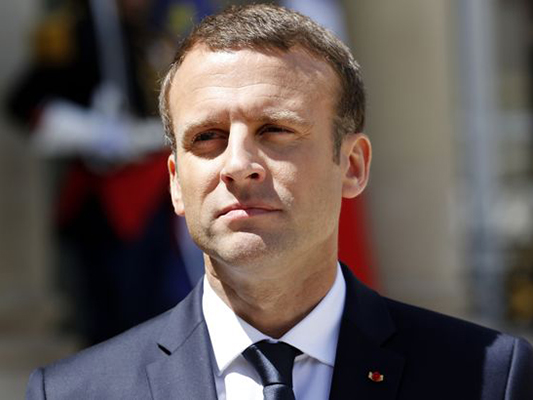
Iran Rejects Macron’s ‘Short-Sighted’ Call for Renegotiation of JCPOA

French-President

Ali Rabiei said any fresh talks on the nuclear deal are out of the question.

“Mr. Macron’s comments were very irresponsible and basically not far-sighted,” said Rabiei.

“As we have said time and again, no new negotiations are supposed to take place about the JCPOA, and accordingly, no new members are supposed to join the talks already held,” he added.

“We already held negotiations in that regard and reached agreements, and the trend is completely clear,” he explained.

“Such requests will have no use other than further complicating the situation and bringing into play variables that would impede peace and security in our region,” the spokesman said.

Rabiei reiterated that the United States should rejoin the nuclear deal, and all parties to the agreement should make good on their obligations.

“There is only one scenario about the JCPOA, and that is for the United States to return to the agreement as soon as possible and for all signatories to the deal, including France, to live up to their commitments as clearly stipulated in the agreement itself,” he said.

Rabiei underlined that Iran has always embraced regional talks to ensure peace and security in the region.

“Still, we have always welcomed regional talks. We have been the flag-bearer of negotiations among regional countries. We keep extending our hands to our neighbours in order to help resolve differences,” he said.

“It is only the regional countries that are eligible to ensure security in the region. And we don’t need extra-regional countries’ intervention and unusual initiatives,” said Rabiee.

Iran Reports over 70 New COVID-19 Deaths in 24 Hours

Covid-19 in Iran

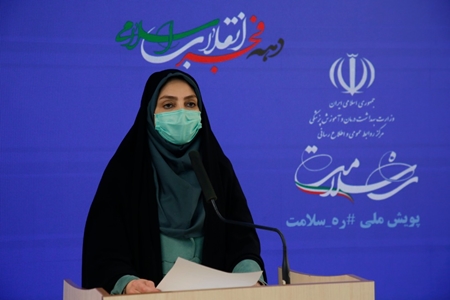
In a press briefing on Tuesday, Health Ministry spokeswoman Sima-Sadat Lari reported 6,820 new cases of COVID-19 infection, raising the total number of cases to 1,431,416.
So far, Lari added, 1,223,197 patients have recovered from the disease or been discharged from the hospital.

Lari said 3,865 patients are also in critical conditions caused by more severe infection.
The spokeswoman noted that 9,394,967 COVID-19 tests have been taken across the country so far.

She said currently 18 cities are in the “orange” zone, 124 are in the “yellow” zone, and 306 are in the “blue” zone in terms of coronavirus outbreak.

The “orange” cities are all in northern provinces, and include Amol, Babol, Babolsar, Behshahr, Tonekabon, Juybar, Chalus, Ramsar, Sari, Fereydunkenar, Qaemshahr, Mahmoud Anad, Neka and Noshahr in Mazandaran province and Some’eh Sara, Rudsar, and Lahijan in Gilan province.

‘Crew of Seized South Korean Ship Allowed to Leave Iran’

Seized South Korean Ship in Iran

In a statement on Tuesday, Khatibzadeh said, “Following the South Korean government’s request and through the good offices of the respected [Iranian] Judiciary in accordance with judicial regulations, crew members of the South Koran vessel seized on charges of polluting the environment in the Persian Gulf have been authorized to leave the country in a humanitarian move by the Islamic Republic of Iran.”

“Judicial proceedings are underway, in accordance with the law, into the case of violations by the ship and its captain,” the spokesman added.

Khatibzadeh also spoke of a phone conversation between Iranian Deputy Foreign Minister for Political Affairs Abbas Araqchi and South Korean Deputy Foreign Minsiter Choi Jong-kun.

In the meeting, said the spokesman, the necessity of freeing up Iran’s assets in South Korea was emphasized. The two sides also discussed effective mechanisms to utilize these financial resources.

The Korean side also said Seoul is determined to make utmost efforts to release the frozen assets as soon as possible.

EU’s Borrell Can End Iran-US Dispute over JCPOA Return: Zarif

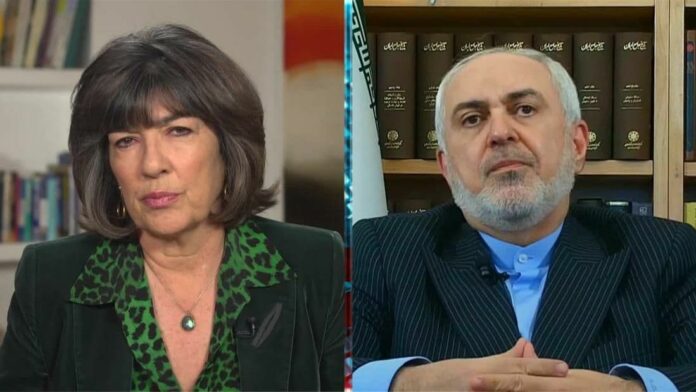
Zarif made the remarks in an exclusive interview with CNN’s Christiane Amanpour on Monday evening.

“Clearly there can be a mechanism to basically either synchronize [Iran and US moves] or coordinate what can be done. The JCPOA has a built-in mechanism, which is the joint commission. The joint commission has a coordinator … who can sort of choreograph the actions needed to be taken by Iran and the US,” Zarif said.

He said Iran’s moves have always been monitored and verified by the International Atomic Energy Agency (IAEA), and Iran has shown that is fulfils its promises.

“The side that has not been able to show that it fulfils its promises has been the United States. So the US needs to prove its bona fide. Iran has already proven its bona fide,” he added.

Zarif said the reason why Iran has moved away from its JCPOA commitments is the US’ move to impose a full economic war against Iran.

“First of all the United States must establish its bona fide, to come back to the nuclear deal. The US is not in the nuclear deal because of its own decision to withdraw without taking the routes that were available to it within the nuclear agreement,” he added.

When asked about the US call for inclusion of non-nuclear issues in the JCPOA, Zarif said the 2015 nuclear deal between Tehran and world powers, officially known as the JCPOA, did not include Iran’s defensive capabilities because the US was not prepared to stop its arms sales to the region as a precondition.

“The nuclear deal was negotiated based on what we could agree and what we could not agree. This is the deal that was made,” Zarif said.

“The United States has to accept that … we decided not to agree upon certain things, not because we neglected them, but because the United States and its allies were not prepared to do what was necessary. Is the US prepared to stop selling arms to our region?”
Zarif said Iran “spends a seventh of Saudi Arabia on defence, with 2.5 times its population”.

“If it wants to talk about our defence … is the US prepared to reduce hundreds of billions of dollars of weapons it is selling to our region? Is the US prepared to stop massacre of children in Yemen if it wants to talk about the situation in Yemen,” he added.

“The United States was not prepared to discuss these issues when we negotiated the nuclear deal. That’s why we agreed to limit the deal,” Zarif noted.

Iran Hosting Gathering on Followers of Divine Faiths

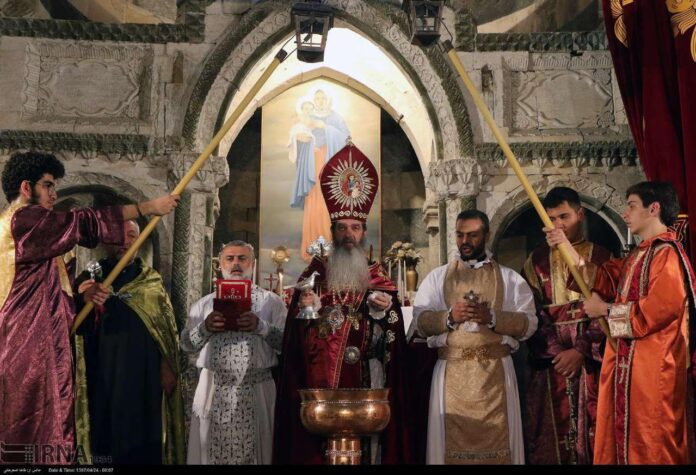
The gathering, where some participants are taking part virtually, brings together delegates from divine religions, including Zoroastrians, Jews, Assyrians and Christians.

The event is being held in the run-up to the anniversary of the 42nd victory of the 1979 Islamic Revolution of Iran.

Meanwhile, in a dinner banquet held on the sidelines of the event, Iranian Minister of Culture and Islamic Guidance Seyyed Abbas Salehi told delegates that the gathering is an opportunity to bring followers of different religions closer together.

“The thousands-years history of Jews, Zoroastrians, Christians and Muslim Iranians are closely intertwined like the roots of an old tree,” he said.

“We followers of divine faiths have common beliefs, moral values and concerns, and such gatherings links followers of divine religions,” he said.

‘Iran Emerged Victorious in US Economic War with Bare Hands’

Iran Rejects Russia's Mediation, Says Has No Plans for Direct Talks with US

Mahmoud Vaezi, the chief of staff of the President’s Office, said the enemies of the Islamic Republic of Iran failed to achieve their objectives during the economic war they imposed on Iran over the past three years as well as during the eight-year Iraqi-imposed war on Iran in the 1980s.
He said Washington used every tool available to bring Iran to its knees in maximum three months.

“These three months became three years and the Americans retreated at the end,” he noted.

“The three-year resistance by the people showed that it is possible to win against the enemy even with bare hands,” Vaezi said.

He said the important outcome of Iran’s resistance against sanctions and pressure was that the White House found out it makes no difference whether Trump or Biden is in power.

“Definitely, during the course of this economic war and ‘maximum-pressure’ policy, all American politicians came to the conclusion that the Iranian nation and government will not give in to sanctions and foreign pressure,” he noted.

Iran Says Trying to Get Its Stranded National Out of Myanmar

In a statement on Monday, Khatibzadeh said the embassy of the Islamic Republic of Iran in Thailand, which is also accredited to Myanmar, has been in touch with the small number of Iranian nationals in this country during the coronavirus pandemic, and helped them get out of Myanmar.
“The last remaining national is an Iranian woman, and the embassy is trying to make sure of her health and safety and to provide the assistance needed for her departure from Myanmar,” the spokesman said.

Khatibzadeh advised Iranian nationals to avoid travelling to the country until proper health and security conditions are restored, and strongly advised other Iranian nationals who might be still in Myanmar to inform the Iranian embassy in Thailand of their situation and possible requests as soon as possible, so that the embassy would provide the assistance needed.

His comments came after Iranian traveller Soudeh Sadraei said in a post in her Instagram account that she’s stranded in Myanmar and needs immediate help to get of the country.

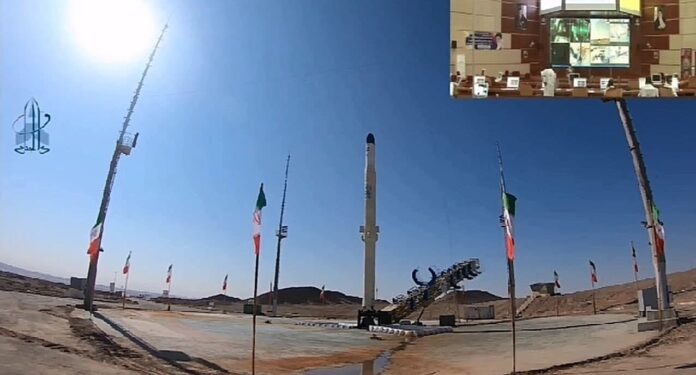
Iran Launches Zoljanah Satellite Launch Vehicle

The satellite launch vehicle has been developed by domestic experts.

“For the first time in the nation’s space sector, Iran carried out the research launch of the combined satellite carrier Zoljanah using the technology of the country’s most powerful solid-fuel engine,” said the defence ministry official.

The official noted that the three-phased satellite launch vehicle can compete with modern SLVs in the world in terms of technical specifications.

In addition to the solid-fuel engine, he said, several other cutting-edge technologies have been incorporated into the vehicle.


‘Talks with Taliban Don’t Mean Iran Has Forgotten Killing of Its Diplomats’

“The government of Iran not only has very close relations with the incumbent administration of the Islamic Republic of Afghanistan, but perhaps we are one of the two countries that, unlike many others, have always supported the achievements of the Afghan nation and its incumbent administration,” Khatibzadeh said on Monday.

“All the talks being held [between Tehran and the Taliban] are either upon the request of or with the knowledge of the Afghan government,” he added, speaking to reporters in a weekly press conference.

“What needs to be said is that the Taliban are part of the reality of Afghanistan’s today and future, but not all of it. The Taliban office is officially operating in Doha and in Pakistan as well as other places.

They are holding direct negotiations with the Afghan government and ruling system, and the Kabul government has been informed about this visit [of Taliban to Tehran].”

“On many issues, the two sides have already exchanged views. Of course, there are many things to say about the nature and activities of this group. We haven’t forgotten the issue of our martyrs [killed by Taliban] in Mazar-i-Sharif, and definitely one of the issues is that we have always held talks to find the perpetrators,” Khatibzadeh noted.

Taliban militants killed Mahmoud Saremi, the correspondent of the Islamic Republic News Agency (IRNA), along with eight Iranian diplomats, in the northern Afghan city of Mazar-i-Sharif in 1998.

The recent visit of a Taliban delegation to Tehran and their meetings with top Iranian officials have drawn widespread criticism, but Tehran says these talks are necessary for restoring peace and stability to Afghanistan, and are thus vital for Iran’s security.

“This visit has been made in line with and within the framework of negotiations between the Afghan government and this group. We have always, not just in this case, announced that we support intra-Afghan dialogue and all-inclusive talks among Afghan groups. The Taliban are definitely part of these groups,” Khatibzadeh said Monday.