Tuesday, December 30, 2025
Home Blog Page 2553

Iran Urges All Armenian Parties to Show Restraint, Avoid Violence

In comments on Thursday, Khatibzadeh said Iran is closely monitoring the developments in the neighbouring country.

Earlier in the day, Armenian Prime Minister Nikol Pashinyan warned of an attempted military coup, after the country’s armed forces said he and his cabinet must resign.

The army “must obey the people and elected authorities,” he told thousands of supporters in the capital Yerevan. His opponents held a rival rally.
The military’s top brass was angered by the PM’s sacking of a commander.

Mr Pashinyan has faced protests after losing last year’s bloody conflict with Azerbaijan over a disputed region.

Deal with IAEA in Line with Implementation of Parliament’s Law: Iran

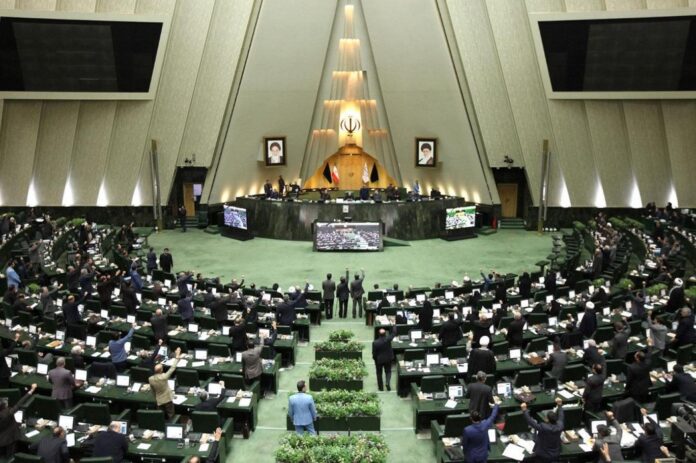
Chief of Staff of the president’s office Mahmoud Vaezi said Tehran’s stopping the voluntary implementation of the Additional Protocol in line with the parliamentary legislation will definitely “not be pleasant” to parties to the 2015 nuclear deal, officially known as the Joint Comprehensive Plan of Action (JCPOA), and the International Atomic Energy Agency (IAEA).

He stressed that the JCPOA should serve Iran’s interests.

“In order for the JCPOA to get back on track, signatories to the deal need to comply with their commitments under the JCPOA, and the 1,600 sanctions imposed against the Iranian government and people during the four-year tenure of [former US President Donald] Trump should be lifted,” he added.

Vaezi then touched upon the IAEA’s new claim that there are undeclared materials at some of Iran’s nuclear sites.

“These issues have been discussed with the IAEA once in the past and the case is closed on that. These documents are related to the past. Nothing new has happened since the Islamic Republic of Iran began its talks with the IAEA,” he noted.

Iran Puts into Service Major Freeway Near Tehran

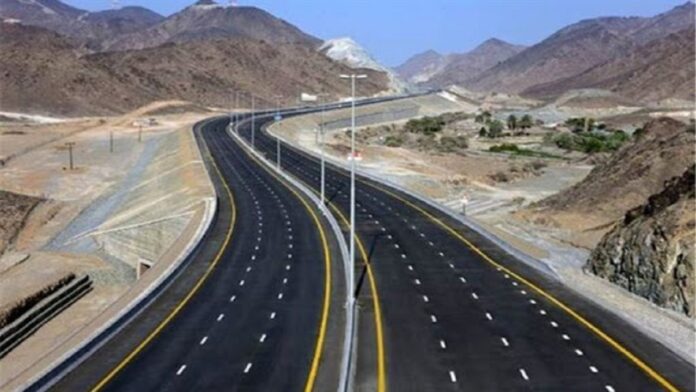
The road connects the town of Abyek in Qazvin province to Varamin in the south of Tehran after passing through the province of Alborz.

The freeway, named Ghadeer, is one of the important transportation corridors in the country and in Asia.

The project came with a price tag of Rls. 70 trillion and will create some 250 stable jobs when fully operational.

The freeway was put into service in a virtual ceremony attended by President Hassan Rouhani, who expressed his gratitude to all those contributing to the project.

He said the project is an achievement for the country at a time when boosting national economy is a top priority.

He noted Iranians put up a stiff resistance during the enemy’s economic war and withstood problems.

President Rouhani reiterated that now “everybody is confessing that the maximum pressure policy has failed.”

He underlined that the project was implemented and completed according to schedule.

The president said the more freeways and main thoroughfares are developed, the more the traffic flow will be eased, the less fuel consumption will be, the more pollution levels will drop and the less time transportation will take.

Iran’s President Congratulates Kuwait on National Day

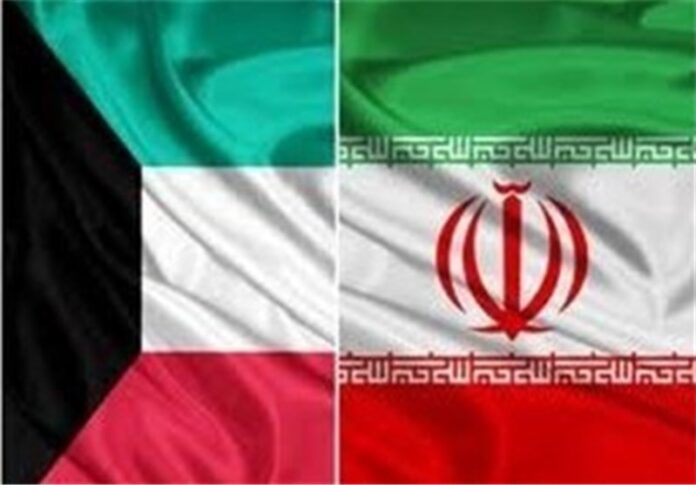
In a message on Thursday, President Hassan Rouhani expressed hope that cooperation between the two countries will further expand in light of unity and rapport and on the back of deep religious, cultural and historical commonalities between the two nations.

He also wished the Kuwaiti Emir and people health and success.

On Feb. 25, Kuwait celebrated its 60th National Day in honour of the day in 1950 when Sheikh Abdullah Al-Salem Al-Sabah became Emir of the State of Kuwait.

Kuwait was first inhabited as a small fishing village in 1613. Little did these early groups know that their modest maritime trading post was home to resources much more valuable than pearls and fish. In 1938, vast oil reserves were found in the region, a discovery which fueled the country’s evolution to become an international business hub, now home to over 4 million people.

As Kuwait first began as a fishing port, it’s no surprise that seafood is a staple of many of the nation’s widely known and celebratory dishes. One of Kuwait’s most beloved meals to recognize today’s festivities is Mutabbaq Samak, traditionally made with fried pomfret (a local fish) atop a savory bed of rice.

Along with tasty meals, Kuwaitis traditionally honour National Day by livening the streets with white, red, black, and green decorations—pan-Arab colours found on the country’s flag.

Iranian, Swedish Diplomats Discuss Yemen Crisis

During the Wednesday conversation, the two sides exchanged views on the new developments pertaining to Yemen, especially the issue of supporting the UN peace plan.

The Swedish representative expressed content with Iran’s constructive role in helping resolve the Yemen crisis politically, calling for such efforts to continue.

He also elaborated on Stockholm’s attempts in line with the peace process in Yemen and an upcoming meeting on offering assistance to Yemen, which is to be jointly hosted by Sweden and Switzerland on March 1, 2021.

Khaji, in turn, evaluated as positive the achievements of a trip to Tehran by UN Special Envoy for Yemen Martin Griffiths.

He expressed hope a change of approach by the Saudi-led coalition and its Western supporters vis-à-vis Yemeni people will lead to lasting peace in that country.

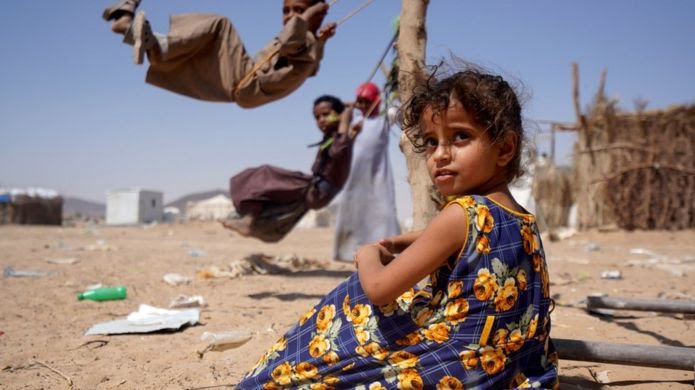
He also hoped the establishment of a ceasefire in Yemen and the lifting of a blockade on the country will improve people’s living conditions.

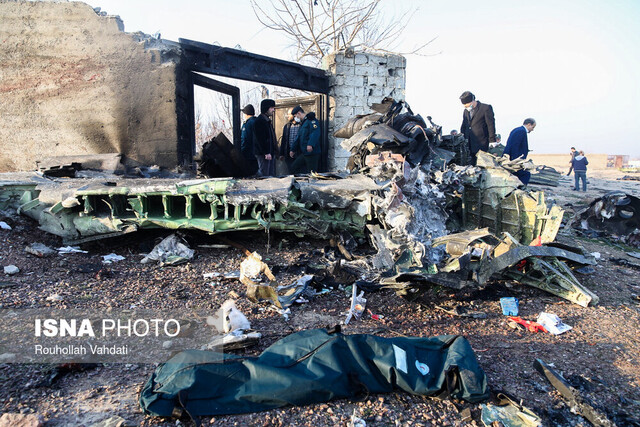
UN Rapporteur Has No Authority to Comment about Ukrainian Plane Crash: Iran

Ukraine Plane Crash: Eyewitnesses Say Can’t Sleep Anymore

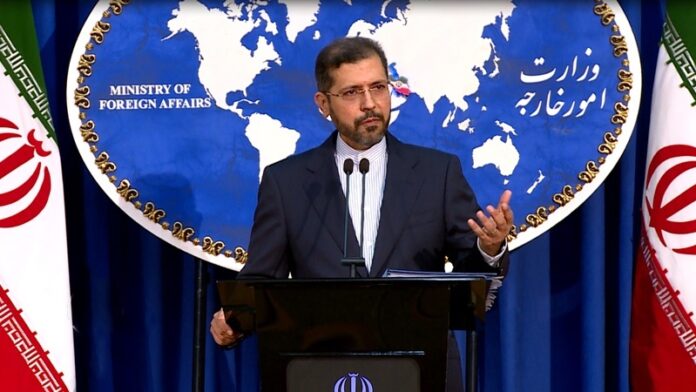
In a statement on Wednesday, Saeed Khatibzadeh explained that the incident is outside the UN official’s remit based on her mission objectives stipulated in a UN Human Rights Council resolution.

“In international law, there are specific as well as precise legal and technical frameworks to look into this issue, and the rapporteur’s sphere of activity has nothing to do with these regulations and frameworks; rather, the rapporteur’s unwarranted involvement might have an unconstructive impact on the legal procedures as well,” Khatibzadeh said.
“She has put forward numerous points indicating the information which she had received and was the base of her report was distorted, tainted with numerous mistakes, biased and irrelevant,” he noted.

“Accordingly, some charges have been levelled against the Islamic Republic of Iran without any valid evidence and documents,” he added.

“It specifically seems that she has got involved in this issue hastily, and the result of this hasty action was an unprofessional, invalid and undocumented text which has resulted in questions and ambiguities about the motive behind this move,” Khatibzadeh explained.

He underlined that even if Callamard considered reviewing the case within her purview, she could have waited until a technical report on the incident as well as an indictment for the accused were issued.

“A technical report on the incident was drawn up in accordance with international standards on December 29, 2020 and sent to relevant countries,” Khatibzadeh said.

“So far, three countries have sent to the relevant authority their technical viewpoints about this report. Most of those views confirmed the technical report,” the spokesman explained.

“Moreover, based on comments made by the relevant official, the final report will be made public by the end of the current Persian Year (ending March 20, 2021),” Khatibzadeh said.

“The report, which contains hundreds of pages, precisely, professionally and comprehensively deals with factors contributing to the accident and other relevant issues,” he explained.

Khatibzadeh said an indictment for those accused in the case is about to be issued by Iranian judicial authorities.

He said the court will soon begin looking into charges against the accused once the case is completed at the military prosecutor’s office.

“Maybe one of the reasons of this unwarranted haste is her resignation from her post as special rapporteur, and by issuing an immature and impetuous text, she may have wanted to turn the issue into a fait accompli for her successor, or she may have received promises for new job positions at some nongovernmental organizations in return for her move to issue this politically-motivated text,” Khatibzadeh said.

“Given that the rapporteur’s action was outside the purview of her responsibilities and overlooked the international technical and legal mechanism for looking into air accidents, the text is not effective whatsoever. Nevertheless, irrespective of her motive and regardless of the main issue, i.e., the rapporteur’s not having the authority to look into the incident, the Islamic Republic of Iran has, in a goodwill gesture, prepared detailed answers to the questions and ambiguities raised and will present them soon,” he said.

Zarif Urges South Korea to Release Iran’s Frozen Assets ASAP

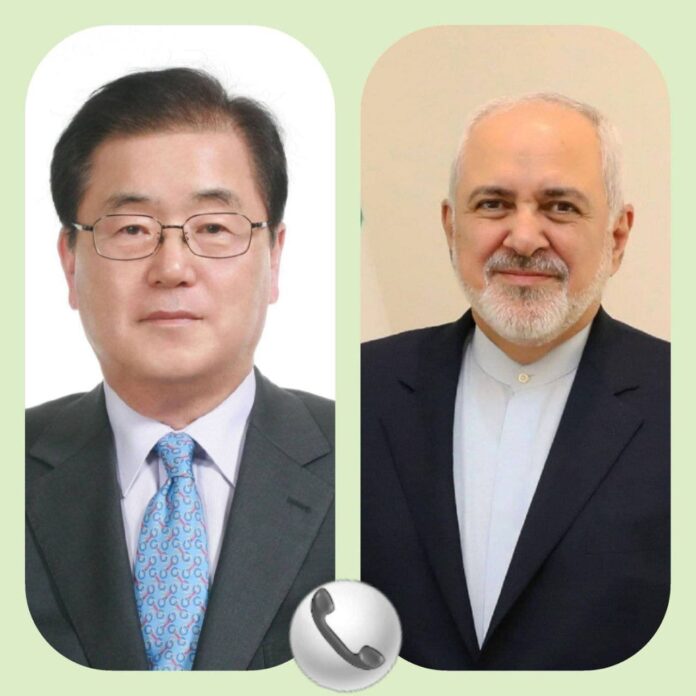
Speaking in a Wednesday phone conversation with his South Korean counterpart Chung Eui-yong, Foreign Minister Zarif expressed hope that Seoul will provide the Central Bank of Iran with access to its financial resources in South Korean banks as soon as possible.

He underlined that bilateral relations between the two countries have unfortunately been affected by the South Korean banks’ unlawful move in the past two and a half years, especially under the difficult conditions caused by the coronavirus outbreak and at a time when the Iranian people seriously needed those resources.

Chung Eui-yong, in turn, said the fact that the two top diplomats are having this conversation less than three weeks after his appointment indicates the significance Seoul attaches to its relations with the Islamic Republic of Iran.

He said he is determined to use all his power to resolve the issue of Iran’s funds in the South Korean banks.

Referring to the Korean vessel seized in Iran, he appreciated Tehran’s move to release the crew, and expressed hope that the vessel will be released and allowed to return to its country of origin as soon as possible.

Foreign Minister Zarif described the seizure of the Korean vessel as a technical issue which is being addressed by judicial authorities.

He further noted that the Iranian government has not spared any effort to provide consular access and all healthcare and welfare services to the ship’s crew.

As regards the latest developments pertaining to the 2015 nuclear deal and Iran’s measures in cooperation with the International Atomic Energy Agency (IAEA), the Korean side said it supports the continuation of talks between member states for reviving the JCPOA.

Iran Developing Wide-Body Combat Drone with Range of 3,000km

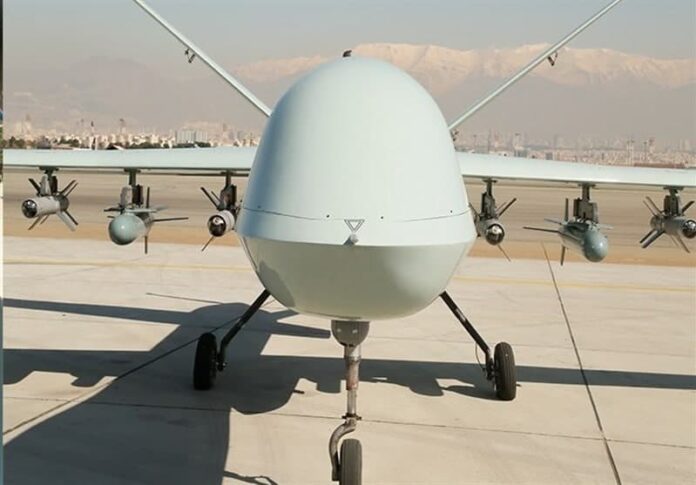
According to Iranian Air Force Commander Brigadier General Aziz Nasirzadeh, the drone named Kaman-22 (Bow-22) is the first wide-body combat drone manufactured by local experts.

Speaking on the sidelines of his visit to a site manufacturing the advanced pilotless aircraft, he said the new aircraft is equipped with various combat, optical and electronic warfare systems, and has a flight endurance of over 24 hours and a range of 3,000 kilometres.

Kaman-22 is utilized in a range of operations, such as patrol, reconnaissance, data gathering, imaging, and aerial combat with a payload of smart weapons.

In January, the Iranian Army staged a war game and flew new military suicide drones that can conduct nonstop sorties to hit targets at a range of 4,000 km.

Tehran Offers to Share with Romania Its Experience in Fight against COVID-19

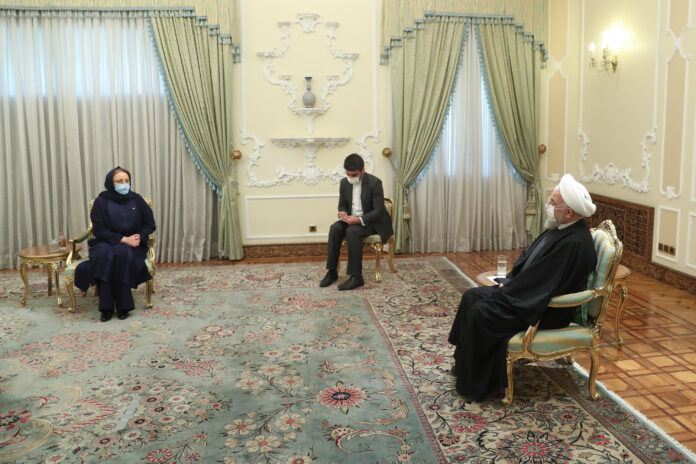
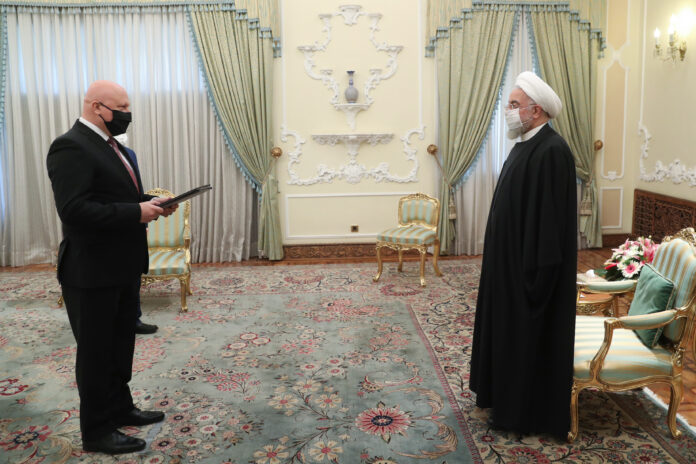
President Hassan Rouhani made the comment while receiving the credential of new Romanian Ambassador to Tehran Mirela-Carmen Grecu.

He expressed hope relations between the two countries will further expand as a new chapter of mutual cooperation has opened.

“The two countries enjoy good potential to enhance their cooperation on economic and scientific fronts,” said Rouhani.

The top Romanian diplomat, in turn, said Tehran and Bucharest have always had cordial and friendly relations, which should be best utilized to tap into the existing potentialities to upgrade bilateral cooperation.

She said the implementation of some agreements between the two countries has been delayed due to the COVID-19 pandemic.

She underlined efforts have been made to hold a meeting of the Iran-Romania Joint Cooperation Commission as soon as possible to make up for the delays and settle the problems which have emerged on the way of boosting bilateral ties.

Iran Says Ready for Closer Corporate Cooperation with Slovakia’s Private Sector

In a Wednesday meeting where he received the credentials of Slovakia’s new ambassador to Tehran, President Hassan Rouhani welcomed closer partnership between Tehran and Bratislava.

“Iran and Slovakia have great potential for expanding their relations in scientific, cultural and economic fields,” said the president.

He further pointed to the outbreak of the coronavirus in the world, and said universal cooperation among all countries is needed to effectively confront the pandemic.

“The Islamic Republic of Iran is currently developing and testing three types of coronavirus vaccines, and is ready to share its experiences with other countries, including Slovakia, in this regard,” he noted.

Ladislav Ballek, the new Slovakian ambassador to Tehran, said his country attaches special respect and importance to Iran, and is resolved to promote its ties with Tehran in different fields.

“The coronavirus pandemic has made it all the more necessary to expand collaborations and humanitarian ties between countries of the world,” he added.