Thursday, December 25, 2025
Home Blog Page 255

Ex-lawmaker: Iran open to talks with U.S.—but only on own terms

Iran US Flags

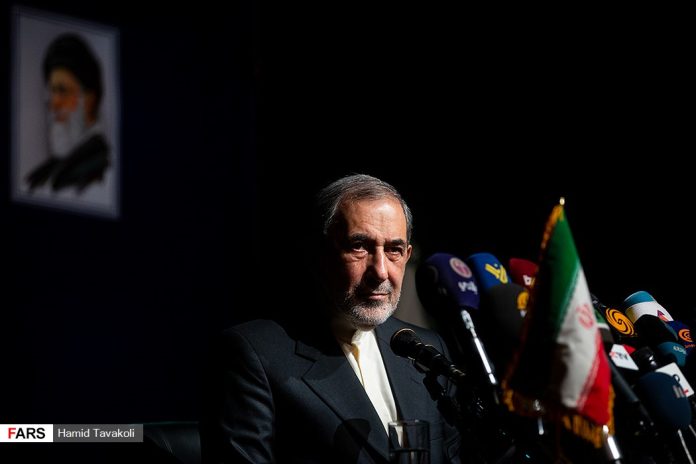
Motahari asserted that unconditional talks in the aftermath of a “cowardly and surprise attack” would be incompatible with Iran’s national pride and independence.

He emphasized that Washington must abandon its longstanding demand for a total halt to uranium enrichment, provide credible guarantees that it will refrain from attacking Iran’s nuclear infrastructure again, and compensate Tehran for the damage inflicted during the recent conflict.

“Entering negotiations without asserting these conditions would be a dishonor to the Iranian people,” Motahari said, adding that if these terms are respected, dialogue would not only be possible, but justified.

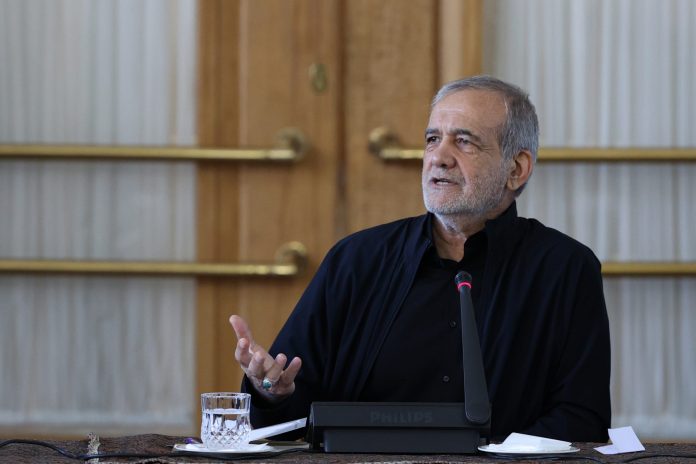
Turning to recent criticism of President Masoud Pezeshkian following his interview with an renowned American journalist, Tucker Carlson, Motahari dismissed calls for his impeachment as reckless and counterproductive.

“The President speaks as the official voice of the nation. He is not a battlefield commander; his words are meant to keep diplomatic avenues open,” he said.

Motahari warned that attempts to question the President’s political competence, particularly through impeachment or censure at this juncture, would serve only the interests of the Israeli regime.

“Differences of opinion can be addressed in dialogue, not through hasty and divisive actions that play into the hands of our enemies,” he concluded.

Russia slams Axios report it backed ‘zero enrichment’ Iran nuclear agreement

8790518 23.10.2024 Iranian President Masoud Pezeshkian and Russian President Vladimir Putin shake hands before a meeting on the sidelines of the 16th BRICS Summit in Kazan, Republic of Tatarstan, Russia.

US news outlet Axios reported on Saturday, citing three anonymous sources familiar with the matter, that Putin had “encouraged” Iran to accept a deal with the United States that would prevent Tehran from enriching uranium.

The article “appears to be a new political defamation campaign aimed at exacerbating tensions around Iran’s nuclear program”, the Russian ministry of foreign affairs said on Sunday.

“Invariably and repeatedly, we have emphasised the necessity of resolving the crisis concerning Iran’s nuclear program exclusively through political and diplomatic means, and expressed our willingness to help find mutually acceptable solutions,” the statement added.

Tehran is suspected by Western countries and Israel of seeking to develop an atomic bomb, which it denies, defending its “non-negotiable” right to develop a civilian nuclear program.

Moscow has a cordial relationship with Iran’s leadership and provides crucial backing for Tehran but did not swing forcefully behind its partner even after the US joined Israel’s bombing campaign in June.

Publicly, Moscow has defended Tehran’s right to use nuclear technology for civilian purposes but in recent months, Putin has also drawn closer to US President Donald Trump.

On June 13, Israel launched an unprecedented attack on Iran, triggering a 12-day war.

The conflict halted negotiations initiated in April between Tehran and Washington to frame Iran’s nuclear program in exchange for lifting economic sanctions against Tehran.

On June 22, the US bombed Iran’s nuclear facilities.

President Pezeshkian hails Iran’s national unity during Israeli war

Pezeshkian made the comments during a visit to the Ministry of Petroleum on Sunday. He appreciated the efforts of the staff and managers of the ministry in providing services during the war and preventing shortages in the supply of energy.

“It was you, alongside other segments of the people, who, with correct understanding and timely wisdom, thwarted the enemy’s plots to destabilize the country. If the people had not united and stood firm alongside the capabilities and missiles of the armed forces that shattered the might of the Zionist regime, our success and victory would not have been possible,” the president stated, his official website reported.

Pezeshkian further mentioned that efforts are being made to prevent the recurrence of war through advancing diplomatic efforts.

“War benefits no one and has no winners. We strive, based on the slogan and approach of the national consensus administration, to pursue peace, tranquility, and stability with internal cohesion and friendship with neighbors and other countries around the world. We have never bullied nor will we, but we will not submit to force and bullying either,” he stated.

Elsewhere in his remarks, the president urged the officials of the ministry to develop and present optimal management solutions for the production and consumption of energy, utilizing thorough research, all available experiences, and expert opinions.

He encouraged them to consider all opportunities, threats, and possibilities, and to make the necessary predictions, hoping that the country will not face an energy shortage this winter.

Pezeshkian also emphasized the importance of increasing investment in the oil industry, stating that numerous individuals and organizations have expressed their readiness and interest in investing in the management of energy production and consumption.

Referring to the development of clean energy production infrastructure, especially the acceleration of solar power plant construction, he noted that expanding solar power plants will reduce the need for subsidized gas and diesel for electricity production, which will both open up investment opportunities for the ministry and increase attractiveness for private sector investors.

The president expressed gratitude for the reports provided regarding successful actions taken in controlling fuel smuggling, managing consumption, and improving efficiency.

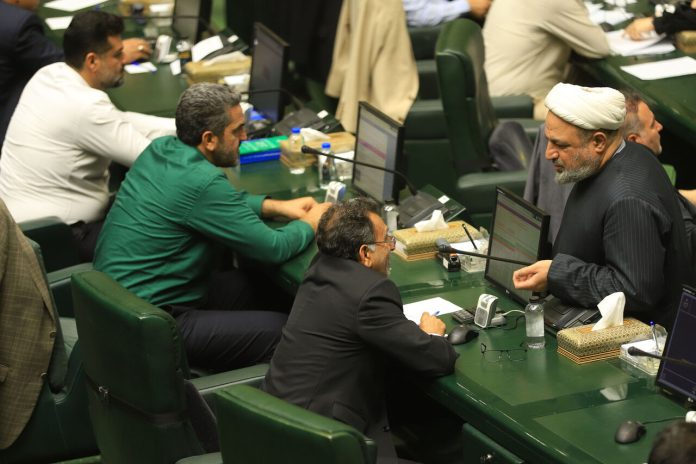
Iranian parliament pass tougher penalties for espionage and collaboration with hostile foreign regimes

Iran's parliament

The amendments, aimed at addressing the Guardian Council’s concerns, were passed by an overwhelming majority during the July 14th session.

Under the revised bill, any operational or intelligence activity deemed detrimental to national security or in collaboration with Israel or other hostile regimes is punishable by death and confiscation of property. If such actions do not meet the threshold of “corruption on earth”, perpetrators face life imprisonment.

The bill also criminalizes activities that aid hostile regimes economically, technologically, or militarily, with penalties ranging from execution to long-term imprisonment.

Possession or use of illegal communication devices like Starlink for subversive purposes is also penalized.

Meanwhile, the bill targets cyberattacks, espionage drones, and dissemination of sensitive materials to foreign media.

Any filming or transmission of content deemed harmful to national morale or unity could result in imprisonment and permanent disqualification from public service.

Iran’s Intelligence Ministry is tasked with identifying “hostile media” and expedited legal processes have been introduced for related offenses.

Iranian lawmakers underlined that these measures are crucial for safeguarding national security amid increasing regional tensions.

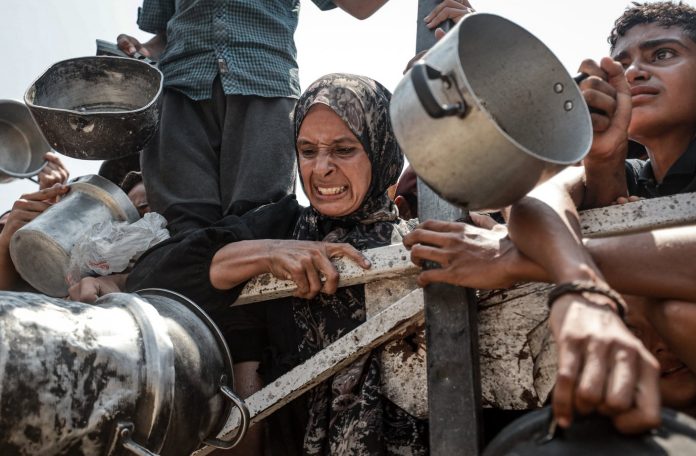
Gaza death toll surges past 58,000 amid relentless Israeli attacks

Gaza War

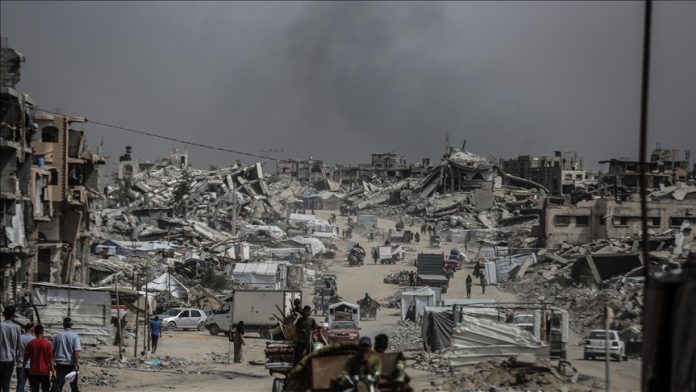
A ministry statement said that 139 bodies were brought to hospitals in the last 24 hours, while 425 people were injured, taking the number of injuries to 138,520 in the Israeli onslaught.

“Many victims are still trapped under the rubble and on the roads as rescuers are unable to reach them,” it added.

The ministry also noted that 28 Palestinians were killed and over 180 injured while trying to get humanitarian aid in the last 24 hours, bringing the total number of Palestinians killed while seeking aid to 833, with over 5,432 others wounded since May 27.

The Israeli army resumed its attacks on the Gaza Strip on March 18 and has since killed 7,450 people and injured 26,479 others, shattering a ceasefire and prisoner exchange agreement that took hold in January.

Last November, the International Criminal Court issued arrest warrants for Israeli Prime Minister Benjamin Netanyahu and his former Defense Minister Yoav Gallant for war crimes and crimes against humanity in Gaza.

Israel also faces a genocide case at the International Court of Justice for its war on the enclave.

France says to raise defence targets, citing Russia threat

French Army

Defence efforts” must be made in the face of mounting threats and a disintegrating world order, Elysee officials said ahead of the president’s 7:00 pm (1700 GMT) speech to the armed forces, traditionally held on the eve of France’s national Bastille Day holiday.

Despite France’s difficult budgetary situation, the president’s announcements will be “major”, they added.

French military and security officials have been warning of global threats weighing on France, with Defence Chief of Staff Chief Thierry Burkhard saying on Friday that Russia posed a “durable” threat to Europe and that the “rank of European countries in tomorrow’s world” was being decided in Ukraine, invaded by Russia in 2022.

Russia currently views France as its “main adversary in Europe”, Burkhard stated.

He also warned of the consequences of a diminished US commitment to Europe, along with cyber threats, disinformation campaigns and the risk of terror attacks.

“We have to take account of the fact that there has been a change in strategic parameters,” he added.

On Sunday, Defence Minister Sebastien Lecornu weighed in, telling the La Tribune weekly newspaper that “it’s our job to provide answers”.

France needed to make “a new effort” if it wanted to “depend on nobody” in the future, the minister said.

France’s defence budget has already increased sharply since Macron took power, rising from 32.2 billion euros ($37.6 billion at current rates) in 2017 to 50.5 billion currently, and is projected to reach 67 billion euros in 2030.

Any major defence spending boost could, however, threaten French efforts to cut deficits and reduce its debt mountain, amid pressure from the EU Commission on Paris to impose more fiscal discipline.

The servicing of France’s debt alone will cost the Treasury 62 billion euros this year.

But Prime Minister Francois Bayrou, who on Tuesday is to outline his budget plan for 2026, has declared the defence budget to be “sacrosanct” and exempt from budgetary cuts.

Several NATO countries are boosting their military spending, after the alliance’s members agreed last month to spend five percent of their gross domestic product (GDP) on security.

Britain aims to increase its defence budget to 2.5 percent of GDP by 2027, and to 3.0 percent after 2029. Germany plans to reach a defence budget of 162 billion euros by 2029, equivalent to 3.5 percent of its GDP, while Poland already dedicates 4.7 percent of GDP to defence.

“Very clearly, we need to revise our programming and strategy today, in light of the changing nature of risks,” Macron stressed on Thursday.

Lecornu this month detailed the most urgent needs for the French armed forces, including ground-to-air defences, ammunition, electronic warfare and space capabilities.

In Sunday’s interview, he noted France was mostly worried about falling behind in “disruptive technologies” including artificial intelligence and quantum technology.

Beyond budget increases, the French government is also seeking to boost “national cohesion” in the face of global crises.

Macron is expected to outline a potential mobilisation drive for young people who should be given “an opportunity to serve”, Elysee officials added.

UN warns of sharp rise in malnutrition cases in Gaza

Gaza War

In a statement, the agency said one of its clinics in Gaza “has seen an increase in the number of malnutrition cases since March, when the siege imposed by the Government of Israel started.”

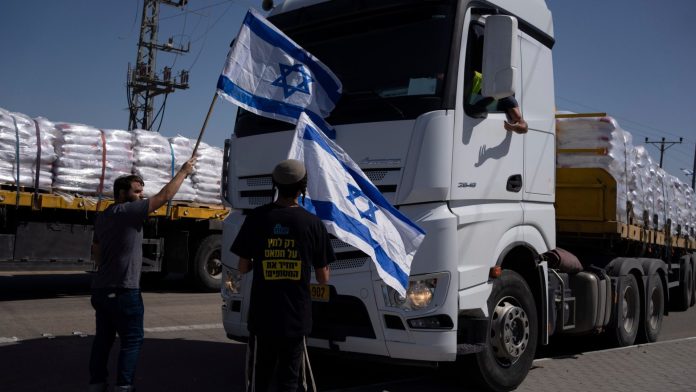
“UNRWA hasn’t been allowed to bring in any humanitarian aid since,” the agency noted.

“Despite a critical shortage in supplies essential for treatment, our teams continue their work in Gaza to help the most vulnerable, including through nutritional assessment for children,” it added.

At least 67 children have died of hunger in Gaza since October 2023 as Israel’s total blockade of the territory enters its 103rd consecutive day, the Government Media Office in Gaza said Saturday.

Gaza’s healthcare system is in a state of collapse due to Israel’s deliberate targeting of hospitals and health centers, as well as its continued closure of border crossings, which has blocked the entry of fuel, medicines, and medical equipment.

The ongoing fuel crisis threatens to shut down the few remaining medical facilities still operating in the strip.

Rejecting international calls for a ceasefire, the Israeli army has pursued a brutal offensive on the Gaza Strip since Oct. 7, 2023, killing nearly 57,900 Palestinians so far, most of them women and children. The relentless bombardment has destroyed the enclave and led to food shortages and the spread of diseases.

Last November, the International Criminal Court issued arrest warrants for Israeli Prime Minister Benjamin Netanyahu and his former Defense Minister Yoav Gallant for war crimes and crimes against humanity in Gaza.

Israel also faces a genocide case at the International Court of Justice for its war on the enclave.

Sand, dust storms affect about 330 million people in 150 countries due to climate change: UN

On Saturday, the UN General Assembly (UNGA) marked the International Day of Combating Sand and Dust Storms and its designation of 2025 – 2034 as the UN Decade on Combating Sand and Dust Storms.

The storms “are fast becoming one of the most overlooked yet far-reaching global challenges of our time”, said Assembly President Philemon Yang.

“They are driven by climate change, land degradation and unsustainable practices.”

The secretary-general of WMO, Celeste Saulo, stated that sand and dust storms do not just mean “dirty windows and hazy skies. They harm the health and quality of life of millions of people and cost many millions of dollars through disruption to air and ground transport, on agriculture and on solar energy production.”

Airborne particles from these storms contribute to 7 million premature deaths annually, said Yang, adding that they trigger respiratory and cardiovascular disease, and reduce crop yields by up to 25%, causing hunger and migration.

“About 2 billion tonnes of dust are emitted yearly, equivalent to 300 Great Pyramids of Giza” in Egypt, Laura Paterson, the WMO’s UN representative, told the UNGA.

More than 80% of the world’s dust comes from the deserts in North Africa and the Middle East, added Paterson, but it has a global effect because the particles can travel hundreds and even thousands of kilometres across continents and oceans.

Undersecretary-General Rola Dashti, head of the UN Economic and Social Commission for Western Asia, told the assembly the storms’ economic costs are “staggering”.

In the Middle East and North Africa, it costs $150bn, roughly 2.5% of gross domestic product (GDP), annually to deal with dust and sand storms, she said.

“This spring alone, the Arab region experienced acute disruption,” Dashti added, citing severe storms in Iraq that overwhelmed hospitals with respiratory cases and storms in Kuwait and Iran that forced school and office closures.

Dust from the Sahara Desert in Africa has travelled as far as the Caribbean and Florida, she said. For the United States, dust and wind erosion caused $154bn in damage in 2017, a quadrupling of the amount since 1995, according to a study in the scientific journal Nature.

The WMO and World Health Organization also warned that the health burden is rising sharply, with 3.8 billion people – nearly half the global population – exposed to dust levels exceeding WHO safety thresholds between 2018 and 2022, up from 2.9 billion people affected between 2003 and 2007.

Iran reports severe environmental damage from 12-day aggression by Zionist regime

The report warns of significant damage to the country’s water resources and soil and also warns of the serious risks to public health due to the attacks.

The Department of Environment said beyond the human casualties and infrastructure destruction, the Zionist regime’s attacks have caused extensive environmental harm with long-term ecological implications. It further condemned the aggression, calling for legal accountability and reparations.

The Department of Environment also confirmed that comprehensive assessments of environmental damage are underway nationwide, and a detailed report will soon be released.

Iranian Army announces military drills in Esfahan, warns of possible explosions

Crime Scene

The Army said controlled explosions and loud sounds may be heard during this period as part of pre-planned drills.

It underlined that these activities are routine and pose no threat to public safety.

The Army urged people in Esfahan and its suburbs to be alarmed, as all operations are conducted under approved safety protocols within the designated area.