Tuesday, December 30, 2025
Home Blog Page 2544

Iran Warns of ‘Disastrous Consequences’ If Israel Makes Any Mistake

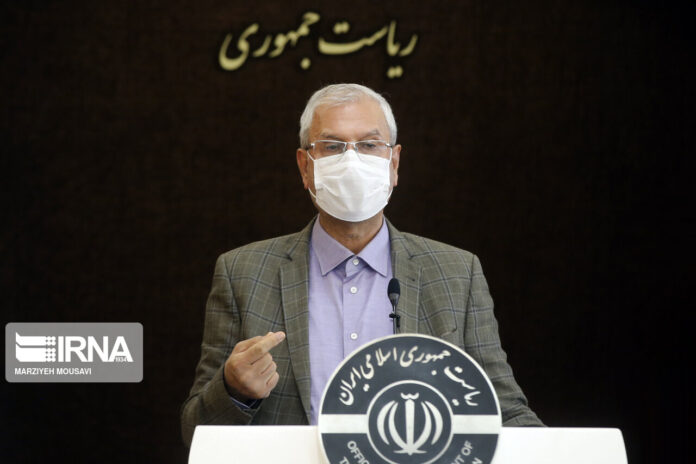
Ali Rabiei on Tuesday dismissed the anti-Iran remarks made by Tel Aviv officials, saying Israel has misgivings over the 2015 nuclear deal, officially known as the Joint Comprehensive Plan of Action (JCPOA).

“The one which is the most concerned about the JCPOA is the Israeli regime. It is extremely worried about any agreement,” he said.

“In the previous round of [nuclear] talks, they also made every effort to prevent an agreement from being reached. Insecurity and psychological insecurity in the region will be a major benefit for the Israeli regime,” he added.

“Accordingly, there is every possibility that the Israeli regime might take some deceptive action in the region in order to disrupt an agreement which contributes to international peace and security as well as regional security and which helps people in the region. This is our analysis of such moves,” Rabiei explained.

He said the Israeli regime wouldn’t like to see the JCPOA revived.

“They are concerned about the revival of the JCPOA. But we don’t take these ridiculous threats seriously,” he said.

The spokesman echoed remarks by Iranian Defence Minister Brigadier General Amir Hatami regarding Tehran’s response to any Israeli threat.

“Israeli regime leaders know well what disastrous consequences making such mistakes will have for them. I don’t think it is necessary to give more answers than what our defence minister Brigadier General Amir Hatami gave regarding what actions Iran will take,” he said.

“And I repeat what our defence minister said in response. ‘Such rhetoric is aimed at either threatening and blackmailing the US or talking Washington out of returning to the JCPOA’,” he said.

“We believe it falls upon the US government to show whether it would submit to medieval-style blackmail or defend its independence and policies as well as the real interests of American people,” he noted.

“It is up to US officials to decide how to react to such remarks and moves, which are aimed at influencing the actions of the US government,” said Rabiee.

“Our reaction is what our defence minister has already announced, i.e., a firm and serious response as mentioned in his remarks,” he reiterated.
 

Iran Says US Not Prepared for Prisoner Exchange

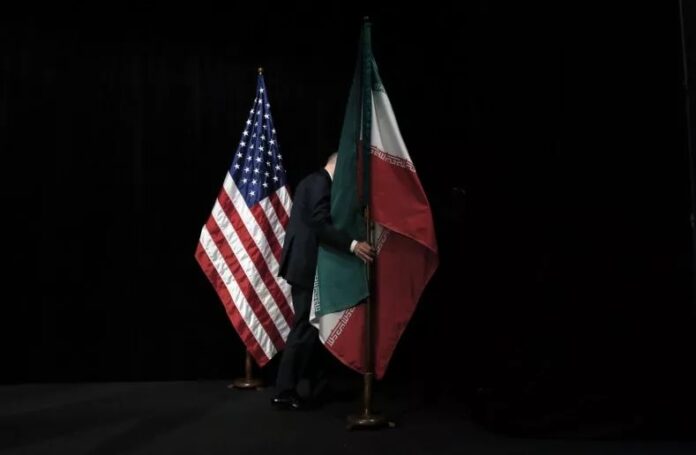
A staff removes the Iranian flag from the stage after a group picture with foreign ministers and representatives of Unites States, Iran, China, Russia, Britain, Germany, France and the European Union during the Iran nuclear talks at Austria International Centre in Vienna, Austria on July 14, 2015.‌ / Photo by Carlos Barria, Getty Images

“There is nothing new [regarding a prisoner swap with the US]. The Foreign Minister previously stated Iran’s position. We are ready to exchange all prisoners, and if it has not happened so far, it is due to the unpreparedness of the United States,” Rabiei said in a weekly press conference on Tuesday.

He said the two sides can decide on this.

“We have many Iranians around the world who have been imprisoned upon the US order. Of course, decisions and actions are being taken in this regard, but we believe that, as Mr [Mohammad Javad] Zarif said, we can talk about all those who have been imprisoned and solve the problem all at once,” he added.

US Wriggling Out of Returning to JCPOA

Asked about the US officials’ call for Iran’s return to compliance with the 2015 nuclear deal, officially known as the JCPOA, Rabiei said “the US does not seem to be in a position to set condition for the implementation of its own international commitments.”

“Unlike the US which wriggles out of returning to the JCPOA, Iran is ready to honour all its commitments along with the US and other JCPOA parties as soon as possible,” he noted.

“Based on the definite policy declared by the Supreme Leader, the only way to revive the JCPOA is the lifting of sanctions and the return of all parties to the full implementation of their commitments,” he stressed.

“If the US is thinking of any other way, it is just wasting the valuable time that could be used for advancing the interests of both countries. I believe the US administration will eventually, in the near future, discern the right policy,” he added.


Iran’s COVID-19 Cases Hit 1.7 Million: Health Ministry

In a press briefing on Tuesday, Sima-Sadat Lari said the virus has killed 81 patients since Monday noon, raising the overall death toll to 60,867.

So far, Lari added, 1,456,759 patients have recovered from the disease or been discharged from the hospital.

Lari said 3,811 patients are also in critical conditions caused by more severe infection.

The spokeswoman noted that 11,402,162 COVID-19 tests have been taken across the country so far.

Science, Culture Only Sustainable Solutions for Proximity among Nations: Rouhani

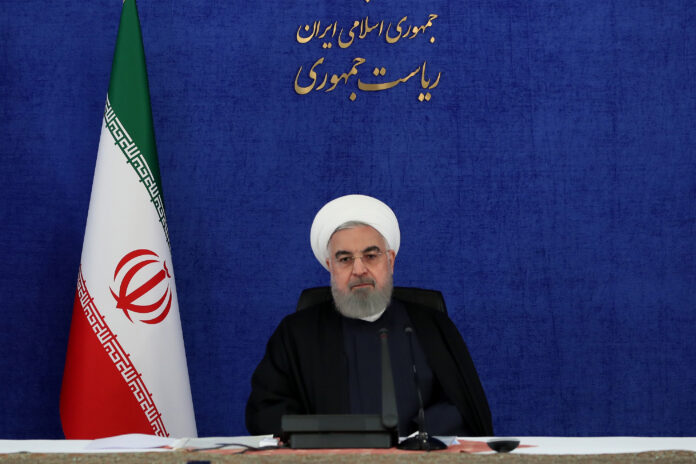
In a written message to the 3rd International Gundi-Shapour Congress on Tuesday, Rouhani thanked all scientists and students from Iran and other countries who attended the event to commemorate the 1750th anniversary of Gundi-Shapour University, the world’s oldest university.

Rouhani described scientific and cultural ties between nations as the “most lasting and most durable” ones, stating that broadening such bonds can further deepen sympathy and friendship among nations.

Referring to registration of Gundi Shapour as the world’s oldest university by UNESCO, the President said that it’s a proof that Iranians have been harbingers of science and friendship since ancient times.

He also underlined that Iranians today, following their ancestors, placed two occasions in their national calendar: ‘The day of dialogue and constructive interaction with the world’ and ‘The day of non-violence and non-extremism.’

“I believe the only durable and lasting way for proximity among nations is to return to lucid sources of science and culture, just as our ancestors in Iran did by establishing the world’s oldest university,” Rouhani added.

Rarely-Seen Persian Artworks to Be Exhibited in Sydney

Rarely-Seen Persian Artworks to Be Exhibited in Sydney

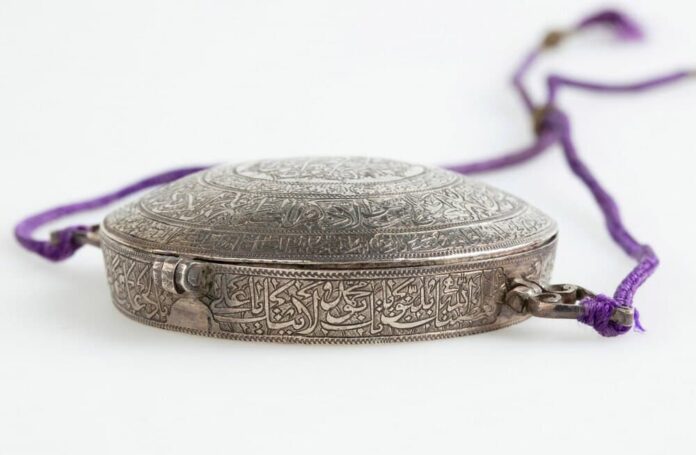
Titled “Iranzamin” (Land of Iran), the exhibit will be opened to the public on March 19.

According to the organizers, the event is the first survey exhibition of Persian art and crafts acquired by the Powerhouse Museum since its establishment in 1880.

It explores the stories behind rarely seen artifacts from the middle of the 19th century up to now, shedding light on the diverse social and cultural history of Persia – today’s Iran – and its people.

The exhibition examines how objects inspired by traditional arts and crafts were used in Persian society, focusing on seven themes: joy and happiness; purification and cleansing; spirituality and devotion; poetry and calligraphy; rituals and performance; patronage and craftsmanship; nature and design.

Furthermore, Iranzamin encompasses a diversity of materials and techniques, including hand-woven crafts, carpets, and rugs; arms and armor; glass, ceramics, and tiles; textiles, embroidery, and foundry.

Iranzamin examines how the influence of Persia, situated between two major trade routes – the Silk Road and the Indian Ocean – spread out into the world.

Special attention is paid to the influence of Persian culture on non-Iranian craftsmen and artists such as Australian painter and textile designer Florence Broadhurst. This includes original Broadhurst wallpaper prints titled Persian Phoenix (Simorgh), Persian Birds, and Persian Pomegranates and Flowers.

The opening of Iranzamin coincides with the Persian new year Noroz. Programs will include the celebrations of Noruz, Haftsin, a table traditionally set for the Persian new year on 20 March, and Sizdehbehdar, the Persian national day for the celebration and admiration of Mother Nature, which will be held in the Powerhouse Museum on 3 April 2021, according to the museum.

After the turmoil and strife of the eighteenth century in Persia, the rise to power of the Qajar dynasty (1789 to 1925) signaled a new peace and unity for the country. The Qajar shahs relied heavily on the visual arts to confirm and solidify their new position. One aspect of their public image tied them to the long history of Persia and its ancient dynasties, but another component of their identity was as modernizers and reformers.

This involved both changes to the government and the acceptance of new technologies such as the railroad and the telegraph. In the arts, this meant support of the new techniques of lithography and photography, as well as innovative applications of existing forms in Iran such as portraiture and oil painting.

Iran, Spain Stress Closer Sports Cooperation

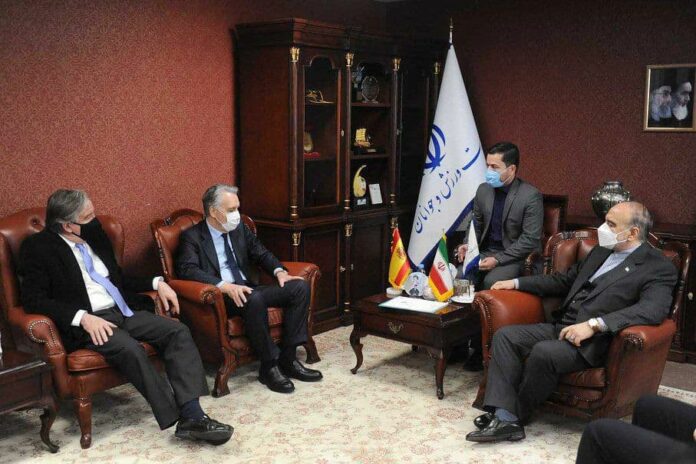
In the Monday meeting, the two sides called for further enhancement of mutual cooperation on youth and sports.

“We are ready for any kind of sports cooperation with Spain,” said Soltanifar.
The top Spanish diplomat, in turn, highlighted that Iran enjoys great potential in the domain of sports.

Iran Urges Europe to Be More Serious in Fighting Narcotics

Chief of Staff of the president’s office Mahmoud Vaezi said fighting drugs is a common responsibility of the global community.

“The common responsibility of the international community in fight against illicit drugs requires that all countries play their role well and seriously,” said Vaezi at a meeting on the measures adopted by Iran in fighting narcotics.

“The country’s officials have consensus on fighting drugs,” he added.

“Although Iran is a route through which narcotics pass, and is not a destination for them, the country has sustained the highest costs for fighting illicit drugs,” he added.

“Despite the problems caused by the United States’ illegal sanctions and the coronavirus pandemic, Iran has moved full steam ahead with its campaign against illicit drugs and narco-trafficking,” Vaezi explained.

He then urged Europe to work more seriously in the fight against drugs.

“As a destination for drugs smuggled from the region, Europe should be more sensitive and have more serious cooperation,” he said.

Irish FM’s Trip to Tehran Could Bridge Iran-EU Gap: Analyst

Sanctions against Iran are still in place and the outlook for the United States’ return to the 2015 nuclear deal as well as the future of the deal remains shrouded in mystery.

New US President Joe Biden has almost settled down at the White House, but still there is no word on the lifting or suspension of sanctions against Iran.

Tehran has set the condition that it will sit at the negotiating table with Washington only when all sanctions are lifted. However, it seems there is not enough determination to do so.

Meanwhile, an Irish delegation came to Tehran a few days ago to mediate between Iran and Europe over the nuclear deal, officially known as the Joint Comprehensive Plan of Action (JCPOA).

The Irish foreign minister is not the first person to be willing to act as a mediator.

French officials had earlier announced their willingness to intervene, but Iran did not welcome their offer.

But at this juncture, how can we take the two countries to a point where the US would return to the JCPOA and Iran’s problems would be settled?
In an interview with Khabar Online, seasoned expert on international issues Fereydoon Majlesi has weighed in on these developments.

Q: A senior Irish delegation has come to Tehran to mediate and has met with our country’s officials. What is your analysis of this trip and do you think such intervention would be effective?

A: I’m not confident that such moves will help, but I know that Ireland has nothing special to do with Iran. We do not have trade and industrial relations with each other, either. So the Irish team is in Iran for something else. I hope Iranian officials would realize how important Iran’s presence in the international arena is for other countries, not only for those who think they have special benefits and interests, but even for those who are sensitive about the future of the world and relations between countries. They expect things will get better after the flexibility shown by the three European countries, which refused to submit their draft anti-Iran resolution to the Board of Governors of the International Atomic Energy Agency (IAEA). Now, they have asked a country which is neutral toward Iran to mediate. Therefore, we hope this trip will help the two sides, i.e., Iran and the European Trokia to hear each other’s voice better.

Coronavirus Kills 100 More Iranians in 24 Hours: Ministry

In a press briefing on Monday, Sima-Sadat Lari reported 8,313 new cases of COVID-19 infection, raising the total number of cases to 1,449,350.

So far, Lari added, 1,449,350 patients have recovered from the disease or been discharged from the hospital.

Lari said 3,804 patients are also in critical conditions caused by more severe infection.
The spokeswoman noted that 11,337,942 COVID-19 tests have been taken across the country so far.