Sunday, December 28, 2025
Home Blog Page 2521

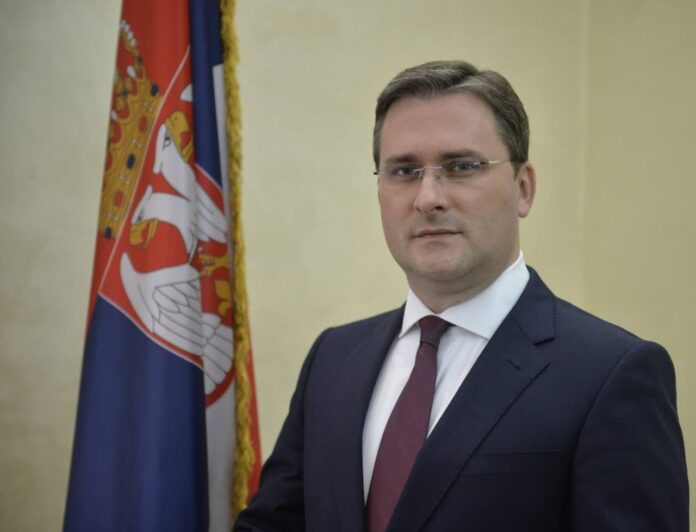
Iranian, Serbian Foreign Ministers Discuss Closer Cooperation in Tehran

During the talks, Zarif touched upon the historical relations between the two countries and highlighted that the Balkans has a significant status in Iran’s foreign policy.

The top Iranian diplomat highlighted the need to maintain and expand relations between Tehran and Belgrade on different political, economic, trade and cultural fronts by drawing on innovative and creative mechanisms.

He underscored the existing potential in the economic domain, urging closer economic cooperation.

The Serbian foreign minister, in turn, referred to the existing potentialities in bilateral relations in economic and industrial domains.

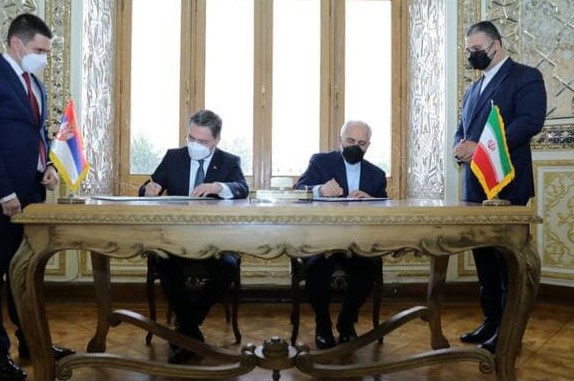
He also said the signing of a cooperation document between the foreign ministries of both countries will be useful for future collaboration between the two sides.

Among other topics on the agenda of the talks were the importance of holding the sixteenth meeting of the two countries’ joint economic commission in order to enhance mutual partnership, especially in the economic domain, issues related to the United States’ unilateral and cruel sanctions, regional issues, including those pertaining to the Balkans and regions surrounding Iran, Tehran-Belgrade cooperation in international circles, as well as measures adopted by both countries in fighting the coronavirus and developing a vaccine for the disease.
Iran Says New Understanding Emerging among JCPOA Parties

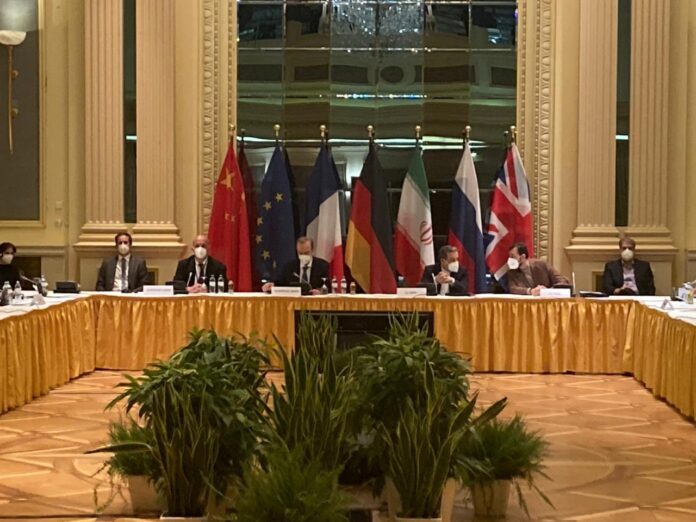
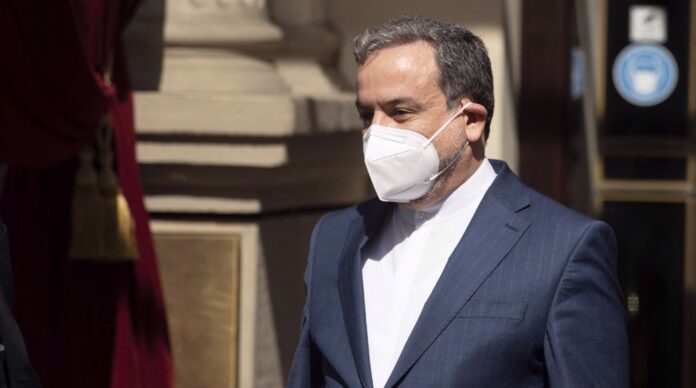
“Today, almost three days the JCPOA Joint Commission started its work, we once again convened a meeting of the Joint Commission to review the progress of talks held so far both in the field of sanctions removal and nuclear issues,” Araqchi said after the conclusion of a fresh round of talks among Iran and the P4+1 in Vienna.

He said the participants reviewed the reports presented by the working groups and held good discussions within the Joint Commission.

“It seems that a new understanding is being developed and there is now common ground among all [the sides] on the final goal,” he added.
Araqchi said the path that must be trodden is a little bit more familiar now.

“However, the path ahead will not be an easy one. The differences have not been settled yet. There are some serious disagreements that need to be decreased during next negotiations,” he noted.

“As we have repeatedly announced, Iran is not at all interested in and does not seek protracted and lengthy negotiations,” Araqchi said, adding that the talks will be continued for as long as necessary.

“We believe the talks have reached a stage where the sides can now start working on preparing a joint text. They can start drafting the text at least on sectors on which they share views,” the Iranian chief negotiator said.

Araqchi said the Iranian delegation has presented its own text both in the fields of nuclear measures and sanctions removal to all the P4+1 countries.
“We believe that the texts we have presented can act as a basis for negotiations and a final agreement,” he said.

“Of course the final agreement should not be necessarily similar to our texts, but these texts will serve as a basis for negotiations.”
Araqchi said the texts presented by Iran can provide the basis for a deal that both meets the demands of Iran and those of the opposite side about Tehran’s return to its commitments as per the JCPOA.

“We believe now it is time to start drafting the text at least on the sectors on which there is consensus,” he added.

Iran’s Foreign Ministry Denies ‘Distorted’ Reports Quoting ‘Informed Sources’

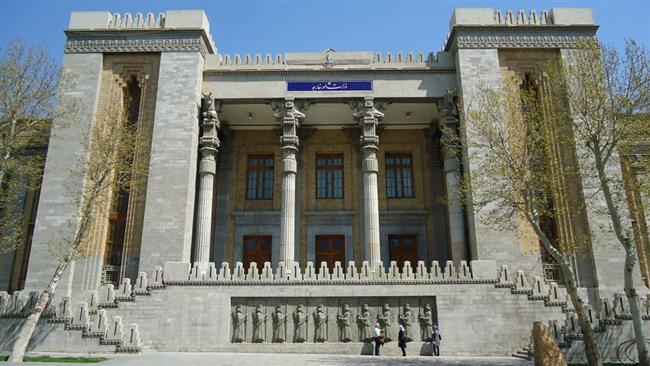
Iran's Foreign Ministry

“The latest news of nuclear negotiations are merely disseminated through the official channels of the Ministry of Foreign Affairs, the Foreign Ministry spokesman, and the head of the Iranian negotiating team,” Khatibzadeh said on Saturday in response to reporters who asked about such rumours.

The spokesman urged media outlets to avoid paying attention to certain reports that try to kick up a fuss by quoting “informed sources”.

In similar remarks, Iran’s chief negotiator Seyyed Abbas Araqchi had earlier criticised certain media outlets for quoting “informed sources” in their reports about the Vienna talks, saying such allegations confuse the other parties participating in the talks, and undermine Iran’s strategy in the negotiations.

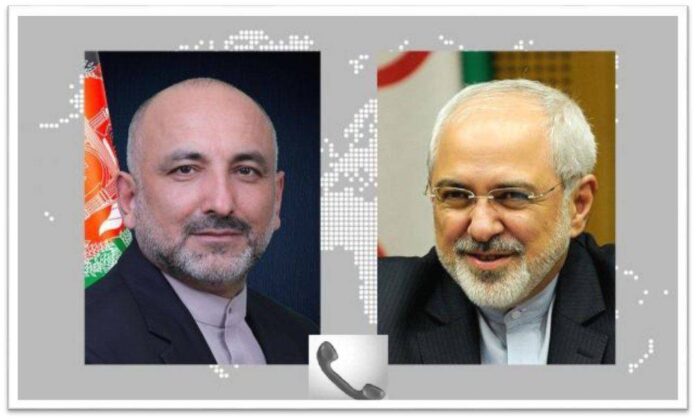
Iranian, Afghan FMs Discuss Afghanistan Peace Process

During the phone conversation, Zarif underlined the need for maintaining Afghanistan’s democratic achievements in the past two decades, and its relation with sustainable peace.

He also reiterated Iran’s all-out support for the Afghan peace process.

The Afghan foreign minister, in turn, expressed pleasure with the growing relations between the two countries, and praised Tehran’s effective role in the Afghan peace process.

The two sides also stressed the necessity of accelerating the finalisation and signing of the comprehensive document for Iran-Afghanistan strategic cooperation.

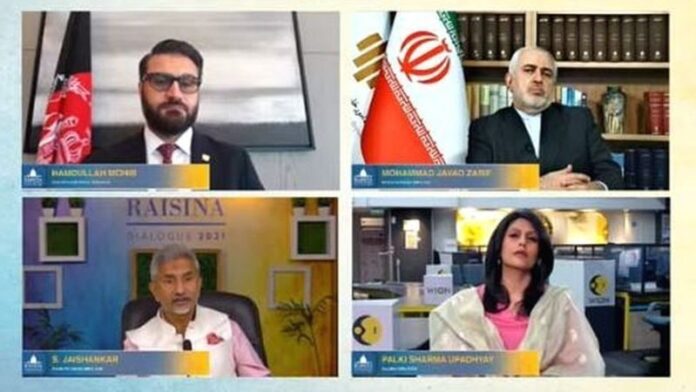
Earlier in the day, Zarif had told a webinar at the Raisina Dialogue held in New Delhi that Iran and the region will not allow Afghanistan to return to what it was in the 1990s.

Addressing the seminar which was attended by Afghanistan’s National Security Advisor Hamdullah Mohib, Zarif said the American troops’ withdrawal from Afghanistan will be a positive step.

“That US forces will finally pull out of Afghanistan is a positive move, and the Taliban should not cash in on this opportunity to stoke violence,” he added.

Zarif noted Iran welcomes US forces’ “responsible withdrawal” from Afghanistan and believes the presence of foreign troops has never contributed to security in Afghanistan and the whole region.

The top Iranian diplomat added the Taliban should take the opportunity and immediately kick off serious negotiations with the Afghan government.

“The Taliban cannot bide its time to see a vacuum created in order to take advantage of it and see Afghanistan plunge into civil war,” said Zarif.

“The Taliban can be part of the trend of talks, but cannot take control of it,” the top diplomat noted.

JCPOA Joint Commission Wraps Up Meeting in Vienna

The participants reviewed the trend of talks in the past few days, and received the report of expert groups on the domains of sanctions and nuclear issues.

In this meeting, it agreed that bilateral and multilateral talks as well as technical consultations continue in coming days, and that the JCPOA Joint Commission hold another plenary meeting if necessary.

Several bilateral and multilateral meetings were earlier held between the head of the Iranian negotiating team and European External Action Service (EEAS) Deputy Secretary General Enrique Mora as well as other delegations taking part in the talks.

In tandem with these negotiations, technical consultations by expert groups are also underway.

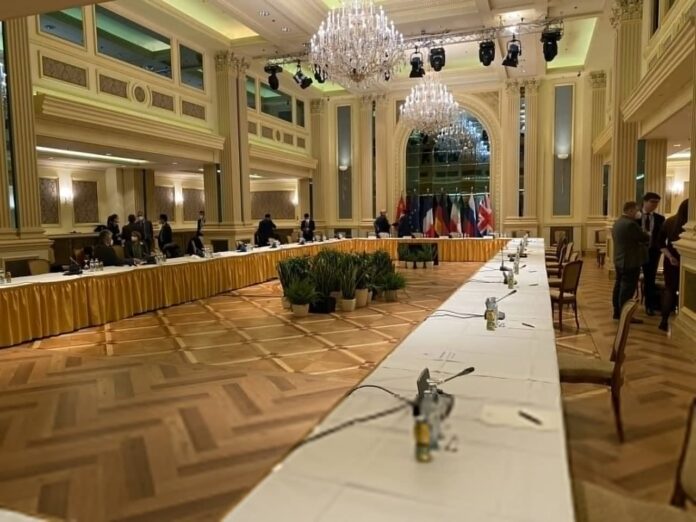
JCPOA Joint Commission Starts New Round of Talks in Vienna

Today’s talks is held between the negotiating teams of Iran and the P4+1 at the level of deputies, and is chaired by Deputy Secretary General for Political Affairs of European External Action Service Enrique Mora.

In this meeting, which started at 15:30 (Tehran time), the participants are expected to make a decision about how to continue the negotiations.

The fresh round of talks in Vienna has started since Thursday. In addition to a plenary meeting of the Joint Commission, the talks have been held at the level of experts in the two domains of “sanctions” and “nuclear issues”.

Serbian Foreign Minister to Visit Tehran Today

According to the spokesman, the Serbian foreign minister will hold talks with his Iranian counterpart Mohammad Javad Zarif, President Hassan Rouhani, Parliament Speaker Mohammad Baqer Qalibaf, and some other Iranian officials during his trip.

Iran, Regional States Won’t Allow Afghanistan to Return to 1990s: Zarif

Iran, Regional States Won’t Allow Afghanistan to Return to 1990s: Zarif

Mohammad Javad Zarif said American troops’ withdrawal from Afghanistan will be a positive step.

“That US forces will finally pull out of Afghanistan is a positive move, and the Taliban should not cash in on this opportunity to stoke violence,” said Zarif in a webinar at the Raisina Dialogue held in New Delhi attended by Afghanistan’s National Security Advisor Hamdullah Mohib and his Indian counterpart.

Zarif added Iran welcomes US forces’ “responsible withdrawal” from Afghanistan and believes the presence of foreign troops has never contributed to security in Afghanistan and the whole region.

The top Iranian diplomat added the Taliban should take the opportunity and immediately kick off serious negotiations with the Afghan government.

“The Taliban cannot bide its time to see a vacuum created in order to take advantage of it and see Afghanistan plunge into civil war,” said Zarif.

“The Taliban can be part of the trend of talks, but cannot take control of it,” the top diplomat noted.
Mohib, in turn, said at the virtual meeting that it is the best opportunity now for Afghans to take responsibility for the security of their country.

“Now it is the best chance for peace,” the Afghan national security advisor said.

He underlined Afghanistan’s peace process should take all Taliban groups on board and “none of them should be left out.”

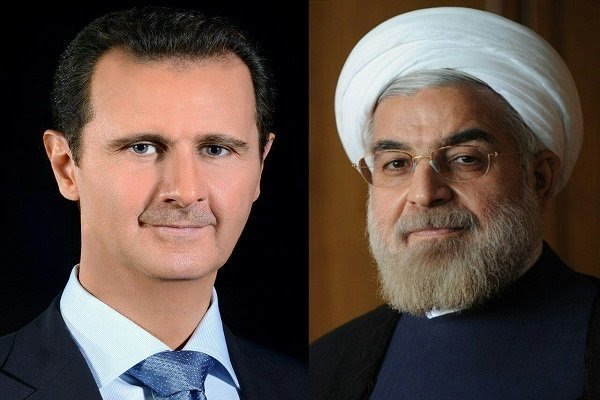
Rouhani Congratulates Assad on Syria National Day

In a message on Saturday, Rouhani offered his sincere congratulations to the Syrian nation and government on the occasion.

“I am confident that valuable steps can be taken to establish peace and stability in the region, promote regional cooperation, and further develop bilateral ties in all fields using the abundant capacities and capabilities of the two states,” Rouhani said.

He finally wished health and success for Assad and prosperity for the Syrian nation and government.

Annually on April 17, Syria celebrates the Evacuation Day as its national day commemorating the evacuation of the last French soldier at the end of the French mandate of Syria on 17 April 1946 after Syria’s proclamation of full independence in 1941.

The French regime had proposed to depart on 18 April, Good Friday in 1946, but Syrian officials opted for a slightly earlier date to avoid holding commemoration activities on the Christian holiday.

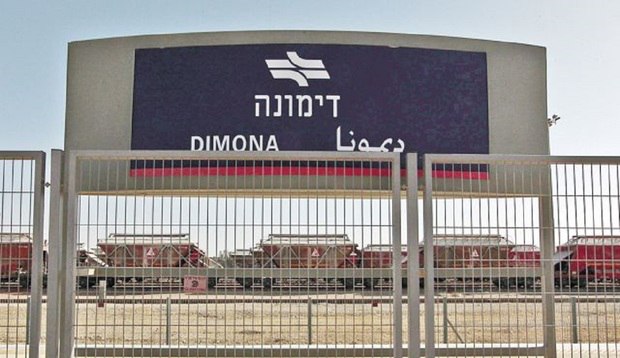
Iran Must Target Israel’s Dimona Nuclear Facility: Hardline Paper

The Kayhan daily wrote in an opinion piece that the enrichment of uranium to the 60% purity level, which Iranian President Hassn Rouhani recently announced Iran would do, is not the right response to the attack at Natanz nuclear site.

“Unfortunately, by saying that Iran’s response is the installation of IR-6 centrifuges and starting 60% uranium enrichment, the president, in fact, announced that Tehran would not reciprocate Israel’s move,” wrote Kayhan.

“This false signal can be a starting point for new actions by enemies against the security of Iranian sensitive facilities and expert individuals,” the paper added.

“The response to the practical move against Iran’s atomic installations is to take practical action against the Israel regime’s nuclear facilities,” wrote Kayhan.

The daily proposed that Iran should act based on the “an eye for and eye” and “mutual threats on a par with threats received” principles because “any response on any level other than this will not be deterrent.”

“Iran’s response should be directed first inside the Israeli regime, and second at its nuclear facilities,” the paper added.