Sunday, April 12, 2026
Home Blog Page 2512

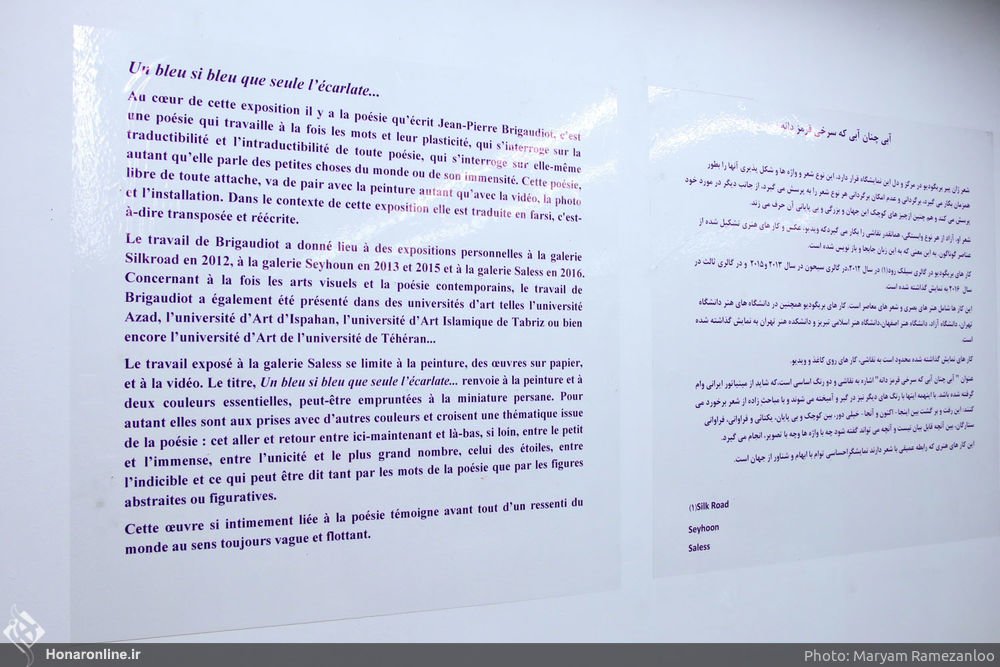
French Artist’s Exhibition in Iran; Journey from Words to Drawings

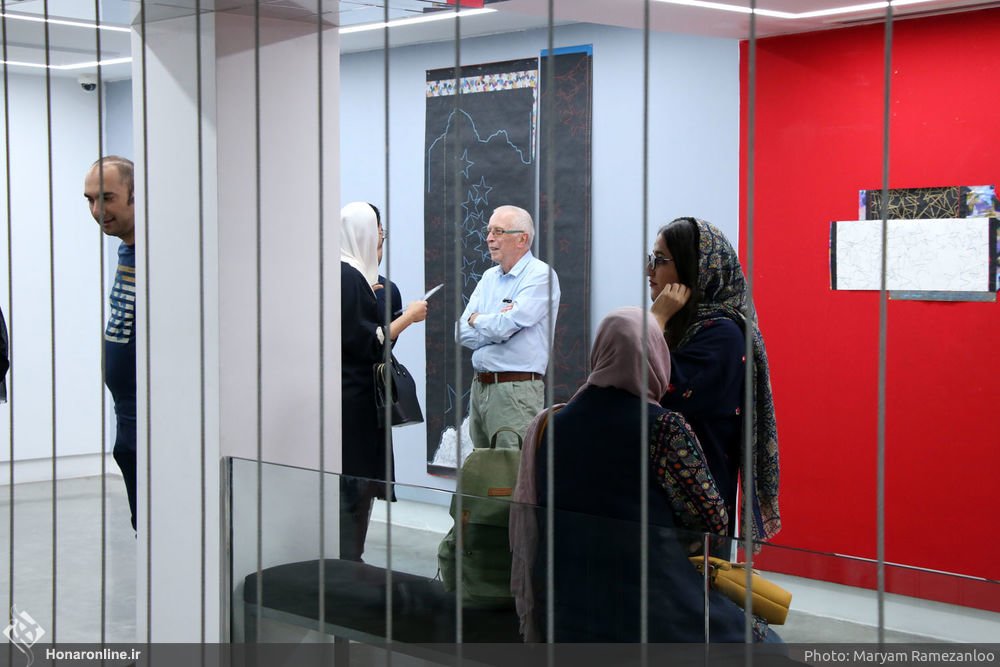
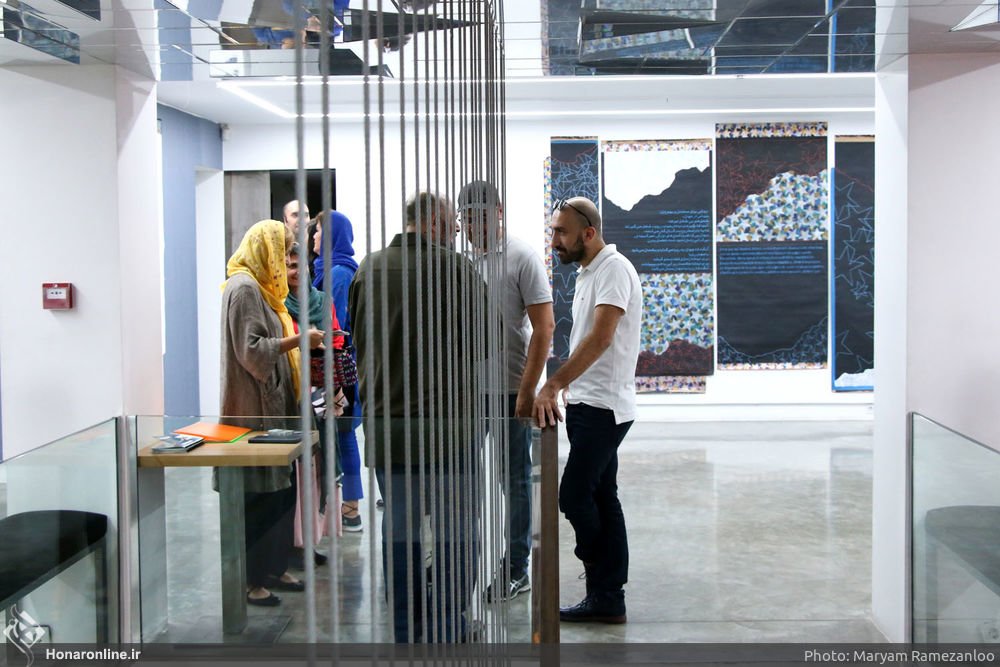
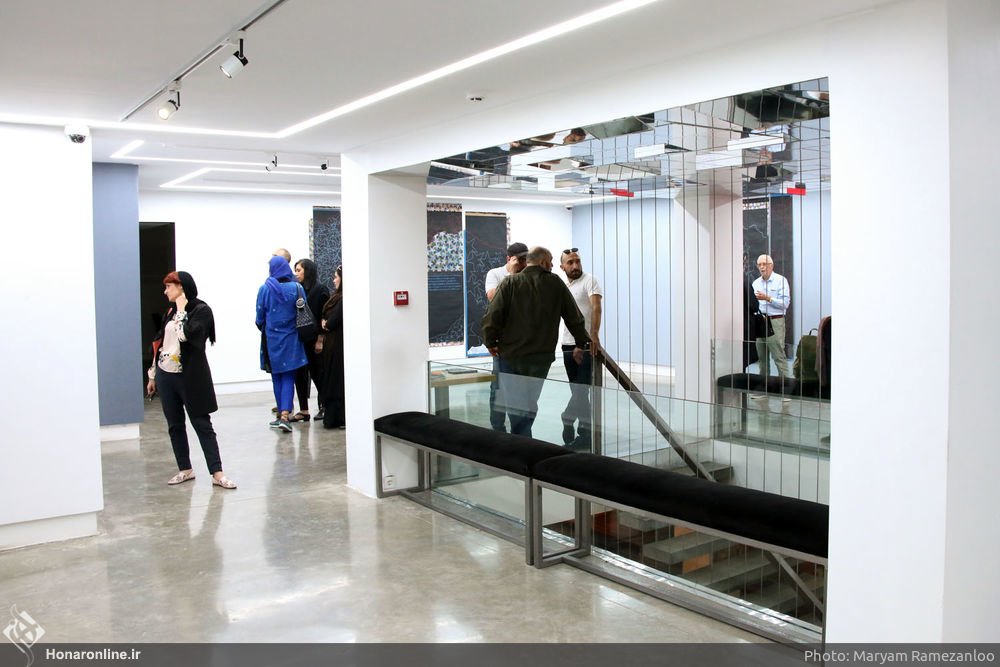
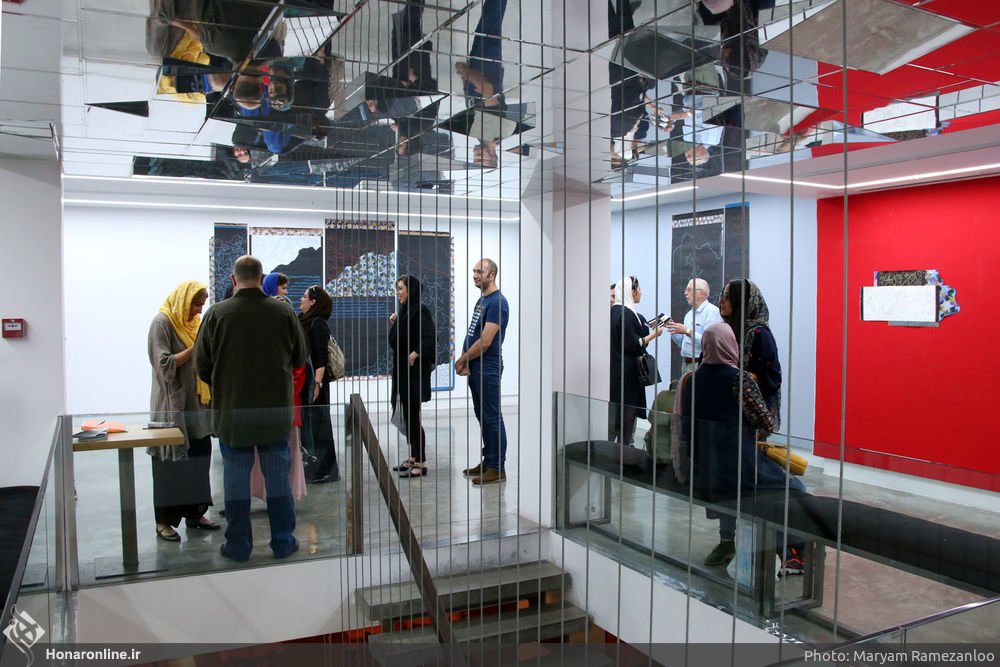
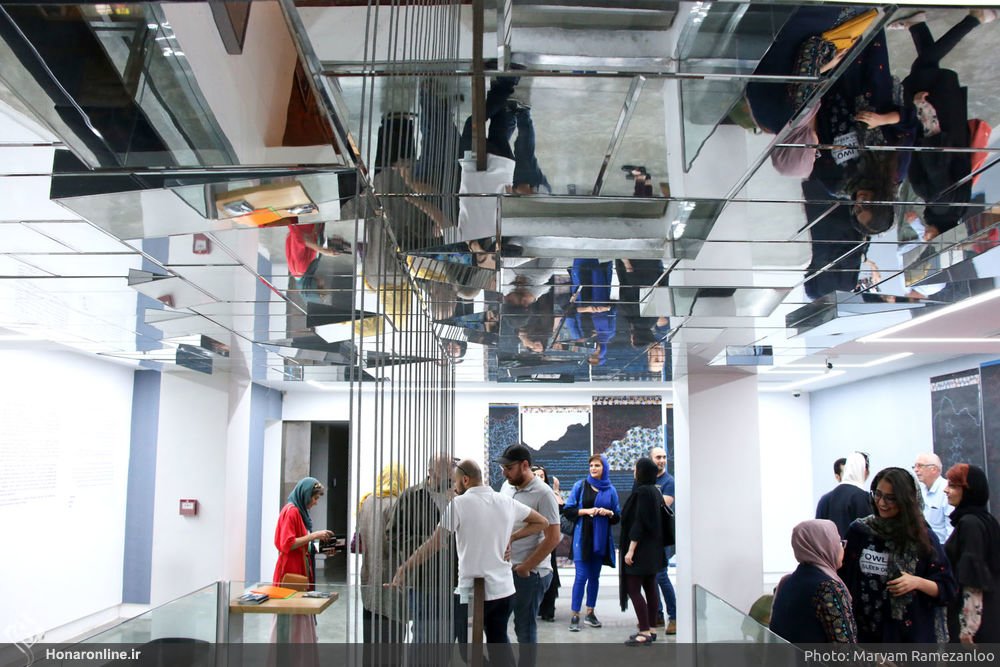
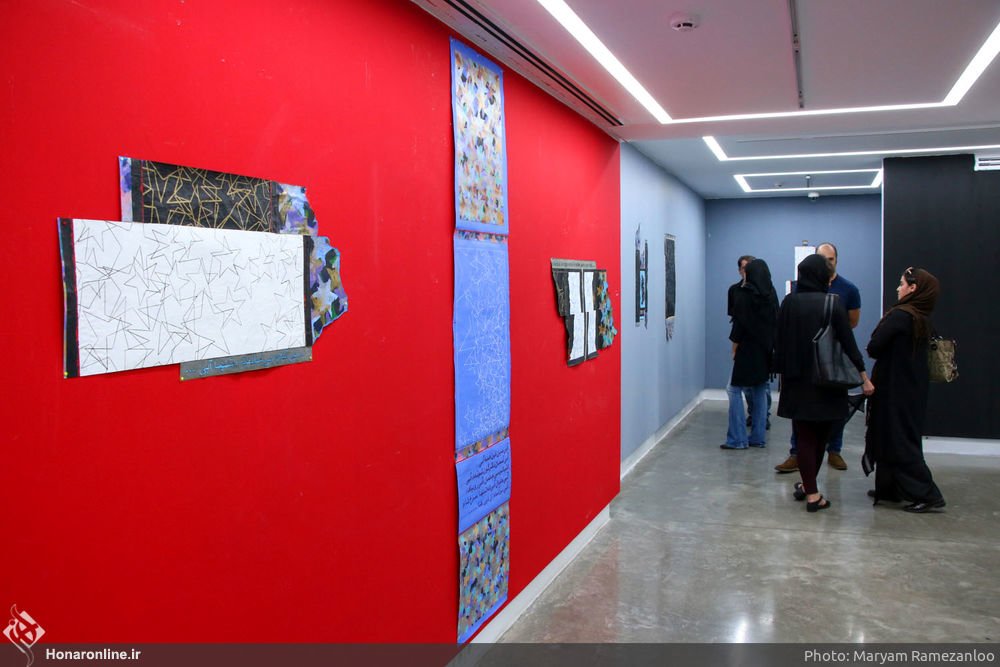
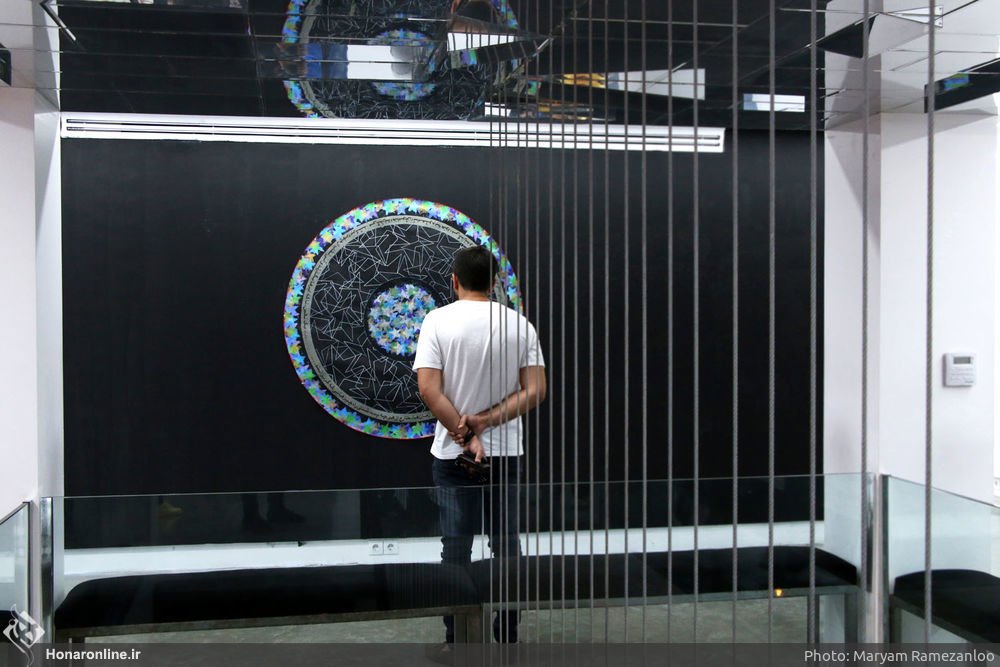
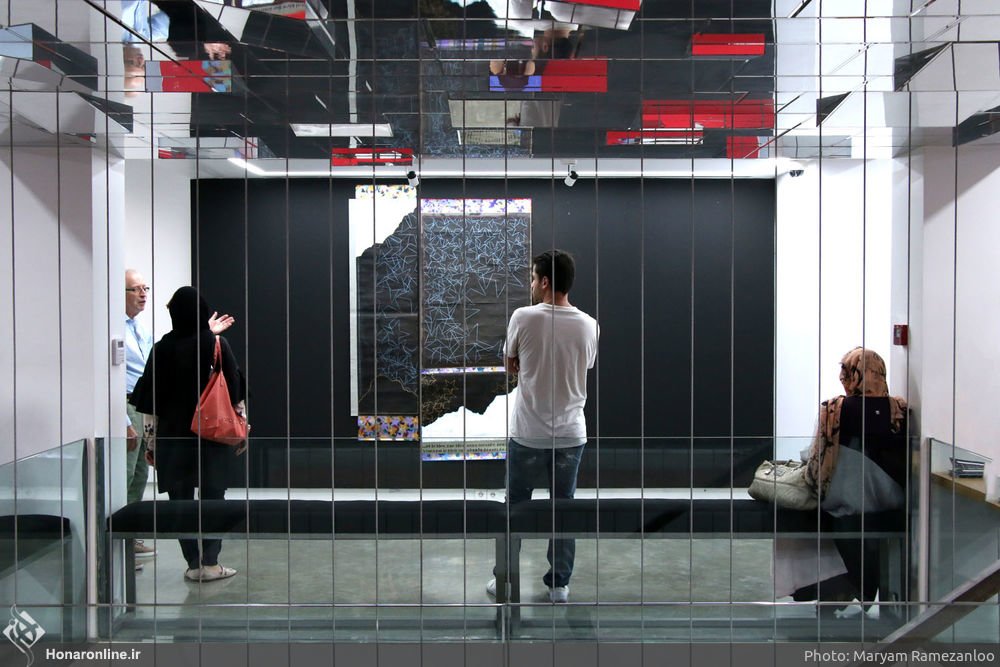
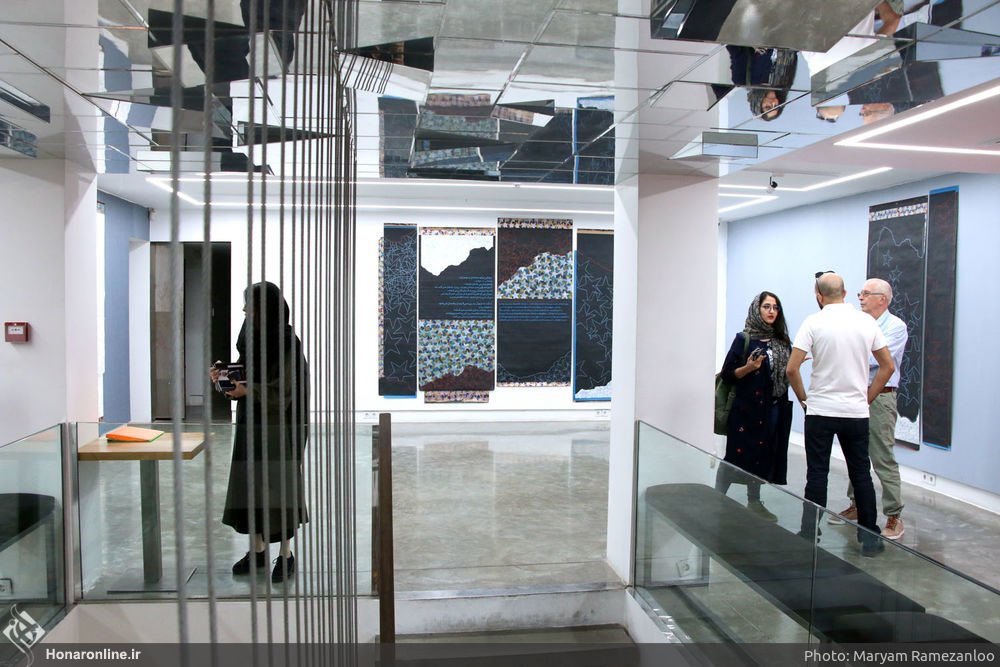
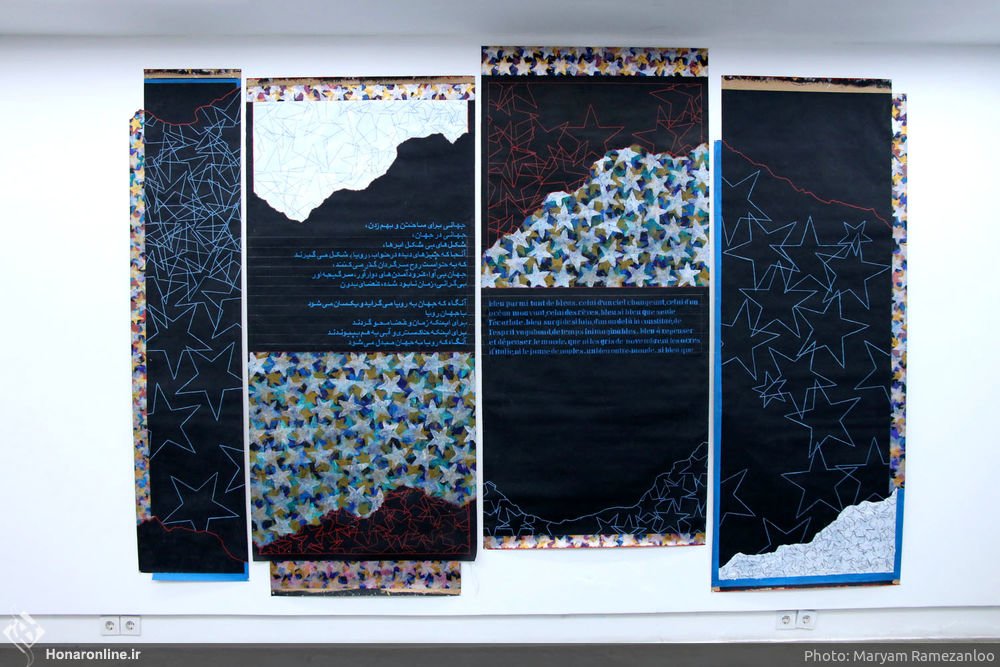
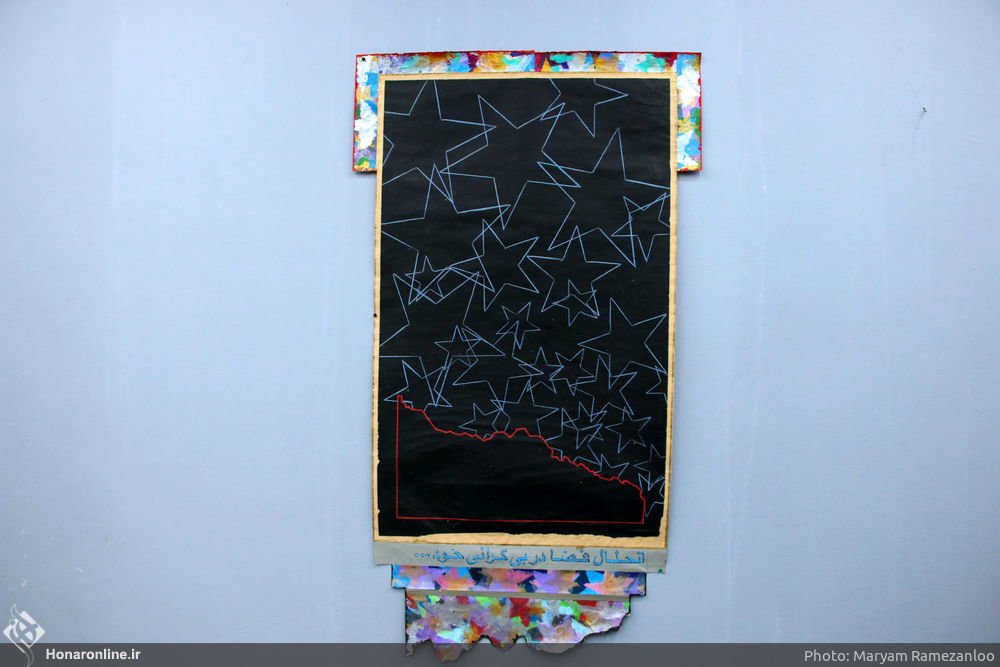
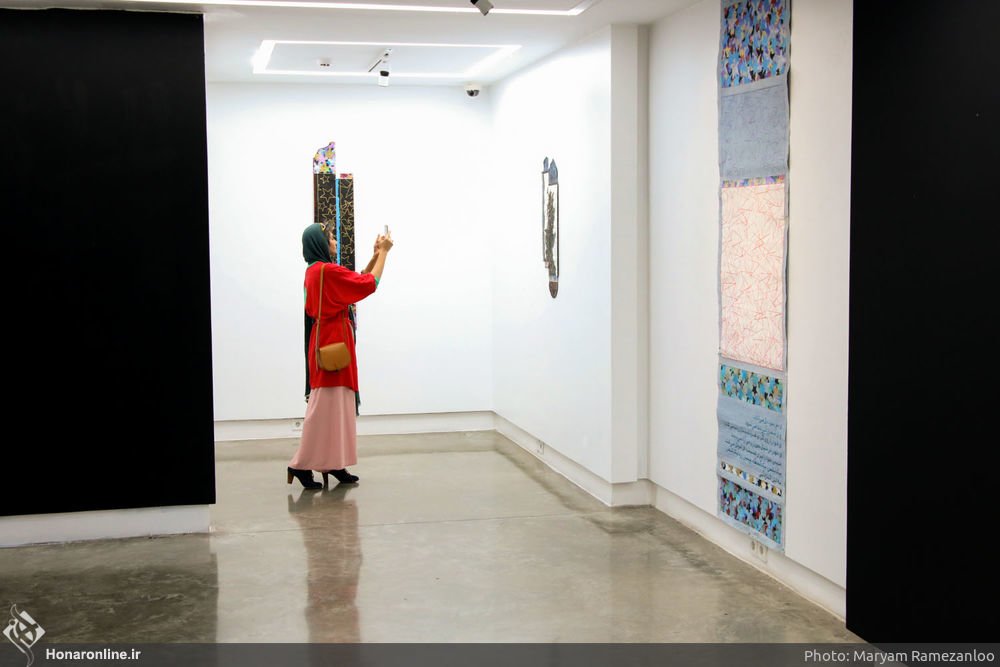
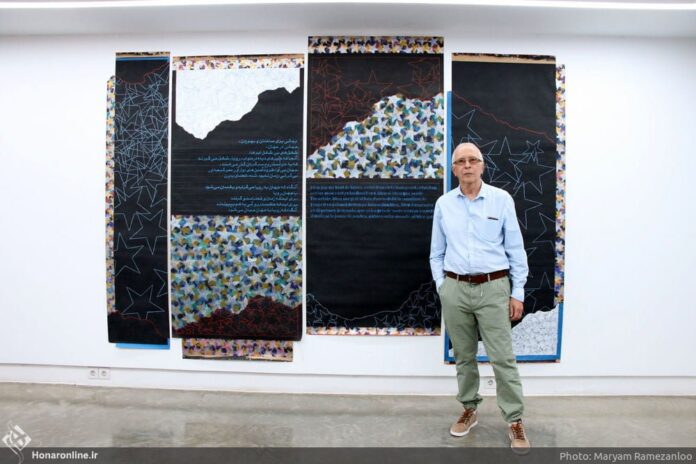
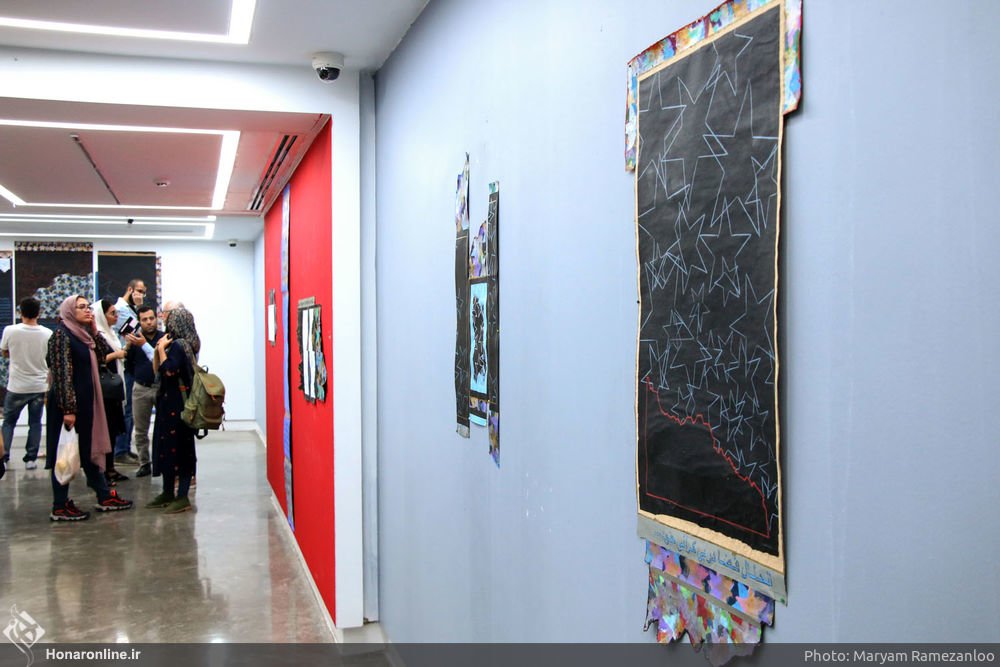
His exhibition was a combination of his poems in French and graphic works. Poems play a key role in his pieces and he seems to have created the drawings solely to add to the beauty of his poems or offer a new interpretation of them.

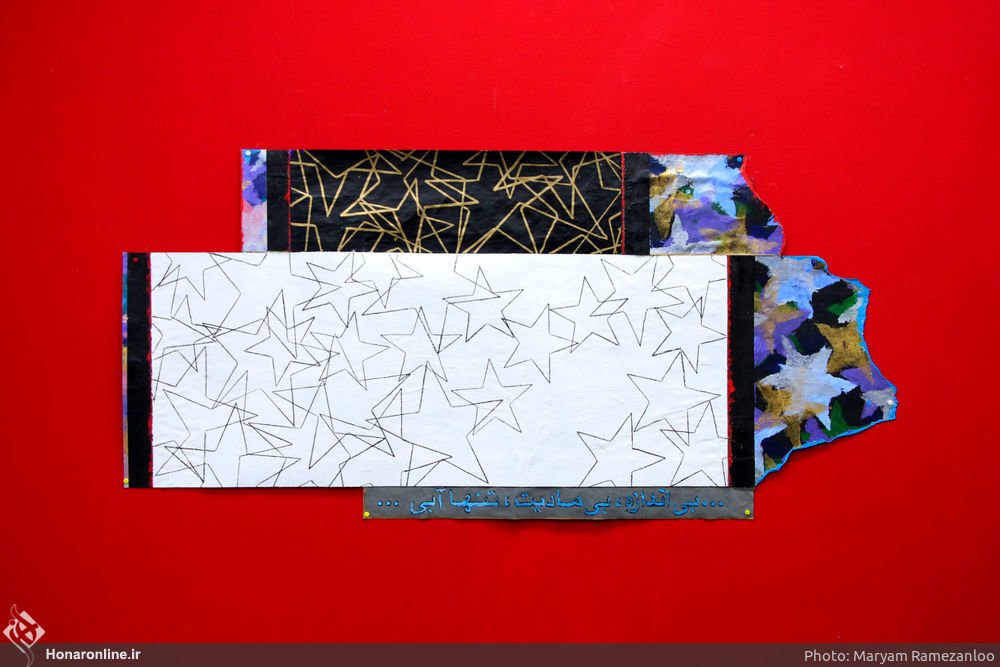
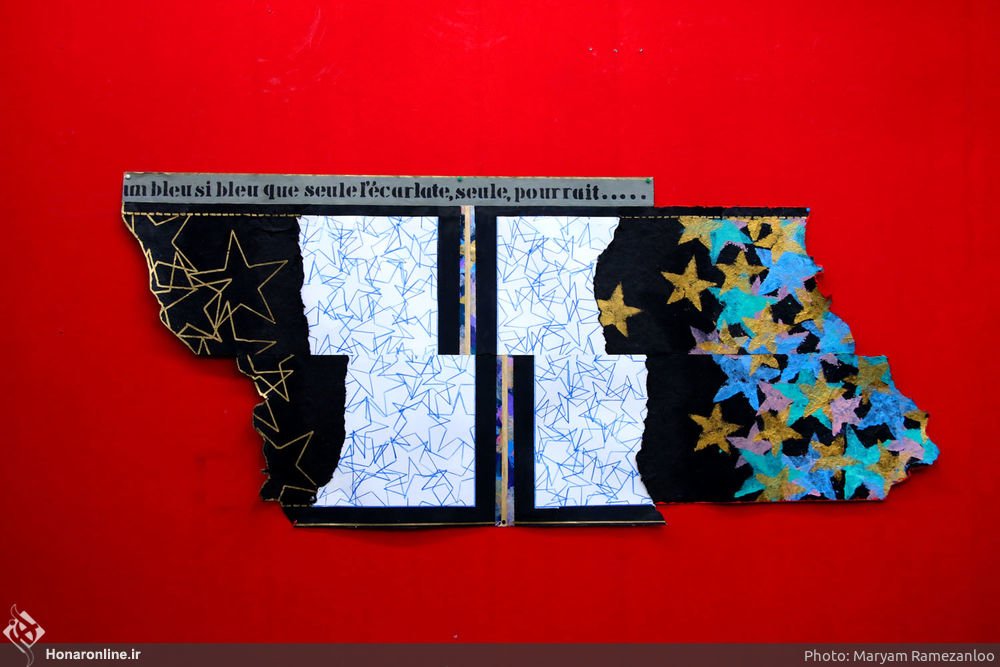
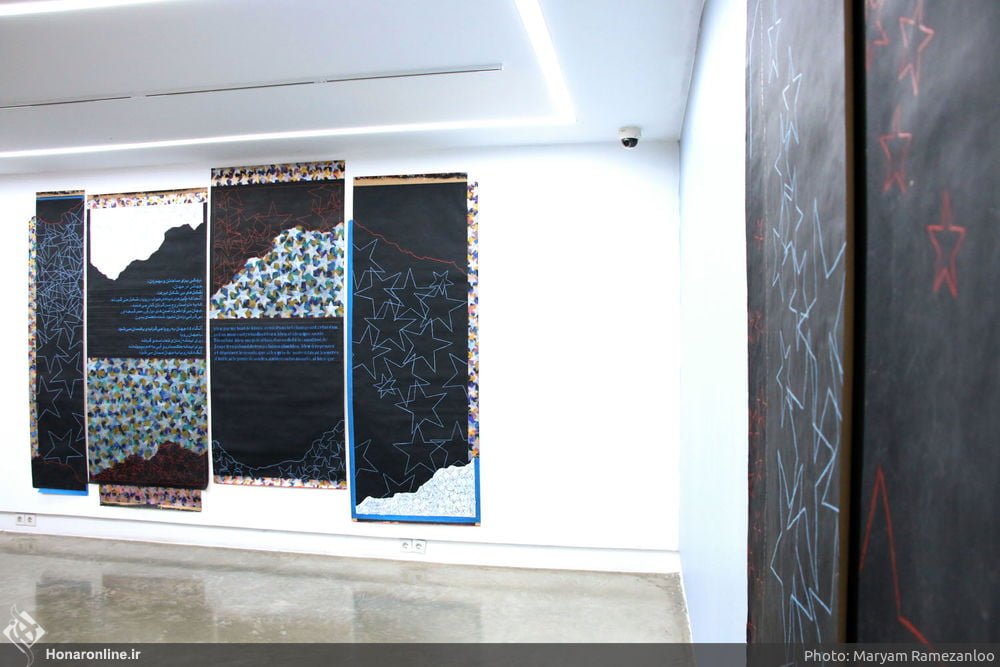
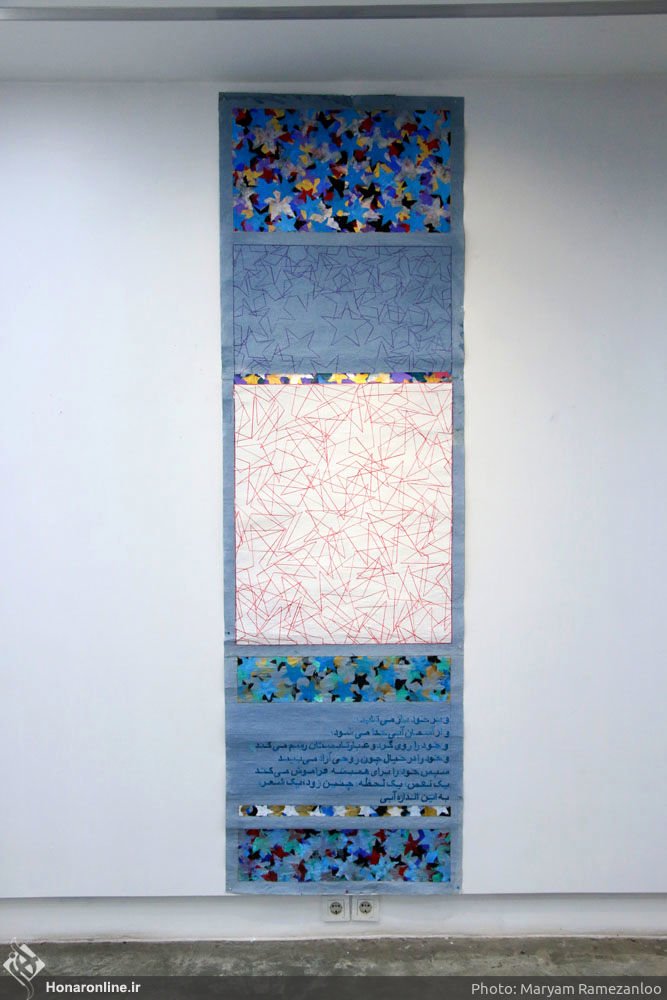
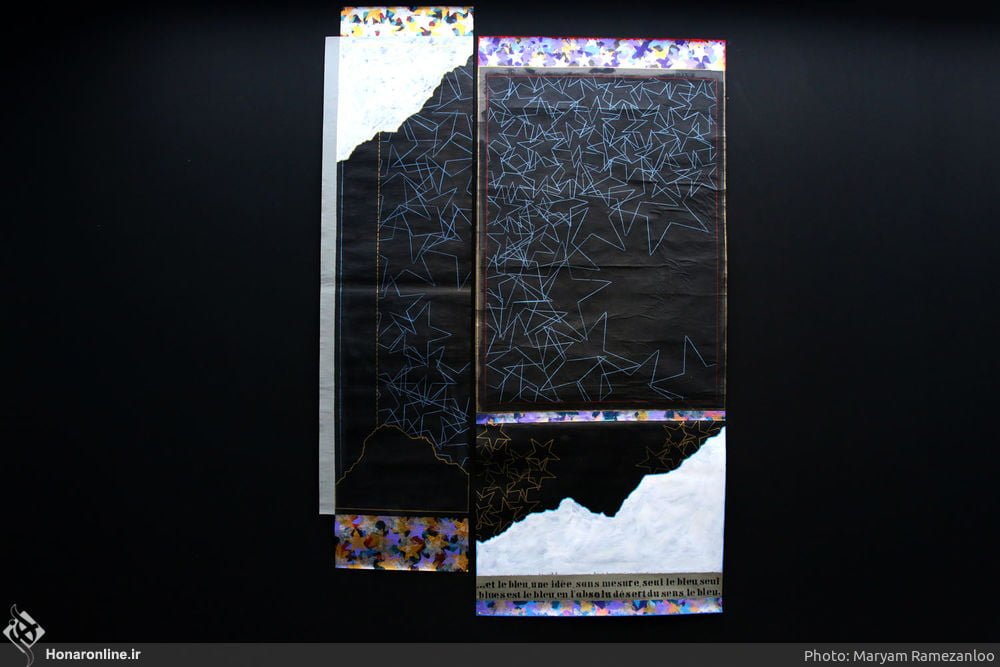
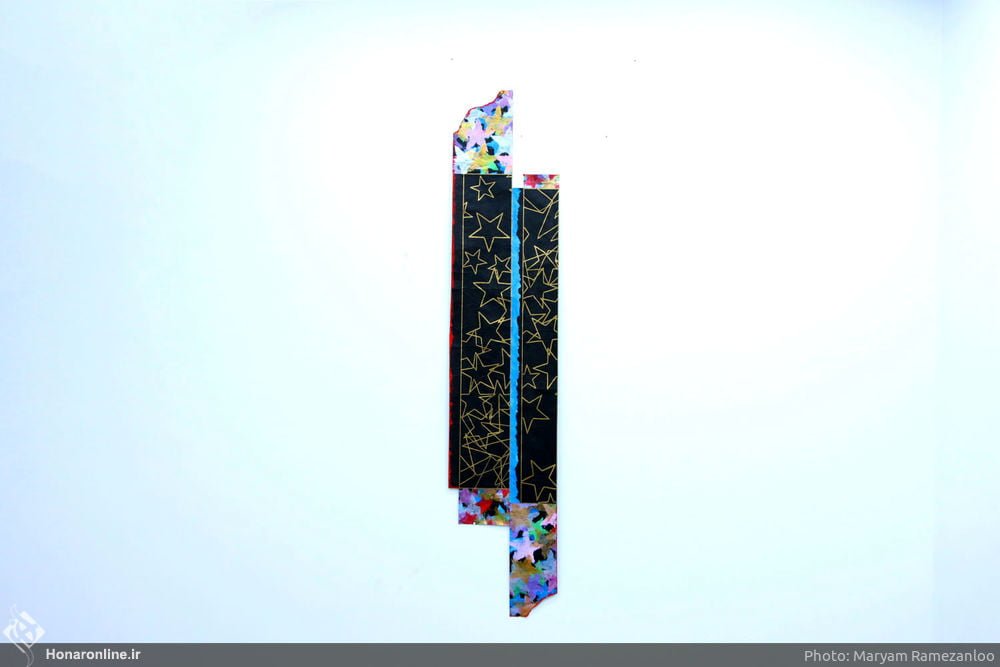
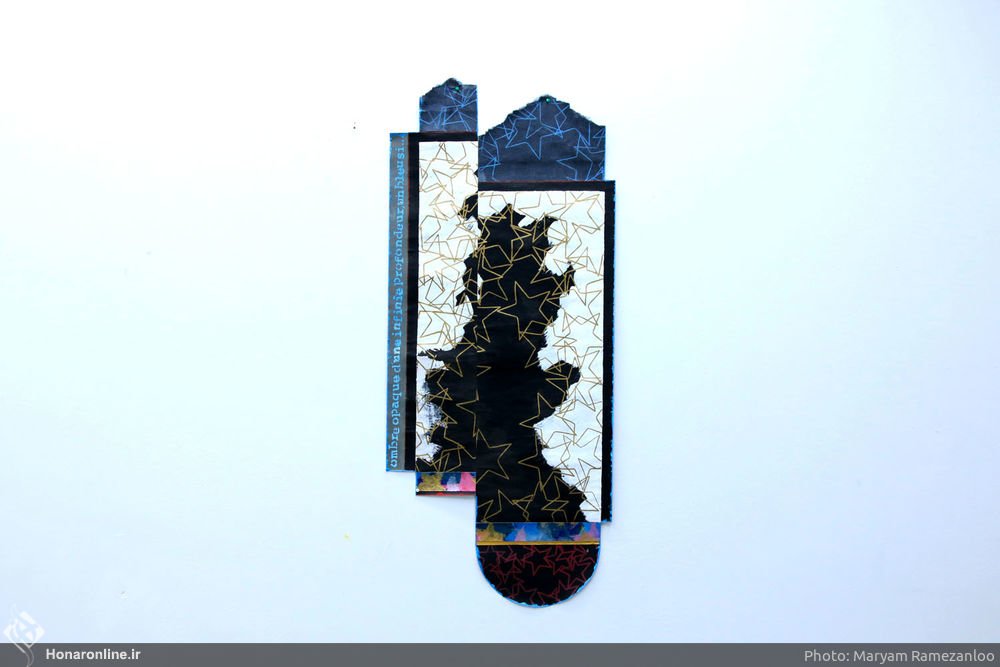
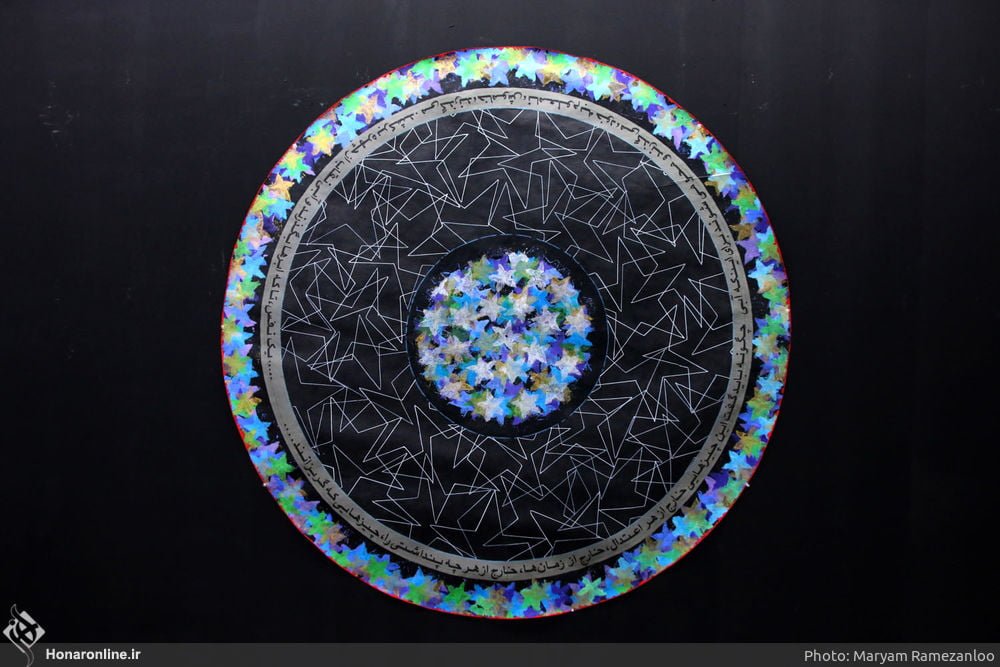
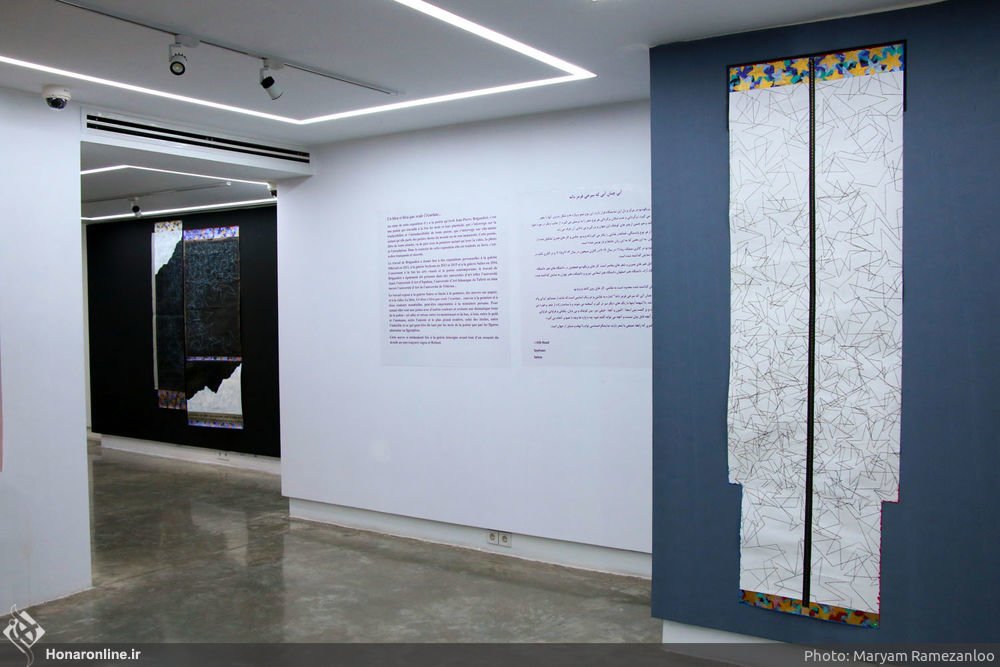
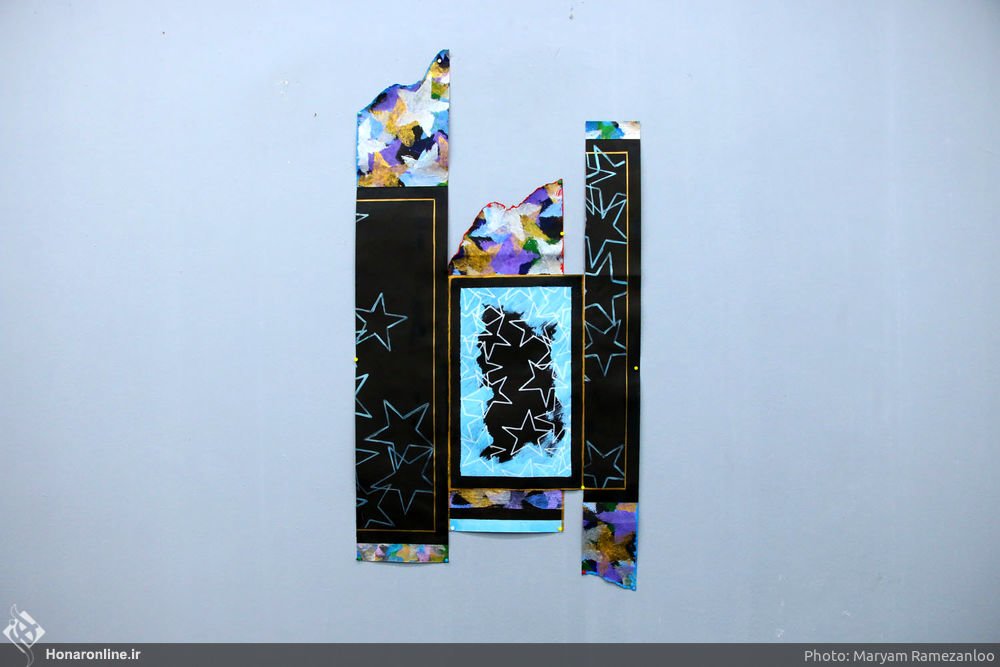
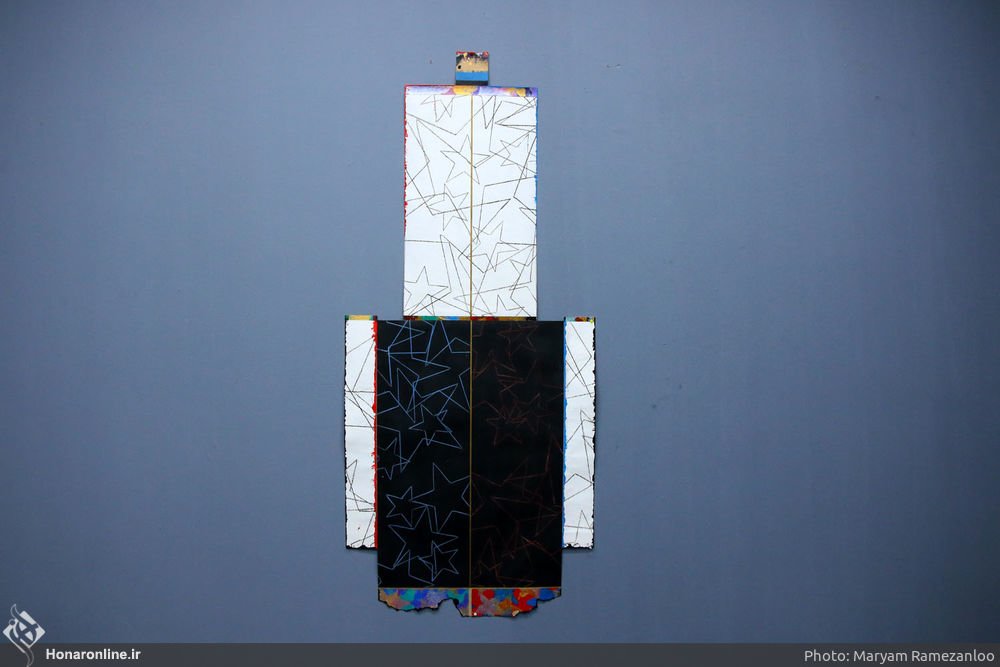
Brigaudiot had earlier held a number of exhibitions in Iran. As in his previous exhibitions, the artist focused on the connection between poems and paintings in his new exhibition.  His paintings are made of a simple element: pentagons drawn usually with blue and red lines on the paper. Their combination in each piece creates various atmospheres.

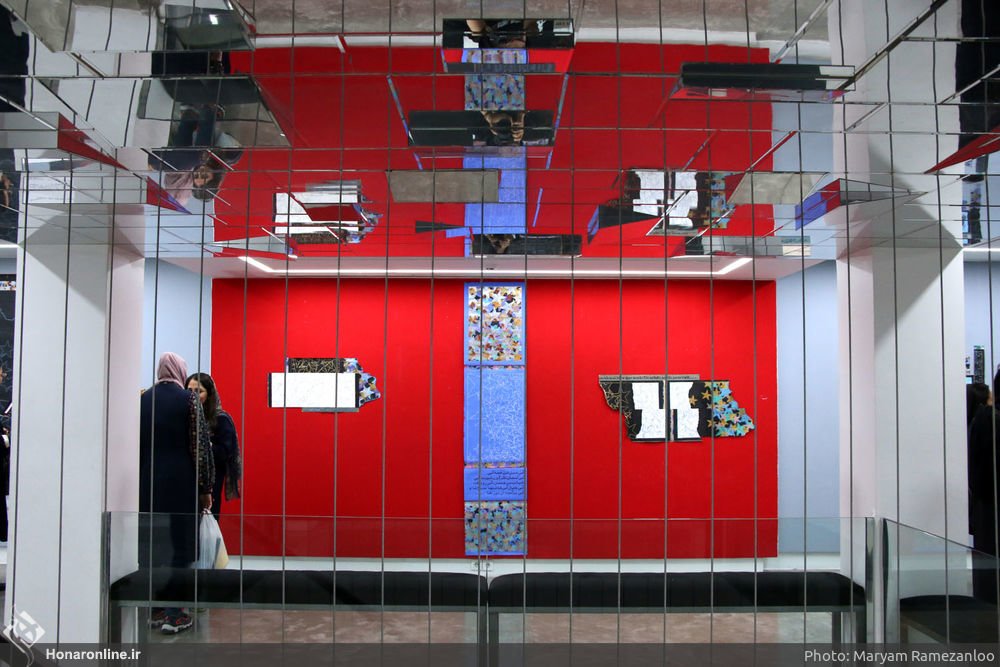
The stars’ short and long distances from each other have created new combinations in each work. In some areas, some additional colours are included, causing some colourful variations. Despite their simplicity, the pieces highly resemble the Iranian paintings and architecture by their geometric shapes. Mirrors, tiles and other elements used geometrically in the French artist’s pieces to create polygon stars have a familiar ring for the Iranian visitors.

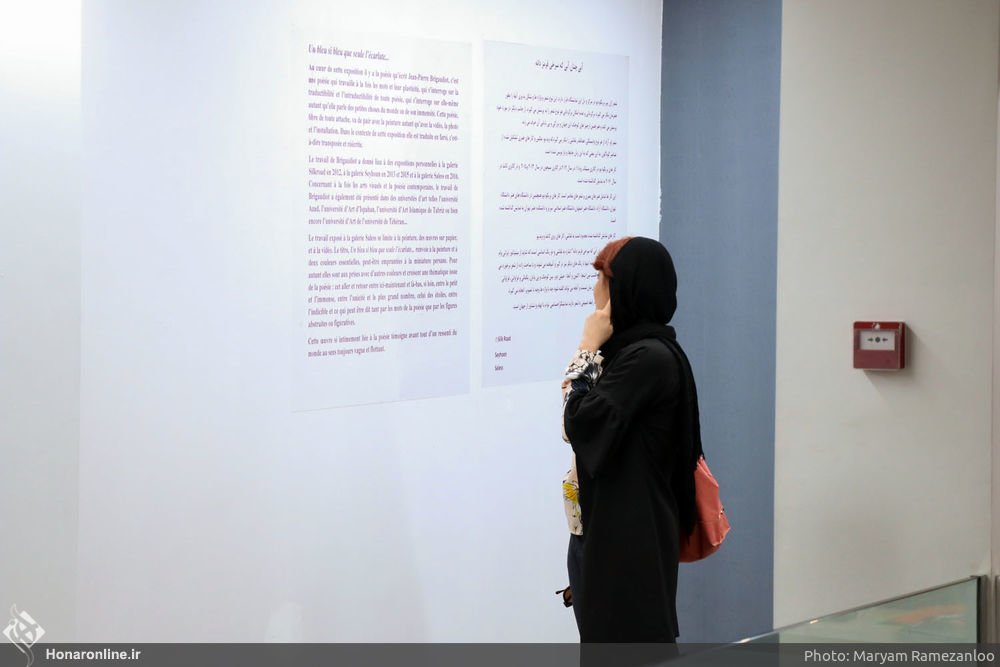
Another significant element in Brigaudiot’s exhibition is his poems. In most of his works, there is a sentence or a text in French or translated in Persian. The poems are not used as graphic elements. They are included in the paintings mostly with a simple layout. Interestingly, the artist doesn’t make any graphical creation with the poems. Therefore, as it seems, Brigaudiot is seeking to remind his visitors of a certain relation between the texts and the paintings.

Poems have a key role in the works of the French artist and as things stand, the artist uses them as an element to make his works seem more beautiful or offer a new interpretation of his poems. While the drawings can be viewed as a poem collection, they also preserve their independent identity as an artistic form deserving an in-depth study.

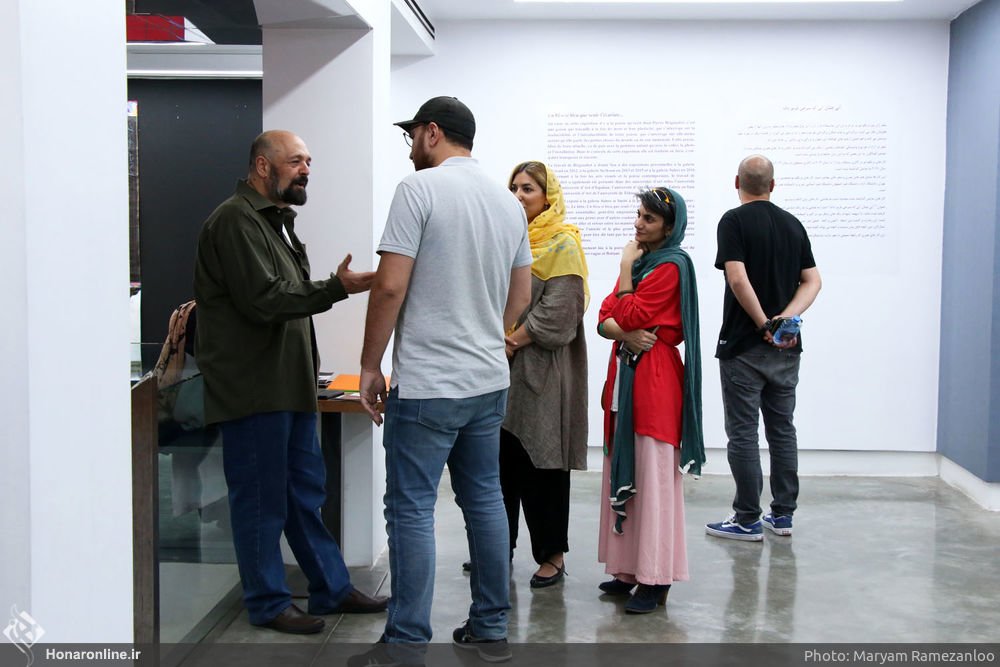
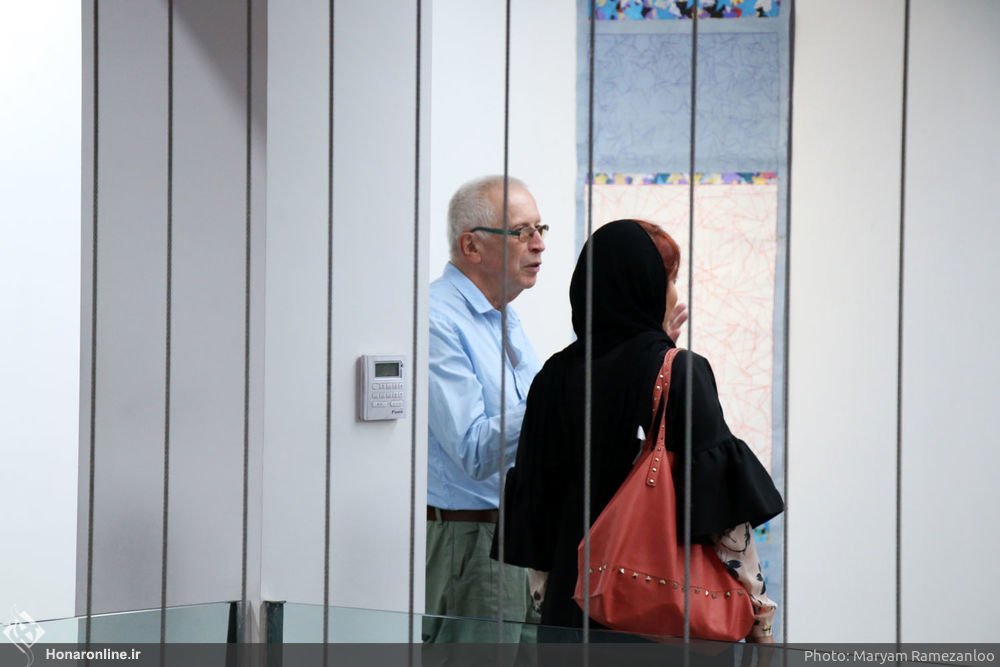
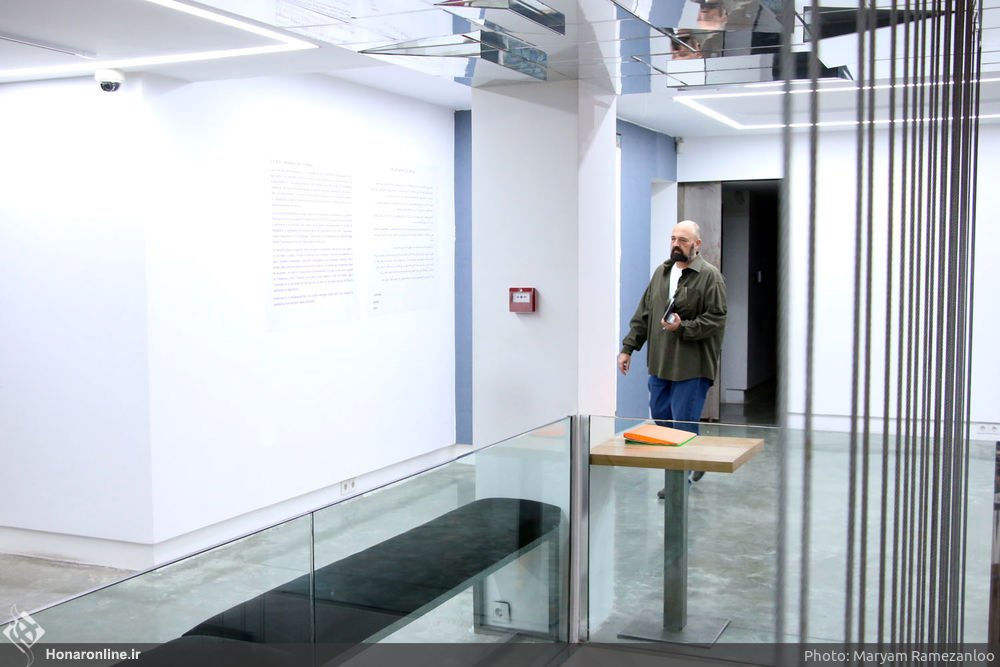
The following photos of the exhibition were first released by Honar Online:
Recent Rise in Oil Prices Offsets US Sanctions: Iran

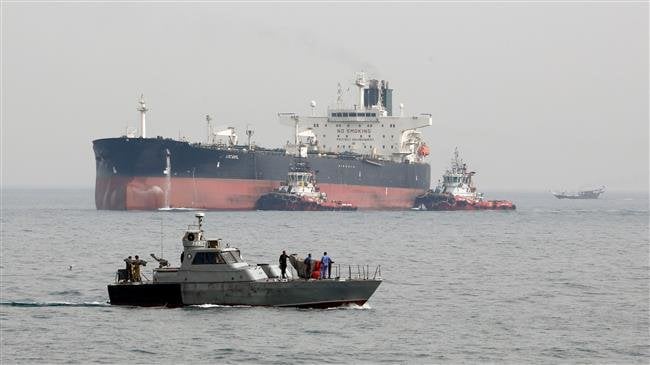
US President Donald Trump has pledged to squeeze Iran’s oil exports down to a trickle, pushing oil prices to levels not seen since 2014.

“Trump thought he could shrink our country’s oil revenues by imposing sanctions on Iran’s oil and cutting its exports, but the rise in oil prices did not let that happen,” Mohammad Baqer Nobakht, the head of Iran’s Planning and Budget Organization, said Thursday.

He said the budget for the current fiscal year has been drawn up on the basis of an oil price of $55 a barrel, but the country’s sales have averaged $70 a barrel so far.

The government also expected to sell 2.4 million barrels per day of oil during the current Iranian calendar year, which started in mid-March, but it exported 2.5 barrels in reality, he said.

Oil prices remain at four-year highs on rising doubts about the capability of Saudi Arabia and other producers to substitute Iran’s crude after the US imposes new sanctions on the country on November 4.

Earlier on Wednesday, Iranian First Vice-President Es’haq Jahangiri told a parliamentary session that “despite the mischief of the Americans, Iran’s oil exports have surpassed state budget outlay projections.”

“Notwithstanding all the pressures that the Americans are creating on the oil issue, Iran has its own oil customers, and the work is going on in a way that no problems will arise,” he said.

International benchmark Brent crude was up 38 cents at $85.18 a barrel on Wednesday, after hitting its highest level since November 2004 on Monday at $85.45.

The US is about to impose new sanctions on Iran’s oil sector on Nov. 4, with the White House saying Saudi King Salman had promised Trump that the kingdom had enough spare capacity to replace Iranian barrels.

However, Iran’s OPEC Governor Hossein Kazempour Ardabili says the US president has apparently been duped by Saudi Arabia.

Iranian Minister of Petroleum Bijan Zangeneh said on Tuesday Iran will go full-throttle to maintain its market share as he blamed Trump for the surge in oil prices.

“The US is doing all it can to prevent us from producing and supplying oil to the market, but Iran is producing its crude oil with force,” he said.

“Mr. Trump has said OPEC is responsible for rising oil prices and has to raise production, but one must say that OPEC is not responsible, but the Trump himself is responsible for the rise,” Zangeneh added.

Iran, Turkey Sign Three Agricultural MoUs

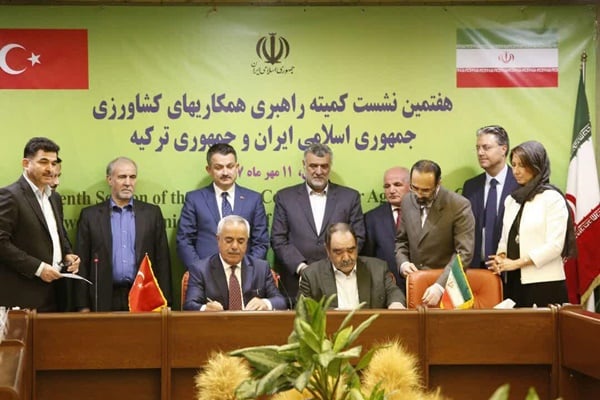
The agreements were signed by Iran’s Deputy Minister of Agriculture Mohammad Ali Tahmasebi and Advisor to Turkey’s Minister of Agriculture and Forest.

The two officials signed the deals during the seventh meeting of the Strategic Committee for Agricultural Cooperation between the two countries in Tehran.

According to IRNA, at this event, Iran’s Minister of Agriculture Mahmoud Hojjati said political relations between Iran and Turkey is positive and agricultural cooperation has to be expanded accordingly.

Hojjati stated that the volume of bilateral agricultural trade is low in comparison to the volume of trade in other fields. He further stressed this level of trade should be increased, and if there are currently restrictions on exports and imports, it is because of US sanctions.

He also noted that work on greenhouses is an area in which the two sides could have good cooperation.

“Turkey has made good progress in the field of greenhouses and can transfer its experience to our country,” underlined Hojjati.

For his part, Turkey’s Minister of Agriculture and Forestry Bekir Pakdemirli called for expansion of trade in agriculture and removal of barriers to increased ezchanges with the Islamic Republic.

“Relations with Iran are important not only for us but for other neighbours, and we hope that mutual relations will develop,” underscored Pakdemirli.

He also referred to the introduction of exemptions on border trade between the two countries, saying such exemptions could revive the trade of the border regions.

Iran, Russia to Ditch US Dollar in Bilateral Trade

According to Hemmati, currently 25% of the transactions between the two countries are carried out via their national currencies, but that is a small figure. “We are looking to raise this number and gradually eliminate dollar and other currencies in our trade relations,” he added.

Hemmati made the comments in an interview with IRNA in Moscow after meeting his Russian counterpart, Elvira Sakhipzadovna Nabiullina.

Iran and Russia agreed to increase their trade volume in Tehran, and in order to achieve this, it is necessary to support the banking system of the two countries, Hemmati said.

According to the statements of the head of the Central Bank of Russia, there is no obstacle to expansion of banking relations between Tehran and Moscow, he added.

“My trip to Moscow was made after good talks and agreements between the Iranian and Russian presidents in Tehran. During that meeting the two sides agreed the heads of the central banks of the two countries hold talks to facilitate bilateral financial relations in the banking sector.”

Hemmati described his meeting with his Russian counterpart as positive, saying a road map was drawn up for the development of banking cooperation.

He also said that the trade volume between Iran and Russia is not that much high, and the two countries want to increase the level of trade cooperation.

The Iranian official further mentioned that President Vladimir Putin is determined to achieve this objective.

Referring to US sanctions against Russia and Iran, Hemmati said that “while the United States imposes sanctions on Tehran and Moscow, we can expand our ties on a bilateral basis and bypass sanctions.”

ICJ’s Rulings Must Be Enforced: Iran VP

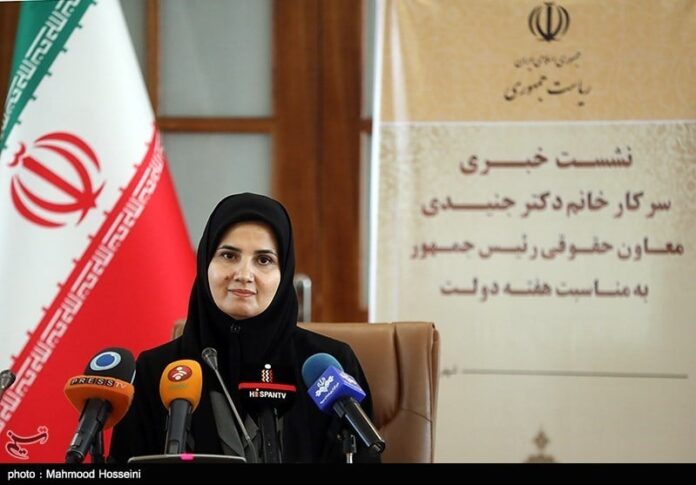
Speaking to reporters on the sidelines of a weekly cabinet session on Wednesday, La’ya Joneidi hailed the top UN court’s ruling that the US should ensure that sanctions against Iran do not impact humanitarian aid or civil aviation safety.

She also dismissed speculation that there is no guarantee the ICJ could enforce its rulings, saying, “In the international law, the guarantee of enforcement of verdicts is proportional to the international community. There is no more powerful tribunal in the world than the International Court of Justice, which is a UN organization. Thus, if we say that the rulings handed down by this court have no guarantee to be implemented, then we should conclude that the international law is worthless.”

As regards the US anger at the ICJ’s verdict in favor of Iran, Joneidi underlined that the UN member states are bound to honor the court rulings.

Hailing the outcomes of the pro-Iran rulings, the vice president said it empowers UN members to follow up on the case and also provides better conditions for the companies intending to work with Iran.

On Wednesday, the ICJ found that assurances offered by Washington in August that it would do its best to ensure sanctions would not affect humanitarian conditions were “not adequate to address fully the humanitarian and safety concerns raised” by Iran.

In its provisional verdict, the ICJ ruled that the US government should lift all bans on the free export of humanitarian goods like food and medicine to Iran which have been re-imposed after Washington’s withdrawal from the 2015 Iran nuclear deal.

The ICJ, which is based in The Hague and is also known as the World Court, is the United Nations tribunal for resolving international disputes. Iran’s filing asks the ICJ to order the United States to provisionally lift its sanctions ahead of more detailed arguments.

Number of Tourists Visiting Iran Increases by 50%

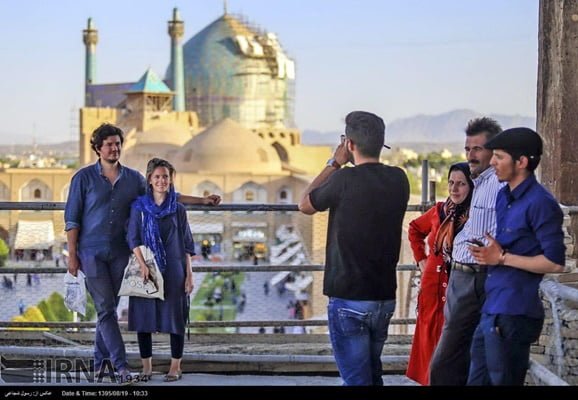
A group of foreign tourists taking photos with historical sites of Isfahan, a city in central Iran. / Photo by IRNA

Ali Asghar Moonesan, the head of Iran’s Cultural Heritage, Handicrafts and Tourism Organization (ICHTO), made the announcement in the city of Natanz in central Iran on Wednesday.

“The current conditions are special for foreign tourists and there are cheap packages for travelling to Iran,” he said.

Moonesan said the tourism industry plays a big role in transferring hard currency into Iran and strengthening the economy, Fars News Agency reported.

The record slide in the value of the national currency in recent months has made Iran visits extremely cheap for foreign visitors.

Moreover, Iran has in recent months made efforts to ease the process of issuing visas to attract more foreign tourists.

Iran is home to many historical landmarks and enjoys a rich culture, but its tourism sector remains relatively underdeveloped.

Leader: Iran Will Definitely Overcome US Sanctions

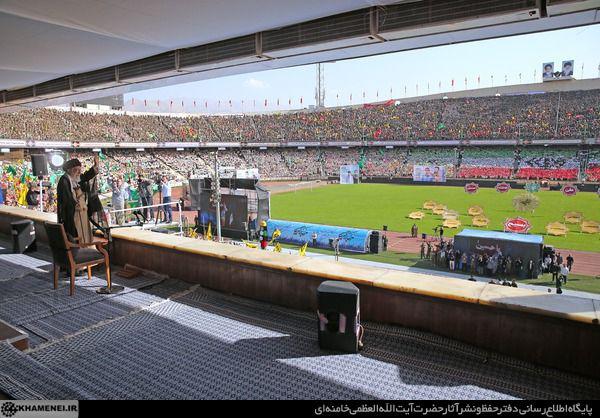
Ayatollah Khamenei made the remarks at a gathering of around 100,000 Basij (volunteer) forces in Tehran’s Azadi Stadium.

He also promised that as long as he’s alive he would not let enemies achieve their goals.

He further noted that the enemy is using media as a tool to paint a false picture of the situation in Iran and affect the public opinion in the country.

He said if media falls into the wrong hands, it will be very dangerous.

The Leader likened media to chemical weapons during war. Ayatollah Khamenei said chemical arms do not destroy military hardware, but kills or injures people.

Ayatollah Khamenei said the enemies use media to paint a false picture of themselves and of Iran to deflect public opinion.

He said the enemy is dismayed at Iran’s might and want to see weakness within the ranks of Iranians.

The Leader then touched upon the elements of power in Iran which, as he said, include missile power and regional influence.

Ayatollah Khamenei took a swipe at some individuals inside the country who favour submission to the United States, saying the Iranian nation will stand up to the US bullying.

The Leader further described the Iranian nation as “invincible” and praised the “grandeur” of Iran.

Ayatollah Khamenei said the United States is resorting to sanctions as the only option available to it to confront the Iranian nations, adding Iranians will overcome sanctions.

The Leader said Trump reportedly told some European Leaders that the Islamic Republic of Iran will be gone in a matter of months. “Dream on!” added Ayatollah Khamenei.

The leader noted the enemy will retreat in the face of the nation’s unity and strong will.

Leader: Iran Will Definitely Overcome US Sanctions

Iranian Papers Hail ICJ’s Vote against US Sanctions

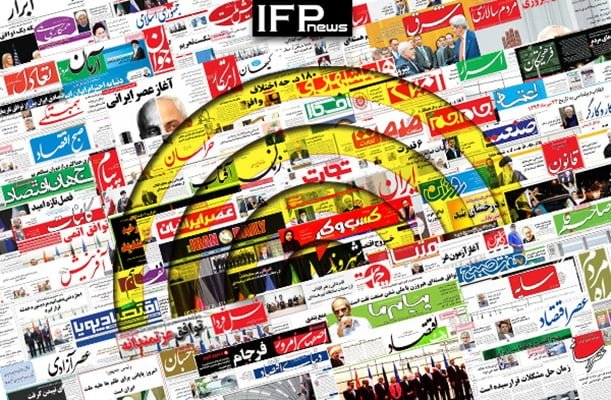
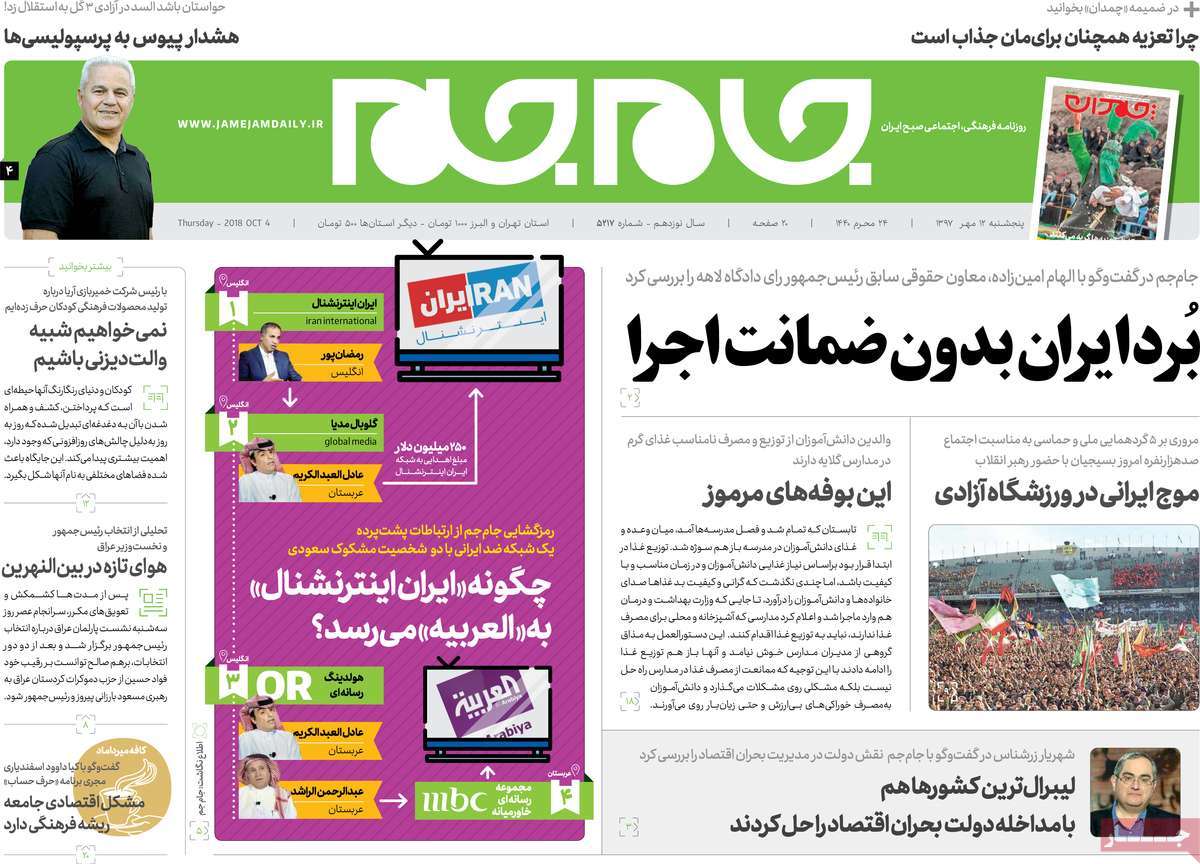
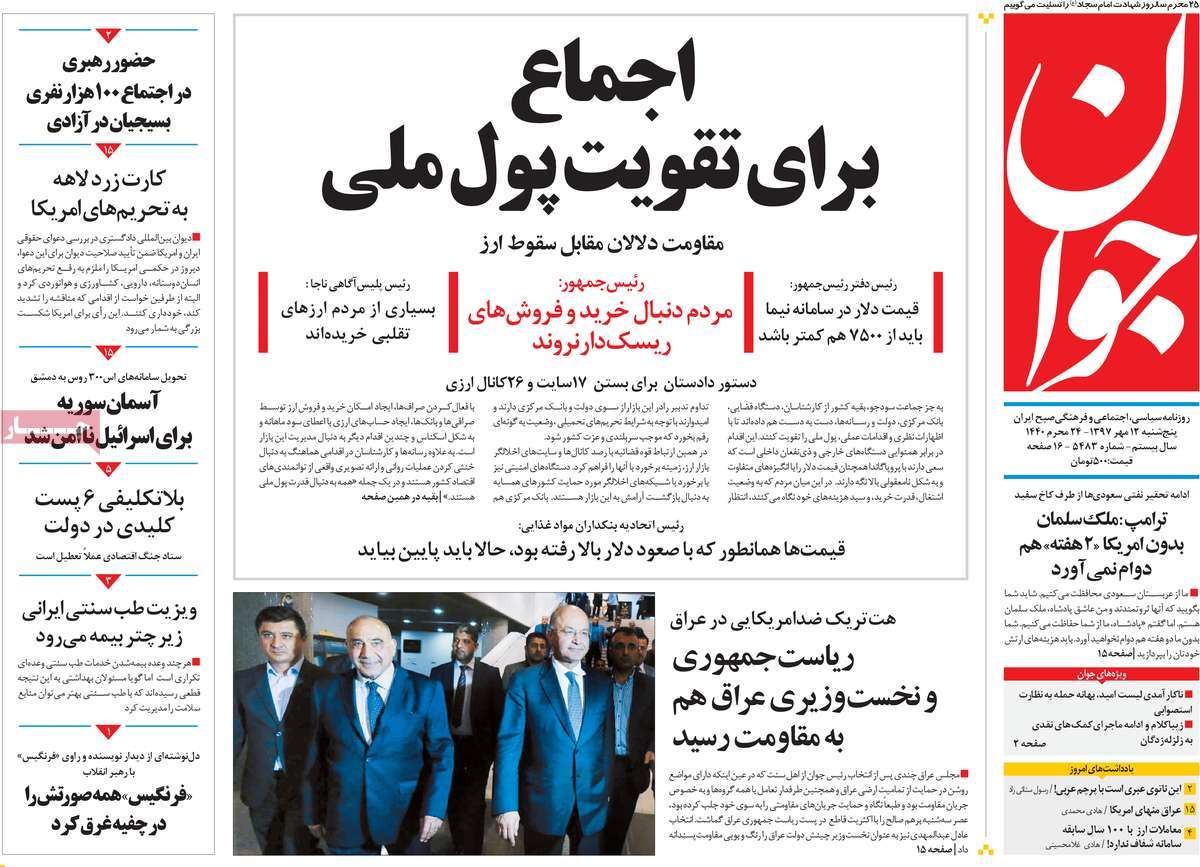
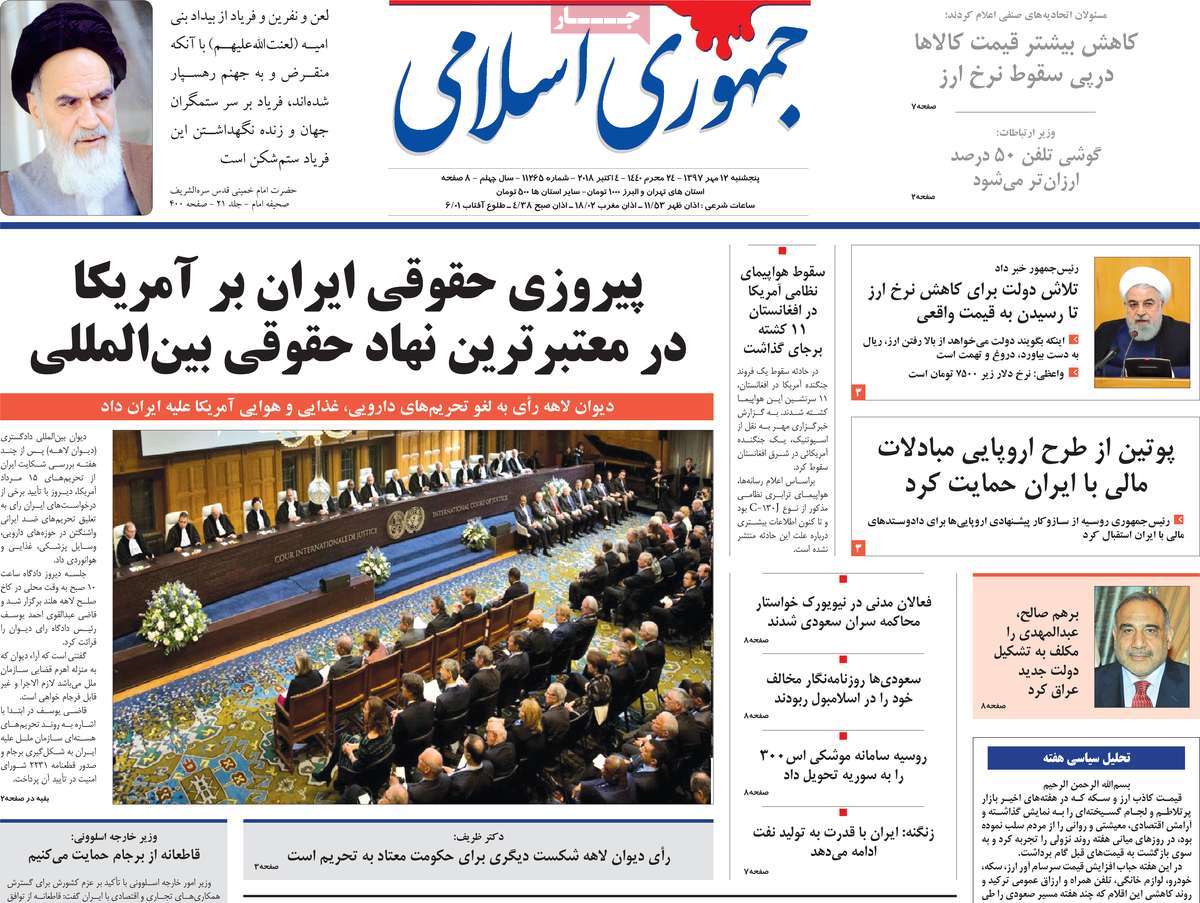
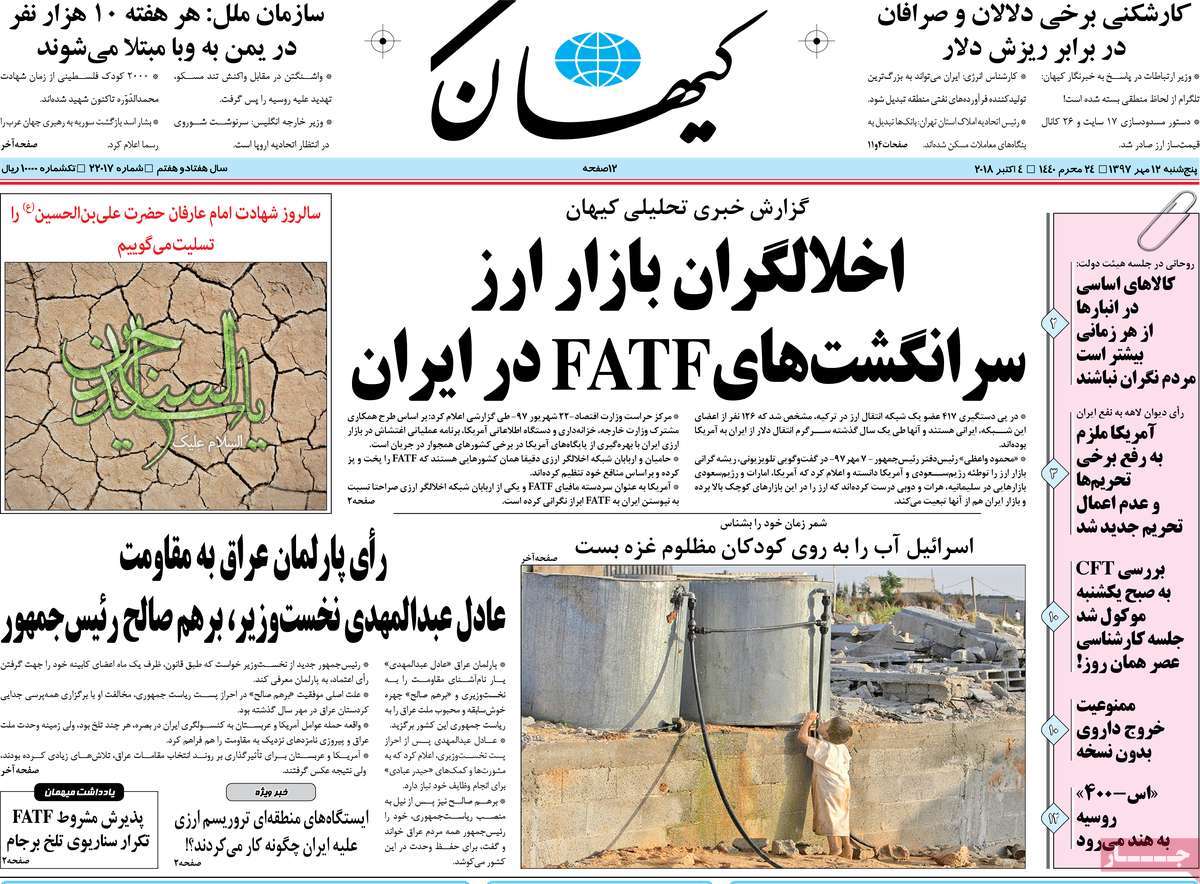
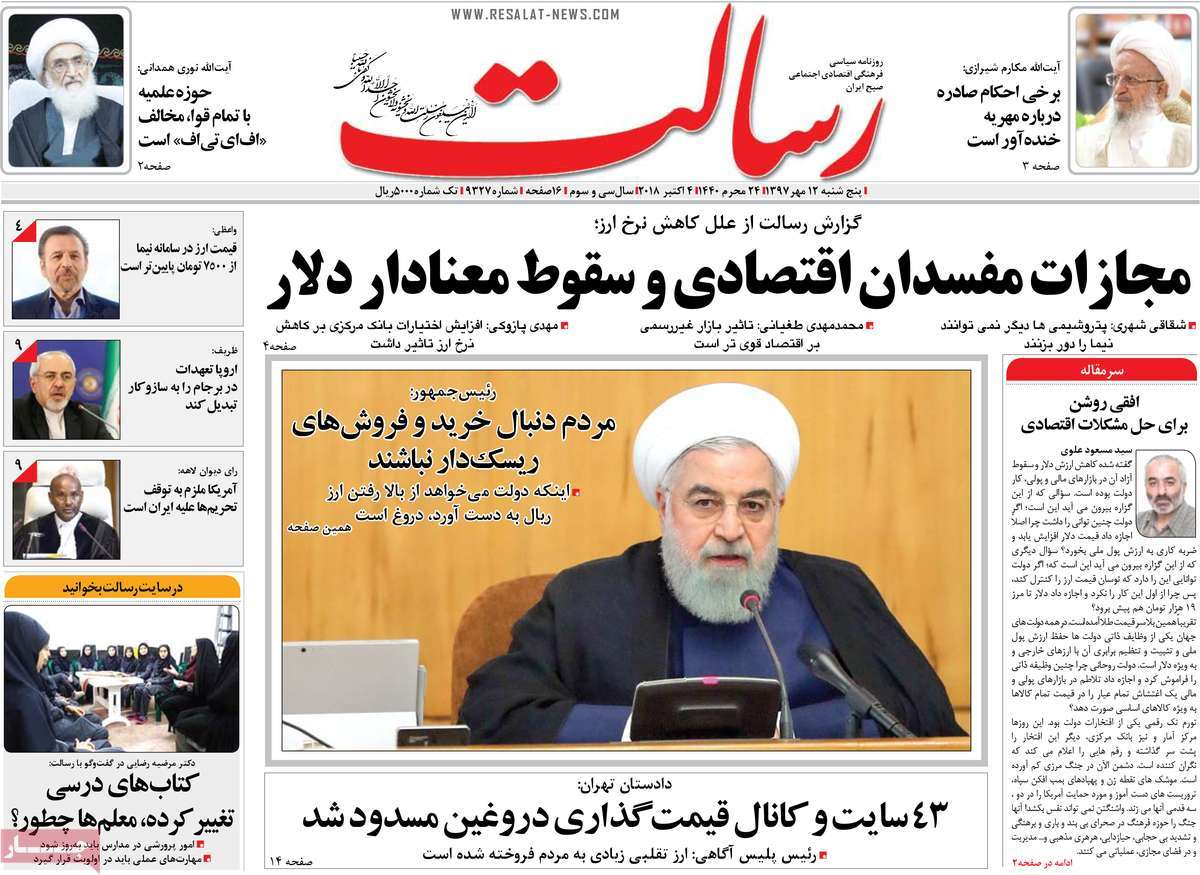
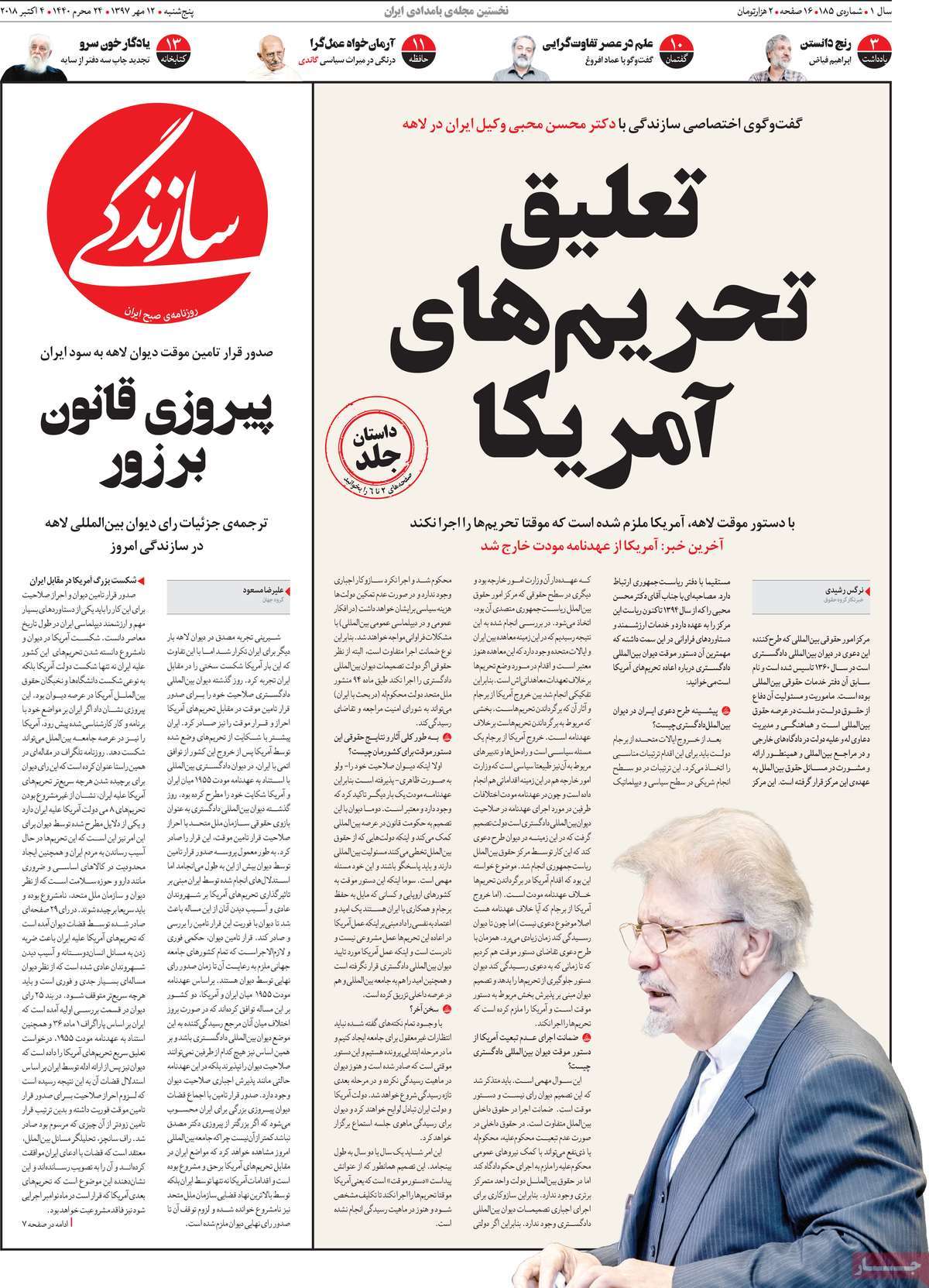
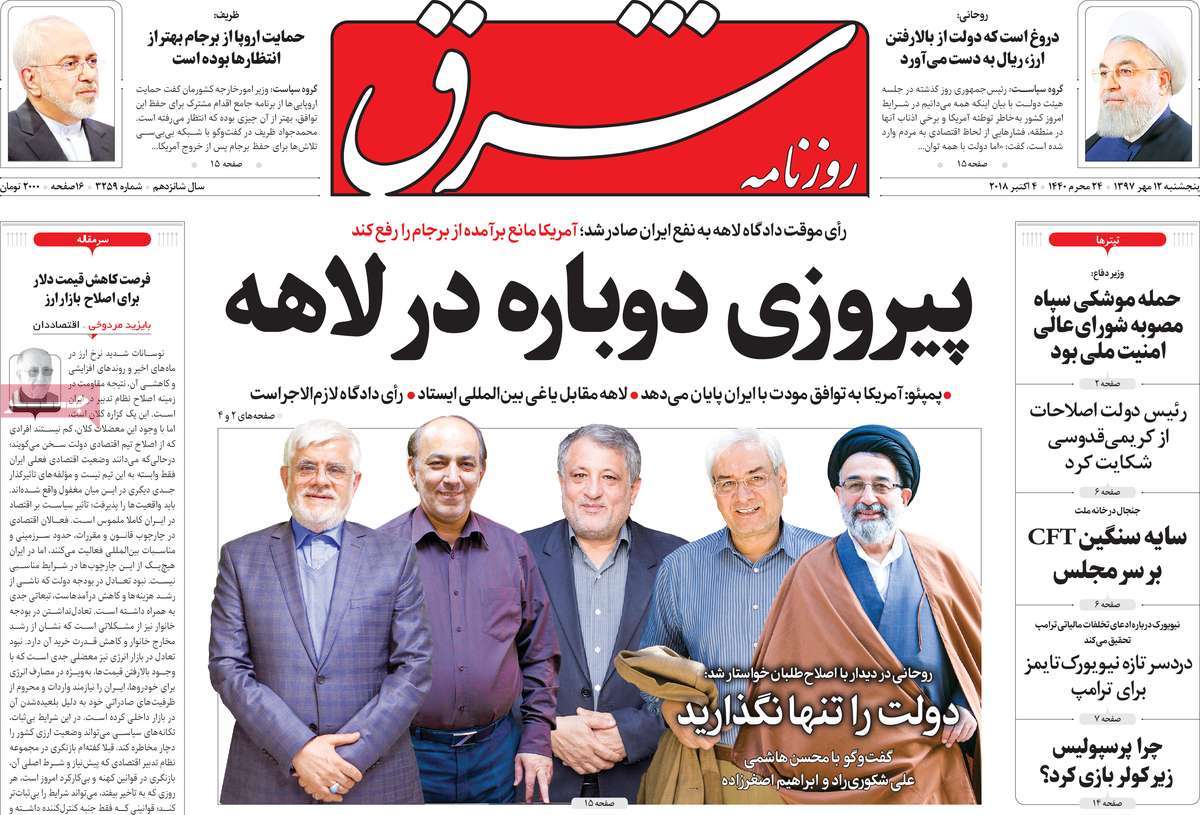
A Look at Iranian Newspaper Front Pages on November 19

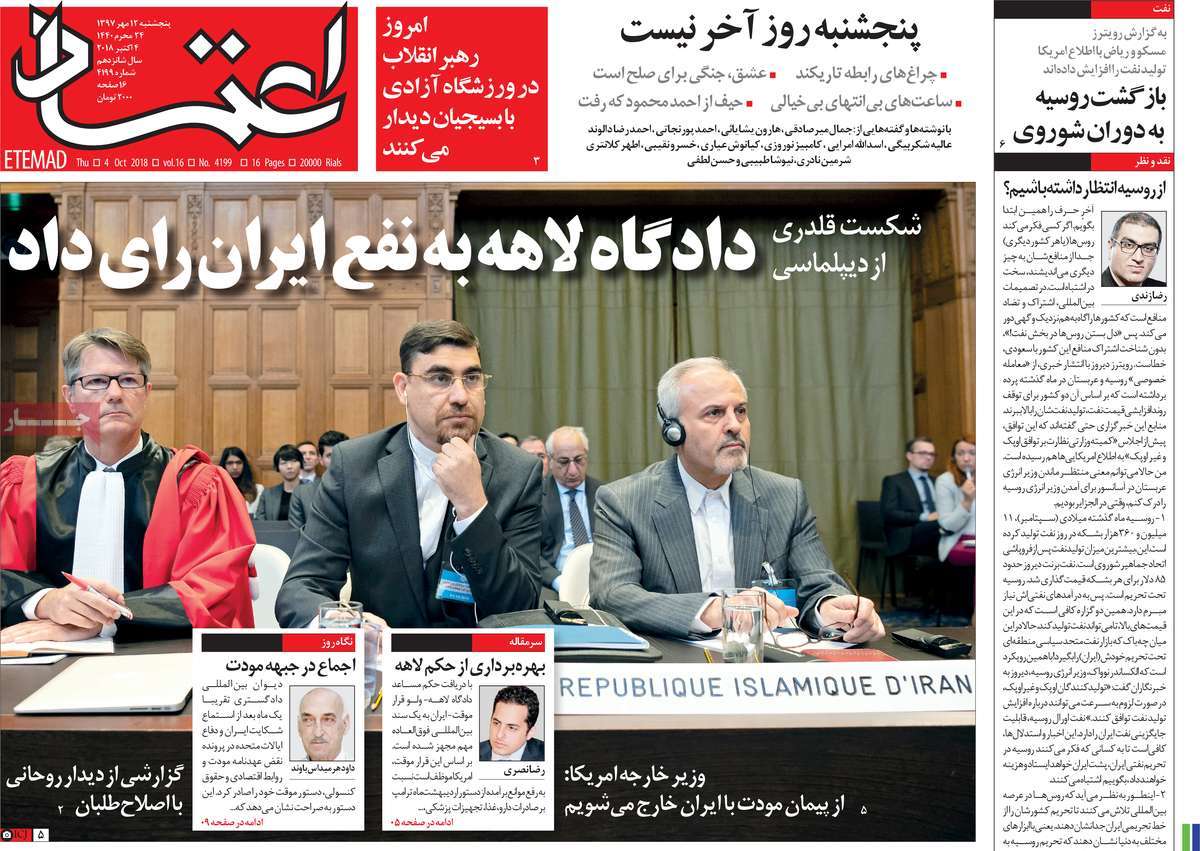
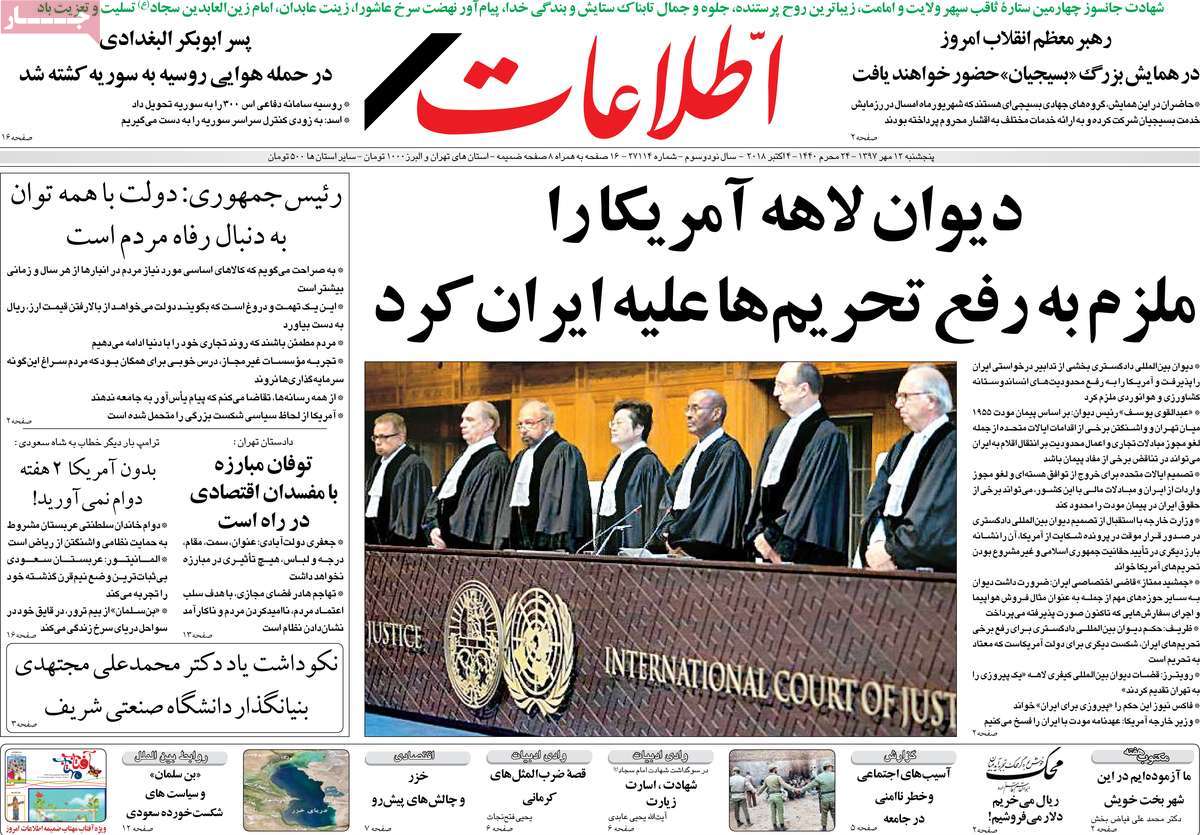
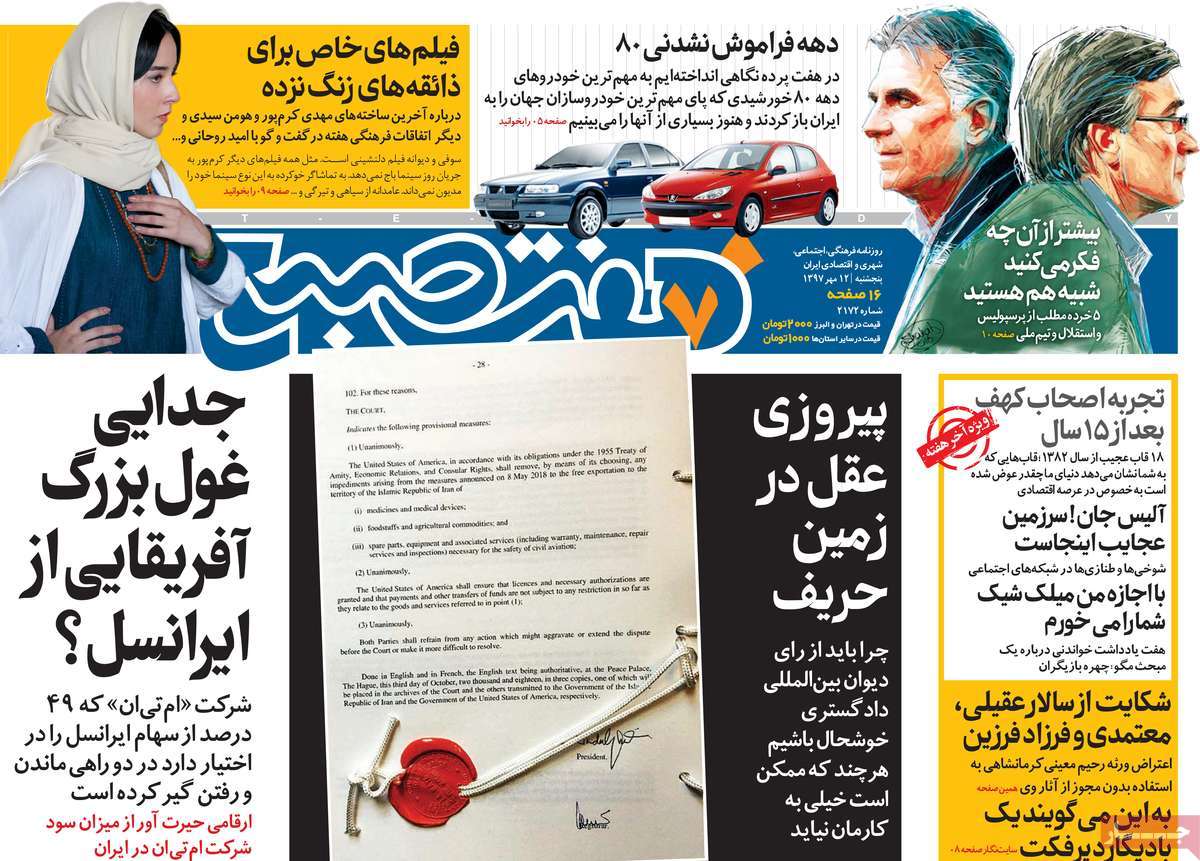
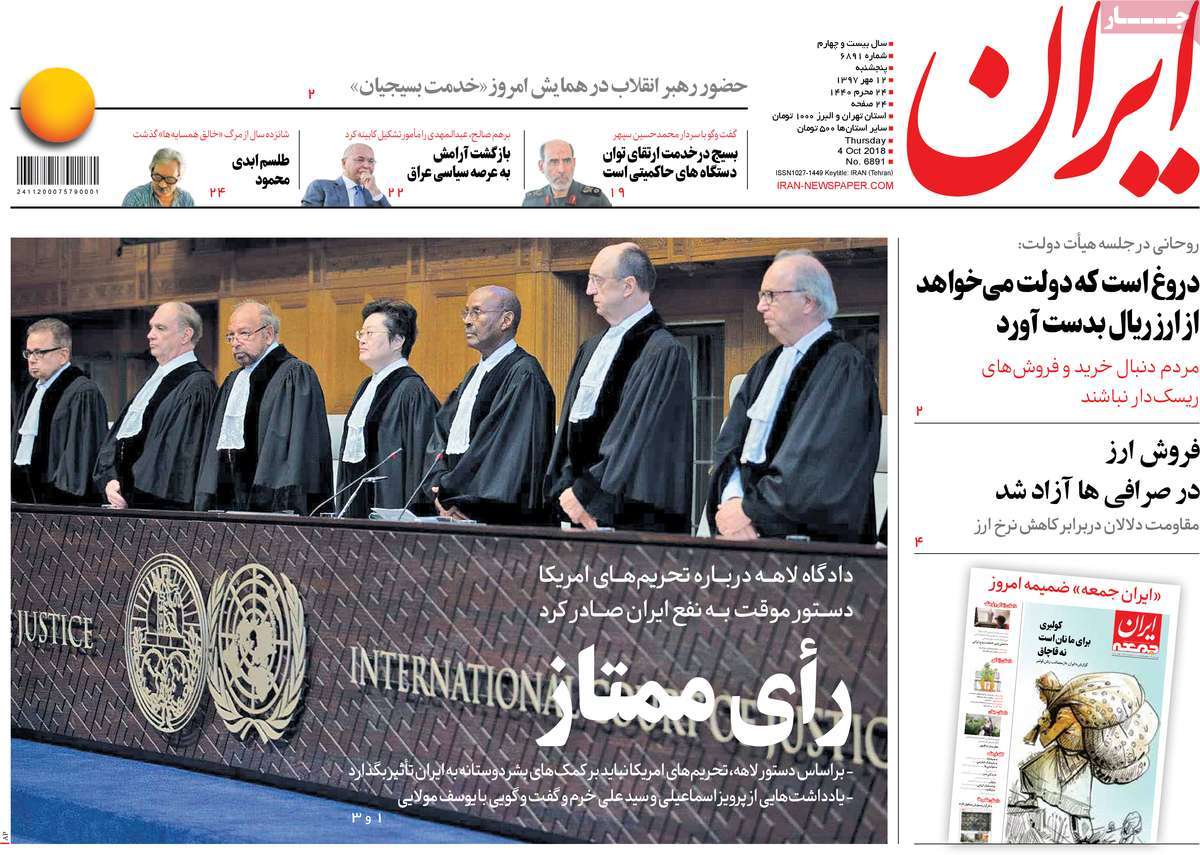
All Iranian papers on Thursday hailed a provisional injunction issued on Wednesday by the International Court of Justice (ICJ), which said the US sanctions are harming the lives of Iranian people. The ICJ ordered the US to refrain from taking measures that damage Iran’s aviation, drug, food and agriculture industries.

The decrease in the US dollar rate in Iran’s forex market as well as the Iranian Parliament’s upcoming session to pass a bill on Combating the Financing of Terrorism (CFT) also remained top stories today.

The above issues, as well as many more, are highlighted in the following headlines and top stories:


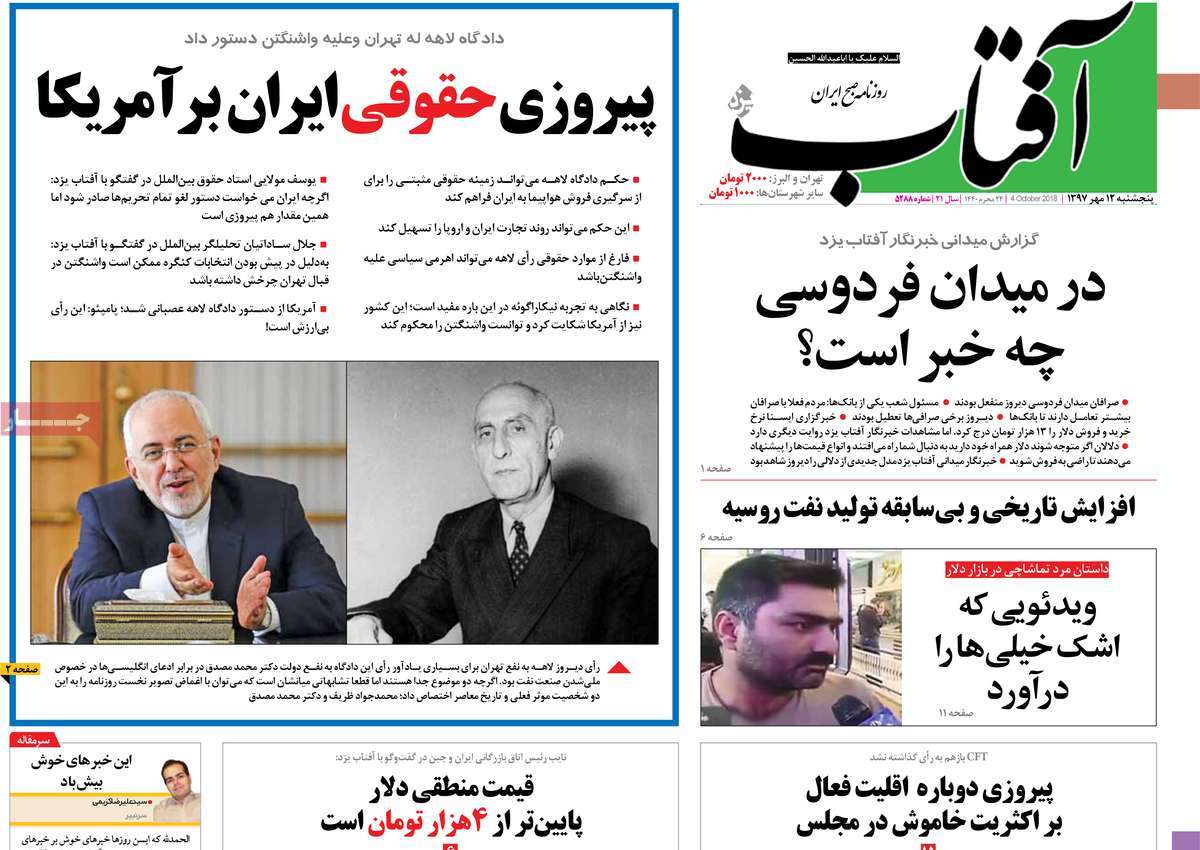
Aftab-e Yazd:

1- What’s Happening in Tehran’s Forex Market?

2- Iran’s Legal Victory over US

3- Viral Video Makes Many People Cry

* Father Whose Son Has Cancer Happy with Rial Regaining Its Value

Iranian Papers Hail ICJ’s Vote against US Sanctions


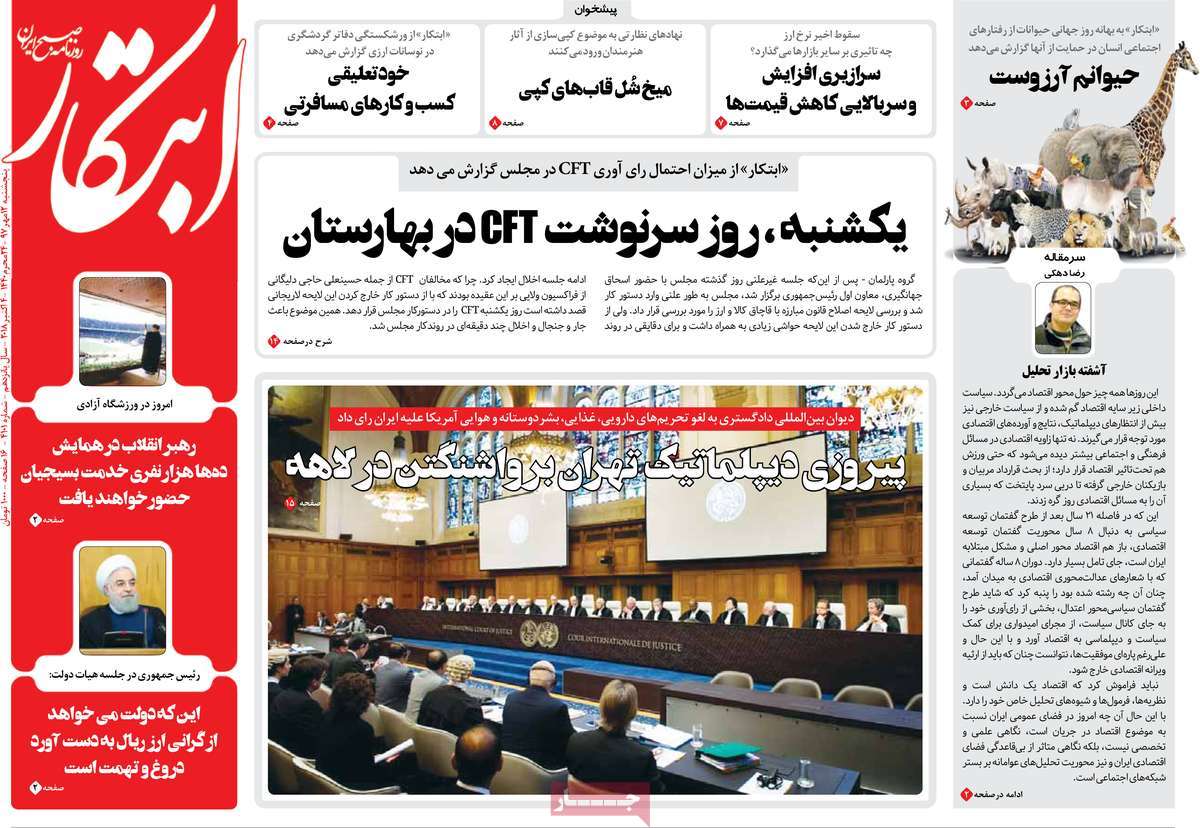
Ebtekar:

1- Iran’s Diplomatic Victory over US at The Hague

2- Sunday, Fateful Day of CFT at Iran Parliament

Iranian Papers Hail ICJ’s Vote against US Sanctions


Etemad:

1- ICJ Votes in Favour of Iran: Bullying Defeated by Diplomacy

2- Return of Russia to USSR Era: Moscow, Riyadh Increase Oil Output after US Call

Iranian Papers Hail ICJ’s Vote against US Sanctions


Ettela’at:

1- ICJ Obliges US to Remove Anti-Iran Sanctions

2- ISIS Leader’s Son Killed in Russian Airstrike on Syria

3- You Won’t Last for Two Weeks without US Support: Trump to King Salman

Iranian Papers Hail ICJ’s Vote against US Sanctions


Haft-e Sobh:

1- Triumph of Wisdom in Rival’s Court

* Why We Should Be Happy with ICJ’s Ruling Even Though It Would Help Us Much

2- Will Giant African Company MTN Leave Irancell?

Iranian Papers Hail ICJ’s Vote against US Sanctions


Iran:

1- Excellent Vote: ICJ’s Provisional Vote in Favour of Iran

2- Return of Calm to Iraq’s Politics

3- Rouhani Denies Claims His Gov’t Earning Revenues by Increasing Dollar Rates

Iranian Papers Hail ICJ’s Vote against US Sanctions


Jame Jam:

1- Iran’s Victory at ICJ: Binding Ruling without Any Enforcement Power

2- Iran Leader to Attend Gathering of 100,000 Basij Forces at Azadi Stadium

Iranian Papers Hail ICJ’s Vote against US Sanctions


Javan:

1- Consensus on Increasing Value of National Currency

2- Anti-US Hat-trick in Iraq: Resistance Forces Win Iraq’s Presidency, Premiership

3- Syria’s Sky No Longer Safe for Israel

4- The Hague Gives Yellow Card to US Sanctions

Iranian Papers Hail ICJ’s Vote against US Sanctions


Jomhouri Eslami:

1- Iran’s Legal Win over US at Most Prestigious Int’l Legal Body

2- Putin Welcomes European Plan for Financial Transaction with Iran

Iranian Papers Hail ICJ’s Vote against US Sanctions


Kayhan:

1- Those Disrupting Forex Market Encouraging Iran’s Adoption of FATF

2- Iraqi Parliament Votes for Resistance: Abdul Mahdi Elected as PM, Salih as President

Iranian Papers Hail ICJ’s Vote against US Sanctions


Resalat:

1- Meaningful Drop in Dollar Rates after Punishment of Those Involved in Economic Corruption

Iranian Papers Hail ICJ’s Vote against US Sanctions


Sazandegi:

1- Suspension of US Sanctions

* Interview with Iranian Member of International Court of Justice

2- Victory of Law over Force

* The Hague Issues Injunction in Favour of Iran

Iranian Papers Hail ICJ’s Vote against US Sanctions


Shargh:

1- Another Victory in The Hague

2- Don’t Leave the Government Alone: Rouhani to Reformists
3- EU’s Support for JCPOA Better than Expectations

4- New York Times Creates New Trouble for Trump

Iranian Papers Hail ICJ’s Vote against US Sanctions

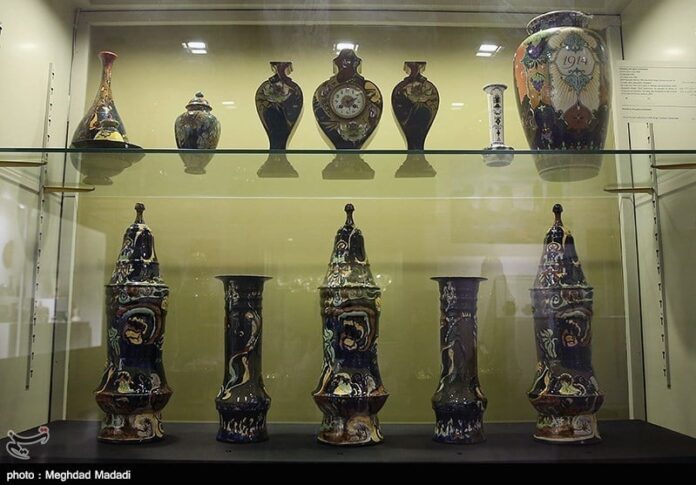
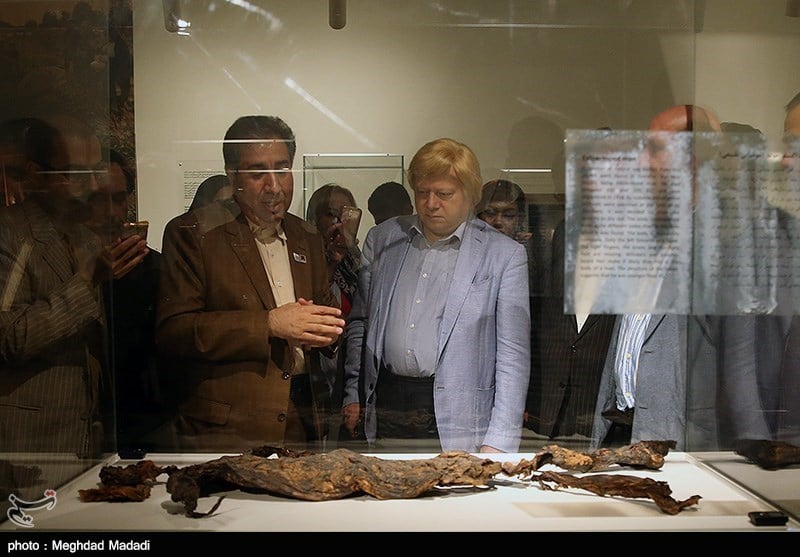
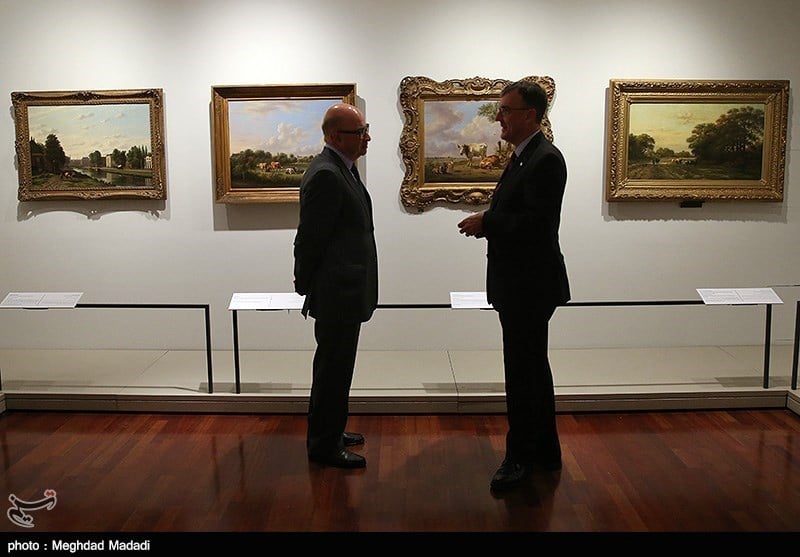
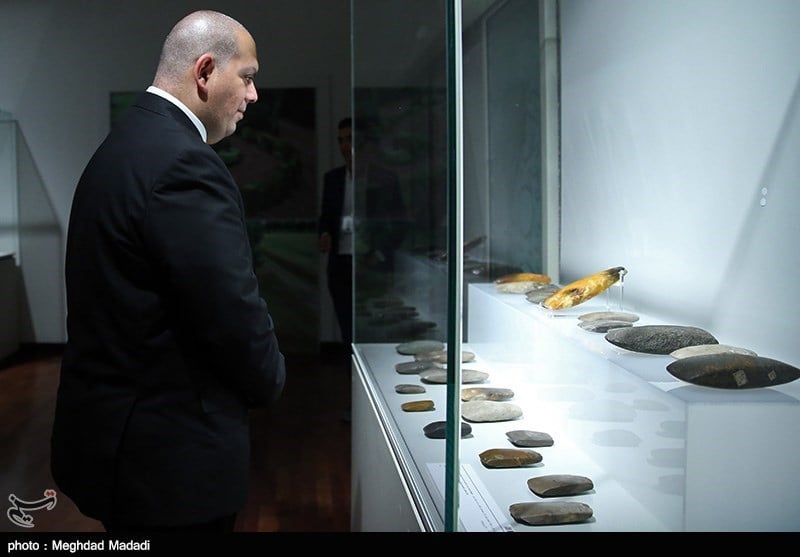
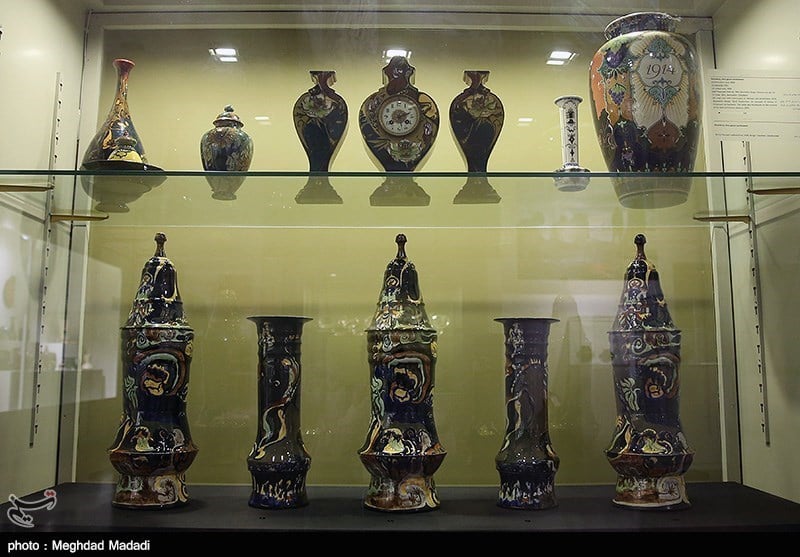
Dutch Antiques on Show in Iran National Museum

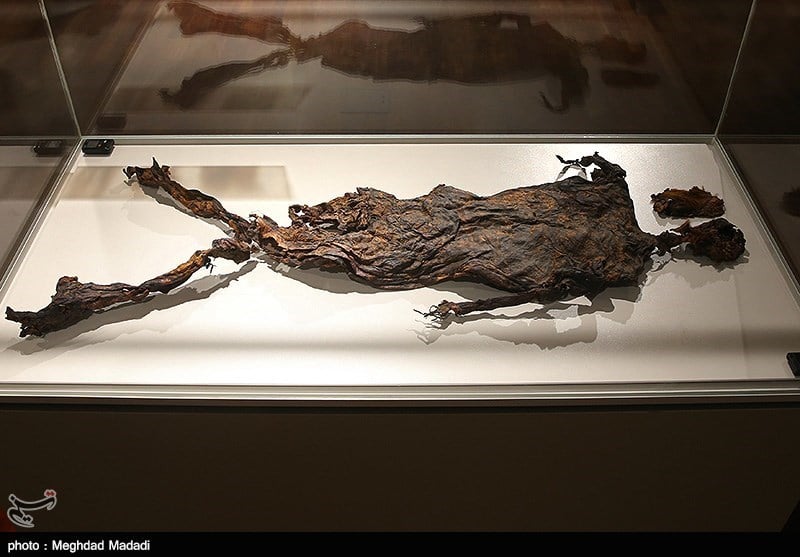
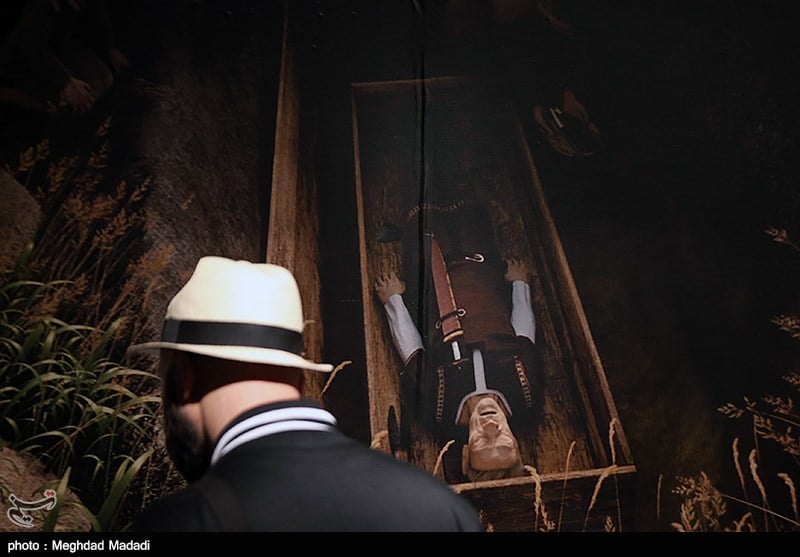
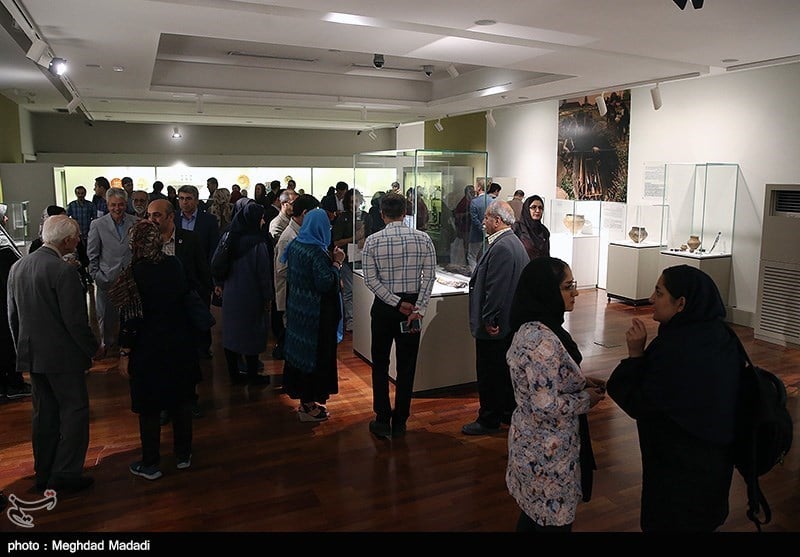
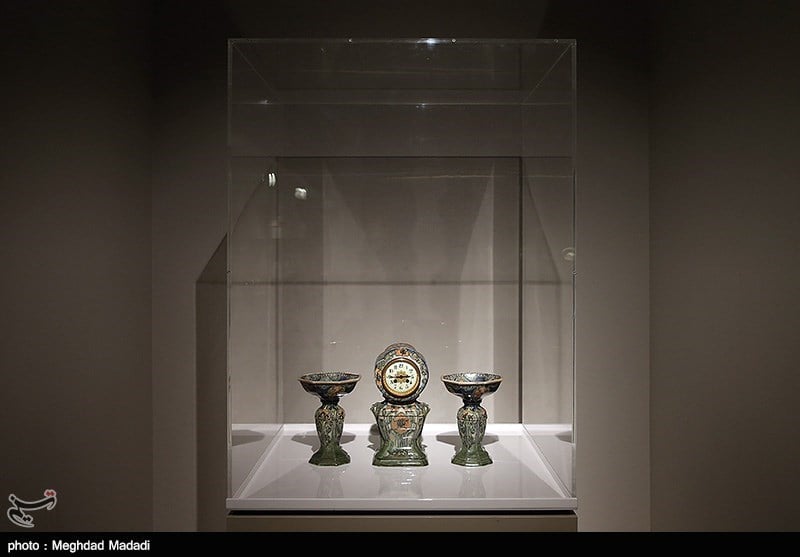
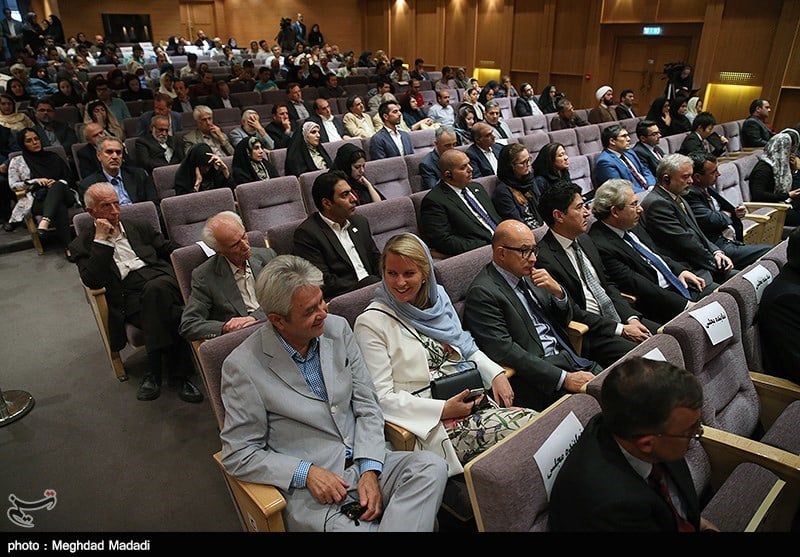
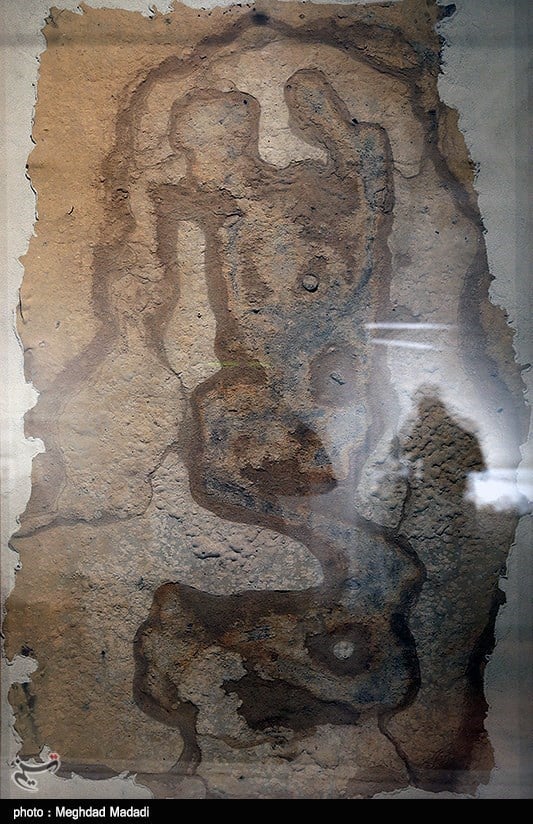
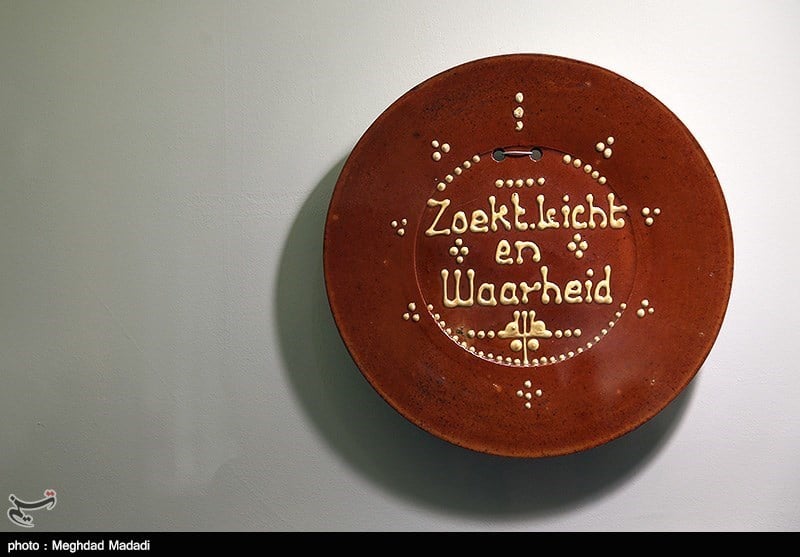
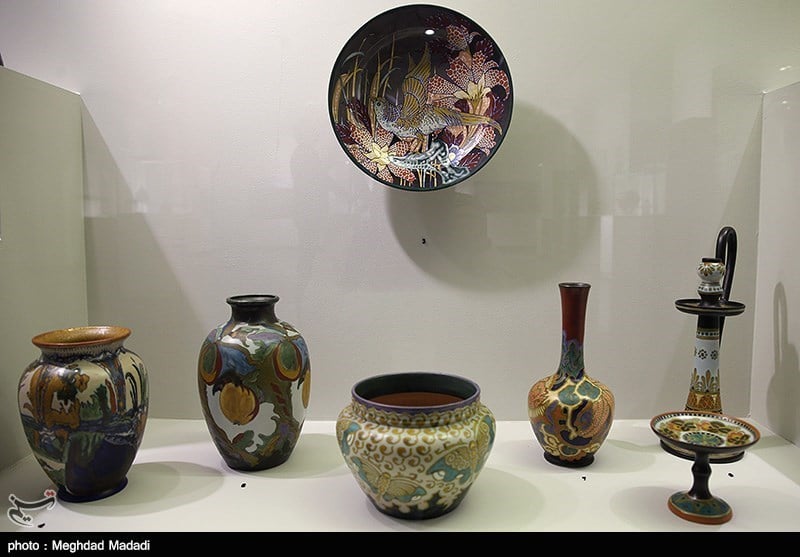
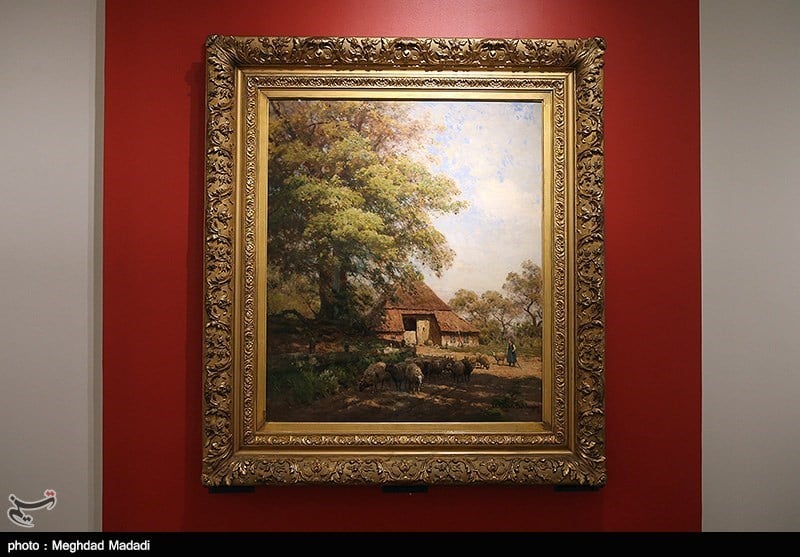
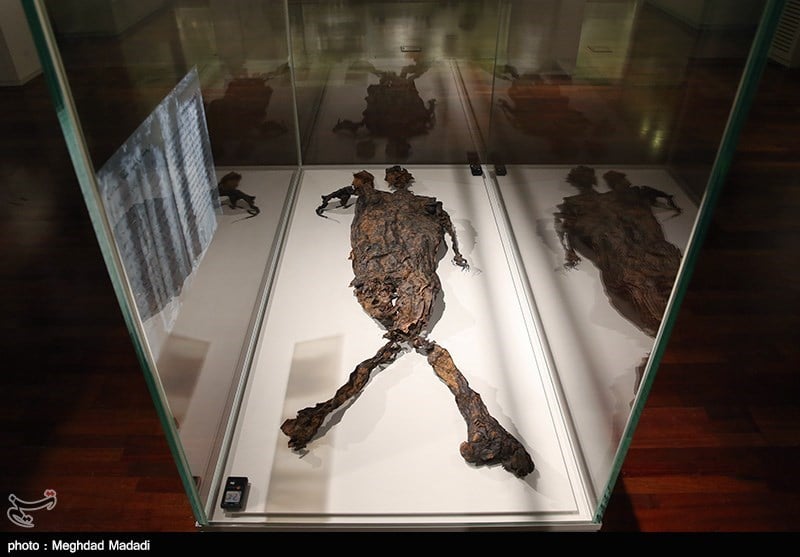
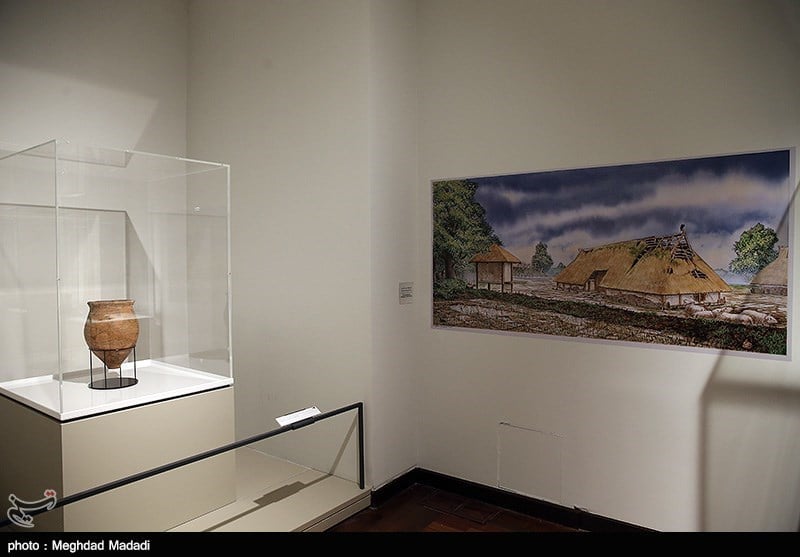
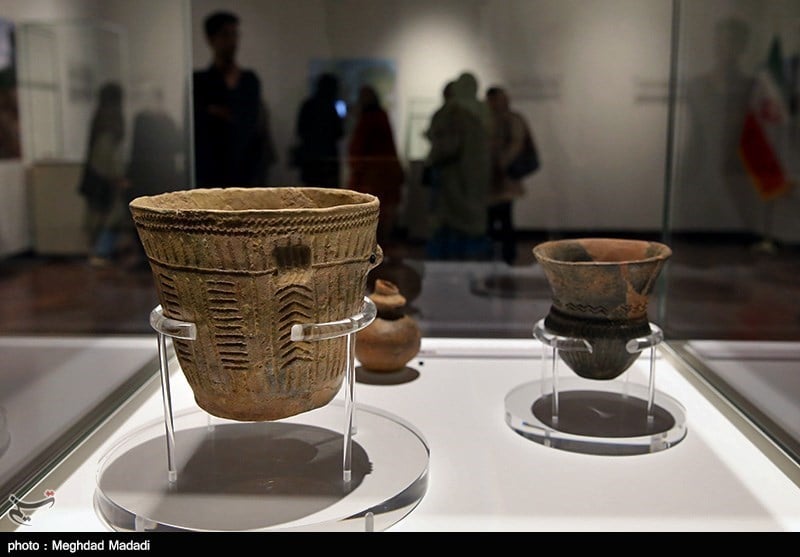
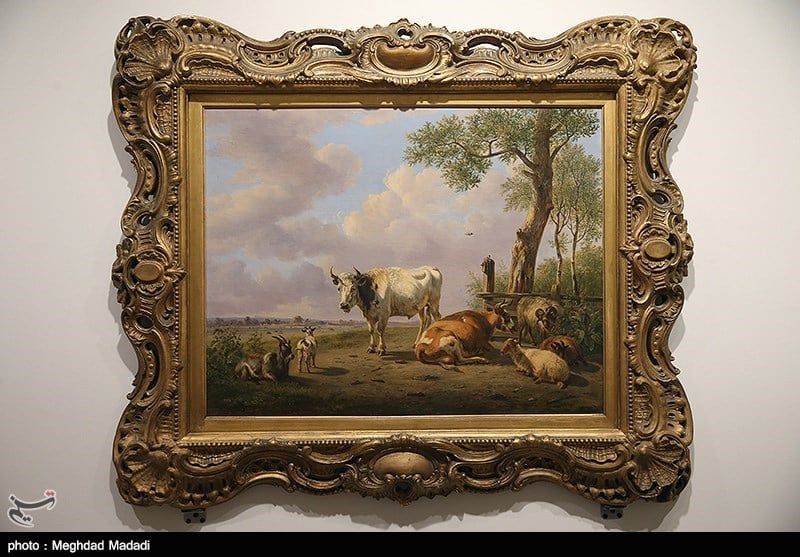
The loan exhibition, which was opened on Tuesday, is showcasing hundreds of relics belonging to the Netherlands’ Drents Museum.

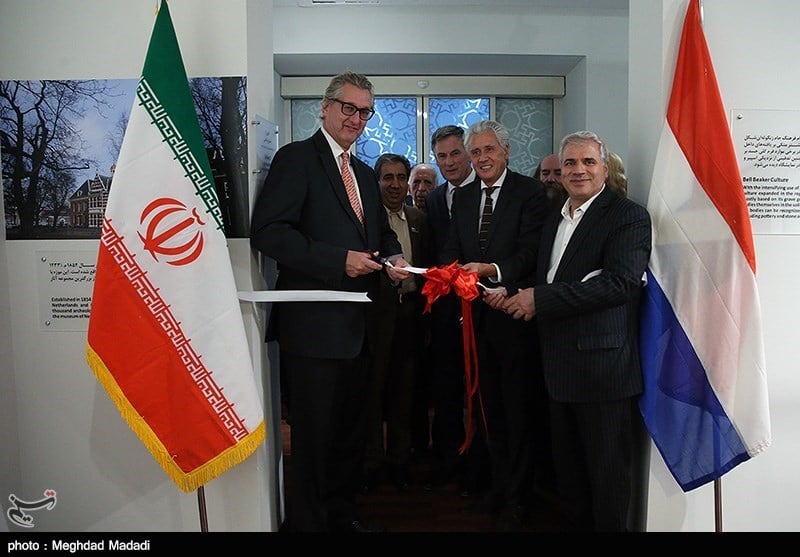
At this event, the Dutch ambassador to Tehran Yvette Daoud cut the ribbon saying that cooperation between Dutch and Iranian museums is an example of a fruitful diplomacy between the two countries.

The works on show belong to the 18th, 19th , and 20th centuries and include potteries, metal utensils, stone tools, jewelry, paintings and a natural human mummy.

The event titled “Dutch Archaeology and Art: Highlights from the Drents Museum” would run through April 6, 2019.
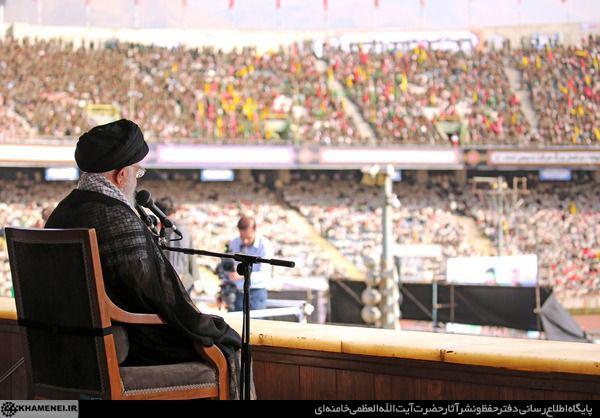
What follows are Tasnim News Agency’s photos of the opening ceremony:


Meanwhile, nearly 200 Iranian antique items from the National Museum of Iran are currently on show at the Drents Museum in a show titled “Iran: The Cradle of Civilisation”. The objects date from the Paleolithic era to the time of the Safavid Dynasty.

Under a memorandum of understanding signed between the National Museum of Iran and the Drents Museum in the Netherlands, 196 historical items have been transferred to the Drents Museum to be showcased for five months.

The Drents Museum website writes that“these treasures have long been hidden from the Western world. Many of them have never been exhibited in the Netherlands before, and have even never been on show outside Iran before.”

Back in March, the National Museum of Iran showcased a collection of works on loan from Paris Louvre museum for a period of four months.

Iran Rejects NATO Chief’s Remarks on Its Missile Program

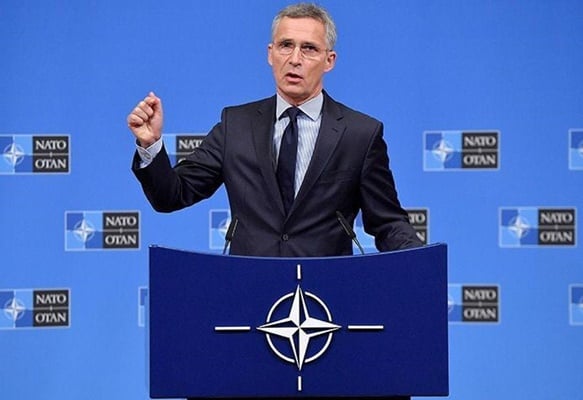
Nato Secretary General Jens Stoltenberg addressing a press conference ahead of a NATO defence ministerial meeting in Brussels on October 2, 2018. / Photo by AFP

In a Wednesday statement, Foreign Ministry Spokesman Bahram Qassemi said the Islamic Republic of Iran, which is itself a major victim of the terrible phenomenon of terrorism, has played the most effective role in ending the rule of terrorist groups, including ISIS, in the region.

He said Tehran’s fight against terrorism comes as certain countries and their allies have just been engaged in creating “fake” coalitions against the terrorist movements.

“Contrary to the statements of the NATO Secretary General, Iran’s constructive role in stabilising the Persian Gulf region and the Middle East has been acknowledged by a large part of the international community,” he added.

“If it was not for the massive struggle of Iran against these extremist terrorist groups, many European countries and cities would not have security today.”

Qassemi further underlined that undoubtedly, many European countries should be thankful for this sacred struggle to suppress the terrorists in the region, and they should not cast doubts on such policies that have been constructive and effective in providing them with security.

“The Islamic Republic of Iran has always sought dialogue and close cooperation with its neighbours, and believed in the strengthening of security in the Middle East by the regional countries. Tehran denies any presence and intervention of foreign military and security forces in the Middle East and Persian Gulf under the pretext of providing securing,” he added.

The foreign ministry spokesman also rejected the NATO chief’s statement regarding the missile program of Iran saying the program has a defensive and deterrent nature. He also underscored that Iran, like all independent countries of the world, has the right to use conventional military-defence programs to defend itself.

“Definitely, such an expression of concern will not have an effect on the policy of the Islamic Republic of Iran in maintaining, developing and strengthening its capabilities and missile defence program. We will never let other countries deprive us of the most basic defensive weapons, having experienced the devastating war of Saddam Hussein supported by the West and the East.”

Qassemi also pointed out that the International Atomic Energy Agency (IAEA) and the international community have for several times confirmed Iran’s adherence to its nuclear-related commitments under the Joint Comprehensive Plan of Action.

“The NATO Secretary General had better be more concerned about the unilateral and dangerous policies of Washington and the non-compliance of this NATO member with its international obligations,” stated Qassemi.

In a press conference on October 2 and ahead of the meetings of NATO Defence Ministers in Brussels, NATO Secretary General Stoltenberg said all allies are concerned about Iran destabilising activities in the wider Middle East region, and the NATO strongly condemns the financial support for terrorism, including Iran’s support to a variety of armed non-state actors.  “We are also, of course, concerned about their missile programme and we are committed to ensuring that Iran’s nuclear programme remains peaceful,” added Stoltenberg.

He further mentioned that “there are different views on the JCPOA, or the Iran nuclear deal, and that’s a fact, but despite the disagreement on the Iran nuclear deal, we all agree on the importance that any nuclear programme in Iran remains peaceful.  And we are also concerned about what they do when it comes to destabilising other countries in the region.”