Sunday, December 28, 2025
Home Blog Page 250

Iran women’s basketball team reaches final of FIBA Asia Cup

Led by head coach Eleni Kapogianni, Iran dominated from the start, winning the first quarter 18-7 and maintaining the lead to close the first half 42-21. Key contributions came from Bahraman and Asadi, who scored the most points in the first half. Tehrani and Shahriari also made impactful three-pointers.

Thailand increased its intensity in the second half, but Iran maintained control through solid defense and effective shooting. Asadi, Shahriari, and Rasoulipour delivered crucial three-point shots in the third quarter, which ended 60-34 in Iran’s favor. Despite Thailand’s attempts to narrow the gap in the final quarter, Bahraman’s late three-pointers and free throws secured the win.

Earlier in the tournament, Iran topped the group with wins over the Cook Islands (82-32), Mongolia (89-55), and Thailand (8-62).

Iran will face the winner of the Mongolia vs. Chinese Taipei match in the final on Sunday. The tournament winner will earn promotion to Division A.

Beyond their performance on the court, the Iranian players have drawn attention for their unified, respectful salute during the national anthem, a symbolic gesture of national pride after the Israeli aggression on Iran’s territory on June 13.

Iran security chief reaffirms opposition to regional geopolitical changes in call with Armenian counterpart

Ali Akbar Ahmadian

According to Iranian media, the two officials discussed regional and bilateral issues in the conversation, with a particular focus on the situation in the South Caucasus.

Ahmadian emphasized that Iran continues to view the preservation of existing regional borders and arrangements as beneficial to all regional actors.

Grigoryan briefed Ahmadian on the latest developments in Armenia’s negotiations with the Republic of Azerbaijan and affirmed that there has been no shift in Armenia’s position regarding regional transit routes.

Ahmadian also expressed appreciation for Armenia’s condemnation of the recent Israeli attack on Iran and welcomed Yerevan’s support in international forums.

Both sides also underscored the importance of strengthening bilateral ties, particularly in the economic domain, as part of broader efforts to promote stability and cooperation in the region.

Ex-Iranian FM Zarif: Only ‘existential threat’ to Israel is peace

Javad Zarif

Zarif listed a series of Israeli crimes, including the invasion of Syria, incursions into Lebanon, war against Iran, genocide in Gaza, and the bombing of Yemen. He also cited Israel’s opposition to the Joint Comprehensive Plan of Action, the Non-Proliferation Treaty, the Chemical Weapons Convention, and accords related to weapons of mass destruction, as well as its obstruction of peace efforts—even those proposed by the U.S. and the European Union.

“So: War, terror, sabotage, blackmail…show that the only ‘existential threat’ to Israel is Peace,” Zarif wrote on his X account on Friday.

Tasnim: Iran reviewing European request to resume nuclear talks

Nuclear Negotiations in Vienna

This development follows recent Western media reports suggesting that talks between Iran and the E3 – France, Germany, and the UK – could resume next week.

Citing informed sources, Tasnim’s correspondent confirmed that the proposal from the European trio is under consideration by Iranian officials.

The report notes that no final decision has yet been made regarding the timing or location of the potential negotiations, which are expected to be held at the deputy foreign ministerial level.

Earlier, the news outlet Axios claimed that the talks are scheduled to take place next week in a European location, although no official confirmation has been provided by either side.

If confirmed, the renewed diplomatic engagement would mark the latest attempt to revive dialogue amid ongoing tensions, especially after Israel and the US bombed Iran while talks were still ongoing.

Smoke from fire in Hoor al-Azim wetland forces remote work in six cities in Iran’s Khuzestan province

Mohammad Javad Ashrafi, Secretary of the Air Pollution Emergency Task Force in Khuzestan, stated that the fire has significantly affected air quality in the western part of the province.

As a result, public offices in the cities of Hoveyzeh, Dasht-e Azadegan, Hamidiyeh, Ahvaz, Karun, and Bavi will shift to remote operations for the day.

He added that the operation of banks will be determined by the Coordination Council of Banks in the province.

Essential services including health, emergency, and public utilities are required to maintain in-person staffing.
Citizens are urged to limit outdoor activities, avoid unnecessary travel, and follow health and environmental guidelines to protect themselves from the hazardous air quality.

The Hoor al-Azim wetland, straddling the Iran-Iraq border, is a critical ecological zone and has been the site of recurrent fires during hot and dry summer months, often causing transboundary air pollution.

10 Israeli hostages to be released from Gaza ‘very shortly’: Trump

Israel Hostages

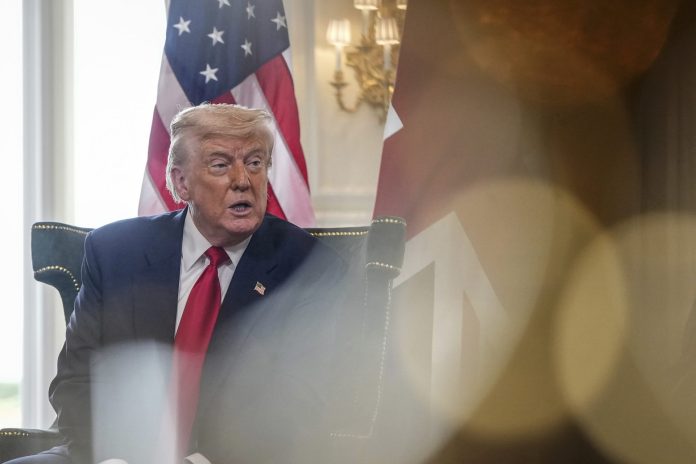
“We got most of the hostages back. We’re going to have another 10 coming very shortly, and we hope to have that finished quickly,” Trump said during a dinner with Republican senators.

He also praised his Middle East envoy Steve Witkoff as “fantastic”.

The current Israel-Hamas ceasefire proposal includes terms calling for the return of 10 hostages, and the remains of 18 others. In exchange, Israel would be required to release an unspecified number of Palestinian prisoners held in Israeli jails.

Earlier on Friday, Axios reported that the director of the Mossad, Israel’s intelligence agency, visited Washington this week in hope that the United States would support its efforts to ask other countries to take in the hundreds of thousands of Palestinians still living in Gaza. Mossad chief David Barnea told Witkoff that Israel has discussed relocating Palestinians to Ethiopia, Indonesia and Libya.

Trump has boasted that a ceasefire agreement between Israel and Hamas would be fothcoming since posting on his social media platform on 1 July that Israel has agreed to the “necessary conditions” to finalise a 60-day ceasefire in Gaza.

Last week, Israeli Prime Minister Benjamin Netanyahu visited the White House, where he presented Trump with a copy of a letter he had sent to the Nobel committee nominating the president for a Nobel peace prize.

That same week, Qatari officials mediated indirect talks between Israel and Hamas over a ceasefire.

A spokesperson for the armed wing of Hamas told Reuters on Friday that the group favors reaching an interim truce in the Gaza war, but could revert to insisting on a full package deal if such an agreement is not reached in current negotiations.

Syria, Israel agree on US-brokered ceasefire accord amid Suwayda clashes: Envoy

Barrack said in a post on X early on Saturday that the ceasefire between Syria and Israel was “supported” by Washington and “embraced” by Turkiye, Jordan and Syria’s neighbours.

In his post announcing the ceasefire, Barrack said the US called “upon Druze, Bedouins, and Sunnis to put down their weapons and together with other minorities build a new and united Syrian identity in peace and prosperity with its neighbors “.

An Israeli official, who declined to be named, told reporters on Friday that in light of the “ongoing instability in southwest Syria”, Israel had agreed to allow the “limited entry of the [Syrian] internal security forces into Suwayda district for the next 48 hours”.

On Wednesday, Israel launched heavy air strikes targeting Syria’s Ministry of Defence in the heart of Damascus, and also hit Syrian government forces in the country’s Suwayda region.

Israel claims it has launched attacks to protect Syria’s Druze minority in Suwayda, where ethnically charged clashes between Druze and Bedouin armed groups and government forces have reportedly left hundreds dead.

Israeli Prime Minister Benjamin Netanyahu has described the Druze, who number about one million in Syria – mostly concentrated in Suwayda – and 150,000 in Israel, as “brothers”.

A ceasefire agreement mediated by the US, Turkiye and Arab countries was reached between Druze leaders and the Syrian government on Wednesday. Israel, however, launched air strikes on Syria the same day, killing at least three people and wounding 34 others.

Following the Israeli raids, Syrian interim President Ahmed al-Sharaa stated in a televised speech early on Thursday that protecting the country’s Druze citizens and their rights was a priority, and though Syria would prefer to avoid a conflict with Israel, it was not afraid of war.

Al-Sharaa added that Syria would overcome attempts by Israel to tear the country apart through its aggression.

Heavy fighting again flared up between the Druze and Bedouin tribes in Suwayda on Friday, and Damascus has redeployed a dedicated force to restore calm in the Druze-majority governorate.

Hezbollah chief says it will not give up weapons despite US proposal

Hezbollah

Qassem argued on Friday that the Israeli army would expand in Lebanon if there was no “resistance” in the country.

“We will not surrender or give up to Israel; Israel will not take our weapons away from us,” he said in a video message.

Qassem’s comments dealt a potential blow to US diplomat Thomas Barrack’s efforts last month to secure a deal between Lebanon and Israel that would involve disarmament of the Lebanese armed group.

Barrack, Washington’s ambassador to Turkiye and special envoy to Syria, had declared he was “unbelievably satisfied” earlier this month after receiving a response to his proposals from the Lebanese authorities, adding that a “go-forward plan” was in the works.

Lebanese leaders who took office after more than a year of hostilities between Israel and Hezbollah have promised a state monopoly on bearing arms, while demanding Israel adhere to a ceasefire with the group reached last November.

Lebanese Prime Minister Nawaf Salam stated in an interview with Al Jadeed TV on Friday that fear of Israeli escalation was warranted, but that the US proposal was an “opportunity” that could lead to Israel’s withdrawal.

Salam acknowledged Hezbollah’s weapons played a leading role in liberating South Lebanon from Israel in 2000, but insisted that they must now be under the command of the Lebanese state.

Qassem, however, stressed that Lebanon is facing an existential danger that should be prioritised over the issue of giving the state monopoly over using weapons.

“After we address that danger, we are ready to discuss a defence strategy or a national security strategy,” he added.

Hezbollah claims the Lebanese armed forces have failed to confront Israeli abuses since Israel’s inception in 1948.

Under the ceasefire, Hezbollah was to pull its fighters back north of the Litani River, some 30km (18 miles) from the Israeli frontier.

Israel was to withdraw its troops from Lebanon, but has kept them deployed in five areas that it deemed strategic and has breached the ceasefire on a near-daily basis with deadly strikes.

Israel dealt Hezbollah significant blows in last year’s war, assassinating its leader, Seyyed Hassan Nasrallah, along with other commanders and destroying much of its arsenal.

Qassem appeared to acknowledge that Hezbollah was not in a position to hit back or attack Israeli troops occupying parts of South Lebanon.

But he said the group would not disarm under the threat of a renewed all-out war.

“We are proceeding, prepared and ready for a defensive confrontation,” the Hezbollah chief added.

EU agrees on ‘one of its strongest’ sanctions packages against Russia

The European Union

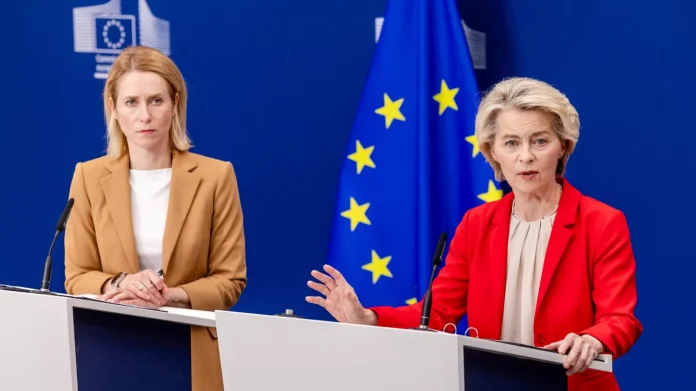
“The EU just approved one of its strongest sanctions packages against Russia to date,” Kaja Kallas, the bloc’s top diplomat, wrote on X.

The EU has vowed to ramp up economic pressure on Russia as it continues to reject a ceasefire in Ukraine and intensifies aerial strikes against Ukrainian cities.

The package includes lowering the price cap on Russian oil from $60 to $47.6 per barrel. The cap was originally imposed by the G7 in late 2022 to curtail Russia’s oil revenues without destabilizing global markets.

The sanctions further contain measures against 105 vessels of Russia’s “shadow fleet” and their enablers, the Russian banking system, and a ban on the Nord Stream 1 and 2 gas pipelines running under the Baltic Sea.

Russian fossil fuel exports are a crucial part of the country’s revenues, helping the Kremlin sustain its war against Ukraine.

“We are putting more pressure on Russia’s military industry, Chinese banks that enable sanctions evasion, and blocking tech exports used in drones,” Kallas said.

For the first time, the EU is also sanctioning a flag registry and the Russian oil giant Rosneft’s biggest Indian refinery. The bloc is further targeting “those indoctrinating Ukrainian children”, the EU diplomat added.

Brussels is newly tightening restrictions on the import of Russian oil products via third-party countries and sanctioning an entity from the Russian liquefied natural gas (LNG) sector.

The bloc also ended an import ban exemption on Russian oil for Czechia, after the Central European country announced it had become independent of Russian supplies.

Overall, the 18th package targets 14 individuals and 41 entities engaged in the Russian defense, finance, and other sectors, bringing the total number of EU listings since the start of the full-scale Russian invasion to over 2,500.

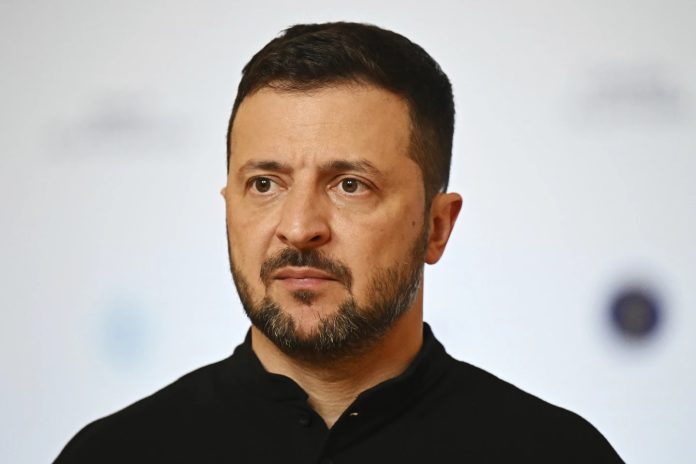
“We welcome the EU’s 18th sanctions package against Russia — the most comprehensive to date,” Ukraine’s Defense Minister Denys Shmyhal stated, adding, “Every measure chips away at the aggressor’s capacity to wage war.”
President Volodymyr Zelensky called the decision “timely, especially now, as a response to the fact that Russia has intensified the brutality of the strikes on our cities and villages.”
“We are promptly preparing the synchronization of European sanctions in Ukraine, and we are also preparing new sanctions decisions, both at the level of partners and within Ukrainian jurisdiction,” he added.

The agreement follows Slovakia’s announcement that it is ready to back the package after blocking it six times due to concerns over the phase-out of Russian gas.

Slovak Prime Minister Robert Fico, whose government has repeatedly aligned itself with Moscow’s positions, said on July 17 that “negotiating options have been exhausted for now, and continuing our blocking position would now endanger our interests.”

Fico noted the European Commission has given Slovakia, one of the EU countries that continues to be heavily dependent on Russian gas, written assurances concerning the planned phase-out of Russian gas to gain the country’s support.

US seeking to stop criticizing foreign elections: WSJ

Marco Rubio

The previous administration, of US President Joe Biden, which had declared what it called “strengthening democratic institutions” globally among its core foreign policy goals, regularly condemned the results of votes in other nations.

Shortly before leaving office in January, then-US Secretary of State Anthony Blinken claimed that the presidential election in Belarus could not be free or fair because of the “repressive environment” there. He also expressed concern over alleged “democratic backsliding” in another former Soviet Republic, Georgia. The criticism was subsequently decried by the countries as interference in their internal affairs.

The WSJ said in an article, according to Rubio’s new directive, the State Department will publicly comment on foreign elections only in rare cases when “there is a clear and compelling US foreign policy interest to do so”. The goal of Washington’s diplomacy should be advancing US foreign policy, not promoting ideology, the Secretary of State insisted in his memo.

“Our message should be brief, focused on congratulating the winning candidate and, when appropriate, noting shared foreign policy interests,” the document read.

The State Department and US embassies “should avoid opining on the fairness or integrity of an electoral process, its legitimacy, or the democratic values of the country in question”, it stressed.

The shift happens as part of the “America First” policy announced by US President Donald Trump, the memo read.

“While the US will hold firm to its own democratic values… [it will also] pursue partnerships with countries wherever our strategic interests align,” it explained.

Despite his public statements, the US president attempted to interfere in Brazil’s affairs earlier this month, slapping the BRICS country with a 50% tariff and demanding an end to the prosecution of his ally, Jair Bolsonaro, who is accused of attempting to orchestrate a coup following his 2022 election defeat.

Brazilian President Luiz Inacio Lula da Silva responded to the move by saying that Trump “was not elected to be the emperor of the world”.