Sunday, December 28, 2025
Home Blog Page 251

US seeking to stop criticizing foreign elections: WSJ

Marco Rubio

The previous administration, of US President Joe Biden, which had declared what it called “strengthening democratic institutions” globally among its core foreign policy goals, regularly condemned the results of votes in other nations.

Shortly before leaving office in January, then-US Secretary of State Anthony Blinken claimed that the presidential election in Belarus could not be free or fair because of the “repressive environment” there. He also expressed concern over alleged “democratic backsliding” in another former Soviet Republic, Georgia. The criticism was subsequently decried by the countries as interference in their internal affairs.

The WSJ said in an article, according to Rubio’s new directive, the State Department will publicly comment on foreign elections only in rare cases when “there is a clear and compelling US foreign policy interest to do so”. The goal of Washington’s diplomacy should be advancing US foreign policy, not promoting ideology, the Secretary of State insisted in his memo.

“Our message should be brief, focused on congratulating the winning candidate and, when appropriate, noting shared foreign policy interests,” the document read.

The State Department and US embassies “should avoid opining on the fairness or integrity of an electoral process, its legitimacy, or the democratic values of the country in question”, it stressed.

The shift happens as part of the “America First” policy announced by US President Donald Trump, the memo read.

“While the US will hold firm to its own democratic values… [it will also] pursue partnerships with countries wherever our strategic interests align,” it explained.

Despite his public statements, the US president attempted to interfere in Brazil’s affairs earlier this month, slapping the BRICS country with a 50% tariff and demanding an end to the prosecution of his ally, Jair Bolsonaro, who is accused of attempting to orchestrate a coup following his 2022 election defeat.

Brazilian President Luiz Inacio Lula da Silva responded to the move by saying that Trump “was not elected to be the emperor of the world”.

Iran’s ambassador to Moscow: Bushehr nuclear power plant with Russia progressing as planned 

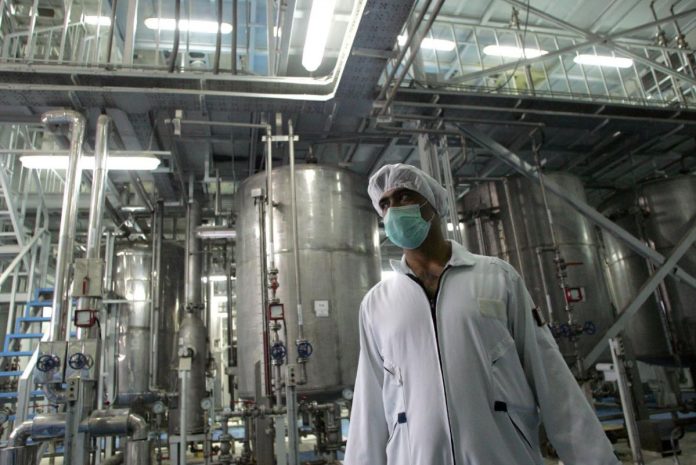
In an interview with the Russian outlet RIA Novosti, Jalali noted that all Russian specialists and Iranian contractors are actively working in Bushehr.

He added that operations are fully underway and the war had no impact on the Bushehr power plant.

He noted that the first unit is already operational and generating electricity, while work on the remaining two units continues based on mutual commitments.

Jalali also reaffirmed continued Iran–Russia cooperation on other key infrastructure projects, including the Rasht–Astara railway, which is part of the North–South International Transport Corridor.

He said these joint ventures are independent of regional tensions and are designed to benefit not only Iran and Russia but also other nations involved in global trade.

Iranian parliament speaker visits family of martyred IRGC aerospace commander 

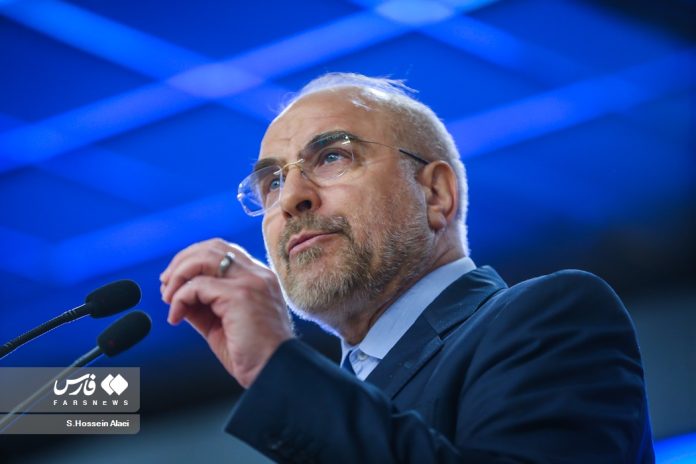
During the visit, Ghalibaf praised Hajizadeh’s legacy, calling the IRGC aerospace force a source of pride and strength for the Islamic Republic.

“This is no exaggeration,” he said, adding that, “Aerospace is the only tool that has truly confronted the Zionist regime”. The parliament speaker noted that for the first time in decades, the Zionist regime has suffered serious damage in the occupied territories.

Ghalibaf noted that Iran’s current strategic position is the result of tireless efforts in aerospace development, largely driven by Hajizadeh’s leadership.

He described Hajizadeh’s martyrdom as a reward for a lifetime of devotion.

Iran FM urges Europeans to abandon snapback threats

Speaking on Friday following a joint phone conference with the foreign ministers of the UK, France, and Germany, as well as the EU foreign policy chief Kaja Kallas, Araghchi said the three European countries must refrain from threatening to trigger the snapback mechanism — a measure that lacks any legal or moral basis.

He emphasized that if the European Union and the E3 — Britain, France, and Germany — truly want to have a constructive role in the nuclear issue, they must abandon outdated policies of pressure and intimidation, including the threat of snapback.

Araghchi reminded his European counterparts, as well as Kaja Kallas, that it was the United States — not Iran — that withdrew from the 2015 nuclear deal (JCPOA), which had been achieved after two years of negotiations with the facilitation of the European Union.

He added that it was again the United States that walked away from the negotiating table in June this year and opted for military confrontation instead — not Iran.

Earlier, European sources had reported that the foreign ministers of the three European countries along with EU foreign policy chief had held a joint phone call with Araghchi.

According to a statement from the French Foreign Ministry, the European ministers reiterated their decision to resort to the snapback mechanism during the call.

Araghchi stressed that any new round of negotiations would only be possible if the other side is prepared for a fair, balanced agreement based on mutual interests.

Iran says 2 million undocumented Afghan migrants must leave, denies racism claims 

He said that about 2 million undocumented Afghans remain in Iran and are expected to depart.

“We are not a racist country,” Momeni stated. “Iran is not anti-immigrant. Around six million Afghan nationals currently reside in Iran, and we share deep historical ties with Afghanistan.”

He emphasized that while many of these individuals have contributed to Iran’s economy and society, all countries have rules, and undocumented residents must follow legal procedures if they wish to remain.

“The majority of these migrants are honorable people who have played a role in production. However, those without legal status must leave,” Momeni said, adding that legal migrants are not subject to expulsion.

He also noted that in cases where legal migrants were mistakenly deported, the matter has been or is being reviewed.

Iran continues to face challenges in balancing immigration enforcement with humanitarian and historical ties, particularly concerning Afghan refugees and workers who have caused a strain on the country’s already restricted resources.

Top military commander warns of crushing response to any new aggression against Iran

Abdulrahim Mousavi

Speaking during a visit to Iran’s Air Defense Headquarters, Major General Abdolrahim Mousavi, stated that the air defense units are at the forefront of protecting Iran’s skies.

He emphasized that these forces have demonstrated their readiness to confront threats at all levels and will make the enemies regret their miscalculation.

Highlighting the recent downing of multiple hostile aircraft, Mousavi said this achievement showcases the capability, determination, and courage of Iran’s air defense personnel — a moment that will be remembered in the nation’s history.

He credited these qualities to deep-rooted faith, national pride, the unique leadership of the Commander-in-Chief, and national unity.

General Mousavi also stressed the importance of upgrading and reorganizing Iran’s defense systems, adopting new tactics and technologies, fostering innovation in response to evolving threats, and leveraging domestic scientific and technological resources.

He paid tribute to the martyrs of the recent 12-day war and their families, as well as to the wounded and disabled veterans. He also extended his appreciation to all air defense personnel for their service and sacrifice.

Hundreds of thousands compete in Iran’s most popular university entrance exam

Approximately 500,000 candidates took part in the exam, hoping to take up mainly medical fields which are lucrative in Iran, besides its high social status.

This followed Thursday’s exams for candidates in the Humanities, Mathematics, Arts, and Foreign Languages groups.

The Experimental Sciences group had the highest participation rate, accounting for 48.5% of all examinees. Female candidates made up 64% of participants in the nationwide exam.

According to Iran’s National Education Evaluation Organization, 60% of this year’s final score will be based on high school academic records, while 40% will come from the exam itself.

Preliminary results will be announced in mid-August. Final results and admissions decisions are expected by early October.

The youngest candidate was born in 2010, and the oldest in 1945.

Iran UN envoy calls on Security Council to end Israel’s impunity

Speaking at a Security Council session on the situation in the Middle East (Syria), Amir Saeid Iravani said Israel’s attacks on Syria are a direct result of the Security Council’s silence and the international community’s failure to take deterrent action. He stressed that the Council must fulfill its responsibilities under the UN Charter and ensure Israel is held responsible for its actions.

Iravani described Israel’s deliberate strikes on Syrian public and state infrastructure as a dangerous escalation by a regime that continues to illegally occupy parts of Syrian territory.

He further stated that Israel poses the most serious and dangerous threat to regional peace and security — a threat exacerbated by its ongoing aggressive actions and the unconditional political and military support it receives from the United States and certain other Western countries.

Iravani also referred to Israel’s 12-day military campaign against the Islamic Republic of Iran, during which it deliberately targeted Iran’s peaceful nuclear facilities — all under IAEA safeguards — as well as civilian infrastructure, including hospitals and residential areas.

He said these unlawful attacks resulted in the killing of over 1,100 civilians, including 41 children and 126 women. Seven hospitals, eleven ambulances, and more than 3,500 residential units were destroyed in the attacks.

“These undeniable facts clearly expose the criminal and aggressive nature of the Israeli regime,” Iravani concluded.

Iran says clear evidence indicates Israel involvement in AMIA case

In a statement issued Friday, the Iranian Foreign Ministry called on Argentina’s judiciary to handle the case transparently, fairly, and free from politicization or undue influence by third parties.

The statement added that the suspicious July 18, 1994 bombing in Buenos Aires was manipulated from the outset by elements linked to the Israeli regime, diverting the case from its proper path. This has disrupted the long-standing relations between the Iranian and Argentine peoples among others.

According to the statement, repeated changes in the investigative judicial team, revelations of corruption among some legal officials — which in some cases led to their dismissal — as well as resignations and even attacks on judges, all indicate a deliberate effort to divert Argentina’s judiciary from a transparent and fair investigation.

The statement also referred to the 2013 memorandum of understanding signed between Iran and Argentina to jointly address the case. It noted that less than two years after the agreement, Argentina unilaterally canceled it, thereby preventing the establishment of a clear process to uncover the truth and identify the real perpetrators.

The Iranian Foreign Ministry stressed that the Islamic Republic of Iran reserves its legal and legitimate rights under international law to respond to any baseless or improper actions taken against the country or its citizens.

Iran Leader’s aide: Negotiations not a priority; Leadership will decide timing 

“Negotiation is a tactic,” Larijani said. “Let the leadership decide when it is necessary. If it isn’t, then there’s no need to use it.”

He added that there is no urgency for talks with the US following its war along with Israel against Iran last month, when the talks were ongoing.

“They have waged a war against us; they must first explain why,” he said.

Meanwhile, Iranian state broadcaster Press TV reported, citing a senior official who requested anonymity, that Iran believes the US uses talks to prepare for military actions.

The source stated that Tehran will not enter new negotiations with the US under the previous framework or agenda, because of lessons learned from earlier talks.

“For now, we think the purpose of the negotiations is to disarm Iran to make up for Israel’s weakness in the next war,” the official said.

The official added Iran must also brace for confrontation and, if negotiations occur, it should demand security guarantees from Washington.