Saturday, December 27, 2025
Home Blog Page 2489

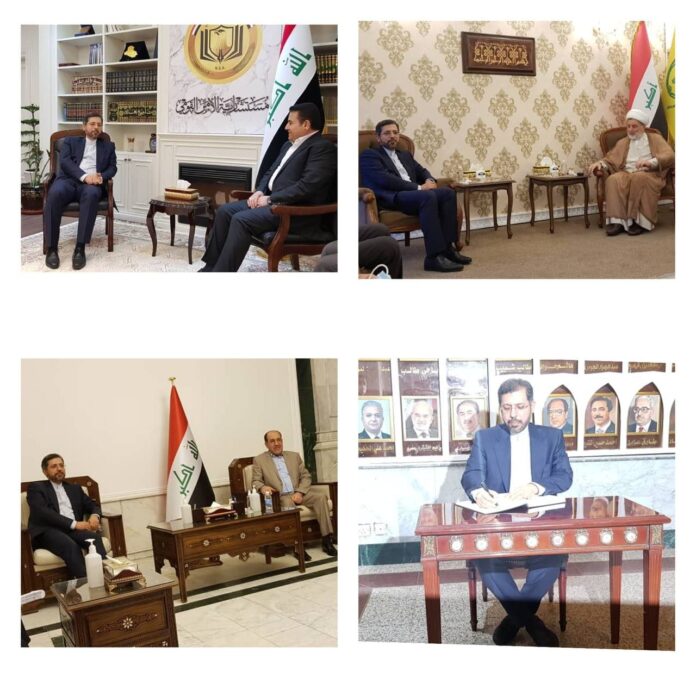
Iranian Diplomat Meets Several Iraqi Officials in Baghdad

On the first day of his trip, Khatibzadeh met with Secretary of Iraq’s National Security Council Qasim al-Araji, former Prime Minister Nouri al-Maliki, Head of the Islamic Supreme Council of Iraq Sheikh Humam Hamoudi, and several Sunni scholars.

The Iranian official also visited Al-Tamayyuz strategic institute as well as Al-Nahrain Centre for Strategic Studies, where he delivered a speech and answered questions raised by Iraqi researchers and scholars about the latest regional developments as well as Tehran-Baghdad ties.

Among the topics discussed in the meetings were all-out support for Iraq and the need for legal and democratic processes to move forward in accordance with the Iraqi people’s will, Iraq’s parliamentary elections, areas of boosting all-out relations, areas of bilateral cultural and media cooperation, and Iran’s policies vis-à-vis Iraq which are based on the notion of having a strong, free, developed, united and independent Iraq.

Osku Bread: One of the Most Delicious Traditional Breads in Iran

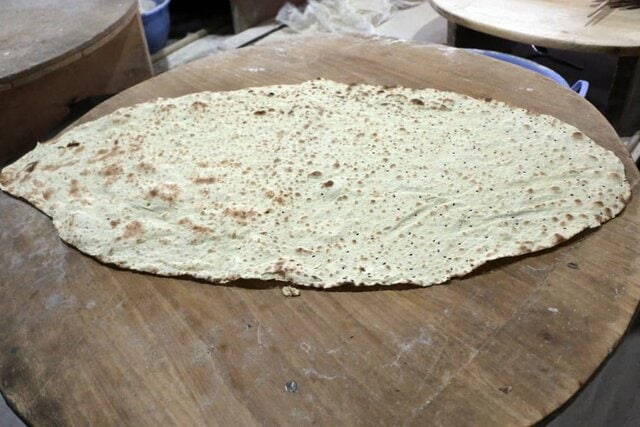
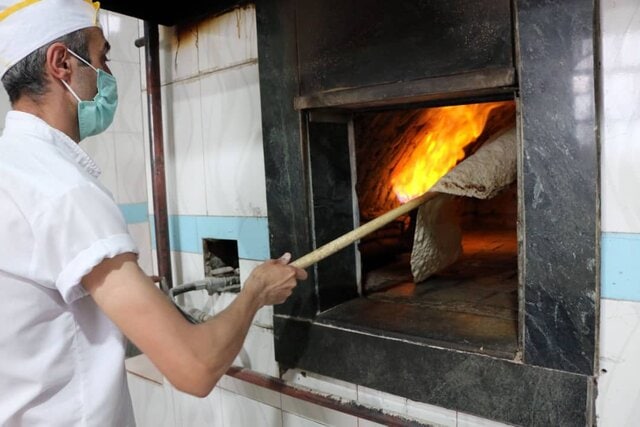
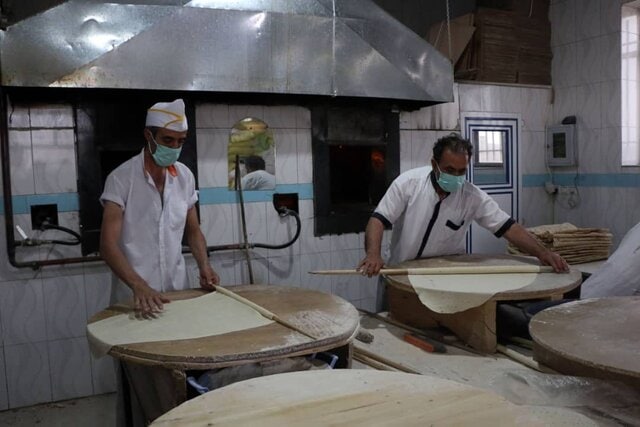
Osku Bread Baking Skill was listed as a national intangible heritage of Iran in 2012. In a world of electronics and other modern-day changes, this bread is still baked using traditional ways, in a bread furnace, using two wooden sticks. The bread is made of high-quality wheat and barley flour, produced locally, and takes shape in the baker’s hot furnace.

The reason why this traditional bread is still baked using the ways of the past can be traced to its favourable and singular characteristics. Osku Chorei leaves behind no leftover or waste when consumed. It is also long-lasting (up to six months after being baked), is delectable and has a high quality. The bread, however, requires special skills to bake.   

Osku Bread: One of the Most Delicious Traditional Breads in IranThis bread has unique features, is circular and has a consistent and crisp texture and is identified as hard bread, which should be sprinkled with water to be softened, though hard Osku Breads still taste very delicious.

The fact that Osku Bread leaves zero waste, is baked using whole-meal flour with its entire stockpile of minerals and vitamins without any baking soda, has a very long shelf life and can be mass produced make it especially unique.  

But that’s not the whole story. A veteran baker says baking Osku Bread is a professional skill and that finding new bakers is a difficult job. That is rooted in the fact that the baker should be able to bake the breads in a specific size and make sure the two sides of the breads are baked equally well.

Osku Bread: One of the Most Delicious Traditional Breads in IranHe says his customers need to schedule appointments three months ahead and every person can only get his/her breads according the pre-set schedule.

“We sell Osku Bread across Iran. We do not have direct exports to other countries, but there are drivers who buy several packs of Osku Bread and take them out of the country,” says Khabbaz, whose family name means “baker”.

Osku Bread: One of the Most Delicious Traditional Breads in Iran

Iranian COVID-19 Vaccine ‘A Leading One’ in Clinical Trials: UK Website

Iranian COVID-19 Vaccine ‘A Leading One’ in Clinical Trials

“Of the 96 COVID-19 vaccine candidates in clinical trials, eight are intranasal vaccines. Out of these, two are leading the race and in Phase II clinical trials,” wrote the website.

One of the two, as the website said, is “being developed by Razi Vaccine & Serum Research Institute in Iran.”

“The recombinant spike protein vaccine candidate dubbed Razi CovPars is intended to be delivered in three doses; the first two doses are injectable, and the third dose is inhaled via nasal spray. The volunteers participating in current trials are those who have gotten the first and second doses,” it added.

The website also carried comments by the head of the Razi Institute Ali Es’haqi with regards to coronavirus.

“The most important reason for COVID-19 spread was that a group of infected people who were carrying the virus showed no symptoms of the disease, so their respiratory system had to be secured; this inhaled dose activates the Immunoglobulin E (IgE) in the upper respiratory tract two weeks after the inhaling and prevents other people from being [infected],” the website quoted Es’haqi as saying.

“The second phase of the inhaled vaccination will be carried out on 500 volunteers in early June, and after two months, the third phase will start,” he said, as quoted by clinicaltrialsarena.com.

According to the website, the other vaccine is one “being developed by the University of Hong Kong, Xiamen University, and the Beijing Wantai Biological Pharmacy Enterprise, in partnership with the Coalition for Epidemic Preparedness Innovations (CEPI) and is based on a live-attenuated influenza virus.”

“CEPI said it should be possible to scale the production of this vaccine candidate to hundreds of millions of doses and that the vaccine platform can be easily and rapidly adapted to target emerging variants of COVID-19,” it wrote.

“Other nasal spray vaccine candidates in clinical trials include Altimmune’s nonreplicating adenoviral vector intranasal vaccine dubbed AdCOVID in Phase I in the US; Meissa’s live-attenuated candidate also in Phase I trials in the US; Cuba’s Center for Genetic Engineering & Biotech protein subunit vaccine in Phase I/II; Codagenix/Serum Institute of India’s live-attenuated SARS CoV-2 COVI-VAC vaccine in Phase I; India’s Bharat Biotech’s BBV154 – A novel adenovirus vectored, intranasal vaccine; the University of Oxford/AstraZeneca’s Covishield, an intranasal version of its ChadOx1 vaccine in Phase I; and the inhaled version of CanSino Biologics’ adenovirus Type 5 Vector vaccine in Phase I/II,” the website explained.

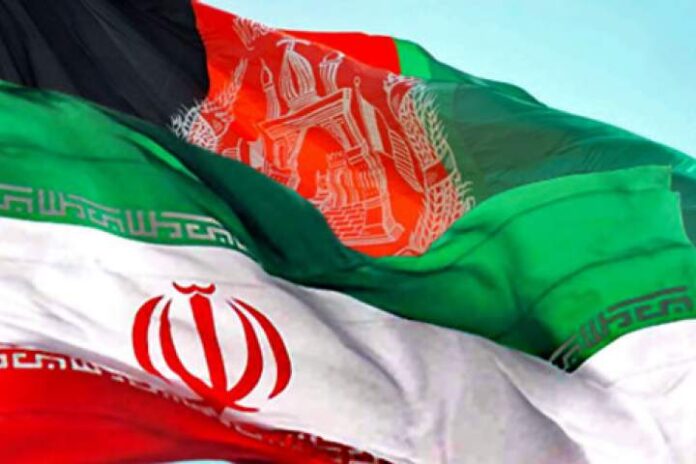
Progress of Afghanistan Peace Talks Hinges on Consensus among Afghan Fronts

During the phone call, Atmar appreciated Iran’s approach to Afghanistan, and presented a report on the measures taken to advance the peace process.

Taherian, in turn, underlined the importance of getting the opinions of various Afghan fronts closer together, and described it as key to the progress of the peace process.

He also once again expressed Iran’s preparedness to help this process.

Iran Envoy, Afghan Security Official Discuss Latest Developments

During the conversation, the Iranian official touched upon a trip to Iran by the UN’s special envoy for Afghanistan, and underscored the need to adopt a common stance by different Afghan factions with regards to the peace process in the country.

Mohib, in turn, appreciated the stances adopted by Iran on the peace trend in his country, and said Kabul would not accept solutions which are based on non-peaceful means.

He also emphasised the need to stand up to the fresh wave of violence in Afghanistan.

Zarif Blasts UN for Suspending Iran’s Voting Rights due to Delinquent Debts

Zarif Blasts UN for Suspending Iran's Voting Rights due to Delinquent Debts

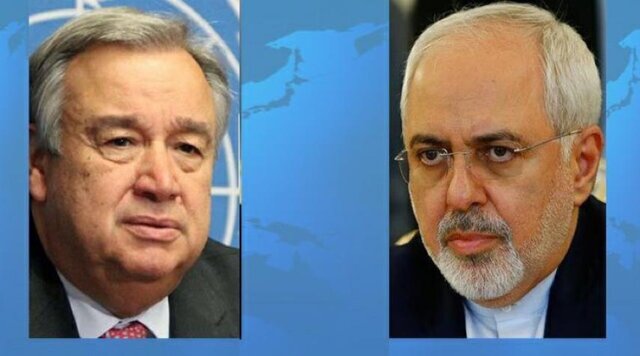
In a letter to the United Nations Secretary-General António Guterres, Zarif described the decision as unacceptable.

“I am writing to convey our strong dismay over the announcement that the Islamic Republic of Iran will lose its voting privileges in the United Nations General Assembly due to the arrears in the payment of its financial contribution to the United Nations,” read part of the letter.

He said the reason for Iran’s delay in payment was Washington’s sanctions.

“This decision is fundamentally flawed, entirely unacceptable and completely unjustified, as Iran’s inability to fulfill its financial obligations towards the United Nations is directly caused by ‘unlawful unilateral sanctions’ imposed by the United States to punish those who comply with a Security Council Resolution,” said Zarif in his letter.

“As you, and indeed the whole world, are well aware, the people of Iran have been under the most unprecedented economic warfare – and indeed economic terrorism – following the Trump administration’s US unilateral withdrawal from JCPOA (shamelessly continued to this day by its successor as so-called “bargaining leverage”) in material breach of peremptory norms of international law, the Charter of the UN and UNSCR 2231,” he explained.

“The U.S.’ unlawful acts of war and economic terrorism have impaired Iran’s capacity to transfer our financial contribution to the United Nations and some other international organizations,” he said.

“The Islamic Republic of Iran, therefore, rejects the notification on suspension of its voting privileges. Iran’s incapacity to transfer its financial contribution has been entirely beyond its control,” he stressed.

Iran, UN Discuss Significance of Humanitarian Aid in Conflict Zones

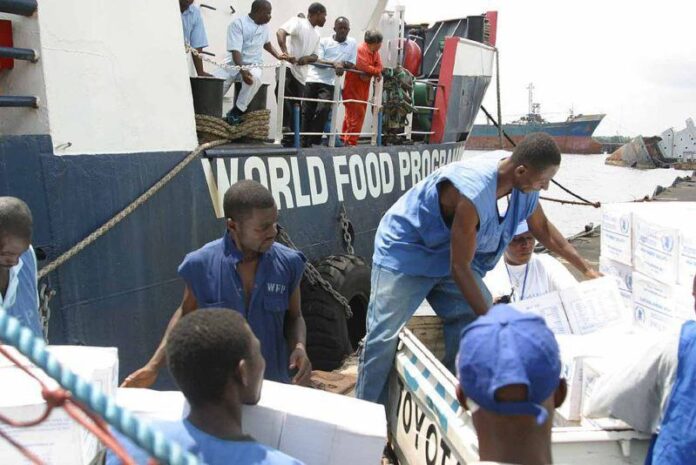
In the meeting, Baharvand congratulated Griffiths on his new post, and stressed the importance of the United Nations’ humanitarian aid in conflict zones, especially in Yemen, Syria, Afghanistan and Iraq regardless of political considerations and pressure.

Despite cruel sanctions, he said, Iran has always stood ready to help the UN expedite the trend of sending humanitarian aid to the needy in war-hit areas.

“Unfortunately, the United States’ unilateral sanctions have not only impeded trade in humanitarian goods such as buying food and drugs, but also overshadowed the UN’s dispatching of humanitarian aid to the needy in conflict-stricken and crisis-hit zones,” the senior Iranian diplomat explained.

“As soon as Griffiths assumes his new responsibility, he should put this issue on the agenda,” he added.

Baharvand proposed that an international contract be drawn up under which humanitarian assistance and trade cannot be targeted by sanctions and political considerations or be used for military purposes.

The Iranian official also expressed deep concern over a rise in terrorist attacks in Afghanistan against specific ethnic groups and religions, especially girls’ schools.

He said such acts not only amount to war crimes, but are also regarded as a gross violation of human rights.

He called on international organizations to pay attention to this issue.

Griffiths, in turn, underlined that he would soon begin work in his new capacity, elaborating on the priorities of the United Nations’ humanitarian programs.

The two sides also exchanged views on regional issues, including the developments pertaining to Yemen, Syria, Afghanistan and Iraq as well as the UN’s role from a humanitarian perspective.

Iran’s Zarif, UN Envoy Discuss Afghan Peace Process

In the Tuesday meeting, Foreign Minister Zarif elaborated on Iran’s viewpoint regarding Afghanistan, especially peace and security in the country and the peace process led by Afghans.

He also expressed Tehran’s support for intra-Afghan talks and the need to protect the achievements of Afghan people in recent years, especially in terms of the basic rights of the people of Afghanistan.

Jean Arnault, in turn, highlighted the key role of neighbours and the fact that he has started his regional tour from Iran after being appointed to this position.

He also noted that the issue of Afghanistan can be resolved through collective measures, and his efforts are focused on finding a way for realising this collective cooperation.

Iran FM, UN Envoy Discuss Yemen Crisis in Tehran

In the Tuesday meeting, the Iranian Foreign Minister elaborated on Iran’s viewpoint on ending the Yemen crisis, the developments following the beginning of crisis in the country, and underlined the need for removing the blockade against the country and facilitating the delivery of humanitarian aid to the Yemeni people.

Foreign Minister Zarif expounded on Iran’s principled policy that war is not a solution to the Yemen crisis, and said the current disastrous situation in Yemen – which has put the Yemeni people on the verge of a humanitarian disaster after six years – can only be wound up through political talks and peaceful ways.

The UN envoy, in turn, briefed the Iranian Foreign Minister on the results of his negotiations with relevant bodies on the Yemen crisis.

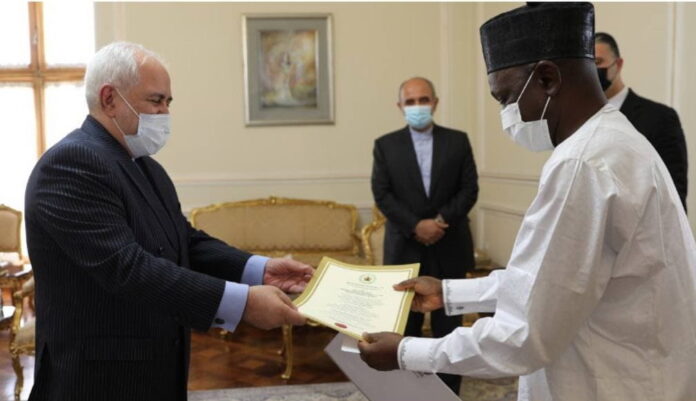
Nigerian, Kenyan Ambassadors Meet with Iran’s FM

Nigerian, Kenyan Ambassadors Meet with Iran’s FM

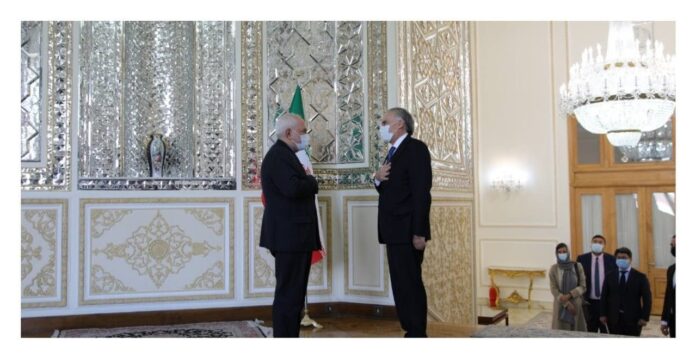
In the Tuesday meetings, the Nigerian and Kenyan diplomats presented a copy of their credentials to the Iranian Foreign Minister.

Syed Jaffar Hussain, the new representative of the World Health Organisation (WHO) to the Islamic Republic of Iran, also met with Zarif at the beginning of his mission.

The WHO representative also presented his credentials to the Iranian Foreign Minister.