Friday, December 26, 2025
Home Blog Page 2463

Zarif Documents West’s Non-Implementation of Its Commitments in Letter to UN Chief

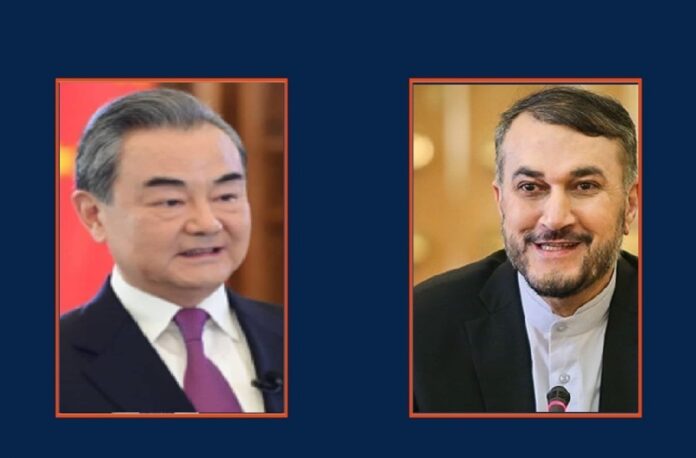
On July 20, 2021, and on the sixth anniversary of the ratification of UN Security Council Resolution 2231, Foreign Minister Zarif, in a letter to UN Secretary General, documented a wrap-up of the Western parties’ non-implementation of their commitments as a document at the UN Secretariat.

Now this letter is published in both Persian and English with an introduction by Foreign Minister Zarif, along with the documents of six years of Western non-implementation of the JCPOA written by him on various occasions.

This collection written by Mohammad Javad Zarif, the Minister of Foreign Affairs of the Islamic Republic of Iran, has been prepared in four pages by the Institute for Political and International Studies, the digital version of which is now available to the public.

The printed version of the books will also be available in the publishing market next week, according to the Institute for Political and International Studies.

The digital version of the text is available through this link.

Zarif Documents West's Non-Implementation of Its Commitments in Letter to UN Chief

Iran Expresses Regret over Deadly Wildfire in Southern Turkey

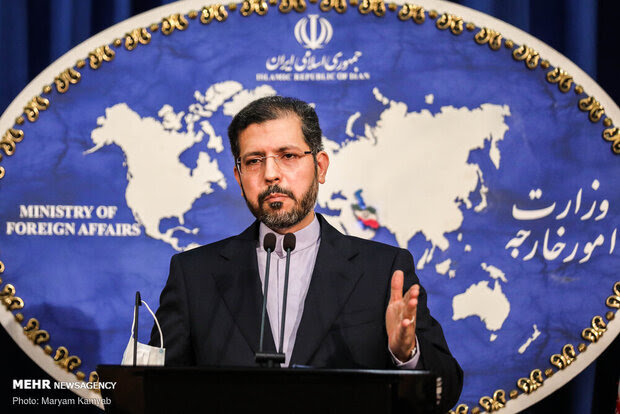
In a statement on Friday, Khatibzadeh expressed Iran’s solidarity with the government and nation of the brotherly and friendly country of Turkey.

He also offered condolences to the families of the victims, and expressed Tehran’s preparedness to assist the Turkish government and people.

At least four people have been killed in southern Turkey as forest fires rage near tourist coastal regions for a third day.

Firefighters were still tackling wildfires in six provinces in Turkey’s Mediterranean and southern Aegean region, Turkey’s agriculture and forestry minister Bekir Pakdemirli said.

More than 50 others wildfires that broke out since Wednesday amid strong winds and scorching heat were extinguished.

The worst fires hit the Manavgat and Akseki regions in Antalya province, where an 82-year-old man and a married couple died. More than 50 people were hospitalised and at least 25 villages or districts were evacuated.

Lahijan; The Gorgeous Bride of Iran’s Gilan Province

A large pool with an area of 17 hectares and a depth of 4 metres, which in the past was a source for irrigation. There is an isle in the middle of the pool which was known as Mian-Poshteh in the past. It is connected to the southern edge of the pool by a cement bridge.

The city is located in a foothill area and its hills are covered with tea bushes. Lahijan is located east of Sefidroud River, 4 metres above the sea level. It is called the bride of Gilan because of its unique be

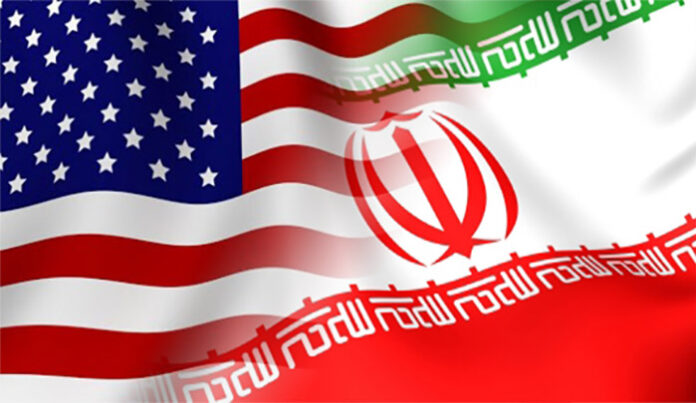
US Refused to Back Off from Its ‘Hostile’ Stances in Vienna: Iran

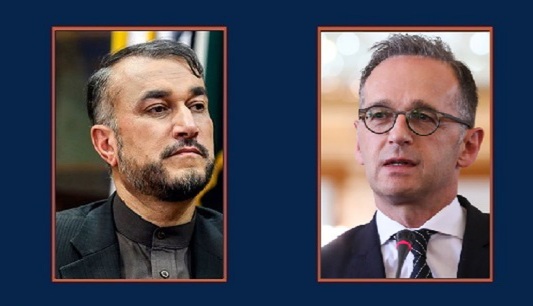
According to Kazem Gharibabadi, in contravention to UN Security Council Resolution 2231, the US has refused to revoke the Executive Order pertaining to the anti-Iran arms embargo.

He said the US has refused to lift its sanctions against 500 individuals and companies and to suspend its CAATSA law.

Gharibabadi said the US has also refused to give guarantees that it will not re-quit the deal, as it did in 2018. 

The Iranian envoy said the US refused to discuss damages caused to Iran as a result of Donald Trump’s withdrawal from the JCPOA, and that it had excessive demands beyond the JCPOA.

Gharibabadi noted that the US has tied the agreement to future talks on regional issues, and specifically subjected the lifting of IRGC’s Foreign Terrorist Organization designation to regional talks. 

Gharibabadi said the US and western countries’ behaviour shows that they still seek to use these talks as a bridge to unrelated topics such as regional and missiles talks, turning them into an integral part of the JCPOA.

He said the talks haven’t been concluded and based on diplomatic norms, there won’t be any agreement unless there is an agreement on everything. 

He stressed that the talks must be on nuclear issues, and that Iran’s missile program and regional presence are not negotiable.

He also noted that while we should focus on lifting the sanctions, neutralising them should be seriously considered so that sanctions as a policy tool is taken from the US.

Iran Says Concerned about Armenia-Azerbaijan Border Clashes

In a statement on Thursday, Khatibzadeh expressed regret over the deaths and injuries of the two countries’ nationals, and called on both parties to show self-restraint.

He also underlined the necessity of the peaceful settlement of border disputes between the two countries.

Khatibzadeh stressed that the two countries must overcome the tensions and clashes, and respect the internationally recognised borders.

He further emphasised the necessity of establishing sustainable peace in the South Caucasus region as soon as possible, and expressed Tehran’s preparedness to provide any kind of assistance for the establishment of sustainable peace in the region.

Three Armenian soldiers were killed in clashes with Azerbaijani forces on the border, Armenia’s government said on Wednesday, in the deadliest clash since the end of last year’s war in Nagorno-Karabakh.

The Armenian Defence Ministry said in a statement that a further four soldiers were wounded by gunfire.

In a statement issued at 09.20 am local time, it added that “fighting continues”. About an hour later, Armenia authorities announced that “an agreement restoring the ceasefire at the line of contact” had been reached “at the mediation of the command of Russian peacekeeping forces”.

Azerbaijan’s Defence Ministry said two of its soldiers were also injured in the clashes but that “there is no danger to their life.”

Both countries blamed each other for the flare-up in tension along the border.

Iran Parliament’s Internet Restriction Bill Sparks Harsh Reactions

Iran’s National Information Network Not Based on Censorship: Official

The bill, officially called “protecting the rights of cyberspace users”, aims to limit the activity of foreign social networks in Iran, in particular Instagram, which until now has not been blocked.

After a closed session on Wednesday, Iranian lawmakers authorised the Joint Specialized Commission (the Cultural Commission) to approve a pilot plan aimed at restricting social networks, especially Instagram, a measure that would facilitate the implementation of the social media restriction plan.

With 121 votes in favour, 74 against and 9 abstentions, the representatives agreed to refer the plan to the Parliament’s Cultural Commission, in accordance with Article 85 of the Constitution.

This constitutional article allows the Parliament to pass certain laws in its internal commissions in necessary cases, without discussing them in a plenary session of the Parliament and subjecting them to a public vote.

On the basis of the Parliament’s decision, the plan will be reviewed by a specialized parliamentary committee and referred to the Guardian Council, which is overseen by Ayatollah Ahmed Jannati.

If approved by the Guardians of the Constitution, it will be carried out on a trial basis.

The plan, however, has been widely criticised by social media users and even some conservative figures.

Jalil Rahimi Jahanabadi, a member of the Parliament’s National Security Commission, believes the Parliament does not have the right to violate the people’s right to freedom of communication.

He said the approval of the plan will create a chaos and serious anarchy in the Iranian people’s link to the outside world and even among the people themselves.

According to Rahimi, the past experiences including the blocking of Telegram messaging app and the ban on the use of satellite TV prove that such confrontation against technology is not rational and logical.

“These methods have not even worked in countries like North Korea or some Communist states in the Latin America,” he added.

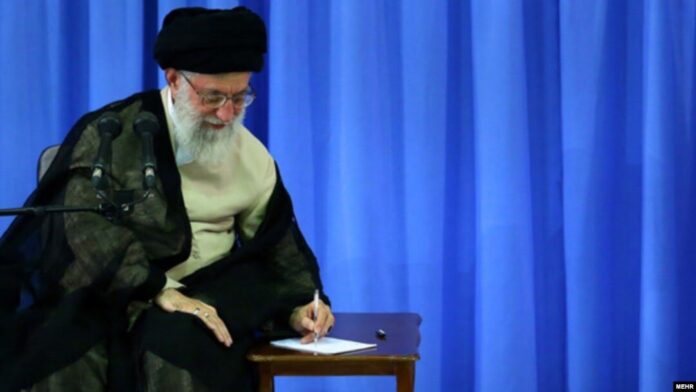
Nuclear Talks Prove Iran Must Avoid Negotiating with West: Leader

Nuclear Talks Prove Iran Must Avoid Negotiating with West Leader

“Others should use the experience of Mr. Rouhani’s government; One experience is distrusting the West. In this administration, it became clear that trusting the West is not helpful,” Ayatollah Khamenei said in his last meeting with outgoing President Hassan Rouhani and his cabinet on Wednesday.

“They don’t help and they strike a blow wherever they can. When they didn’t, it was because they couldn’t,” the Leader added.

He said Iranian administrations should utterly avoid tying their plans to negotiations with the West, for they will certainly fail. 

“This administration, too; wherever it relied on negotiations with the West and the US, they were unsuccessful, and when they relied on domestic potential, they succeeded.”

Ayatollah Khamenei pointed to the recent talks held in Vienna to revive the 2015 nuclear agreement, and said the Americans staunchly insisted on their obstinate stances during the negotiations. 

“When making promises and on paper, they say they will remove sanctions, but in practice, they didn’t and won’t. Then they say new articles should be added to the deal that already exists,” he noted.

The Leader said the US insisted on the inclusion of a sentence in the deal that obliged Iran to engage in broader talks in the future, otherwise there will be no deal. 

Ayatollah Khamenei described it as a pretext for future interference in Iran’s missile and regional issues, and said the country’s policies would not let that happen.

He said the US wants to first include that article in the deal, and once Iran refused to engage in such broader talks, tell the world that Tehran has breached the nuclear deal.

“The West and the US are totally unjust and malicious in their negotiations. They have no hesitation in breaching their commitments at all. In the previous agreement, they breached their commitments and they give no guarantee they will abide by their commitments in the future either,” he said.

That is what they have explicitly told our diplomats in Vienna, the Leader said.

Sangsar Museum of Rocks & Fossils; Unique Attraction in Central Iran

The personal museum of rocks and fossils of Sangsar near Ghar Darband Mountain in Mahdishahr (Sangsar) city consists of three museums of fossils, rocks and anthropology.

Hassan Pakzadian, the top private museum owner of Iran in 2016, is a researcher and the owner of this collection.

The stone part of this museum includes all kinds of minerals and ornamental stones that have been collected from the outskirts of central Iran. However, a small number of these minerals belong to other countries.

There are around 850 pieces of fossils, ornamental stones, minerals and 650 pieces of mineral stones in the Museum of Rocks and Fossils of Mahdishahr which belong to the historical periods and the contemporary era.

The museum was established in 2016 and 70% of the fossils collected here are for Alborz mountain range. 25% of the fossils are from the other parts of Iran and 5% are from foreign countries. 45% of ornamental and mineral stones have been collected from the central Iranian desert, while 25% have been purchased from different parts of the country.

The rocks in the museum are divided into two groups: silicate and non-silicate. Silicates are decorative stones and non-silicates are minerals. Some of the minerals in this museum are diamonds, rubies, turquoise and gemstone.

From Tehran to Rome: A Journey through Art

This collection looks at the works and artistic lives of seven Iranian and Italian artists, including Bijan Basiri (1954), Mohsen Vaziri ‌ Moghaddam (1924-2018), Khosrow Khorshidi (1933), Bahman Mohasses (1930-2010) Pier Paplo Patti, Akbar Mikhak and Vincenzo Bianchini (1903-2000).

Giuseppe Perrone, the Italian ambassador to Tehran, told IRNA that these artists, as a bridge, connect Iran and Italy.

“Showing the process of their artistic activity in a dramatic way better reflects the artistic connection between the two countries. Each episode of this collection is about 15 to 20 minutes and is published on the internet by the Italian Embassy in Iran,” he added. 

The latest and fourth episode of this series is about Bahman Mohasses (1930-2010), which was unveiled on Thursday, July 21. He is a world-renowned artist who lived in Rome for many years and died in 2010. Therefore, the main purpose of producing this collection was to emphasise the artistic connection between the two countries, added the Italian envoy. 

Giuseppe Perrone started his work as Italy’s ambassador to Iran in July 2019. He has been working as an Italian diplomat in various countries since the 1990s. His interest in Persian language made him learn Persian language since he arrived in Iran.

Since his presence in Iran, Perrone has prioritised the development of cultural activities and contacts and has supported joint projects with the cooperation of Iranian and Italian artists.

Regarding other activities of the Italian Embassy in Iran, he said, some projects have been run in the field of literature. 

“Recently, we held a commemoration ceremony for Dante Alighieri, the Italian poet and writer, on the occasion of his 700th birthday. In this ceremony we read some of his works in Persian and Italian. We will also be holding a meeting on October 18 to mark the 100th birthday of Leonardo Sciascia, a contemporary Italian writer, playwright and critic.”

We have also considered an annual award for Persian translations of Italian works with the aim of supporting Persian translation works, the details of which will be announced soon. We also have a good collaboration with Bukhara Literary Magazine to commemorate the Italian writers, noted Perrone.

He also emphasised that due to the corona epidemic, the presence of writers and artists have slightly decreased, but the activities are not stopped and only during the last week four cultural events were held.

Perrone explained about the future plans of the Italian Embassy in Iran saying that the embassy is planning to hold several important exhibitions. “There are also some specific cultural and artistic fields that we will focus on in the future,” he concluded.

Iran Calls on Tunisian Parties to Show Self-Restraint

In a statement on Tuesday, Khatibzadeh called on all parties to show self-restraint and maintain their empathy, and underlined the significance of dialogue among all Tunisian groups and institutions in order to end the current tension and realise the causes of the revolutionary people of Tunisia.

The Iranian spokesman said Tehran stands with Tunis while the country gets through this juncture.

He also highlighted the necessity of the establishment of stability in political and security fields in the country.

Khatibzadeh finally expressed hope that Tunisia will get through this critical juncture through dialogue as soon as possible.