Friday, December 26, 2025
Home Blog Page 2464

Iran’s Uramanat Landscape Inscribed on UNESCO’s World Heritage List

Following the review of the candidates for inclusion in the UNESCO World Heritage List, the Uramanat landscape was registered as the 26th World Heritage Site of the country. Two days ago, the national railway (north-south) of Iran had also been registered in the list.

The Uramanat is located in the provinces of Kermanshah and Kurdistan with about 409,000 hectares of land and territory.

In 2020, a field evaluation of the Uramanat cultural landscape was conducted by the ICOMOS.

Prior to the commencement of the UNESCO World Heritage Committee assessment, the initial opinion of ICOMOS experts was that the case had a high chance of being registered as World Heritage.

Finally, on Tuesday, July 27, the Uramanat case was inscribed on the UNESCO World Heritage List according to criteria 3 and 5.

Uramanat is the name of historical regions with stepped structure and special customs that includes parts of Sarvabad, Sanandaj and Kamyaran cities in Kurdistan province and Ravansar, Paveh, Javanroud and Thalas Babajani cities in Kermanshah province.

The main part of the Uramanat cultural landscape includes the valleys of Zhavehorud, Oraman Takht and Lahun.


The report of Iran’s Ministry of Cultural Heritage, Tourism and Handicrafts states that there are about 700 villages in the Uramanat region.

This region has a history of rich cultural background, customs and special symbols that represent the rich culture of this region.

The history of settlement in this region dates back to prehistoric times, when the discovery of Horaman documents confirmed the existence of Assyrian, Median, Achaemenid and Greek rule.

The artefacts of human habitation have been found in archaeological excavations around the village of Hajij that date back to the Paleolithic period, which according to archaeologists is more than 40,000 years old.

The stepped architecture of Uramanat and its spectacular houses have shaped the village into a pyramid, at the top of which there is an ancient castle.

The 44th UNESCO World Heritage Committee is currently being held virtually in Fuzhou, China, during which 39 works submitted by countries will be reviewed.

At this summit, with the support of other countries, Iran succeeded in submitting two cases of the national railway (north-south railway) and Uramanat to the UNESCO.

Thus, the number of Iranian sites on World Heritage List reached 26 works.

Every year since 1978, UNESCO has picked a number of World Heritage Sites for their outstanding universal value and to help preserve places threatened by neglect, climate change and overdevelopment. Over the years, more than a thousand sites, both natural and cultural, have been added to the list.

Iran’s Historical Uramanat Region to Be Registered Internationally


Iran Arrests Mossad-Linked Spies Seeking to Infiltrate into Riots

The network of spy agents, with a large amount of weapons and ammunition, was arrested after sneaking into Iran from across the country’s western border, the Intelligence Ministry said.

It also said that the Mossad agents intended to use the weapons during riots in Iran and also for assassinations.

The Ministry did not say how many agents were arrested or when they purportedly infiltrated into Iran.

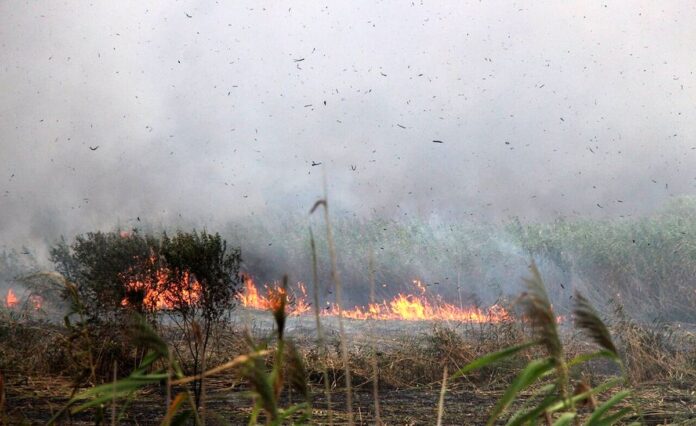
At least five people have been killed amid days of protests over water shortages affecting Iran’s Khuzestan province, according to statements carried by state-run and semiofficial media in Iran.

Iran: No Broader Talks with US before JCPOA Obligations Fulfilled

Iran’s Government Spokesman Ali Rabiei

“We remain committed to the return of all parties to the Joint Comprehensive Plan of Action to their obligations in strict compliance with the text of the agreement and we are not going to open negotiations on any other subject. Talking and even thinking about negotiations beyond the nuclear deal is meaningless before the US and members of the 4+1 group completely fulfill their obligations under the accord,” said Iran’s government spokesman Ali Rabiei.

“This is the fundamental approach of the Islamic Republic of Iran and is backed by the country’s major [national] documents and will not change with the change in administration. Of course, the 13th administration has the legal authority to take its own approach to the issue, to diplomatic ways and means and to materialization of uncompromisable national objectives.” 

He was responding to a question on the US stance on the nuclear deal and the fate of the agreement after August 3, when the new government takes office in Iran.

“Generally speaking, it should have been clearly proven over the past years that sanctions against Iran, at any level, are condemned to failure and that no new sanction can lead to any result beyond repetition of past failures. Therefore, we hope that the US government has learnt lessons from the previous [US] administration and does not get trapped in wrong and destructive analyses and impressions,” Rabiei said.

The spokesman further stressed that the government of President Hassan Rouhani has already fulfilled its responsibility during the nuclear talks in connection with removal of anti-Iran sanctions. He said things would have been different in relation to sanctions without the “unnecessary restrictions implemented by the law”, in a reference to a parliamentary legislation that imposed limits on how the government can approach the Vienna talk on revival of the nuclear deal.

Iran Unveils Virtual Educational Courses on Life Skills for Girls

According to a report by the Education Ministry’s public relations, the educational content was unveiled during a meeting between the minister, Mohsen Haji Mirzaei, and the Vice President Masoumeh Ebtekar, at the vice presidential office for women and family affairs.

The virtual courses include “Omid” [hope], “Kindness and Altruism” and “Emotional Intelligence”, which are aimed at helping girls learn how to live better.

Olympics 2020: Iran, Poland Volleyball Teams Crush Opponents on 2nd Leg

The second-ranked Poland won 25-20 26-24 25-20 against Italy to open their account in Pool A with indomitable outside hitter Wilfredo Leon leading the way with 18 points.

Italian duo Alessandro Michieletto and Osmany Juantorena, the heroes of their sensational comeback victory over Canada on Saturday, had nine points each but Poland’s defence proved too strong with the team making 22 successful digs.

“From zero to 10, I think (our performance) was eight. It wasn’t the best,” Leon told reporters. “But we won and this is the most important part.”

After Iran’s five-set epic in their opening win over Poland on Saturday, they had a relatively comfortable outing in their second match against Venezuela, wrapping up a 25-17 25-20 25-18 victory, Reuters reports.

Iran dominated on serve, made 10 blocks at the net and set up numerous spiking opportunities as Amir Ghafour top-scored with 16 points and Meisam Salehi had 13.

“Today, we controlled the game, we made less mistakes,” Ghafour said.

However, Iran’s second win was not enough to put it in the Pool A’s top place, as Japan bagged another three points today to sit first in Pool A.

Japan lost the opening set against Canada but their patience in subsequent rallies paid off as Yuji Nishida (23 points) and Yuki Ishikawa (22) galvanised the hosts to top Pool A with a tight 23-25 25-23 25-23 25-20 victory.

“The next opponent Italy plays with more quality, so I am just focusing on the next game. Then we will see what lies ahead,” Nishida, who injured his ankle in May and is still not at 100%, said.

Iran’s Zarif, Head of Cuba’s Finlay Vaccine Institute Meet in Tehran

In the Monday meeting, the Iranian foreign minister touched on the friendly ties between the two countries and described as very significant the cooperation between Iran and Cuba in the fields of biotechnology, genetic engineering and especially vaccine production.

The Cuban official, in turn, briefed Zarif on the cooperation between vaccine institutes of the two countries for production of a COVID-19 vaccine and the unique features of the jab. He also thanked Zarif and the foreign ministry for their quick steps to advance cooperation between the two countries for production of a joint vaccine.

During the meeting, Cuban ambassador to Tehran Alexis Bandrich Vega also underlined the significance of Zarif’s visit to his country last year in launching the cooperation between Pasteur Institute of Iran and Finlay Institute of Cuba for joint production of a COVID-19 vaccine.

Protest Rally Held in Downtown Tehran against Power Cuts

The shop owners gathered outside the mall, located in the central Jomhouri Street, in an act of protest.

According to media reports, the protest held to raise concern over the impact of power cuts on the shop owners’ businesses, was later infiltrated by a group of people, who politicized the rally, chanting slogans strongly critical of the political system in Iran. The protesters later dispersed.

According to the Ministry of Energy, the two-hour-long power outage at Aladdin shopping mall was due to consumption exceeding the limits set for the commercial center.

Iran has been hit by scheduled power cuts over the past months amid rising electricity consumption, which officials say, topped the national power generation threshold in the hottest days of June and July.

Iran’s power sector has been hit hard by a dry raining season, which has taken its toll on the mainly hydro-electric industry.

Iran Opens First Specialized Centre for Innovation in Nuclear Industry

The centre was launched in a ceremony at the presence of head of the Atomic Energy Organisation of Iran Ali Akbar Salehi and Vice President for Science and Technology Sorena Sattari.

Launching of the centre is the first step for Iran to shape its innovation biome in the nuclear industry and support the development of innovation in the field.

The centre is expected to help the expansion of the civilian applications of the nuclear technology in the fields of medicine, agriculture and industry, among other sectors.

Taliban; Domestic Afghan Issue or Leverage to Harness China’s Domination?

As the Americans are leaving Afghanistan, violence against civilians and fighting with the army has intensified. Before the withdrawal of US troops, the Taliban had control over someparts of the country, but in the past two months, as the US and its allies withdrew most of their forces from Afghanistan and the peace talks in Doha and Istanbul failed, the militant group found opportunity to further confront the government and occupy more regions.

The Afghan-Chinese border is turning into a concern these daysas the Taliban expand their dominance, advancing to the borderwith their eastern neighbour and Xinxiang region.

Badakhshan province, in northeastern Afghanistan, is a mountainous region suitable for armed activities. It fell into the hands of Taliban as the government forces and the armed popular forces were unable to keep the region under control.

China and Afghanistan share a 76-kilometre border in the northeast. There is also a border with Tajikistan in the same area, where the Chinese have kept their forces to protect both sides.

Xinjiang, now bordered by the Taliban, is an autonomous regionin western China formerly known as East Turkestan. Muslim Uighurs live in the area, and the Chinese central government is constantly concerned about separatist activities there.

It was back in March that some UN human rights experts raised concerns about the alleged detention and forced labour of Muslim Uighurs in China and Xinxiang .

“We stand ready to strengthen our dialogue with the Government of China at the earliest opportunity and welcome the Government’s prompt response to these allegations as well as its willingness to continue the constructive engagement with us,” the Working Group on Business and Human Rights said on March 29.

Beijing in response refuted the concerns and accused the group of publishing “distorted facts” and said “it spreads lies against China out of bias and political purposes.”

Liu Yuyin, the spokesman for the Chinese Mission to the UN in Geneva said in a statement that “China is a socialist country in which the 56 ethnic groups, as equal members of the big family of the Chinese nation, are closely united like the pomegranate seeds.”

The significance of this region becomes more tangible when we see China’s route to West Asia, or the so-called Silk Road, passes through Xinxiang.

Uighurs of Xinxiang have constantly fought for independence and the region has had intermittent autonomy since 18th century.

However, what makes the region a threat for Beijing is that a group called “The Eastern Turkistan Islamic Movement”(ETIM) has used violence to pursue its aim of establishing an independent so-called “East Turkistan” state within China. The UN says the ETIM is linked with al Qaeda and its members are supposed to have fought along with the Taliban in Afghanistan.

It was later revealed that the militant group was being trained militarily by the Taliban and had close ties with them.

It is not yet clear where their highly advanced weapons came from, but many are sceptical of the third parties and their support for the Uighurs.

Experts on the Chinese issues believe that without the support of foreign countries, the Uighurs would not have been able to form a group and take up arms. They believe that some countries want to counter China’s influence by creating armed groups similar tothe Taliban.

This as China believes that separatist tendencies are widespread in Xinjiang province, which requires government control.

Beijing accuses the ETIM of carrying out a number of terror acts in Xinjiang, where around one million Uyghurs and other minority groups are kept by the government in internment camps.

It was in May that China’s foreign minister Wang Yi said “We should resolutely crack down on the ‘three evil forces’ [of extremism, terrorism and separatism] including the East Turkestan Islamic Movement.”

However, the United States says the Chinese are hard on Uighurs, and Washington’s foreign policy is now focused on controlling the Chinese influence in the region.

Currently, new concerns have been raised as the risk of the Taliban-controlled militant groups is expanding in China. The Taliban have formally extended their hand of friendship to Beijing, while the Chinese opposition is receiving military training in impassable areas controlled by the Taliban.

In such situation, many observers ask what is the connection between the sudden withdrawal of the United States from Afghanistan and the inaction of Washington in the face of the occupation of most of Afghanistan by the Taliban?

To answer this question, we must take into consideration that spread of extremism near the Chinese borders can weaken China’s central government.

The East Turkestan Islamic Movement is not a newly established group. Since 1931, they have been active in northwestern China, revolting against the central government.

In recent decades, the group has been close to Saudi Arabia and Turkey, and has later chosen the Taliban as its close friend.

In this regard, it seems the other world powers are happy that the Taliban are near the Xinjiang borders as they put the Chinese government in hot water.

Uighurs can now travel more easily on the border with Afghanistan, and it will be easier for them to get weapons.

At the same time, the Taliban with the cooperation of the Uighurs will have control over some parts of the Silk Road and it could cause great trouble for Beijing.

On the other hand, it can create a good opportunity for Turkey, because the Americans believe Turkey’s presence in Afghanistan and their proximity with Turkic Uighurs can be a good solution to thwart Chinese threat and domination in the West Asian countries.

All in all, the constant presence of the Taliban near the border with China could turn the Uighurs and their armed activities into a dormant source of trouble for Beijing; something that Washington has always been wishing for.

Weaving Shirdong; Local Art of Iran’s Bakhtiari People

Shirdong is a decorative object made of wool which is obtained from sheep in spring.

Local women turn the wool into thin strings using simple tools, and then dye them using natural colours.

The women later begin weaving the Shirdong. They spin a thin string using a simple tool called Peel, and then dye it with joyful colours. Then, they start weaving according to the designs they have in mind.

The colourful and patterned strings of Shirdong represent the joy and happiness of Bakhtiari people. At celebrations and weddings, these people hang these decorative stuff on black tents and at home, conveying the message of happiness to guests and acquaintances.