Friday, January 2, 2026
Home Blog Page 2448

Guinea president ‘detained by military in apparent coup’

The ongoing unrest broke out in the capital city as local media reported that heavy gunfire was coming from Conakry’s upscale neighborhood of Kaloum, housing the presidential palace and other government buildings.

Uncorroborated footage circulating online shows multiple military vehicles and heavily armed soldiers roaming the area.

In another video, purportedly shot on Sunday, gunfire can be heard in the background.

The unrest is reportedly led by Lieutenant Colonel Mamady Doumbouya, a former French legionnaire and an elite military unit commander.

While multiple pro-government sources told the media that the country’s president was safe, local media reports corroborated by imagery circulating online suggested otherwise.

A video and several photos purport to show Conde detained by heavily armed soldiers and then being driven away to an unspecified location.

As Conde was arrested, the leader of the coup released a brief video address, accusing the president of “trampling” on people’s rights and leading the country’s economy into a state of “dysfunction”.

Doumbouya announced the dissolution of the government, as well as the closure of the country’s air and land borders, while proclaiming Guinea’s constitution void.

The latest presidential election, held in October last year, however, was surrounded with much controversy. The longtime leader had changed the country’s constitution before the polls, allowing himself to run for the third time. The election was also marred by violent opposition protests, as well as crackdowns on them by the authorities.

Shortly after the address, however, the Guinea’s Defense Ministry claimed the attack on the mutinous special forces had been successfully repelled and the military loyal to the elected government was working to restore order in the capital. The ministry did not elaborate on the whereabouts of the president, sowing further confusion on who exactly holds power in the country.

Source: RT

Iran Quds Force chief in Iraq

Media outlets close to resistance groups posted images of Qaani in the holy city that houses the shrine of Imam Ali, the first Shia Imam and the Prophet Muhammad’s cousin and son-in-law.

Ayatollah Hakim died of a heart attack on Friday. He was the grandson of the top Shia authority Seyyed Mohsen hakim and the nephew of Mohammad Bagher Hakim who was killed in a terrorist attack by Takfiris in Najaf in August 2003.

Quds Force has played a pivotal role in defeating Daesh in Iraq after the terrorist group overran Iraqi cities in 2014.

The former commander of Quds Force General Qassem Soleimani and his Iraqi companion Abu Mahdi Muhandis are viewed as iconic anti-terror fighters in Iraq. The two were martyred in a US drone strike outside Baghdad Airport in January 2020.

Raisi tells Macron Iran wants all sanctions removed

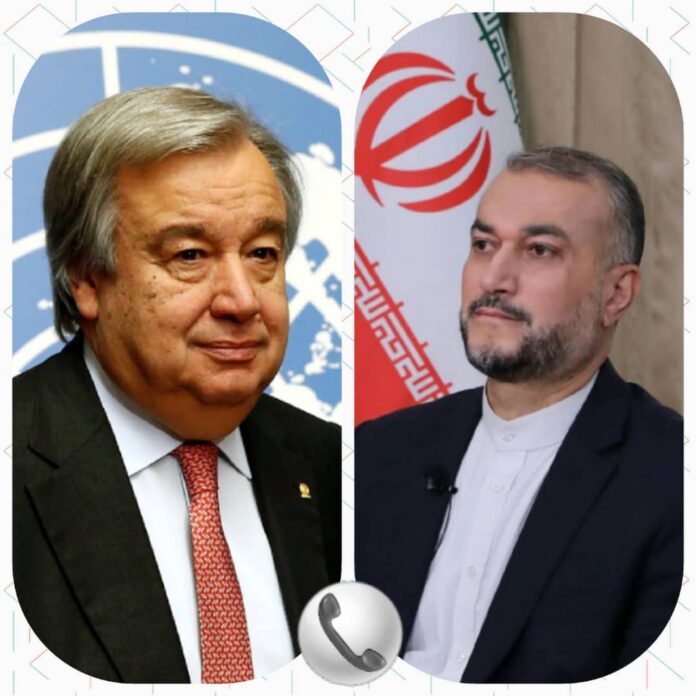
President Raisi, in phone conversation with Macron, touched on the Vienna talks to revive the Iran nuclear deal, known as the JCPOA, saying Tehran’s for fruitful talks and wants all anti-Iran sanctions removed.

He also said Iran welcomes any move to expand ties, particularly trade and economic relations, between the two countries.

Raisi added that Tehran is ready to deepen ties with Europe, starting with France.

On regional security, Raisi said Iran will support any move that would strengthen stability in neighboring countries and the wider region.

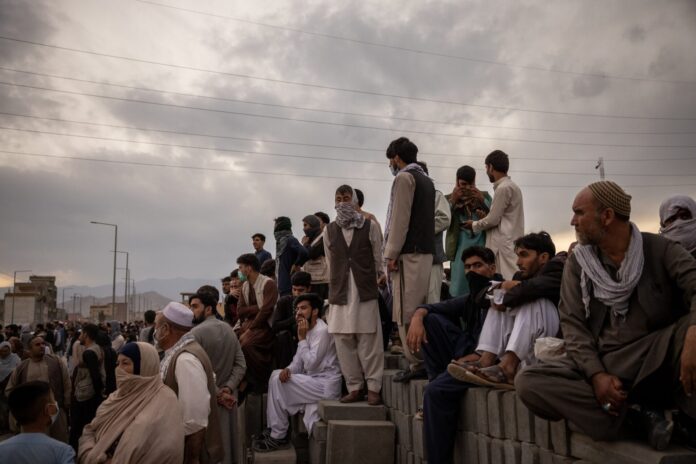
He added that the US interventionist policy in Afghanistan has failed. Raisi noted that the best thing to do would be letting Afghans decide their own fate.

The Iranian president also said the Islamic Republic considers Daesh under any name a terrorist entity that must be dealt with.

Raisi also spoke of Lebanon. The Iranian president said Tehran is prepared to help with the formation of a powerful central government in Lebanon that would serve the interests of its people.

Iran interior minister appoints new political deputy

In an order, Vahidi urged Khorrmashahd to fulfill his tasks to the best of his ability.

He said the responsibilities of the deputy interior minister for political affairs, among others, include efficient interaction with political parties and organizations, creating solidarity among all ethnic groups of Iran and people from all walks of life, and also holding elections with a view to maximum voter turnout, the latter being a key task.

Vahidi wished Khorramshad good luck in his new capacity.

Khorramshahd is a full Professor of Law at Tehran’s Allameh Tabatabaee University. He has previously served as Deputy Foreign Minister and Deputy Minister of Science, Technology and Research.

Ex-Iran petrochemical company officials get long sentences

A 20-year prison sentence has been handed down to each of the defendants in the case involving the disruption of the petrochemical market.

“Each of them were given a 20-year jail term as well as 74 lashes and were permanently deprived of any government services,” said Judiciary Spokesman Zabihollah Khodaian.

“Also, as for financial offences, they were sentenced to the restitution of the amounts they had acquired illegally,” he added.

He said the managing director of the Petrochemical Commercial Company, his deputy and several members of the board of directors and executives of the firm were found guilty of earning ill-gotten wealth by getting involved in activities leading to disruption, on a large scale, in the country’s economic system by manipulating the forex income from petrochemical exports amounting to well over €6.6 billion.

“The case has two parts; part of it had been sent to the court after an indictment was issued, and a verdict was issued accordingly; the other part is going through proceedings at the prosecutor’s office,” the spokesman explained.

According to the spokesman, the case also involves the then CEO of the Vala Sarmayeh Amin Company and another top executive, who were sentenced to 15 years in prison, 74 lashes and cash fines equal to the amount of money they acquired illegally.

They were also sentenced to five years of discretionary imprisonment and were permanently banned from receiving any government services.

They had been found guilty of complicity in seriously disrupting the country’s economic system by manipulating forex earnings from petrochemical exports.

Iran Covid deaths stands at 610, around 30K new cases

Iran’s Ministry of Health announced on Sunday the deaths have happened over the past 24 hours.

Covid fatalities now stand at 110,674 .

Authorities also logged 25,870 new cases. That figure includes 3,430 hospitalizations. The total caseload in Iran has hit 5,129,407.

But good news is, 4,362,814 Covid patients recovered. Iranians have so far received 29,152,527 doses of Coronavirus vaccine.

Figures also show that 9,684,669 got fully vaccinated while 19,467,858 other got their first jab. The vaccination campaign in Iran was initially slow, drawing harsh criticism from citizens. But now it’s well on track.

In his first interview with IRIB as president, Ebrahim Raisi said officials are determined to inoculate all citizens in as short a time as possible.

Raisi also said Iran will receive 40 million doses of Covid vaccine by mid-September.
He added that the Islamic Republic needs another 60 million shots.

Polls show 20% regret voting for Biden

A poll conducted by Zogby Analytics found 20 percent of Biden voters now regret their choice, 4 percent aren’t sure and 76 percent still have confidence in the commander-in-chief.

Nearly three in ten (29%) Republicans who voted Biden regretted it, while one-fifth (20%) of Democrats felt the same and 14% of Independents.

Men were far more likely to regret their vote than women – 27% of males regretted their vote for the Democratic ticket, where only 13% of females felt the same.

Young people and minorities were also far more likely to regret their vote. Hispanics regretted their vote the most, 33% of them, where 25% of African Americans felt the same, as did 16% of white people.

The survey was taken before the fall of Kabul and the most recent onslaught of criticism Biden has faced for his handling of the Afghanistan withdrawal.

Most interestingly, urban voters regretted their vote more than suburban and rural ones. Twenty-eight percent of urban Biden voters regretted their vote while only 14% of suburban voters felt the same, as did 12% of rural voters.

Biden’s approval rating has dipped to 44%, while 51% disapprove, according to a ABC News/Washington Post survey.

A breakdown of the numbers shows just 36 percent of Independent voters approving of Biden, while only 8 percent of Republicans think he’s doing a good job.

His approval is still strong amongst fellow Democrats at 86 percent – though it’s a steep drop to just 56 percent approving of his job in Afghanistan.

The 44 percent figure is a six-point drop from Biden’s June approval numbers. His disapproval shot up by nine points since then.

Source: Daily Mail

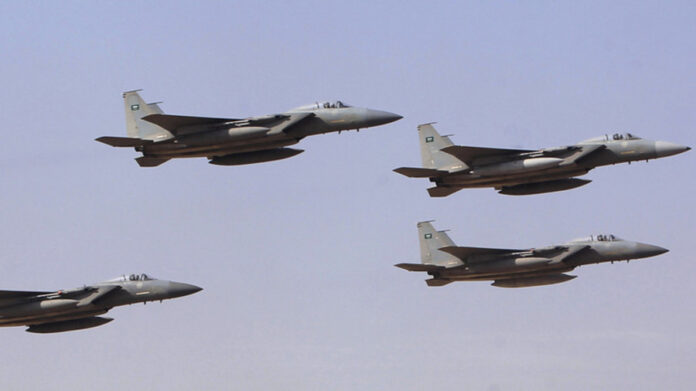
Yemeni forces hit Saudi soil facilities, with 16 ballistic missiles, drones

“As part of confronting the crimes of aggression against our country, our armed forces carried out the 7th Balanced Deterrence Operation,” Spokesman for Yemeni Armed Forces Brigadier General Yahya Sare’e said in a televised statement on Sunday. 

“The operation targeted vital facilities and military bases of the Saudi enemy,” he added, stated that Yemeni troops targeted Saudi depth with more than 16 ballistic missiles and drones.

Sare’e indicated that the 7th Balanced Deterrence Operation targeted Saudi Aramco facilities in Ras Al-Tanura in the Dammam region, eastern Saudi Arabia, with eight Sammad-3 drones and a Zulfiqar ballistic missile.

The spokesman noted that the operation targeted Aramco facilities in Jeddah, Jizan and Najran with five Badr ballistic missiles and two Sammad-3 drones.

“The 7th Balanced Deterrence Operation successfully achieved its goals,” Sare’e stated, warning the Saudi enemy of the consequences of its continued aggression against “our dear country and our steadfast Mujahid people”.

He also stressed Yemen’s legitimate right to carry out more qualitative military operations in defense of the country and its people until the aggression is stopped and the siege is lifted.

“The Yemeni Armed Forces are continuing in their jihadist battle until the liberation of all the lands of the republic and the achievement of freedom and independence,” Sare’e affirmed.

Saudi Arabia, backed by the US and its other regional allies, launched a devastating war on Yemen in March 2015. The six years and half of war has killed hundreds of thousands of people and destroyed much of the country’s infrastructure. Yemeni people are facing malnutrition, hunger, and famine, which have increased risks of disease and starvation.

With an all-out blockade on Yemen in place since the onset of the bloody war, the country is witnessing the world’s worst humanitarian crisis, according to the UN. The sea, land, and air siege from, among others, has led to the closure of the Sana’a International Airport, the largest and most important airport in Yemen, and closed the Hodeidah port, which acts as a lifeline for the country.

Yemeni Armed Forces have repeatedly warned the Saudi regime to stop its war, promising the regime larger and larger operations if it continues its aggression and siege on the country.

Yemen’s Air Force has stepped up the retaliatory attacks on Saudi Arabia in recent months.

Source: Al-Masirah

Former UK PM: West committing ‘moral outrage’ over covid vaccine

Brown, who is a United Nations special envoy, called on US President Joe Biden and other Group of Seven leaders to urgently ship vaccines from warehouses in America and Europe to Africa.

Western countries are hoarding nearly 300 million shots while only 70 million people in Africa have so far been vaccinated, Brown said in an opinion piece published in The Sunday Mirror, citing research by data firm Airfinity.

By Christmas, the West is set to have one billion surplus doses even if every European and American adult has received a booster shot and all children over 12 are injected, he added.

“We are in a new ‘arms’ race – to get vaccines into people as quickly as possible – but this is an arms race where the West have a stranglehold on the vaccine supplies,” Brown stated.

The grip of rich countries on vaccine stocks was stopping Covax, the international facility for buying vaccines, from meeting its promise to send two billion vaccines to poorer countries this year, he added.

The stockpiling has also delayed dose-sharing by G7 countries with Africa and low-income countries, Brown said.

His remarks came as around half a million people in the UK are to be offered a third jab.

Last month, the Biden administration also announced a plan to offer booster shots to all Americans.

The World Health Organization (WHO) condemned the rush by the wealthy countries to provide booster shots, comparing the move to providing “extra life jackets to people who already have life jackets, while we’re leaving other people to drown without a single life jacket”.

Biden, however, defended the plan by claiming that the US has donated more vaccine doses than the rest of the world combined.

Association Chief: Iran Power Outages Cost Steel Sector $6bn

“The annual steel production capacity in the country is 40 million tons, 30 million tons of which is now operational and the 10 million tons in lost capacity, equal to 6 billion dollars, which is due to the power cuts,” Bahram Sobhani said.

The official added that the annual national steel production should increase to 55 million tons by 2025. But he said this will be hampered by inadequate electricity supply.  

“The steel production is profitable when more than 75 percent of its capacity is in use. Anything less than 75 percent will be loss-making. Currently,75 percent is in use, which makes the production break-even,” Sobhani said.

“We have been saying this for eight years that with power short in supply during summer, how we should catch up with an annual production of 55 million tons of steel.”

Sobhani also warned that cutting on power supply to the industry complicates such processes as heating the furnaces and this means a halt in steel plants’ operations, which cannot be easily resumed.  

Sobhani also proposed the establishment of an energy consortium with the participation of the steel sector. 

Severe drought and high demand during summer are blamed for the power outages across Iran.