Friday, April 10, 2026
Home Blog Page 2447

Xi criticizes US China policy, warns confrontation could cause disaster

Ties between Beijing and Washington have been strained in recent years by a bruising trade war and America’s tough stand on China’s human rights track record – while competition over tech dominance and disputes over the origins of the coronavirus have further sullied relations.

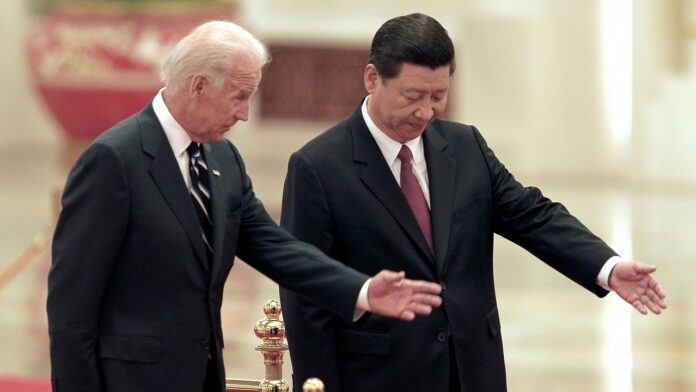
In “candid, in-depth” talks with Biden, Xi warned that confrontation between the world’s top economies “would spell disaster for both countries and the world”.

“Whether China and the US can properly handle their relations… is critical for the future and destiny of the world,” Xi said, adding, “And this is a question of the century that both countries must answer.”

Xi told Biden the recent US political steps toward China had caused significant difficulties in the bilateral relations.

“The US policy toward China conducted for some time has caused serious difficulties in the relations between Beijing and Washington, which is not in line with the basic interests of the peoples of the two countries and the interests of all nations of the world,” Xi stressed.

It was the first call between the two leaders in seven months.

Xi stressed that the two sides should continue their dialogue on climate change, epidemic prevention and the global economic recovery, while “respecting our differences”.

“China-US relations are not a multiple-choice question involving whether or not to do a good job,” Xi continued, stating it is “a must-answer question on how to do a good job”.

The White House also announced that Biden and Xi have held a phone conversation to discuss each other’s national interests and the competition between the two countries.

“President Joseph R. Biden, Jr. spoke today with President Xi Jinping of the People’s Republic of China (PRC). The two leaders had a broad, strategic discussion in which they discussed areas where our interests converge, and areas where our interests, values, and perspectives diverge,” the White House said in a statement on late Thursday.

The leaders also agreed to cooperate on both sets of problems “openly and straightforwardly”, it added.

“This discussion, as President Biden made clear, was part of the United States’ ongoing effort to responsibly manage the competition between the United States and the PRC. President Biden underscored the United States’ enduring interest in peace, stability, and prosperity in the Indo-Pacific and the world and the two leaders discussed the responsibility of both nations to ensure competition does not veer into conflict,” the statement read.


Source: CCTV and China Central Television
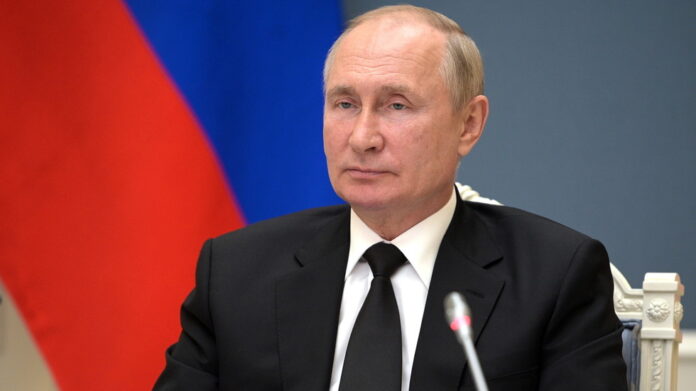
Putin: US left world with a mess in Afghanistan

Western countries have withdrawn from Afghanistan but now the whole international community has to deal with the possible consequences, Putin warned.

Speaking to a video conference of the BRICS economic international group, Putin said the crisis in Afghanistan results from an attempt to impose foreign ideas in a country where they won’t be accepted.

“I have said many times that the current crisis in Afghanistan is a direct consequence of irresponsible attempts to impose alien values from outside and the desire to build so-called democratic structures by political engineering, which takes into account neither historical nor national characteristics of other nations,” Putin stated, accusing the US and its allies of “ignoring the traditions that other countries live by”.

He stressed that such actions lead to destabilization and ultimately to chaos.

“The authors of these experiments then hastily retreat, leaving their subjects to fend for themselves as well. The whole international community has to deal with the consequences,” he summed up.

BRICS, named for an acronym of Brazil, Russia, India, China, and South Africa, is a group of five major emerging economies that have significant influence in their regions. The five nations meet every year, each hosting on a rotating basis. Speaking to his heads-of-state counterparts, Putin noted that the group has “consistently advocated the establishment of long-awaited peace and stability on Afghan soil.”

Source: RT

UN warns of freezing Afghanistan’s assets

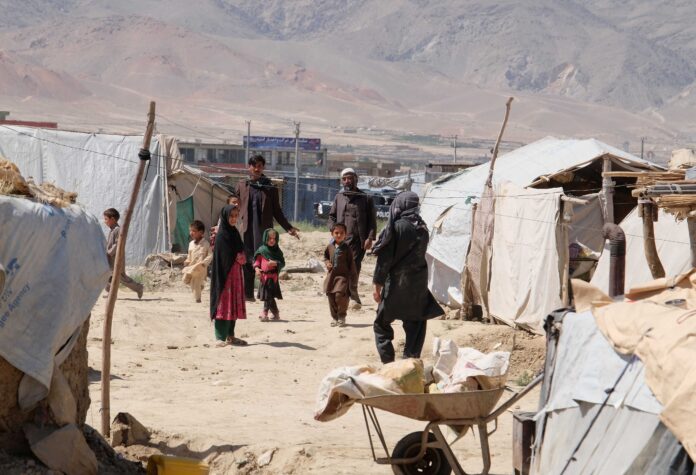
Internally displaced Afghans at a camp outside Kabul, Afghanistan, during a visit by United Nations Secretary General Antonio Guterres June 14, 2017. REUTERS/Josh Smith - RTS170LZ

UN special envoy on Afghanistan Deborah Lyons warned on Thursday that the freezing of billions of dollars in Afghan assets to keep them out of Taliban hands would inevitably spark “a severe economic downturn” and could push millions more Afghans into poverty and hunger.

Lyons said a way needed to be found to get money quickly flowing to the country “to prevent a total breakdown of the economy and social order” and with safeguards to ensure it is not misused by the Taliban.

Lyons told the UN Security Council that Afghanistan could be set “back for generations”.

“The economy must be allowed to breathe for a few more months, giving the Taliban a chance to demonstrate flexibility and a genuine will to do things differently this time, notably from a human rights, gender, and counter-terrorism perspective,” Lyons added.

Much of the Afghan central bank’s $10 billion in assets are parked overseas, where they are considered a key instrument for the west to pressure the Taliban. The US Treasury Department announced it is not easing Taliban sanctions or loosening curbs on the group’s access to the global financial system.

The International Monetary Fund has also blocked the Taliban from accessing some $440 million in new emergency reserves.

“The Taliban seeks international legitimacy and support. Our message is simple: any legitimacy and support will have to be earned,” senior US diplomat Jeffrey DeLaurentis told the Security Council.

Russia and China both argued for the release of Afghanistan’s frozen assets.

At the start of 2021 half of Afghanistan’s population – more than 18 million people – needed help. The UN Development Programme warned on Thursday that Afghanistan was facing universal poverty by the middle of next year.

The Taliban last month seized power 20 years after they were ousted by a US-led invasion for refusing to hand over Al-Qaeda leader Osama bin Laden in the wake of the September 11, 2001, attacks on the United States.

Afghanistan’s UN Ambassador Ghulam Isaczai, who was appointed by Washington-backed government ousted by the Taliban, urged the Security Council to “withhold any recognition of any government in Afghanistan unless it’s truly inclusive and formed on the basis of free will of the people.”

Source: Reuters

First intl. flight from Afghanistan since US withdrawal in Doha

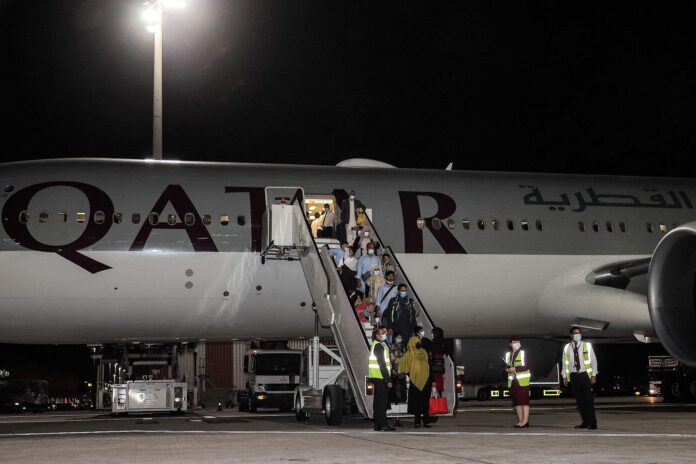
The plane carried 113 passengers, including citizens of the UK, Germany, Canada, the US and Ukraine.

The charter flight was organized by Qatari government under the request from a number of countries that were unable to evacuate their citizens from Afghanistan on time.

Civilian passenger flights in Afghanistan were suspended after the Taliban movement took control over the country. This was followed by emergency evacuation, carried out by a number of countries at once.

The chaos at the Kabul Airport during the evacuation and a terror attack that happened near it caused significant damage to the airstrip and terminals. Specialists from Qatar and Turkey assist in repairing the airport. Internal flights resumed on September 4. In the last few days, foreign flights with humanitarian aid started arriving in Kabul.

Source: Sky News

Israel says ‘not considering’ return of Golan Heights to Syrian govt.

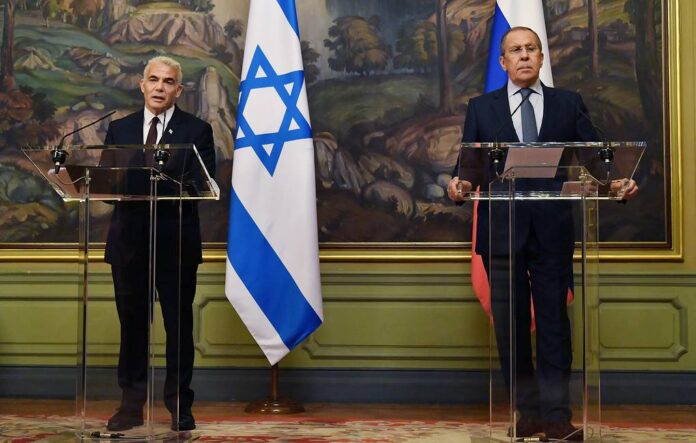
MOSCOW, RUSSIA - SEPTEMBER 9, 2021: Russia's Foreign Minister Sergei Lavrov (R) and Israel's Foreign Minister Yair Lapid during a press conference following a meeting at the Reception House of the Russian Foreign Ministry. Alexei Kudenko/POOL/TASS –осси€. ћосква. ћинистр иностранных дел –‘ —ергей Ћавров и министр иностранных дел »зраил€ яир Ћапид (справа налево) во врем€ пресс-конференции по итогам российско-израильских переговоров в ƒоме приемов ћ»ƒ на —пиридоновке. јлексей  уденко/POOL/“ј——

The minister explained that no talks with Damascus are taking place at the moment and are unlikely to be held in the future.

“No negotiations taking place right now between Israel and Syria. There is not much to negotiate actually aside from security issues. Israel is not even considering, and never will, returning the Golan Heights to Syria, there is no much room for negotiations right now,” Lapid added.

This is the first time the new Israeli government has spoken out regarding its position on the Golan Heights issue since Naftali Bennet became Prime Minister, replacing veteran politician Benjamin Netanyahu earlier this year.

Israel seized the Golan Heights from Syria during the Six-Day War in 1967. Israeli forces captured most of the region in response to an artillery and air offensive by the Arab Republic, which came to Egypt’s aid in the armed conflict. The war itself started with Israeli airstrikes against Egyptian military air bases, but Tel Aviv insists it was a pre-emptive strike.

Over the years, Israel extended its authority to the Golan Heights, appointing officials and holding local elections there, despite protests from some local communities and a lack of international recognition of Israeli sovereignty over the land. However, the administration of US President Donald Trump changed Washington’s longstanding stance on the issue in 2019, officially recognizing the Golan Heights as part of Israel.

Following negotiations with Lapid, Russian Foreign Minister Sergey Lavrov said Moscow regrets that Ankara has not yet managed to fully implement the agreement to separate terrorists from opposition forces in Syria’s Idlib, and keeps proposing solutions.

“The only way to resolve the situation in Idlib in line with [UN Security Council’s] Resolution 2254 is for our Turkish colleagues to fully implement the agreements that Presidents [Vladimir] Putin and [Recep Tayyip] Erdogan reached a couple of years ago and that envision separation of normal, sane opposition forces from terrorists, first of all from Hay’at Tahrir Al-Sham,” he added.

This process was launched but it is far from being completed,” Lavrov stated, noting, “We keep discussing this with our Turkish colleagues through the military, we offer exact ways to assist agreement implementation by our Turkish partners.”

Lavrov stressed that the practice of exchanging information on the situation in Syria between Russia and Israel has proven its usefulness and will be continued.

“Those practical issues that arise in this connection [on the situation in Syria] are discussed extensively by our [Russian and Israeli] militaries on a daily basis. I believe that this practice has proven its usefulness. Today we agreed that it would be continued,” he said.

According to Lavrov, the situation in Syria remains challenging in many respects due to the fact that many countries’ interests are intertwined in that process.

“There are legitimate interests, for example, such as security interests. There are interests that are not quite legitimate, putting it mildly. I mean, first and foremost, the illegal occupation of a considerable part of Syria’s territory by the United States, the exploitation of natural resources and hydrocarbons, grain and water resources belonging to the Syrian people and, of course, the United States’ activities to connive with Kurdish separatism,” he noted.

The Russia’s top diplomat added that Moscow was opposed to turning Syria into an arena of confrontation between third countries. Taking into account all the realities, it is essential to move towards the implementation of UN Security Council Resolution 2254 and respect Syria’s sovereignty and territorial integrity.

“That integrity must be restored, which means foiling any attempts of separatism and moving towards the organization of an inclusive Syrian nationwide dialogue,” he stated.

Source: Sputnik and TASS

Iran envoy urges accountability for war crimes in Afghanistan

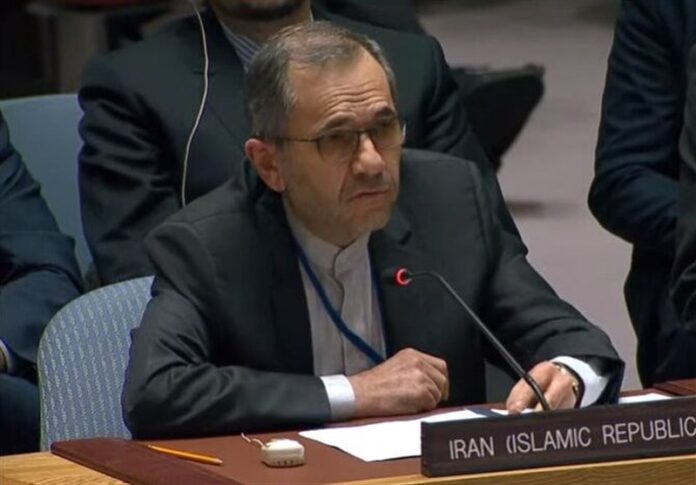
Takhte Ravanchi was speaking at the UN Security Council on Thursday night. He said hundreds of thousands of Afghans have fled their country while 600 thousand other have been internally displaced.

The Iranian envy also spoke of the urgent need to send relief aid to Afghanistan, saying the country is running out of food and 18.4 million Afghans need humanitarian assistance and that Iran ready to facilitate the dispatch of relief to the country.

Takhte Ravanchi said the US-led war killed 165 thousand Afghans including 33 thousand children from 2001 to 2021, adding that there must be accountability for war crimes in Afghanistan.

Takhte Ravanchi said Tehran is ready to host the next round of peace talks between Afghan groups. He declared Iran wants all Afghan ethnic groups and political factions to put Afghanistan’s national interests above those of a single group.

Takhte Ravanchi condemned what he called “deplorable fratricide” in the Panjshir valley, saying any side grabbing power in Afghanistan by force will fail to win international recognition. Takhte Ravanchi said Iran expects the Taliban to live up to their obligations in this regard because an inclusive Afghan government will have Iran’s full backing.

Takhte Ravanchi voiced concern over instability in Afghanistan and over the threat of terrorist groups, criminals, human traffickers and drug traffickers.

Ex official: Trump admin sought to mitigate US casualties in Iran missile attack

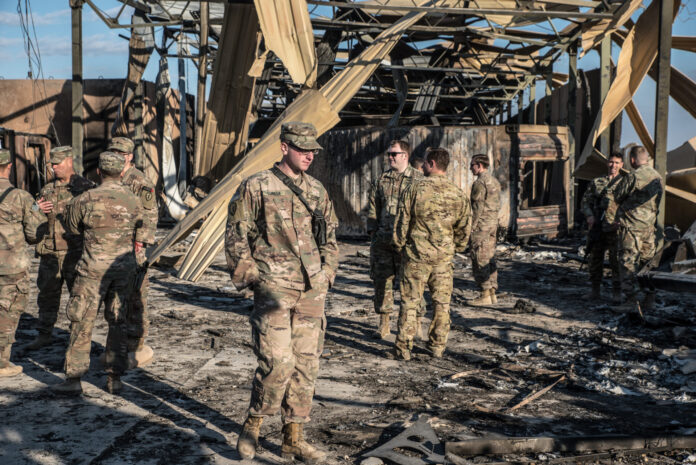
AIN AL-ASAD, IRAQ - JANUARY 13, 2019: U.S. officials stand near a damaged installation hit by Iranian airstrikes inside the Ain al-Asad base near Anbar, Iraq, on January 13, 2019. (Photo by Emilienne Malfatto/For The Washington Post)

Speaking to former CNN journalist Michelle Kosinski and the former head of Britain’s MI6 intelligence agency, Sir Richard Dearlove, on the podcast “One Decision”, Farah said that the Trump-era White House had asked the Defence Department to refrain from providing regular updates on US soldiers’ injuries.

Referring to the attack as the “heaviest several hours of my life”, Farah noted that the initial assertion by Trump about no casualties in the missile strike was true “at the time that we gave those facts to the president”, but the former president appeared to have gone “too far” in an attempt to show that “the Iranians were not successful in harming our targets in response”.

“And I think that it ended up glossing over what ended up being very significant injuries on US troops after the fact”, Farah continued, adding, “We did get pushback from the White House of, ‘Can you guys report this differently? Can it be every 10 days or two weeks, or we do a wrap-up after the fact?’ […] It was this drip, drip of quote unquote bad news”.

Farah, however, claimed that she did not yield to the pressure from the White House at the time, stating that she had the feeling that “transparency is always going to be your best friend in that field”.

The missile attack by Iran was carried out on January 8, 2020, five days after Trump ordered a drone strike that killed Soleimani when the latter was leaving Baghdad Airport.

When asked to estimate the potential seriousness of the injuries, Trump noted in February that he had “heard that they [US troops] had headaches” and estimated it was “nothing serious”.

The assassination of Soleimani drew massive backlash not only from Iran, but from many others. Particularly, former UN special rapporteur on extrajudicial, summary, and arbitrary killings, Agnes Callamard, stressed at the time that the killing was “unlawful” due to Washington’s failure to provide evidence of an imminent threat from Soleimani, a high-profile military official who was killed “on the territory of a third, non-belligerent country, and outside a known armed conflict”.

Tehran has denounced Soleimani’s assassination numerous times, dubbing the drone strike against the Islamic Revolution Guards Corps (IRGC) general an act of “state terrorism”. In July, Iran’s ambassador to the United Nations office in Geneva blasted the Joe Biden administration, noting that Washington’s “failure in holding accountable and bringing to justice the perpetrators behind the assassination is explicitly clear”.

Source: The Guardian

Iraq increases Iranians’ visa quota for Arbaeen rituals

Previously, Iraq said it would allow only 40 thousand Iranian nationals to attend the ceremonies in the Iraqi city of Karbala as part of measures to fight the Covid pandemic.

Baghdad now says Iraqi Prime Minister Mustafa al-Kazemi has instructed authorities to issue 80 thousand visas for Iranians, Iraqi website Shafaghnews reported.

This came after Iranian government officials held talks with the Iraqis over the matter.

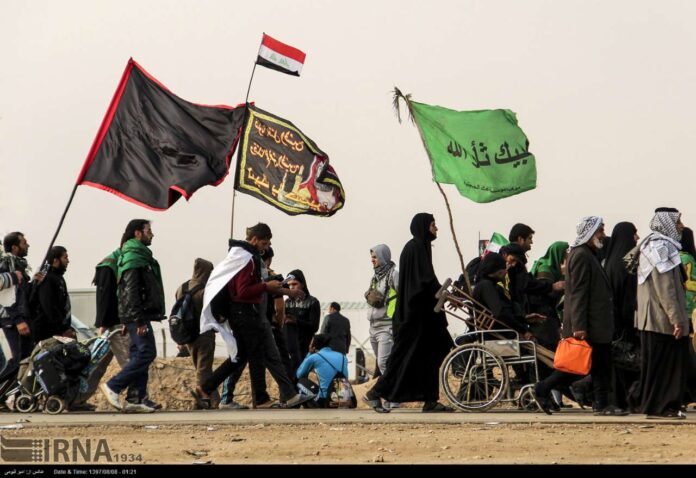
Arbaeen marks the 40th day after the martyrdom of the Prophet Muhammad’s grandson Imam Hussein along with 72 of his companions at the battle of Karbaka by the army of tyrant of the time, Yazid.

Each year, millions of Iranians join huge crowds at Imam Hussein’s shrine in Karbala to mark Arbaeen.

US sets up Persian Gulf drone task force amid tensions with Iran

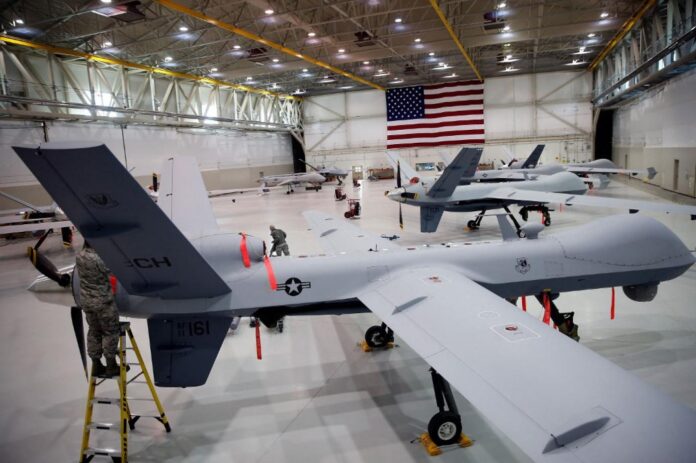
“The bottom line on why we’re doing this is so that we can develop and integrate unmanned systems and AI as a means to do two things,” said Vice Adm. Brad Cooper, commander of NAVCENT, US 5th Fleet and Combined Maritime Forces.

“One, enhance our maritime domain awareness, and two, increase deterrence,” he added.

Arch enemies Iran and Israel have exchanged accusations over responsibility for attacks targeting maritime vessels linked to each country in the waters of the Gulf since February.

Western countries claimed Iran was behind the drone attack on Israeli-linked MT Mercer Street tanker off Oman’s coast which killed two people on board. Tehran denies the allegations.

The maritime attacks come at a time when the nuclear talks between Iran and the US are stalled.

The US fifth fleet’s area of operations encompasses approximately 2.5 million square miles of water area and includes the Gulf, Gulf of Oman, Red Sea and parts of the Indian Ocean.

The Fifth Fleet is based Bahrain.

Source: Al-Arabiya

Official: Infections much higher than needed to end COVID pandemic in US

“In a country of our size, you can’t be hanging around and having 100,000 infections a day. You’ve got to get well below 10,000 before you start feeling comfortable,” Fauci told Axios.

According to the Centers for Disease Control and Prevention (CDC), the seven-day moving average for cases is currently around 140,000.

With current infection rates as high as they are, Fauci added, “That’s not even modestly good control … which means it’s a public health threat.” He added that “we’re still in pandemic mode.”

Fauci said that when enough people have become vaccinated “you’ll still get some people getting infected, but you’re not going to have it as a public health threat”.

As of Thursday, at least 73 percent of the US eligible population has received at least one dose of a COVID-19 vaccine, with 62.4 percent fully vaccinated. But just 53 percent of the country’s total population is fully vaccinated.

Fauci, the country’s leading expert on immunology, stated that while available vaccines have been effective, not enough people are taking steps to protect against the delta variant.

He also warned that the longer the pandemic is allowed to rage on, the higher the chances are that a “monster variant” that is stronger than the vaccines will occur.

Immunology experts have repeatedly stated that as long as large groups of people continue to contract COVID-19 and harbor it in their systems, mutations like the delta and more recently identified mu variant will occur, increasing the chances of a vaccine-resistant strain occurring.

President Joe Biden on Thursday admonished unvaccinated Americans and some elected officials for exacerbating the coronavirus pandemic as he laid out new, more aggressive steps his administration is taking to confront COVID-19, according to The Hill.

“We have the tools to combat COVID-19, and a distinct minority of Americans, supported by a distinct minority of elected officials, are keeping us from turning the corner. These pandemic politics, as I refer to it, are making people sick, causing unvaccinated people to die,” Biden said in prepared remarks from the State Dining Room of the White House.

“We cannot let these actions stand in the way of protecting the large majority of Americans who have done their part and want to get back to life as normal,” he added.

Biden captured the frustration expressed by vaccinated Americans, saying the US has made substantial progress against the virus but that the remaining 25 percent of eligible Americans — about 80 million people — who have not yet gotten vaccinated for COVID-19 threaten those gains.

He went on to address unvaccinated people directly, telling them that his patience is “wearing thin”.

“My message to unvaccinated Americans is this: What more is there to wait for? What more do you need to see? We have made vaccinations free, safe and convenient. The vaccine is FDA approved. Over 200 million Americans have gotten at least one shot. We’ve been patient but our patience is wearing thin and your refusal has cost all of us,” Biden continued, adding, “So please, do the right thing.”

Biden, without naming anyone, also accused some elected officials of “actively working to undermine the fight against COVID-19”.

“Instead of encouraging people to get vaccinated and mask up, they are ordering mobile morgues for the unvaccinated dying of COVID-19 in their communities,” Biden said, adding that “this is totally unacceptable”.

Biden’s remarks represented a notable shift in tone as he more sternly confronts Americans who have not got the COVID-19 vaccine and conservative politicians who have spouted anti-vaccine messages.

At one point on Thursday, Biden suggested the unvaccinated could reverse US gains in the economic recovery.

Biden also announced a new rule that will require all private employers with upwards of 100 employees to mandate weekly testing as well as plans to require vaccines for most federal workers and contractors. He also stated he would require employers to provide paid time off to get the vaccine and he urged large entertainment venues to require proof of vaccination or testing to gain entry.

Biden, who two months ago was celebrating the country’s progress against COVID-19 with a large outdoor Independence Day gathering, warned that the US faces a difficult road ahead against the highly contagious delta variant. At the same time, he stressed that the situation would not be as dire as last winter because of the strength of the vaccines in combating serious illness.

“We’re in a tough stretch and it could last for a while,” Biden noted.

COVID-19 cases have risen across the US after a low point earlier this year, as the delta variant has spread among unvaccinated Americans. In some areas of the country, COVID-19 patients have overwhelmed hospitals.