Wednesday, April 8, 2026
Home Blog Page 2419

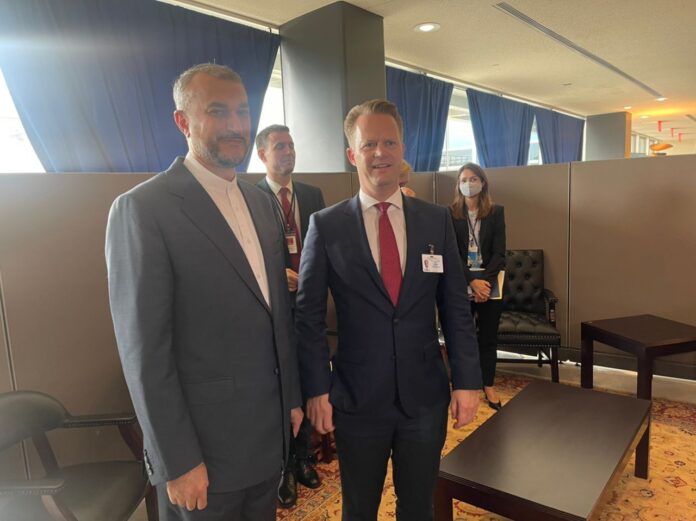
Iran FM: Presence of terrorists in Denmark unacceptable

The meeting was held on the sidelines of 76th session of the United Nations General Assembly on Thursday, during which the top Iranian diplomat called for the application of a single standard for dealing with terrorism.

Iran’s foreign minister referred to the new administration’s interest in establishing balanced relations with different countries, including those in Europe, and stressed the expansion of cooperation in various fields such as environment, renewable energy, medicine, veterinary and health, and appreciated Denmark’s production of pen insulin in Iran.

Amirabdollahian expressed readiness to review relations and design a path for further development of bilateral relations. He said activating the capacities of the joint commission of the two countries and reopening direct flights between Tehran and Copenhagen will help achieve those goals.

In another part of his talks with his Danish counterpart, the Iranian foreign minister referred to the sanctions and said the current U.S. administration has continued the path of the previous administration in imposing illegal and oppressive sanctions against the Iranian people, and this is contrary to the claims heard from Washington on a daily basis that they want to return to the JCPOA.

Of course, although these sanctions have caused limitations, they have failed to create obstacles in Iran’s creative trade relations with the outside world, and this is an opportunity for both countries, Amirabdollahian added.

Regarding Afghanistan, Amirabdollahian announced the Islamic Republic of Iran’s readiness to cooperate with Denmark to send the necessary aid to Afghan people.

The Danish foreign minister also expressed his desire to expand cooperation, saying that unilateral sanctions against the Iranian people are not acceptable adding that at the same time it is necessary to resume the Vienna talks as soon as possible.

Jeppe Kofod thanked Iran for its important measures in helping with the evacuation of foreign nationals from Afghanistan.

Denmark has allocated $80 million for humanitarian aid and a part of that must go to Afghan refugees, he said.

During the meeting, the Danish foreign minister emphasized his government’s support for regional consultations in the Persian Gulf.

It should be noted that Amirabdollahian also raised some consular issues regarding the problems of Iranian citizens in Denmark. The Danish foreign minister welcomed joint consular cooperation to solve the problems.

P5 foreign ministers discuss Iran nuclear deal

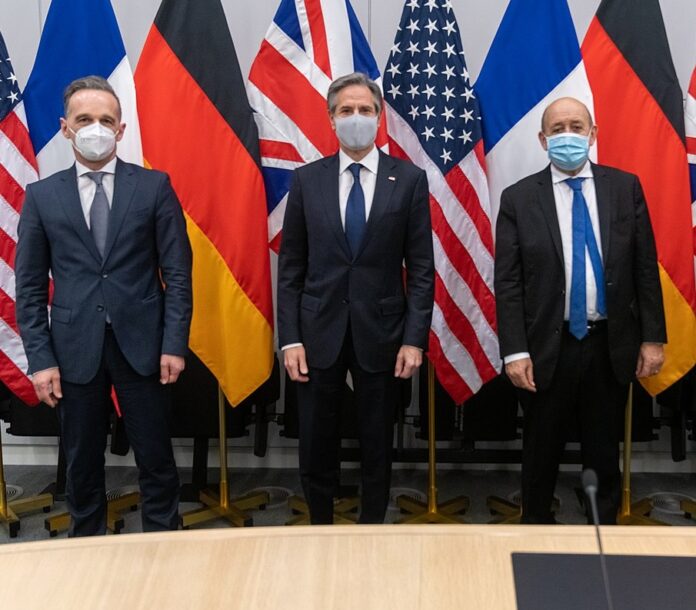
U.S. Secretary of State Antony Blinken convened with foreign ministers of China, Russia, France and the United Kingdom in their capacity as permanent members (P5) of the United Nations Security Council, State Department spokesperson Ned Price said.

The secretary emphasized the importance of constructive P5 action to maintain international peace and security, he added.

On Iran, Blinken reiterated the United States’ intent to pursue a path of meaningful diplomacy to achieve a mutual return to compliance with the JCPOA (Joint Comprehensive Plan of Action) and to address our full range of concerns with Iran.

On Afghanistan, Blinken called for P5 coordination to mitigate the emerging humanitarian crisis and prevent an economic collapse.

He noted the shared expectations for an inclusive and representative government.

The secretary of state encouraged the P5 to remain united on Afghanistan, to hold the Taliban accountable to its commitments, and to work together to ensure humanitarian access, respect for humanitarian principles, and availability of funds to meet humanitarian needs.

Source: The website of U.S. Department of State

Most Europeans say US in cold war with China, Russia

Based on polling in 12 member states, the study by the European Council on Foreign Relations (ECFR) found, however, that more Europeans believed the EU leadership in Brussels was a party to the new international conflict.

As fallout from the Aukus alliance continues and amid talk of rifts in the western alliance, the report’s authors said the polling data suggested there was a clear danger of a widening gulf between European public opinion and that in the US.

The responses also pointed to a “disconnect” between the policy ambitions of Brussels and EU member states, they said, adding that this could undermine an effective European response in the event of escalating tensions with China or Russia.

“The European public thinks there is a new cold war but they don’t want to have anything to do with it,” said Mark Leonard, a co-author of the study and ECFR director.

“Our polling reveals that a ‘cold war’ framing risks alienating European voters,” Leonard added.

If Washington and Brussels were preparing for an “‘all of society’, generational struggle against autocracies in Beijing and Moscow”, they could discover they “do not have a societal consensus behind them”, wrote Leonard and his co-author Ivan Krastev, an ECFR board member.

Across the 12 countries surveyed, 62% of respondents believed a new cold war was taking place between the US and China, and 59% saw a comparable schism emerging between the US and Russia.

Only 15% of Europeans felt their own country was in a new cold war with China, rising to 25% with Russia. The view that this was not the case was most pronounced in Hungary (91%), Bulgaria (80%), Portugal (79%) and Austria (78%).

More Europeans – although, at 31%, still a minority – felt the EU was now in a conflict with China, with 35% saying that was not the case. A plurality (44%) said they thought the EU was in a new cold war with Russia.

The authors stated Europeans may “finally be recognizing a common European foreign policy” when it comes to China and Russia, and seeing Brussels rather than their own national governments as “best placed to defend their interests and values”.

But they noted that Brussels’ hawkishness ran against the grain of opinion in Europe, and said a cold war framing was likely to repel more voters than it attracts. Policymakers would need to argue for a strong Atlantic alliance in a new way, they said.

“Unlike during the first cold war, [Europeans] do not see an immediate, existential threat to Europe’s neighbourhood or a sense of ideological cohesion within the free world,” Leonard continued, adding, “Politicians cannot longer rely on tensions with Russia and China to convince the electorate of the value of a strong Atlantic alliance. Instead, they need to make the case from European interests.”

Source: The Guardian

Venezuela calls for an end to US sanctions

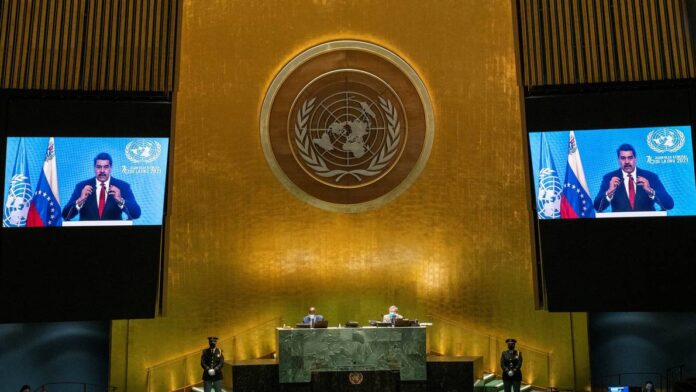
The US and its allies have targeted Venezuela with a “fierce campaign” of permanent and systematic aggression through economic and financial sanctions, Maduro said in a pre-recorded address to the 76th session of the United Nations General Assembly in New York on Wednesday.

“Financial accounts are being chased, gold has been seized and blocked from the legal international reserves of the Central Bank of Venezuela in London, billions of dollars in bank accounts have been seized and blocked in the United States, Europe and more,” he added.

The US has imposed several rounds of tough sanctions against Venezuela aimed at ousting Maduro and replacing him with its favored opposition figure Juan Guaido. The sanctions, which include illegal confiscation of Venezuelan assets abroad and an economic blockade, have caused enormous suffering to millions of people in the Latin American country.

“We ratify our request, our demand that all criminal sanctions against the Venezuelan economy, against Venezuelan society by the United States and by the governments of the European Union be lifted,” Maduro noted.

This comes as Caracas holds talks with representatives of Venezuela’s opposition in Mexico in a bid to have sanctions removed. The negotiations commenced after the two sides inked a document to reach a series of agreements leading to the holding of elections.

Separately on Wednesday, Caracas announced that it had asked the International Criminal Court (ICC) to investigate US sanctions as crimes against humanity and provided The Hague-based tribunal with evidence.

Venezuelan Vice President Delcy Rodriguez stated that two days earlier, the government had delivered to ICC’s chief prosecutor a dossier that reveals how US sanctions on Venezuela have affected people’s rights to health, food, and economic development.

She added that among the countries “illicitly” targeted by the US’ sanctions, Venezuela was fifth in the number of the “unilateral coercive measures” that it was enduring.

Back in February 2020, Caracas complained to the ICC that Washington’s unilateral measures against Venezuela constituted a crime against humanity.

Elsewhere in his remarks at the UN General Assembly on Wednesday, Maduro also called for a “new human community … free of hegemonic empires”.

The world “must be liberated from any hegemonies or any empires’ attempts at economic, financial, military or political domination; liberated from those who over centuries plundered, dominated, exploited and oppressed people throughout the world with their old, rapacious colonialism”, he continued.

“There are those who are today attempting to impose new forms of colonialism on our people, new forms of domination, looting, oppression and exploitation of people throughout the world,” Maduro added.

With the support of Mexican President Andrés Manuel Lopez Obrador and the special diplomatic aid of Norway, Russia, and the Netherlands, Venezuela is addressing a comprehensive agenda to advance in the social and economic recovery, he said.

In conclusion, Maduro noted that there was a necessity to build “a new world”, which must be free of hegemony and founded on the principles of multilateralism and international law.

“A new world that emerges from Africa, Asia, Latin America, and the Caribbean, and from the native peoples of the United States of America. A new world that is reborn to end the old hegemonies, to put an end to the pretense of some to become policemen and judges of all the peoples of the world,” he continued, noting that such a new world needed a new United Nations as well.

“Venezuela stands up with its own voice for that new world”, Maduro added.

Source: Press TV

Russia PM, Kremlin spokesman among those banned by US committee

Kremlin

The House Rules Committee has approved the amendment put forth by Representative Tom Malinowski (D-New Jersey), giving the Biden administration a six-month deadline to submit a report on whether any of the 35 individuals listed by name meet the criteria to be blacklisted under the Global Magnitsky Act, an anti-Russian sanctions law.

First on the list is Roman Abramovich, a Russian-Israeli businessman best known as the owner of the Premier League football club Chelsea. Other business figures on the list include VTB bank executives Denis Bortnikov and Andrey Kostin; businessmen Oleg Deripaska, Alisher Usmanov and Gennady Timchenko; Gazprom CEO Alexei Miller and Rosneft CEO Igor Sechin; as well as Transneft chairman Nikolai Tokarev.

A number of senior government officials are also mentioned by name: Prime Minister Mikhail Mishustin, Agriculture Minister Dmitry Patrushev, Health Minister Mikhail Murashko, and Deputy Defense Minister Andrei Kartapolov.

Targeting the Kremlin, the bill lists presidential press secretary Dmitry Peskov, presidential chief of staff Anton Vaino, and first deputy Sergei Kirienko.

Moscow Region Governor Andrey Vorobyev and Leningrad Region Governor Alexander Beglov were also on the list, along with Moscow Mayor Sergey Sobyanin, Central Election Commission head Ella Pamfilova, head of the federal prison service Alexander Kalashnikov, and chair of the state development corporation VEB Igor Shuvalov. So were the chiefs of the Federal Security Bureau (FSB) Alexander Bortnikov and the Investigative Committee (Sledkom) Alexander Bastrykin, and National Guard chief Viktor Zolotov.

A number of junior state and local officials were likewise listed, including the transport chief of the Economic Security Service, Victor Gavrilov, head of the Chelyabinsk FSB Dmitry Ivanov, Khimki district judge Elena Morozova, as well as police chief Igor Yanchuk, and Moscow chief prosecutor Denis Popov. The sanctions proposal also included former chief prosecutor general Yuri Chaika and former deputy justice minister Pavel Krasheninnikov.

In addition to government officials, the list included RT editor in chief Margarita Simonyan, Channel 1 CEO Konstantin Ernst, and TV talk show host Vladimir Solovyev.

Congressional staffer Paul Massaro described the proposal as an “amazing counter-kleptocracy national defense bill”. It is attached to the National Defense Authorization Act (NDAA), the must-pass bill to fund the US military, which is currently making its way through the House and the Senate.

Sanctions against any of the listed individuals would be based on the Global Magnitsky Act, a 2016 expansion of the 2012 law adopted by the US at the behest of international investor Bill Browder, who has sought to counter charges of tax evasion against him in Russia with claims of human rights violations by the Kremlin.

Peskov told the media on Thursday US legislators’ proposals for imposing sanctions against a number of Russian officials are nothing but an intra-parliamentary exercise, which has a long way before it will materialize.

“It’s an intra-parliamentary exercise. Before it can materialize and be activated it will have to go a very long way,” Peskov said.

“It is common knowledge that in various congressional commissions there are a tremendous number of people who have a very vague idea about Russian realities, but at the same time they fiercely hate our country,” he continued.

“Sooner or later, when such documents move on, they eventually end up in the hands of those who, while feeling a dislike towards our country, also possess some expert knowledge,” Peskov stated, adding, “For this reason, we believe it is premature to comment on such projects.”


Sources: RT, TASS

Russian, British top diplomats discuss Iran nuclear deal

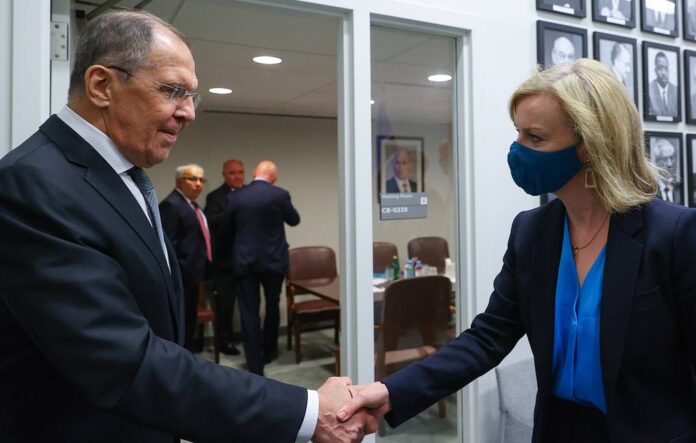
“They discussed the need for Iran to return to nuclear talks. They also discussed stability and security in Afghanistan, including the need for the Taliban to form an inclusive government. They looked forward to the COP26 conference in Glasgow in November,” a Foreign Office Spokesperson told TASS, commenting on the meeting’s outcome.

The diplomats held the meeting on the sidelines of the United Nations General Assembly. It was the first meeting between Lavrov and Truss, who was appointed as British foreign secretary last week in a cabinet reshuffle carried out by Prime Minister Boris Johnson.

The talks involving Iran and the five world powers (Russia, the United Kingdom, Germany, China, and France) on restoring the nuclear deal in its original form have been underway in Vienna since April. The agenda includes issues related to the lifting of US sanctions on Iran, Tehran’s implementation of its nuclear obligations and Washington’s return to the JCPOA. The nuclear deal’s participants are also holding separate consultations with the US, which don’t involve Iran. The delegations initially intended to wrap up the endeavor by late May.

Iranian Foreign Ministry Spokesman Saeed Khatibzadeh stated on Tuesday that the talks would resume in Vienna in the next few weeks.

Source: TASS

Iran Covid fatalities rise, 317 killed in 24 hours

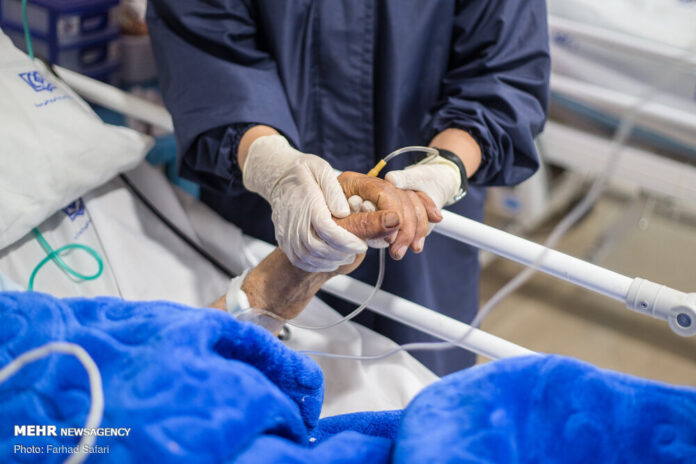
Iran’s latest daily death toll is up compared with Wednesday. But overall, the country has seen a downward trend in Covid deaths, infections and hospitalizations in recent days.

Covid kill count now stands at 118,508 while the total caseload is 5,493,591.

The Health Ministry announced on Thursday so far, 33,3243,104 Iranian have received the first dose of the Covid vaccine while 14,938,853 people have been fully inoculated.

The total number of jabs administered to citizens is 48,281,957.

Meanwhile, Iran’s President Ebrahim Raeisi has attended a meeting of Iran’s National Task force Against Coronavirus where he appreciated efforts to provide vaccine and accelerate the nationwide vaccination drive. Raeisi called on authorities to ensure the observance of health protocols and enforce rules at all airports and border crossings for foreign nationals.

He also urged them to inform people, in a timely manner, of any decisions or measures that are taken in order to reopen schools.

More than of 1.6 million Iranian first-graders rang in the new school year on Thursday with the classes being held on-line due to the pandemic.

China, Russia, Pakistan envoys meet Taliban officials

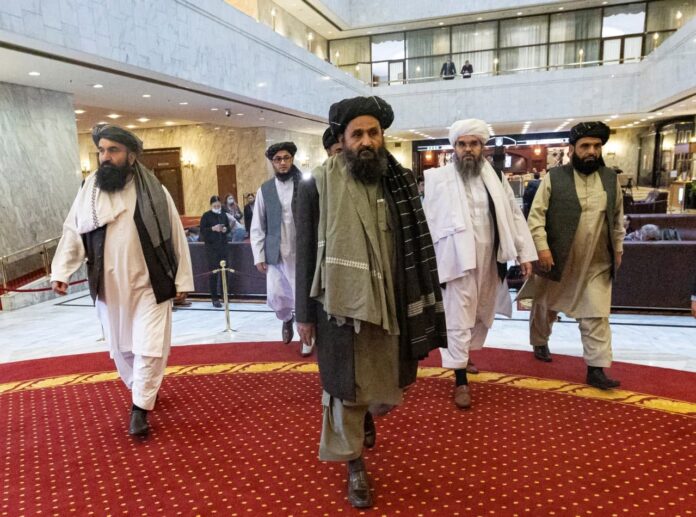
The envoys met with the acting prime minister of Afghanistan’s interim government, Mullah Muhammad Hassan Akhund, among other officials, Zhao Lijian, a spokesperson for the china’s foreign ministry, told a regular press briefing.

The officials discussed the recent development of the situation in Afghanistan, Zhao added. The meeting discussed inclusiveness, human rights, economics, humanism, and Afghanistan’s relations with neighboring nations, he added.

During their visit, the envoys also met with ex-Afghan President Hamid Karzai and head of the Afghan National Reconciliation Council Abdullah Abdullah, Zhao said. They talked about promoting peace and stability in Afghanistan, he added.

Yue reiterated China’s policy on not interfering in Afghanistan’s internal affairs, the spokesperson said. During his time in Kabul, the Chinese envoy said China has been playing a constructive role in the political solution of Afghan issues.

Source: CGTN

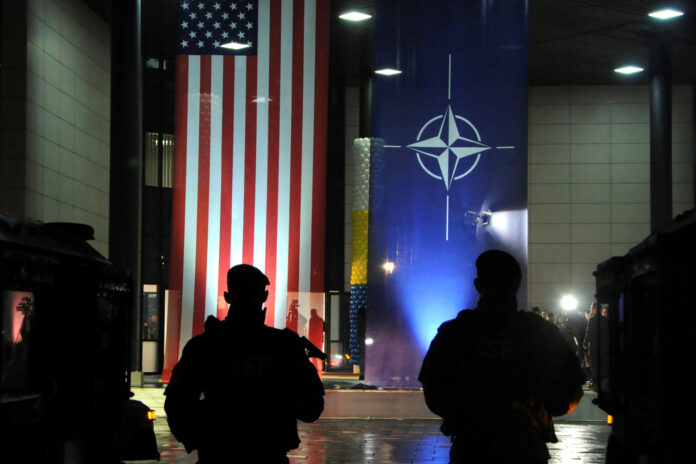
Russia: NATO ‘totally shocked’ by AUKUS

The move by Australia, the United Kingdom and the United States to create a security partnership surprised its NATO allies more than their potential adversaries, Russian Foreign Ministry Spokeswoman Maria Zakharova told the Soloviev Live YouTube channel on Wednesday.

“It came as a total surprise and a shock for NATO,” she pointed out, adding, “It came as an absolute surprise not for those whom the US, Australia and the UK call their opponents and whom they are collaborating against, but for their allies and the military and political blocs that the US and the UK are part of.”

“The developments that are unfolding around Australia, a seemingly a faraway land, what is happening there is not just interesting – though it is interesting indeed – but it also requires special attention from the political analyst community, including experts on international relations and military and strategic issues,” the Russian diplomat noted.

On September 15, Australia, the United Kingdom and the United States announced the formation of a new security pact called AUKUS. Australia particularly intends to use American technologies to build at least eight nuclear-powered submarines, the first of which will become operational in 2036, as well as to equip its armed forces with US-made cruise missiles.

The move broke an earlier defense deal inked with France, the biggest in Australia’s history. Paris slammed Canberra’s decision as “a stab in the back” and recalled its ambassadors from the US and Australia for consultations. France later expressed its determination to defend its interests during discussions of a trade agreement between the European Union and Australia.

Source: TASS

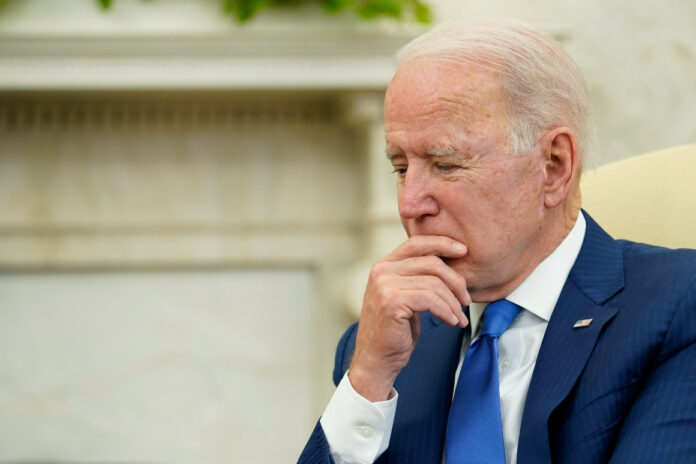
Republicans introduce articles of impeachment against Biden

Joe Biden

Ohio Republican Rep. Bob Gibbs introduced articles of impeachment against Biden. Republican Reps. Andy Biggs of Arizona and Brian Babin and Randy Weber of Texas signed on as co-sponsors of the impeachment resolution.

“I take this seriously. I don’t think it’s haphazard. I’m not trying to get media attention for myself,” Gibbs told The Washington Examiner in an interview.

“He’s done so much damage to this country in less than nine months, which is really scary,” he continued.

“He’s not capable of being commander in chief, and that’s obvious by the actions since Day One when he took the presidency back in January,” Gibbs said, adding, “Maybe something like this makes the White House think twice before they do some of this nonsense.”
Although the most recent Republican impeachment calls have centered on a chaotic withdrawal from Afghanistan, during which the U.S.-backed government fell and the Taliban retook power, Gibbs’s resolution includes three articles of impeachment that cover two other issues.

“We actually started working before the Afghanistan debacle because I was so upset” about the border and eviction situations, Gibbs said.

“Obviously, it’s not going to go anywhere with Speaker [Nancy] Pelosi,” Gibbs added, acknowledging the slim chances of impeachment while Democrats are in the majority.

But “it shows that there are some Republicans that think that this president needs to be impeached, he needs to be removed from office one way or another”, he added.

“At some point, they’re gonna be held accountable for their actions, and this is kind of putting them on notice,” Gibbs stated.

The first impeachment article in his resolution charges that Biden “violated his constitutional oath to faithfully execute the office of President” with his handling of migration on the U.S.-Mexico border. It cites his halting construction of the border wall, ending the policy that requires migrants seeking asylum to remain in Mexico, and releasing “thousands of migrants who entered the United States illegally without a date to appear in court for immigration”, including migrants who tested positive for COVID-19.

“If that isn’t violating his oath of office to protect American citizens, our safety, and our welfare, I don’t know what is,” Gibbs said.

Law enforcement encounters with people illegally crossing the southern border have reached record levels under the Biden administration. As a result, the Supreme Court last month effectively reinstated former President Donald Trump’s “remain in Mexico” policy implemented in January 2019. Migrants who presented themselves to federal law enforcement officers at border crossings and who were detained for sneaking over the border are both returned to Mexico if they seek asylum during the process.

The second article accuses Biden of violating the separation of powers by extending the federal moratorium on evictions “despite the clear warning from the U.S. Supreme Court” and “with no legislative directive from the U.S. Congress”.

In August, Biden attempted to extend a federal pause on evictions due to the coronavirus pandemic days after Congress could not extend it before the previous July 31 deadline. At the time, Biden acknowledged the “targeted” order might not pass “constitutional muster”. The Supreme Court later blocked the extension, saying Congress would have to enforce a federal pause on evictions to protect renters during the coronavirus pandemic.

The third and last impeachment article states that Biden “failed to act responsibly as Commander in Chief with regard to the withdrawal of United States forces from Afghanistan”.

“Who in their right mind takes troops out before they take out American citizens and our allies?” Gibbs added.
The move represents an escalation of Republican pushback against Biden amid various crises his administration faces, particularly due to a chaotic U.S. exit from Afghanistan.

A wave of Republicans called for Biden’s resignation, impeachment, or removal after 13 U.S. service members were killed in a Daesh suicide bomb outside the Kabul airport last month.

Yet, only a handful of Republicans have signed on to impeachment resolutions so far.

Georgia Republican Rep. Marjorie Taylor Greene introduced an impeachment resolution against Biden on his first full day in office for “abuse of power by enabling bribery” relating to his son, Hunter Biden. She followed that with two more impeachment resolutions in August: one concerning Biden’s extension of the eviction moratorium, which Republican Reps. Paul Gosar of Arizona and Mary Miller of Illinois co-sponsored, and another citing his handling of the Afghanistan withdrawal, which has seven Republican co-sponsors.

Earlier this month, Texas Republican Rep. Randy Weber also introduced an article of impeachment against Biden for abuse of power regarding the withdrawal of U.S. forces from Afghanistan, alleging Biden urged former Afghan President Ashraf Ghani to “falsely portray” progress in fighting the Taliban in a July 23 phone call. Biggs and Georgia Republican Rep. Jody Hice co-sponsored that resolution.

House Republican leadership has not endorsed or promised to impeach Biden over the chaotic Afghanistan withdrawal. But House Minority Leader Kevin McCarthy promised last month that there would be a “day of reckoning” for how Biden executed the withdrawal.

“We can take up anything that holds accountable for the actions that have been taken, the lies that have been given, the misdecisions that have put Americans in harm’s way, and the decision to leave Americans behind,” McCarthy stated in a press conference.

Source: The Washington Examiner