Sunday, December 21, 2025
Home Blog Page 2388

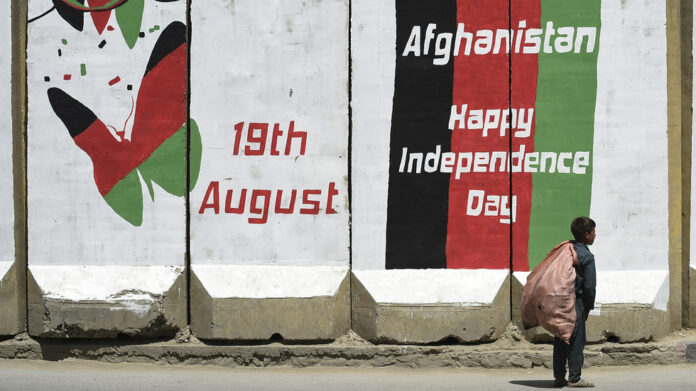
China urges lifting of sanctions against Afghanistan

Beijing on Thursday called for the lifting of sanctions against the Taliban-administered Afghanistan and urged the US not to use the frozen foreign exchange reserves of the war-torn country as a “bargaining chip” to exert political pressure on the hardline group.

Addressing the G20 Foreign Ministers via a video link, Chinese Foreign Minister Wang Yi also demanded the rushing of humanitarian assistance to Afghanistan without any delay.

“Humanitarian assistance is a task which brooks no delay. We should redouble efforts on and speed up the provision of assistance to Afghanistan, and in particular, lend the Afghan people a helping hand in time to address their most urgent needs,” a foreign ministry statement quoted Wang as saying.

He highlighted China’s decision to provide 200-million-yuan ($31 million) aid, which included three million vaccines.

Wang also asked the US to release frozen foreign reserves of Afghanistan’s central bank.

According to reports from Washington, the US has frozen about $9.5 billion in assets belonging to Afghanistan’s central bank and stopped shipments of cash to Kabul, in a bid to keep the Taliban government from accessing the money.

“The economic sanctions must be stopped. All kinds of unilateral sanctions or restrictions on Afghanistan should be lifted,” Wang asserted.

“Afghanistan’s foreign exchange reserves are its national assets, and should be owned by and used for the people, rather than being used as a bargaining chip to exert political pressure on Afghanistan,” he stated, adding that G20 members should actively take practical steps to help Afghanistan ease the current liquidity stress.

International financial institutions should also provide financing support for poverty reduction, sustainable development, livelihood and infrastructure projects in Afghanistan, he continued.

After the Taliban’s seizure of power in Afghanistan last month, the International Monetary Fund and the World Bank halted their aid to the war-torn country which largely depends upon the flow of foreign funds.

According to reports from Kabul, Afghanistan’s economy is near collapse even as the United Nations has made hectic efforts to galvanise global efforts to rush food and essential supplies.

The Taliban, whose interim government is yet to be recognised, have earlier asked the US to release its frozen foreign exchange reserves and threatened to take legal action.

“Both the symptoms and root causes of the refugee issue must be addressed. The United States and the North Atlantic Treaty Organization (NATO) countries should take the primary responsibility for solving the issue of Afghan refugees and migrants,” he noted.

Wang also spoke about China, Pakistan and Russia’s initiatives to step up contacts with the Taliban.

The special envoys of the three countries held talks with top Taliban officials in Kabul as well as former Afghanistan President Hamid Karzai and Abdullah Abdullah, President of the Council for National Reconciliation under the previous government, during the past two days.

“First Foreign Ministers’ Meeting on the Afghan Issue among the Neighbouring Countries of Afghanistan and the Informal Meeting of Foreign Ministers of China, Russia, Pakistan and Iran on the Afghan Issue reached a consensus, sending a clear signal of creating a favourable external environment for the peaceful reconstruction of Afghanistan,” Wang said.

Also, the world community support the efforts of Afghanistan “eventually building a broad and inclusive political structure which respects the basic rights of minority groups, women and children, and pursues a foreign policy of peace advocating good neighbourliness with all countries, especially with neighbouring countries”, he added.

The counter-terrorism cooperation needs to be deepened, he added.

“Afghanistan must earnestly honour its commitments by making a clean break with and resolutely fighting all kinds of international terrorist forces,” Wang said.

He stated the international community should build a united front against terrorism, oppose double standards and selective counter-terrorism, and prevent Afghanistan from becoming a breeding ground and shelter for terrorism again.

“Afghanistan should make its administration more inclusive and predictable, and the international community should work in a down-to-earth manner to help Afghanistan accelerate reconstruction so as to fundamentally reduce the number of new refugees and migrants,” he continued.

Source: NDTV
Iran ready to reconstruct liberated Azeri areas

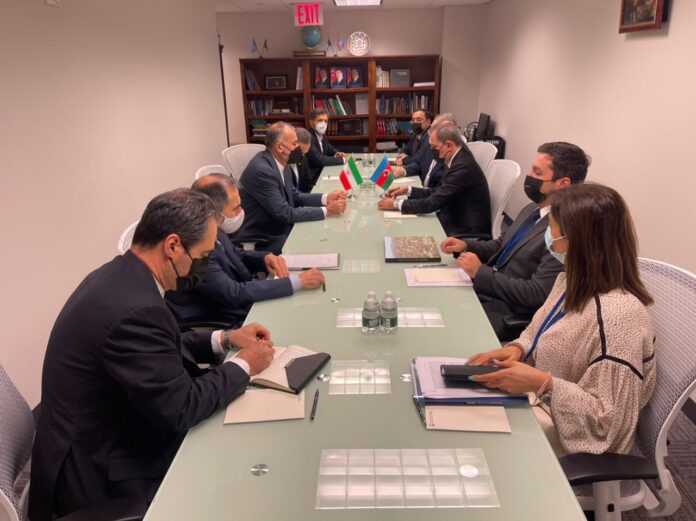
Hossein Amirabdollahian called the reconstruction of the liberated areas a ground for extensive cooperation between the two countries.

The Iranian Foreign Minister continued his Thursday meetings on the sidelines of the UN General Assembly and discussed bilateral relations with Jeyhun Bayramov, the foreign minister of Azerbaijan Republic.

At the beginning of the meeting, the Azeri foreign minister welcomed the holding of a three-way meeting between Iran, Turkey and the Republic of Azerbaijan in Tehran.

Bayramov described the relations between the two countries as having very positive dynamics and going in the right direction. He also thanked Iran for its support for the territorial integrity of the Republic of Azerbaijan. Emphasizing his country’s readiness to cooperate with the Islamic Republic of Iran in all fields, including political, economic, trade and cultural spheres, the Azeri foreign minister said that on behalf of the Republic of Azerbaijan, Shahin Mustafayev is ready to contact his Iranian counterpart within the two countries’ joint commission. He also said the Azerbaijan Republic is ready to pursue joint projects in the Caspian Sea with Iran, calling for regular interactions and consultations at various levels.

The Iranian foreign minister also said relations between Iran and the Republic of Azerbaijan are highly important and expressed hope that the previous agreements would be implemented. Amirabdollahian noted that the new Iranian government has given special priority to relations with neighbors.

Amirabdollahian said the two countries supported each other in international and regional forums and stressed the need to maintain this spirit. He also called the commonalities of the two countries deep and diverse and reminded that the Islamic Republic of Iran has always supported the territorial integrity of the Republic of Azerbaijan.

The Iranian foreign minister also noted that important projects and cooperation in various fields such as electricity, gas, dam construction, trade and transit, including the Astara railway terminal and cooperation between the private and public sectors of Iran and Azerbaijan Republic have been defined and will be pursued by the two sides.

He also stressed that some third parties should not be allowed to affect the good relations between the two countries.

The foreign minister further discussed with his Azerbaijani counterpart the facilitation of transit and traffic of Iranian trucks, as well as some consular issues, including two Iranian drivers detained by the Azerbaijani police. The two top diplomats agreed to resolve this issue through contacts between the two sides.

Iran FM: Sanctions a terrorism tool, UNGA must stand against US unilateralism

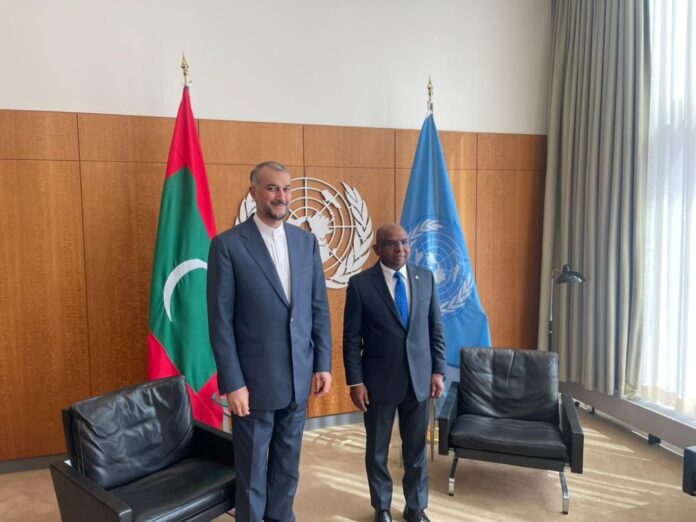
The meeting between Hoseein Amirabdollahian and Abdulla Shahid took place on Thursday on the fringes of the assembly’s 76th session in New York.

Amirabdollahian congratulated Shahid on his appointment as the president of the UN General Assembly and invited him to visit Tehran.

Referring to the importance of the role of the United Nations, the Iranian foreign minister emphasized the support of the Islamic Republic for UN missions and the mission of the president of the General Assembly, and wished him success in his tasks, including the fight against terrorism.

Noting that terrorism is today plaguing the world, Amirabdollahian said the assassination of General Qassem Soleimani, the great general of peace, by the United States on Iraqi soil is one of the most blatant manifestations of this terrorism.

Abdollahian said a legal and international committee has been set up inside Iran to follow up on the assassination with the aim of bringing the perpetrators of this assassination to justice, but the United Nations certainly has an important role to play in this regard.

During the meeting, the top Iranian diplomat touched on the constructive role of the Islamic Republic of Iran in cooperating with the regional governments in the fight against terrorism, from Lebanon to Iraq and Afghanistan.

He expressed regret that the United States, despite its slogans, has linked economic terrorism to health and medicine terrorism, and stressed the need for a serious response from the international community to this approach.

The president of the UN General Assembly also congratulated Amirabdollahian’s appointment as foreign minister and described as unforgettable his visit to Tehran to attend the summit of the Organization of Islamic Cooperation in 1996.

Shahid described the multilateral system as the only path and choice for the international community, saying that the coronavirus pandemic showed how interconnected countries are and that no one will be safe until everyone is safe.

Shahid called the United Nations and its General Assembly the best mechanism ever developed in the field of multilateralism. He also stressed that the General Assembly is making every effort to be successful in fulfilling its missions.

Iran FM: Presence of terrorists in Denmark unacceptable

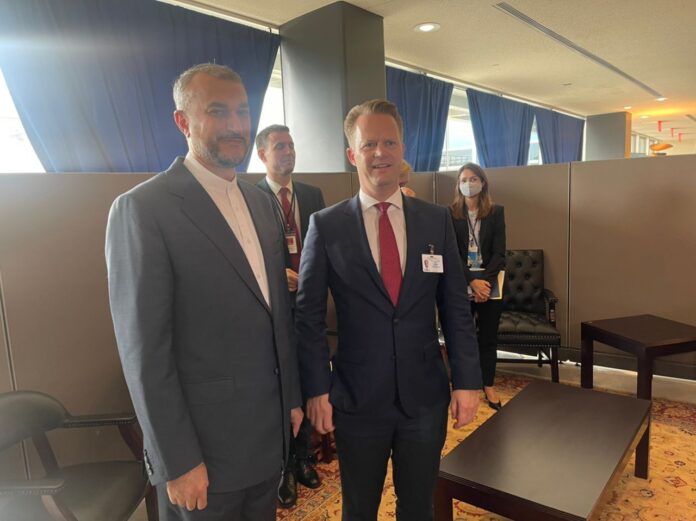
The meeting was held on the sidelines of 76th session of the United Nations General Assembly on Thursday, during which the top Iranian diplomat called for the application of a single standard for dealing with terrorism.

Iran’s foreign minister referred to the new administration’s interest in establishing balanced relations with different countries, including those in Europe, and stressed the expansion of cooperation in various fields such as environment, renewable energy, medicine, veterinary and health, and appreciated Denmark’s production of pen insulin in Iran.

Amirabdollahian expressed readiness to review relations and design a path for further development of bilateral relations. He said activating the capacities of the joint commission of the two countries and reopening direct flights between Tehran and Copenhagen will help achieve those goals.

In another part of his talks with his Danish counterpart, the Iranian foreign minister referred to the sanctions and said the current U.S. administration has continued the path of the previous administration in imposing illegal and oppressive sanctions against the Iranian people, and this is contrary to the claims heard from Washington on a daily basis that they want to return to the JCPOA.

Of course, although these sanctions have caused limitations, they have failed to create obstacles in Iran’s creative trade relations with the outside world, and this is an opportunity for both countries, Amirabdollahian added.

Regarding Afghanistan, Amirabdollahian announced the Islamic Republic of Iran’s readiness to cooperate with Denmark to send the necessary aid to Afghan people.

The Danish foreign minister also expressed his desire to expand cooperation, saying that unilateral sanctions against the Iranian people are not acceptable adding that at the same time it is necessary to resume the Vienna talks as soon as possible.

Jeppe Kofod thanked Iran for its important measures in helping with the evacuation of foreign nationals from Afghanistan.

Denmark has allocated $80 million for humanitarian aid and a part of that must go to Afghan refugees, he said.

During the meeting, the Danish foreign minister emphasized his government’s support for regional consultations in the Persian Gulf.

It should be noted that Amirabdollahian also raised some consular issues regarding the problems of Iranian citizens in Denmark. The Danish foreign minister welcomed joint consular cooperation to solve the problems.

P5 foreign ministers discuss Iran nuclear deal

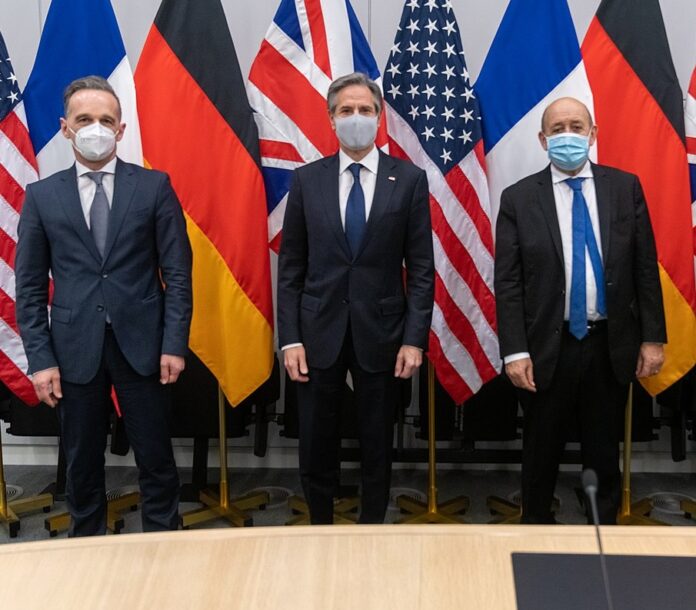
U.S. Secretary of State Antony Blinken convened with foreign ministers of China, Russia, France and the United Kingdom in their capacity as permanent members (P5) of the United Nations Security Council, State Department spokesperson Ned Price said.

The secretary emphasized the importance of constructive P5 action to maintain international peace and security, he added.

On Iran, Blinken reiterated the United States’ intent to pursue a path of meaningful diplomacy to achieve a mutual return to compliance with the JCPOA (Joint Comprehensive Plan of Action) and to address our full range of concerns with Iran.

On Afghanistan, Blinken called for P5 coordination to mitigate the emerging humanitarian crisis and prevent an economic collapse.

He noted the shared expectations for an inclusive and representative government.

The secretary of state encouraged the P5 to remain united on Afghanistan, to hold the Taliban accountable to its commitments, and to work together to ensure humanitarian access, respect for humanitarian principles, and availability of funds to meet humanitarian needs.

Source: The website of U.S. Department of State

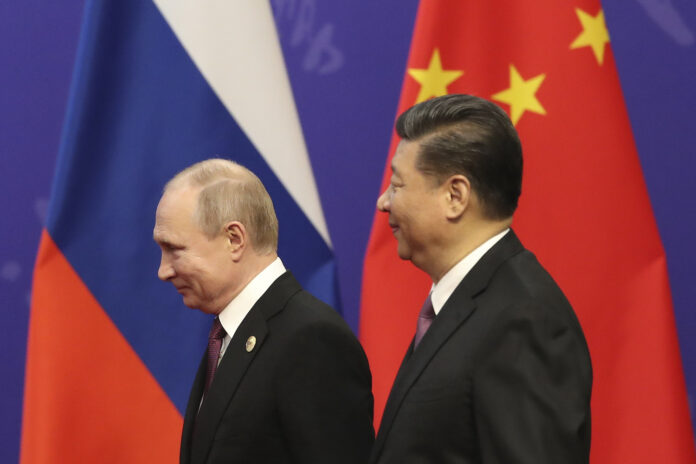
Most Europeans say US in cold war with China, Russia

Based on polling in 12 member states, the study by the European Council on Foreign Relations (ECFR) found, however, that more Europeans believed the EU leadership in Brussels was a party to the new international conflict.

As fallout from the Aukus alliance continues and amid talk of rifts in the western alliance, the report’s authors said the polling data suggested there was a clear danger of a widening gulf between European public opinion and that in the US.

The responses also pointed to a “disconnect” between the policy ambitions of Brussels and EU member states, they said, adding that this could undermine an effective European response in the event of escalating tensions with China or Russia.

“The European public thinks there is a new cold war but they don’t want to have anything to do with it,” said Mark Leonard, a co-author of the study and ECFR director.

“Our polling reveals that a ‘cold war’ framing risks alienating European voters,” Leonard added.

If Washington and Brussels were preparing for an “‘all of society’, generational struggle against autocracies in Beijing and Moscow”, they could discover they “do not have a societal consensus behind them”, wrote Leonard and his co-author Ivan Krastev, an ECFR board member.

Across the 12 countries surveyed, 62% of respondents believed a new cold war was taking place between the US and China, and 59% saw a comparable schism emerging between the US and Russia.

Only 15% of Europeans felt their own country was in a new cold war with China, rising to 25% with Russia. The view that this was not the case was most pronounced in Hungary (91%), Bulgaria (80%), Portugal (79%) and Austria (78%).

More Europeans – although, at 31%, still a minority – felt the EU was now in a conflict with China, with 35% saying that was not the case. A plurality (44%) said they thought the EU was in a new cold war with Russia.

The authors stated Europeans may “finally be recognizing a common European foreign policy” when it comes to China and Russia, and seeing Brussels rather than their own national governments as “best placed to defend their interests and values”.

But they noted that Brussels’ hawkishness ran against the grain of opinion in Europe, and said a cold war framing was likely to repel more voters than it attracts. Policymakers would need to argue for a strong Atlantic alliance in a new way, they said.

“Unlike during the first cold war, [Europeans] do not see an immediate, existential threat to Europe’s neighbourhood or a sense of ideological cohesion within the free world,” Leonard continued, adding, “Politicians cannot longer rely on tensions with Russia and China to convince the electorate of the value of a strong Atlantic alliance. Instead, they need to make the case from European interests.”

Source: The Guardian

Venezuela calls for an end to US sanctions

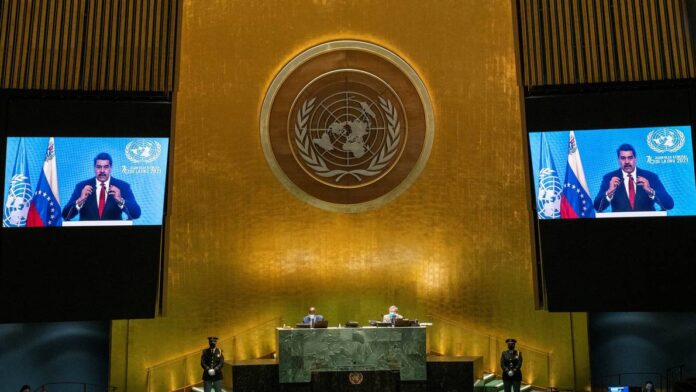
The US and its allies have targeted Venezuela with a “fierce campaign” of permanent and systematic aggression through economic and financial sanctions, Maduro said in a pre-recorded address to the 76th session of the United Nations General Assembly in New York on Wednesday.

“Financial accounts are being chased, gold has been seized and blocked from the legal international reserves of the Central Bank of Venezuela in London, billions of dollars in bank accounts have been seized and blocked in the United States, Europe and more,” he added.

The US has imposed several rounds of tough sanctions against Venezuela aimed at ousting Maduro and replacing him with its favored opposition figure Juan Guaido. The sanctions, which include illegal confiscation of Venezuelan assets abroad and an economic blockade, have caused enormous suffering to millions of people in the Latin American country.

“We ratify our request, our demand that all criminal sanctions against the Venezuelan economy, against Venezuelan society by the United States and by the governments of the European Union be lifted,” Maduro noted.

This comes as Caracas holds talks with representatives of Venezuela’s opposition in Mexico in a bid to have sanctions removed. The negotiations commenced after the two sides inked a document to reach a series of agreements leading to the holding of elections.

Separately on Wednesday, Caracas announced that it had asked the International Criminal Court (ICC) to investigate US sanctions as crimes against humanity and provided The Hague-based tribunal with evidence.

Venezuelan Vice President Delcy Rodriguez stated that two days earlier, the government had delivered to ICC’s chief prosecutor a dossier that reveals how US sanctions on Venezuela have affected people’s rights to health, food, and economic development.

She added that among the countries “illicitly” targeted by the US’ sanctions, Venezuela was fifth in the number of the “unilateral coercive measures” that it was enduring.

Back in February 2020, Caracas complained to the ICC that Washington’s unilateral measures against Venezuela constituted a crime against humanity.

Elsewhere in his remarks at the UN General Assembly on Wednesday, Maduro also called for a “new human community … free of hegemonic empires”.

The world “must be liberated from any hegemonies or any empires’ attempts at economic, financial, military or political domination; liberated from those who over centuries plundered, dominated, exploited and oppressed people throughout the world with their old, rapacious colonialism”, he continued.

“There are those who are today attempting to impose new forms of colonialism on our people, new forms of domination, looting, oppression and exploitation of people throughout the world,” Maduro added.

With the support of Mexican President Andrés Manuel Lopez Obrador and the special diplomatic aid of Norway, Russia, and the Netherlands, Venezuela is addressing a comprehensive agenda to advance in the social and economic recovery, he said.

In conclusion, Maduro noted that there was a necessity to build “a new world”, which must be free of hegemony and founded on the principles of multilateralism and international law.

“A new world that emerges from Africa, Asia, Latin America, and the Caribbean, and from the native peoples of the United States of America. A new world that is reborn to end the old hegemonies, to put an end to the pretense of some to become policemen and judges of all the peoples of the world,” he continued, noting that such a new world needed a new United Nations as well.

“Venezuela stands up with its own voice for that new world”, Maduro added.

Source: Press TV

Russia PM, Kremlin spokesman among those banned by US committee

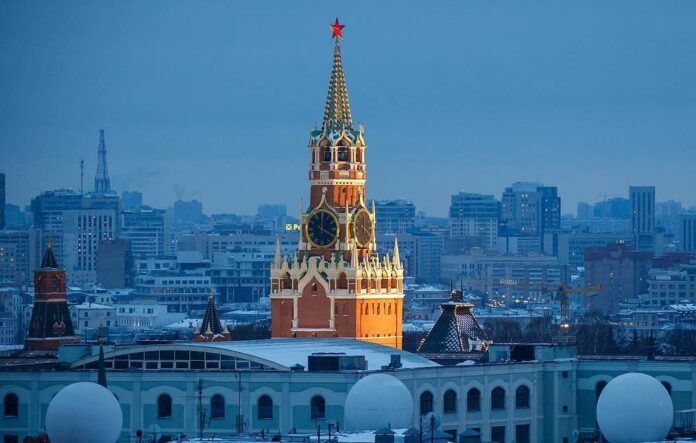
Kremlin

The House Rules Committee has approved the amendment put forth by Representative Tom Malinowski (D-New Jersey), giving the Biden administration a six-month deadline to submit a report on whether any of the 35 individuals listed by name meet the criteria to be blacklisted under the Global Magnitsky Act, an anti-Russian sanctions law.

First on the list is Roman Abramovich, a Russian-Israeli businessman best known as the owner of the Premier League football club Chelsea. Other business figures on the list include VTB bank executives Denis Bortnikov and Andrey Kostin; businessmen Oleg Deripaska, Alisher Usmanov and Gennady Timchenko; Gazprom CEO Alexei Miller and Rosneft CEO Igor Sechin; as well as Transneft chairman Nikolai Tokarev.

A number of senior government officials are also mentioned by name: Prime Minister Mikhail Mishustin, Agriculture Minister Dmitry Patrushev, Health Minister Mikhail Murashko, and Deputy Defense Minister Andrei Kartapolov.

Targeting the Kremlin, the bill lists presidential press secretary Dmitry Peskov, presidential chief of staff Anton Vaino, and first deputy Sergei Kirienko.

Moscow Region Governor Andrey Vorobyev and Leningrad Region Governor Alexander Beglov were also on the list, along with Moscow Mayor Sergey Sobyanin, Central Election Commission head Ella Pamfilova, head of the federal prison service Alexander Kalashnikov, and chair of the state development corporation VEB Igor Shuvalov. So were the chiefs of the Federal Security Bureau (FSB) Alexander Bortnikov and the Investigative Committee (Sledkom) Alexander Bastrykin, and National Guard chief Viktor Zolotov.

A number of junior state and local officials were likewise listed, including the transport chief of the Economic Security Service, Victor Gavrilov, head of the Chelyabinsk FSB Dmitry Ivanov, Khimki district judge Elena Morozova, as well as police chief Igor Yanchuk, and Moscow chief prosecutor Denis Popov. The sanctions proposal also included former chief prosecutor general Yuri Chaika and former deputy justice minister Pavel Krasheninnikov.

In addition to government officials, the list included RT editor in chief Margarita Simonyan, Channel 1 CEO Konstantin Ernst, and TV talk show host Vladimir Solovyev.

Congressional staffer Paul Massaro described the proposal as an “amazing counter-kleptocracy national defense bill”. It is attached to the National Defense Authorization Act (NDAA), the must-pass bill to fund the US military, which is currently making its way through the House and the Senate.

Sanctions against any of the listed individuals would be based on the Global Magnitsky Act, a 2016 expansion of the 2012 law adopted by the US at the behest of international investor Bill Browder, who has sought to counter charges of tax evasion against him in Russia with claims of human rights violations by the Kremlin.

Peskov told the media on Thursday US legislators’ proposals for imposing sanctions against a number of Russian officials are nothing but an intra-parliamentary exercise, which has a long way before it will materialize.

“It’s an intra-parliamentary exercise. Before it can materialize and be activated it will have to go a very long way,” Peskov said.

“It is common knowledge that in various congressional commissions there are a tremendous number of people who have a very vague idea about Russian realities, but at the same time they fiercely hate our country,” he continued.

“Sooner or later, when such documents move on, they eventually end up in the hands of those who, while feeling a dislike towards our country, also possess some expert knowledge,” Peskov stated, adding, “For this reason, we believe it is premature to comment on such projects.”


Sources: RT, TASS

Russian, British top diplomats discuss Iran nuclear deal

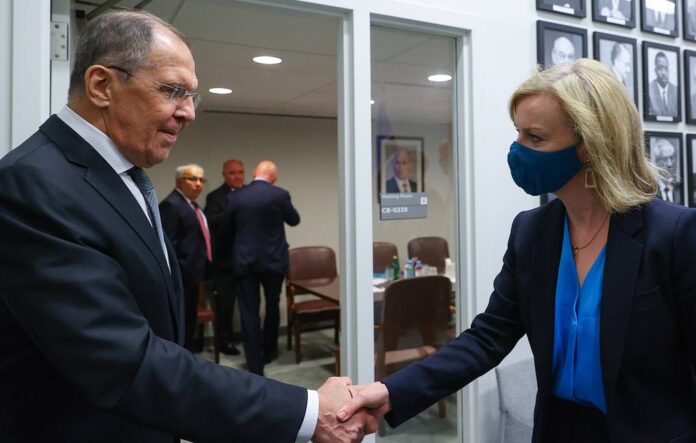
“They discussed the need for Iran to return to nuclear talks. They also discussed stability and security in Afghanistan, including the need for the Taliban to form an inclusive government. They looked forward to the COP26 conference in Glasgow in November,” a Foreign Office Spokesperson told TASS, commenting on the meeting’s outcome.

The diplomats held the meeting on the sidelines of the United Nations General Assembly. It was the first meeting between Lavrov and Truss, who was appointed as British foreign secretary last week in a cabinet reshuffle carried out by Prime Minister Boris Johnson.

The talks involving Iran and the five world powers (Russia, the United Kingdom, Germany, China, and France) on restoring the nuclear deal in its original form have been underway in Vienna since April. The agenda includes issues related to the lifting of US sanctions on Iran, Tehran’s implementation of its nuclear obligations and Washington’s return to the JCPOA. The nuclear deal’s participants are also holding separate consultations with the US, which don’t involve Iran. The delegations initially intended to wrap up the endeavor by late May.

Iranian Foreign Ministry Spokesman Saeed Khatibzadeh stated on Tuesday that the talks would resume in Vienna in the next few weeks.

Source: TASS

Iran Covid fatalities rise, 317 killed in 24 hours

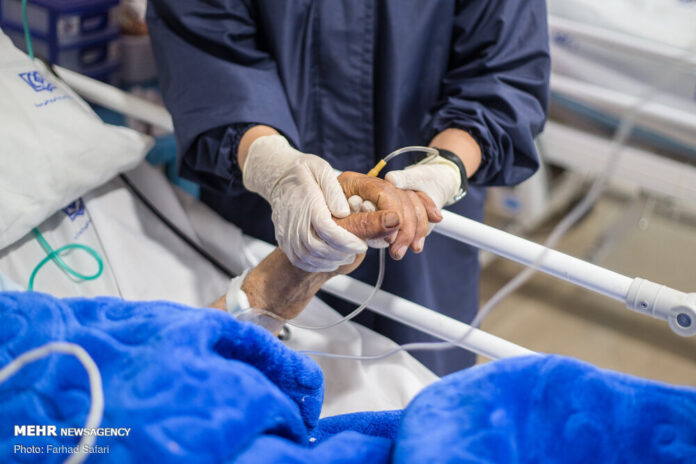
Iran’s latest daily death toll is up compared with Wednesday. But overall, the country has seen a downward trend in Covid deaths, infections and hospitalizations in recent days.

Covid kill count now stands at 118,508 while the total caseload is 5,493,591.

The Health Ministry announced on Thursday so far, 33,3243,104 Iranian have received the first dose of the Covid vaccine while 14,938,853 people have been fully inoculated.

The total number of jabs administered to citizens is 48,281,957.

Meanwhile, Iran’s President Ebrahim Raeisi has attended a meeting of Iran’s National Task force Against Coronavirus where he appreciated efforts to provide vaccine and accelerate the nationwide vaccination drive. Raeisi called on authorities to ensure the observance of health protocols and enforce rules at all airports and border crossings for foreign nationals.

He also urged them to inform people, in a timely manner, of any decisions or measures that are taken in order to reopen schools.

More than of 1.6 million Iranian first-graders rang in the new school year on Thursday with the classes being held on-line due to the pandemic.