Saturday, December 27, 2025
Home Blog Page 238

Spox: Iran’s nuclear industry has deep roots, to recover from attacks

Iran Nuclear Program

Kamalvandi stated that such attacks cannot cripple a homegrown industry with strong foundations.

“Our nuclear industry is rooted in the country. Anything with deep roots cannot be damaged by pressure or aggression—it will flourish again,” he asserted.

He emphasized that despite the recent strikes on key facilities in Fordow, Natanz, and Isfahan in the early hours of June 21, the Islamic Republic’s scientific and technical capacities remain intact, and the development of the peaceful nuclear program will continue without interruption.

Earlier, Kamalvandi had responded firmly to the attacks, affirming that Iran’s nuclear progress cannot be uprooted.

“Given our capabilities and infrastructure, the growth of this industry is inevitable,” he said.

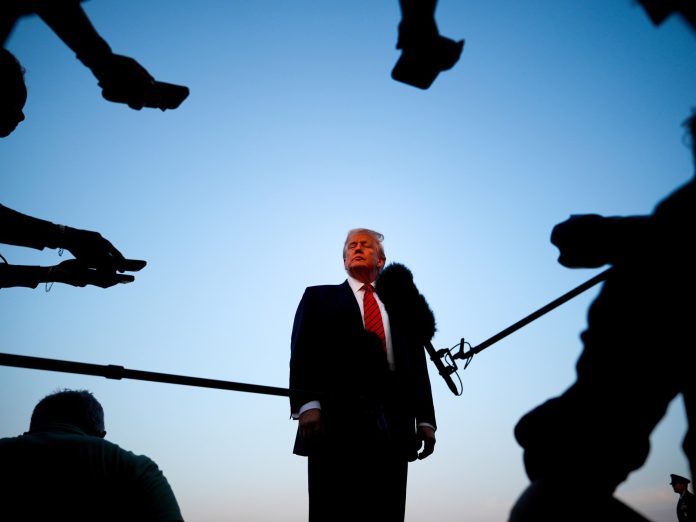
The U.S. President had claimed the attacks were aimed at halting Iran’s enrichment capabilities and that all of iran’s nuclear installations were destroyed. However, Iranian officials maintain that the peaceful nature and indigenous strength of the program make it impervious to such military aggression.

Iran’s senior cleric urges Pope to speak out against Gaza crimes

Gaza War

Highlighting the severity of the situation, Ayatollah Nouri Hamedani described Gaza as a “besieged land that has become a global symbol of human suffering in the face of oppression.”

He condemned the complete blockade imposed by the Zionist regime, which has resulted in widespread hunger, thirst, and medical shortages, especially among children and civilians.

“The deliberate deprivation of an entire population from food, water, and medicine is not only immoral and inhumane,” he wrote, “but also constitutes a war crime under established principles of international law.”

Calling the continued denial of humanitarian aid a blatant violation of both divine and secular norms, Ayatollah Nouri Hamedani urged the Pope and all other religious leaders to raise their voices against the atrocities in Gaza.

He emphasized that it is the duty of all free people, religious institutions, and human rights organizations to defend the oppressed and demand accountability for these crimes.

He expressed hope that religious leaders would play an effective role in preventing further atrocities against the Palestinian people.

Taliban committing ‘rights violations’ against Afghan returnees: UN

Taliban

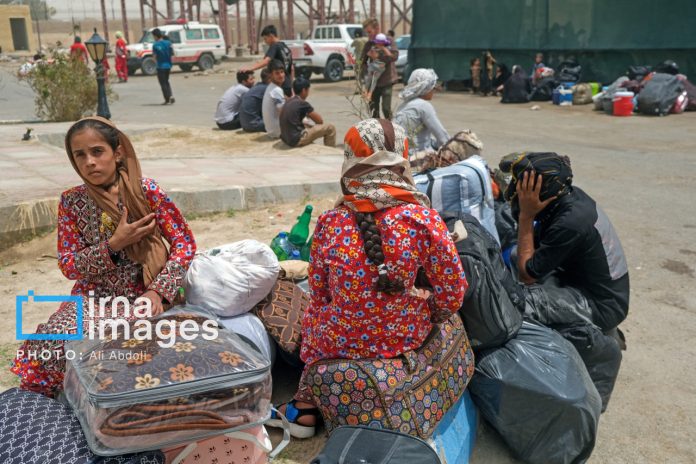
Large-scale deportation campaigns launched by Iran and Pakistan have forced millions of Afghans to return to Afghanistan, including more than 1.9 million people so far in 2025, the overwhelming majority from Iran.

“People returning to the country who were at particular risk of reprisals and other human rights violations by the de facto (Taliban) authorities were women and girls, individuals affiliated with the former government and its security forces, media workers and civil society,” the UN said in a statement accompanying the release of the report.

“These violations have included torture and ill-treatment, arbitrary arrest and detention, and threats to personal security.”

The UN’s refugee agency (UNHCR) recently estimated that up to three million people could return to Afghanistan in 2025, to a country facing a severe humanitarian crisis.

The report by the UN Assistance Mission in Afghanistan and the UN Human Rights Office was based on interviews with 49 returned Afghans.

It said violations have been committed against Afghans “based on their specific profile”, including women, media workers, and members of civil society, as well as individuals affiliated with the former foreign-backed government that fell in 2021.

The Taliban government has previously denied allegations of abuse, having declared an amnesty against those who worked for NATO forces and the former government during their two-decade conflict against the Taliban’s insurgency.

“Nobody should be sent back to a country where they face risk of persecution on account of their identity or personal history,” UN rights chief Volker Turk said in a statement earlier this month.

“In Afghanistan, this is even more pronounced for women and girls, who are subjected to a range of measures that amount to persecution on the basis of their gender alone,” he added.

Over the past four years, women have been increasingly isolated from public life by the Taliban authorities, which have banned them from universities, public parks, gyms and beauty salons, in what the UN has denounced as “gender apartheid”.

The Taliban government says that their interpretation of Islamic law “guarantees” everyone’s rights and that allegations of discrimination are “unfounded”.

Neighbouring Tajikistan has followed Islamabad and Tehran’s example by announcing its intention to expel Afghans.

Since July 8, at least 377 have been deported, the UNHCR told AFP.

According to the UN, the recent increase in number of returnees has created a ‘multi-layered human rights crisis’ and the organisation called last week for an “immediate halt” to forcible returns.

Passenger aircraft with 49 people on board crashes in Russia

The Antonov An-24 twin-engine turboprop went down around 1pm local time near the city of Tynda in the Far Eastern Amur Region. The plane was flying a multi-leg domestic route from Khabarovsk to Blagoveshchensk and then onward to Tynda – a remote city built during Soviet times as a hub for the Baikal–Amur Mainline (BAM), Russia’s second major east–west rail corridor.

According to preliminary data, the aircraft was carrying 43 passengers, including five children, along with six crew members. The wreckage was found on a wooded mountainside approximately 15km from Tynda’s airport, with parts of the fuselage still burning when rescuers arrived.

“There are no signs of survivors,” a source in the regional rescue service told Moscow daily Kommersant.

The An-24 reportedly vanished from radar during its second approach to land, having aborted the initial attempt for reasons that remain unclear. Weather conditions at the time have not yet been publicly confirmed.

Russia’s Investigative Committee has opened a criminal case under Article 263 of the Criminal Code – violation of air transport safety rules resulting in death.

Angara Airlines, based in Irkutsk, primarily operates Soviet-era turboprop aircraft on regional routes across Siberia and the Russian Far East. The An-24 model involved in Thursday’s crash first entered service in the 1960s and remains in use on some of the country’s most isolated air routes.

Amur Region, home to roughly 750,000 people, borders China and spans a vast expanse of forests, mountains, and rivers. Tynda itself is a logistical outpost of fewer than 30,000 residents, built in the 1970s to support the BAM railway. The city lies over 2,000km from Khabarovsk, a major regional capital and the starting point of the doomed flight.

There was no immediate statement from Angara Airlines. A team of investigators and aviation safety experts has been dispatched to the crash site.

Footage from the scene shared on Telegram showed smoke rising from snow-dusted forested slopes, with emergency crews working amid wreckage strewn across the hillside.

Bombing Iran nuclear facilities ‘wrong’, will bear ‘unpredictable’ consequences: Ex-US envoy

US Attack Iran

“So, I do think a military option was the wrong one for all kinds of reasons. It doesn’t fully take care of the problem. It leads to all kinds of uncertainties and unpredictable outcomes that I think we’re going to live with, not just in the coming days, weeks, but also months and years. So I think that it was the wrong option to take,” Robert Malley said in an interview with the American cable news channel NBC on Wednesday.

He also noted that the people who thought that the Israeli-US strikes were going to lead to an uprising in Iran were wrong, as the raids by foreign regimes did not just target Iranian nuclear facilities, but also hospitals, and killed civilians.

He further cited a number of his Iranian-American friends as saying that they were becoming more nationalist amid the unprovoked assault.

On June 13, Israel launched a surprise and unprovoked act of aggression against Iran, assassinating dozens of senior military commanders and nuclear scientists in targeted strikes and setting off a 12-day war that killed at least 1,062 people in the country.

More than a week later, the United States also entered the war by bombing three Iranian nuclear sites in a grave violation of the United Nations Charter, international law, and the Nuclear Non-Proliferation Treaty (NPT).

In response, the Iranian Armed Forces targeted strategic sites across the occupied territories as well as the al-Udeid air base in Qatar, the largest American military base in West Asia.

On June 24, Iran, through its successful retaliatory operations against both the Israeli regime and the US, managed to impose a halt to the illegal aggression.

In the interview, Malley stated that Israel initially failed to block the 2015 nuclear deal, officially known as the Joint Comprehensive Plan of Action, despite all its efforts in the US, but it had more success when President Trump was in office.

Israel did not like the prospect of an Iran that would have more international economic transactions with Europe, and with the US perhaps, so “they did what they could to undo it,” he added.

He said that many people in the US believed Trump’s withdrawal from the JCPOA and ensuing maximum pressure campaign would prompt Iran to give up its nuclear program and surrender, but “It didn’t happen.”

“I think where we have it often wrong is we think that the threat of sanctions and the imposition of sanctions is enough to get a country to surrender,” he pointed out.

“That was what, certainly, President Trump thought, and also some others, some Democrats have thought over the years, just maximum coercion, sanctions, threat of military intervention, Iran is going to give up what they have … they’re not going to give up their one asset just because of coercion. They’re going to want something in exchange.”

Meanwhile, the former US envoy emphasized that developing ballistic missiles has always been among Iran’s priorities, with or without sanctions.

He also added that during the imposed war on Iran in the 1980s, Iraq was being supported by the United States, the Persian Gulf countries, Europeans, and Russia, while the Islamic Republic “really was almost on its own.”

He further stated that besides Israel, the US military presence in Iraq and Afghanistan also posed a threat to the Islamic Republic.

Iran has on several occasions warned that, in addition to Israel’s clandestine nuclear activities and the regime’s acts of aggression against it, the foreign military presence in the region is a cause of concern and instability.

Iranian officials say regional countries are well capable of keeping the region secure and safe on their own without any foreign interference or intervention.

Iranian parliament speaker says enemy goal is to ‘dismantle Islamic Republic’

Mohammad Bagher Ghalibaf

Speaking at a memorial ceremony for IRGC Aerospace Force victims on Thursday, Ghalibaf said the US, the UK, and other “enemies” oppose the Islamic Republic because it symbolizes Iran’s strength, unity, and territorial integrity.

He quoted Iran’s Leader Ayatollah Seyyed Ali Khamenei, as stating, “Homeland and Islam are two sides of the same coin,” adding that Iran’s people have stood firm against separatist agendas.

“The real source of our power is not missiles,” Ghalibaf said, “but the hearts of our people.”

While acknowledging Iran’s military achievements, he stressed that public “faith and unity are the foundation of national strength.”

He cited the national response during the missile operations against Israel in reprisal against its assault in June, as an example of the spiritual and material cohesion.

Ghalibaf praised the IRGC Aerospace Force for its role in defending the country, despite the loss of senior commanders.

He emphasized that external powers are determined to prevent Iran from becoming a strong nation, but that unity and resilience remain key to overcoming such threats.

ISL may be responsible for atrocities against Druze, not Syrian forces: US envoy

Barrack, who is President Donald Trump’s envoy to Syria as well as ambassador to Turkey, made the comments in an interview with Reuters in Beirut.

Syria’s southern province of Sweida was the site of sectarian violence between the majority Druze community and Sunni Bedouins.

The conflict was internationalised after Israel intervened, bombing Syrian government forces. Israel cast the bombings as an effort to protect Druze. Israel is home to around 150,000 Druze. Around 1,000 people were killed in the clashes in southern Syria.

Barrack also cast doubt on video footage that circulated widely on social media alleged to be of Syrian government forces committing atrocities, saying it could have been easily altered.

“The Syrian troops haven’t gone into the city. These atrocities that are happening are not happening by the Syrian regime troops. They’re not even in the city because they agreed with Israel that they would not go in,” he told Reuters.

Israel’s intervention in the fighting “upset” the Trump administration and Saudi Arabia, as Middle East Eye was the first to report. On Monday, the White House announced Trump was “caught off guard” by Israel’s bombing.

Barrack is spearheading the lifting of US sanctions on Syria. He has been a vocal supporter of efforts by Persian Gulf states to invest in the war-torn country. He has generally walked a tightrope between concerns for minorities in Syria and calls for the central government in Damascus to assert its authority.

Barrack is trying to push the Kurdish-led Syrian Democratic Forces (SDF) to integrate into the Syrian army as the US looks to continue reducing its military presence in northeast Syria. Barrack has been well received in Turkey. US support for the SDF has been a long-running sore point in the NATO allies ties.

In a press conference in Beirut on Monday Barrack was asked about Israeli intervention, which he said “came at a very bad time” and created “another very confusing chapter” for Syria.

Current and former Arab, Israeli and US officials told MEE that Israel’s strikes and efforts to position itself as a defender of the Druze suggested it was bent on carving out a zone of influence in Syria that conflicts directly with the vision of a unitary post-war Syria put forward by Barrack.

Barrack has repeatedly stressed that the US was not dictating Syria’s form of government. He has cast his diplomacy as a test case for Trump’s pledge in May to stop western “nation builders” and “interventionists” from working in the Middle East and instead empower locals allies such as the Persian Gulf states and Turkey.

But Barrack stated that Syrian President Ahmed al-Sharaa should assess the fallout of the Sweida conflict, noting Sharaa should reflect: “I’m going to adapt quickly, because if I don’t adapt quickly, I’m going to lose the energy of the universe that was behind me.”

Barrack added that Sharaa’s “theme … isn’t working so well”, and told Reuters he advised Sharaa to reduce the influence of Islamists in the military and cooperate on security with regional states.

Sharaa was the leader of Hay’at Tahrir al-Sham, a former US-designated terrorist organisation that toppled Bashar al-Assad last December. Before that he ran al-Qaeda’s Syrian branch.

Syria has been seen bouts of sectarian violence since Sharaa came to power. In March, Syrian security forces killed hundreds of Alawites – the sect to which Assad belonged – along the Mediterranean coast.

In June, at least 25 people were killed in a bombing at Mar Elias Greek Orthodox Church. Sharaa was criticised for his handling of the fallout. He has promised to protect minorities.

Barrack said that Sharaa had to address those concerns.

“If they end up with a federalist government, that’s their determination. And the answer to the question is: everybody may now need to adapt,” he added.

OIC calls on UN Security Council to act on Gaza

Gaza War

“It is regrettable that the glimmers of hope which follow the recent negotiations and proximity talks on a permanent ceasefire in Gaza have not produced immediate results, thereby leaving the Palestinian people, especially in Gaza, to face the continuing horrors of this illegal occupation,” Türkiye’s UN envoy Ahmet Yildiz said at the Open Debate of the Security Council on the Situation in the Middle East.

He warned that “more innocent lives are lost” every day as people in Gaza endure “unbearable and life-threatening conditions.”

On behalf of the OIC, Yildiz condemned what he described as “genocide, forced displacement, starvation and destruction perpetrated by the Israeli occupation in the Gaza Strip,” stressing that the group regards these actions as “war crimes and crimes against humanity.”

“This calculated strategy aimed at forcibly displacing the indigenous Palestinian civilian population of Gaza represents an unprovoked violation of fundamental human rights and all norms of international law and international humanitarian law,” he added.

Yildiz further called on the Council to “assume its primary responsibility for the maintenance of international peace and security at this very crucial period in the history of the protracted Middle East crisis.”

On the situation in Syria, he conveyed the OIC’s strong condemnation over “the continued Israeli aggression against the sovereignty and territory of the Syrian Arab Republic” and reiterated support for Syria’s “legitimate right to self-defense.”

In his national capacity, Yildiz stated that Türkiye, as co-chair of the roundtable on the two-state solution, “urges all member states to seize the opportunity to reinvigorate collective efforts toward a just, comprehensive and lasting peace,” including full UN membership for Palestine.

“We call on this Council to act with unity, determination and moral clarity to end suffering in Gaza,” he noted, calling the current moment “a historic opportunity” to implement the two-state solution and uphold international law.

Hamas says submitted response to Gaza ceasefire proposal to mediators

Gaza War

“A short while ago, Hamas delivered to the mediators its response and the response of the Palestinian factions to the ceasefire proposal,” the group said in a statement.

Further details regarding the response were not immediately available.

Israeli Prime Minister Benjamin Netanyahu’s office said the negotiation team received the Hamas response from mediators and was reviewing it.

Israel’s public broadcaster KAN, citing sources familiar with the matter, said that the latest response is “more positive” than the previous ones.

Indirect negotiations between Israel and Hamas over the Gaza ceasefire and prisoner release deal continue in Doha, Qatar.

Hamas has repeatedly affirmed its willingness to release all Israeli captives in one batch in exchange for ending Israel’s war and the complete withdrawal of Israeli forces from Gaza.

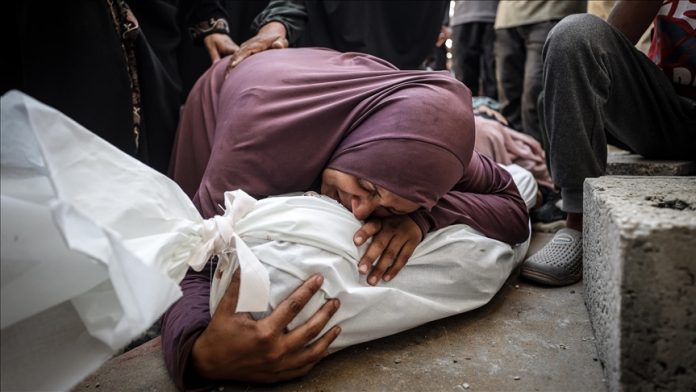
Israel has killed more than 59,000 Palestinians, most of them women and children, in the Gaza Strip since October 2023. The military campaign has devastated the enclave, collapsed the health system, and led to severe food shortages.

Last November, the International Criminal Court issued arrest warrants for Netanyahu and his former Defense Minister Yoav Gallant for war crimes and crimes against humanity in Gaza.

Israel also faces a genocide case at the International Court of Justice for its war on the enclave.

Iran slams US, Israel’s role in ‘collapse’ of intl. legal order, ‘erosion’ of UN Charter

Kazem Gharib Abadi

Deputy Foreign Minister for Legal and International Affairs, Kazem Gharibabadi made the remarks in New York on Wednesday, addressing a UN Security Council meeting on the situation in the region, including the issue of Palestine.

He described the US and the Israeli regime as the “main source of instability” in the West Asia region, citing their individual or joint atrocities against regional countries.

Washington and Tel Aviv, he added, posed “a major threat to international peace and security” as a result of their acts of deadly regional military adventurism.

The official cited the regime’s US-enabled war of genocide on the Gaza Strip, the occupied West Bank, Syria, and Yemen as well as its unprovoked 12-day war on the Islamic Republic last month.

Referencing the war on Gaza, he said the October 2023-present campaign of unbridled aggression had featured killing or maiming tens of thousands, bombing hospitals and schools, and murdering UN staff and humanitarian workers.

Millions had also been displaced, and starvation “weaponized against an entire population,” Gharibabadi added, pointing to Tel Aviv’s near-total siege of the Palestinian territory.

He described the situation as worsening, saying the regime now employed a “systematic method of killing” by “deliberately targeting starving civilians” awaiting aid.

The diplomat called the method that had seen Israeli forces kill more than 1,000 civilians swarming around Israeli- and American-sponsored so-called aid distribution points, “premeditated mass murder.”

The overall war, Gharibabadi said, amounted to “organized and systematic annihilation of a besieged civilian population by an occupying regime, supported and shielded by the United States.”

He was pointing to Washington’s providing the warfare with ceaseless political, military, and intelligence support.

Amid the situation, the Security Council was expected to take action towards ensuring an immediate and permanent ceasefire, provision of unimpeded humanitarian access for Gazans, and release of arbitrarily detained Palestinians.

The body was also required to reject the regime’s forced displacement plans, enable full UN membership for Palestine, and ensure accountability on the part of Tel Aviv.

Turning to the June 13-25 war on Iran that took place amid unprecedented American support, Gharibabadi said the assault was one of an “unprovoked and unlawful” nature.

He noted how the aggression targeted the Islamic Republic’s civilian and nuclear infrastructures, including nuclear sites under the International Atomic Energy Agency (IAEA)’s safeguards.

Iran, the official stated, demanded urgent Security Council action concerning such atrocities.

He, meanwhile, denounced Dorothy Shea, Washington’s UN envoy, for accusing the Islamic Republic earlier during the meeting of being behind ongoing instances of regional instability instead of taking up responsibility on the part of her country for the underway situation.

“The US representative is in no moral, political, or legal position to lecture or blame Iran,” Gharibabadi concluded.