Saturday, April 25, 2026
Home Blog Page 239

Ex-diplomat outlines why a military nuclear program would endanger Iran

Iran nuclear program

In an op-ed published by Shargh newspaper titled “A Plan for Non-Nuclear Security,” Kourosh Ahmadi argued that a military nuclear program would not enhance Iran’s security, but rather increase risks, threaten national stability, and disrupt the daily lives of citizens.

He noted that Iran’s leadership has consistently reiterated the peaceful nature of the nuclear program, with the Leader Ayatollah Khamenei issuing a fatwa against nuclear weapons.

Ahmadi cited several reasons for this policy, including the geopolitical sensitivity of the Middle East, widespread international opposition to a nuclear-armed Iran, and the lack of strategic allies willing to support such a move.

Ahmadi proposed that Iran pursue a comprehensive non-nuclear security strategy. This would include strengthening conventional defense capabilities, advancing missile and drone programs, improving cyber defense and counterintelligence, and building regional defense partnerships.

On the diplomatic front, he emphasized the importance of regional cooperation, confidence-building measures, and reducing tensions with both Western and Eastern powers.

Economically, he advocated for lifting sanctions, boosting resilience through diversification, and integrating into global trade networks.

US House speaker becomes highest-ranking American official to visit illegal settlements in West Bank

Johnson visited Ariel city, the fourth-largest illegal Israeli settlement in the occupied West Bank, according to Marc Zell, chairman of Republicans Overseas Israel.

“Speaker Mike Johnson says that the mountains of Judea and Samaria are the rightful property of the Jewish People,” he wrote on X alongside a photo of Johnson as he speaks at an event in the occupied territories.

Johnson and his delegation also intend to travel to Gaza and tour controversial aid centers of the Gaza Humanitarian Foundation (GHF), backed by the US and Israel, Israeli officials told Axios.

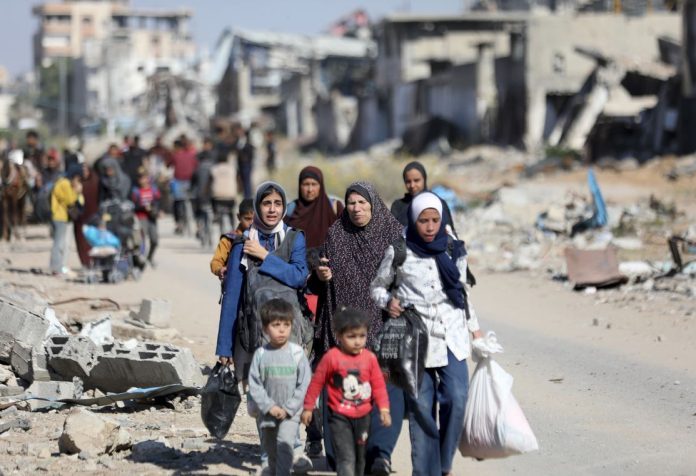
Access to food, water, and medical supplies remains severely limited in the Gaza Strip due to an ongoing Israeli blockade and poor distribution of aid by the GHF.

Johnson and his delegation will meet with Israeli Prime Minister Benjamin Netanyahu and President Isaac Herzog as part of an “unusually long” eight-day visit ending on Aug. 10.

The trip was arranged by Heather Johnston, who founded the US Israel Education Association, a conservative pro-Israeli advocacy organization, three Israeli officials informed Axios.

Israeli sources told the media site that the Israeli Embassy in Washington, DC, learned of the visit unexpectedly and played no role in organizing it. The Israeli Foreign Ministry and the US Embassy in Jerusalem were similarly uninvolved in preparations.

The unannounced Republican delegation became public knowledge only after Israeli ministers released statements about their meetings with the group.

Johnson arrived on Sunday, accompanied by Reps. Michael McCaul, Nathaniel Moran, Michael Cloud, and Claudia Tenney. Tenney chairs the Friends of Judea and Samaria caucus in the US Congress, which advocates for illegal Israeli settlements.

Since the start of Israel’s genocidal war on the Gaza Strip in October 2023, over 1,000 Palestinians have been killed and more than 7,000 injured in the West Bank by Israeli forces and illegal settlers, according to the ministry.

In an advisory opinion last July, the International Court of Justice declared Israel’s occupation of Palestinian territory illegal and called for the evacuation of all settlements in the West Bank and East Jerusalem.

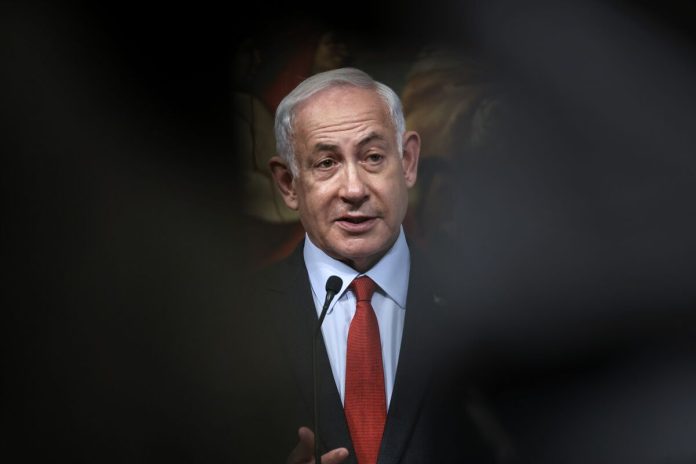
Netanyahu has decided on full occupation of Gaza: Report

Netanyahu

Netanyahu’s decision will see the Israeli military expand its operations across the entire enclave, including areas where Hamas’s captives are being held, i24NEWS, The Jerusalem Post, Channel 12 and Ynet reported.

“The decision has been made,” Amit Sega, chief political analyst with Channel 12, quoted an unnamed senior official in Netanyahu’s office as saying.

“Hamas won’t release more hostages without total surrender, and we won’t surrender. If we don’t act now, the hostages will starve to death and Gaza will remain under Hamas’s control.”

The Palestinian Ministry of Foreign Affairs condemned the reported plans and called on the international community to “intervene urgently to prevent their implementation, whether they are a form of pressure, trial balloons to gauge international reactions, or genuinely serious”.

The reports come as Netanyahu is set to convene his war cabinet on Tuesday to discuss the next steps for Israel’s military in Gaza as its war in the besieged enclave nears the two-year mark.

Netanyahu is facing growing international pressure to allow more humanitarian aid into Gaza and halt the war amid mounting Palestinian deaths due to malnutrition and Israeli attacks.

The Israeli leader is also facing mounting domestic pressure to secure the release of Hamas’s remaining captives in Gaza, following the release of footage of detainees Rom Braslavski and Evyatar David appearing emaciated.

Netanyahu on Monday doubled down on his war goals, including eliminating Hamas and securing the release of the remaining captives.

“We must continue to stand together and fight together to achieve all our war objectives: the defeat of the enemy, the release of our hostages, and the assurance that Gaza will no longer pose a threat to Israel,” Netanyahu stated at the start of a regular cabinet meeting on Monday.

Senior Hamas official Osama Hamdan on Monday accused the United States and other Western countries of turning a blind eye to Israeli atrocities, and stressed that Netanyahu’s government bore “full responsibility” for the lives of the captives “due to its stubbornness, arrogance, and evasion of reaching a ceasefire agreement, and the escalation of the war of extermination and starvation against our people”.

More than 60,900 Palestinians, including at least 18,500 children, have been killed in Gaza since October 2023, according to Gaza health authorities.

Forty-nine captives, including 27 who are believed to be dead, are still being held by Hamas, according to Israeli authorities.

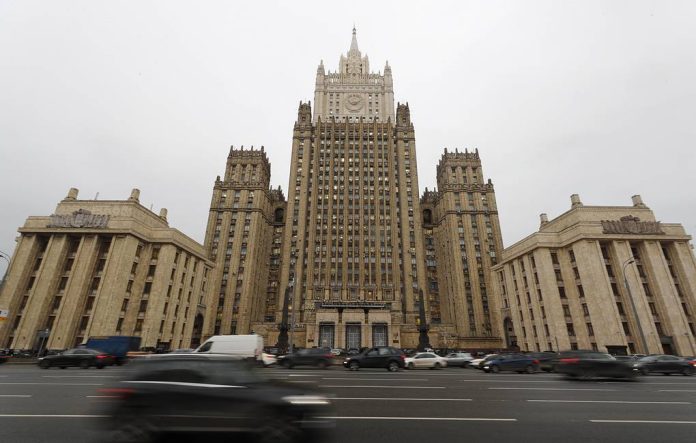
Russia says ‘no longer considers itself bound’ by nuclear treaty with US

Russian Foreign Ministry

The INF Treaty, which banned ground-launched missiles with ranges of 500–5,500km, collapsed in 2019 when Washington withdrew, citing Russian violations. Moscow has denied the claims, accusing the US itself of developing banned missiles. Russian President Vladimir Putin has warned that the collapse of the INF will significantly erode the global security framework.

“The Russian Foreign Ministry notes the disappearance of conditions for maintaining the unilateral moratorium on the deployment of similar weapons and is authorized to state that Russia no longer considers itself bound by the corresponding self-imposed restrictions previously adopted,” the statement reads.

According to the ministry, the “actions of Western countries” are creating a “direct threat” to Russian security. It also noted that last year, the US deployed a Typhon missile launcher in the Philippines. The statement also referenced the Talisman Sabre exercise in Australia, where the US Army also fired Typhon.

The Typhon is a mobile ground-based launcher designed to launch Tomahawk cruise missiles (range up to 1,800km) and SM-6 multipurpose missiles (range up to 500km).

The Foreign Ministry also took notice of the Australian Army testing an American Precision Strike Missile (PrSM) for the first time in July. The PrSM is a has a maximum range beyond 500km and “is central to strengthening Australia’s land and maritime strike capability,” according to the country’s Defense Ministry.

The Russian statement added further: “Decisions on specific parameters of response measures will be made by Russia’s leadership based on an interagency analysis of the scale of the deployment of American and other Western ground-based intermediate-range and shorter-range missiles, as well as the overall development of the situation in the field of international security and strategic stability.”

Moscow has repeatedly voiced the possibility of lifting the moratorium, for example, after the US announced plans to deploy long-range weapons in Germany in 2026. In November, Russian President Vladimir Putin said that Russia is developing intermediate- and shorter-range missiles in response to Washington’s actions. The Kremlin has not ruled out deploying the missiles in the Asia-Pacific region.

US President Donald Trump, who during his first term withdrew from the INF and the 1992 Open Skies Treaty which allowed conducting surveillance flights over each other’s territory, has suggested that he would resume negotiations on maintaining the existing restrictions on nuclear weapons with Russia.

US House Democrats call on Trump administration to recognize Palestinian state

Pro-Palestine Rally

In a letter addressed to the US President Donald Trump and Secretary of State Marco Rubio, lawmakers wrote: “This tragic moment has highlighted for the world the long overdue need to recognize Palestinian self-determination.”

The lawmakers highlighted French President Emmanuel Macron’s recent pledge to recognize Palestinian state at a UN meeting in September, which Rubio strongly rejected.

“We encourage the governments of other countries that have yet to recognize Palestinian statehood, including the United States, to do so as well,” the letter said.

Representative Ro Khanna, who is leading the initiative, told Axios that he “just started outreach this past week” and that “the response has been overwhelming.”

“The recognition would come by embracing the 22 state Arab League Plan just passed this week that calls for a Palestinian state and the recognition of Israel as a Jewish democratic state,” Khanna stated.

He pointed out that over 147 countries have recognized a Palestinian state, saying: We cannot be isolated from the rest of the free world.”

France, Britain, Canada, and Malta have indicated plans to recognize a Palestinian state in September, while Australia has signaled it may follow.

Spain, Norway and Ireland officially recognized a Palestinian state in May 2024, followed by Slovenia in June, bringing the total number of UN member states recognizing Palestine to 149 out of 193.

The Israeli army has pursued a brutal offensive on Gaza since Oct. 7, 2023, killing almost 61,000 Palestinians. The relentless bombardment has devastated the enclave and led to food shortages and deaths by starvation.

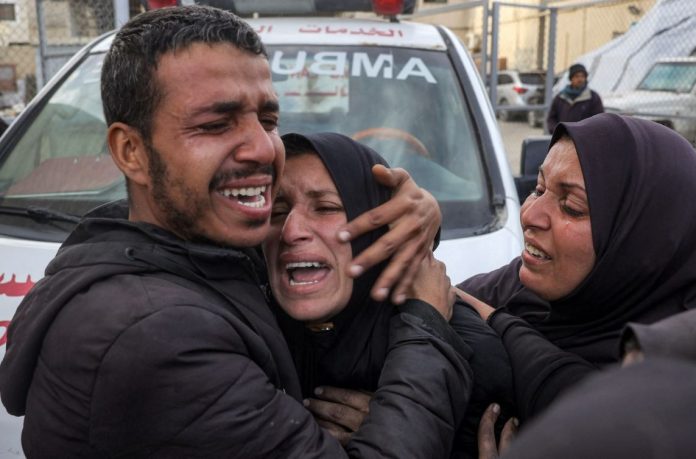
1,500 Gazans killed while seeking aid since May: UN

Gaza War

“The Office for the Coordination of Humanitarian Affairs says that many people reportedly continue to be killed and injured, including people seeking food along the UN convoy routes and militarized distribution points. Some 1,500 people have been reportedly killed since May,” Farhan Haq, UN deputy spokesperson, told reporters.

Since May 27, a US- and Israeli-backed aid scheme in Gaza has been widely criticized as being ineffective as well as being a “death trap” for starving civilians.

Asked by Anadolu whether the UN secretary-general believes the UN’s reputation and effectiveness can be salvaged given its failure to stop Israel’s actions, including plans to expand the annexation of Palestinian land, Haq responded: “He certainly does.”

Haq said the UN’s record includes “successful diplomatic negotiations” and humanitarian aid that continues to “keep billions of people alive.” He emphasized that lack of international unity, particularly within the UN Security Council, hinders the organization’s effectiveness.

Gaza’s Government Media Office announced Monday that Israel had allowed in just 674 aid trucks since July 27 – only 14% of the strip’s minimum daily requirement of 600 trucks.

It added most of the 80 trucks that entered on Sunday were looted amid what it called “a deliberately engineered climate of chaos and starvation,” accusing Israel of weaponizing hunger to undermine Palestinian resilience.

Rejecting international calls for a ceasefire, the Israeli army has pursued a brutal offensive on Gaza since Oct. 7, 2023, killing nearly 61,000 Palestinians, almost half of them women and children. The military campaign has devastated the enclave and brought it to the verge of famine.

28 children killed daily in Gaza: UNICEF

Gaza War

“Death by bombardments. Death by malnutrition and starvation. Death by lack of aid and vital services,” said a post by UNICEF on X.

“In Gaza, an average of 28 children a day — the size of a classroom — have been killed.”

The agency stressed that children in Gaza are in urgent need of food, clean water, medicine and protection, adding: “More than anything, they need a ceasefire, NOW.”

Rejecting international calls for a ceasefire, the Israeli army has pursued a brutal offensive on Gaza since Oct. 7, 2023, killing nearly 61,000 Palestinians, almost half of them women and children. Israel’s military campaign has devastated the enclave and brought it to the verge of famine.

Last November, the International Criminal Court issued arrest warrants for Netanyahu and his former Defense Minister Yoav Gallant for war crimes and crimes against humanity in Gaza.

Israel also faces a genocide case at the International Court of Justice for its war on the enclave.

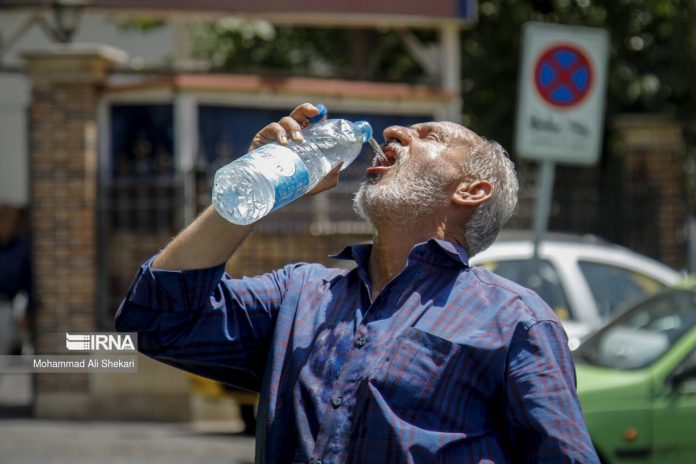
Multiple Iranian provinces announce shutdowns amid unprecedented heatwave

According to official announcements, the provinces, including the capital Tehran, have either declared full closures or reduced working hours.

The decisions were made by local energy committees and approved by provincial governors.

In most provinces, government offices, banks, educational institutions, and public organizations will remain closed on Wednesday. Some provinces, such as West Azarbaijan, East Azarbaijan, and Khuzestan, have extended the closures to Tuesday as well.
Essential services, including hospitals, emergency units, and select bank branches, will continue operations.

The closures aim to stabilize the national electricity network, which has been under severe stress due to record-high temperatures. Officials have urged citizens to minimize energy use and cooperate with ongoing conservation efforts.

This marks the second consecutive week of midweek closures in some provinces, reflecting the increasing urgency of Iran’s energy management challenges during the summer heat.

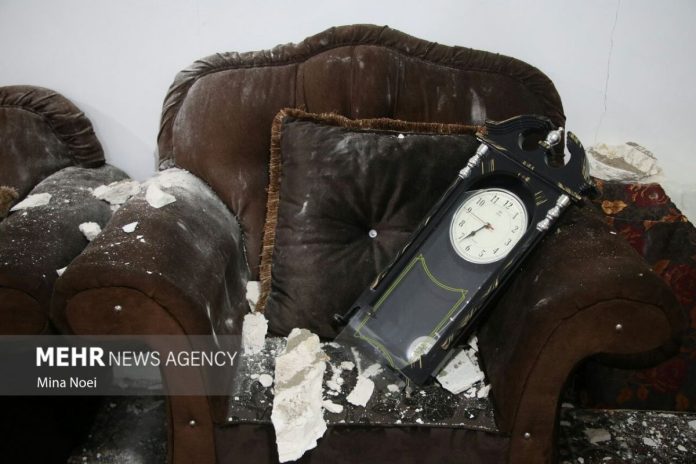
Magnitude 5.4 earthquake strikes Iranian provinces of Sistan-Baluchestan, Kerman

Earthquake Iran

According to the Seismological Center of the Institute of Geophysics, University of Tehran, the quake occurred at 08:36 local time.

The epicenter was recorded at a depth of 28 kilometers, near the town of Zahakloot in Jazmourian County.

The nearest cities to the epicenter were Zahakloot (47 km, Kerman Province), Masjed Hazrat Abolfazl (64 km, Sistan-Baluchestan), and Galmourti (70 km, Sistan-Baluchestan).

Mohammad Ali Arabnejad, Deputy Director of Crisis Management in Kerman Province, confirmed that the quake occurred in an uninhabited area and caused no damage or casualties.

He stated that emergency teams remain on full alert and field assessments are ongoing.

Officials said the seismic activity has not disrupted local services and urged residents to remain calm while staying informed through official channels.

Iran sits on several major fault lines and is prone to frequent seismic activity.

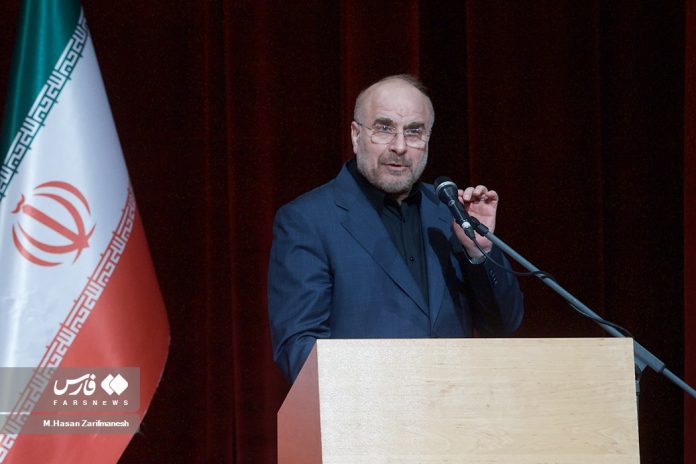
Iranian parliament speaker: Majlis is offspring of Constitutional Revolution

Mohammad Bagher Ghalibaf

Speaking at the opening of Tuesday’s parliamentary session, Ghalibaf said, “The Majlis is the offspring of the Constitutional Revolution and a valuable legacy entrusted to us.”

He called the revolution, which began on August 5, 1906, a significant turning point in modern Iranian history, rooted in public demands for justice and the rule of law.

While acknowledging the challenges faced by the movement, including foreign interference and internal setbacks, Ghalibaf described the revolution as a grassroots effort inspired by the Iranian people’s religious and social consciousness.

He said the Constitutional Revolution was not merely a political transformation but a foundation for Iran’s early experiences in establishing religious democracy and resisting tyranny.

Its legacy, he added, lived on in the nationalization of the oil industry and the Islamic Revolution.

Ghalibaf concluded by honoring the memory of constitutional-era martyrs and figures such as Sheikh Fazlollah Noori, reaffirming the Parliament’s commitment to uphold its historical and legal responsibilities.