Monday, December 22, 2025
Home Blog Page 2372

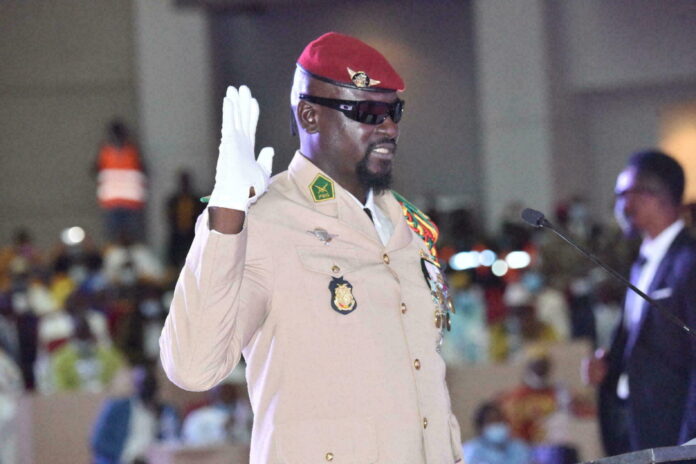
Guinea coup leader inaugurated as interim president

The swearing-in ceremony was held at the Mohamed V Palace in the capital Conakry with the marked absence of most West African heads of state, who agreed last month to impose sanctions on junta members and their relatives.

West and Central Africa has seen four coups since last year — political upheaval that has intensified concerns about a slide towards military rule in a resource-rich but poverty-stricken region.

Wearing military dress uniform, a red beret and wraparound sunglasses, Doumbouya held up a white-gloved hand as he took the oath of office.

“I fully appreciate the magnitude and immensity of the responsibilities entrusted to me,” he said in a speech afterwards.

He promised to oversee a transition that would include the drafting of a new constitution, fighting corruption, electoral reform and the organization of free and transparent elections.

The junta has announced its members will be barred from standing in the next elections, but has not made clear when these might take place, saying this will be decided by an 81-member Transitional National Council.

The Economic Community of West African States, a regional bloc, has frozen assets and imposed travel bans on the junta, hoping to encourage a swift return to democracy.

Coup leaders have stated they ousted Conde because of concerns about poverty and corruption, and because he was serving a third term only after altering the constitution to permit it.

Fears that the political crisis would hinder Guinea’s production of bauxite, a mineral used to make aluminum, have eased. The country’s largest foreign operators say they have continued work without interruption.

Baku Should Beware of Unsavoury Friends: Analyst

Azerbaijan Republic’s provocative moves began by stopping Iranian commercial trucks at the border and holding them for 48 hours.

The campaign continued with interventionist remarks by some members of the Azerbaijan Republic’s Parliament, insults and verbal attacks by Azeri media against Iranian authorities, including Ayatollah Ameli, the representative of Leader of Iran’s Islamic Revolution Ayatollah Seyyed Ali Khamenei in Ardebil, etc.

This unfriendly trend finally entered a new phase with outrageous remarks by Azeri President Ilham Aliyev, which fueled tensions and pushed bilateral friendly relations into an unwanted negative atmosphere.

In an interview with Turkey’s Anadolu Agency, Aliyev levelled accusations against Iran without referring to Baku’s provocative moves triggered by untrue information.

Such accusations indicate that either he is unaware of the consequences of his stances and such behaviour, or he has set foot in this path only to please countries which are against cordial ties between Tehran and Baku.

Such behaviour, which stands in stark contrast to Iran’s cordial policies vis-à-vis the Azerbaijan Republic and whose origin is crystal clear to Tehran, has resulted in unwanted circumstances which we will discuss later.

Since the historic collapse of the Soviet Union, Iran has proved its brotherhood and friendship with the Azerbaijan Republic in different ways and has, by observing the principles of good neighbourliness, sought to promote Tehran-Baku ties on different fronts both quantitatively and qualitatively.

Nevertheless, ill-wishers of the two countries have long been provoking Baku authorities under different pretexts to launch anti-Iran moves.

During the conflict between the Azerbaijan Republic and Armenia a few months back over the occupied territories of the Kharabak region, Iran recognized Baku’s right to take over part of its occupied territories and sought to push the two countries toward dialogue and reconciliation in order to prevent further bloodshed and a flare-up of tensions. However, Azeri officials seem to have mistaken this friendly stance of Iran.

During the Kharabak war, Iran’s Leader straightforwardly stressed the need to return the Azerbaijan Republic’s occupied territories to that country as well as evacuate and hand over the areas to Baku.

Throughout his speeches at a time when the Kharabak conflict was ongoing, Ayatollah Khamenei underscored that Yerevan need to realized that the perpetuation of the war was not in its favour. Still, it seems that Azeri officials have forgotten everything very soon.
It is perfectly clear to Iran that the United States and the Israeli regime have, for years, been bent on touching off a crisis in Tehran-Baku relations.

Moreover, some ambitious countries in the region are piggybacking on the regional developments and turning a blind eye to the necessity of observing geostrategic requirements for the Caucasus and just thinking about expanding their own influence.

Iran’s strategic position on the major East-West corridor, which recently entered a new phase with Iran’s joining the Shanghai Cooperation Organization (SCO) as a permanent member, is the very same trump card that has prompted some expansionist regional countries provoked by Washington and Tel Aviv to cash in on Baku’s strategic mistakes, use military muscle-flexing and make geopolitical changes to the region in a bid to strip Iran of this strategic position and take possession of it through the Zangezur corridor.

This dangerous game being played by triggering ethnic-religious tensions and taking advantage of Iran’s patience has long been underway engineered by joint US-Zionist think tanks led by figures such Brenda Shaffer, a member of the Foundation for Defense of Democracies (FDD), and Baku has unfortunately got involved in this game despite Tehran’s warnings.

Interesting enough, Azeri officials have used the presence of Iranian military forces in northern Iran as well as the “Conquerers of Khaybar” war game as a pretext to try to accuse Iran of disrupting security and stability in the region.
This comes as any country is entitled to conduct, inside its borders, any move it deems necessary to boost its security, and military exercises staged in northern Iran are part of such moves.
The point is, if military maneuvers are to be criticized, then the joint drills that the Azerbaijan Republic holds with countries beyond the region should be slammed because not only Iran, but also some other Caspian Sea littoral states are seriously critical of such war games.
The joint drills held recently by Pakistan, Turkey and the Azerbaijan Republic was obviously an unprecedented and provocative move which amounts to muscle-flexing by these countries against other regional powers.

In recent days, many political and military analysts have described the joint maneuvers by Baku, Islamabad and Ankara in the Caspian Sea as a warning to Russia which lies to the north of the sea.

Naturally, given Pakistan’s American tendencies along with Baku and Ankara’s relations with Tel Aviv and other Western governments, this provocative approach by the Azerbaijan Republic is, by no means, regarded as a constructive move aimed at ensuring stability in the region.

Azeri analysts had better remind their politicians of the important point that Baku’s expansion of ties with the Israeli regime, which is hated by most people, is the greatest threat against regional security and will destabilize relations among countries.

The history of Azerbaijan-Israel military cooperation and Tel Aviv’s cashing in on Iran’s determination to enhance its relations with the Azerbaijan Republic should not lead Baku to believe that Iran is indifferent toward that which threatens its security.

Given the principles of neighbourliness, cultural exchanges, a common past and a shared religion with Azeri people, Iran has always emphasized the enhancement of relations with the Azerbaijan Republic. This country, in turn, should not only pay attention to bonds between Iran and Azerbaijan, but should also beware of Tel Aviv and Washington’s objective, which is to foment tensions in the region, especially between Iran and the Azerbaijan Republic.

The border sensitivities in any country follow requirements and principles which should be understood by other countries. These sensitivities particularly become all the more important when it comes to countries such as Iran which has, over the past two centuries, not only not initiated any wars, but has fallen victim to the expansionist policies of other countries.

Iran has shown that it, by no means, has an eye on the territory of other countries. However, it monitors the smallest moves by other countries which concern its territorial integrity and national security, and will respond to them in the right place, at the right time and in accordance with legal frameworks.

The emergence of unwanted circumstances in recent weeks in the Caucasus should draw Azeri officials’ attention to the destructive role of their disreputable friends and to the necessity of paying more attention to the requirements of neighbourliness and the considerations of Azerbaijan’s real friends.

15 million Britons facing higher energy bills

Millions of people face huge rises in their energy bills as the UK’s energy regulator’s latest price cap comes into force amid soaring wholesale prices.

Bills will increase by at least £139 – a record high – for about 15 million households due to a rise in wholesale prices, Ofgem announced.

Energy customers on default tariffs who pay by direct debit have seen the sharpest jump in prices since the cap was introduced in January 2019, taking average bills to £1,277.

Pre-payment customers will see costs rise by £153, from £1,156 to £1,309.

The increase has been driven by a rise of more than 50% in energy costs over the last six months, with gas prices hitting a record high as inflation jumped amid the easing of pandemic restrictions.

The latest cap, announced in August, was determined before further unprecedented increases in global prices, which has seen nine small UK suppliers collapse since the start of September.

Energy watchdog Citizens Advice warns people will face “desperate choices” this winter with customers of the five largest failed suppliers set to pay £6.70 more a week when they moved on to the default tariffs of a replacement firm.

Although households that shop around and sign up to fixed plans with suppliers are not subject to the price cap, the recent rise in wholesale costs have seen companies hiking their fixed plan fees significantly above the cap to deter people.

The regulator reviews the price cap once every six months, and changes it based on the cost suppliers have to pay for their energy, cost of policies and operating costs, among other things.

In further bad news for energy customers, research agency Cornwall Insight has already predicted that Ofgem’s next price cap will rise by £178 from April.

The new energy cap comes after the cost of gas on wholesale markets rocketed at unprecedented rates, up 70% since August and 250% since the beginning of the year, according to trade body Oil & Gas UK.

Adam Scorer, chief executive at fuel poverty charity National Energy Action, said, “The massive devastating increases in energy prices will drive over 500,000 more households into fuel poverty, leaving them unable to heat or power their homes.

“Just when they were needed most, the uplifts to Universal Credit are also being withdrawn and inflation is soaring. The new Household Support Fund will provide some welcome support for those who can access it, but on its own it is not enough to halt the erosion in incomes and deal with rising prices,” Scorer added.

“Without a wider package of support – keeping Universal Credit uplifts and more rebates to protect those on the lowest incomes from spiralling energy prices – vulnerable people are still at dire risk of premature death this winter,” he continued.

The End Poverty Coalition warned fuel poverty could become “endemic” in the UK and published a map showing the worst affected places in England.

It said the number of households in fuel poverty could rise from 4.1 million to 5.3 million.

The worst place in England for fuel poverty is Barking and Dagenham, followed by Stoke-on-Trent and Newham, according to the coalition.

Meanwhile Bracknell Forest, Runnymede and East Hampshire are among the areas least affected by fuel poverty.

The coalition – which includes Age UK, Fuel Poverty Action Group, Unison and Generation Rent – has launched a petition calling on the government to take immediate action to avert the fuel poverty crisis this winter.

Myanmar’s ousted leader on trial for corruption

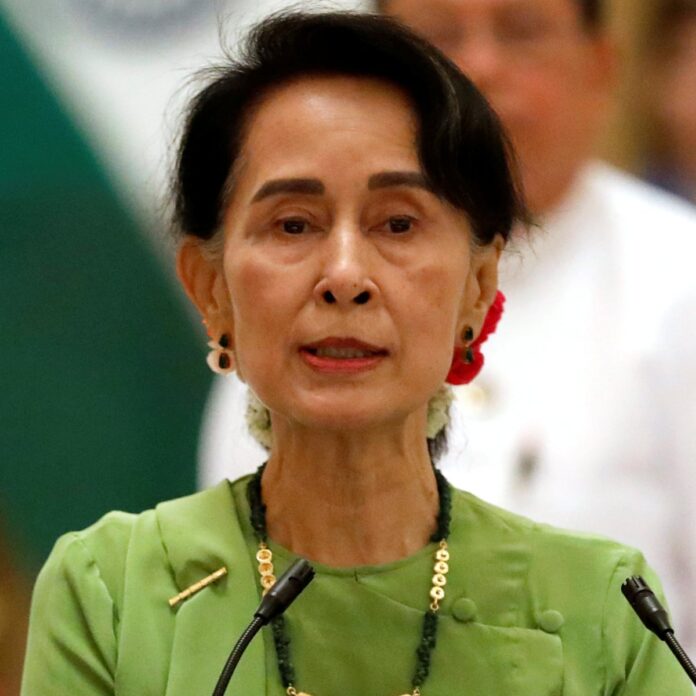
A Special Court in the capital Naypyitaw is hearing four corruption cases against Suu Kyi, each carrying a penalty of up to 15 years’ imprisonment, the longest possible prison term of the several offences with which she has been charged.

All the proceedings against the 76-year-old are closed to the public and press. She has been detained by the military at an undisclosed location in Naypyitaw since the February 1 military coup that deposed her government.

Like other top members of her party and government, Phyo Min Thein, who testified on Friday, was arrested by the military when it took power. The allegations of pay-offs were first raised in March by the military junta and have been denied by her lawyers. 

Suu Kyi faces two charges of accepting bribes and two of conspiring to carry out corruption in connection with real estate transactions. A fifth corruption charge has not yet gone to trial.

Phyo Min Thein, a top figure in Suu Kyi’s National League for Democracy party who held the important job of chief minister for the Yangon region before the military seized power, testified for the prosecution. He said he had personally handed over $US600,000 ($826,000) and seven gold bars to Suu Kyi in 2017-18, lawyer Min Soe stated.

The military at a March news conference had presented a videotape of Phyo Min Thein making the same allegations. In his court testimony, he added that he presented the Nobel Prize laureate with a statue from a prominent Buddhist monk, Min Soe noted.

Suu Kyi’s supporters and independent analysts say all the charges against her are politically motivated and an attempt to discredit her and legitimise the military’s seizure of power while keeping her from returning to politics.

Suu Kyi is also being tried on lesser charges of sedition, two counts of flouting COVID-19 pandemic restrictions, illegally importing walkie-talkies and the unlicensed use of the radios.

Preparations have also begun to try her for breaching the official secrets law, which carried a maximum prison term of 14 years. Australian Sean Turnell, a former economics advisor to Suu Kyi, has also been accused of a breach of the colonial-era Burmese Official Secrets Act. He’s been held in prison since February 6.

The military announced it seized power because last November’s election, won in a landslide by Suu Kyi’s party, was tainted by massive fraud. Its claim has almost no independent support, and the takeover was quickly met by widespread public protests.

Security forces used deadly force to try to quash the peaceful protests, killing more than 1100 people, according to the detailed tallies of the Assistance Association of Political Prisoners and human rights groups. Opponents of military rule have turned to armed self-defence, sabotage and killings of soldiers and officials on a near-daily basis.

A group of former MPs and democracy activists have formed a parallel civilian government – the National Unity Government – which is seeking to bring an end to military rule.

17K US police-involved deaths unaccounted

More than half of all police-involved killings in the US go unreported with the majority of victims being Black, according to a new study published in the Lancet, a peer reviewed journal.

Research at the University of Washington School of Medicine’s Institute for Health Metrics and Evaluation found that in the US between 1980 and 2018, more than 55% of deaths, over 17,000 in total, from police violence were either misclassified or went unreported.

The study also discovered that Black Americans are more likely than any other group to die from police violence and are 3.5 times more likely to be killed by police than white Americans.

“Recent high-profile police killings of Black people have drawn worldwide attention to this urgent public health crisis, but the magnitude of this problem can’t be fully understood without reliable data,” said Fablina Sharara, a researcher at the University of Washington School of Medicine and co-lead author of the study.

To fully understand the underreporting of police-involved killings, researchers compared data from the US National Vital Statistics System (NVSS), a government database for tracking the US population, with non-governmental, open-source databases that track police brutality including the Guardian’s two-year investigation into police violence The Counted. Open-source databases aggregate information from news reports and public record requests, capturing a wider range of fatal police-involved incidents.

“Open-sourced data is a more reliable and comprehensive resource to help inform policies that can prevent police violence and save lives,” added Sharara.

In total, the NVSS database misclassified nearly 60% of all fatal police encounters involving Black Americans. NVSS also missed approximately 50% of all police-involved deaths of Hispanic people, 56% of all police-involved deaths of non-Hispanic white people, and 33% of deaths involving non-Hispanic people across other races.

“Inaccurately reporting or misclassifying these deaths further obscures the larger issue of systemic racism that is embedded in many US institutions, including law enforcement,” Sharara continued.

The paper found that men die from police violence at higher rates than women, with 30,600 police-involved deaths recorded among men and 1,420 among women between 1980 and 2019.

Researchers also noted the large conflict of interests inherent in tracking police-involved deaths. Coroners are often embedded within police departments and can be disincentivized from determining that deaths are caused by police violence.

“The same government responsible for this violence is also responsible for reporting on it,” stated Sharara.

Past studies have analyzed underreporting of fatal police incidents and how Black Americans disproportionately die from police violence, but previous research was conducted over much shorter time periods.

The new study published by Lancet is the longest study period to date, though researchers acknowledged that future studies are needed to fully examine the impact of police violence in the US as data collected did not include police officers killed by civilians, police violence in US territories or abroad, and used death certificates that could not identify non-cisgender people, notably masking police violence against trans people.

Overall, an increased use of open-source data collection is needed to document and understand disparities in police brutality by race, ethnicity, and gender, the researchers said, allowing for more targeted changes to policing and public safety protocols. The authors also acknowledged that more needs to be done to combat police-involved violence.

“As a community we need to do more. Efforts to prevent police violence and address systemic racism in the USA, including body cameras that record interactions of police with civilians along with de-escalation training and implicit bias training for police officers, for example, have largely been ineffective,” noted co-lead author Eve Wool.

Futsal World Cup: Iran’s Glareh Nazemi to adjudicate final match

This is the first time an Iranian referee is adjudicating the final match in a big tournament like this. 

The final match of the FIFA Futsal World Cup will start at 20:30 on Sunday, October 3, 2021, in the Lithuanian city of Kaunas. 

The third place play-off will pit Kazakhstan against Brazil. The match will also start at 18:30 on Sunday. 

Iran played against Kazakhstan in the quarter-finals and lost the match to the Kazakh national team and got knocked out. 

In the opening match of the FIFA Futsal World Cup between Lithuania and Venezuela, Glareh Nazemi was the third referee and another Iranian, Ebrahim Mehrabi, was the Fourth Official.

Iran to import 60 million doses of Sinopharm vaccine

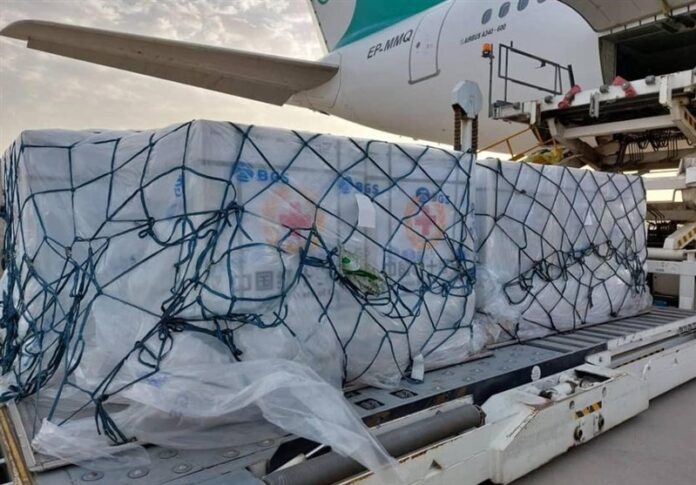
The authorities also say Iran’s Red Crescent Society has no plans to import Pfizer vaccines.  

Iran has stepped up its vaccination drive in recent weeks using imported and domestically produced jabs and it’s inoculated more than half of its population. 

The country has witnessed a downward trend in death, infections and hospitalizations as a result. 

Officials say the worst of the fifth Covid peak is over in most of Iran. They also say the entire population will be vaccinated within a few months.

UK official warns fuel crisis could continue

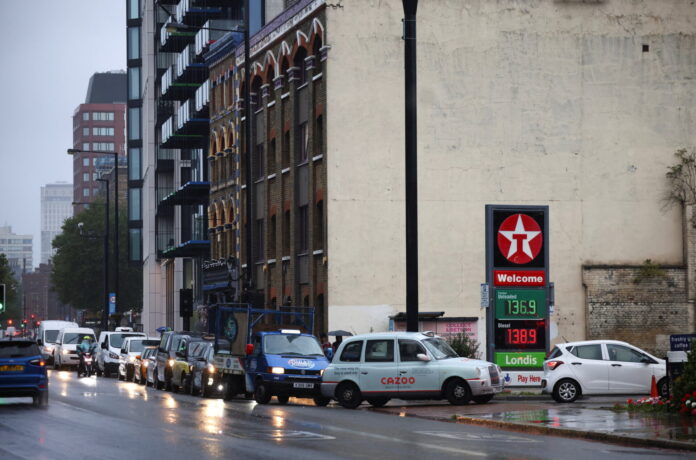
Motorists could face another “week or so” of long queues at the filling stations as demand for fuel remains strong, said Kit Malthouse Minister of State for Crime and Policing at the Home Office.

Malthouse said there needs to be an “improvement” in the situation in the coming days and that Prime Minister Boris Johnson stands ready to review matters if there is any deterioration.

His downbeat assessment contrasted sharply with comments by other ministers in recent days that the situation would swiftly return to normal as drivers resumed their usual buying patterns.

It follows a warning by the Petrol Retailers Association that filling stations were running out of fuel faster than they could be resupplied, with one in four forecourts having run dry.

Malthouse told the BBC Radio 4 Today programme: “We are still seeing strong demand in parts of the country around fuel. The distribution mechanism is trying to respond to this unprecedented demand.”

“My latest briefing is that the situation is stabilising, that we are seeing more forecourts with a greater supply of fuel and hopefully that, as demand and supply come better into balance over the next few days, week or so, that we will see a return to normality,” he said

“I think if things started to deteriorate further, obviously the Prime Minister and the Secretary of State for Energy, whose responsibility this is, will have to review the situation,” he added.

His comments came just 24 hours after another minister – Treasury Chief Secretary Simon Clarke – claimed the situation was “absolutely back under control”.

Earlier this week Johnson ruled out granting priority access to fuel to healthcare staff on the grounds that it was unnecessary as the situation was “stabilising”.

However Malthouse noted there were “pockets” of the country where there were still problems – with London and the south-east reported to be among the hardest hit.

He said efforts were being made to balance out the situation with areas where supplies were strong, but he indicated they were being constrained by the numbers of tankers available.

“What we need to see is a stabilisation and improvement over the next few days,” he continued, adding, “Obviously there are only so many tankers that can be used to get this fuel around. They are trying their best to get around as fast as possible.”

“There is co-ordination now across the country looking at where there are pockets of supply problems and demand strength and trying to bring the two into balance,” he noted.

Petrol Retailers Association executive director Gordon Balmer said that while there were signs of improvement, it was happening “far too slowly”, with 26% of filling stations still completely out of fuel.

He added independent operators in particular were not getting the supplies they needed.

“Whilst the situation is similar to recent days, there are signs that it is improving, but far too slowly,” he said, adding, “Until independents start getting frequent supplies, we will continue to see long queues at forecourts.”

On Wednesday, the Business Secretary, Kwasi Kwarteng announced that the Government was sending out its reserve tanker fleet – driven by civilian drivers – to support the distribution efforts.

However, it is yet to deploy the 150 military drivers who have been on standby since the start of the week to assist with the operation.

Malthouse’s comments raise the prospect that Johnson will go into the Conservatives’ annual party conference – which begins in Manchester at the weekend – with the issue still hanging over the Government.

The crisis began after reports that a shortage of tanker drivers had led a number of BP stations to close, which triggered a wave of panic buying that has yet to fully subside.

EU, Australia trade talks postponed over submarine deal

EU commission chief spokesman Eric Mamer added the decision to delay the meeting was taken by the EU’s executive arm. Asked whether it was a retaliation measure, Mamer stated “the EU is not in the business of punishing anybody.“

Miriam Garcia Ferrer, the EU commission spokesperson in charge of trade, insisted the delay does not mean the end of discussions while Australian Trade Minister Dan Tehan said he would continue planning to meet with his EU counterpart Valdis Dombrovskis next week to discuss the negotiations now set for November.

“A free trade agreement is in the interests of Australia and the European Union and will strengthen our relationship that is built on a shared commitment to democracy, human rights, the rule of law and economic openness,” Tehan announced in a statement.

“We understand the French reaction to our submarine decision, but ultimately any nation must act in its national interest – which is what Australia has done,” he added.

The EU launched negotiations for a trade agreement with Australia in 2018. The 12th round of talks was scheduled to take place later this month via videoconference.

Australia signed the 90 billion Australian dollar ($66 billion) deal with French majority state-owned Naval Group in 2016 to build 12 conventional diesel-electric submarines. But Prime Minister Scott Morrison canceled the deal last month as part of an alliance with the United States and Britain that will give Australia at least eight nuclear-powered submarines.

The move infuriated France, and prompted criticism from European Commission president Ursula von der Leyen.

An EU official directly aware of the matter said the submarine row played a role in the decision to delay this month’s talks but insisted a deal was not ready to be sealed in any case. The person spoke anonymously because they were not authorized to speak publicly about the case.

France has accused the United States and Australia of betrayal over the canceled contract and the replacement trilateral alliance negotiated in secret. France briefly recalled its ambassador from Washington in protest; there is no word of when a French ambassador might return to Australia.

According to EU data, the 27-nation EU represented Australia’s third-largest trading partner in 2020, after China and Japan, ahead of the United States.

After the previous round of talks in June, the EU announced discussions were held in a “good and constructive atmosphere and showed a shared commitment to negotiate an ambitious and comprehensive agreement”.

Garcia Ferrer stated the monthlong delay would allow both sides to prepare better for the next round.

Source: AP

Shahin Cyclone Hits Chabahar in Southeast Iran

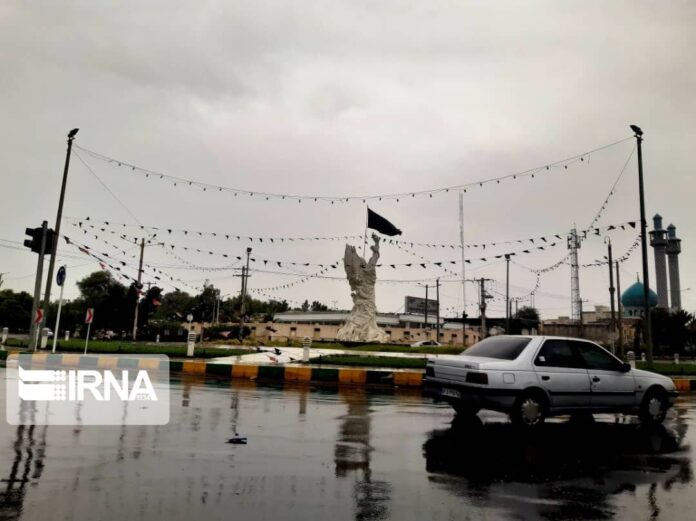
Shahin has now turned to a strong cyclone and is expected get more intense with winds of up to 120 kilometres per hour, announced the provincial weather office.

“Torrential rain, thunder and lightning, strong winds and dust storms, flooding, rising water levels at the sea and seasonal rivers, a rise in wave heights and the sea getting rough are among the most climatic hazards caused by the tropical cyclone,” the head of the weather office added.

After warnings by the weather office, all relief agencies as well as local state institutions, governors and the armed forces were put on high alert.

As authorities have raised the alarm about possible torrential rain and ensuing traffic restrictions, all government offices in Chabahar were closed on Saturday,  with the exception of utility and emergency institutions, including the water and sewage, energy and firefighting departments as well as the Red Crescent Society and hospitals.