Monday, December 22, 2025
Home Blog Page 2373

US says ‘limited runway’ for Iran nuclear negotiations

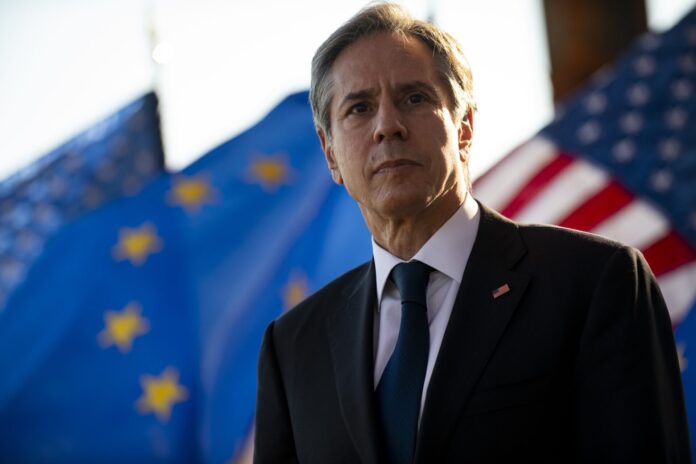
Blinken renewed warnings Thursday that time was running out for Iran to return to a nuclear deal, saying it was up to Tehran to act.

“The ball remains in their court, but not for long,” Blinken told reporters in Pittsburgh where he took part in US-EU trade talks.

“There is a limited runway on that, and the runway is getting shorter,” he added.

Blinken reiterated that President Joe Biden was willing to return the United States to a 2015 accord in which Iran drastically scaled back nuclear work in return for promises of economic relief.

Former President Donald Trump trashed the deal known formally as the Joint Comprehensive Plan of Action (JCPOA) and re-imposed sweeping sanctions, which Iran wants removed before it undoes a series of steps out of compliance that it took to protest the pressure campaign.

“Simply getting back to the terms of the JCPOA at some point will not be sufficient to recapture the benefits of the agreement because of the progress Iran has made,” Blinken noted.

Blinken added that the Biden administration has been engaged “in very good faith for many months” in indirect talks in Vienna with Iran on returning to compliance.

Iran requested a break in talks in June due to a political transition as Ebrahim Raisi became president, replacing Hassan Rouhani who entered the nuclear deal and favored better relations with the west.

No date has been set for talks to resume, although Raisi has said that he backs diplomacy to end sanctions.

On September 21, Foreign Ministry Spokesman Saeed Khatibzadeh stated the 4+1 group of countries that remain party to the JCPOA will resume nuclear negotiations in Austrian capital Vienna within the next few weeks.

During the last official meeting with the president and the cabinet members of the twelfth government in late July, Leader of the Islamic Revolution Ayatollah Seyyed Ali Khamenei said that one key lesson for future administrations to learn from the experience gained during the tenure of Rouhani is that there is no benefit in putting one’s trust in the west.

“The others should use your experience,” Ayatollah Khamenei told the meeting, adding, “There is a specific experience… that I have noted to you and the people many times before, and let me repeat the same thing here, which is [the need for] a lack of trust in the west.”

“This is an experience that the posterity should use. As it became manifest during the tenure of this administration, nothing can be gained from putting one’s trust in the west,” the leader stated.

The leader added that domestic programs should in no way be tied to western states under any circumstances due to the proven failure of such an approach.

“Wherever you tied your work to the west, you failed, and wherever you rose and moved forward without trusting the west, you succeeded,” he said in an address to members of the outgoing administration.

“Wherever you tied issues to an agreement or talks with the west, America and the like, you failed to move forward,” he said, adding, “Because they don’t help. They are the enemies, of course.”

“The Americans say [in words] and promise that ‘we will remove the sanctions’ but they have failed to do so,” stressed the leader, denouncing the US attempts to add new terms to the agreement to push Iran to begin talks on other issues.

By adding such a clause, according to the leader, the Americans are seeking to gain an excuse for further meddlesome acts regarding the JCPOA, Iran’s missile program and regional issues.

“And if Iran refuses to talk about [those issues], they would say ‘you have violated the JCPOA and therefore there won’t be an agreement anymore,’” he stated.

Ayatollah Khamenei drew attention to the fact that the US has refused to provide Iran with a guarantee that it will not violate its commitments again.

He noted that Washington will not shy away from violating its contractual commitments in the same manner it did in 2018, a move that was “completely costless” for them.
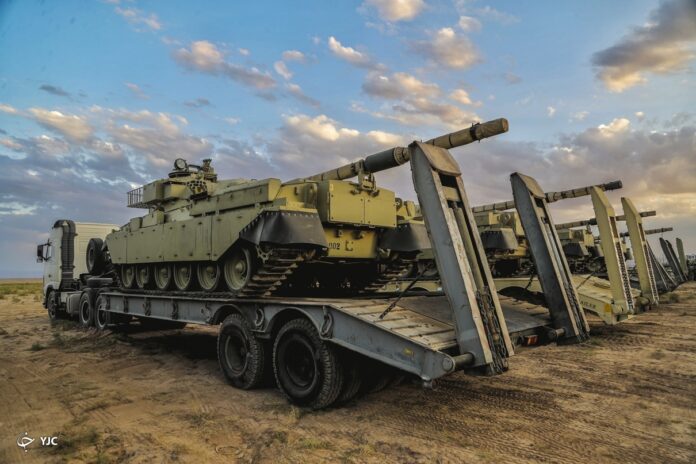
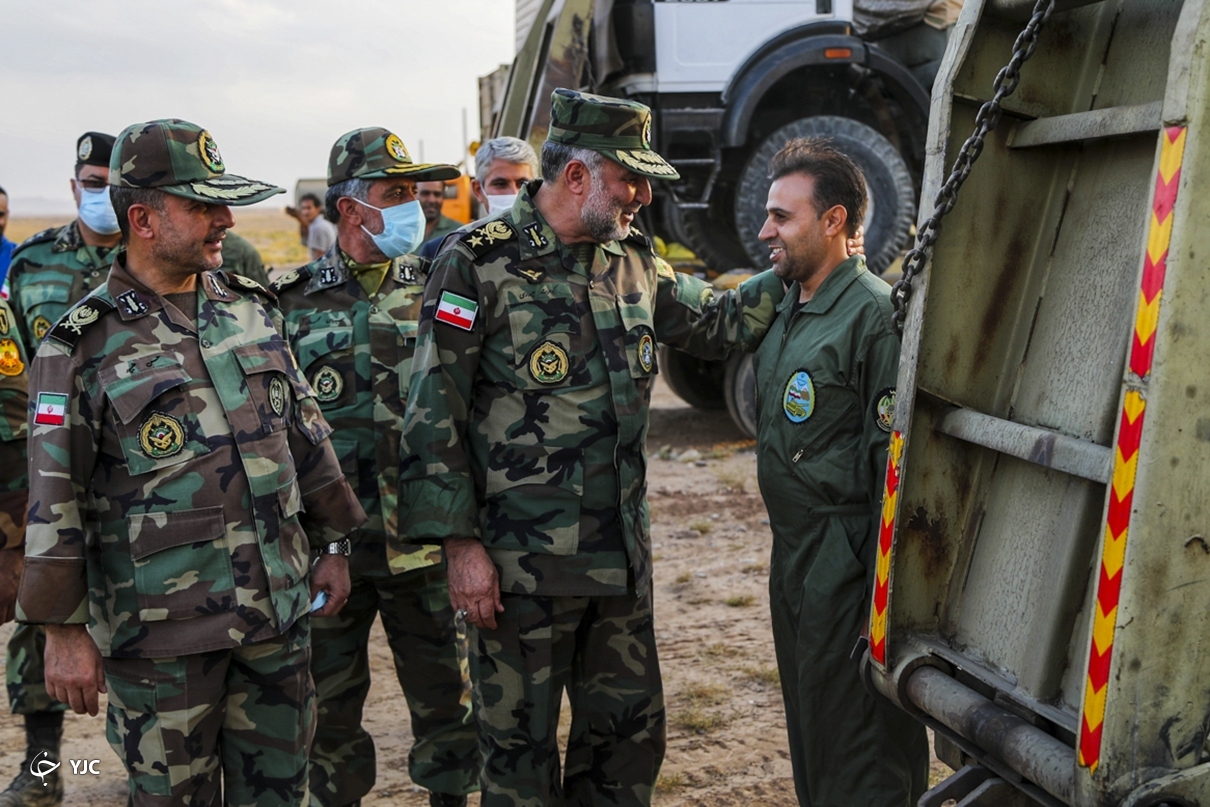
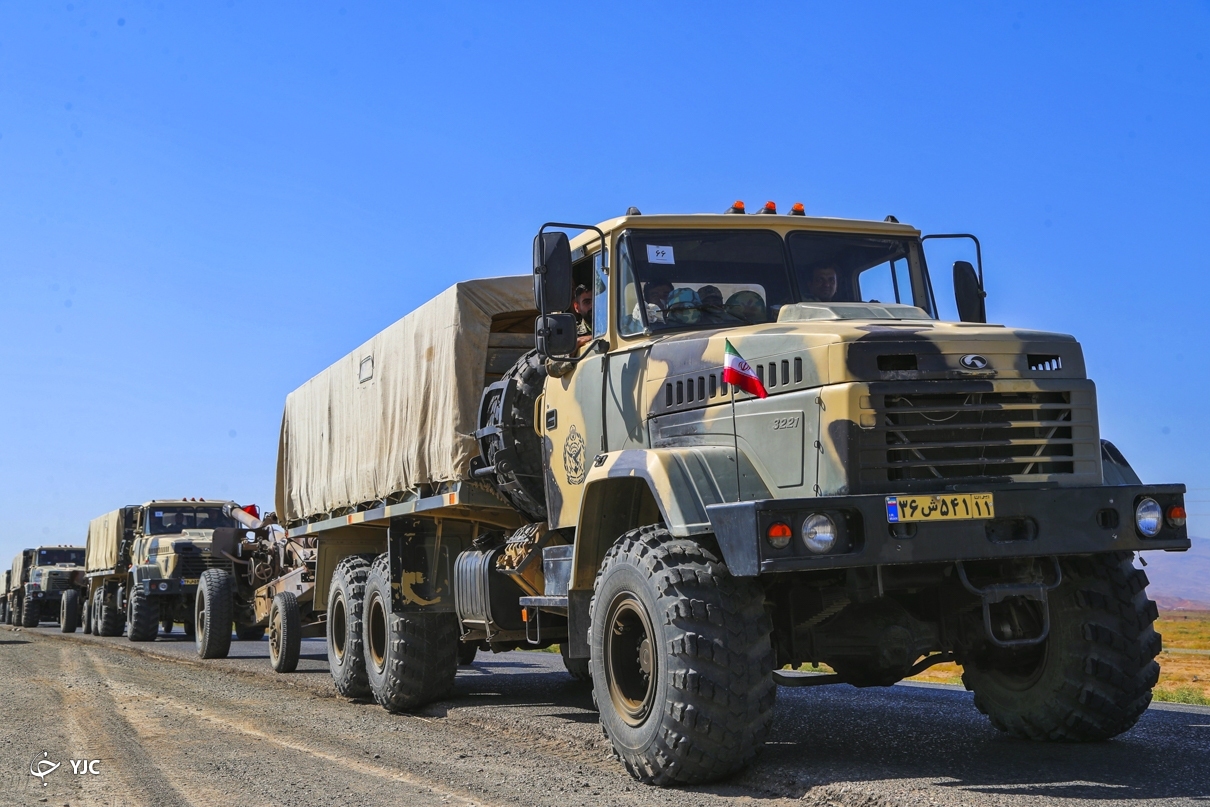
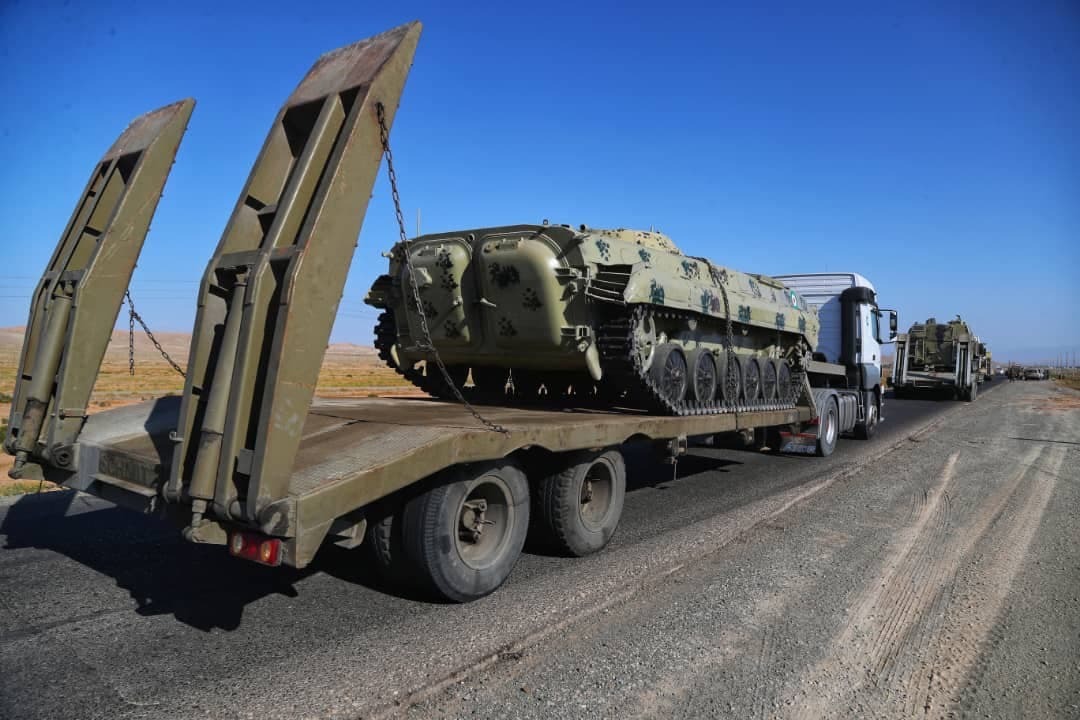
Iran Army Ground Force launches drills in northwest

Armored, artillery, drone, and electronic warfare units of the Ground Force with support from Army Air Force helicopters are taking part in the exercises.

During the first phase of the maneuvers on Friday Morning, the UAV unit carried out a general reconnaissance of the drill zone, and after sending pictures to the command post; the 25th Rapid Reaction Brigade transported its forces to the area with helicopters and exercised an operation.

Later, the artillery units opened heavy fire on pre-determined targets, and the armored units carried out a strike operation.

During the exercises, two new anti-tank weapons along with several other achievements of the ground forces will be unveiled.

The Commander of the Iranian Army Ground Force Brigadier General Kiomars Heidari said on Friday that the drills have a message for the Daesh terrorist group and the Zionist regime.

“They (Daesh terrorists) and the Zionists must know that they have no place in the region and that the armed forces of the Islamic Republic of Iran are particularly vigilant about them and will confront them wherever they see them,” the general warned.

The commander of the Iranian Army Ground Force has said that the exercises are held with detailed planning and are aimed at testing weapons, military equipment and assessing the combat readiness of the armed forces in northwestern border areas.

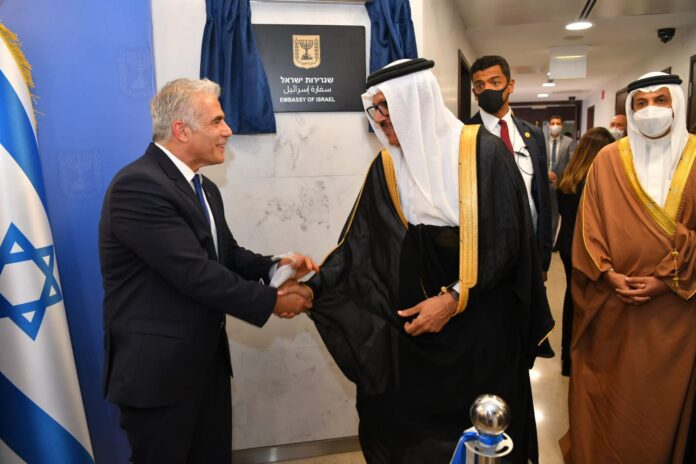
First Israel’s embassy opens in Bahrain

Lapid inaugurated the diplomatic mission in Manama, Bahrain, on Thursday, announcing that the Bahraini Embassy in Israel will be opened before the end of this year.

“Today we cut a ribbon and officially opened the Israeli embassy in Bahrain with the presence of the Foreign Minister. The opening of the embassy symbolizes the political cooperation between us. We agreed that the Bahraini embassy in Israel will open by the end of the year,” Lapid tweeted.

Lapid met earlier in the day with the King of Bahrain, Hamad bin Isa Al Khalifa, also holding meetings with the crown prince and prime minister of the Kingdom, Salman bin Hamad Al Khalifa, along with al-Zayani.

Apart from that, Lapid visited the US Fifth Fleet headquarters and the Multinational Naval Task Force in Bahrain.

Lapid has carried out his first visit to the Kingdom of Bahrain, a year after the countries established diplomatic relations.

Bahrain’s ambassador has already started his work in Tel Aviv.

On 15 September last year, the United Arab Emirates and Bahrain signed an agreement on the normalization of relations with the Jewish State, which became known as the Abraham Accords. The process was actively facilitated by the United States. Later, Sudan and Morocco also joined the initiative.

Before the Accords were signed, Tel-Aviv had diplomatic relations only with Egypt and Jordan from the Arab countries.

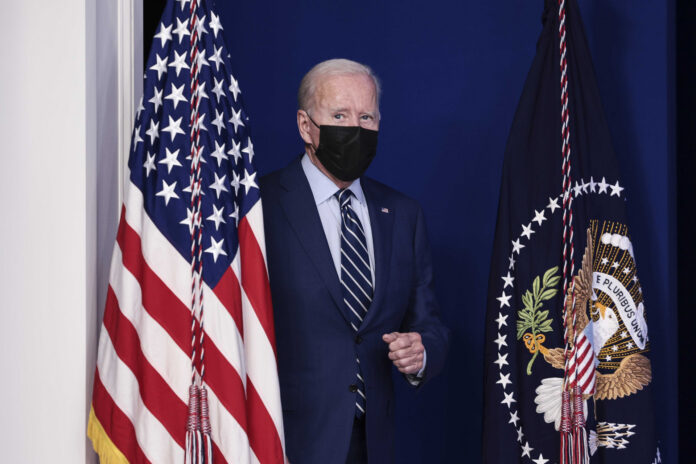
Biden signs budget resolution to keep US govt. open

Biden on Thursday evening signed a deal the House and Senate passed earlier in the day to avert a government shutdown that would have affected hundreds of thousands of federal workers and slammed an economy still struggling to recover from the pandemic, all with just hours left to stave off a crisis.

“It meets critical and urgent needs of the nation,” the president said in a statement Thursday night, but he also noted, “There’s so much more to do.”

Under the deal, announced by Senate Majority Leader Chuck Schumer, senators dispensed with a handful of Republican amendments and then approved, 65-35, a temporary funding bill that not only averts a shutdown until Dec. 3, but also includes $28.6 billion in disaster aid for states ravaged by extreme weather and $6.3 billion to further assist Afghan refugees.

The House passed the Senate version of the stopgap measure later Thursday afternoon, 254-175, just hours before the government technically runs out of money at the end of the day Thursday.

According to the White House, H.R. 5305 — the Extending Government Funding and Delivering Emergency Assistance Act — “provides fiscal year 2022 appropriations to Federal agencies through December 3”.

The bill does not include any provision to raise the nation’s debt ceiling, after Republicans steadfastly rejected any attempt to include it.

Senate Minority Leader Mitch McConnell has continued to insist that his conference will not help raise the borrowing limit — or even expedite Democrats’ ability to do so alone — citing concerns about the majority party’s intention to pass trillions in new spending for social and climate policy. This, despite a debt ceiling increase paying for past, bipartisan debt.

“What Republicans laid out all along was a clean continuing resolution without the poison pill of a debt limit increase,” McConnell stated, adding, “That’s exactly what we’ll pass today.”

He added Democrats “accepted reality”, putting forward a “clean” continuing resolution to fund the government, and that “the same thing will need to happen on the debt limit”.

Schumer said Republicans realized a shutdown would be “catastrophic” and “they should realize that a default on the national debt would be even worse”.

He noted the GOP have spent the week “solidifying themselves as the party of default”.

Biden hinted at the discord in his statement on the continuing resolution Thursday evening, writing that “the passage of this bill reminds us that bipartisan work is possible and it gives us time to pass longer-term funding to keep our government running and delivering for the American people”.

Treasury Secretary Janet Yellen has warned of “calamity” for the economy and average Americans unless the debt limit is raised before Oct. 18.

Senate Appropriations Committee Chairman Patrick Leahy, D-Vt., noted the irony of Republicans refusing to raise the borrowing limit but then voting to approve billions in new spending.

“If there’s no money in the treasury to pay for these items — what’s the point?” Leahy asked.

McConnell, for his part, condemned Democrats for not including $1 billion in funding for Israel’s anti-missile Iron Dome system. Democrats in the House balked at funding, and the measure was stripped out in that chamber. But a majority of Democrats in both chambers have said they intend to pass the funding for a key U.S. ally at a later date.

Iran Foreign Ministry spokesman: Tehran not to accept anything beyond JCPOA

Khatibzadeh spoke to Le Monde during his stay in Paris on September 29 reiterating that the US must lift all sanctions it imposed on Iran.

He was also asked about what Iran means by “very soon” when it talks about the restart of the JCPOA negotiations. Khatibzadeh said, “This is what was said the day the new Iranian government came to power. There are two things to take into account.

Iran has considered whether to resume negotiations, and we have come to the conclusion that we will certainly resume them. Then there is a second phase which involves the evaluation of all the negotiations that have already been conducted to clarify all the dimensions, before entering into an active and effective dialogue. As soon as this reassessment takes place, we will not waste an hour before arriving in Vienna.”

He also referred to the West’s claim that it’s concerned about the delay in the resumption of the nuclear talks and their allegation that Iran may “take advantage of it to continue its nuclear program”.

Khatibzadeh said, “I understand your concern. But when President Biden took office, how many days did it take before the Americans got into the talks again? At the time, there was no European desire to revive the negotiations. They kept telling us, ‘Wait, be patient, it won’t be long. The Americans are assessing the situation, they will certainly come to Vienna’.”

Asked whether Tehran will ask for additional measures, particularly the lifting of sanctions, Khatibzadeh said,

“In this case, the United States was the first party that left the nuclear deal, imposed unilateral sanctions on Iran, caused suffering for the Iranian people, and caused Iran to suffer billions of dollars in losses”.

He also rejected Europe’s accusations that Iran is violating the JCPOA. Khatibzadeh said Iran has only reduced its commitments under the agreement while it’s fully sticking by the nuclear non-proliferation treaty, NPT.

He reiterated that all measures Iran has done are reversible.

Khatibzadeh also spoke of Syria, Iraq and Afghanistan. He said Iran is in Syria at the invitation of the Syrian government, noting that relations between the two countries are strategic. The Foreign Ministry spokesman noted that Iran is not after a permanent base in Syria.

He also described Iran’s relations with Iraq as historical and multi-faceted. Khatibzadeh added that if Iran were not in Iraq, the Daesh terrorists would have captured the city of Erbil.

On the Taliban, Khatibzadeh said it’s too early to speak of the group’s legitimacy and that the world must wait and see if they will keep their word and if they will form a broad-based government.

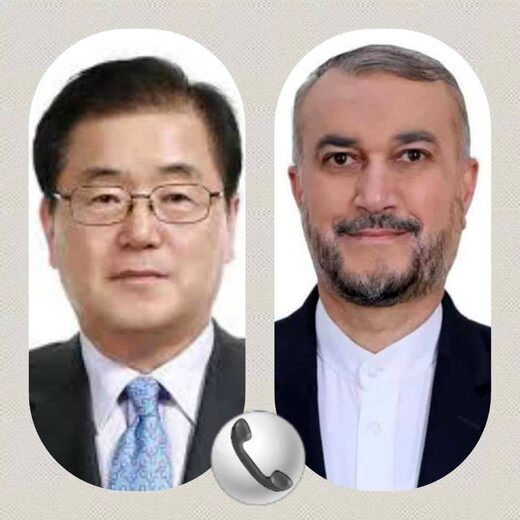
Iranian, South Korean FMs discuss Iran’s frozen assets

Amirabdollahian praised the friendly relations between the two countries in the past decades, and stressed the need to further develop relations.
At the same time, he strongly criticized South Korean banks for their refusal to return Iranian assets at those banks.

The Iranian foreign minister called for solving the problem of the country’s lack of access to its assets in South Korea as soon as possible, in a way that would end the current impasse created due to following the path drawn by the United States, so that our country can regain its financial resources and it will be possible to buy essential medicines and other items.

Amirabdollahian stressed, “Unfortunately, due to the lack of attention to the problem of Iran’s financial resources in South Korea and the suspension of trade between the two countries and even restrictions on the process of trade in humanitarian items, the Iranian people are very dissatisfied with this situation and the current situation is unbearable for them”.

Chung Eui-yong also referred to the long-standing relations between the two countries. He stressed the need to solve the problems in bilateral relations, saying, “South Korea will continue to pursue Iran’s access to its assets”. Chung Eui-yong also expressed concern over reports that Iran has banned imports of South Korean goods and called for looking into the issue.

Amirabdollahian: Iran not tolerate Israel’s presence along borders

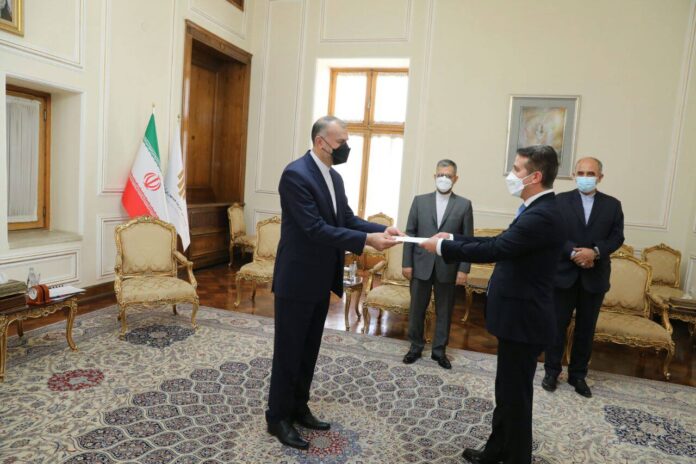
Hossein Amirabdollahian made the remarks on Thursday while receiving a copy of the new Azeri ambassador’s credentials in Tehran.

Amirabdollahian was referring to the Zionist regime’s recent movements near Iran’s border.

Also referring to the military drills set to start on Friday by Iran’s army along its northwestern borders, the Iranian foreign minister said military drills by any country within its territory are a sovereign right.

He described as surprising and regrettable, the recent negative comments by Azerbaijan Republic’s officials against Iran.

The top Iranian diplomat meanwhile wished the Azeri envoy success during his mission in Tehran and underlined the importance of relations between Tehran and Baku.

The new Azerbaijani ambassador, for his part, underscored good and deep relations between Azerbaijan Republic and Iran.

Strategic mistakes of Azerbaijan republic and Armenia

How did it start?

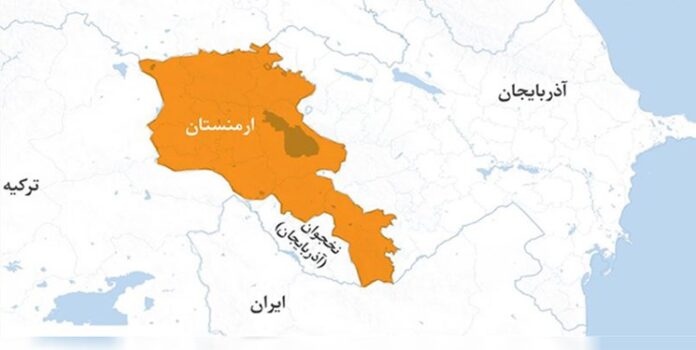
Several issues have been the main cause of tension in the region: First, the military forces of the Republic of Azerbaijan have blocked the Goris-Qapan axis and do not allow heavy vehicles to pass through this route. In addition, the joint military maneuver of Azerbaijan Republic, Pakistan and Turkey in recent days near the Iranian border was another issue that caused sensitivities in our country.

Another issue was the sharp and undiplomatic remarks of the members of Azeri Parliament against the territorial integrity of the Islamic Republic of Iran. The last thing was the possibility of border changes and a deal over some areas in the Armenian territory and the Republic of Azerbaijan, as a result of which part of the territory of Armenia bordering the Islamic Republic of Iran will be ceded to Azerbaijan Republic and Armenia will effectively lose its border with Iran.

What is the context of this story?

The statements of Azeri officials or some movements such as the ban on Iran’s exports to Armenia are not issues that can escalate the conflict to this high level. What is important is that the United States and Israel would scramble for proxy actions on the northwestern borders of our country.

Political analyst Saadollah Zarei wrote in a note, “The Armenian government and Prime Minister Pashinian, who is considered pro-Western compared with the former government, have joined the US-Turkey project in the hope of enjoying political and economic benefits, which is a betrayal of Armenia.”

In this case, instead of a direct and obvious presence, the United States uses the Zionist regime’s nearly 30 years of security ties with Azerbaijan Republic and Armenia. Although exact figures are not available, numerous reports indicate the growing security presence of the Israeli regime, especially in Azerbaijan Republic, mostly at the “Qibla Air Base”.

The number of Israeli forces is between 500 and 1,000, while this criminal regime has gained significant influence in the last decade in the pillars of Azerbaijan Republic and the family of Elham Aliyev such that the Zionist leaders referred to Azerbaijan Republic as “Lebanon of Israel”. In this way, we have said, we can entangle the Islamic Republic in a long-term border security challenge and blunt its impact in the region. However, it’s absolutely clear that such claims and their capability to translate them into action are far apart.

What is clear is that a trans-regional event is taking place that is the result of linking neo-Ottoman tendencies with Zionism, and in the meantime, Turkey is trying to play its role well in line with these developments.

What is the mistake of Azerbaijan Republic and Armenia?

For many years, Azerbaijan Republic has been a haven for pro-Israel currents and even allowed the direct presence of Zionism in the region. It has forgotten that in the time of serious and historical crises in this region, it was Iran that supported Azerbaijan Republic’s territorial integrity and did not allow the extra-regional powers to disrupt the strategic order of this region. Iran has also played its rightful role as a neighbor to Armenia.
Iran has tried to have secure and strong neighbors according to a grand strategy. But now Armenia, with its pro-Western president, and the Republic of Azerbaijan, with a pro-Israeli government, are seeking to play a proxy role in confronting the Islamic Republic of Iran. Azerbaijan Republic is a Shia Muslim country and will naturally, in the short term, come into social confrontation with the anti-religious and anti-Shia currents of the West and Israel. This is the main mistake of the Republic of Azerbaijan.

Armenia must also realize how important countries in the region play their roles, and in this case, if the important and influential role of such countries as Iran and Russia is not taken into account, it will certainly not be possible to move forward in regional equations.

What does Iran want?

Iran pursues two main issues: First, Iran does not accept the strong presence of Israel on its borders and cannot allow the enemies of the Iranian people to equip themselves around Iran’s borders. The second issue is that Iran can in no way accept border changes in its northwestern regions. The principle of good neighborliness is an issue that neighbors should respect. Iran has always wanted security and power for its neighbors, and they are also expected to reciprocate.

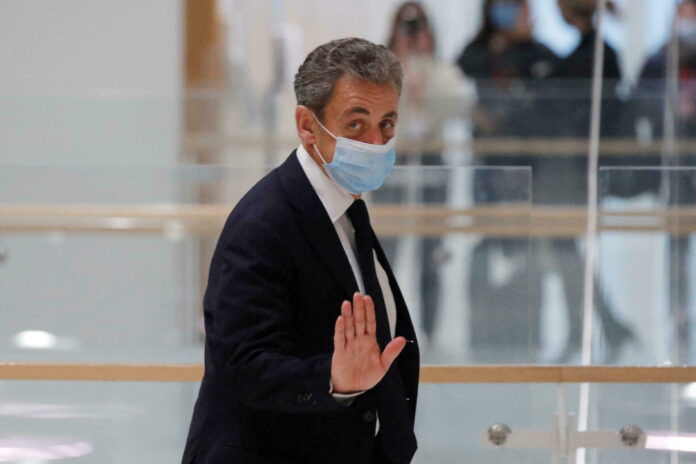
France’s Sarkozy sentenced to one year jail term

A French court Thursday convicted Sarkozy of illegal campaign financing over massive overspending on his 2012 re-election campaign, and sentenced him to one year in prison. The verdict came six months after Sarkozy was found guilty of corruption in a separate trial.

Sarkozy, who spent nearly twice the legal limit on his failed bid for a second term in office, wasn’t present at the Paris court for the announcement of the verdict.

The 66-year-old right-winger pulled out all the stops in 2012 to try fend off the ultimately victorious Socialist candidate, François Hollande.

A series of lavish US-style election rallies caused his costs to spiral, with the final bill coming to at least 42.8 million euros $49.7 million), nearly double the legal limit of 22.5 million euros.

The case is known as the Bygmalion affair, after the name of the public relations firm that set up a system of fake invoices to mask the real cost of the events.

Prosecutors sought a one-year prison sentence, half of it suspended, for the former president. He is in any case unlikely to go to jail immediately as he would be expected to appeal the sentence.

It was the second guilty verdict this year for Sarkozy, who led France from 2007 to 2012 and retains influence among conservatives despite falling from grace over his legal woes.

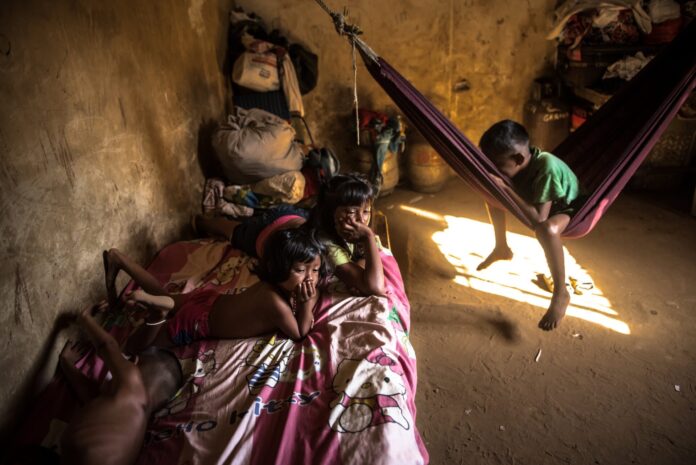
Report: Three in four Venezuelans living in extreme poverty

The 2020-2021 National Survey of Living Conditions found that the percentage of Venezuelans living in extreme poverty rose by nearly 10 percentage points from last year, the wire service noted, from 67.7 percent last year to 76.6 percent this year.

Roughly 95 percent live in poverty when only looking at income levels, according to the study, run by researchers from Andres Bello Catholic University, which surveyed 14,000 households in 21 of the country’s 23 states between February and April.

Among the factors contributing to such dramatic poverty include fuel shortages, COVID-19 and not enough job opportunities.

“It is the absence of opportunities,” Pedro Luis Espana, sociologist from Andres Bello Catholic University who worked on the report, told Reuters.

“It is sitting in front of the door of the house, doing nothing, not because you do not want to do anything, but because there is nowhere to do it,” he added.

The report comes as the country is mired in political and economical crisis, which includes shortages of critical supplies like medicine and food, hyperinflation and a lack of power, according to the BBC.

Some argue that the conditions to the mismanagement of the country’s economy, Reuters noted.

The administration of President Nicolas Maduro has pointed the blame on U.S. sanctions for the reasoning behind the country’s predicament.

However, the U.S. has also continued to give financial assistance to the country, including a recent contribution of $336 million in humanitarian and economic assistance. According to the State Department, the U.S. has given over $1.9 billion in financial assistance to the country since 2017.