Tuesday, December 23, 2025
Home Blog Page 236

Iranian official urges sun protection as UV radiation levels rise

Deputy Director of the Air Quality and Climate Change Research Center at Iran’s Shahid Beheshti University of Medical Sciences Abbas Shahsavani referred to social media reports on elevated UV levels in Tehran and other cities, saying this is not a new phenomenon.

“Countries in West Asia, due to their geographic location, typically experience high UV index levels from June to September, particularly between 11 a.m. and 4 p.m”, he said. Shahsavani noted that climate change is intensifying both temperatures and UV radiation in the region.

He advised the public to wear sunglasses, wide-brimmed hats, long-sleeved clothing, and sunscreen, especially during peak sunlight hours, and to limit outdoor activities whenever possible.

Shahsavani warned that long-term exposure to UV can lead to skin cancer, premature aging, weakened immune function, and eye damage.

He said UV levels in Tehran have reached an average index of 11.28 during the summer months, peaking at 12 in August, levels which are considered very high.

Israeli soldiers arrested in Belgium after Gaza war crimes complaint by rights groups

A statement by the Hind Rajab Foundation (HRF) and the Global Legal Action Network (Glan) said the pair were in the country to attend a music festival and that legal proceedings were ongoing.

“The suspects were identified and arrested with a clear show of force at the Tomorrowland festival in Boom,” the groups announced on Monday.

HRF director Dyab Abou Jahjah stated: “Within the framework of the long fight for accountability, this is a major milestone. This is the first time that a European country acknowledges universal jurisdiction against Israeli soldiers and acts upon it in a forceful way, arrests them, and brings them to a police station to interrogate them.”

Dearblah Minogue, Glan’s senior lawyer who worked on the case with HRF, noted the arrests are “the biggest step for accountability since the beginning of the genocide, because law enforecement in Europe actually took action and arrested some suspects”.

“I think we will now see a domino effect across Europe and around the world,” she told Middle East Eye, explaining that the accusations brought against the two soldiers include the use of human shields and wanton destruction.

The evidence was collected from the soldiers’ own social media feed.

“One of them posted videos of his unit blowing up property in Gaza and Lebanon,” added Minogue.

“The other posed next to a Palestinian who was being used as a human shield by his unit.”

The Federal Prosecutor’s Office on Monday said it received two complaints on Friday and Saturday from the HRF and Glan, concerning “serious violations of international humanitarian law allegedly committed in the Gaza Strip by two members of the Israeli army” who were in Belgium to attend the Tomorrowland festival.

The prosecutor’s office announced it has determined that it might have jurisdiction on the case based on the new Article 14/10 of the Preliminary Title of the Code of Criminal Procedure, which entered into force on 28 April 2024. The article grants Belgian courts jurisdiction over crimes committed outside Belgium based on the Geneva Conventions of 1949 and the Convention against Torture of 1984.

“In light of this possible jurisdiction, the Federal Prosecutor’s Office instructed the police to locate the two individuals mentioned in the complaint and to proceed with their questioning. After the interviews, they were released,” it said, adding that no further information will be provided at this stage of the investigation.

The HRF is a Brussels-based NGO focused on taking international legal action for war crimes committed in Gaza since the start of the war in October 2023. Its founder Dyab Abou Jahjah has told MEE that it has more than 8,000 pieces of evidence documenting war crimes by Israeli soldiers in Gaza.

It has pursued war crimes cases against Israeli soldiers and officials in Europe and Latin America, but this is the first time its efforts have led to arrests.

“The Hind Rajab Foundation and Glan welcome this breakthrough with determination and humility,” they said in a press release, adding, “We will continue to support the ongoing proceedings and call on Belgian authorities to pursue the investigation fully and independently. Justice must not stop here – and we are committed to seeing it through.”

The arrests came on the same day Belgium’s King Philippe described the situation in Gaza as “a disgrace to humanity”. He stated in speech on Sunday that Belgium backs calls by the UN for “an immediate end to this unbearable crisis”.

Israeli army admits major manpower shortfall amid Gaza war for 1st time: Report

Israeli Army

“For the first time, the Israeli army admits that its forces are significantly depleted. It estimates a shortage of around 7,500 soldiers,” the Hebrew-language daily Maariv said.

According to the report, the army is currently lacking 300 platoon commanders in combat units across its ground forces.

The army admitted that it has been “difficult to convince capable soldiers to join the officer training program,” and said it had resorted to appointing experienced sergeants as acting platoon commanders to fill the gap.

Maariv reported that another shortfall lies in company-level leadership.

“In recent months, the army has been forced to assign officers to roles in both regular and reserve units who have not completed the official company commander course,” the newspaper added.

As for the war in Gaza, Maariv noted that “a significant number of officers and commanders have been killed,” and that “hundreds have been injured.”

Commanders in both regular and reserve units told the newspaper that the leadership crisis extends beyond platoon and company levels, reaching battalion commanders, who bear a heavy combat burden while remaining away from home and family.

Many battalion commanders have expressed interest in retiring due to workload and extended deployments, the paper noted.

Despite more than 21 months since the start of the genocidal war on Gaza in October 2023, Palestinian resistance factions continue to conduct well-planned ambushes in the area, inflicting casualties on Israeli forces, showcasing Tel Aviv’s inability to achieve its war objectives.

Israel maintains strict censorship on reporting its military losses in Gaza and has not published an updated toll for its dead and wounded, prompting speculation that actual figures may be significantly higher.

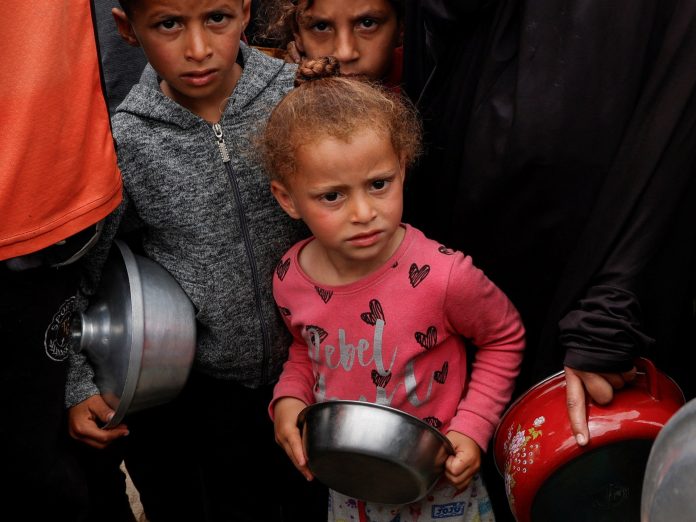
Rejecting international calls for a ceasefire, the Israeli army has pursued a brutal offensive on Gaza since Oct. 7, 2023, killing more than 59,000 Palestinians, most of them women and children. The relentless bombardment has destroyed the enclave and led to food shortages and a spread of disease.

Last November, the International Criminal Court issued arrest warrants for Israeli Prime Minister Benjamin Netanyahu and his former Defense Minister Yoav Gallant for war crimes and crimes against humanity in Gaza.

Israel also faces a genocide case at the International Court of Justice for its war on the enclave.

25 states, EU condemn Israel ‘inhumane killing’ of civilians in Gaza

In a joint statement, the foreign ministers of 25 countries and the EU Commissioner for Equality, Preparedness and Crisis Management Hadja Lahbib, said the suffering of civilians in Gaza has reached “new depths.”

“The Israeli government’s aid delivery model is dangerous, fuels instability and deprives Gazans of human dignity,” it added.

“We condemn the drip feeding of aid and the inhumane killing of civilians, including children, seeking to meet their most basic needs of water and food.”

Labelling the killing of over 800 Palestinians while seeking aid since the start of operations by the controversial Gaza Humanitarian Foundation in late May as “horrifying,” the statement noted that the Israeli government’s denial of essential humanitarian assistance to the civilian population is “unacceptable.”

“Israel must comply with its obligations under international humanitarian law,” read the statement, signed by the foreign ministers of Australia, Austria, Belgium, Canada, Denmark, Estonia, Finland, France, Iceland, Ireland, Italy, Japan, Latvia, Lithuania, Luxembourg, The Netherlands, New Zealand, Norway, Poland, Portugal, Slovenia, Spain, Sweden, Switzerland and the UK as well as the EU commissioner.

Also condemning the detention of hostages, they called for their “immediate and unconditional release.” Hamas took around 250 Israeli hostages in its Oct. 7, 2023 attack. Around 20 are still believed to be alive.

“We call on the Israeli government to immediately lift restrictions on the flow of aid and to urgently enable the UN and humanitarian NGOs to do their life saving work safely and effectively.”

Calling on all parties to protect civilians and uphold the obligations of international humanitarian law, the statement said proposals to remove the Palestinian population into a “humanitarian city” are “completely unacceptable.”

“Permanent forced displacement is a violation of international humanitarian law. We strongly oppose any steps towards territorial or demographic change in the Occupied Palestinian Territories.”

The parties also reaffirmed their “complete support” to the efforts of the US, Qatar and Egypt to achieve immediate, unconditional and permanent ceasefire.

Beijing slams EU for including Chinese firms in anti-Russia sanctions

On Friday, Brussels blacklisted two Chinese banks and five companies as part of the 18th sanctions package against Russia over the Ukraine conflict, claiming that they helped circumvent earlier sanctions.

“China has consistently opposed unilateral sanctions that lack a basis in international law and are not authorized by the UN Security Council,” a spokesperson for the ministry told journalists on Monday, warning that the EU’s move will severely impact bilateral trade, as well as economic and financial cooperation.

The ministry called for an immediate halt to “the erroneous practice,” adding that China will “take necessary measures to resolutely safeguard the legitimate rights and interests” of its sanctioned businesses.

Heihe Rural Commercial Bank and Heilongjiang Suifenhe Rural Commercial Bank were included in the EU sanctions list for allegedly providing cryptocurrency services which, according to Brussels, were “frustrating the purpose of the sanctions” on Russia. This is the first time Chinese lenders have been added to the EU sanctions list since the escalation of the Ukraine conflict in February 2022.

The latest round of EU sanctions also targets seven UAE-based enterprises accused of engaging in oil trading or ship management services supporting Russian exports. Nayara Energy, an Indian oil refinery in which Russia’s Rosneft holds a 49% stake, was also included.

In addition, the bloc sanctioned eight Belarusian-based companies in the military-industrial sector, claiming that they support Russia through manufacturing or facilitating military technologies. Four Turkish companies were also targeted for allegedly supplying dual-use goods and technologies that could support Russia’s military-industrial complex.

Kremlin spokesman Dmitry Peskov described the EU’s latest sanctions as a “double-edged sword,” warning that “each new package adds a negative effect for the countries joining it.” He stressed that Russia has already developed “a certain immunity” to the “illegal” Western sanctions.

Gaza death toll surges past 59,000 as Israel continues war on Palestinians

A ministry statement said that 134 bodies were brought to hospitals in the last 24 hours, while 1,155 people were injured, taking the number of injuries to 142,135 in the Israeli onslaught.

“Many victims are still trapped under the rubble and on the roads as rescuers are unable to reach them,” it added.

The ministry also noted that 99 Palestinians were killed and over 650 injured while trying to get humanitarian aid in the last 24 hours, bringing the total number of Palestinians killed while seeking aid to 1,021, with over 6,511 others wounded since May 27.

The Israeli army resumed its attacks on the Gaza Strip on March 18 and has since killed 8,196 people and injured 30,094 others, shattering a ceasefire and prisoner exchange agreement that took hold in January.

Last November, the International Criminal Court issued arrest warrants for Israeli Prime Minister Benjamin Netanyahu and his former Defense Minister Yoav Gallant for war crimes and crimes against humanity in Gaza.

Israel also faces a genocide case at the International Court of Justice for its war on the enclave.

Iran’s Lake Urmia on brink of total desiccation

Lake Urmia

The warning was issued by Director General of Environmental Protection in West Azarbaijan Province Hojjat Jabbari.

Speaking on Monday, Jabbari confirmed that satellite images and local reports show the northern half of the lake is nearly dry, with only a thin layer of water, just four to five centimeters deep, is covering an area of about 100 square kilometers.

“This thin layer of water will disappear within a week”, Jabbari said.

He added that from an ecological perspective, the area can already be considered dry. The lake’s southern basin, which currently holds about 600 to 700 square kilometers of water at a depth of 15 to 20 centimeters, is also expected to dry completely by the end of summer.

According to the official, autumn rainfall will not significantly improve the situation, as most seasonal precipitation occurs during winter and spring.

“The lake has essentially become seasonal since around 2011…without a substantial change in water management, it will only retain water in wet seasons and dry up in summer”, Jabbari said.

Experts warn that complete drying of Lake Urmia will have severe environmental, health, and socio-economic consequences for West and East Azarbaijan Provinces.

Iran prioritizes strengthening defense capabilities and post-war recovery

Iran Air Defense System

Pourmohammadi noted that relevant meetings are underway to expedite these efforts and ensure that the armed forces can operate effectively.

Responding to questions about the government’s plans following the 12-day war, Pourmohammadi said strengthening national defense is the foremost priority for the entire system, with coordinated efforts between the government, parliament, and the judiciary.

He also referred to the efforts during the war to support the armed forces and first responders during the recent war, noting that in the early days, the Red Crescent and emergency services received necessary resources.

Given that several provinces were affected by the conflict, funds were allocated to help local authorities provide better services to citizens.

Pourmohammadi added that with coordination from the Armed Forces General Staff, the Plan and Budget Organization has efficiently managed logistical support for the military.

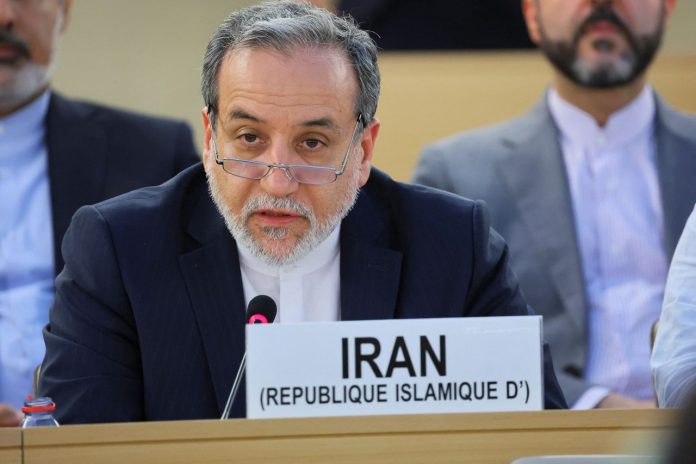
Iran to host three-way talks with Russia and China amid efforts to prevent snapback sanctions

Esmaeil Baqaei said Iran is in continuous consultations with these two countries to prevent the activation of the snapback mechanism, aimed at reimposing inti-Iran sanctions, or at least mitigate its consequences.

Responding to a question about how much Iran can rely on Russia and China if the snapback threat materializes, Baqaei noted that both countries are parties to the 2015 Iran nuclear deal known as JCPOA and are also permanent members of the UN Security Council, which gives them influential roles in any process of the top world body.

The Foreign Ministry spokesman added that Iran shares aligned positions with Moscow and Beijing and enjoys strong relations with both nations.

Baqaei further said that from legal, ethical, and political perspectives, there is no valid basis to reinstate the sanctions lifted under the JCPOA.

Iran leader’s advisor: National unity requires tangible change and public satisfaction

Ali-Akbar Velayati

Echoing Ayatollah Khamenei’s repeated calls for cohesion, Velayati suggested that true unity may require adjustments in the government’s social approach, with a stronger focus on the people’s satisfaction in ways they can tangibly feel.

“The people have proven themselves,” he said, “and now it is the officials’ turn”.

Velayati also noted that outdated governance methods are no longer effective for the purpose of addressing the needs of the post-war society.