Tuesday, December 23, 2025
Home Blog Page 235

Over 87% of Gaza Strip under Israeli military orders, militarized zones: UN

Citing Office for the Coordination of Humanitarian Affairs (OCHA), UN spokesperson Stephane Dujarric told a news conference that “87.7% of the Gaza is now under displacement orders or within displacement zones, squeezing about 2.1 million people into a fragmented area of the strip where hardly any services are available.”

Emphasizing that more than 1.3 million people in Gaza are in need of shelter and household items, Dujarric stated: “Harsh weather, humidity, overcrowding and frequent disassembly, a reassembly of tents and tarpaulins lead to shorter lifespan of shelter items.”

He highlighted the “dire” situation in the enclave, where no shelter supplies have entered more than four months. “The fuel crisis continues.”

“The limited quantity that have been allowed to enter Gaza in recent days are hardly sufficient,” he said, adding that UN is prioritizing the use of available fuel for “most critical operations.”

Dujarric also emphasized the “deeply concerning reports of severely malnourished people who are arriving in medical points and hospitals in extremely poor health” amid ongoing Israeli attacks.

According to the Gaza Health Ministry, 86 people—including 76 children—have died from hunger and dehydration since October 2023. Gaza’s government media office warned the enclave is “on the brink of mass death” after over 140 days of a near-total closure of all crossings.

Since October 2023, the Israeli army has killed nearly 59,000 Palestinians, most of them women and children, in Gaza. The relentless bombing has destroyed the enclave, nearly collapsed its health system, and created famine-like conditions.

Last November, the International Criminal Court issued arrest warrants for Israeli Prime Minister Benjamin Netanyahu and former Defense Minister Yoav Gallant for war crimes and crimes against humanity in Gaza.

Israel also faces a genocide case at the International Court of Justice over its war on the enclave.

Iran’s ICT minister warns against ‘blind confrontation’ with technology amid network challenges

Speaking during a parliamentary session on Tuesday amid reports of switching the country’s internet access to “national” or “tiered” system, Hashemi stated, “Can we really confront technology blindly?”

He emphasized that restrictions alone cannot prevent access to content, particularly as young people continue to bypass filters using free VPNs.

Hashemi cited the use of unregulated VPNs as a major cause of network contamination, confirming that up to 30% of user requests now fail due to degraded quality.

Addressing the recent 12-day conflict with Israel, the minister said maintaining digital connectivity was crucial for public calm and business continuity.

He stressed that a core element of the national information network is global connectivity, balanced with national sovereignty and security.

He, however, reported that cyberattacks intensified during the war, with over 20,000 attempted intrusions from abroad, and noted that Iran’s digital economy, on which 10 million Iranians depend, sustained nearly 15 trillion rials ($300 million) in losses, with a 30% drop in employment in the sector.

US can’t ‘compel’ Israel to withdraw from southern Lebanon: Trump envoy

“America is not here to compel Israel to do anything,” Barrack told reporters on Monday.

“We are here to use our influence to bring calm minds together… America can only influence… we are not going to have more boots on the ground.”

The 78-year-old billionaire, who officially serves as US ambassador to Turkey and special envoy to Syria, has been shuttling across the Middle East as Israel continues to launch wars on several fronts.

Despite the Lebanese movement Hezbollah agreeing to a ceasefire with Israel in November, Israel has continued to strike the group and occupy five strategic border “points” in the country’s south.

For months, Lebanon has been asking the US to help secure a full Israeli withdrawal and an end to air strikes, in return for Hezbollah handing over its weapons.

But on Monday, Barrack told reporters that the US was not going to force Hezbollah to disarm, or sanction the country if progress is not achieved.

“There’s no consequence, there’s no threat, there’s no whip,” he added.

The former real estate mogul and close Trump advisor, who lived in Beirut during the 1970s and enjoys close ties to Persian Gulf rulers, has said the US president’s promise of economic gain for the region is enough motivation.

“I honestly think that they are going to say ‘the world will pass us by.’ Why? You have Israel on one side, you have Iran on the other, and now you have Syria manifesting itself so quickly that if Lebanon doesn’t move, it’s going to be Bilad al-Sham again,” Barrack stated earlier this month, using the name for the historic region of Syria that once comprised Lebanon.

Since taking office, Lebanon’s President Michel Aoun has said Beirut is moving to disarm the powerful movement in exchange for a complete withdrawal of Israeli troops from southern Lebanon and an end to Israeli air strikes.

His government has reduced its sway in parts of the south as well as its hold over Beirut’s port and airport, but US officials have been asking for swifter and broader action.

The Lebanese Armed Forces, the country’s non-sectarian military, has moved into positions Israel has evacuated in southern Lebanon and where Hezbollah has withdrawn from – mainly south of the Litani River.

For its part, Hezbollah insists its arms are necessary because Israel continues to occupy Lebanese territory.

In an interview with reporters in New York earlier this month, Barrack noted the US was not concerned with Hezbollah’s small arms, but larger systems like missiles and rockets.

“Everybody in Lebanon is packing a 357 Magnum. I mean, it’s like having a belt. So we’re not talking about small arms. We’re talking about the weapons that could affect Israel,” he added.

And on 11 July, Barrack told reporters that the US only had “issues with” Hezbollah’s armed wing, not its political party, Amal, which represents most of Lebanon’s Shia Muslims in parliament.

At the beginning of the year, the US dangled reconstruction funds from Saudi Arabia to Lebanese lawmakers to lobby for them to vote in favour of former Lebanese army chief Aoun as president.

Those funds have not materialised, with US officials insisting on a full dismantlement of Hezbollah’s heavy arms arsenal.

Barrack said Persia Gulf states “are ready to provide [funding]” once Hezbollah is disarmed.

“Saudi Arabia, Qatar, and now the UAE are coming in and saying, ‘If we can get to where everybody can just calm down, we will help redevelop that portion of Lebanon,’ which is huge.”

Azerbaijan president accuses EU observers in Armenia of spying on Iran

President Ilham Aliyev

Aliyev claimed the observers patrol the Iran-Armenia border and conduct surveillance under the guise of monitoring, while Azerbaijan also keeps them under close watch.

Aliyev’s remarks came in response to questions about a reported US proposal to lease the Zangezur corridor, an idea he dismissed, reiterating that no foreign operators or companies would be allowed on Azerbaijani soil.

He further stressed that Armenia’s actions along the border are beyond his control and sharply criticized the EU mission’s presence.

In a wide-ranging press briefing, Aliyev also took aim at Russia, threatening legal action over the downing of an Azerbaijani aircraft.

He expressed frustration over a lack of response from Moscow, claiming the incident was deliberate and demanding accountability and reparations.

Turning to energy policy, he emphasized Azerbaijan’s neutral stance, stating the country’s gas exports to Europe are purely commercial and not intended to rival Russian energy supplies, despite plans to boost output by 2030.

Iranian daily warns against underestimating sanctions snapback mechanism

Iran Nuclear Program

The editorial draws parallels to former president Mahmoud Ahmadinejad’s dismissal of UN sanctions as mere “pieces of paper,” arguing that such attitudes led to long-term consequences for the nation.

The snapback mechanism enables the reactivation of six UN Security Council resolutions against Iran if the country fails to comply with enrichment limits outlined in the JCPOA.

The newspaper noted deep divisions in Iran over the gravity of this mechanism, noting, while some officials consider it a “gun without bullets,” others warn it functions as a “powerful artillery” with serious consequences.

It further stressed the mechanism’s legal strength under Chapter VII of the UN Charter, enabling broad military and economic measures.

With Russia and China unable to veto its reactivation, and both having previously supported these resolutions, the editorial urged Iran to actively pursue diplomacy with the European JCPOA members, namely France, Britain and Germany.

Given Europe’s current focus on the Ukraine conflict, the paper believes a window remains for Iran to prevent activation through strategic engagement.

US calls on Europe to join potential secondary tariffs on Russian oil

Russia Oil

“Russian oil is going to be subject to up to 100% secondary tariffs,” Bessent said. “I urge our European allies, who have talked a big game, to follow us if we implement these secondary tariffs.”

Bessent’s remarks follow U.S. President Donald Trump’s July 14 announcement that the U.S. will impose “severe” tariffs on Russia unless it agrees to end the war in Ukraine within 50 days.

“We call them secondary tariffs,” Trump said during a joint press conference with NATO Secretary General Mark Rutte at the White House. “Tariffs that are about 100%.”

Secondary tariffs are penalties targeting countries or companies that continue doing business with a sanctioned nation by charging extra for access to the U.S. market or financial system.

If a third country like China keeps buying Russian oil, exports to the U.S. could face a further 100% tariff, significantly raising prices for American consumers and squeezing Chinese exporters.

Trump, who had promised to broker a peace deal within 24 hours of taking office, has grown increasingly frustrated with what he described as Russia’s delays in moving forward with peace talks.

The U.S. strategy seeks to pressure Moscow by curbing its oil income, which accounts for roughly one-third of federal revenue and remains a vital source of funding for its war effort.

Kremlin spokesperson Dmitry Peskov responded on July 15 by calling Trump’s threat “serious,” but said Moscow needs time to analyze Washington’s message.

Israel says attacked Houthi targets in Yemen’s Hodeidah port

Yemen Houthi

Minister of Defence Israel Katz on Monday said the military was “forcefully countering any attempt to restore the terror infrastructure previously attacked”.

The Israeli military claimed that the “port serves as a channel for weapons used by the Houthis to carry out terrorist operations against Israel and its allies”.

The Houthi movement, which controls large parts of northern Yemen, later claimed responsibility for drone and missile attacks on locations in Israel, including Ben Gurion airport, Ashdod and Jaffa.

In a statement, Houthi military spokesperson Yahya Saree stated that the strikes were a direct response to the attacks on Hodeidah and Israel’s continued bombardment of Gaza.

“The drone attack successfully achieved its objectives,” he continued, adding that operations would continue until Israel ends its offensive on Gaza and lifts the siege.

Since Israel launched its war on Gaza in October 2023, the Houthis have carried out several attacks on shipping lanes in the Red Sea, saying they were acting in solidarity with Palestinians in Gaza. Israel has responded with repeated strikes on Houthi targets, particularly in Hodeidah, a key entry point for goods and aid into Yemen.

“The Houthis will pay a heavy price for launching missiles toward the State of Israel,” Katz noted.

Earlier this month, the Houthis claimed responsibility for an attack on the Greek-owned vessel Eternity C, which maritime officials said had killed four people.

In May, the United States brokered a deal with the Houthis to halt their bombing campaign in exchange for reduced attacks on international shipping. However, the Houthis clarified that the agreement did not extend to operations involving Israel.

Third round of Ukraine-Russia peace negotiations set for July 23: Zelensky

“Today I discussed with (National Security and Defense Council Secretary) Rustem Umerov the preparation of a (prisoner) exchange and another meeting in Turkey with the Russian side,” the president said.

“Umerov reported that the meeting is scheduled for Wednesday. Tomorrow there will be more details.”

The latest round of direct talks between Ukraine and Russia took place in Istanbul on June 2, following a previous meeting on May 16 after more than three years without negotiations.

Earlier in the day, Zelensky noted that the meeting would focus on three key issues: the return of prisoners of war, the return of abducted children, and preparations for a leaders’ summit.

“The agenda from our side is clear,” Zelensky wrote on X, adding, “It is clear to all that truly effective talks can only take place at the level of national leaders.”

Kremlin spokesperson Dmitry Peskov has stated that Moscow supports holding the next round of talks, although he claimed that no final date had been agreed.

While Zelensky has expressed readiness for face-to-face talks, Russian President Vladimir Putin has repeatedly declined to participate in person, sending lower-level officials instead.

Peskov said there would be “no changes” to the Russian delegation, which continues to be led by Putin’s aide, Vladimir Medinsky. Top Russian officials, including Foreign Minister Sergey Lavrov, will not take part.

President Recep Tayyip Erdogan has stated Turkey is working to organize a Zelensky-Putin meeting with the possible participation of U.S. President Donald Trump.

The peace talks, characterized by great distance between the two sides’ minimal demands, have been given new energy after Trump’s warning on July 14 that he would impose “severe” tariffs on Russia unless it agrees to end the war within 50 days.

Peskov had reiterated that Moscow’s war goals remain unchanged and are to be achieved “on the battlefield,” reflecting an increasingly open admission that Russia has no intention to stop on the battlefield.

Ukraine has proposed a 30-day unconditional ceasefire in both rounds of talks — a position supported by the U.S. — but Russia has so far rejected the proposal.

Ukraine’s First Deputy Foreign Minister Sergiy Kyslytsya has told the Kyiv Independent that Russia’s approach at the Istanbul meetings amounts to ultimatums rather than genuine negotiations.

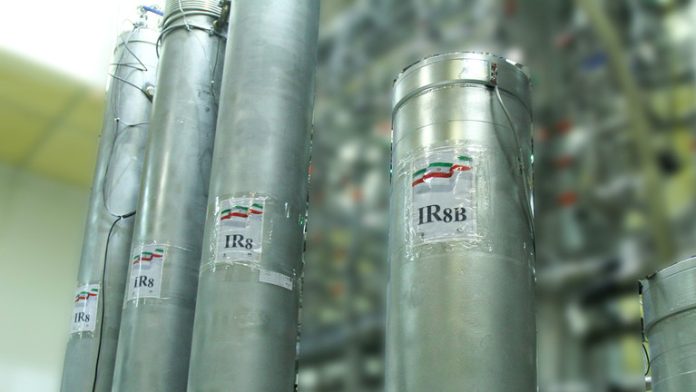
Nuclear enrichment will continue, but Iran still open to talks: Iran’s FM

“It is now stopped because, yes, damages are serious and severe, but obviously, we cannot give up our enrichment because it is an achievement of our own scientists, and now, more than that, it is a question of national pride,” Araghchi told the US broadcaster Fox News in an interview aired on Monday.

Araghchi said at the beginning of the interview that Iran is “open to talks” with the United States, but that they would not be direct talks “for the time being”.

“If they [the US] are coming for a win-win solution, I am ready to engage with them,” he added.

“We are ready to do any confidence-building measure needed to prove that Iran’s nuclear programme is peaceful and would remain peaceful forever, and Iran would never go for nuclear weapons, and in return, we expect them to lift their sanctions,” the foreign minister continued.

“So, my message to the United States is that let’s go for a negotiated solution for Iran’s nuclear programme.”

Araghchi’s comments were part of a 16-minute interview aired on Fox News, a broadcaster known to be closely watched by US President Donald Trump.

“There is a negotiated solution for our nuclear programme. We have done it once in the past. We are ready to do it once again,” Araghchi said.

Tehran and Washington had been holding talks on the nuclear programme earlier this year, seven years after Trump pulled the US out of the Joint Comprehensive Plan of Action (JCPOA), which Tehran signed with several world powers in 2015. Under the pact, Iran opened the country’s nuclear sites to comprehensive international inspection in return for the lifting of sanctions.

Trump’s decision to pull the US out of the deal came after Israeli Prime Minister Benjamin Netanyahu accused Iran of pursuing a “secret nuclear programme“.

Iran has long maintained that its nuclear enrichment programme is strictly for civilian purposes.

The US and Iran engaged in talks as recently as May to reach a new deal, but those negotiations broke down when Israel launched surprise bombing raids across Iran on June 13, targeting military and nuclear sites.

More than 1,000 people were killed in Iran before a ceasefire took hold on June 24.

The US also joined Israel in attacking Iranian nuclear facilities, with the Pentagon later claiming it had set back the country’s nuclear programme by one to two years.

Araghchi stated on Monday that Iran’s Atomic Energy Organisation is still evaluating how the attacks had affected Iran’s enriched material, adding that they will “soon inform” the International Atomic Energy Agency (IAEA) of its findings.

He added any request for the IAEA to send inspectors would be “carefully considered”.

“We have not stopped our cooperation with the agency.”

IAEA inspectors left Iran after Iranian President Masoud Pezeshkian signed a law suspending cooperation with the IAEA earlier this month.

Tehran had sharply criticised the IAEA and its chief, Rafael Grossi, over a June 12 resolution passed by the IAEA board accusing Tehran of non-compliance with its nuclear obligations.

Iranian officials said the resolution was among the “excuses” that Israel used as a pretext to launch its attacks, which began on June 13 and lasted for 12 days.

Speaking to journalists earlier on Monday, Stephane Dujarric, the spokesperson for the United Nations secretary-general, stated that the UN welcomed renewed “dialogue between the Europeans and the Iranians”, referring to talks set to take place between Iran, France, Germany and the United Kingdom in Turkiye on Friday.

The three European parties to the former JCPOA agreement have announced that Tehran’s failure to resume negotiations would lead to international sanctions being reimposed on Iran.

Tehran air quality reaches hazardous levels amid extreme heat

Iran Air Pollution

According to real-time monitoring data, most air quality stations in Tehran are reporting red and purple alerts. Only one station has reported a safer AQI of 37.

The AQI just 24 hours earlier had been at a 87, within the “moderate” range.

Currently, eight stations report “very unhealthy” (purple) conditions, six are marked “unhealthy for all groups” (red), and the rest are in the “orange” zone, meaning high health risks. Since the beginning of the current Persian year (starting March 21), Tehran has experienced only six days of “clean” air.