Tuesday, December 23, 2025
Home Blog Page 2359

Moscow to respond to NATO’s expulsion of Russian diplomats

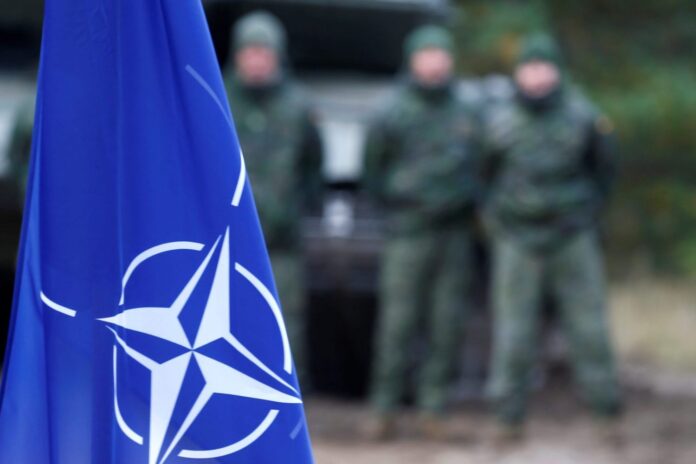
Moscow will formulate and implement response measures to NATO’s actions against Russia, Kremlin spokesman Dmitry Peskov said Friday, underscoring that the Alliance is cutting options for a dialogue.

“Undoubtedly, some response measures will be formulated in a way that would comply with our interests the most, and they will be implemented,” the spokesman underlined, adding, “A cooperation [between Russia and NATO] is out of discussion, because there is no cooperation, essentially.”

“Our NATO counterparties narrow the options for a dialogue,” Peskov stated.

On Wednesday, NATO announced its decision to cut the Russian diplomatic mission from 20 people to 10 before the end of October, adding that the diplomatic accreditation of 8 diplomats had been withdrawn.

“NATO is not an instrument of cooperation, not an instrument for interaction; it is a bloc that overall is anti-Russian in nature,” the spokesman said, adding that “this is how we see it, and this perception is clearly evidenced by this bloc’s actions”.

Foreign Ministry Spokeswoman Maria Zakharova told a briefing on Thursday Moscow will prepare tit-for-tat measures in response to NATO’s decision to strip eight staffers of the Permanent Mission of the Russian Federation to NATO of their accreditation.

“The unwillingness of NATO to cooperate has become obvious once and for all. We will proceed from this in working on retaliatory measures, which will follow,” the diplomat noted.

The NATO decision to expel eight Russian diplomats from Brussels was not caused by any specific event, but rather by Russia’s activity in general and the Alliance’s intelligence information, NATO Secretary General Jens Stoltenberg said during a press conference on Thursday.

“This decision is not linked to any particular event, but we have seen over some time now, an increase in Russian malign activity, and therefore we need to be vigilant, and we need to act when we see that members of the Russian delegation to NATO conduct activities which are not in line with their [diplomatic] accreditation, and therefore the accreditation is withdrawn,” he added.

The Secretary General stated that this decision was made “based on intelligence”, claiming that the expelled diplomats “were undeclared intelligence officers”.

He noted that the relations between Russia and NATO are at their lowest point since the Cold War, claiming that the responsibility for this lies with Russia. However, he said that the Alliance is open to a dialogue with Russia, including holding the Russia-NATO Council meeting.

Biden approval rating falls to lowest amid national crises

Biden’s approval rating has fallen to its lowest level so far, a new poll has found, with voters punishing the US president for a series of apparent failures at home and abroad.

After taking office with a 56 per cent approval rating, according to pollsters Morning Consultant/Politico, Biden’s approval rating has fallen to 45 per cent in the latest poll.

It also found that his disapproval rating was at 52 per cent, which was also the highest so far for the US president – and 16 per cent more than it was in January.

A new Quinnipiac poll also gives Biden the lowest approval rating of his presidency so far.

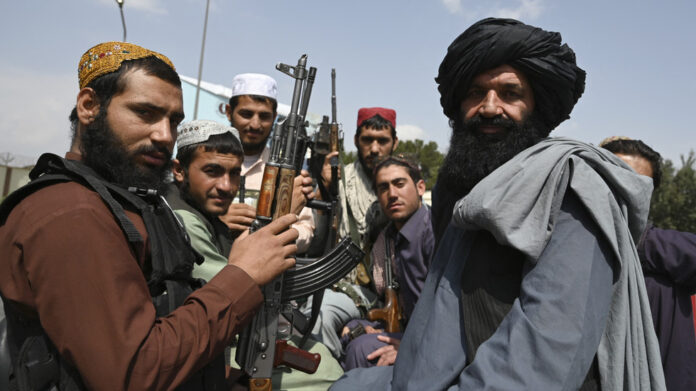
The ongoing collapse in Biden’s approval rating follows the US withdrawal from Afghanistan in August, which attracted heavy criticism for failing to prepare for the Taliban retaking the county and its capital, Kabul.

That was followed by last week’s failure by Democrats in Congress to agree on two influential bills that form part of Biden’s “Build Back Better” agenda, and which he campaigned on last year.

According to Morning Consultant/Politico, nearly three in five voters had heard about the delay in Congress last week, with Democrats now aiming to vote on the bills by the end of the month.

The party has also suffered in recent polling, with Democrats now leading Republicans by one per cent nationally on a “generic ballot” question, compared to the party’s four per cent lead last month.

That is despite the GOP largely refusing to negotiate or vote for Democrat bills.

Democrats, with small majorities in both the House and Senate, risk failing to pass Biden’s main domestic agenda, and large scale changes to social care, education, the environment and infrastructure – with investments worth trillions of US dollars.

Despite difficulties in Congress and falling approval ratings, voters still support the “Build Back Better” plans, according to the latest Quinnipiac University poll.

It found 62 per cent of voters approving of a $1trn infrastructure bill, and 57 per cent approval for a $3.5trn bill on domestic spending, or “Build Back Better”.

Former US president Donald Trump’s approval rating fell as low as 34 per cent, which according to Gallup, followed January’s riot on the US Capitol.

U.S. delegation to meet with Taliban in Qatar

Two senior administration officials told Reuters that some of the individuals expected to partake in the meetings include Tom West, deputy special representative for Afghanistan reconciliation with the State Department, and Sarah Charles, assistant to the administrator of USAID’s Bureau for Humanitarian Assistance.

Reuters reported that U.S. special representative for Afghanistan reconciliation Zalmay Khalilzad would not be included in the delegation. He led negotiations on the U.S. side that led to a deal in 2020 with the Taliban that created a timeline that would give the U.S. just over a year to leave Afghanistan, according to CNN.

It was not immediately clear who on the Taliban side would be attending the talks, but the two senior administration officials told Reuters that members of the Taliban’s cabinet would be at the meeting. 

A State Department official told CNN that topics to be discussed in the meeting included, “the continued safe passage out of Afghanistan of US and other foreign nationals and Afghans to whom we have a special commitment who seek to leave the country”.

“As Afghanistan faces the prospect of a severe economic contraction and possible humanitarian crisis, we will also press the Taliban to allow humanitarian agencies free access to areas of need,” the official told the network.

The official also told CNN that U.S. officials would press the Taliban to make sure that the insurgent group respects girls’ and women’s rights and push the Taliban to assure them that Afghanistan will not see a resurgence of terrorist activity.

“This meeting is not about granting recognition or conferring legitimacy. We remain clear that any legitimacy must be earned through the Taliban’s own actions. They need to establish a sustained track record,” a senior administration official told Reuters.

State Department spokesperson Ned Price stated that the number of Americans who seek to leave Afghanistan continues to be “dynamic” but noted that 105 U.S. citizens and 95 lawful permanent residents had been evacuated through direct facilitation efforts led by the U.S. government since Aug. 31.

On Thursday, Taliban spokesman Suhail Shaheen said he had a meeting with ambassadors and officials from the European Union, Canada, the United Kingdom, and the United States, and that the parties confirmed their commitment to provide Afghanistan with humanitarian aid.

“Today I had meeting with ambassadors and representatives of various countries including EU, Norway, Sweden, Netherlands, Italy, Japan, South Korea, Canada, UK and USA here in Doha,” Shaheen tweeted.

The Taliban official added that the participants expressed their readiness to continue to extend humanitarian aid to Afghanistan.

“I told them IEA [Islamic Emirate of Afghanistan] is a reality and we are ready to engage with the International Community and resolve issues through talks and understanding based on mutual interests and positive interaction,” Shaheen noted.

The spokesman mentioned that global isolation that Afghanistan experienced in the past turned out to be a failure. Shaheen also stated that his country urgently needs humanitarian aid before winter.

Iran’s FM: Tehran ready to provide Lebanon with more fuel

Talking to reporters in Beirut, Amirabdollahian also said Iran can sign a contract with Beirut to implement infrastructure projects such as the construction of a subway in Lebanon using its technical know-how for the well-being of the Lebanese people. 

Amirabdollahian added that his stay in Lebanon was partly designated to talks about economic ties between Iran and Lebanon and also Lebanon’s problems. 

He said he had reaffirmed Iran’s respect for Lebanon’s independence, sovereignty and territorial integrity in line with bilateral ties and that Iran is ready to provide Lebanon with any assistance to weather its economic crisis. 

The Iranian foreign minister noted that Tehran is also capable of meeting Beirut’s need for medicines, food and basic commodities. 

He referred to the US’s oppressive sanctions against regional countries, saying leaders and nations of the West Asia region won’t let the US economic war on them succeed. 

Amirabdollahian later said in a tweet that Iran is ready for helping Lebanon in the times of difficulty, adding he spent useful hours with Hezbollah Secretary General Sayyed Hassan Nasrallah. 

He also described his talks with high-ranking Lebanese officials as important. 

The Iranian foreign minister also paid tribute to the high ranking Hezbollah commander Imad Mughniyeh and other martyrs after the resistance, during his visit to a cemetery in Beirut. 

Imad Mughniyeh, was killed in a car bomb attack in Syrian in 2008.

5-magnitude quake rocks Iran’s Khuzestan province

The quake happened at 2:46 AM local time on Saturday at a depth of 7 kilometers. 

Its epicenter was near Ghaleh Khajeh region. There are no reports of casualties or damage yet. 

A 4-magnitude tremor also hit Khuzestan at 21:00 PM local time on Friday. 

Nearly all parts of Iran are criss-crossed by fault lines that have made the country quake-prone.

China warns U.S. to withdraw from Taiwan

China has called on the U.S. to abide by the status quo and keep troops out of Taiwan after reports the U.S. has been secretly training Taiwanese forces for at least a year. 

“The One China principle is the political foundation of China and U.S. relations,” Chinese Foreign Ministry spokesman Zhao Lijian said at a press conference in Beijing. 

“The U.S. must sever diplomatic relations and abrogate its mutual defense treaty with Taiwan and U.S. forces must withdraw from Taiwan,” he added.

During the administration of Jimmy Carter, the U.S. switched formal recognition from the government in Taipei to the government in Beijing. Since then, the United States’ relationships with China and Taiwan have been dictated by several diplomatic agreements as well as the 1979 Taiwan Relations Act.

“The U.S. has made its clear commitment to China,” Zhao stated. 

“In his phone call with President Xi Jinping, President [Joe] Biden emphasized that it has no intention to change the One China principle,” he continued.

The comments from China come after The Wall Street Journal reported Thursday there have been troops and two dozen special operations members training Taiwan ground forces.

There has also been a detachment of Marines on the democratic island to help with small-boat training. 

The report came as tensions between China and Taiwan have heightened, with U.S. officials noting earlier this year an attack on Taiwan by China could come sooner than thought.

Taiwan has been self-ruled for decades, but China still claims sovereignty over the island.

A majority of Americans would support U.S. troop intervention in Taiwan if China attacked the island, according to a new poll.

Daesh claims responsibility for fatal blast at Afghan Mosque

Dozens of people have been killed in a suicide bombing at a Shia mosque in Afghanistan’s northeastern city of Kunduz during Friday prayers, the country’s worst attack since the Taliban took over control in August.

The Islamic State in Khorasan Province, ISKP, claimed responsibility for the attack through its Telegram channels on Friday.

In a statement released on Telegram, the group said a suicide bomber “detonated an explosive vest amid a crowd” of Shia worshippers who had gathered inside the mosque.

Video footage showed bodies surrounded by debris inside the Gozar-e-Sayed Abad Mosque that is used by people from the minority Shia Muslim community.

There have been conflicting reports about the number of casualties. The United Nations mission to Afghanistan said in a tweet the blast killed and wounded more than 100 people.

Dost Mohammad Obaida, the deputy police chief for Kunduz province, also stated at least 100 people were killed or wounded in the attack, adding that the “majority of them have been killed”.

“I assure our Shia brothers that the Taliban are prepared to ensure their safety,” Obaida continued, adding that an investigation was under way.

Meanwhile, the state-run Bakhtar News Agency reported at least 46 people were killed, while more than 140 were wounded inside the mosque in the Khan Abad area of Kunduz city.

A deputy director for the province’s health department said there were “around 50 dead and at least 50 wounded”, the DPA news agency reported.

Al Jazeera’s Hashem Ahelbarra reporting from the northern city of Mazar-i-Sharif noted people in Kunduz have described “horrifying” scenes.

“They were struggling to deal with the human remains scattered throughout the back yard of the mosque,” Ahelbarra continued, adding, “They expect the death toll to further climb in further hours because they say many people who were injured are in critical condition.”

The blast blew out windows, charred the ceiling and scattered debris and twisted metal across the floor. Rescuers carried one body out on a stretcher and another in a blanket. Blood stains covered the front steps.

In its claim of responsibility, the region’s Daesh affiliate identified the bomber as a Uighur Muslim, saying the attack targeted both Shias and the Taliban for their purported willingness to expel Uighurs to meet demands from China.

The statement was carried by the Daesh-linked Aamaq news agency.

The worshippers targeted in Friday’s attack were Hazaras, who have long suffered from double discrimination as an ethnic minority and as followers of Shia Islam in a majority Sunni country.

Groups affiliated to the Daesh group have a long history of attacking Afghanistan’s Shia Muslims.

There have been several attacks, including one at a mosque in Kabul, in recent weeks, some of which have been claimed by Daesh.

Ahelbarra stated that this explains why the Taliban has in the past few days “launched a major crackdown and said they arrested many Daesh operatives in Kabul and in Jalalabad”.

“This [attack] is going to put more pressure on the Taliban; people will now be angry. When the Taliban took power in August, they prided themselves on providing a safe environment for the Afghan people. Now, this isn’t the case any more because you’re seeing the pattern of those attacks,” Ahelbarra added.

“[Friday’s attack by Daesh] could be a clear indication that they are sending a message to the international community that they are far from defeated, that they are willing to further expand their footprint across Afghanistan and we are likely to see major confrontation in the future between [Daesh] and the Taliban,” Ahelbarra continued.

Iranian film wins award in Belgrade festival

The festival began with the motto “Eternal Footprint” last week and ended on Friday after awards were granted. 

The International Festival of Ethnological Film in Belgrade featured 56 movies from more than 30 countries including Iran, Britain, France, Germany, Japan and India. The 56 films were selected from among 160 ones by prominent Serbian director Vladimir Perović for the competition. 

Three movies directed by young Iranian filmmakers contested the award and Marjan Khosravi’s “Snow Names” won the award for the best film in the student sector. 

Head of the Cultural Center of the Iranian embassy in Belgrade Mohammad Taghi Rahmani received the award on behalf of the Islamic Republic. 

Rahmani told Ms. Tiana Popović, the head of Serbia’s Ethnological Museum that this is the first time during his tenure that works of Iranian artists including films and cartoons are selected for an award in the festival and “this shows the good level of cultural cooperation between the two countries”. 

Ms. Popović noted that the Iranian directors failed to show up at the festival due to the Covid-19 pandemic and expressed hope that this cultural cooperation between Iran and Serbia will continue.

Report: 140k U.S. kids affected by COVID-related deaths of parents

Tens of thousands of children in the U.S. have lost a parent to Covid-19, according to research published Thursday in Pediatrics — a devastating consequence of the coronavirus pandemic that experts say will have ramifications for years to come.

The research, which pulls from a wide range of data about births, deaths and household compositions, estimated that 129,630 children lost a primary caregiver to Covid-19.

Another 22,007, according to the new research, lost a secondary caregiver, such as a grandparent who was living in the home. 

Even that may be an underestimate, said the study’s lead author, Susan Hillis, a member of the Centers for Disease Control and Prevention’s Covid-19 Response Team. 

The study included data only from April 2020 through the end of June 2021 — just as the supercontagious delta variant was beginning to take hold.

“Once a child loses a parent or caregiver, they’re going to need help until they’re at least 18 to 24,” Hillis noted, stating, “It will be a problem that lasts for many years.”

The president of the Robert Wood Johnson Foundation, Dr. Richard Besser, a former acting director of the CDC, agreed.

“When we talk about Covid, so much of the conversation is around how many cases of Covid and how many people have died and how many people have been hospitalized,” stressed Besser, who was not involved with the research.

“What this study points to is that the impacts of Covid go way beyond that,” he added.

Besser, a pediatrician, said children who lose a primary caregiver are at risk of other problems, such as the risk of eviction and having to switch schools.

Nearly a quarter of U.S. children live with just one parent, according to Pew Research released in 2019, the latest year for which data are available.

The same year, an estimated 4.5 million children lived with a grandparent who provided housing, according to the Pediatrics study. Black, Hispanic and Asian children were twice as likely as white children to live with a grandparent. 

The new estimate of children left without a parent is much higher than previous assessments were. 

Rachel Kidman, a social epidemiologist at Stony Brook Medicine in New York, reported in April in JAMA Pediatrics that up to 43,000 U.S. children were affected by a parent who died of Covid.

Kidman noted she was saddened to see the rise in the numbers of affected children.

“We have had more deaths in 2021 since the vaccine became available than we had in all of 2020,” she continued, adding, “These deaths are skewing younger, which means more parents are dying.”

Losing their parents will have long-term impacts on the lives of children, Kidman said, adding they are “the most important adults in their life — the person who nurtures them, who protects them, who provides for them”.

The new CDC research also found tremendous racial and ethnic disparities. While 1 out of 753 white children lost a caregiver to Covid-19, 1 out of 412 Hispanic children were similarly affected, and 1 in 310 Black children had a parent or a caregiver die.

The study found that 1 in 168 American Indian and Native Alaskan children lost a parent.

The ratios deviate dramatically from the actual racial and ethnic breakdown of the U.S.

“It is clear that this pandemic has hit every community in America,” Besser said, “but it hasn’t hit every community with the same ferocity.”

Census data show that about 60 percent of the U.S. population is white and that about 40 percent identify with racial or ethnic minority groups.

In contrast, 65 percent of children who lost parents to Covid-19 are in racial and ethnic minority groups, compared to 35 percent who are white, Hillis added.

“It’s really one of the most extreme disparities I have ever seen,” she continued.

Iran, Russia against Foreign Interference in Region: Russian Analyst

Baburin said the top Iranian diplomat’s trip will have a positive impact on Iran-Russia cooperation at bilateral, regional and international levels.

A former Russian presidential election contender, Baburin added the Iranian foreign minister’s visit to Russia had good accomplishments and showed the two countries have common ground or very close views on regional and international issues.

He said Amirabdollahian’s most important achievement was that Tehran and Moscow agreed to settle regional issues without the intervention of non-regional players, who have proven on many occasions that they seek to interfere and gain a foothold in the region.

Elsewhere in his remarks, Baburin noted that the South Caucasus region ranks as the number-one regional issue given the interference of certain powers in this region.

The Russian analyst said Iran and Russia want South Caucasus issues to be resolved through negotiations and without leading to political tensions.

Like Russia, he said, Iran enjoys cordial relations with Armenia and the Azerbaijan Republic and wouldn’t like to see war and bloodshed between the two countries.

He then touched upon the 2015 Iran nuclear deal known as the Joint Comprehensive Plan of Action (JCPOA).

He underlined that a considerable part of discussions between the Iranian and Russian foreign ministers was dedicated to the JCPOA.

Baburin reiterated that Iran has not violated the provisions of the Non-Proliferation Treaty (NPT) while the US has sometimes breached the NPT.

He said another achievement of Amirabdollahian’s trip to Russia was talks on the promotion of Iran’s relations with the Eurasian Economic Union.

He noted Tehran has shown its willingness for membership in this key regional union and is set to boost its economic cooperation with it.