Tuesday, December 23, 2025
Home Blog Page 2357

Larijani: Iran Should Be Vigilant About Taliban, Afghanistan

Photo of Iranian Parliament Speaker Ali Larijani in a meeting with Chairwoman of the Foreign Policy Committee of the French National Assembly Marielle de Sarnez in Tehran on Jun 15, 2019. / Photo by ICANA

Larijani: Iran Should Be Vigilant About Taliban, Afghanistan

Former Iranian Parliament Speaker Ali Larijani has called for “deeper vigilance” in the country’s diplomacy toward Afghanistan and the Taliban.

“The crime in Kunduz very soon exposed the nature of the new vicious organization [of forces] in Afghanistan,” he said in a tweet, in reference to the bloody attack on a mosque in the Afghan city of Kunduz.

“This false show by power calls for deeper diplomatic vigilance to ensure Iran’s national interests and security are protected.”

The Daesh terrorists claimed responsibility for the Kunduz attack, which killed dozens of Shia worshippers during Friday prayers.

Afghanistan has witnessed several such suicide bombings against ordinary people since the Taliban takeover of Afghanistan and the formation of the cabinet of their so-called Islamic Emirate.

Polls open in Iraq parliamentary vote

Polls opened at 7:00 a.m. local time (0400 GMT) on Sunday, and will close at 6:00 p.m.

More than 25 million citizens are eligible to vote. Voters are supposed to present a biometric card for what is conceived as a fully electronic voting process. However, some have not received the cards and authorities say provisions have been made to ensure they are not excluded.

A total of 329 seats are up for grabs in the election. More than 3,240 candidates are in the running, including 950 women.

One-quarter of the seats are reserved for female candidates, and nine for minorities including Christians and Izadis.

The elections were originally planned to be held in 2020, but the date was brought forward in response to a mass protest movement that broke out in 2019 to call for economic reforms, better public services, and an effective fight against unemployment and corruption in state institution.

The vote is also taking place under a new election law that divides Iraq into smaller constituencies, another demand of the protesters, and allows for more independent candidates.

Around 600 international observers, including 150 from the United Nations, are monitoring the voting process.

“Iraqis should have the confidence to vote as they please, in an environment free of pressure, intimidation and threats,” the United Nations Assistance Mission for Iraq (UNAMI) announced ahead of the polls.

Security forces, prisoners and those displaced by Daesh’s terror campaign voted in special early polls Friday, head of the countrywide general election.

The voting is underway under tight security, with all airports closed from Saturday evening to dawn on Monday across Iraq.

The biggest bloc Sairoon, with 54 seats in the last assembly, is led by influential Shia Muslim scholar Muqtada al-Sadr. It is expected to strengthen its hold in parliament after scoring big in the 2018 elections.

Other major players are the Fatah (Conquest) Alliance led by Hadi al-Ameri, who also heads the Badr Organization, one of the factions of the anti-terror Hashd al-Sha’abi – now integrated into regular Iraqi armed forces, and a political movement called “Harakat Huqooq”. 

It is close to the Hezbollah Brigades, another group under operating under the command of Hashd al-Sha’abi.

Former Prime Minister Nouri al-Maliki, who led Iraq from 2006 to 2014, heads the State of Law Alliance.

The Alliance of State Forces brings together factions aligned to former Prime Minister Haider al-Abadi, and Shia cleric Ammar al-Hakim, who led the Islamic Supreme Council of Iraq from 2009 to 2017.

Parliament Speaker Mohammed al-Halbousi, leads the Taqaddum (Progress) movement.  It is an umbrella body for several Sunni parties, politicians, and tribal leaders from Baghdad and other provinces in the west and north of the country.

The Kurdistan Democratic Party (KDP) and the Patriotic Union of Kurdistan (PUK) are also the two major Kurdish political factions in the elections.

Iraqi officials and top have been encouraging people for a large turnout in the election.

Iraqi President Barham Salih on Saturday said he believed a good turnout would be a “turning point” and a “defining moment”.

“It will close the road to saboteurs and to those who try to manipulate the fate of the country and the future of its people,” Salih added.

Prime Minister Mustafa al-Kadhemi’s political future hangs in the balance, with few observers willing to predict who will come out on top.

Iraqi elections are often followed by months of protracted negotiations over a president, a prime minister and a cabinet.

Security forces drove through the streets of Baghdad on Saturday, with loud speakers encouraging voters to cast their votes in Sunday’s general election.

“Voting leads to the achievement of your demands,” a recording blasting from the vehicle speakers said.

Austrian chancellor to resign amid scandal charges

Kurz stated on Saturday he would move to parliament as leader of the Austrian People’s Party (ÖVP). Foreign Minister Alexander Schallenberg will replace him as chancellor, he added.

“My country is more important to me than myself,” Kurz said in a televised statement.

“What we need now are stable conditions,” he told reporters in Vienna, adding, “So, in order to resolve the stalemate, I want to make way to prevent chaos and ensure stability.”

Earlier this week, Austrian prosecutors announced the chancellor and nine other individuals were being probed for bribery after investigators carried out raids on the offices of his ruling party.

Though the ÖVP backed him against the allegations, the junior coalition partner, the Greens, demanded his resignation on Friday, arguing that he could no longer remain as chancellor.

They called his party to nominate an “irreproachable person” to replace him.

Kurz and his associates are accused of using public funds from the Finance Ministry to “finance partially manipulated opinion polls that served an exclusively party political interest” between 2016 and 2018.

In 2017, Kurz took over the leadership of the right-wing ÖVP and subsequently became chancellor as the head of a coalition with the far-right Freedom Party (FPÖ).

He and nine other people, as well as three organizations, are under investigation over the alleged offenses, according to prosecutors.

Announcing his resignation on Saturday, Kurz insisted again that the accusations against him “are false and I will be able to clear this up… I am deeply convinced of that”.

Since the scandal, investigators have launched several investigations into alleged corruption, some of them targeting top ÖVP politicians.

Kurz started his second term as the head of government in January 2020, leading a coalition with the Green party as the junior partner.

U.S. police officer who paralyzed black man won’t face charges

Officer Rusten Sheskey shot Blake during a domestic disturbance in August 2020. The shooting, which left Blake paralyzed from the waist down, sparked several nights of protests.

Kyle Rittenhouse, an Illinois man, shot three people, killing two, during one of the demonstrations. Rittenhouse, who is white, faces two charges of felony murder and one charge of attempted felony murder.

Blake has said Rittenhouse’s actions left him “furious”.

“For the reasons [police] said they shot me, they had every reason to shoot him, but they didn’t,” Blake told CNN in August, adding, “Honestly, if his skin color was different – and I’m not prejudiced or a racist – he probably would have been labeled a terrorist.”

At a pre-trial hearing this week, an expert called by lawyers for Rittenhouse said he had been justified because the men he shot confronted him and two tried to wrestle his gun away. Rittenhouse’s trial begins next month.

State prosecutors decided not to file charges against Sheskey in January, after video showed Blake had been armed with a knife. The US Department of Justice launched its own investigation days after the shooting.

In a statement, the DoJ announced “experienced federal prosecutors from the civil rights division and the US attorney’s office reviewed evidence obtained by the FBI and state investigators to determine whether the police officer violated any federal laws, focusing on the application of deprivation of rights under color of law, a federal criminal civil rights statute that prohibits certain types of official misconduct”.

“They conducted a detailed and lengthy analysis of numerous materials, including police reports, law enforcement accounts, witness statements, affidavits of witnesses, dispatch logs, physical evidence reports, photographs and videos of some portions of the incident,” it added.

The statement concluded by saying the department would not pursue charges against Sheskey, as there was not enough evidence to prove he had used excessive force or violated Blake’s federal rights.

Blake has said he will walk again.

“Yeah, I’m here,” he noted in August this year, “and yeah, I’m about to be walking, but I really don’t feel like I have survived because it could happen to me again. I have not survived until something has changed.”

Lebanon: No fuel, no electricity

A government official told Reuters on Saturday that Lebanon will have no state-provided electricity for several days.

“The Lebanese power network completely stopped working at noon today, and it is unlikely that it will work until next Monday, or for several days,” the official said.

A statement by Lebanon’s state electricity company Electricite du Liban (EDL) confirmed that the thermoelectric plant stopped working at Zahrani power station after the Deir al-Ammar plant stopped on Friday because of fuel shortages.

EDL had repeatedly warned of the potential of a state grid failure by the end of September.

It added that it would temporarily use the army’s fuel oil reserves to operate the power plants, but that would not happen anytime soon.

For decades, Lebanon has not experienced 24-hour electricity, and would often face daily blackouts lasting several hours – but the country’s devastating economic crisis over the past two years, largely blamed on decades of corruption and mismanagement by the ruling class, has led to mass shortages of fuel in the country in recent months.

Many in Lebanon now rely almost exclusively on private generators that run on diesel but these are hard to find and expensive to run.

The Lebanese currency has lost over 90 percent of its value in the span of two years, in what is believed to be among the worst economic crises in the world since the 1850s.

To fill a medium-sized vehicle’s tank, most Lebanese would now have to pay close to the monthly minimum wage of 675,000 Lebanese pounds ($43 on the black market), at a time when nearly 80 percent of the population is estimated to live below the poverty line.

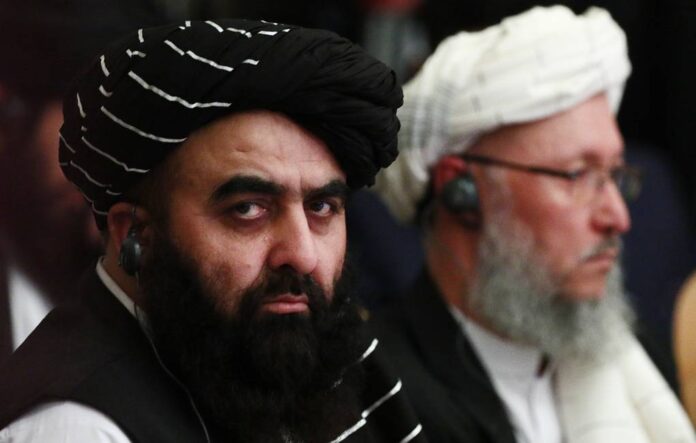
Taliban rules out cooperation with U.S. against Daesh

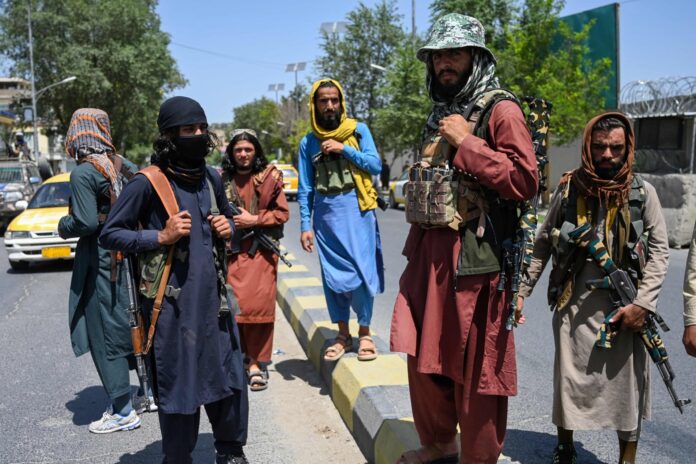
Taliban

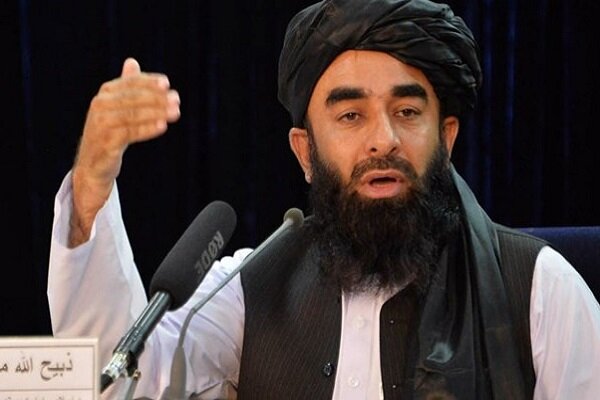
Taliban political spokesman Suhail Shaheen told The Associated Press the Taliban will independently deal with extremist groups such as the Islamic State (IS) group.

“We are able to tackle Daesh independently,” Shaheen stated, using an Arabic acronym for the group.

The position comes ahead of talks between senior Taliban officials and U.S. officials in Doha, Qatar. This is the first direct talks the two groups will have since the U.S. evacuated Afghanistan in August, with the U.S. noting that these talks are not a sign the Taliban will be recognized by the U.S.

Daesh has taken responsibility for a number of attacks in Afghanistan, including a suicide bombing that killed tens of Shiite Muslims and wounded dozens as they prayed in a mosque in Kunduz.

The meetings in Qatar will take place on Saturday and Sunday where the officials are expected to discuss terrorism and evacuations of more Americans and Afghan allies.

Two senior administration officials told Reuters that Tom West, deputy special representative for Afghanistan reconciliation with the State Department, and Sarah Charles, assistant to the administrator of USAID’s Bureau for Humanitarian Assistance, are some of the individuals expected to be at the meetings.

China’s Xi: Taiwan independence a dead end

Xi reiterated commitments to striving for national reunification by peaceful means, saying it is in the best interests of compatriots across the Taiwan Straits as well as the Chinese nation.

“The Taiwan question arose out of the weakness and chaos of our nation, and it will be resolved as national rejuvenation becomes a reality,” Xi said in his speech at the Great Hall of the People in Beijing, adding that cross-Straits reunification is the common will of all the Chinese people.

Xi recalled that the mainland adheres to the basic policies of peaceful reunification and the One Country, Two Systems, upholds the one-China policy and the 1992 Consensus and works for the peaceful development of cross-Straits relations.

Noting that the Chinese nation has an honorable tradition of opposing division and safeguarding unity, he underscored that “secession aimed at ‘Taiwan independence’ is the greatest obstacle to national reunification and a grave danger to national rejuvenation.”

Underlining that the Taiwan question is China’s internal affairs and brooks no external interference, Xi expressed the confidence that “the complete reunification of our country will be and can be realized.”

One hundred and ten years ago, Chinese revolutionaries led by Dr. Sun Yat-sen launched the 1911 Revolution, marking a milestone in the long and arduous journey to realize the rejuvenation of the Chinese nation.

Speaking at a commemorative meeting on Saturday to mark the 110th anniversary of the Revolution, Xi called for drawing lessons from the past when achieving China’s complete reunification and driving the great cause of national rejuvenation forward.

“For all the Chinese people, achieving national rejuvenation is not only a shared honor but also a shared mission,” said Xi, also general secretary of the Communist Party of China Central Committee and chairman of the Central Military Commission.

Longing for a bright future for the Chinese nation, Dr. Sun Yat-sen once wrote, “If I believe something to be feasible, even if it may be as difficult as moving a mountain or draining the sea, I will one day bring it to pass.”

Recalling these words, Xi added that after years of hard work, China’s national rejuvenation has become a historical inevitability, with stronger institutions, firmer material foundations and a more proactive mindset.

“The past 110 years have shown us that to realize national rejuvenation, the Chinese people must have a strong force to lead us forward, and that force is the Communist Party of China,” Xi continued.

On the road to national rejuvenation, “socialism with Chinese characteristics has proven to be the only correct path,” he noted.

He also urged the Chinese people to rely on their own heroic efforts.

“Through courage and skills, we will overcome all major risks and challenges that may impede our path to national rejuvenation and resolutely safeguard our national sovereignty, security, and development interests,” he said.

Xi urged the Chinese people and nation to learn the patriotic lessons from the 1911 Revolution, stick together through good times and bad, and rely on strong unity to overcome risks and challenges on the road ahead.

Realizing national rejuvenation needs not only a stable and united domestic environment but also a peaceful and stable international environment, Xi added.

“Aggression and hegemony are not in the blood of the Chinese people,” he pointed out, stating that China will remain a champion of world peace, a contributor to global development, and a defender of the international order, and we will do our very best to make even greater contributions to humanity.

Raeisi: Afghanistan mosque blast crime, seeking rift among Muslims

Raeisi extended his condolences to the Afghan people and the international community over the incident.

On Friday, a bomb blast on a mosque in Afghanistan’s northern city of Kunduz killed and wounded dozens of worshippers during Friday prayers. The Daesh terror group claimed responsibility for the deadly explosion.

Raeisi said the inhumane and anti-religious nature of the perpetrators of the act of terror is known to all people.

He added that everyone knows that Takfiri terrorism thrived on support from the US and that Washington paved the way for the Daesh criminals to expand their presence in Afghanistan in recent years and prevented efforts to eradicate them.

The Iranian president expressed concern over the continued terrorist attacks and the combination of ethnic and sectarian strife which, according to him, is part of the US scheme for Afghanistan.

Raeisi noted that Iran is ready, as always, to help Afghan brothers and sisters, expressing hope that Afghan groups exercise vigilance and foil the US plot by forming an inclusive government so that the Afghan people live in peace.

Beijing: CIA China center shows cold-war mentality

The remarks by Chinese Foreign Ministry spokesperson Zhao Lijian came a day after the CIA’s announcement of a number of structural changes, including a new mission center for China to “further strengthen collective work on the most important geopolitical threat we face in the 21st century”.

Zhao urged the U.S. agency to treat China’s development in a rational and objective way and stop any actions that may damage China’s sovereignty, security and development interests as well as the mutual trust and cooperation between the two countries.

Noting that the U.S. special operations forces carried out training in China’s Taiwan, Zhao reiterated that the one-China principle serves as the political foundation for China-U.S. ties.

The U.S. side should recognize the high sensitivity and severity of Taiwan related issues, firmly abide by the one-China principle and the three China-U.S. joint communiques to maintain bilateral ties and regional stability, Zhao said.

China will take all necessary actions to defend its sovereignty and territorial integrity, the spokesperson added.

Iran Leader: Blast in Afghan mosque, heinous crime

The Leader, in a message, urged Afghan officials to prevent the repetition of such acts of terrorism in the future.

In his message, Ayatollah Khamenei described the bombing in Kunduz as a bitter and disastrous incident, saying the carnage left him filled with grief. Ayatollah Khamenei described the perpetrators of the terrorist attack as bloodthirsty criminals who must be brought to justice.

He also prayed for divine mercy on those killed in the explosion and swift recovery for the worshippers who were wounded.

The mosque bombing in Afghanistan happened during Friday prayers. It killed dozens of people and wounded many more.

The Taliban who are in control of Afghanistan has condemned the blast, promising to find and punish the those behind it.

The Daesh terror group has claimed responsibility for the bomb explosion.