Monday, December 22, 2025
Home Blog Page 2340

Persepolis suffers defeat against Al Hilal in 2021 ACL quarters

It was in the 27th minute of the match when Salem Al-Dawsari gave the hosts at Prince Faisal bin Fahd Stadium a valuable lead.

Al-Hilal’s French striker Bafetimbi Gomis scored twice in the 50th and 70th minute to put the result beyond doubt.

Al Hilal will lock horns with Al Nassr on Tuesday in an all-Saudi Arabian semi-final.

On Friday, Persepolis officially protested against a lack of proper coordination in holding training sessions, and allocating all stadium seats to Al Hilal.

The Iranian club has sent an official protest letter to the AFC.

Also on Wednesday, players and coaches of Persepolis had to head back home from Tehran Mehrabad Airport after their flight to Saudi Arabia was canceled because the kingdom failed to issue a permit for their flight. The team flew to Saudi Arabia on Thursday evening instead.

Austria official says Vienna has common concerns with Tehran over Daesh

In this meeting, Amirabdollahian called the ties between the Islamic Republic of Iran and Austria age-old and said, “We attach great importance to these relations”.

Amirabdullahian expressed hope for increased economic and trade cooperation between the two countries. He also appreciated the donation of vaccine by Austria to the Islamic Republic and called for more cooperation with Vienna on the Covid pandemic and vaccine.

The Iranian foreign minister called on the European Union to adopt a more responsible approach to the rights of displaced Afghans and condemned the terrorist attacks in recent weeks in Afghanistan.

The Iranian foreign minister also described the rise of Daesh and Takfiri terror groups in Afghanistan as dangerous.

Secretary General of the Austrian Ministry of Foreign Affairs, Peter Launsky, also praised the friendly relations between his country and Iran and expressed hope that the Iran nuclear deal will be revived with the cooperation of all parties.

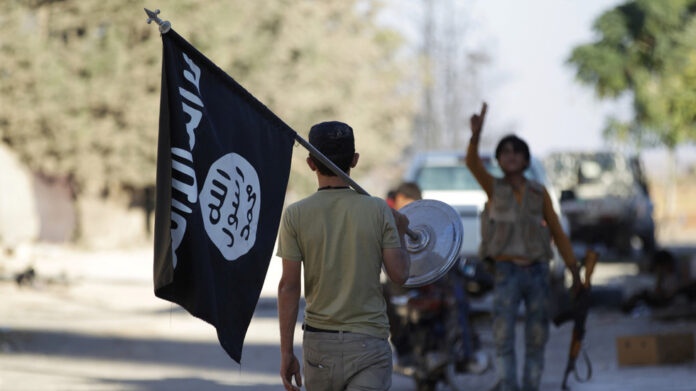
Launsky also condemned the recent terrorist acts in Afghanistan, noting that the Islamic Republic of Iran and Austria have common concerns about Daesh terrorists.

He also stressed Austria’s support for meetings of Afghanistan’s neighbors to resolve the country’s problems.

Bagheri: Europe expected to take action on Yemen

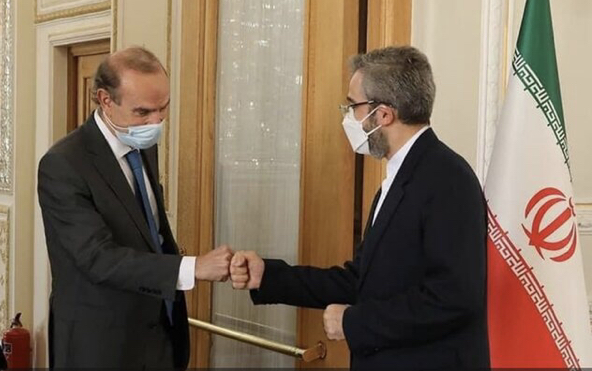
Ali Bagheri raised the issue on Saturday during the
fifth round of political talks between the Islamic Republic of Iran and Austria in Tehran.

The talks were chaired by Ali Bagheri, Iran’s Deputy Foreign Minister for Political Affairs, and Peter Launsky, Secretary General of the Austrian Ministry of Foreign Affairs.

Bagheri referred to the long history of relations between Tehran and Vienna, saying that is a valuable asset for bilateral ties.

Bagheri also spoke of regional issues. He touched on the latest developments in Yemen and Afghanistan, as well as Iran’s efforts to help reduce the problems in those countries and said the Yemeni people have been under the most severe military attacks for five years and, from a humanitarian point of view, European countries are expected to take serious action to put an end to the ongoing catastrophes in the country.

Elsewhere, he underlined Tehran’s compliance with its commitments under the Iran nuclear deal.

Bagheri added that Europe did not withdraw from the agreement after the withdrawal of the United States, but did not take effective and practical action within the framework of its commitments under the JCPOA.

Launsky also underscored the antiquity of the Iran-Austria relations, noting that mutual respect and understanding have institutionalized the will of the two nations to cooperate with each other.

The Secretary General of the Austrian Ministry of Foreign Affairs also pointed to the significant potential in economic relations between Iran and Austria and underlined the willingness of Austrian companies to be present in the Iranian market.

He then turned to the situation in Afghanistan.

Launsky emphasized that Austria understands Iran’s concerns and appreciated Islamic Republic’s hosting of Afghan refugees.

Regarding Yemen, he said Austria is trying to alleviate the suffering of the Yemeni people as much as possible by providing them with humanitarian aid.

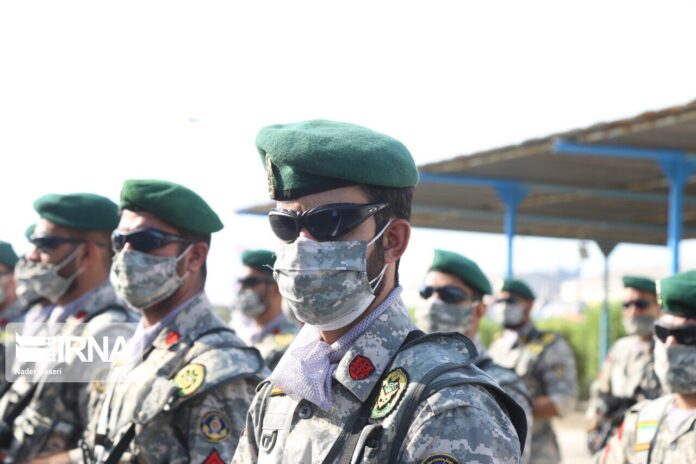
Iran’s Navy foils pirate attack on oil tanker in Gulf of Aden

The attack happened early on Saturday.

The pirates were on board five speedboats. They tried to hijack the Iranian oil vessel but were forced to flee following a heavy exchange of fire with the Navy’s 78th flotilla of warships.

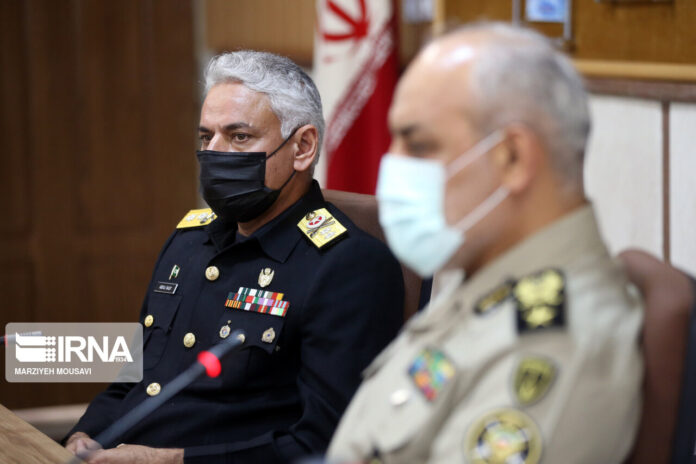
Iranian Navy Commander Rear Admiral Shahram Irani said the flotilla including Alborz Destroyer was escorting the Iranian oil tanker when the incident happened.

He described the attack as “maritime terrorism”.

“With the timely action of the army marines, the two tankers safely passed through the Gulf of Aden, and now our country’s ships and those of other countries are sailing through this area safely, and so far no specific case has been reported there,” he added.

Iran has deployed warships to international waters to protect naval routes and maintain security for cargo ships.

MP: Parliament examines properties to fight corruption

Seyyed Nezameddin Mousavi said from the beginning, the authority to investigate the property of officials has been the judiciary, but that’s only about investigation, not the public dissemination of information.

He added that what the media are reporting is related to the consideration of a plan in Parliament’s Legal and Judicial Commission, which has not yet been finally approved by this commission.

Mousavi said the issue goes back to the review of a bill entitled the Law on the Investigation of Property and Assets of Officials in May 2012.

He noted that Parliament at the time passed a resolution saying the Judiciary must review the properties of the Leader, the president, vice presidents and ministers, and their spouses and children before and after service so that their properties are not unjustly increased.

According to this MP, the resolution was sent to the Guardian Council and after objections to some clauses thereof, it went to the Expediency Council and finally, the Guardian Council amended the resolution.

He said this means that the officials should declare their properties to the judiciary, but their information should remain confidential.

According to Mousavi, registering the properties of officials has been approved by the 11th parliament as the legislature examines the properties to fight corruption.

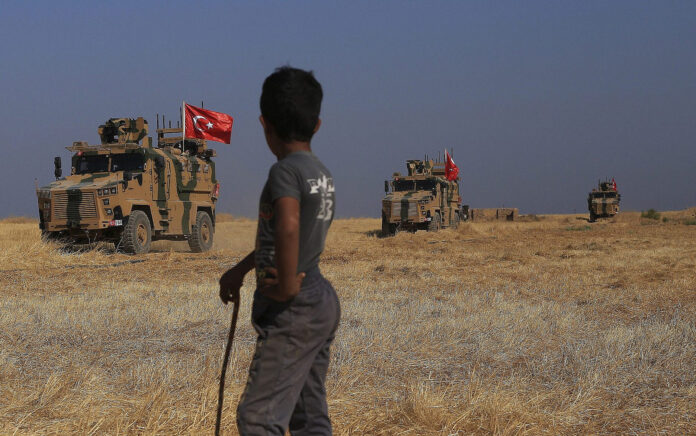
Turkey threatens new military operation in Syria

President of Turkey Recep Tayyip Erdogan makes a statement after chairing the cabinet meeting in Ankara, on December 14, 2020. (Photo by Adem ALTAN / AFP) (Photo by ADEM ALTAN/AFP via Getty Images)

Erdogan has threatened to launch a new military campaign on the Syrian soil after a rocket attack blamed on Kurdish militants killed two Turkish special force police in northern Syria.

“We have run out of patience regarding certain areas in Syria that have been the source of terrorist attacks on our country. We are determined to eliminate the threats originating from those areas,” Erdogan said Friday, referring to Kurdish-held city of Tel Rifaat, located near the city of Azaz in the country’s Aleppo Province, where the attack took place earlier this week.

On Sunday, a guided missile was launched from Tel Rifaat by US-backed Kurdish People’s Protection Units (YPG) militants, killing two Turkish police officers and wounding two others, according to Ankara.

Erdogan’s threat came as two unknown Turkish officials also stated Ankara was preparing for possible military action against the YPG in northern Syria if talks on the issue with the United States and Russia failed.

“It is essential that the areas, notably the Tel Rifaat region from which attacks are constantly carried out against us, are cleansed,” one senior official was quoted as noting.

The official added that the military and national intelligence agency MIT was making preparations, without providing any details about the time and nature of the Turkish military action.

“The decision for this has been taken and the necessary coordination will be done with particular countries. This subject will be discussed with Russia and the United States,” he stressed.

The officials stated Erdogan would discuss the issue with US President Joe Biden at a G20 summit of the world’s major economies in Rome at the end of October.

Another Turkish official said the YPG must be pushed back at least 30 kilometers, claiming that Russia was completely in control of the areas from which recent attacks had come.

Erdogan will speak with Russian President Vladimir Putin after the talks with Biden, the official added.

“If there is no outcome from diplomacy and the PYD does not leave these areas, an operation appears unavoidable,” he continued, using the abbreviation for the YPG’s political wing and referring to Tel Rifaat and “several other locations.”

In separate agreements with Moscow and Washington in 2019, Turkey halted its incursion in northeast Syria in exchange for the withdrawal of YPG militants 30 km south of its border.

On Monday, shells believed to have been fired from the YPG-controlled area east of Tel Rifaat exploded in the Turkish town of Karkamis, across the border from Syria’s Jarablus, causing slight damage.

Speaking at a news conference in Ankara, Foreign Minister Mevlut Cavusoglu said Turkey would “do what is necessary for its security” after what it described as a rise in cross-border attacks by the Kurdish militants.

Cavusoglu held the US and Russia responsible for the attacks, vowing that Turkey “will do whatever it takes to cleanse the terrorists.”

In 2019, Turkish troops carried out a cross-border offensive in northeastern Syria — the third such operation since 2016 — in an attempt to clear US-backed YPG Kurdish militants from border areas and establish a “safe zone” there.

Ankara views the YPG as a terrorist organization tied to the homegrown Kurdistan Workers’ Party (PKK), which has been seeking an autonomous Kurdish region in Turkey since 1984.

The Kurdish-led administration in northeastern Syria says the Turkish offensive has killed hundreds of civilians, including dozens of children since it started.

The Damascus government has repeatedly slammed violations of the Arab country’s sovereignty, calling on the Turkish military to withdraw its forces and end its occupation of the Syrian soil.

Syria has been grappling with foreign-sponsored militancy since 2011. Turkey has been supporting a number of militant groups operating to topple the government of President Bashar al-Assad.

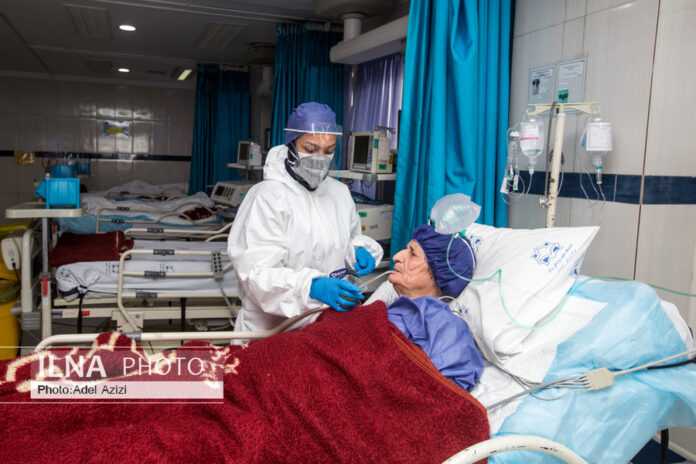
Iran reports 181 new Covid-19 fatalities

Iran’s COVID-19 Cases Hit 600,000: Ministry

Based on the ministry’s figures, over 7,500 new infection cases have been identified over the past 24 hours.

Iran reported 197 deaths from the respiratory disease on Friday and 223 on Thursday.

Iran, which has accelerated its vaccination campaign over the past months, has so far administered over 71 million doses of Covid-19 vaccine.

Iranian President Ebrahim Raeisi emphasized on Saturday that public vaccination should continue vigorously, urging academics and public figures to encourage people to observe health protocols and be vaccinated against the virus.

During a session of the National Task Force against coronavirus, the Iranian president referred to important achievements in the production and import of Covid-19 vaccines, adding that the health ministry should support companies that domestically produce Covid-19 shots.

Iran has moved past the peak of its fifth wave of the respiratory disease but health officials have warned that a sixth wave could be looming.

Iran has dramatically sped up production and imports of Covid-19 vaccines in a bid to contain the outbreak.

Belt and Road Initiative can help Iran blunt US sanctions

Iran-China 25-Year Deal Made on Equal Footing: Official

The report says under the project that was launched following China’s decision in 2013, the country is linked through Central and Western Asia with the Persian Gulf and the Mediterranean Sea.

The BRI was initially started as a network of regional infrastructure projects, but the latest version shows that the scope of the initiative continues and now includes upgrading policy coordination in Asia, financial integration, trade liberalization and people-to-people connections.

The BRI covers the three continents of Asia, Europe and Africa.

According to the report, in 2020, China invested the most in African countries along the belt road, amounting to about $ 12.6 billion and accounting for approximately 27% of its total investment of $ 47 billion.

In 2021, China is expected to invest more in specific areas, such as transportation infrastructure and in Asian countries, to reap the benefits of the new agreements.

The report points out that Iran’s entry into this major initiative is not only a step toward blunting the US sanctions, but it is also an effective strategy to neutralize the trans-economic goals of sanctions, including thwarting efforts to reduce the geopolitical advantages of the Islamic Republic.
The report added that if Iran uses the capacities of the BRI soundly, the agreements will provide more opportunities for regional cooperation.

According to US officials, the BRI has two drawbacks. On the one hand, loans to developing countries in the corridor of the initiative can exacerbate the external debt crisis for these countries, and on the other hand, international standards in areas such as transparency, and workers’ rights are missing in the project.

Accordingly, local and environmental issues are not addressed in this initiative. Of course these criticisms are mostly due to international competition between the two countries.

Lebanon arrests more people following bloody Beirut events

Lebanon has detained 19 people in relation to recent gunfire in Beirut, state National News Agency has reported.

Security officials stated authorities detained 17 Lebanese and two Syrians for questioning over Thursday’s firefight.

Lebanon on Friday mourned seven people killed in gunbattles on the streets of Beirut the previous day, a confrontation that erupted over a long-running probe into last year’s massive port blast in the city and raised fears of the country being drawn into further violence.

Schools, banks and government offices across Lebanon shut down for a day of mourning Friday, while funerals were held in several parts of the country.

Thursday’s clashes saw gunmen battling each other for several hours with automatic rifles and rocket-propelled grenades in the streets of Beirut.

It was the most violent confrontation in the city in years, echoing the nation’s darkest era of the 1975-90 civil war.

The fight raised the specter of a return to sectarian violence in a country already struggling through one of the world’s worst economic crises of the past 150 years.

The violence broke out at a protest organised by Hezbollah and Amal which called for the removal of the lead judge investigating last year’s massive explosion at Beirut port.

Officials from both parties have suggested the judge’s investigation is heading toward holding them responsible for the blast, which killed at least 215 people.

Several former central bank officials sentenced to jail for squandering millions of dollars

Seif, who led the central bank from 2013 to 2018, had initially been charged with mismanaging more than $30bn and 60 tonnes of gold reserves. 

Several of Seif’s deputies were arrested after his sacking. They also faced the same charges. One of them was the Central Bank’s then-deputy for foreign exchange affairs, Ahmad Araghchi. He has been sentenced to 8 years of discretionary imprisonment for disrupting the foreign currency market and destabilizing the Iranian economy through his actions. 

Another defendant in the case was Meisam Khodai, a former official of the Central Bank and advisor to former president Hassan Rouhani. 

According to the indictment, Khodai had in 2017 introduced a 26 year old man named Salar Aghakhani to Araghchi to unofficially sell foreign currency as part of an effort to control fluctuations in the market. 

Aghakhani was sentenced to 13 years while Khodai got 5 years. 

Seyyed Rasoul Sajjad, another deputy of the Central Bank, was also convicted of disrupting the currency market and was sentenced to 7 years and 7 months in prison. 

The indictment also read that the Central Bank’s wrong decisions not only did not help stabilize the currency market, but they lead to the smuggling of 160 million dollars and 20 millions of Euros out of Iran. 

Due to the mismanagement on the part of the Central Bank official, the Iranian rial lost more than 200 percent of its value in a matter of weeks during Rouhani’s presidency. 

Now the court that convicted the former officials has declared that the verdicts are final and binding.